Objekte ähnlich wie Japanese Antique Black Drawer Chest 1716s-1736s / Tansu Sideboard Wabi Sabi
Möchten Sie mehr Bilder oder Videos?
Zusätzliche Bilder oder Videos von dem*der Anbieter*in anfordern
1 von 19
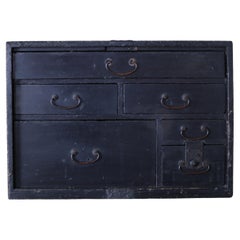
Japanese Antique Black Drawer Chest 1716s-1736s / Tansu Sideboard Wabi Sabi
2.173,58 €
Angaben zum Objekt
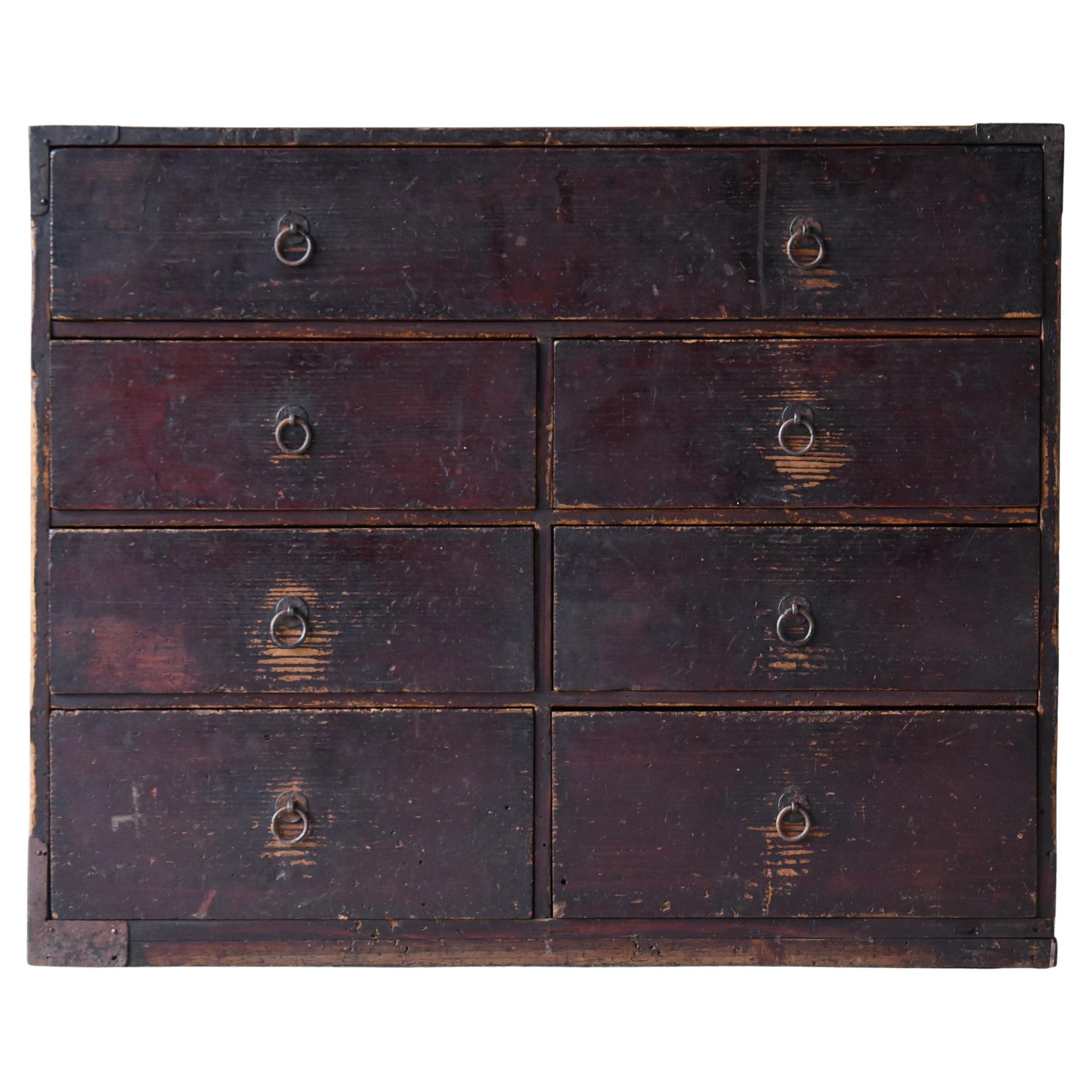
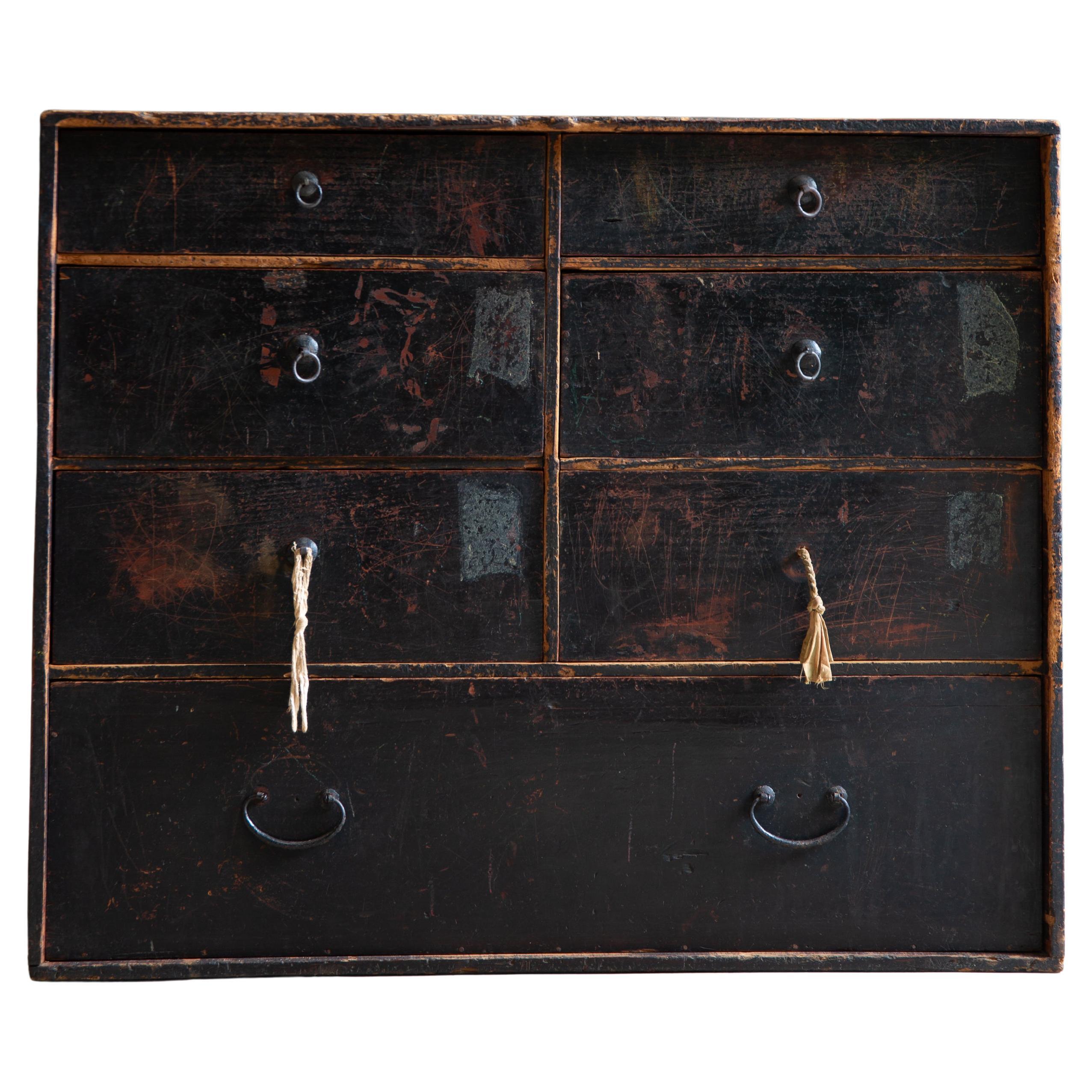
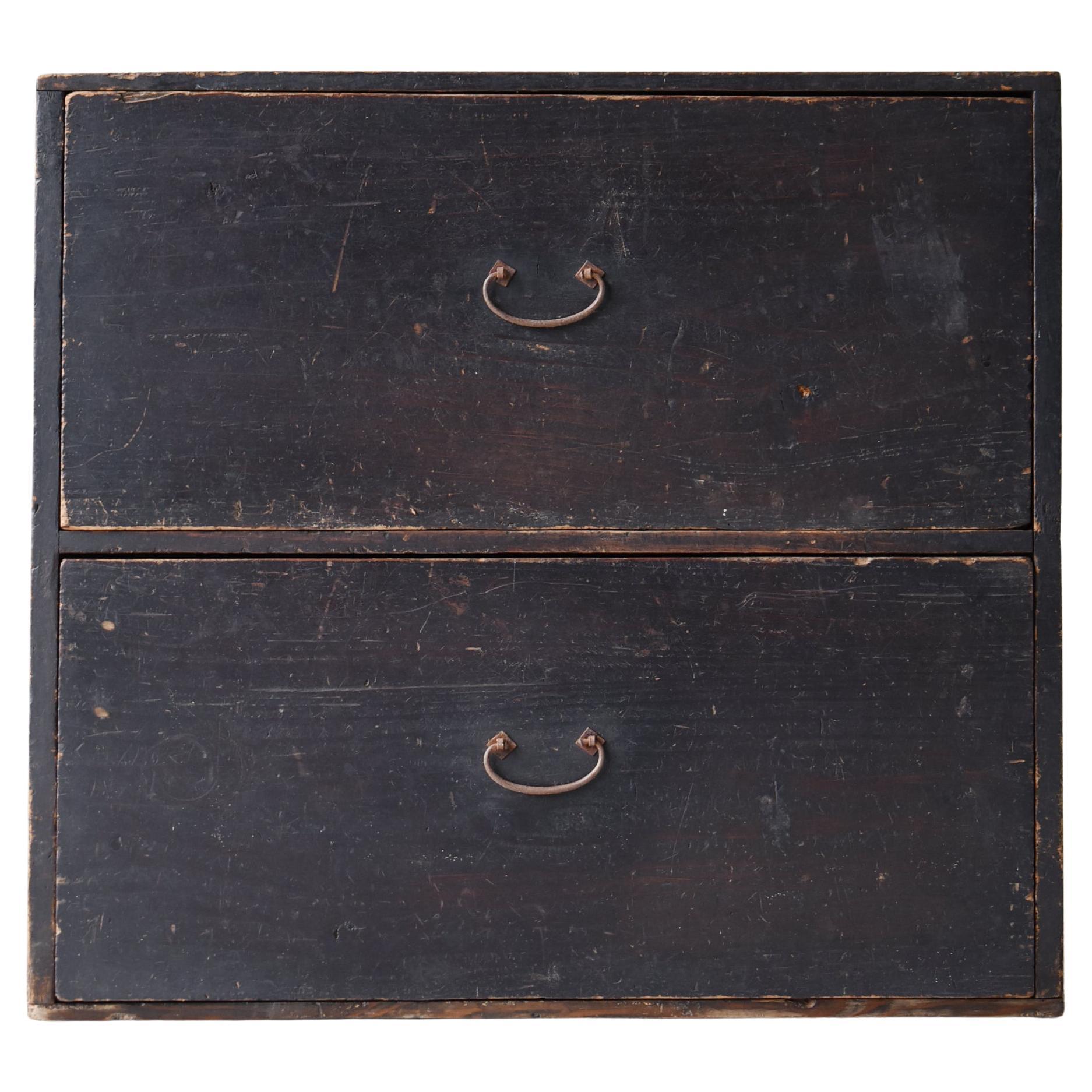
This is a very old Japanese black wooden chest of drawers. The entire piece carries a profound sense of time, as if layers of history have accumulated to form a single, compelling landscape. One of its most remarkable features is the handwritten inscription “享保(Kyōhō)” found on the underside. The Kyōhō era (1716–1736) belongs to the mid-Edo period, and it is exceedingly rare to find furniture with such a clearly identifiable date. While Meiji-period pieces still appear on the market from time to time, items that trace back to the Kyōhō era almost never surface. This chest is, quite literally, a surviving fragment of Japanese daily culture from nearly three centuries ago.
The primary material is paulownia (kiri), a wood now regarded as a luxury material. Lightweight, moisture-resistant, and naturally repellent to insects, kiri was one of the most trusted materials for furniture in the Edo period. The fittings are made of iron, and the reddish rust that has emerged over time harmonizes beautifully with the deeply smoked black surface of the wood. There is no artificial decoration anywhere—only the quiet beauty that results from long and faithful use.
This deep black coloration is not applied paint; it is the result of centuries spent near an irori, a traditional Japanese hearth. Smoke and soot permeated the wood over many decades, gradually building up layer upon layer to create a unique tone and texture. It is a color that can only be produced by time itself—impossible to reproduce by human hands. Countless subtle scratches, worn edges, iron patina, and soot deposits blend together into a serene, cohesive landscape.
All drawers have been adjusted to open and close smoothly, allowing for practical, everyday use. Inside, the soft grain of kiri wood remains visible, offering a beautiful contrast to the darkened exterior. The entire piece has been carefully cleaned and disinfected for安心してご使用いただけますので、届いたそのままお使いいただけます。
There are a few small traces of past insect activity on the underside, but all activity has long since ceased, and no new wood dust appears. In fact, these minor marks serve as quiet testimony to the chest’s long life and the generations who used it.
This piece embodies the spirit of wabi-sabi—the appreciation of imperfection, wear, soot, rust, and the gentle degradation that time imparts. These are not flaws; they are the very essence of its beauty.
A storage chest from the Kyōhō era, still exuding a commanding presence nearly 300 years later—this is a truly one-of-a-kind antique that represents the depth of Japanese aesthetics.
Weight: 16 kg
__________________________
Our Philosophy
Objects always tell the truth.
All I can do is just to face with them sincerely and give
them deep affection as much as I can.
There is no boundary of nationalities and of eras in beauty.
But I think now is the time we choose 'Japanese style' and it
will be the best way to remind us of what we are losing
today and to question us about an essence of beauty again.
I hope that you can touch the memories which the objects here have,
feel and think of something invisible but exists undoubtedly.
- Maße:Höhe: 56 cm (22,05 in)Breite: 72 cm (28,35 in)Tiefe: 39,5 cm (15,56 in)
- Stil:Edo (Aus dem Zeitalter)
- Materialien und Methoden:
- Herkunftsort:
- Zeitalter:
- Herstellungsjahr:1716s-1736s
- Zustand:Abnutzung dem Alter und der Nutzung entsprechend.
- Anbieterstandort:Chōsei District Nagara, JP
- Referenznummer:1stDibs: LU10403247934022
Anbieterinformationen
4,8
Platin-Anbieter*in
Premium-Anbieter*innen mit einer Bewertung über 4,7 und 24 Stunden Reaktionszeit
Gründungsjahr 2017
1stDibs-Anbieter*in seit 2025
62 Verkäufe auf 1stDibs
Typische Antwortzeit: 2 Stunde
- VersandAngebot wird abgerufen …Versand von: Chōsei District Nagara, Japan
- Rückgabebedingungen
Einige Inhalte dieser Seite wurden automatisch übersetzt. Daher kann 1stDibs nicht die Richtigkeit der Übersetzungen garantieren. Englisch ist die Standardsprache dieser Website.
Mehr von diesem*dieser Anbieter*in
Alle anzeigenJapanische antike schwarze Tansu 1860er-1900er / Anrichte Schublade Lagerung Wabisabi
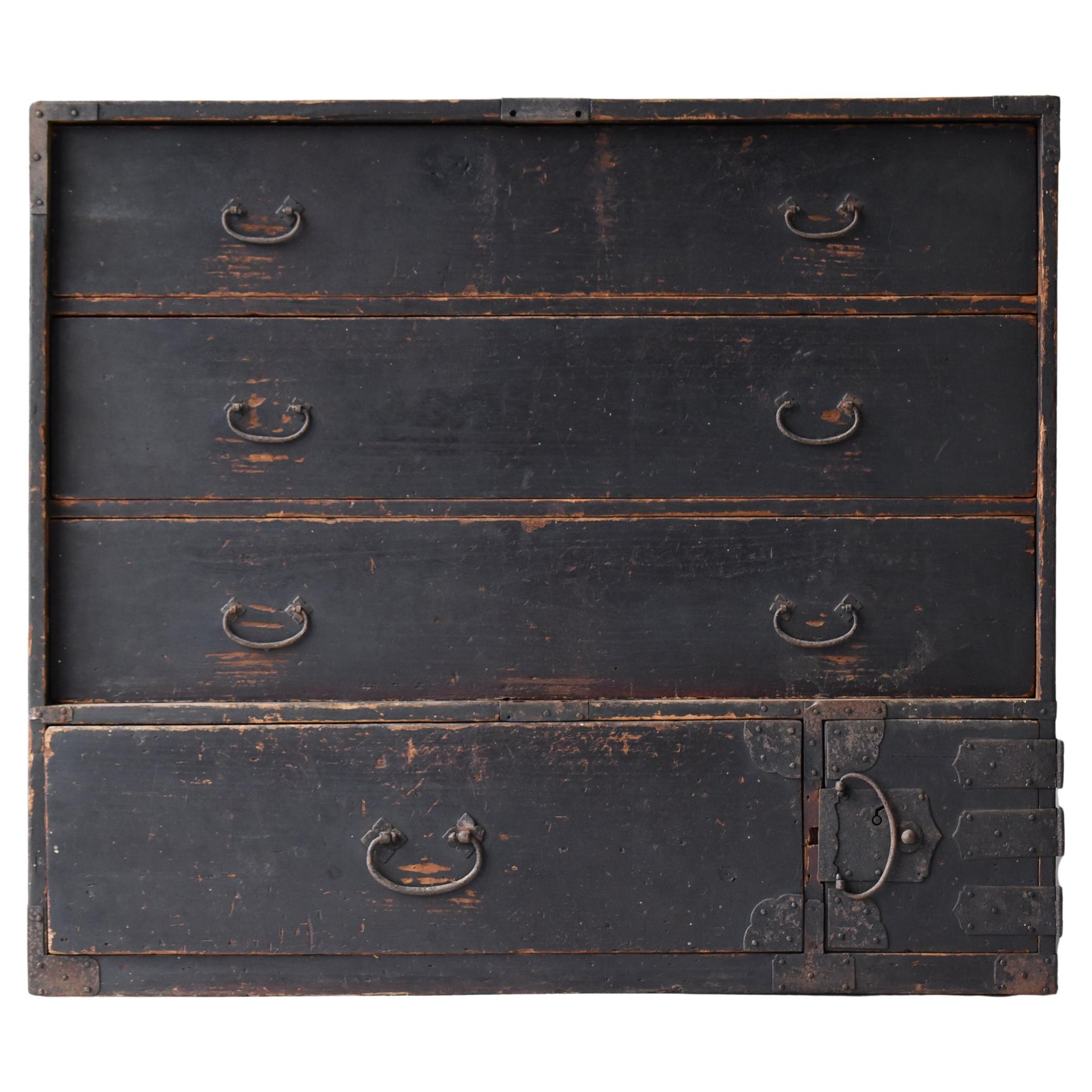
Dies ist eine alte schwarze Kommode, die in Japan während der Meiji-Zeit (1860-1900) hergestellt wurde, einer Zeit, in der Handwerkskunst und MATERIAL ein außergewöhnliches Niveau er...
Kategorie
Frühes 20. Jahrhundert, Japanisch, Meiji-Periode, Kommoden
Materialien
Eisen
Japanese Antique Black Drawer Storage 1860s-1900s / Tansu Sideboard Wabisabi
This is an old drawer storage made in Japan.
It was made during the Meiji period (1860s-1900s) and is a valuable antique piece of furniture filled with Japanese craftsmanship. The ma...
Kategorie
Frühes 20. Jahrhundert, Japanisch, Meiji-Periode, Kommoden
Materialien
Eisen
1.182 € Verkaufspreis
24 % Rabatt
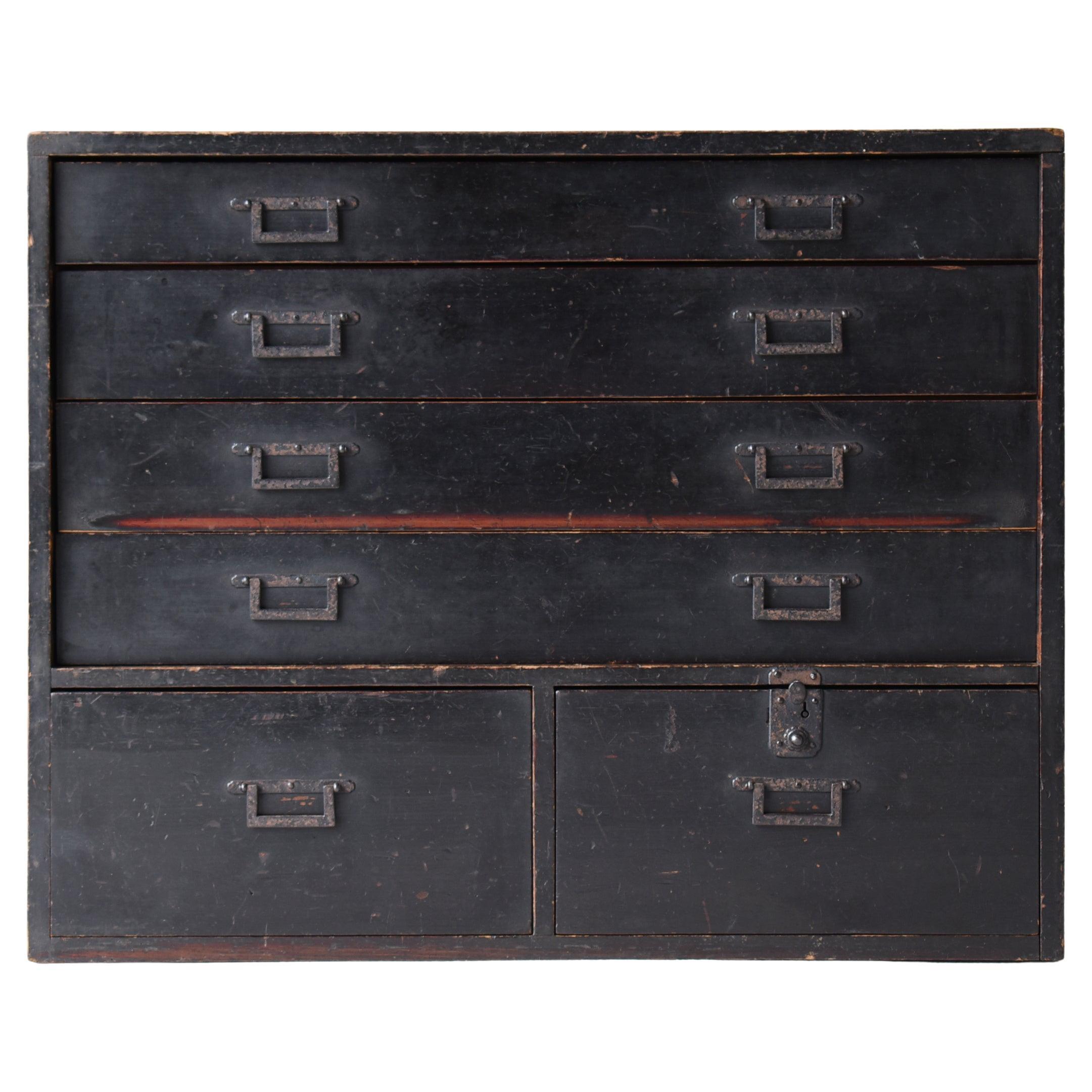
Japanische antike Schubladen-Kommode 1860-1920er Jahre / Tansu Sideboard Wabi Sabi
Dies ist eine antike japanische Schubladenkommode, die in der Meiji- bis Taishō-Periode (1860er-1920er Jahre) hergestellt wurde. Er hat eine stille Präsenz, die durch jahrzehntelange...
Kategorie
Frühes 20. Jahrhundert, Japanisch, Meiji-Periode, Kommoden
Materialien
Eisen
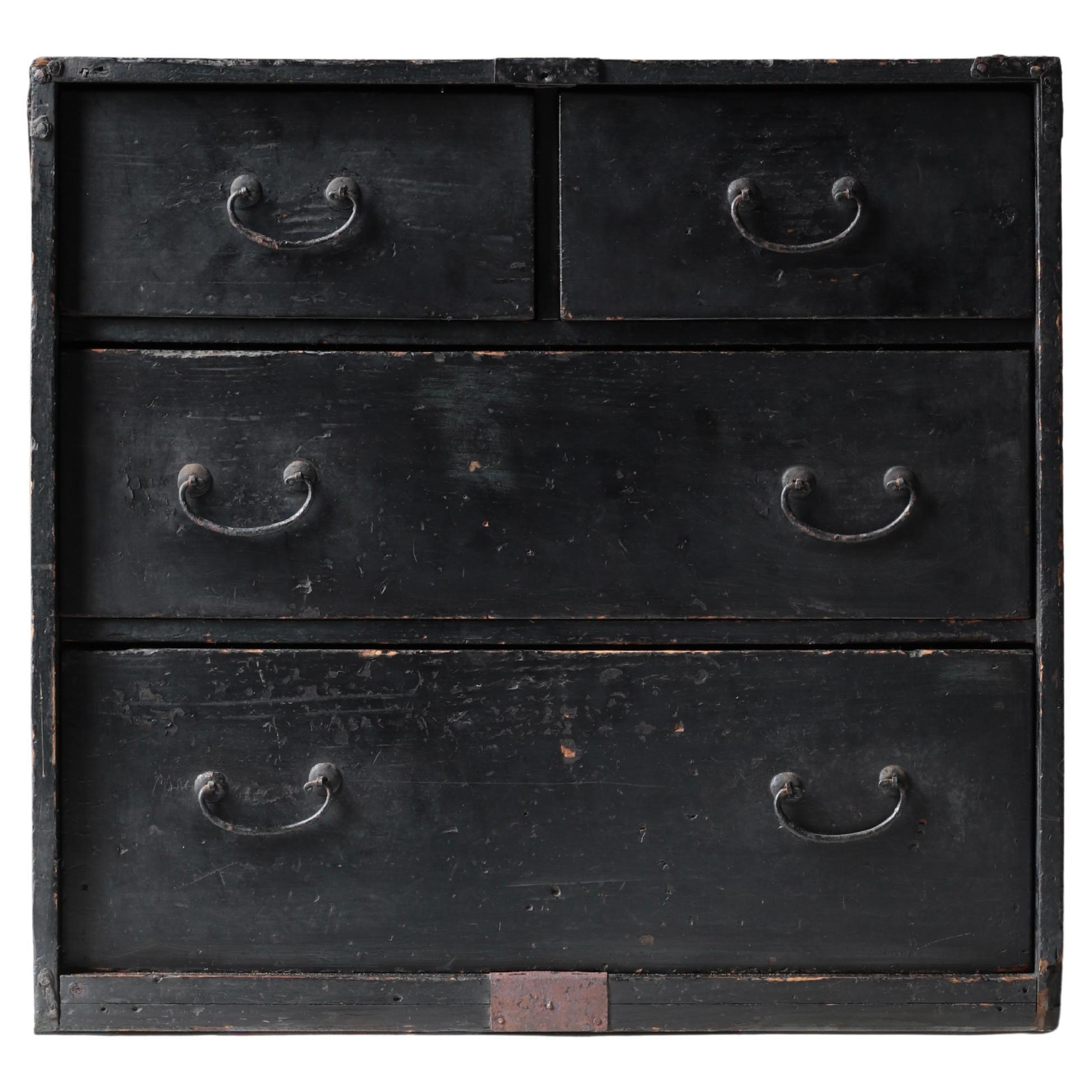
Japanische antike schwarze Schublade Lagerung 1860er-1900er / Tansu Sideboard Wabisabi
Dies ist eine alte japanische Kommode, die während der Meiji-Zeit (1860-1900) handgefertigt wurde.
Es ist ein schönes Beispiel für traditionelle japanische Handwerkskunst aus dieser ...
Kategorie
Frühes 20. Jahrhundert, Japanisch, Meiji-Periode, Kommoden
Materialien
Eisen
Japanese Antique Edo period Drawer Chest 1830s-1844s / Sideboard Tansu Wabisabi
Dies ist eine sehr alte japanische Kommode.
Auf der Innenseite einer Schublade ist die handschriftliche Inschrift "天保(Tenpō)" erhalten geblieben, was darauf hindeutet, dass das Stück...
Kategorie
Antik, 1830er, Japanisch, Edo, Kommoden
Materialien
Eisen

Antike japanische große Schublade 1860er-1920er Jahre / Tansu Sideboard Wabi Sabi, Wabi Sabi
Dies ist eine japanische Schubladenablage.
Es wurde zwischen der Meiji- und der Taisho-Periode (1860er-1920er Jahre) hergestellt und ist ein Möbelstück mit einer langen Geschichte, d...
Kategorie
Frühes 20. Jahrhundert, Japanisch, Meiji-Periode, Kommoden
Materialien
Holz
1.251 € Verkaufspreis
42 % Rabatt
Das könnte Ihnen auch gefallen
Japanische antike schwarze Schublade / Aufbewahrung Tansu / 1905er Jahre / Wabi-Sabi Mingei
Dies ist eine alte, in Japan hergestellte Schublade.
Sie ist aus Zedernholz gefertigt, und auf dem Boden der Schublade ist mit Tinte das Datum "Meiji 38 (1905)" aus dieser Zeit eing...
Kategorie
Antik, Frühes 20. Jhdt., Japanisch, Meiji-Periode, Kommoden
Materialien
Eisen
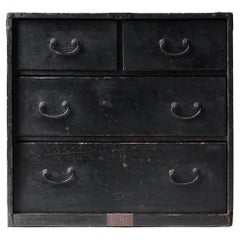
1860-80er Jahre japanische antike wabi sabi Schwarz Urushi Mitte Tansu Kommode
Aus der Region Kanto oder Tohoku, Japan.
Diese mittelgroße, schwarz Urushi lackierte Tansu-Kommode ist ein Produkt der späten Edo- bis frühen Meiji-Ära (ca. 1860er-1880er Jahre), ge...
Kategorie
Antik, Spätes 19. Jahrhundert, Japanisch, Edo, Kommoden
Materialien
Holz
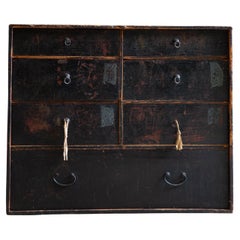
Japanische antike BK-Schubladenkommode 1860er-1900er Jahre / Aufbewahrung Tansu Wabi Sabi
Sehr alte japanische Schubladenlagerung.
Die Möbel stammen aus der Meiji-Periode (1860-1900er Jahre).
Das Hauptmaterial ist Zedernholz.
Die Griffe sind aus Eisen gefertigt.
Das Desi...
Kategorie
Frühes 20. Jahrhundert, Japanisch, Meiji-Periode, Kommoden
Materialien
Zedernholz
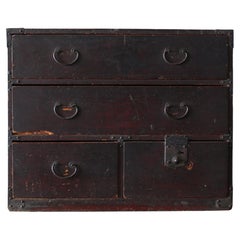
Japanese Antique Drawer 1860s-1920s / Sideboard Wabi Sabi
This is a very old drawer storage chest made in Japan.
It dates back to the Meiji era (1860s–1920s) and is crafted from Japanese cedar wood.
The metal fittings are made of iron.
The...
Kategorie
Frühes 20. Jahrhundert, Japanisch, Meiji-Periode, Kommoden
Materialien
Eisen
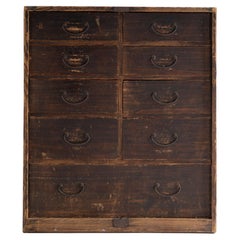
Japanische Antike BK Kleine Schublade Meiji / Tansu Lagerung Wabisabi
Dies ist ein sehr altes, schwarz lackiertes Schubladenregal aus Japan.
Dem Griffdesign nach zu urteilen, scheint sie aus der Meiji-Zeit zu stammen. Es ist sehr alt.
Es ist mit einem ...
Kategorie
Antik, 19. Jahrhundert, Japanisch, Meiji-Periode, Kommoden
Materialien
Zedernholz
1860-80er Jahre japanische antike wabi sabi Urushi Mitte Tansu Kommode
Neue Funde aus einer Kura (Lagerhaus im traditionellen Stil) eines Bauern in der Präfektur Ibaraki, Japan.
Diese mittelgroße, schwarz Urushi lackierte Tansu-Kommode ist ein Produkt ...
Kategorie
Antik, Spätes 19. Jahrhundert, Japanisch, Edo, Kommoden
Materialien
Holz