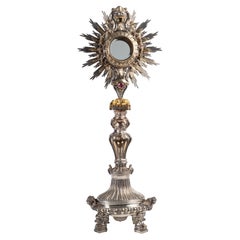
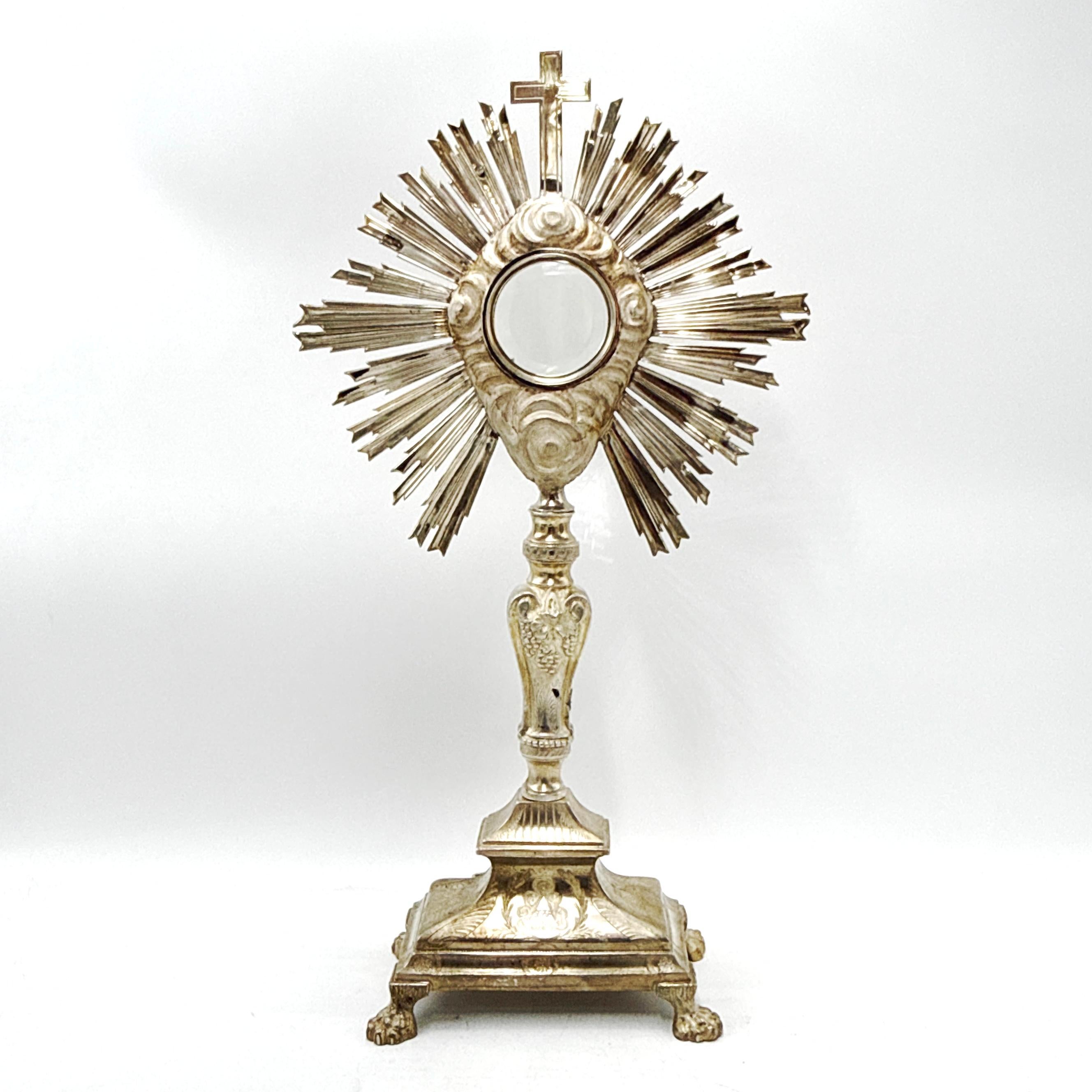
Objekte ähnlich wie Monstrance, San Martín de Cartes. Gilt bronze. Spanish school, 1680.
Möchten Sie mehr Bilder oder Videos?
Zusätzliche Bilder oder Videos von dem*der Anbieter*in anfordern
1 von 16
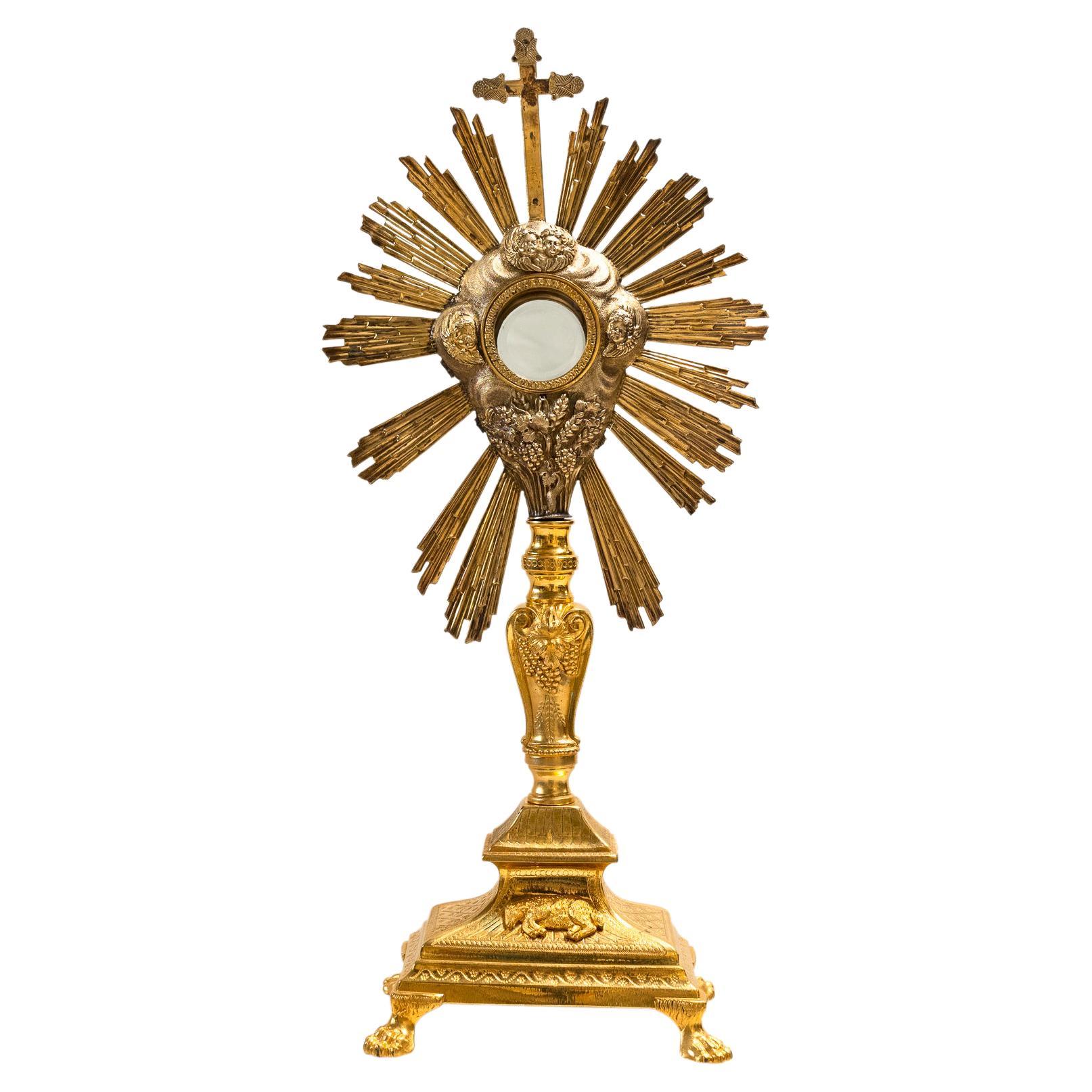
Monstrance, San Martín de Cartes. Gilt bronze. Spanish school, 1680.
8.400 €Einschließlich MwSt.
Angaben zum Objekt
Monstrance, San Martín de Cartes (Cantabria, España). Gilt bronze. Spanish school, 1680.
With registration and date on base.
Bibliography: Heredia Moreno, María del Carmen. “Origin and diffusion of the iconography of the double-headed eagle in Spanish and Hispanic-American religious silverware.” / Sigaut, Nelly. “The monstrances of the double-headed eagle.”
This monstrance, made of gilded bronze, is of the type known as a "sunburst" due to the shape of its upper section and the rays it features (alternating between smooth rays ending in stars, wavy rays, and smooth rays without ends). The upper section also displays a vegetal motif with a winged angel's head, and the area where the Sacred Host would be placed also features rays (alternating between smooth and wavy) and a frame with engraved elements (dots, rhombuses, and C-shapes). The central axis of the piece begins with a winged angel's head, a vase-like shape, and a crowned double-headed eagle with a Franciscan shield (Latin cross and two arms) engraved on its abdomen. It continues with several discs and moldings engraved with small geometric elements and dots. The base consists of several tiers, all engraved with vegetal, geometric, and other motifs. simple, ending in a cruciform base on which the inscription “RAI FELPE 1680” is engraved (note that the R with which it begins shows elements that suggest a possible combination of F and R, resulting, perhaps, in Fray, although the bibliography mentioned cites RAY). Based on the consulted publications, the present piece is presumed to be the monstrance of San Martín de Cartes (Cantabria, Spain), the most austere and earliest of a particular group of monstrances that feature a double headed eagle on the stem and which is attributed, with reservations, to the Madrid school. Compare it with the monstrance of Santa María de Orduña from 1683, the one from the church of Alquézar Castle (Barbastro, Huesca), the one from the Carmelites of Alba de Tormes, the one from Santa María de Valtierra in Navarre, or the one from the Archbishopric of Popayán (Colombia). Apparently, the origin of the double headed eagle iconography dates back to Maximilian I's adoption of the title of Emperor of the Holy Roman Empire in 1508, with the incorporation of this symbol into his coat of arms. In 1519, this emblem was introduced to the Iberian Peninsula thanks to an engraving of Charles V as King of Spain aspiring to the Holy Roman Empire. The eagle motif appeared on religious silverware during the second half of the 17th and the beginning of the 18th centuries, the period to which the monstrances mentioned in the cited bibliography have been dated. These sources add that the use of this emblem in religious silverware was due to very specific reasons. According to the year inscribed on this monstrance (1680), Charles II was reigning, a time marked by the intrigues of Fernando de Valenzuela, which culminated in the excommunication of nobles and the corresponding acts of reparation to the Blessed Sacrament promoted by the monarch in response to the "violation of the Monastery of El Escorial by the nobility." It is important to remember, however, that from this period the iconography of the double-headed eagle was so successful that it continued to be used until the 19th century.
Weight: 4550 grams. · Size: 34x26,5x60 cm
International Buyers – Please Note: for those articles that need Export Permits (those older than 100 years), the obtaining of the Permit will be processed without additional expenses (if you choose the seller sends it to you), but the period for the obtention of it may vary from 10 to 35 days.
- Maße:Höhe: 60 cm (23,63 in)Breite: 34 cm (13,39 in)Tiefe: 26,5 cm (10,44 in)
- Stil:Sonstiges (Aus dem Zeitalter)
- Materialien und Methoden:
- Herkunftsort:
- Zeitalter:1680–1689
- Herstellungsjahr:1680
- Zustand:Abnutzung dem Alter und der Nutzung entsprechend. Geringfügige Schäden. Geringfügiges Verblassen. Check pictures and description.
- Anbieterstandort:Madrid, ES
- Referenznummer:Anbieter*in: zf14851stDibs: LU2951348219802
Anbieterinformationen
4,9
Geprüfte*r Anbieter*in
Jede*r Anbieter*in erfüllt strenge Standards bezüglich Echtheit und Zuverlässigkeit
Gründungsjahr 1985
1stDibs-Anbieter*in seit 2017
359 Verkäufe auf 1stDibs
Typische Antwortzeit: 21 Stunde
- VersandAngebot wird abgerufen …Versand von: MADRID, Spanien
- Rückgabebedingungen
Einige Inhalte dieser Seite wurden automatisch übersetzt. Daher kann 1stDibs nicht die Richtigkeit der Übersetzungen garantieren. Englisch ist die Standardsprache dieser Website.
Mehr von diesem*dieser Anbieter*in
Alle anzeigenMonstrance (Temple-Typ). Silber. Spanien, 16. Jahrhundert mit Restaurierungen.
Tragbares Tempelgewahrsam. Vergoldetes Silber, Glas. 16. Jahrhundert, möglicherweise restauriert.
Kustodie aus vergoldetem Silber (das Finish ist an einigen Stellen verloren gegange...
Kategorie
Antik, 16. Jahrhundert, Spanisch, Renaissance, Religiöse Gegenstände
Materialien
Silber, Sonstiges
Vergoldete Bronze Prozessionskreuzplatte, 20. Jahrhundert, nach früheren Modellen
Ende des Prozessionskreuzes. Ormolu, 20. Jahrhundert.
Lateinisches Kreuz mit geraden Armen mit Zungendekoration zwischen Simsen auf beiden Vorderseiten, Strahlen am Schnittpunkt de...
Kategorie
20. Jahrhundert, Spanisch, Barock, Religiöse Gegenstände
Materialien
Bronze
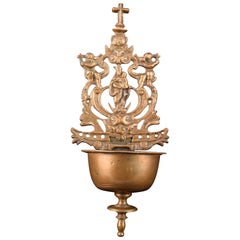
Bronze-Bassin für Heiliges Wasser, Spanien, 17. Jahrhundert
Heilige Wandschrift. Bronze. Spanien, 17. Jahrhundert.
Kleines Weihwasserbecken, das an einer Wand aufgestellt werden soll und einen mit Stuck und architektonischen Elementen verzi...
Kategorie
Antik, 17. Jahrhundert, Spanisch, Barock, Religiöse Gegenstände
Materialien
Bronze, Sonstiges
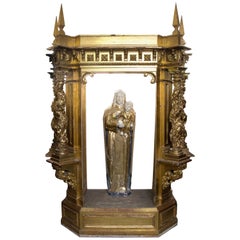
Retabel-Fragment, vergoldetes Wood, ca. zweite Hälfte des 17.
Altarbild. Holz geschnitzt und vergoldet. Barock, in der zweiten Hälfte des 17. Jahrhunderts.
Die salomonische Säule war ein bereits in der Renaissance (und davor) bekanntes Elemen...
Kategorie
Antik, 17. Jahrhundert, Europäisch, Barock, Religiöse Gegenstände
Materialien
Holz
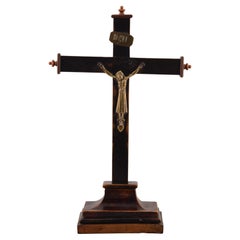
Christus von Burgos. Holz, Metall. Spanische Schule, 19. Jahrhundert.
Christus von Burgos. Holz, Metall. Spanische Schule, 19. Jahrhundert.
Ein rechteckiger Sockel dient als Basis für ein lateinisches Kreuz mit Endstücken an den drei oberen Enden. Es ...
Kategorie
Antik, 19. Jahrhundert, Spanisch, Sonstiges, Religiöse Gegenstände
Materialien
Metall
Bronze-Pax. aus dem 18. Jahrhundert
BRONZE PAX.
Die Platte, die dieses Element bildet, das früher in der Messe verwendet wurde, um den Friedensosculus mit dem Dekorum zu geben, wurde mit verschiedenen Reliefs verziert:...
Kategorie
Antik, 18. Jahrhundert, Spanisch, Rokoko, Religiöse Gegenstände
Materialien
Bronze
Das könnte Ihnen auch gefallen
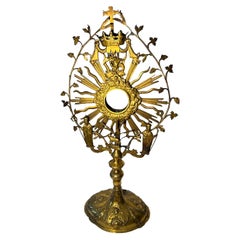
Vergoldete italienische Monstrance des späten 18. Jahrhunderts
Monstranz mit vergoldeten Bischöfen, Vogel, Lamm und Kreuz. Die vergoldete Basis mit Engeln ist 10" x 7,5" groß. Ca. 1780-1810, Italienisch.
Kategorie
Antik, 1780er, Italienisch, Religiöse Gegenstände
Materialien
Metall
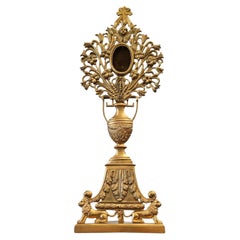
europäischer Monstrance-Reliquary aus vergoldeter Bronze des 19. Jahrhunderts
Eine seltene feine Qualität neoklassischen Empire-Stil vasiform vergoldeter Bronze Ormolu Kirche religiöse Reliquie Altar Monstranz Reliquienschrein.
Exquisit handgefertigt in Kon...
Kategorie
Antik, 19. Jahrhundert, Europäisch, Empire, Skulpturen und Schnitzereien
Materialien
Bronze, Goldbronze
Antiker Reliquary aus vergoldeter Bronze
Ein französischer Reliquienschrein aus vergoldeter Bronze des späten 19. Jahrhunderts mit herausnehmbaren Glaseinsätzen, die ein besticktes Säckchen halten.
Abmessungen:
Höhe: 14,5"...
Kategorie
Antik, Spätes 19. Jahrhundert, Französisch, Religiöse Gegenstände
Materialien
Bronze
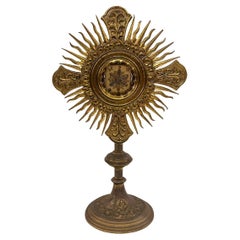
Französische Monstranz aus Silber und Bronze aus dem 19.
Diese auffällige französische Monstranz aus dem 19. Jahrhundert ist ein wunderbares Beispiel für kirchliche Metallarbeiten. Sie besteht aus einer oberen Hälfte aus massivem Silber - ...
Kategorie
Antik, Spätes 19. Jahrhundert, Französisch, Religiöse Gegenstände
Materialien
Silber, Bronze
Monstrance aus Silber und Gold des 19. Jahrhunderts mit Reisekoffer
Eine Monstranz aus Silber und Gold mit Reiseetui (um 1890). Dieses auch als Ostensorium bezeichnete Gefäß wurde als Reliquienschrein in der Privatresidenz einer wohlhabenden französi...
Kategorie
Antik, Spätes 19. Jahrhundert, Französisch, Neoklassisch, Religiöse Gege...
Materialien
Vergoldung, Silber, Bronze
2.419 € Verkaufspreis
20 % Rabatt
Silberne Monstranz, 18. Jahrhundert, ca. 1797-1799. Augsburg Neoklassizistisch Vergoldet Lüders
Augsburger Silber-Monstranz mit Sonnenschliff, um 1797-1799.
Meister: Jakob Hermann David Lüders
Diese beeindruckende Monstranz mit Sonnenschliff aus dem späten 18. Jahrhundert wur...
Kategorie
Antik, 1790er, Deutsch, Neoklassisch, Religiöse Gegenstände
Materialien
Silber