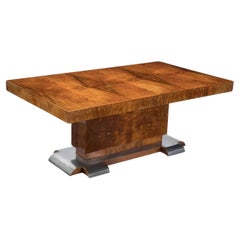
Objekte ähnlich wie Antique Art Deco Epstein Burr Walnut Dining Table Epstein 20th Century
Video wird geladen …
Möchten Sie mehr Bilder oder Videos?
Zusätzliche Bilder oder Videos von dem*der Anbieter*in anfordern
1 von 14
Antique Art Deco Epstein Burr Walnut Dining Table Epstein 20th Century
3.797,99 €
Angaben zum Objekt
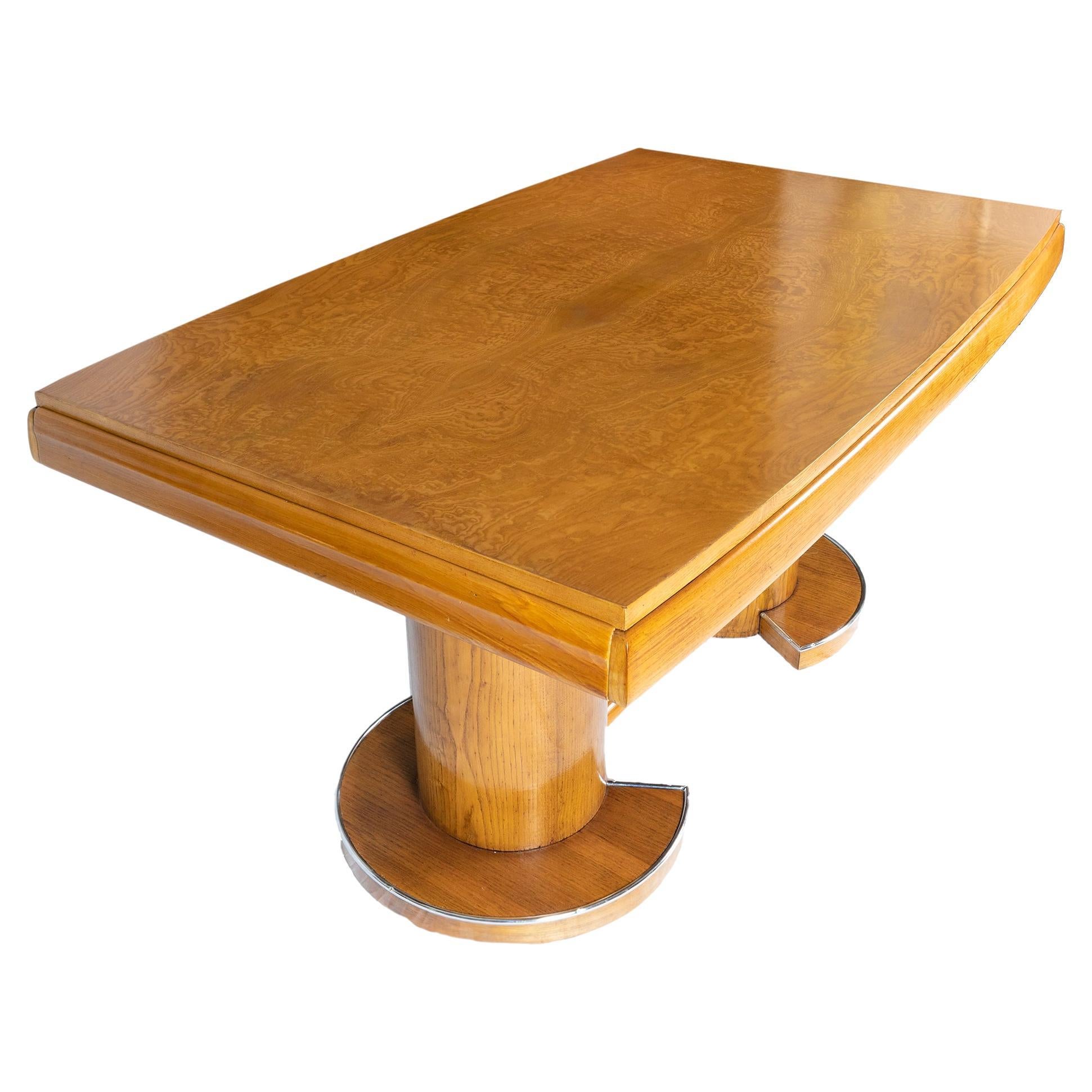
A truly stunning antique Art Deco burr walnut and Coromandel dining table,
attributed to the world renowned cabinet makers Harry
Lou Epstein, circa 1920 in date.
The rectangular shaped table features stunning burr walnut top with rounded corners and coromandel banding, and stands on a decorative a pair of plinth bases.
It has one leaf with folds into the under side of the table when not in use.
This is a fabulous example of the Art Deco period and will enhance any room in which it is placed.
Condition:
In excellent original condition having only been beautifully cleaned and waxed, in our workshops, please see photos for confirmation.
Dimensions in cm:
Height 76 cm x Width 220 cm x Depth 97 cm - Fully Opened
Height 76 cm x Width 166 cm x Depth 97 cm - Leaf Removed
Dimensions in inches:
Height 2 foot, 6 inches x Width 7 foot, 3 inches x Depth 3 foot, 2 inches - Fully Opened
Height 2 foot, 6 inches x Width 5 foot, 5 inches x Depth 3 foot, 2 inches - Leaf Removed
Epstein furniture
was originally founded in East London by Polish immigrants in the 1890s. The firm passed to brothers Harry and Lou Epstein and the pair turned their attention to the production of Art Deco forms from the 1930s until the 1950s.
Finished to high standards, most pieces were custom-made in veneers of burr maple, sycamore or walnut. The design of the famous ‘cloud’ seat furniture is credited to Epstein and the company also popularized the uniquely British taste in suite furniture.
Following World War II, Epstein had showrooms in London, Manchester and Glasgow. A conservative Art Deco style became the company`s trademark after the war and most pieces were made from bleached walnut. Art Deco pieces are not signed.
From the 1960s, some pieces were labelled ‘H.
L. Epstein’ or ‘Epstein
Goldman’.
Art Deco or Deco,
is an influential visual arts design style which first appeared in France during the 1920s, flourished internationally during the 30s and 40s.
It is an eclectic style that combines traditional craft motifs with Machine Ageimagery and materials. The style is often characterized by rich colours, bold geometric shapes, and lavish ornamentation.
Deco emerged from the Interwar period when rapid industrialization was transforming culture. One of its major attributes is an embrace of technology. This distinguishes Deco from the organic motifs favored by its predecessor Art Nouveau.
Historian Bevis Hillier defined Art Deco as "an assertively modern style...[that] ran to symmetry rather than asymmetry, and to the rectilinear rather than the curvilinear; it responded to the demands of the machine and of new material...[and] the requirements of mass production".
During its heyday Art Deco represented luxury, glamour, exuberance, and faith in social and technological progress.
Coromandel wood or Calamander wood
is a valuable wood from India, Sri Lanka and South East Asia. It is of a hazel-brown color, with black stripes (or the other way about), very heavy and hard. It is also known as Macassar Ebony or variegated ebony and is closely related to genuine ebony, but is obtained from different species in the same genus; one of these is Diospyros quaesita Thwaites, from Sri Lanka. The name Calamander comes from the local sinhalese name, 'kalu-medhiriya', which means dark chamber; referring to the characteristic ebony black wood.
Coromandel wood has been logged to extinction over the last 2 to 3 hundred years and is no longer available for new work in any quantity. Furniture in coromandel is so expensive and so well looked after that even recycling it is an unlikely source. A substitute, Macassar Ebony, has similar characteristics and to the untrained eye is nearly the same but it lacks the depth of colour seen in genuine Coromandel.
Walnut
Burr Walnut
Walnut is a hard, dense, tight- grained wood that polishes to a very smooth finish. It is a popular and attractive wood whose colour ranges from near white in the sapwood to a dark hew in the heartwood. When dried in a kiln, walnut wood tends to develop a dull brown colour, but when air-dried can become a rich purplish-brown. Because of its colour, hardness and grain, it is a prized furniture and carving wood. Walnut veneer was highly priced and the cost would reflect the ‘fanciness’ of the veneer – the more decorative, then the more expensive and desirable.
Burr walnut refers to the swirling figure present in nearly all walnut when cut and polished, and especially in the wood taken from the base of the tree where it joins the roots. However the true burr is a rare growth on the tree where hundreds of tiny branches have started to grow. Burr walnut produces some of the most complex and beautiful figuring you can find.
Our reference: A4852b
- Schöpfer*in:Harry Lou Epstein Furniture Co (Tischler*in)
- Maße:Höhe: 76 cm (29,93 in)Breite: 220 cm (86,62 in)Tiefe: 97 cm (38,19 in)
- Stil:Art déco (Im Stil von)
- Materialien und Methoden:
- Herkunftsort:
- Zeitalter:
- Herstellungsjahr:circa 1920
- Zustand:
- Anbieterstandort:London, GB
- Referenznummer:Anbieter*in: A4852b1stDibs: LU950648042262
Anbieterinformationen
5,0
Platin-Anbieter*in
Premium-Anbieter*innen mit einer Bewertung über 4,7 und 24 Stunden Reaktionszeit
Gründungsjahr 1983
1stDibs-Anbieter*in seit 2012
1.444 Verkäufe auf 1stDibs
Typische Antwortzeit: <1 Stunde
Verbände
LAPADA - The Association of Arts
Antiques Dealers
- VersandAngebot wird abgerufen …Versand von: London, Vereinigtes Königreich
- Rückgabebedingungen
Einige Inhalte dieser Seite wurden automatisch übersetzt. Daher kann 1stDibs nicht die Richtigkeit der Übersetzungen garantieren. Englisch ist die Standardsprache dieser Website.
Mehr von diesem*dieser Anbieter*in
Alle anzeigenAntique Art Deco Burr Walnut Dining Table
8 Chairs Epstein 20th Century
Von Harry
Lou Epstein Furniture Co
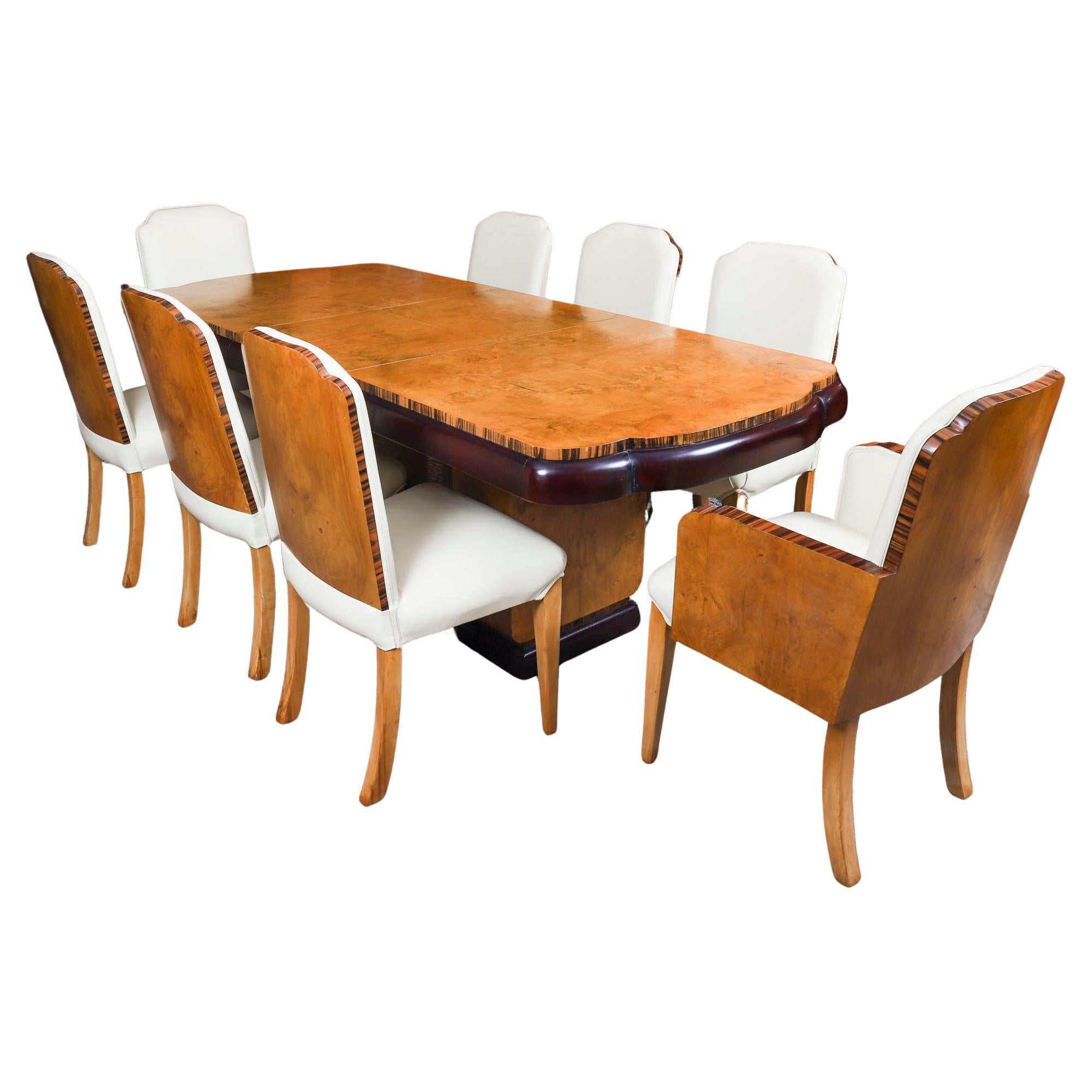
A truly stunning antique Art Deco burr walnut and Coromandel dining suite attributed to the world renowned cabinet makers Harry
Lou Epstein, comprising a dining table with the ...
Kategorie
Frühes 20. Jahrhundert, Britisch, Art déco, Esszimmer-Sets
Materialien
Leder, Makassar, Walnuss
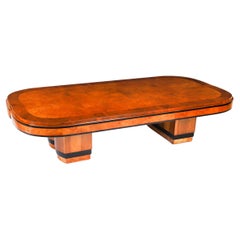
Antik Art Deco Gratnussbaum Couchtisch CIRCA 1920
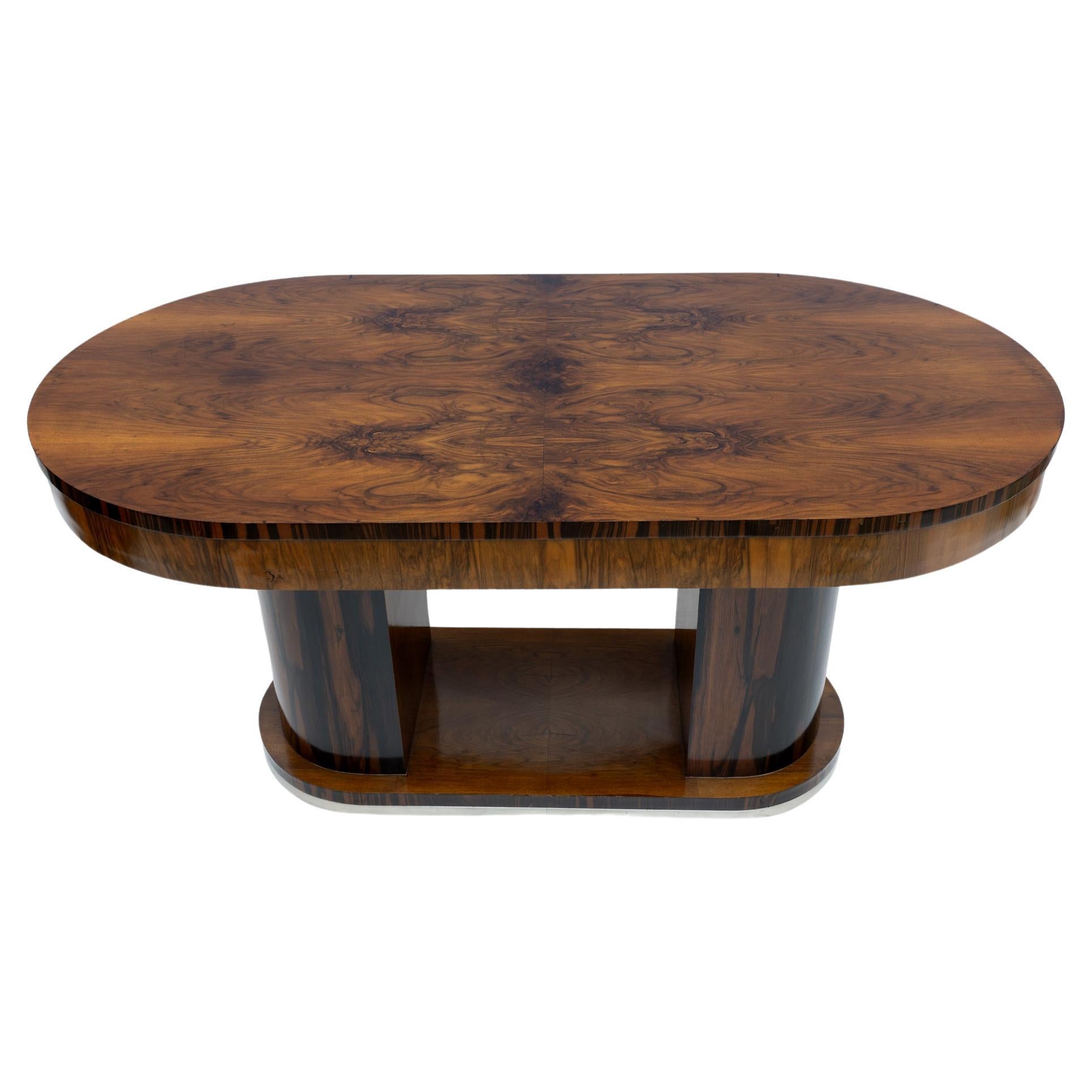
Dies ist ein hervorragender antiker Couchtisch aus Nussbaum im Art-Déco-Stil aus der Zeit um 1920.
Die Tischplatte hat eine rechteckige Form mit abgerundeten Ecken und Kreuzbanddeko...
Kategorie
Vintage, 1920er, Art déco, Couch- und Cocktailtische
Materialien
Walnuss
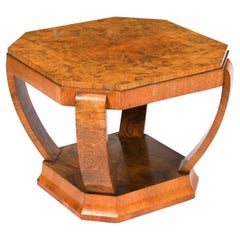
Antiker Art déco-Couchtisch aus Wurzelnussholz im Art déco-Stil, 20. Jahrhundert
Dies ist ein hervorragender antiker Couchtisch aus Wurzelnussholz im Art Deco-Stil aus der Zeit um 1920.
Er hat eine wunderschöne quadratische Platte mit abgeschnittenen Ecken und s...
Kategorie
Frühes 20. Jahrhundert, Art déco, Couch- und Cocktailtische
Materialien
Walnuss
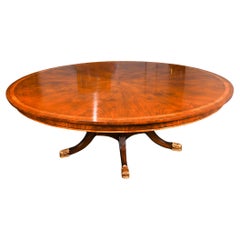
Vintage Flame Mahagoni Regency Revival Esstisch Mitte des 20.
Ein schöner Esstisch aus geflammtem Mahagoni im Regency-Revival-Stil aus der Mitte des 20. Jahrhunderts.
Der Tisch ist von hervorragender Qualität, in ausgezeichnetem Zustand, biete...
Kategorie
Mitte des 20. Jahrhunderts, Englisch, Regency Revival, Esstische
Materialien
Goldbronze
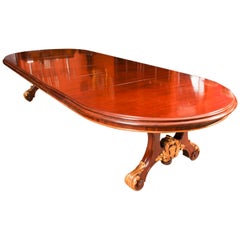
Antiker viktorianischer Mahagoni-Esstisch mit zwei Sockeln und ausziehbarem Sockel, 19. Jahrhundert
Von Wylie
Lochhead
Ein fantastischer antiker viktorianischer Esstisch aus Mahagoni und vergoldetem Zwillingssockel mit der eingeprägten Marke der renommierten Möbelschreiner und Einzelhändler Wylie & L...
Kategorie
Antik, 1850er, Englisch, Viktorianisch, Esstische
Materialien
Mahagoni
Vintage 7ft Französisch Empire Revival Burr Walnuss Esstisch 20. Jahrhundert
Ein beeindruckender Esstisch aus französischem Empire-Revival-Wurzelnussbaum aus der Mitte des 20.
Die runde Platte aus Wurzelholz ist mit einer satinierten Holzleiste versehen und ...
Kategorie
Mitte des 20. Jahrhunderts, Empire Revival, Esstische
Materialien
Walnuss
Das könnte Ihnen auch gefallen
Art déco-Esstisch aus Nussbaumholz, 1930er-Jahre
Art deco Tisch Die Basis mit 4 "Zwiebel" förmigen Füßen tragen einen Kiefernzapfen auf der Oberseite und verbinden die Basis mit Wellen aus massivem Holz von großzügiger Dicke geschn...
Kategorie
Vintage, 1930er, Italienisch, Art déco, Esstische
Materialien
Walnuss, Wurzelholz
Französischer Art Deco Esstisch in Nussbaum Wurzelholz
Die ovale Tischplatte des Esszimmertisches bringt die Schönheit des Wurzelholzes zur Geltung. Er wird von einem breiten und markanten Bein getragen, das auf einem rechteckigen Sockel...
Kategorie
Vintage, 1940er, Französisch, Art déco, Esstische
Materialien
Wurzelholz
Italienischer Esstisch aus Nussbaum im Art déco-Stil, 1925
Art Deco Esstisch aus Nussbaum und Bruyère,
Restauriert und mit Schellack poliert, italienische Produktion aus den 1920er Jahren.
Der Tisch hat zwei Verlängerungen und erreicht, wenn...
Kategorie
Vintage, 1920er, Italienisch, Art déco, Esstische
Materialien
Walnuss
Esstisch aus Nussbaumholz im Poisson-Stil, Art déco, Gaston Poisson-Stil
Ein eleganter Esstisch im Art-Déco-Stil aus Nussbaumholz mit einer Veredelung aus klarem Furnier mit zwei Verlängerungen und verchromten Eisendetails an den runden Sockelfüßen.
Gasto...
Kategorie
20. Jahrhundert, Französisch, Art déco, Esstische
Materialien
Metall
4.219 € Verkaufspreis
40 % Rabatt
Italienischer Esstisch aus Nussbaum im Art déco-Stil, 1940
Art Deco Esstisch aus Nussbaum und Bruyère,
Restauriert und schellackpoliert, italienische Produktion aus den 1940er Jahren.
Kategorie
Vintage, 1940er, Italienisch, Art déco, Esstische
Materialien
Walnuss
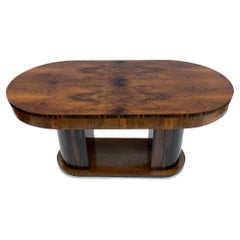
Französischer Art-déco-Esstisch im Art déco-Stil, Dominique zugeschrieben schönes Wurzelholz und Nickel
Von Dominique
Eleganter französischer Art-Déco-Esstisch, Dominique zugeschrieben, unsigniert, Frankreich, ca. 1930er Jahre. Er ist aus schönem Wurzelholz und vernickelten Beschlägen gefertigt. Die...
Kategorie
Vintage, 1930er, Französisch, Art déco, Esstische
Materialien
Metall