Objekte ähnlich wie Japanese Antique Two-Sided Work Table with Drawers
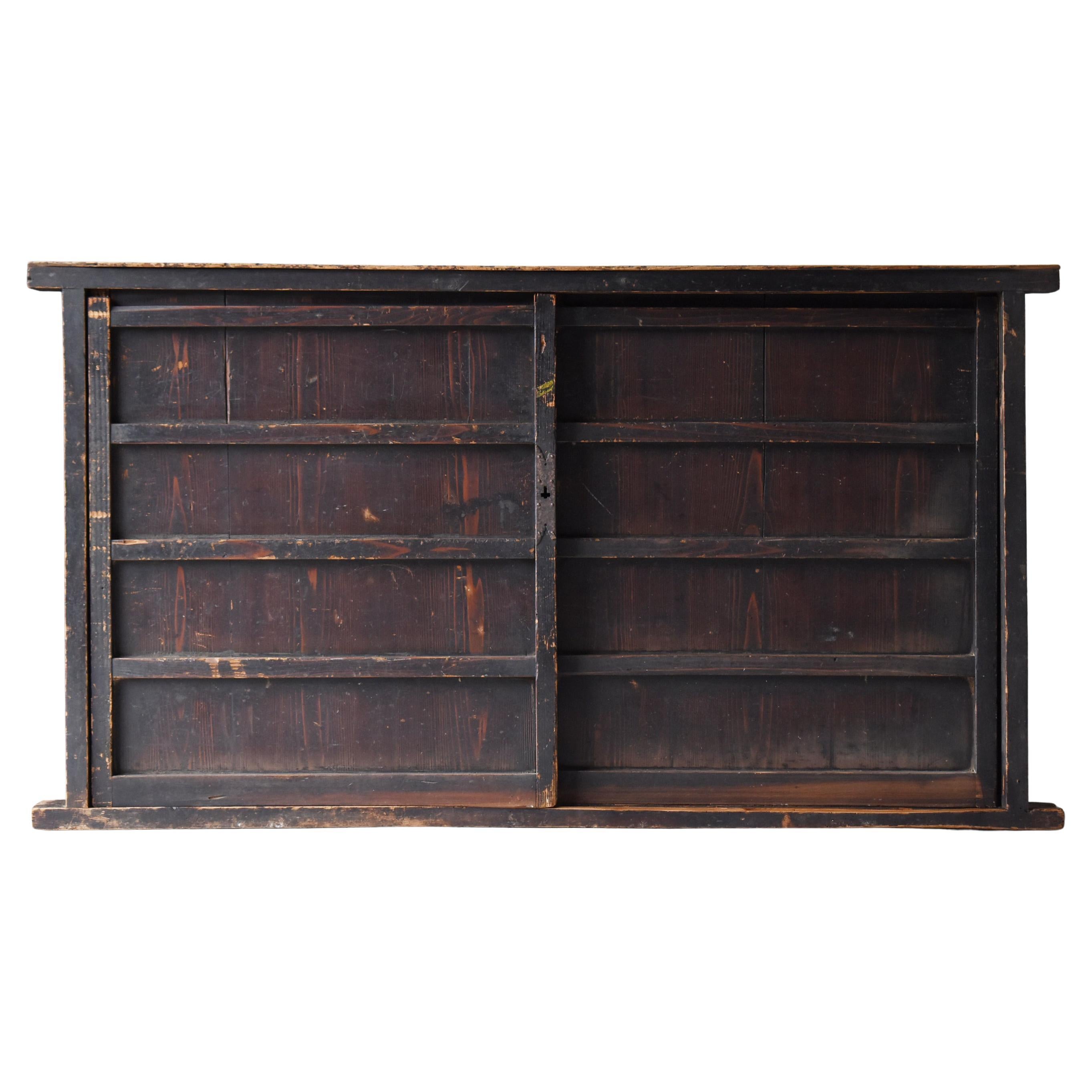
Sliding Doors, Taisho era
Video wird geladen …
Möchten Sie mehr Bilder oder Videos?
Zusätzliche Bilder oder Videos von dem*der Anbieter*in anfordern
1 von 22
Japanese Antique Two-Sided Work Table with Drawers
Sliding Doors, Taisho era
3.895,33 €
Angaben zum Objekt
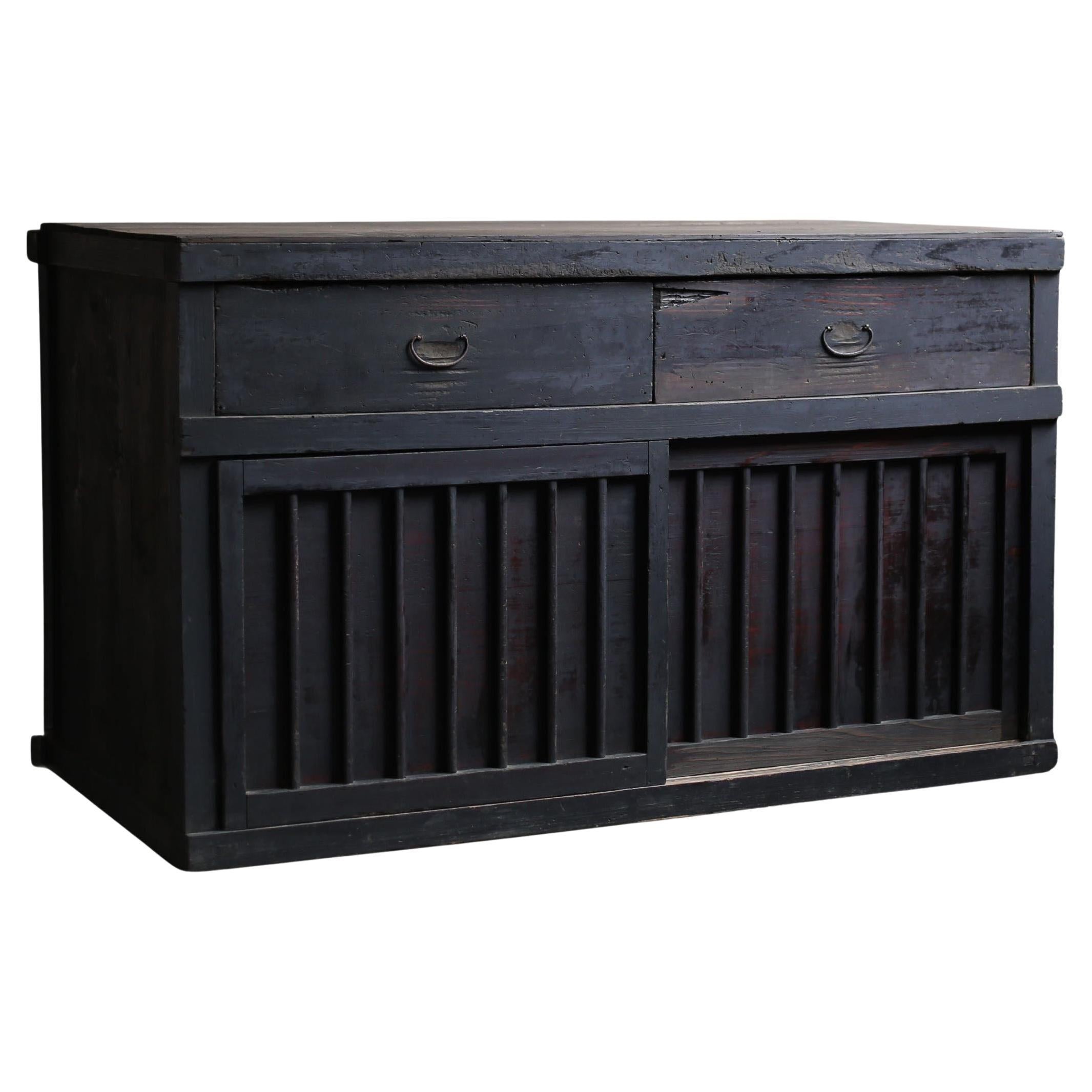
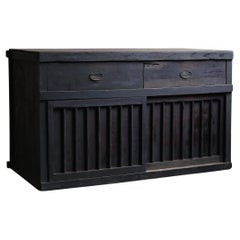
This substantial Japanese work table dates to the Taisho period (1912–1926) and is designed to be used from both sides, a configuration that is rarely encountered.
At the center of the piece is sliding-door storage, with three drawers arranged on both the front and back sides. This double-sided layout reflects a working environment where access from either direction was essential, emphasizing efficiency and practicality in its original use.
The table is constructed primarily from Japanese cedar, with a solid Japanese horse chestnut tabletop finished in black urushi lacquer. The lower structure is finished in a reddish-brown lacquer, with areas of wear and abrasion that lend the surface a quietly decadent character. These layered surfaces convey a clear sense of long-term use and aging.
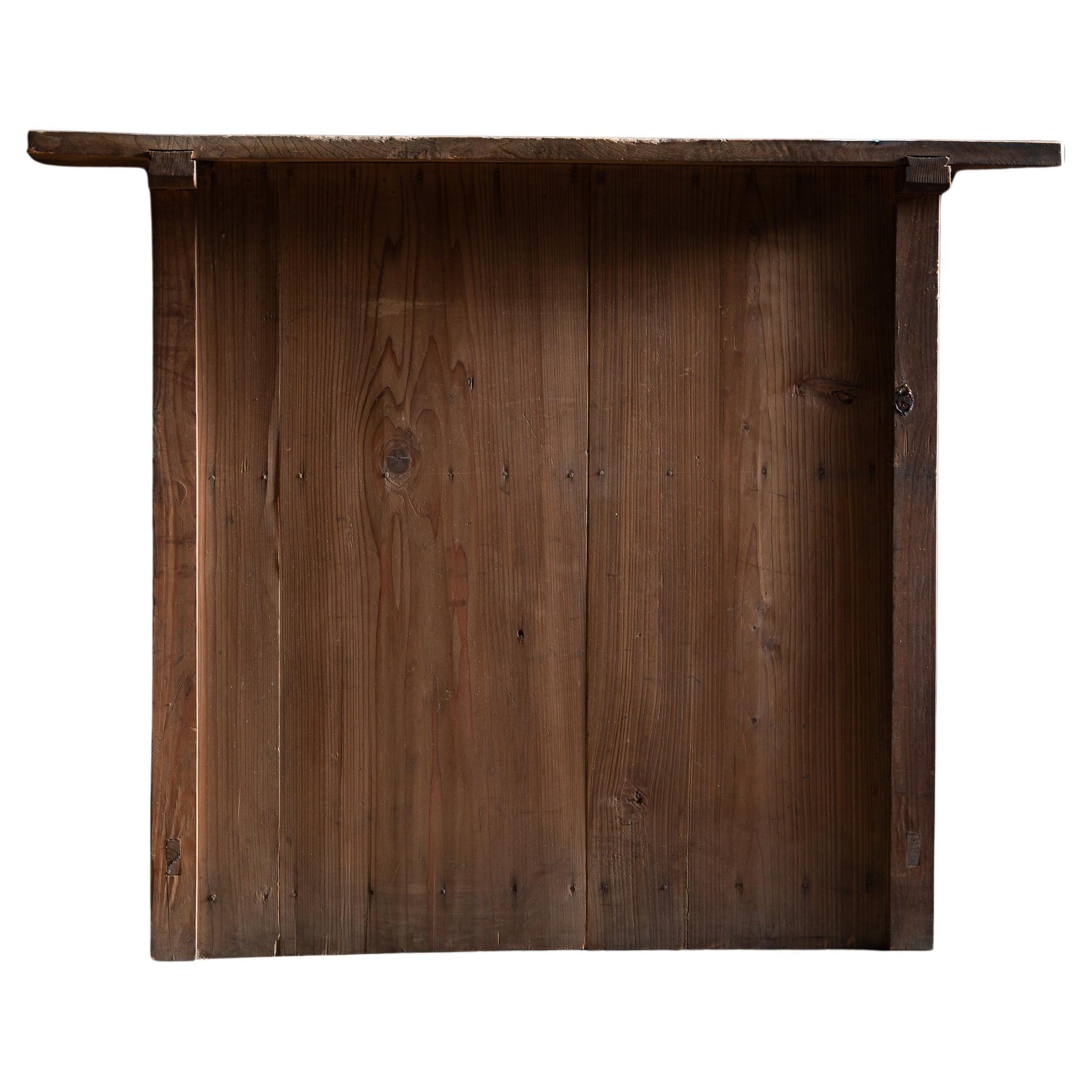
Subtle vertical striping is carved into the side panels of the main body, introducing a restrained decorative element within an otherwise functional structure. On both sides of the drawers, projecting structural supports extend outward beneath the tabletop. These supports are crafted from zelkova wood, a dense and durable hardwood traditionally used in Japan for load-bearing components. They play a structural role while also giving the table a strong architectural presence and visual depth.
This piece was selected for its distinctive presence. The weathered coloration shaped by time and use, together with the balance between robust construction and considered design, is particularly compelling. Among the many pieces we have handled, this table stands out for the strength of its visual character and overall composition.
It is well suited for use as a worktable, counter, or central island within a space.
The sliding doors operate smoothly. Inside, a single shelf board is present; it is not fixed and can be removed if desired. The interior shows less aging than the exterior and has been carefully cleaned. The drawers have also been thoroughly cleaned inside and slide smoothly.
Some structural repairs have been carried out where necessary. The legs showed signs of wear and were reinforced from the inside using new wood to restore strength without altering the external appearance. Parts of the sliding-door frame have also been repaired using traditional wood patching techniques. These repairs were undertaken with care, preserving both functionality and the table’s original character.
Condition Notes:
- Carefully cleaned prior to listing
- Sliding doors and drawers operate smoothly
- Rails show no significant wear; recessed areas are present where natural knots have fallen away over time
- These recessed areas do not affect operation and have been left as found
- Some structural repairs have been carried out where appropriate
- Legs were reinforced from the inside using new wood to restore strength without altering the external appearance
- Parts of the sliding-door frame have been repaired using traditional wood patching techniques
Cleaned gently with water only.
As an authentic Taisho-era piece, this table shows natural signs of age inherent to Japanese antique furniture. Characteristics such as surface wear, abrasion, wood movement, and areas of lacquer loss are reflections of its history and authenticity, not defects. Please review all photos carefully—condition details are visible in the images—and feel free to contact us with any questions before purchasing.
Interior dimensions (approx.)
Open storage interior (left section):
Opening width: 46.9" (119.0 cm)
Shelf width: 48.8" (124.0 cm)
Upper section:
D: 21.1" (53.7 cm) / H: 11.2" (28.5 cm)
Lower section:
D: 21.5" (54.5 cm) / H: 12.6" (32.0 cm)
Drawer interior (each):
W: 14.0" (35.5 cm) / D: 15.0" (38.0 cm) / H: 3.9" (9.8 cm)
Weight: 125.0 lbs (56.7 kg)
Shipping Information:
We ship from Japan. I will provide my own shipping quote. Please ask.
Import duties, taxes, and customs fees are the responsibility of the buyer.
Approach to Selection and Restoration:
Each piece is individually selected through our own eye, then restored to reveal its most compelling state. Movement, stability, and surface are considered as one—shaped through practice to be lived with naturally, honoring the wood’s natural patina while avoiding environmentally harsh chemical strippers or forceful abrasion.
- Maße:Höhe: 86,8 cm (34,18 in)Breite: 136,5 cm (53,75 in)Tiefe: 88,8 cm (34,97 in)
- Stil:Taisho (Aus dem Zeitalter)
- Materialien und Methoden:
- Herkunftsort:Japan
- Zeitalter:
- Herstellungsjahr:Circa 1910
- Zustand:Repariert: Structural repairs were carried out in Japan prior to listing. The legs were reinforced internally using new wood to restore strength without altering the exterior. Parts of the sliding-door frame were also repaired using traditional wood patching. Abnutzung dem Alter und der Nutzung entsprechend. Structurally sound and stable. Age-related wear such as surface abrasion and areas of lacquer loss are present, consistent with age and use. Sliding doors and drawers operate smoothly, and the table remains fully functional.
- Anbieterstandort:Hitachiomiya-shi, JP
- Referenznummer:1stDibs: LU7430248099562
Anbieterinformationen
5,0
Platin-Anbieter*in
Premium-Anbieter*innen mit einer Bewertung über 4,7 und 24 Stunden Reaktionszeit
Gründungsjahr 2019
1stDibs-Anbieter*in seit 2022
83 Verkäufe auf 1stDibs
Typische Antwortzeit: 1 Stunde
- VersandAngebot wird abgerufen …Versand von: Hitachiomiya, Japan
- Rückgabebedingungen
Einige Inhalte dieser Seite wurden automatisch übersetzt. Daher kann 1stDibs nicht die Richtigkeit der Übersetzungen garantieren. Englisch ist die Standardsprache dieser Website.
Mehr von diesem*dieser Anbieter*in
Alle anzeigenAntiker japanischer Tenjin-Schreibtisch aus der Meiji-Ära (1868-1912), Wabi Sabi
Dieser antike Tenjin-Schreibtisch wurde in der Meiji-Ära (1868-1912) hergestellt.
Ursprünglich wurde dieser niedrige Schreibtisch in traditionellen Terakoya (Tempelschulen) verwende...
Kategorie
Antik, Spätes 19. Jahrhundert, Japanisch, Meiji-Periode, Couch- und Cock...
Materialien
Holz
Japanischer Vintage-Tisch (Fuzukue), frühe Showa-Periode (1926-)
Dieser niedrige Vintage-Tisch (fuzukue) wurde in der frühen Showa-Periode (1926-) hergestellt.
Es ist aus Hinoki (japanische Zypresse) gefertigt und hat eine warme, von der Zeit geze...
Kategorie
Mitte des 20. Jahrhunderts, Japanisch, Showa, Couch- und Cocktailtische
Materialien
Zypressenholz
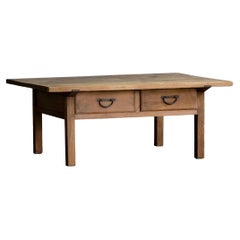
Späte Meiji-Ära(1868-1912)Japanischer antiker Schreibtisch oder Couchtisch
Dieser niedrige Tisch wurde in der späten Meiji-Ära (1868-1912) hergestellt.
In Anlehnung an die japanische Kultur der Bodenbestuhlung ist er niedriger als Standardtische. Die Tisc...
Kategorie
Frühes 20. Jahrhundert, Japanisch, Meiji-Periode, Couch- und Cocktailtische
Materialien
Kastanienholz
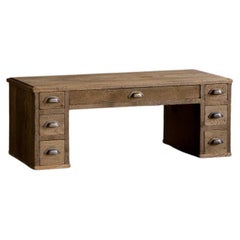
Japanese Vintage Sliding-Door Cabinet, Early Showa Period (1926–1945), Wabi Sabi
This Japanese sliding-door cabinet was crafted in the early Showa Period (1926–1945) from sugi (Japanese cedar). Compact and warm in character, it features a simple pair of wooden sl...
Kategorie
Mitte des 20. Jahrhunderts, Japanisch, Showa, Schränke
Materialien
Zedernholz

Antiker japanischer Schiebetürenschrank (Cha Tansu), Taisho-Ära (1912-1926), Wabi
Dieser japanische Schiebetürenschrank (cha tansu) wurde in der Taisho-Periode (1912-1926) unter Verwendung einer durchdachten Kombination von Hölzern hergestellt: kiri (Paulownia) fü...
Kategorie
Frühes 20. Jahrhundert, Japanisch, Taisho, Schränke
Materialien
Holz, Zedernholz
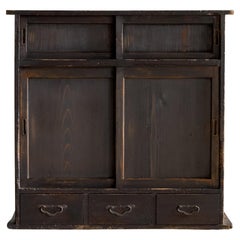
Japanische antike große Tansu, Paneeltüren, Meiji-Ära 1868-1912, Wabi Sabi
Diese antike große Mizuya-Tansu wurde in der Meiji-Ära (1868-1912) hergestellt.
Seine schlichten Schiebetüren und die dunkle, abgenutzte Oberfläche spiegeln die stille Schönheit des...
Kategorie
Antik, Mittleres 19. Jahrhundert, Japanisch, Meiji-Periode, Schränke
Materialien
Zedernholz
Das könnte Ihnen auch gefallen
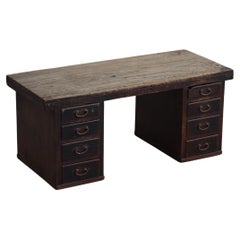
Antiker japanischer antiker Tisch, Schreibtisch, doppelreihiger Schreibtisch, Wabi-Sabi, frühes 20. Jahrhundert
Dieser antike japanische Tisch wurde in der Taisho-Periode (1912-1926) hergestellt.
Es handelt sich um einen Schreibtisch mit zwei Ärmeln, dessen Lack im Laufe der Zeit einen tiefen...
Kategorie
Frühes 20. Jahrhundert, Taisho, Antiquitäten
Materialien
Holz
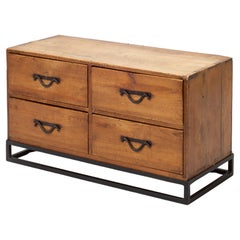
19. Jahrhundert Japanisch Meiji Ära Tansu Kleidung Brust auf Eisen Stand
Die aus Sugi-Holz (japanische Zeder) gefertigte Kleidertruhe hat ein minimalistisches Design und ruht auf einem Eisenrahmen. Der Beistelltisch ist mit geschwärzten Eisenbeschlägen ve...
Kategorie
Antik, Spätes 19. Jahrhundert, Japanisch, Meiji-Periode, Beistelltische
Materialien
Eisen
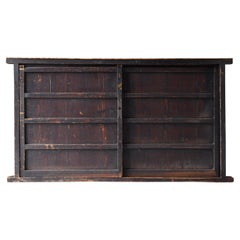
Japanische Antike Große Tansu 1860er-1900er / Anrichte Schrank Wabi Sabi
Dies ist eine sehr alte japanische Tansu-Truhe, die in der Meiji-Periode (1860-1900er Jahre) hergestellt wurde. Er ist aus Sugi (Zedernholz) gefertigt, und seine bescheidene, unaufdr...
Kategorie
Frühes 20. Jahrhundert, Japanisch, Meiji-Periode, Schränke
Materialien
Zedernholz
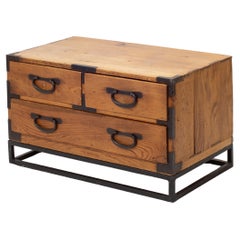
19. Jahrhundert Japanisch Meiji Ära Tansu Kleidung Brust auf Eisen Stand
Diese aus Sugi (japanisches Zedernholz) gefertigte Kimonotruhe ist mit geschwärzten Eisenbeschlägen verziert und ruht auf einem Eisengestell. Der Beistelltisch hat 3 Schubladen und e...
Kategorie
Antik, Spätes 19. Jahrhundert, Japanisch, Meiji-Periode, Beistelltische
Materialien
Eisen
Japanische antike große BK Tansu 1860er-1900er Jahre / Schrank Sideboard Wabi Sabi, Wabi Sabi, antik
Dies ist eine antike japanische Tansu.
Dem Zustand der Metallteile nach zu urteilen, scheint sie recht alt zu sein und stammt wahrscheinlich aus der Edo-Zeit.
Er wurde sorgfältig ge...
Kategorie
Antik, Mittleres 19. Jahrhundert, Japanisch, Edo, Schränke
Materialien
Zedernholz
Japanischer antiker Kassentisch mit Regal, Wabi-Sabi-Beistelltisch, Display-Ständer
Japanischer antiker Kassentisch mit Innenregal, hergestellt um 1780 - 1910 (Meiji-Periode), Schätzung nach Stil und Zustand.
Die Tischplatte ist mit traditionellem schwarzem Urushi-...
Kategorie
Antik, Spätes 19. Jahrhundert, Japanisch, Meiji-Periode, Beistelltische
Materialien
Holz