Objekte ähnlich wie Two Ancient Egyptian Alabaster Canopic Jars
Möchten Sie mehr Bilder oder Videos?
Zusätzliche Bilder oder Videos von dem*der Anbieter*in anfordern
1 von 9
Two Ancient Egyptian Alabaster Canopic Jars
195.622,36 €
Angaben zum Objekt
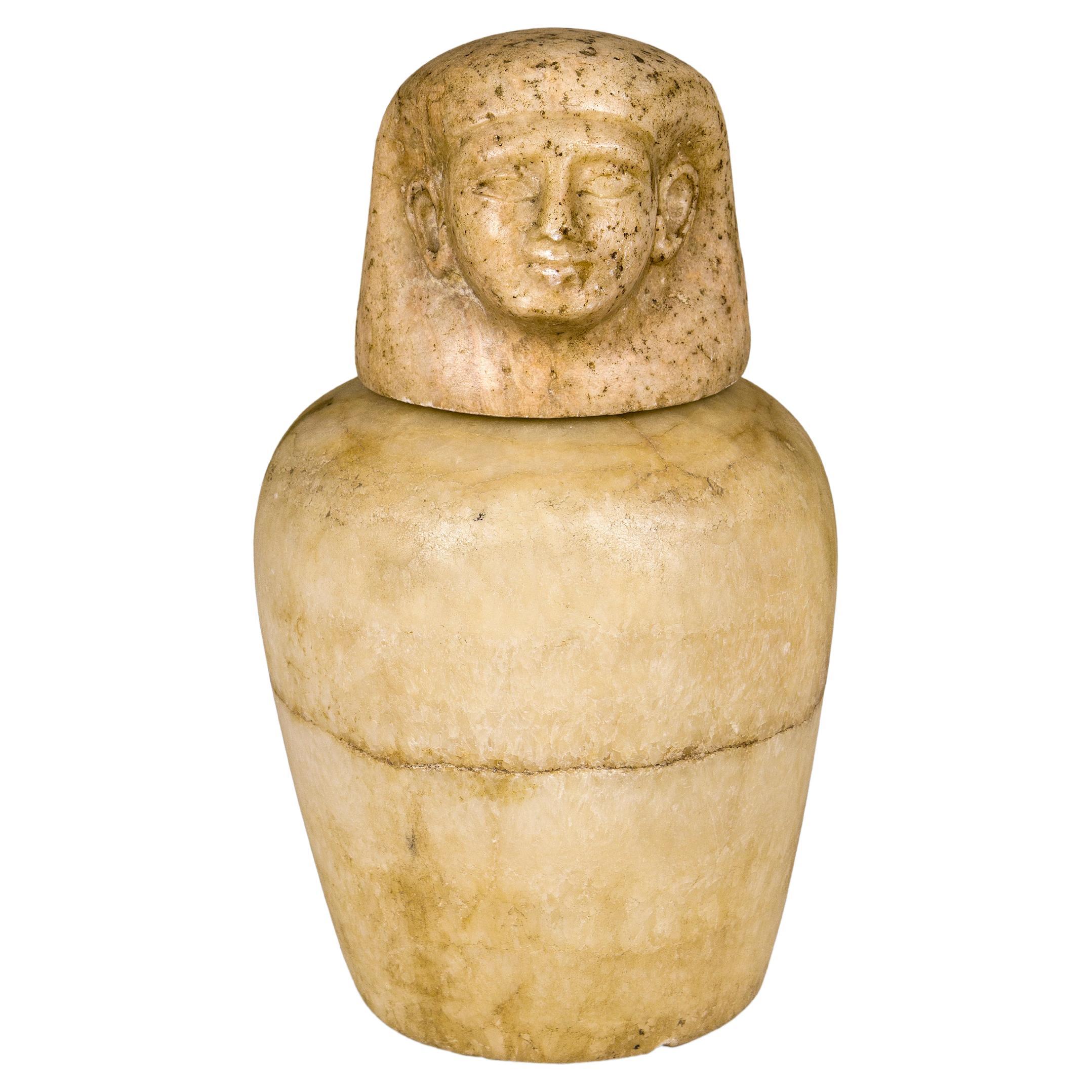
This set of two canopic jars represents unequivocal masterpieces of the type. Carved out of a beautifully rich white veined caramel alabaster, both jars are deftly executed and of robust, elegant proportion. Each with rounded shoulders tapering to a flat base, and featuring lids in the form of the human-headed Imsety, one of the four sons of Horus. Both serene oval faces executed with heavy upper eyelids, a broad nose, thick lips and prominent ears.
Notes
As early as the Fourth Dynasty of the Old Kingdom, the internal organs of the deceased were removed from the body during the process of mummification.' These organs, the most easily prone to putrefaction, were then placed in special containers, the so-called canopic jars-always a set of four-and buried beside the sarcophagus or coffin with the mummy. The procedure was motivated by the belief that only a complete body, with all of its components, could guarantee an individual's rebirth and the desired afterlife. The earliest known examples were simple stone jars with shallow disklike lids, usually uninscribed. During the First Intermediate Period (the Ninth-Tenth Dynasty, ca. 2100 B.C.), the style changed to lids with human heads, and entire sets of jars were produced from a variety of materials.
It was not until the late Eighteenth Dynasty (ca. 1300 B.C.) that the lids were carved in the characteristic form with the four Sons of Horus, each associated with one of the viscera. Four funerary goddesses, in addition to the canopic deities, protected the jars' contents. Human-headed Imsety guarded the liver (under the protection of the goddess Isis, baboon-headed Hapy guarded the lungs (under the goddess Nephthys), jackal-headed Duamutef guarded the stomach (under the goddess Neith) and falcon-headed Qebehsenuef guarded the intestines (under the goddess Serket). The form and iconography of canopic jars and the chests that contained them remained in use till Greco-Roman times, and they were an indispensable element of standard burials, both royal and private
Provenance
Said to be found in Dahshur in 1896.
Palm Beach Private Collection.
Alice Tully (1902-1993), New York.
French Furniture, European Works of Art and Porcelain from the Collection of Alice Tully; Christie’s, New York, 26-28 October 1994.
Antiquities Christie's New York, June 4, 2015.
Private Collection, Los Angeles California.
- Maße:Höhe: 34,93 cm (13,75 in)Durchmesser: 20,32 cm (8 in)
- Stil:Ägyptisch (Aus dem Zeitalter)
- Materialien und Methoden:
- Herkunftsort:
- Zeitalter:
- Herstellungsjahr:Middle Kingdom, 12th Dynasty, 1985 BC to 1773 BC
- Zustand:Abnutzung dem Alter und der Nutzung entsprechend. Each intact as preserved, with some minor cracks and areas of heavy surface wear and incrustation. With some hairline cracks and chips. A label in one reading "Foiulles de Dachour", 1896.
- Anbieterstandort:Los Angeles, CA
- Referenznummer:Anbieter*in: MS.00321stDibs: LU10743247947422
Anbieterinformationen
Neu bei 1stDibs
In den letzten sechs Monaten beigetreten.
Noch keine Bewertungen
Geprüfte*r Anbieter*in
Jede*r Anbieter*in erfüllt strenge Standards bezüglich Echtheit und Zuverlässigkeit
Gründungsjahr 2022
1stDibs-Anbieter*in seit 2025
- VersandAngebot wird abgerufen …Versand von: Los Angeles, CA
- Rückgabebedingungen
Einige Inhalte dieser Seite wurden automatisch übersetzt. Daher kann 1stDibs nicht die Richtigkeit der Übersetzungen garantieren. Englisch ist die Standardsprache dieser Website.
Mehr von diesem*dieser Anbieter*in
Alle anzeigenAltägyptische bemalte Cartonnage-Mumienmaske
Cartonnage-Masken wie diese wurden verwendet, um die Gesichtszüge der Verstorbenen bei der Bestattung zu schützen und zu idealisieren. Typisch für den Typ sind die übergroßen, mit au...
Kategorie
Antik, 15. Jahrhundert und früher, Ägyptisch, Ägyptisch, Antiquitäten
Materialien
Leinen, Holz
Altägyptische grüne Fayence Shabti
Für Padiusir zeigt diese Shabti-Figur ein heiteres Antlitz, mit fein gezeichneten Gesichtszügen und eleganten Proportionen. Er steht in Mumienform mit verschränkten Armen, hält zwei...
Kategorie
Antik, 15. Jahrhundert und früher, Ägyptisch, Ägyptisch, Antiquitäten
Materialien
Fayence
Ancient Egyptian Limestone Sculptor
s Model
This superb sculptors model is carved in raised relief with the bust of a pharaoh in profile to the right. The noble face features a prominent chin and thick lips. A delicate eye-lin...
Kategorie
Antik, 15. Jahrhundert und früher, Ägyptisch, Ägyptisch, Antiquitäten
Materialien
Kalkstein
Altägyptische Sphinx aus grauem Marmor
Die Sphinx, ein mythologisches Mischwesen, das erstmals in der 4. Dynastie auftauchte, ist eine der ikonischsten Kompositionen der altägyptischen Kunst. Mit dem Körper eines Löwen un...
Kategorie
Antik, 15. Jahrhundert und früher, Ägyptisch, Ägyptisch, Antiquitäten
Materialien
Marmor

Altgriechische attische schwarzfigurige Halsamphora
Wird der Manier des Malers Antimenes zugeschrieben.
Seite A zeigt den bärtigen Dionysos in der Mitte, mit zurückgewandtem Kopf, gekleidet in eine Himation mit gemustertem Rand über ...
Kategorie
Antik, 15. Jahrhundert und früher, Griechisch, Griechisch-römisch, Vasen
Materialien
Terrakotta

Antike griechische Terrakotta weibliche Protome
Diese große weibliche Terrakotta-Protome wurde in Form gegossen und mit weißem Schlicker versehen. Sie ist ebenso lebendig wie bezaubernd. Sie trägt eine Stephane und einen Mantel m...
Kategorie
Antik, 15. Jahrhundert und früher, Griechisch, Klassisch-griechisch, Ant...
Materialien
Terrakotta
Das könnte Ihnen auch gefallen
Canopus-Gefäß „Asmet“, 1069–664 v. Chr., Ägypten
Canopus Jar "Asmet",
Mit Echtheitszertifikat.
1069 - 664 v. Chr., Ägypten.
Guter Zustand.
Ägyptische Kultur sind "Canopus-Gefäße". Dies waren Gefäße, die die alten Ägypter während d...
Kategorie
Antik, 15. Jahrhundert und früher, Ägyptisch, Ägyptisch, Vasen
Materialien
Alabaster
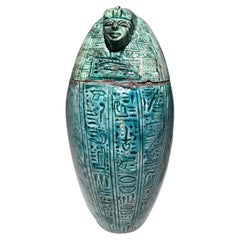
Ägyptisches Kanopic-Gefäß des 19. Jahrhunderts
Entdecken Sie mit diesem exquisiten ägyptischen Kanopenglas aus dem 19. Jahrhundert, das fachmännisch aus glasierter Fayence gefertigt wurde, ein faszinierendes Stück Geschichte. Die...
Kategorie
Antik, 1880er, Gefäße
Materialien
Fayence
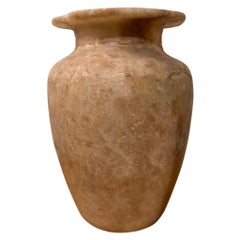
Grand Tour Ägyptisches Alabastergefäß
Handgeschnitztes Vorratsgefäß aus Alabaster aus dem späten 19. Jahrhundert im altägyptischen Stil mit spitz zulaufendem Hals und breitem, umgedrehtem Rand.
10 Zoll hoch und 7,5 Zol...
Kategorie
Antik, Spätes 19. Jahrhundert, Ägyptisch, Grand Tour, Gefäße
Materialien
Alabaster
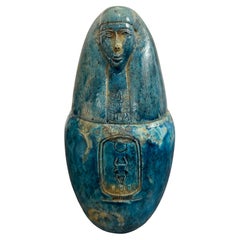
Fayence-Kanapee aus glasierter Keramik, Imsety, frühes 20.
Fayence-Kanapee aus glasierter Keramik, Imsety, frühes 20.
Provenienz: Private Australian Collection'S.
Beschreibung:
Das robuste, eiförmige Gefäß mit durchgehend gesprenkelter Fay...
Kategorie
Frühes 20. Jahrhundert, Ägyptisch, Gefäße
Materialien
Keramik
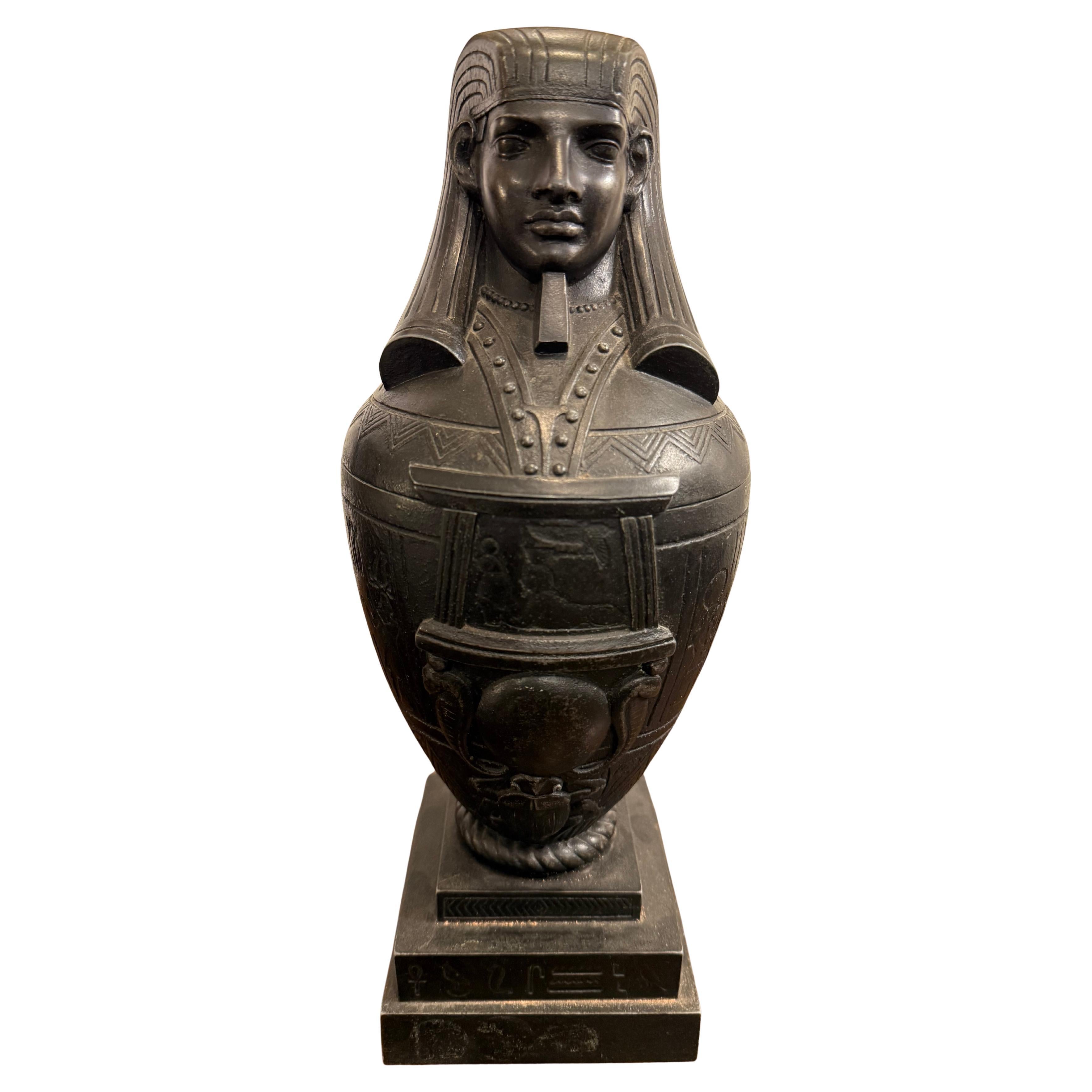
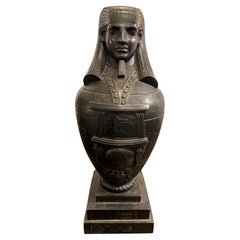
Bronzierter Metallkanopenkrug mit Sockel, frühes 20. Jahrhundert
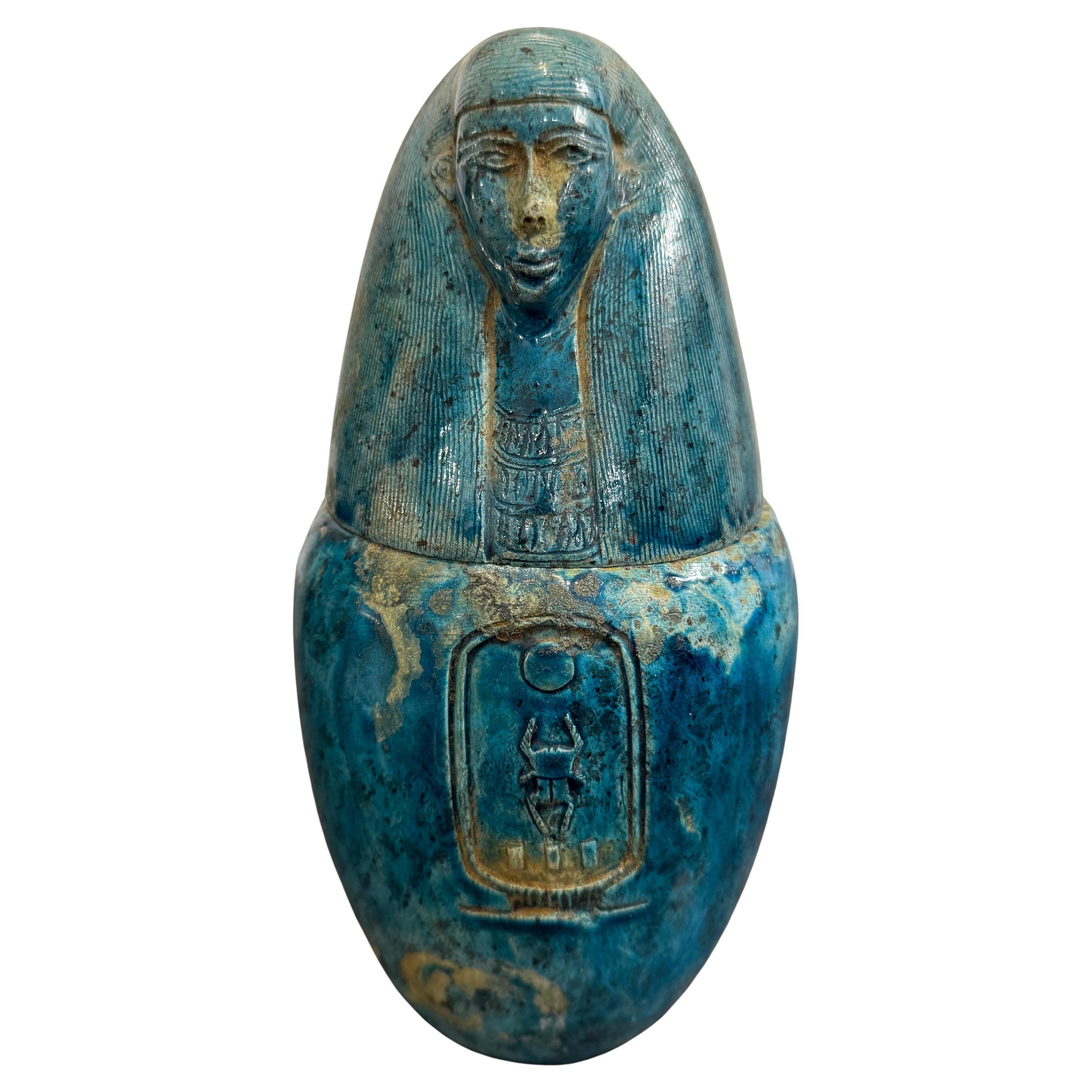
Bronzierter Metallkanopenkrug mit Sockel, frühes 20. Jahrhundert
Beschreibung:
Das Gefäß mit einem Deckel in Form eines humanoiden Kopfes, der die pharaonische Nemes-Kopfbedeckung u...
Kategorie
Frühes 20. Jahrhundert, Ägyptisch, Gefäße
Materialien
Metall
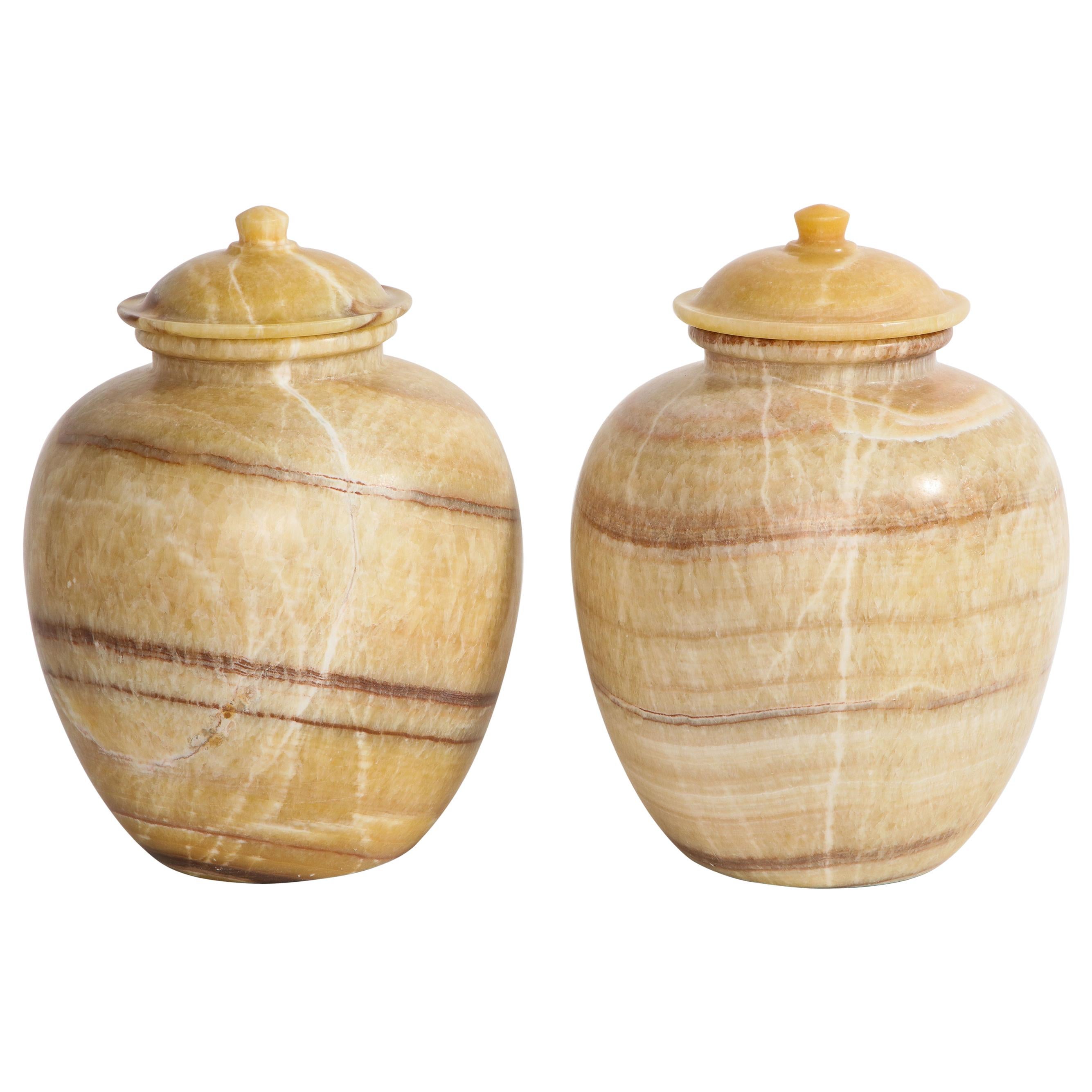
Paar ägyptische Vasen im Stil der Mitte des Jahrhunderts/Art Deco mit Honig-Alabaster-Marmor-Überzug
Ein schönes und sehr dekoratives Paar ägyptischer Honig-Alabaster-Vasen mit Marmorüberzug im Stil der Jahrhundertmitte und des Art déco. Jedes Stück ist wunderschön handgeschnitzt, m...
Kategorie
Vintage, 1930er, Italienisch, Art déco, Vasen
Materialien
Alabaster