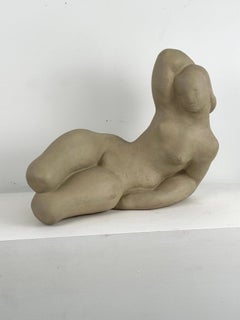
BLUE IRIS / IRIS BLEU Figurative Sculptures
to
2
1
3
Overall Width
to
Overall Height
to
6
2
1
2
3
2
3
3
2
2
1
1
1
1
1
1
1
1
4
2
2
1
6
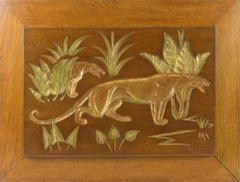
Panthers in the Jungle Art Deco Carved Gilt Wood Panel by N. R. Brunet
Located in Atlanta, GA
Engraved Art Deco Panther Panel by N.R. Brunet (20th Century, France)
A striking and seldom-seen example of Art Deco artistry, this richly engraved wood panel by French sculptor N.R...
Category
1930s Art Deco Figurative Sculptures
Materials
Wood
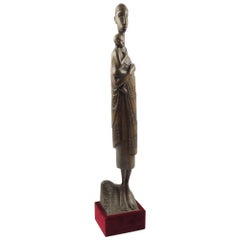
Madonna and Baby Sculpture by African Artist Ndatite Ilo, Rwanda
Located in Atlanta, GA
Tutsi tribe artist Ndatite Ilo from Rwanda carved this gorgeous African wood statue sculpture. This unique artwork features a beautiful black woman, often depicted as a Mother or Mad...
Category
20th Century Tribal Figurative Sculptures
Materials
Wood
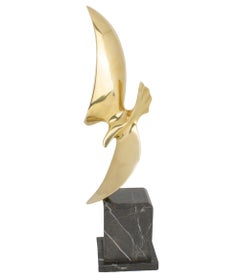
Hattakitkosol Somchai Art Bronze Bird Sculpture, circa 1980
By Hattakitkosol Somchai
Located in Atlanta, GA
Soar into the realm of timeless artistry with this magnificent gilded bronze sculpture by celebrated Thai artist Hattakitkosol Somchai (1934–2000)—a commanding representation of a bi...
Category
1990s Modern Figurative Sculptures
Materials
Bronze
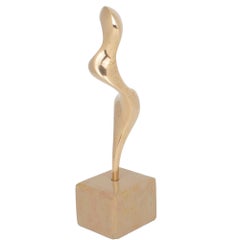
Roland Masson Abstract Organic Bronze and Marble Sculpture, circa 1990
Located in Atlanta, GA
Discover a striking work of art by acclaimed French sculptor Roland Masson: a rare, limited-edition abstract bronze sculpture of extraordinary beauty and elegance.
Meticulously cast ...
Category
1990s Modern Figurative Sculptures
Materials
Bronze
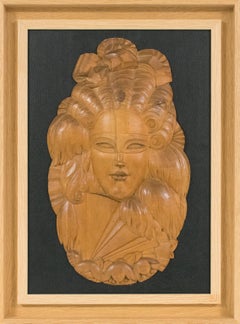
Art Deco Venetian Mask Handcarved Wood Panel Wall Sculpture
Located in Atlanta, GA
This superb French Art Deco wooden panel or wall-mounted sculpture features a spectacular Venetian mask and was hand-crafted in the 1930s. The sculpted panel boasts finely detailed c...
Category
1930s Art Deco Figurative Sculptures
Materials
Wood
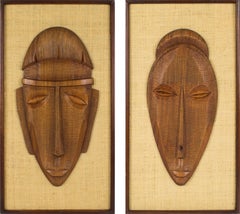
Mid-Century Carved Wood Relief Mask Wall Sculpture Panel, a pair
Located in Atlanta, GA
Superbly handcrafted pair of Mid-Century-Modern wooden wall art sculpture panels. The artworks feature dimensional female and male faces or m...
Category
1960s Modern Figurative Sculptures
Materials
Wood
Related Items
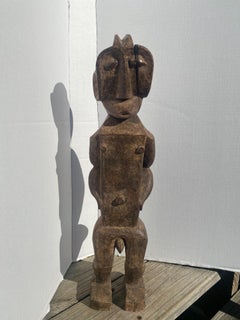
MUMUYE FIGURE
Located in Three Oaks, MI
Within Nigeria's Benue River Valley region, such representations have been associated with a range of functions, including reinforcement of the status of male elders and used by heal...
Category
Early 20th Century Tribal Figurative Sculptures
Materials
Wood

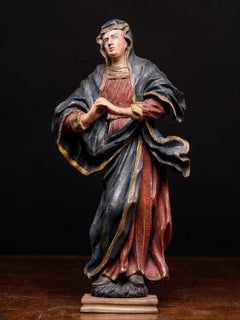
18th C Polychromed fruitwood carved statue depicting Maria Magdalena, Germany.
Located in brussel, BE
This beautiful polychrome and highly expressive statue 18th C statue represents Mary Magdalene in prayer, hands joined, eyes raised to the sky.It's of German origin
Category
18th Century Other Art Style Figurative Sculptures
Materials
Wood
$2,882
H 15.36 in W 7.09 in D 3.94 in
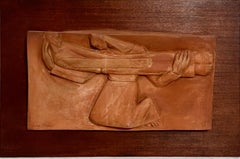
Large George Aarons Terracotta Sculpture Relief Art Deco Plaque WPA Artist
By George Aarons
Located in Surfside, FL
Two Figures (Mother and son)
9" x 17" terracotta sculpture, signed lower left mounted to wood panel, 15 1/2" x 23 1/2"
George Aarons (born Gregory Podubisky, in St. Petersburg, Russ...
Category
20th Century Art Deco Figurative Sculptures
Materials
Wood, Terracotta
$2,200
H 15.5 in W 23.5 in D 1 in
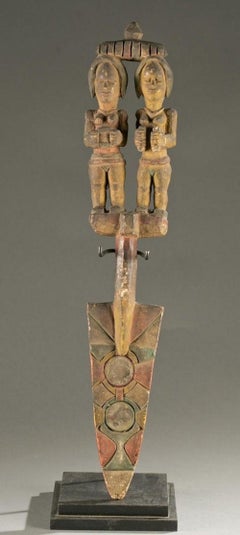
Antique Polychrome African Wood Carving from Igbo Nigeria
Located in Lake Worth Beach, FL
Antique Polychrome Wood Carving Igbo Nigeria Africa, Staff decorated with two figures, mounted as a finial on the shaft terminating in a triang...
Category
1910s Tribal Figurative Sculptures
Materials
Wood, Paint
RECLINGING WOMAN
By Antoniucci Volti
Located in Los Angeles, CA
ANTONIUCCI VOLTI
"RECLINGING WOMAN"
BRONZE, SIGNED, NUMBERED 2/6
VALSUANI FOUNDRY
ITALiAN, WORKED IN PARIS, C.1960
6.5 X 18.5 X 10.5 INCHES
Antoniucci Volti
1915-1989
Sculptor, painter, and printmaker Antoniucci Volti was born in Albano, Italy, in 1915. His family lived in Italy until 1920 when the family moved to France.
Volti studied at the Ecole des Arts Décoratifs in Nice from 1928 to 1920. By 1932 the young artist had won a gold medal for two polychrome bas-reliefs before going to Paris, where he entered the studio of Jean Boucher at the Ecole Nationale des Beaux-Arts in Paris at the age of only fifteen.
After serving in the Second World War, when he was interned as a prisoner of war in Bavaria, he returned in poor health to Paris, only to find his studio destroyed.
From 1947 he showed work at various Paris Salons and, in 1954 and 1955 at the Brussels and Antwerp Biennales. In 1957 a retrospective of his work was organized at the Museum Rodin in Paris.
He died in Paris in 1989 Works by Volti are in leading museums such as the Musée National d'Art Moderne, Paris. Antoniucci Volti is one of the most important Late Modern...
Category
1960s Modern Nude Sculptures
Materials
Bronze
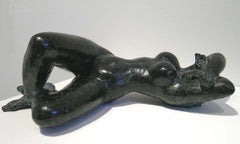
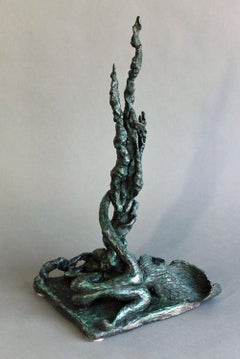
Woman Lying Down
Growing with Tree bronze sculpture by Yulla Lipchitz
Located in Hudson, NY
Organic, abstract bronze sculpture by Yulla Lipchitz of a woman lying down with a tree.
About this artist: Yulla Lipchitz, née Halberstadt, was born on April 21, 1911 in Berlin, Ge...
Category
1970s Modern Figurative Sculptures
Materials
Bronze
$3,775
H 16 in W 7 in D 8 in
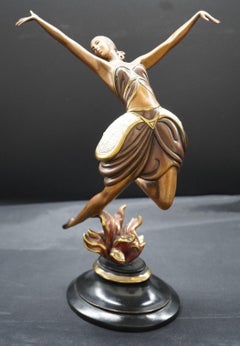
ERTE "LA DANSEUSE" 1986, BRONZE SCULPTURE
By Erte - Romain de Tirtoff
Located in Pembroke Pines, FL
"Femme de luxe" (Bronze)
by
Erte
Type: Sculpture
Media: Patina on Bronze
Dimensions: 13 3/4" High
Year Produced: 1986
Edition Size: 500 Numbered, 35 AP
Edition Number: 13/500
In Exce...
Category
1980s Art Deco Figurative Sculptures
Materials
Bronze
$2,499
H 13.75 in W 6 in D 6 in
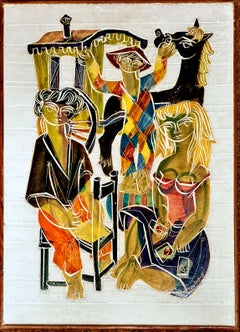
Mid Century Sgraffito, Saltimbanque and the Card Player, Circle of Picasso.
Located in Cotignac, FR
Mid 20th Century sgraffito work on plaster by Jean Pierre de Cayeux. The work is signed and dated on the skirt of the card player, bottom right, and on the stretcher of the chair, bo...
Category
Mid-20th Century Modern Figurative Sculptures
Materials
Enamel
$1,152 Sale Price
20% Off
H 16.93 in W 12.41 in D 0.6 in
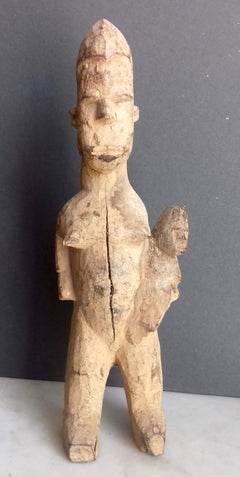
African art tribal maternity figure, Lobi peoples Ghana - Ivory Coast
Located in Norwich, GB
A delightful African maternity figure from the Lobi peoples of the Ivory Coast/Ghana. With a serene yet feisty expression, the mother is carry...
Category
Mid-20th Century Folk Art Figurative Sculptures
Materials
Wood
$385
H 7.88 in W 2.76 in D 2.37 in
Chaim Gross Mid Century Mod Bronze Sculpture Mother and Baby Playing WPA Artist
By Chaim Gross
Located in Surfside, FL
Chaim Gross (American, 1904-1991)
Cast bronze sculpture
Caring (or Mother and Child)
signed
Mounted on wooden plinth
Featuring a mother raising her child up in superb high relied i...
Category
Mid-20th Century American Modern Figurative Sculptures
Materials
Bronze
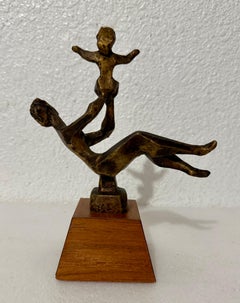
$2,400
H 9 in W 7.5 in D 3.5 in
Ted Egri Taos Modernist Judaica Cubist Bronze Sculpture Rabbi
Torah WPA Artist
Located in Surfside, FL
Ted Egri (American, 1913-2010)
Bronze sculpture
Rabbi
Signed Egri and numbered 4/30 on side.
Dimensions: 12"L x 8.5"H x 6.75" D
Born in New York city in 1913 to a Hungarian Jewish emigre family (both of his parents were born in Hungary), Egri was first exposed to music later dropping that for art. He studied with Howard Giles at the Master Institute of the Roerich Museum in New York where he was introduced to Oriental arts, Chinese and Japanese art forms, and later with Hans Hofmann. He worked for the Federal Arts Project, the WPA, making mural paintings and silkscreen prints as well as easel painting. Once WWII began, Egri signed up to serve as a map maker for the Navy, and was witness to some of the fiercest battles in the Pacific. As an artist, he painted many important depictions of his wartime experiences and these works have all be donated to the U.S. Naval Museum.
Already a practicing painter and instructor at the Kansas City Art Institute, Ted Egri came to Taos, New Mexico with his wife Kit in 1950 to continue his study of painting at Ribak's Taos Valley Art School on the GI Bill. Louis Ribak quickly introduced Egri to Eulalia Emetaz, the owner of La Galleria Escondida, who gave him his first one-person show in 1951.
A prolific and versatile artist, as well as arts organizer and advocate, Egri's contributions to underserved African American, Native American, Hispanic and women were honored by two Taos mayors, with no less than two Ted Egri days during his 50-year art career in Taos. Egri remained in Taos. He became widely known for his sculpture, influenced by cubism and painting, with his style ranging from abstract to realistic. Egri had incredible draftsmanship - charcoal, pencil, pastel, watercolor, oils, mixed media, pen and ink, acrylic, gouache Over time his work gradually shifted from its focus on human struggle to an exploration of natural elements and the changes that come about as a result of living in a physical environment like Taos. "The impact of the majestic Sangre de Cristo Mountain Range and the vast spaces of the mesas directed me toward space and form. I moved into sculpture," Egri said in a 1987 interview with ARTSPACE magazine. He was included in a show at Stables Gallery along with Emil Bisttram, Louis Catusco, Edward Corbett, Lawrence Calcagno, Keith Crown, Andrew Dasburg, John De...
Category
Mid-20th Century American Modern Figurative Sculptures
Materials
Bronze
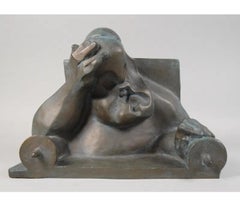
$3,600
H 12 in W 8.5 in D 6.75 in
Relining Nude (WG6)
By Waylande Gregory
Located in Wilton Manors, FL
Waylande Gregory (1905-1971).
Nude Reclining, ca. 1950's. Painted composite cast from original sculpted in 1930's. Casting sanctioned and approved by the artist during his lifetime in partnership with MPI, Museum Pieces Incorporated. Very few examples were produced and even fewer survive.
Waylande Gregory was considered a major American sculptor during the 1930's, although he worked in ceramics, rather than in the more traditional bronze or marble. Exhibiting his ceramic works at such significant American venues for sculpture as the Whitney Museum of American Art in New York City and at the venerable Pennsylvania Academy of the Fine Arts in Philadelphia, he also showed his ceramic sculptures at leading New York City galleries. Gregory was the first modern ceramist to create large scale ceramic sculptures, some measuring more than 70 inches in height. Similar to the technique developed by the ancient Etruscans, he fired his monumental ceramic sculptures only once.
Gregory was born in 1905 in Baxter Springs, Kansas and was something of a prodigy. Growing up on a ranch near a Cherokee reservation, Gregory first became interested in ceramics as a child during a native American burial that he had witnessed. He was also musically inclined. In fact, his mother had been a concert pianist and had given her son lessons. At eleven, he was enrolled as a student at the Kansas State Teacher's College, where he studied carpentry and crafts, including ceramics.
Gregory's early development as a sculptor was shaped by the encouragement and instruction of Lorado Taft, who was considered both a major American sculptor as well as a leading American sculpture instructor. In fact, Taft's earlier students included such significant sculptors as Bessie Potter Vonnoh and Janet Scudder. But, Taft and his students had primarily worked in bronze or stone, not in clay; and, Gregory's earliest sculptural works were also not in ceramics. In 1924, Gregory moved to Chicago where he caught the attention of Taft. Gregory was invited by Taft to study with him privately for 18 months and to live and work with him at his famed "Midway Studios." The elegant studio was a complex of 13 rooms that overlooked a courtyard. Taft may have been responsible for getting the young man interested in creating large scale sculpture. However, by the 1920's, Taft's brand of academic sculpture was no longer considered progressive. Instead, Gregory was attracted to the latest trends appearing in the United States and Europe. In 1928 he visited Europe with Taft and other students.
"Kid Gregory," as he was called, was soon hired by Guy Cowan, the founder of the Cowan Pottery in Cleveland, Ohio, to become the company's only full time employee. From 1928 to 1932, Gregory served as the chief designer and sculptor at the Cowan Pottery. Just as Gregory learned about the process of creating sculpture from Taft, he literally learned about ceramics from Cowan. Cowan was one of the first graduates of Alfred, the New York School of Clayworking and Ceramics. Alfred had one of the first programs in production pottery. Cowan may have known about pottery production, but he had limited sculptural skills, as he was lacking training in sculpture. The focus of the Cowan Pottery would be on limited edition, table top or mantle sculptures. Two of the most successful of these were Gregory's Nautch Dancer, and his Burlesque Dancer. He based both sculptures on the dancing of Gilda Gray, a Ziegfield Follies girl.
Gilda Gray was of Polish origin and came to the United States as a child. By 1922, she would become one of the most popular stars in the Follies. After losing her assets in the stock market crash of 1929, she accepted other bookings outside of New York, including Cleveland, which was where Gregory first saw her onstage. She allowed Gregory to make sketches of her performances from the wings of the theatre. She explained to Gregory, "I'm too restless to pose." Gray became noted for her nautch dance, an East Indian folk dance. A nautch is a tight, fitted dress that would curl at the bottom and act like a hoop. This sculpture does not focus on Gray's face at all, but is more of a portrait of her nautch dance. It is very curvilinear, really made of a series of arches that connect in a most feminine way.
Gregory created his Burlesque Dancer at about the same time as Nautch Dancer. As with the Nautch Dancer, he focused on the movements of the body rather than on a facial portrait of Gray. Although Gregory never revealed the identity of his model for Burlesque Dancer, a clue to her identity is revealed in the sculpture's earlier title, Shimmy Dance. The dancer who was credited for creating the shimmy dance was also Gilda Gray. According to dance legend, Gray introduced the shimmy when she sang the Star Spangled Banner and forgot some of the lyrics, so, in her embarrassment, started shaking her shoulders and hips but she did not move her legs. Such movement seems to relate to the Burlesque Dancer sculpture, where repeated triangular forms extend from the upper torso and hips. This rapid movement suggests the influence of Italian Futurism, as well as the planar motion of Alexander Archipenko, a sculptor whom Gregory much admired.
The Cowan Pottery was a victim of the great depression, and in 1932, Gregory changed careers as a sculptor in the ceramics industry to that of an instructor at the Cranbrook Academy in Bloomfield Hills, Michigan. Cranbrook was perhaps the most prestigious place to study modern design in America. Its faculty included the architect Eliel Saarinen and sculptor Carl Milles.
Although Gregory was only at Cranbrook for one and one half years, he created some of his finest works there, including his Kansas Madonna. But, after arriving at Cranbrook, the Gregory's had to face emerging financial pressures. Although Gregory and his wife were provided with complimentary lodgings, all other income had to stem from the sale of artworks and tuition from students that he, himself, had to solicit. Gregory had many people assisting him with production methods at the Cowan Pottery, but now worked largely by himself. And although he still used molds, especially in creating porcelain works, many of his major new sculptures would be unique and sculpted by hand, as is true of Kansas Madonna. The scale of Gregory's works were getting notably larger at Cranbrook than at Cowan.
Gregory left the surface of Kansas Madonna totally unglazed. Although some might object to using a religious title to depict a horse nursing its colt, it was considered one of Gregory's most successful works. In fact, it had a whole color page illustration in an article about ceramic sculpture titled, "The Art with the Inferiority Complex," Fortune Magazine, December, 1937. The article notes the sculpture was romantic and expressive and the sculpture was priced at $1,500.00; the most expensive sculpture...
Category
1950s Art Deco Figurative Sculptures
Materials
Plaster