Carol Master Antiques Trunks and Luggage
to
3
3
1
2
2
2
2
1
1
1
1
3
3
3
1850s Korean Coin Chest Ton-Kwe
Located in Tarrytown, NY
1850s Korean coin chest.
Category
Antique 1850s Trunks and Luggage
Materials
Brass

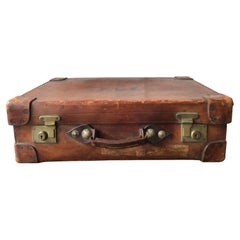
1910 Leather Suitcase
Located in Tarrytown, NY
1910 English leather suitcase by Walker and Hall.
Category
Vintage 1910s Trunks and Luggage
Materials
Leather
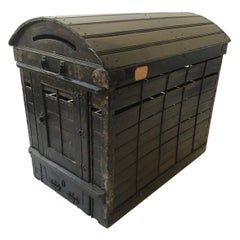
Turn of the Century Dog Crate
Located in Tarrytown, NY
Early 19th century shipping crate for a dog. Label on top says it was from New Rochelle, NY. Under the door, is a slot to pull out a tray. Iron hardware.
Category
Vintage 1910s Trunks and Luggage
Materials
Wood
Related Items
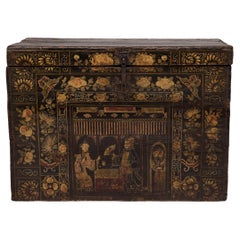
Chinese Painted Clothing Trunk, c. 1850
Located in Chicago, IL
Trunks and storage chests were the most ubiquitous form of household storage throughout the Ming and Qing dynasties. Used to store clothes, linens, kitchen utensils, and other miscel...
Category
Antique Mid-19th Century Chinese Qing Furniture
Materials
Pine

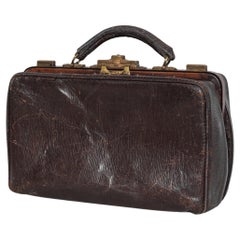
1920s French Leather Suitcase
Located in High Point, NC
Discover the timeless elegance of this 1920s French Leather Suitcase, an exquisite piece that captures the essence of early 20th-century travel. Crafted with meticulous attention to ...
Category
Early 20th Century French Trunks and Luggage
Materials
Leather
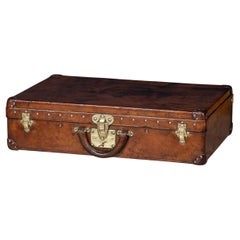
20th Century Louis Vuitton Suitcase In Natural Cow Hide, France c.1910
By Louis Vuitton
Located in Royal Tunbridge Wells, Kent
A highly unusual and exceptionally rare Louis Vuitton suitcase, originating from the early years of the 20th century, distinguishes itself not with the globally renowned monogram canvas but with a distinctive covering crafted from a singular piece of cowhide. This unique piece represents a special order from Louis Vuitton, showcasing the brand's historical commitment to utilising only the finest hides available.
Unlike many of its counterparts, leather trunks and cases of this era often struggle to withstand the test of time, requiring regular treatments to prevent drying and disintegration. Remarkably, this particular example defies the odds, retaining the same supple quality it possessed on the day it first graced the shop floor. This suitcase belongs to Louis Vuitton's collection of "speciality materials," which encompasses a diverse range, including, but not limited to, zinc, copper, crocodile leather, and cow leather.
A brief history about Louis Vuitton trunks: Louis Vuitton was born in 1821 to a farmer and milliner and came from a long-established working-class family in eastern France. Vuitton grew up understanding the effects of perseverance and a strong work ethic from watching his family. At the age of 16, he made the decision to walk 292 miles from his hometown to Paris to try and make a new life for himself. When he arrived the city was in the midst of industrialization with current modes of transportation evolving quickly allowing for longer journeys. With this came the need for sturdy travel pieces.
Vuitton was taken as an apprentice for a successful box maker and packer named Monsieur Marechal. He learned to craft durable containers and how to pack them properly – a well-respected profession at the time.In 1854, years after he had mastered his craft and became well respected for it, Vuitton ventured out on his own to open a shop on Rue Neuve des Capucines. It was here that he began to establish himself as a luggage maker. Then, in 1858, Vuitton designed the first Louis Vuitton steamer trunk. At the time trunks had rounded tops to allow for water to run off but this did not allow for convenient stowage. Vuitton introduced a flat, yet waterproof, trunk that was easily stackable. The first of his trunks were outfitted with a grey canvas referred to as Trianon – it wouldn’t be until several decades later that the signature monogram would be introduced.
With a burgeoning business, Vuitton moved his family and workplace to Asniere, where he employed twenty workers to craft his trunks. By 1900 he would have 100 employees, and in 1914 the company would more than double in size. After years of success, Vuitton began to experiment with the design of his luggage by introducing a new striped canvas pattern (1876) and later the still well-known Damier print (1888). The hand-painted patterns were developed to prevent counterfeits. Even in the late 1800s, Louis Vuitton was enough of a status symbol to warrant counterfeiting. In 1886, his son George invented and patented an ingenious locking system that made it impossible to pick the lock of their trunks. This lock is still used today.
1892 would prove to be a time of mourning for the family as Louis Vuitton passed...
Category
20th Century French Other Trunks and Luggage
Materials
Brass
$4,399
H 6.7 in W 25.99 in D 16.93 in
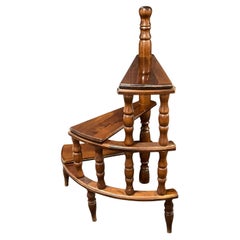
Mid-20th Century French Turned Nut Wood Spiral Step Library Ladder
Located in Nuernberg, DE
Created in France in the 1970s and standing on turned legs, the circular step ladder features three stairs rolled around a turned central post. Versatile and practical, the elegant l...
Category
Mid-20th Century Austrian Mid-Century Modern Ladders
Materials
Wood
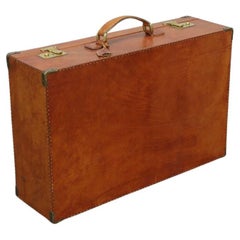
Italian Leather Suitcase, attributed to Ferrari, 1960s
By Ferrari SRL
Located in DE KWAKEL, NL
A rare, hand-crafted Italian leather suitcase from the 1960s, attributed to Ferrari. Made with remarkable craftsmanship, this piece features thick saddle leather, brass-reinforced co...
Category
Vintage 1960s Italian Mid-Century Modern Trunks and Luggage
Materials
Brass
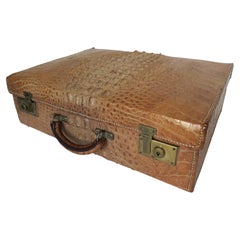
1900s Crocodile Suitcase
Located in Vienna, AT
In this ad you get the chance to buy an old African crocodile suitcase from England. The skin has a rare tan shade and beautifully pronounced points on the top side of the suitcase. ...
Category
Antique Early 19th Century English Trunks and Luggage
Materials
Brass
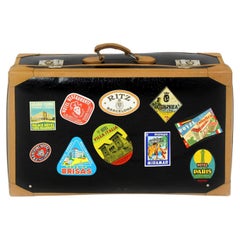
Vintage Leather Suitcase with Original Stickers, 1950s
Located in Żory, PL
This leather travel suitcase was produced in the Czech Republic in the 1950s. The suitcase is in original good condition with numerous original stickers from tourist places in Europe.
Category
Mid-20th Century Mid-Century Modern Trunks and Luggage
Materials
Leather
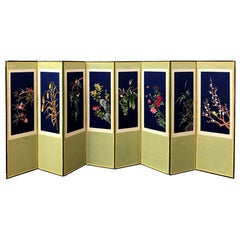
Korean Asian Large 8-Panel Silk Embroidered Byobu Bird Butterfly Screen, 1900s
Located in Studio City, CA
A gorgeous early to midcentury Korean embroidered eight-panel screen depicting scenic nature motifs of flowering trees, playful birds, and floating butterflies. Rare and hard to come...
Category
Mid-20th Century Korean Paintings and Screens
Materials
Silk, Paper
$2,999
H 62 in W 142 in D 0.75 in
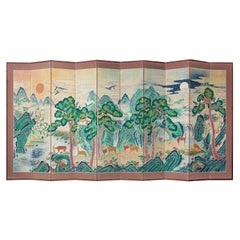
Korean Asian Large Long Life Byobu Byeongpung Shipjangsaengdo Ten Panel Screen
Located in Studio City, CA
An absolutely gorgeous, monumental, exceptionally large Korean ten-panel Sipjangsaengdo Byobu folding screen depicting the ten symbols of longevity—sun, mountain, water, rock, cloud,...
Category
Mid-20th Century Korean Paintings and Screens
Materials
Fabric, Wood, Paint, Paper
$19,500
H 69 in W 149 in D 0.75 in
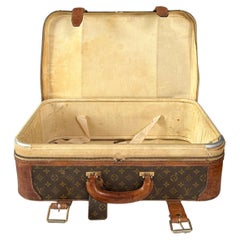
Louis Vuitton Suitcase
Located in Munich, DE
Travel in style with this iconic Louis Vuitton suitcase. Crafted from premium materials and featuring the signature monogram, it’s the epitome ...
Category
20th Century Trunks and Luggage
Materials
Wood
Set of Two Spanish Leather Suitcases as Side Table
Located in Barcelona, ES
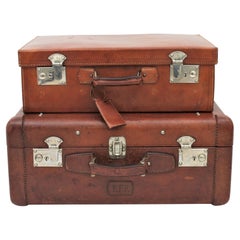
Beautiful set of two brown leather suitcases placed as side / end table, Spain, 1930s.
They have leather handles and metal hardware.
The small one is a travel suitcase with a gentleman vanity...
Category
20th Century Spanish Art Deco Trunks and Luggage
Materials
Metal, Chrome
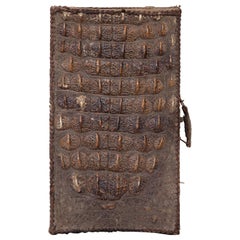
Antique Luggage Crocodile Skin Leather Suitcase, Colonial
Located in Antwerp, BE
Antique suitcase made of crocodile leather handstitched with leather lacing and secured with tacks, an attractive antique reptile skin suitcase with a...
Category
Antique Early 1900s British British Colonial Trunks and Luggage
Materials
Faux Leather
$2,499 Sale Price
20% Off
H 6.7 in W 22.45 in D 13 in