CIMIEZ ANTIQUITES Asian Art and Furniture
to
1
1
1
1
1
1
1
1
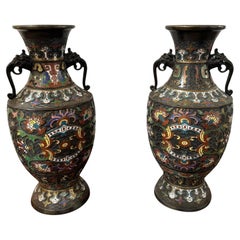
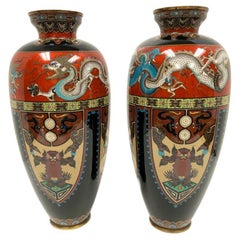
Japan - Meiji Era (1868-1912) Pair of Flared Neck Baluster Vases
Located in Nice, FR
JAPON - Epoque MEIJI (1868-1912) Paire de vases balustres à col évasé et deux anses en forme de têtes de chimères, en bronze et émaux cloisonnés à décor dans leur feuillage sur fond ...
Category
Antique Mid-19th Century Antiquities
Materials
Bronze
Related Items
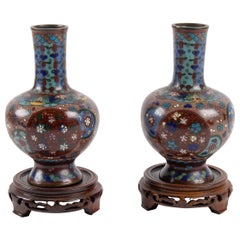
Pair of Cloisonné Bronze Vases, Japan, Circa 1900
Located in Saint-Ouen, FR
Pair of cloisonné bronze vases, Japan, circa 1900, accident on one, slight depression
Measures: H 19cm, D 10cm.
Category
20th Century Japanese Japonisme Metalwork
Materials
Bronze

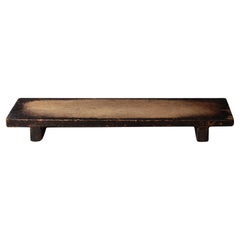
Japanese Antique Exhibition Table / Wall Decoration / 1868-1912s / Wabi-sabi
Located in Iwate-gun Shizukuishi-cho, Iwate Prefecture
This is an old Japanese wooden work board.
The wood is cedar, and due to long-term use, the black color around the edges remains, and the color has peeled off only in the middle. Th...
Category
Antique Late 19th Century Japanese Meiji Antiquities
Materials
Wood, Cedar
$500
H 2.88 in W 27.56 in D 8.27 in
Japanese Meiji Period (1868-1912) Satsuma Vase by Kinkozan
By Kinkozan
Located in Newark, England
JAPANESE SATSUMA PROCESSIONAL VASE
From our Japanese collection, we are delighted to introduce to the market this Japanese Satsuma Vase by Kinkozan. The vase with a compressed body ...
Category
Antique Late 19th Century Japanese Meiji Ceramics
Materials
Ceramic, Earthenware, Pottery

Japanese Meiji Period (1868-1912) Satsuma Earthenware Vase Taizan for Hattori
Located in Newark, England
Meiji Period (1868-1912)
From our Japanese collection, we are delighted to offer Japanese Meiji Period Satsuma Vases. The Satsuma Vase of hexagonal form with a slight waisted neck and tight rounded rim is extensively decorated with multiple figures to two large scenes. The first scene features a beach with waves to the background and a plethora of figures including multiple geisha holding traditional Japanese wagasa’s. The second scene follows on from the first with a large building in the foreground holding figures on a large platform under a pagoda roof with a pagoda building in the background and further figures in the foreground. The scenes are framed by a full detailed border with gilt shapes, flowers amongst pink shaded backgrounds and butterflies around the neck. The Satsuma Vase is unusually signed Fine Art, Satsuma Ware, Dai Nippon (Great Japan), Hattori Made, Gosuido Works, Taizan Painted. 美術, サツマヤキ(薩摩焼), 大日本, 服部造, 五スイ堂工, 對山画 and dates to the Meiji Period (1868-1912) and the turn of the 20th century circa 1905.
Satsuma ware is a type of earthenware pottery originating from the Satsuma province in Southern Kyushu, Japan’s third largest island.
Wagasa are traditional Japanese umbrellas made of washi paper attached to a bamboo frame and treated to ensure it is waterproof.
Meiji Period was an era of Japanese history that spanned from 1868 to 1912. It was the first half of the Empire of Japan, when the Japanese people began to build a paradigm of a modern, industrialised nation state and emergent great power, influenced by Western countries and aesthetics. As a result of radically different ideas, the changes to Japan were profound and it affected the social structure, politics, economy, military, and foreign relations across the board. The period corresponded to the reign of Emperor Meiji and was preceded by the Keio era and was succeeded by the Taisho era.
Cultural Art during the Meiji Period was of particular interest to the government and they overhauled the art export market which in turn promoted Japanese arts via various world’s fairs, beginning in Vienna at the world fair in 1873. The government heavily funded the fairs and took an active role organising how Japan’s culture was presented to the world including creating a semi-public company named Kiritsu Kosho Kaisha (First Industrial Manufacturing Company). The Kiritsu Kosho Kaisha was used to promote and commercialise exports of Japanese art and established the Hakurankai Jimukyoku (Exhibition Bureau) to maintain quality standards. For the 1876 Centennial International Exhibition in Philadelphia, the Japanese government created a Centennial Office and sent a special envoy to secure space for the 30,000 items that would be displayed. The Imperial Household also took an active interest in arts and crafts, commissioning works by select artists to be given as gifts for foreign dignitaries further emphasising the high quality and importance of Japanese art. Just before the end of the 19th century in 1890, the Teishitsu Gigeiin (Artist to the Imperial Household) system was created to recognise distinguished artists. These artists were selected for their exceptionally high quality wares and talent in their own industry. Over a period of 54 years Seventy artists were appointed, amongst these were ceramicist Makuzu Kozan and cloisonné enamel artist...
Category
Antique Early 1900s Japanese Meiji Ceramics
Materials
Earthenware, Pottery

$3,167
H 4.63 in W 2.17 in D 2.37 in
Antique Bronze Vase Cloisonné Japan Meiji 19th Century Japanese
Located in Amsterdam, Noord Holland
Absolute top Quality vase with superb decoration of flowers
Cloisonné is a way of enamelling an object, (typically made of copper) whereby fine wires are used to delineate the dec...
Category
Antique 19th Century Japanese Meiji Antiquities
Materials
Porcelain

$935 Sale Price
48% Off
H 4.85 in Dm 1.58 in
Pair Of Japanese Meiji Era Cloisonne Vases
Located in Bridgeport, CT
Pair of Japanese cloisonné vases with fine traditional form decorated with dragons and demons, geometric motifs and floral bands.
Dimensions: 5" W x 12" H
Condition: Please see detai...
Category
Antique Late 19th Century Japanese Meiji Metalwork
Materials
Metal, Enamel
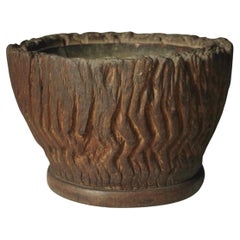
Japanese Antique Wooden Brazier/Hibachi Brazier/1868-1912s Wabi-Sabi
Located in Iwate-gun Shizukuishi-cho, Iwate Prefecture
This is an old Japanese brazier.
It is made of zelkova wood and is thought to date back to the Meiji period.
It features the strong grain of zelkova...
Category
Antique Late 19th Century Japanese Primitive Antiquities
Materials
Copper
$1,000
H 11.82 in W 18.51 in D 17.72 in
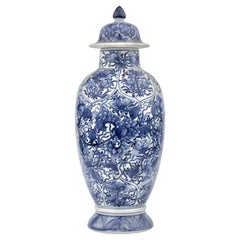
Blue and White Baluster Vase, Qing Dynasty, Kangxi Era, Circa 1690
Located in seoul, KR
The baluster shaped vase rising from a splayed foot to a short waisted neck, decorated in underglaze blue with flower blooms borne on leafy stems.
Period : Qing Dynasty, Kangxi reign
Production Date : 1690-1699
Made in : Jingdezhen
Destination : Amsterdam
Found/Acquired : Southeast Asia , South China Sea, Vung Tau...
Category
Antique 1690s Vietnamese Chinoiserie Antiquities
Materials
Ceramic
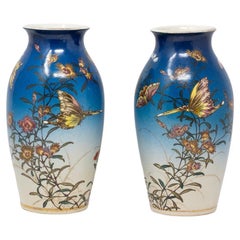
Unusual Pair of Japanese Meiji Period (1868-1912) Satsuma Vases by Kinkozan
By Kinkozan
Located in Newark, England
Taizan Yohei IX Style
From our Japanese collection we are delighted to offer this pair of Japanese Satsuma Vases by Kinkozan. The Satsuma Vases of baluster shape made from earthenwa...
Category
Antique Early 1900s Japanese Meiji Ceramics
Materials
Ceramic, Earthenware, Pottery
$5,783
H 9.45 in Dm 4.93 in
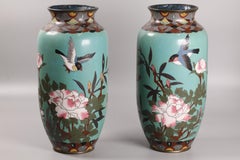
pair of Japanese cloisonné vases, 19th c.
Located in New York, NY
decorated with bird & floral motif on turquoise ground
Category
Antique Late 19th Century Chinese Antiquities
Materials
Metal, Enamel
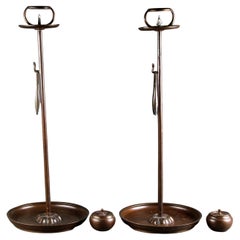
Shokudai Candle Holders of Bronze from Japan, Meiji 1868-1912
Located in London, GB
Pair of Shokudai candle holders made of bronze during the Meiji period (1868-1912) in Japan. Includes original box as pictured.
Candle holders H. 66cm; diameter 26cm.
Lidded bro...
Category
Antique Late 19th Century Japanese Meiji Antiquities
Materials
Bronze
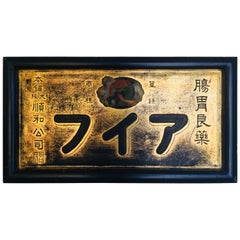
Kanban, Japanese Shop Sign, Meiji Period, 1868-1912
Located in Camden, ME
This 19th century Japanese Pharmacy sign advertises a popular stomach medicine, Aifu from the Juwa Co. in Osaka. The hand-painted registered trademark of the world looking through bi...
Category
Antique 19th Century Japanese Meiji Lacquer
Materials
Lacquer