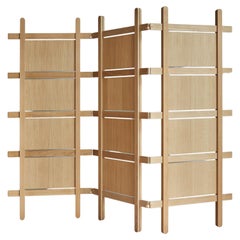
DUPLEX Bird Cages
to
2
2
2
2
2
1
1
2
2
2
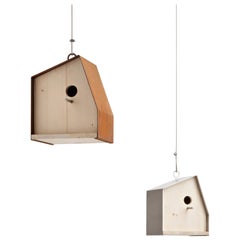
DeCastelli Nest House N.1 in Natural Corten by Filippo Pisan
By DeCastelli
Located in Brooklyn, NY
Our care for the environment around us can also be seen in the attention paid to our small friends in the animal kingdom. A small birdhouse can set the stage, with a structure that’s...
Category
21st Century and Contemporary Italian Modern Bird Cages
Materials
Fir
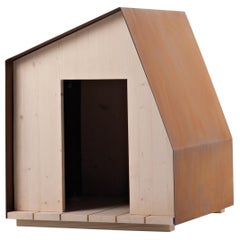
DeCastelli Dog House N°1 in Natural Corten by Filippo Pisan
By DeCastelli
Located in Brooklyn, NY
Dog House n°1 reinvents homes for our furry friends. Created as a version of Cottage n°1, it offers a conceptual revisitation of traditional kennels, focusing on the intrinsic charac...
Category
21st Century and Contemporary Italian Modern Bird Cages
Materials
Wood
Related Items
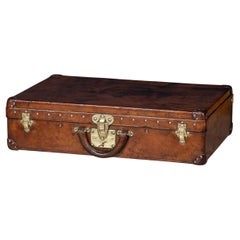
20th Century Louis Vuitton Suitcase In Natural Cow Hide, France c.1910
By Louis Vuitton
Located in Royal Tunbridge Wells, Kent
A highly unusual and exceptionally rare Louis Vuitton suitcase, originating from the early years of the 20th century, distinguishes itself not with the globally renowned monogram canvas but with a distinctive covering crafted from a singular piece of cowhide. This unique piece represents a special order from Louis Vuitton, showcasing the brand's historical commitment to utilising only the finest hides available.
Unlike many of its counterparts, leather trunks and cases of this era often struggle to withstand the test of time, requiring regular treatments to prevent drying and disintegration. Remarkably, this particular example defies the odds, retaining the same supple quality it possessed on the day it first graced the shop floor. This suitcase belongs to Louis Vuitton's collection of "speciality materials," which encompasses a diverse range, including, but not limited to, zinc, copper, crocodile leather, and cow leather.
A brief history about Louis Vuitton trunks: Louis Vuitton was born in 1821 to a farmer and milliner and came from a long-established working-class family in eastern France. Vuitton grew up understanding the effects of perseverance and a strong work ethic from watching his family. At the age of 16, he made the decision to walk 292 miles from his hometown to Paris to try and make a new life for himself. When he arrived the city was in the midst of industrialization with current modes of transportation evolving quickly allowing for longer journeys. With this came the need for sturdy travel pieces.
Vuitton was taken as an apprentice for a successful box maker and packer named Monsieur Marechal. He learned to craft durable containers and how to pack them properly – a well-respected profession at the time.In 1854, years after he had mastered his craft and became well respected for it, Vuitton ventured out on his own to open a shop on Rue Neuve des Capucines. It was here that he began to establish himself as a luggage maker. Then, in 1858, Vuitton designed the first Louis Vuitton steamer trunk. At the time trunks had rounded tops to allow for water to run off but this did not allow for convenient stowage. Vuitton introduced a flat, yet waterproof, trunk that was easily stackable. The first of his trunks were outfitted with a grey canvas referred to as Trianon – it wouldn’t be until several decades later that the signature monogram would be introduced.
With a burgeoning business, Vuitton moved his family and workplace to Asniere, where he employed twenty workers to craft his trunks. By 1900 he would have 100 employees, and in 1914 the company would more than double in size. After years of success, Vuitton began to experiment with the design of his luggage by introducing a new striped canvas pattern (1876) and later the still well-known Damier print (1888). The hand-painted patterns were developed to prevent counterfeits. Even in the late 1800s, Louis Vuitton was enough of a status symbol to warrant counterfeiting. In 1886, his son George invented and patented an ingenious locking system that made it impossible to pick the lock of their trunks. This lock is still used today.
1892 would prove to be a time of mourning for the family as Louis Vuitton passed...
Category
20th Century French Other Trunks and Luggage
Materials
Brass

$4,399
H 6.7 in W 25.99 in D 16.93 in
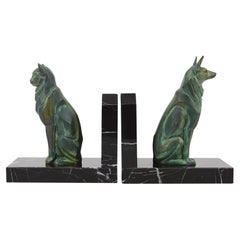
Art Deco Cat
Dog Bookends, 1920
Located in Saint-Amans-des-Cots, FR
French Art Deco bookends, France, 1920s. Cat and dog. The Art Deco spirit at its best. A discreet cubism underlines the perfect lines of our two friends. Spelter and marble. Each - H...
Category
Vintage 1920s French Art Deco Bookends
Materials
Marble, Spelter
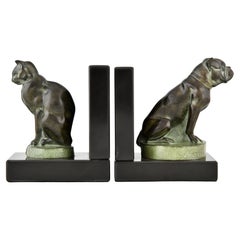
Art Deco style bookends cat and dog signed by Max Le Verrier.
By Max Le Verrier
Located in Antwerp, BE
Art Deco style bookends cat and dog signed by Max Le Verrier.
With foundry mark. Patinated Art Metal on Black marble base.
Design 1930.
Posthumous contemporary cast.
CHAT ET DOGUE....
Category
2010s French Art Deco Bookends
Materials
Belgian Black Marble, Metal
$1,502 / set
H 5.24 in W 4.34 in D 3.15 in
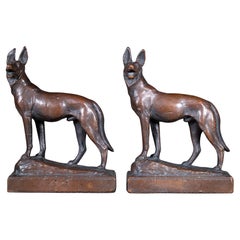
Signed Early 20th c. Bronze Dog Bookends by PAUL HERZEL c.1920
By Paul Herzel
Located in San Francisco, CA
ABOUT
A pair of original bronze clad dog bookends with original felt on the bottom. Designed and stamped Paul Herzel. Both bookends are in good condition and have retained their fin...
Category
Early 20th Century Art Deco Bookends
Materials
Bronze
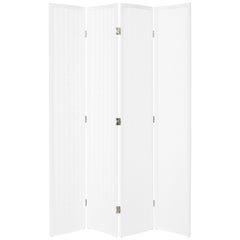
ClassiCon Folding Screen in White by Eileen Gray
By Eileen Gray
Located in New York, NY
The high-tech look that arose in the 1980s and which is still potentially current had an ingenious predecessor. Over half a century ago, Eileen Gray anticipated the cool industrial a...
Category
21st Century and Contemporary German Modern Screens and Room Dividers
Materials
Wood
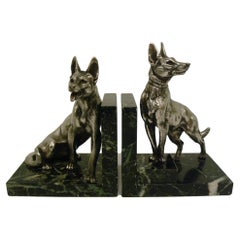
German Shepherd Dog Sculpture Bookends by Louis-Albert Carvin. France 1925
By Louis-Albert Carvin
Located in Buenos Aires, Olivos
German Shepherd dog sculpture bookends by Louis-Albert Carvin.
Dog Animalier Art Deco Sculpture Bookends in Marble and Silvered Metal. Pair of large Silvered Metal Sculptures of two ...
Category
Early 20th Century French Art Deco Bookends
Materials
Marble, Metal
$1,600
H 7.88 in W 5.79 in D 4.34 in
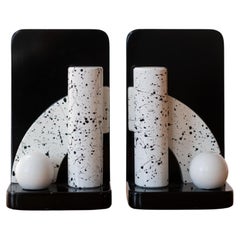
Postmodern House Bookends Memphis Milano 1980s
By Ettore Sottsass, Peter Shire
Located in San Diego, CA
Postmodern wood bookends. 1980s production in the Memphis Milano style. Retains the original 1984 label. USA
Category
Vintage 1980s Unknown Post-Modern Bookends
Materials
Wood
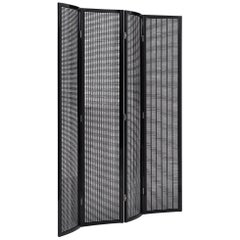
ClassiCon Folding Screen in Black by Eileen Gray
By Eileen Gray
Located in New York, NY
The high-tech look that arose in the 1980s and which is still potentially current had an ingenious predecessor. Over half a century ago, Eileen Gray anticipated the cool Industrial a...
Category
21st Century and Contemporary German Modern Screens and Room Dividers
Materials
Wood
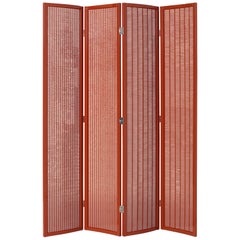
ClassiCon Folding Screen in Red by Eileen Gray
By Eileen Gray
Located in New York, NY
The high-tech look that arose in the 1980s and which is still potentially current had an ingenious predecessor. Over half a century ago, Eileen Gray anticipated the cool Industrial a...
Category
21st Century and Contemporary German Modern Screens and Room Dividers
Materials
Wood
Yoko Folding Screen in Natural Solid Oak
Located in Paris, FR
Folding Screen Yoko with 4 folding panels in solid oak wood in piano white lacquered finish.
manufacture of a plywood panel, 5 plies on touch hinges in p...
Category
21st Century and Contemporary French Screens and Room Dividers
Materials
Brass
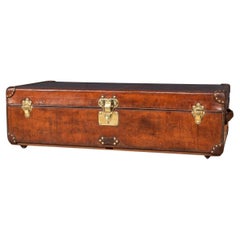
20th Century Louis Vuitton Cabin Trunk In Natural Cow Hide, Paris, c.1910
By Louis Vuitton
Located in Royal Tunbridge Wells, Kent
A rare Louis Vuitton cabin trunk covered in leather. Dating to the early part of the 20th century, covered not in the world famous (but more common) monogram canvas but in a single piece of cow hide. These all-leather trunks were made by special order and Louis Vuitton used...
Category
20th Century French Trunks and Luggage
Materials
Leather, Canvas
$14,589
H 13 in W 40.16 in D 21.66 in
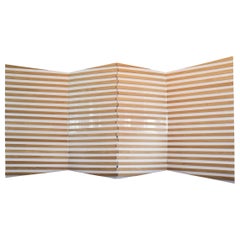
Natural Fold Room Divider by Storängen Design
Located in Geneve, CH
Natural Fold room divider by Storängen Design
Dimensions: D 4 x W 70 x H 170 cm
Materials: oak wood, leather straps.
Available in other colors ...
Category
2010s Swedish Post-Modern Screens and Room Dividers
Materials
Leather, Oak