FOMOBOY Figurative Sculptures
to
4
12
1
1
Overall Width
to
Overall Height
to
5
1
8
1
2
1
1
8
7
5
5
4
3
2
1
1
1
1
1
1
1
1
1
1
1
1
1
8
5
5
2
2
1
14
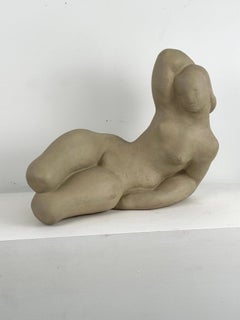
Relining Nude (WG6)
By Waylande Gregory
Located in Wilton Manors, FL
Waylande Gregory (1905-1971).
Nude Reclining, ca. 1950's. Painted composite cast from original sculpted in 1930's. Casting sanctioned and approved by the artist during his lifetime in partnership with MPI, Museum Pieces Incorporated. Very few examples were produced and even fewer survive.
Waylande Gregory was considered a major American sculptor during the 1930's, although he worked in ceramics, rather than in the more traditional bronze or marble. Exhibiting his ceramic works at such significant American venues for sculpture as the Whitney Museum of American Art in New York City and at the venerable Pennsylvania Academy of the Fine Arts in Philadelphia, he also showed his ceramic sculptures at leading New York City galleries. Gregory was the first modern ceramist to create large scale ceramic sculptures, some measuring more than 70 inches in height. Similar to the technique developed by the ancient Etruscans, he fired his monumental ceramic sculptures only once.
Gregory was born in 1905 in Baxter Springs, Kansas and was something of a prodigy. Growing up on a ranch near a Cherokee reservation, Gregory first became interested in ceramics as a child during a native American burial that he had witnessed. He was also musically inclined. In fact, his mother had been a concert pianist and had given her son lessons. At eleven, he was enrolled as a student at the Kansas State Teacher's College, where he studied carpentry and crafts, including ceramics.
Gregory's early development as a sculptor was shaped by the encouragement and instruction of Lorado Taft, who was considered both a major American sculptor as well as a leading American sculpture instructor. In fact, Taft's earlier students included such significant sculptors as Bessie Potter Vonnoh and Janet Scudder. But, Taft and his students had primarily worked in bronze or stone, not in clay; and, Gregory's earliest sculptural works were also not in ceramics. In 1924, Gregory moved to Chicago where he caught the attention of Taft. Gregory was invited by Taft to study with him privately for 18 months and to live and work with him at his famed "Midway Studios." The elegant studio was a complex of 13 rooms that overlooked a courtyard. Taft may have been responsible for getting the young man interested in creating large scale sculpture. However, by the 1920's, Taft's brand of academic sculpture was no longer considered progressive. Instead, Gregory was attracted to the latest trends appearing in the United States and Europe. In 1928 he visited Europe with Taft and other students.
"Kid Gregory," as he was called, was soon hired by Guy Cowan, the founder of the Cowan Pottery in Cleveland, Ohio, to become the company's only full time employee. From 1928 to 1932, Gregory served as the chief designer and sculptor at the Cowan Pottery. Just as Gregory learned about the process of creating sculpture from Taft, he literally learned about ceramics from Cowan. Cowan was one of the first graduates of Alfred, the New York School of Clayworking and Ceramics. Alfred had one of the first programs in production pottery. Cowan may have known about pottery production, but he had limited sculptural skills, as he was lacking training in sculpture. The focus of the Cowan Pottery would be on limited edition, table top or mantle sculptures. Two of the most successful of these were Gregory's Nautch Dancer, and his Burlesque Dancer. He based both sculptures on the dancing of Gilda Gray, a Ziegfield Follies girl.
Gilda Gray was of Polish origin and came to the United States as a child. By 1922, she would become one of the most popular stars in the Follies. After losing her assets in the stock market crash of 1929, she accepted other bookings outside of New York, including Cleveland, which was where Gregory first saw her onstage. She allowed Gregory to make sketches of her performances from the wings of the theatre. She explained to Gregory, "I'm too restless to pose." Gray became noted for her nautch dance, an East Indian folk dance. A nautch is a tight, fitted dress that would curl at the bottom and act like a hoop. This sculpture does not focus on Gray's face at all, but is more of a portrait of her nautch dance. It is very curvilinear, really made of a series of arches that connect in a most feminine way.
Gregory created his Burlesque Dancer at about the same time as Nautch Dancer. As with the Nautch Dancer, he focused on the movements of the body rather than on a facial portrait of Gray. Although Gregory never revealed the identity of his model for Burlesque Dancer, a clue to her identity is revealed in the sculpture's earlier title, Shimmy Dance. The dancer who was credited for creating the shimmy dance was also Gilda Gray. According to dance legend, Gray introduced the shimmy when she sang the Star Spangled Banner and forgot some of the lyrics, so, in her embarrassment, started shaking her shoulders and hips but she did not move her legs. Such movement seems to relate to the Burlesque Dancer sculpture, where repeated triangular forms extend from the upper torso and hips. This rapid movement suggests the influence of Italian Futurism, as well as the planar motion of Alexander Archipenko, a sculptor whom Gregory much admired.
The Cowan Pottery was a victim of the great depression, and in 1932, Gregory changed careers as a sculptor in the ceramics industry to that of an instructor at the Cranbrook Academy in Bloomfield Hills, Michigan. Cranbrook was perhaps the most prestigious place to study modern design in America. Its faculty included the architect Eliel Saarinen and sculptor Carl Milles.
Although Gregory was only at Cranbrook for one and one half years, he created some of his finest works there, including his Kansas Madonna. But, after arriving at Cranbrook, the Gregory's had to face emerging financial pressures. Although Gregory and his wife were provided with complimentary lodgings, all other income had to stem from the sale of artworks and tuition from students that he, himself, had to solicit. Gregory had many people assisting him with production methods at the Cowan Pottery, but now worked largely by himself. And although he still used molds, especially in creating porcelain works, many of his major new sculptures would be unique and sculpted by hand, as is true of Kansas Madonna. The scale of Gregory's works were getting notably larger at Cranbrook than at Cowan.
Gregory left the surface of Kansas Madonna totally unglazed. Although some might object to using a religious title to depict a horse nursing its colt, it was considered one of Gregory's most successful works. In fact, it had a whole color page illustration in an article about ceramic sculpture titled, "The Art with the Inferiority Complex," Fortune Magazine, December, 1937. The article notes the sculpture was romantic and expressive and the sculpture was priced at $1,500.00; the most expensive sculpture...
Category
1950s Art Deco Figurative Sculptures
Materials
Plaster
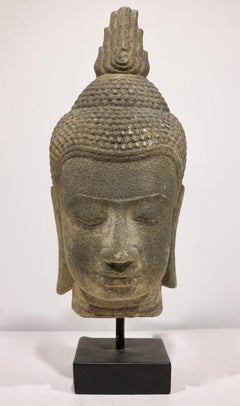
Sandstone head of Buddha, Khmer, Angkor period, post-Bayon
Located in Wilton Manors, FL
Beautiful Khmer head of Buddha. Angkor period, style of the post-Bayon. 14th century. Carved sandstone. Height 12 5/8 inches, width 5 5/8 inches, profile 5 ...
Category
15th Century and Earlier Figurative Sculptures
Materials
Sandstone

$4,000 Sale Price
60% Off
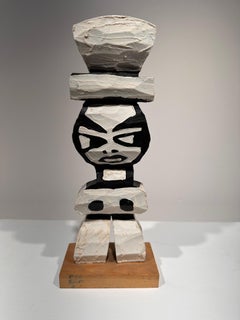
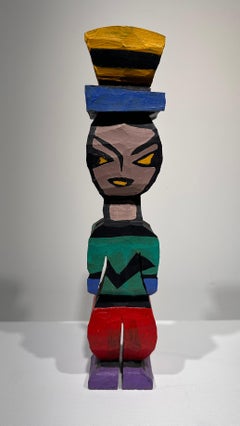
Standing Figure
Located in Wilton Manors, FL
Tom Cramer (b.1960). Standing Figure, 1998. Carved wood and polymer paint. Measures 12 inches high. Excellent condition. Signed and dated under base.
Tom Cramer is an American artist working in Portland, Oregon noted for his intricately carved and painted wood reliefs and ubiquity throughout the city of Portland. Often called the unofficial Artist Laureate of Portland,[2] Cramer is one of the most visible and successful artists in the city. The influences on his work are both organic and technological. He is widely collected and is in many prominent west coast museum and private collections. He is in the permanent collections of the Portland Art Museum[3] in Portland Oregon, the Halle Ford Museum in Salem Oregon, the Jordan Schnitzer Museum in Eugene, Oregon, the Boise Art Museum in Idaho.
Cramer made a name for himself in the 1980s and 1990s becoming a bridge between historical Oregon artists like Clifford Gleason and Milton Wilson...
Category
Late 20th Century Neo-Expressionist Figurative Sculptures
Materials
Wood, Latex
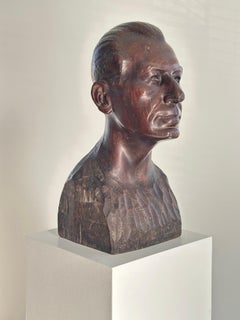
Portrait of a Man
Located in Wilton Manors, FL
Francisco Vazquez Diaz, known as Compostela (1898-1988). Portrait of a Man, 1949. Carved mahogany, measuring 18.75 inches h, 8.5 inches w, 11 in...
Category
Mid-20th Century Realist Figurative Sculptures
Materials
Mahogany
$8,000 Sale Price
60% Off
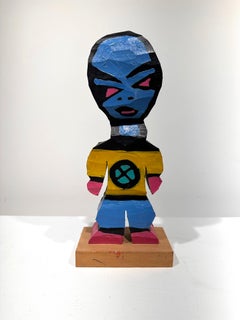
Standing Figure
Located in Wilton Manors, FL
Tom Cramer (b.1960). Standing Figure, 1998. Carved wood and polymer paint. Measures 10.25 inches high. Excellent condition. Signed and dated under base.
Tom Cramer is an American artist working in Portland, Oregon noted for his intricately carved and painted wood reliefs and ubiquity throughout the city of Portland. Often called the unofficial Artist Laureate of Portland,[2] Cramer is one of the most visible and successful artists in the city. The influences on his work are both organic and technological. He is widely collected and is in many prominent west coast museum and private collections. He is in the permanent collections of the Portland Art Museum[3] in Portland Oregon, the Halle Ford Museum in Salem Oregon, the Jordan Schnitzer Museum in Eugene, Oregon, the Boise Art Museum in Idaho.
Cramer made a name for himself in the 1980s and 1990s becoming a bridge between historical Oregon artists like Clifford Gleason and Milton Wilson...
Category
Late 20th Century Neo-Expressionist Figurative Sculptures
Materials
Wood, Latex
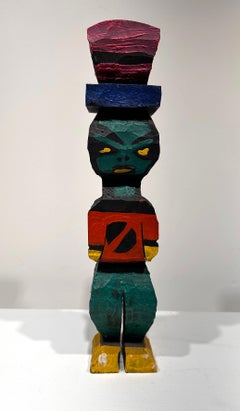
Standing Figure
Located in Wilton Manors, FL
Tom Cramer (b.1960). Standing Figure, 1988. Carved wood and polymer paint. Measures 11.5 inches high. Excellent condition. Signed and dated under base.
Tom Cramer is an American artist working in Portland, Oregon noted for his intricately carved and painted wood reliefs and ubiquity throughout the city of Portland. Often called the unofficial Artist Laureate of Portland,[2] Cramer is one of the most visible and successful artists in the city. The influences on his work are both organic and technological. He is widely collected and is in many prominent west coast museum and private collections. He is in the permanent collections of the Portland Art Museum[3] in Portland Oregon, the Halle Ford Museum in Salem Oregon, the Jordan Schnitzer Museum in Eugene, Oregon, the Boise Art Museum in Idaho.
Cramer made a name for himself in the 1980s and 1990s becoming a bridge between historical Oregon artists like Clifford Gleason and Milton Wilson...
Category
Late 20th Century Neo-Expressionist Figurative Sculptures
Materials
Wood, Latex
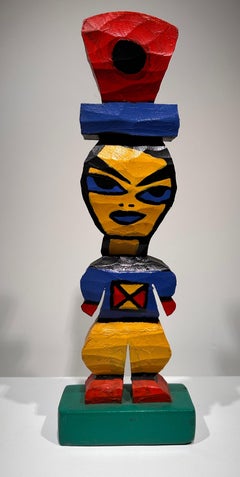
Standing Figure
Located in Wilton Manors, FL
Tom Cramer (b.1960). Standing Figure, 1998. Carved wood and polymer paint. Measures 17.5 inches high. Excellent condition. Signed and dated under base.
Tom Cramer is an American artist working in Portland, Oregon noted for his intricately carved and painted wood reliefs and ubiquity throughout the city of Portland. Often called the unofficial Artist Laureate of Portland,[2] Cramer is one of the most visible and successful artists in the city. The influences on his work are both organic and technological. He is widely collected and is in many prominent west coast museum and private collections. He is in the permanent collections of the Portland Art Museum[3] in Portland Oregon, the Halle Ford Museum in Salem Oregon, the Jordan Schnitzer Museum in Eugene, Oregon, the Boise Art Museum in Idaho.
Cramer made a name for himself in the 1980s and 1990s becoming a bridge between historical Oregon artists like Clifford Gleason and Milton Wilson...
Category
Late 20th Century Neo-Expressionist Figurative Sculptures
Materials
Wood, Latex
Standing Figure
Located in Wilton Manors, FL
Tom Cramer (b.1960). Standing Figure, 1980. Carved wood and polymer paint. Measures 11.5 inches high. Excellent condition. Signed and dated under base.
Tom Cramer is an American artist working in Portland, Oregon noted for his intricately carved and painted wood reliefs and ubiquity throughout the city of Portland. Often called the unofficial Artist Laureate of Portland,[2] Cramer is one of the most visible and successful artists in the city. The influences on his work are both organic and technological. He is widely collected and is in many prominent west coast museum and private collections. He is in the permanent collections of the Portland Art Museum[3] in Portland Oregon, the Halle Ford Museum in Salem Oregon, the Jordan Schnitzer Museum in Eugene, Oregon, the Boise Art Museum in Idaho.
Cramer made a name for himself in the 1980s and 1990s becoming a bridge between historical Oregon artists like Clifford Gleason and Milton Wilson...
Category
Late 20th Century Neo-Expressionist Figurative Sculptures
Materials
Wood, Latex
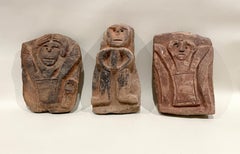
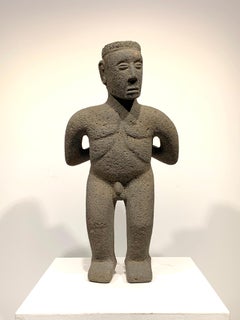
Costa Rican pre-Columbian sculptural figure ca. 1000-1500
Located in Wilton Manors, FL
Magnificent standing figure, Costa Rica, ca. 1000-1500. Carved volcanic stone. Measures 16.5 x 9 x 5.5 inches. Outstanding condition with no damage.
The figure represents a captured...
Category
15th Century and Earlier Figurative Sculptures
Materials
Stone
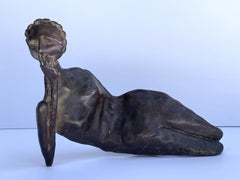
Reclining Figure (woman)
By William King (b.1925)
Located in Wilton Manors, FL
William King (1925-2015). Reclining figure, ca. 1965. Cast and welded bronze, 7 x 9.5 x 5 inches. Unsigned.
William King, a sculptor in a variety of materials whose human figures traced social attitudes through the last half of the 20th century, often poking sly and poignant fun at human follies and foibles, died on March 4 at his home in East Hampton, N.Y. He was 90.
His death was confirmed by Scott Chaskey, who is married to Mr. King's stepdaughter, Megan Chaskey.
Mr. King worked in clay, wood, bronze, vinyl, burlap and aluminum. He worked both big and small, from busts and toylike figures to large public art pieces depicting familiar human poses -- a seated, cross-legged man reading; a Western couple (he in a cowboy hat, she in a long dress) holding hands; a tall man reaching down to tug along a recalcitrant little boy; a crowd of robotic-looking men walking in lock step.
But for all its variation, what unified his work was a wry observer's arched eyebrow, the pointed humor and witty rue of a fatalist. His figurative sculptures, often with long, spidery legs and an outlandishly skewed ratio of torso to appendages, use gestures and posture to suggest attitude and illustrate his own amusement with the unwieldiness of human physical equipment.
His subjects included tennis players and gymnasts, dancers and musicians, and he managed to show appreciation of their physical gifts and comic delight at their contortions and costumery. His suit-wearing businessmen often appeared haughty or pompous; his other men could seem timid or perplexed or awkward. Oddly, or perhaps tellingly, he tended to depict women more reverentially, though in his portrayals of couples the fragility and tender comedy inherent in couplehood settled equally on both partners.
Mr. King's work is in the collections of the Metropolitan Museum of Art and the Museum of Modern Art in New York and the Smithsonian American Art Museum in Washington, among other places, and he had dozens of solo gallery shows in New York and elsewhere. But the comic element of his work probably caused his reputation to suffer.
Reviews of his exhibitions frequently began with the caveat that even though the work was funny, it was also serious, displaying superior technical skills, imaginative vision and the bolstering weight of a range of influences, from the ancient Etruscans to American folk art to 20th-century artists including Giacometti, Calder. and Elie Nadelman.
The critic Hilton Kramer, one of Mr. King's most ardent advocates, wrote in a 1970 essay accompanying a New York gallery exhibit that he was, "among other things, an amusing artist, and nowadays this can, at times, be almost as much a liability as an asset."
A "preoccupation with gesture is the focus of King's sculptural imagination," Mr. Kramer wrote. "Everything that one admires in his work - the virtuoso carving, the deft handling of a wide variety of materials, the shrewd observation and resourceful invention - all this is secondary to the concentration on gesture. The physical stance of the human animal as it negotiates the social arena, the unconscious gait that the body assumes in making its way in the social medium, the emotion traced by the course of a limb, a torso, a head, the features of a face, a coiffure or a costume - from a keen observation of these materials King has garnered a large stock of sculptural images notable for their wit, empathy, simplicity and psychological precision."
William Dickey King...
Category
Mid-20th Century Abstract Abstract Sculptures
Materials
Bronze
$2,800 Sale Price
30% Off
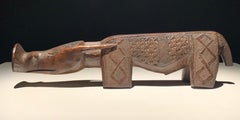
Kuba African Warthog Divining Figure tribal arts sculpture
Located in Wilton Manors, FL
Warthog Divining Figure. Kuba, DRC. Late 19th century. Carved wood with palm oil patina, 12.5 incehes (l), 3.25 inches (h), 2 5/8 inches (d). Loss evident at tip of right ear and on snout.
Provenance: Ex. collection Martin and Faith-Dorian Wright; J.J. Klegman; Angelo Caggiula-Carulucci, chief magistrate in Belgian Congo for King Leopold...
Category
Late 19th Century Abstract Figurative Sculptures
Materials
Wood
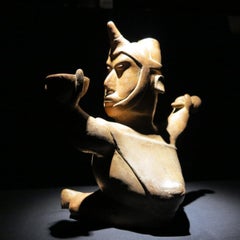
Pre-Columbian Colima Shaman terracotta figure vessel Mexican sculpture
Located in Wilton Manors, FL
Seated Shaman
Colima culture
Mexico
ca. 300 BCE - 300 CE
Pre-Columbian, West Mexico, Colima, ca. 300 BCE to 300 CE. A hollow-cast and highly-burnished terraco...
Category
15th Century and Earlier Figurative Sculptures
Materials
Terracotta
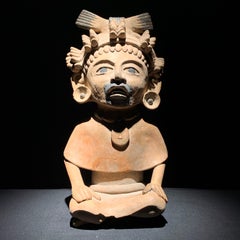
Veracruz Mexico Pre-Columbian ceramic Warrior figure sculpture
Located in Wilton Manors, FL
Figure of a Chanting Warrior
Ceramic with bitumen highlights
300-600 CE (Classic Period)
Mexico, Veracruz, possibly Nopiloa
Veracruz Culture
Pre-Columbian, Mexico, Vera Cruz culture...
Category
15th Century and Earlier Figurative Sculptures
Materials
Ceramic
$6,000 Sale Price
50% Off
Late 15th-century Old Master Burgundian Netherlands carved walnut figure
Located in Wilton Manors, FL
Beautiful late 15th-century Burgundian Netherlandish portrait of a woman. Carved walnut. Original polychrome has been removed with traces at base and lower portions of figure. Minor ...
Category
15th Century and Earlier Old Masters Figurative Sculptures
Materials
Walnut

Related Items
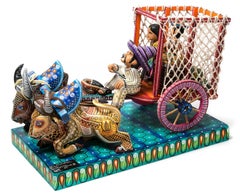
Carreta Herencia de mi Tierra / Wood carving Alebrije Mexican Folk Art Sculpt
By Manuel Cruz Prudencio
Located in Jesus del Monte, MX
FREE SHIPPING TO WORLDWIDE!
Artisan: Manuel Cruz Prudencio
MASTERPIECE
Made with Copal wood, woodcarving technique gouges, machete and sandpaper, decorated with acrylic paintings ...
Category
2010s Folk Art Abstract Sculptures
Materials
Wood, Acrylic
$2,063 Sale Price
24% Off
H 13 in W 19 in D 11 in
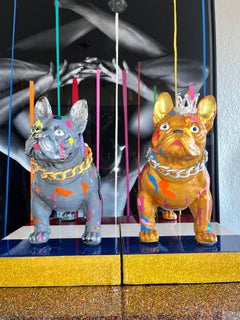
FREN AND CHIE: The Badass Gangstar Couple Of South Of France.
By Mauro Oliveira
Located in LOS ANGELES, CA
**STORE CLOSURE - UP TO 80% OFF - TAKE ADVANTAGE OF IT**
***EVERYTHING MUST GO BY DECEMBER 31ST!***
***The artist is moving on to a new full time venture in 2026**...
Category
21st Century and Contemporary Pop Art Figurative Sculptures
Materials
Metal
$1,950
H 14 in W 11 in D 16 in
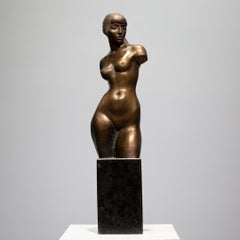
Model Girl
Located in Zofingen, AG
Classic female torso inspired by examples of high Greek sculpture. Sculptor explores the lines and shapes of the female body, embodied the diversity, slightly changed the poses.
Thi...
Category
1980s Realist Nude Sculptures
Materials
Stone, Bronze
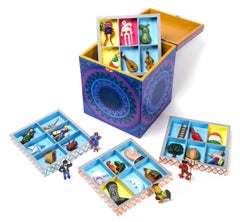
8" Loteria Purpura / Wood carving Mexican Folk Art Sculpture
By Roxana y Jesus Hernandez
Located in Jesus del Monte, MX
FREE SHIPPING TO WORLDWIDE!
Artisan: Roxana y Jesus Hernandez
MASTERPIECE
Made with Copal wood, woodcarving technique gouges, machete and sandpaper, decorated with acrylic paintin...
Category
2010s Folk Art Abstract Sculptures
Materials
Wood, Acrylic
$2,400
H 9 in W 8 in D 9 in
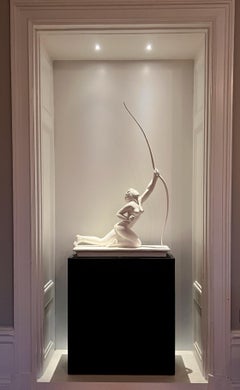
Diana The Huntress - 1920´s Plaster Sculpture
Located in Stockholm, SE
Sculpture representing the goddess Diana by Danish sculptor Jens Jacob Bregno (1877–1946), executed in plaster around 1920. This is a highly unusual model by the artist, and possibly...
Category
1920s Art Deco Figurative Sculptures
Materials
Plaster
$8,166
H 40.56 in W 25.2 in D 7.88 in
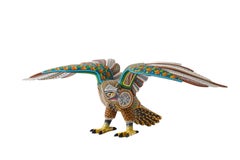
Aguila - Eagle - Mexican Folk Art Cactus Fine Art
By Manuel Cruz Prudencio
Located in Jesus del Monte, MX
Aguila - Eagle Alebrije
This Mexican Aguila - Eagle Alebrije made with Copal wood, wood carving technique gouges, machete and sandpaper, decorated with acrylic paintings with Zapotec symbols.
At Cactus Fine Art...
Category
2010s Folk Art Abstract Sculptures
Materials
Wood, Acrylic
$2,100
H 6 in W 16 in D 8 in
24
Nativity Avion Wood carving Alebrije Sculpture Mexican Folk Art
By Agustin Cruz Tinoco
Located in Jesus del Monte, MX
FREE SHIPPING TO WORLDWIDE!
Artisan: Agustin Cruz Tinoco
MASTERPIECE:
Made with Copal wood, woodcarving technique gouges, machete and sandpaper, decorated with acrylic paintings wi...
Category
2010s Folk Art Abstract Sculptures
Materials
Wood, Acrylic

$2,400
H 24 in W 20 in D 18 in
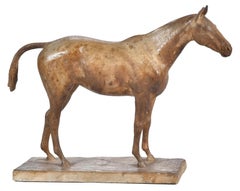
Finely rendered Equestrian Model Sculpture
Located in Greenwich, CT
a very fine Model Sculpture of a standing horse , finely rendered in patinated plaster, signed ‘MMM’ and dated 30 , w. rich burnished patina.
Its quality and elegance are reminiscent...
Category
Early 20th Century Figurative Sculptures
Materials
Plaster
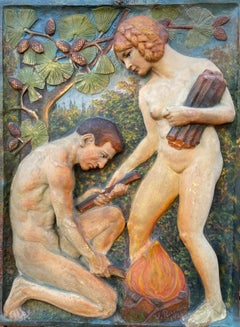
“Adam and Eve”
Located in Southampton, NY
Very rare Art Deco three dimensional terracotta sculpture of Adam and Eve by the Austrian artist, Virgil Rainer. Hand painted by the artist. Signed bott...
Category
1920s Art Deco Figurative Sculptures
Materials
Terracotta, Plaster
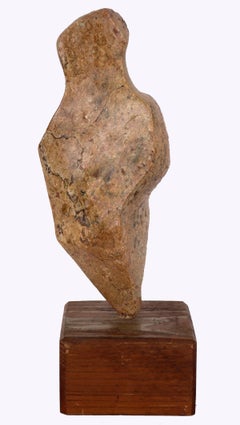
Venus, Modern Abstract Figurative Sculpture #37
By Doris Warner
Located in Soquel, CA
Wonderful small scale abstract figurative stone Venus sculpture by Doris Ann Warner (American, 1925-2010), 1975. A highly abstracted female form is expressed through the organic, fl...
Category
1970s Modern Figurative Sculptures
Materials
Sandstone
$2,120 Sale Price
41% Off
H 11 in W 3.75 in D 3.75 in
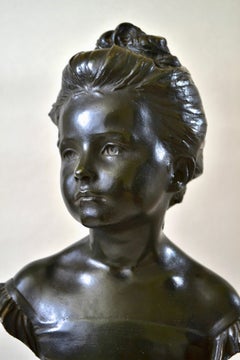
The Age of Innocence - New Sculpture bronze bust by Alfred Drury
Located in London, GB
ALFRED DRURY, RA
(1856-1944)
The Age of Innocence
Signed: A DRURY
Bronze on green marble base
Height including base 45.5 cm., 18 in.
Born in Islington...
Category
1890s Realist Figurative Sculptures
Materials
Bronze
$6,610
H 17.92 in W 5.91 in D 5.91 in
A Grouping of Three Period Ancestor Posts, Possibly Aztec
Located in Chicago, IL
A Grouping of Three Period Figural Ancestor Posts; Mexican Tribal Figures, Possibly Pre-Columbian Aztec. Each are Terra cotta or sandstone with obsidian glass inlay to the eyes; Da...
Category
16th Century Tribal Figurative Sculptures
Materials
Sandstone