hermhaus Cabinets
to
Height
to
Width
to
Depth
to
5
5
5
5
2
5
5
5
5
5
5
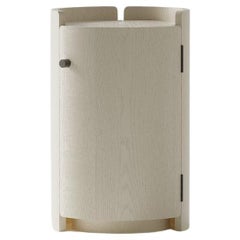
Dot Mini Cabinet - Light Beige by Hermhaus
By hermhaus
Located in istanbul, TR
Dot Mini Cabinet offers versatile use in both your work area and different corners of your home with its functional and stylish design. This cabinet, which can be used under the desk...
Category
2010s Turkish Mid-Century Modern Cabinets
Materials
Wood

$6,845 / item
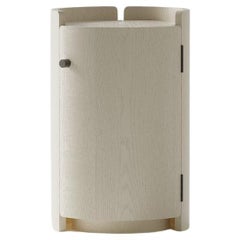
DOT Mini Cabinet Light Beige by Hermhaus
By hermhaus
Located in istanbul, TR
The Dot Mini Cabinet combines functionality and elegance, offering versatile use in both workspaces and various corners of your home.
Designed to fit seamlessly under or beside a de...
Category
2010s Turkish Mid-Century Modern Cabinets
Materials
Wood, Oak
$3,700 / item
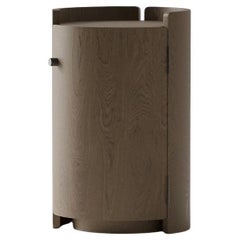
DOT Mini Cabinet Wooden by Hermhaus
By hermhaus
Located in istanbul, TR
The Dot Mini Cabinet combines functionality and elegance, offering versatile use in both workspaces and various corners of your home.
Designed to fit seamlessly under or beside a de...
Category
2010s Turkish Mid-Century Modern Cabinets
Materials
Wood, Oak
$3,700 / item
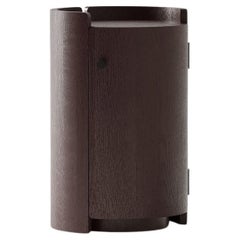
DOT Mini Cabinet - Burgundy by Hermhaus
By hermhaus
Located in istanbul, TR
Dot Mini Cabinet offers versatile use in both your work area and different corners of your home with its functional and stylish design. This cabinet, which can be used under the desk...
Category
2010s Turkish Mid-Century Modern Cabinets
Materials
Wood
$6,845 / item
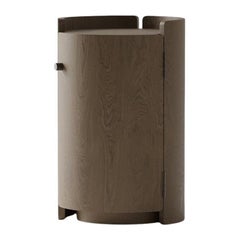
DOT Mini Cabinet - Wooden by Hermhaus
By hermhaus
Located in istanbul, TR
Dot Mini Cabinet offers versatile use in both your work area and different corners of your home with its functional and stylish design. This cabinet, which can be used under the desk...
Category
2010s Turkish Mid-Century Modern Cabinets
Materials
Wood
$6,845 / item
Related Items
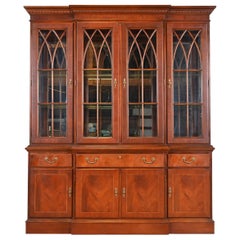
Georgian Inlaid Mahogany Lighted Breakfront Bookcase Cabinet
Located in South Bend, IN
A gorgeous Georgian or Chippendale style lighted breakfront bookcase, dining cabinet, or bar cabinet
USA, Late 20th Century
Beautiful carved mahogany, with satinwood inlay, mullion...
Category
Late 20th Century American Georgian Cabinets
Materials
Brass
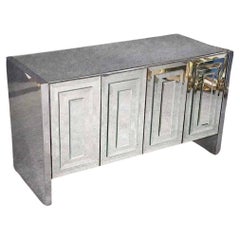
Mirrored Cabinet by Ello
By Ello Furniture
Located in Brooklyn, NY
Mid-Century Modern cabinet by Ello in mirrored glass. Beveled layers of glass set on four doors. Adjustable cabinet storage.
Please confirm location.
Category
Mid-20th Century Mid-Century Modern Cabinets
Materials
Mirror
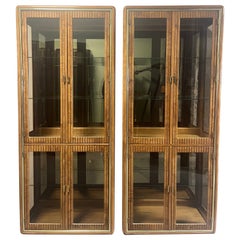
American of Martinsville Burl Curio Cabinets Lighted
By American of Martinsville
Located in W Allenhurst, NJ
Pair of beautiful Burl Wood with brass inlays. Nicely fluted detail offset with complimenting brass trim. Smokey glass doors which swing wide. 2 upper adjustable glass shelves with p...
Category
Vintage 1980s American Mid-Century Modern Cabinets
Materials
Brass
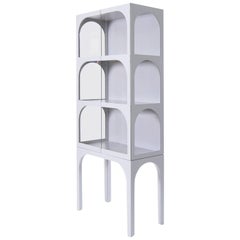
Light grey Vitrine Cabinet, Lacquered Eco Fiberboard, Color by Customers Choice
By Lukas Dahlén
Located in Visby, SE
Valv
Light grey Vitrine Cabinet, Lacquered Eco Fiberboard, Color by Customers Choice
Inspired by the medieval wall around the small town of Visby, Sweden, the designer noticed the t...
Category
2010s Scandinavian Modern Vitrines
Materials
Natural Fiber
$5,173 / item
H 70.87 in W 30.71 in D 14.18 in
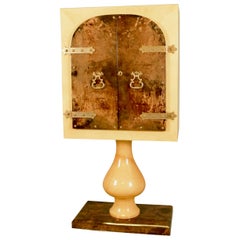
Rare Aldo Tura Lighted, Locking Bar Cabinet or Liquor Cabinet
By Aldo Tura
Located in Rovereta, Repubblica di San Marino
Aldo Tura floor standing bar cabinet. Mirrored interior with glass shelves. Interior lighting through milk glass panels in the bottom of the cabin...
Category
Mid-20th Century Italian Mid-Century Modern Cabinets
Materials
Goatskin
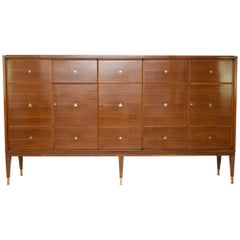
Cabinet by Paolo Buffa
By Paolo Buffa
Located in London, GB
Exceptional cabinet by Paolo Buffa in walnut with mahogany interior and brass detail. Italy circa 1950. Measures: height 133cm, width 26cm, dept...
Category
Vintage 1950s Italian Mid-Century Modern Cabinets
Materials
Hardwood
Lighted Vittorio Dassi "Midcentury" bar cabinet from the 1950s
By La Permanente Mobili Cantù, Vittorio Dassi
Located in Wolfurt, AT
Lighted Midcentury drinks cabinet from the 1950s. Designed was the cabinet by Vittorio Dassi and manufactured by La Permanente Mobili Cantù. This massive cabinet is made of nut tree and maplewood. Behind the doors is a etched mirror with sun...
Category
Vintage 1950s Italian Mid-Century Modern Sideboards
Materials
Brass
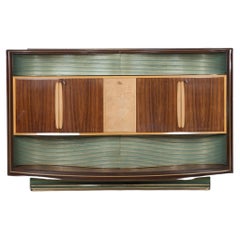
Modern Chevron Cabinet - Light
Located in Westwood, NJ
A modern chevron design cabinet with brushed quarter oak veneer in our Gowan finish, two doors with matte tungsten finish chevron overlays enclosing two adjustable shelves and raised...
Category
21st Century and Contemporary Vietnamese Mid-Century Modern Cabinets
Materials
Wood
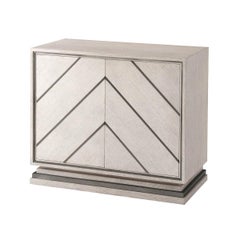
1950s Rare Wooden Bar Cabinet, Czechoslovakia
Located in Praha, CZ
- Carefully refurbished
- Rare model
- By KMEN
Category
Vintage 1950s Czech Mid-Century Modern Cabinets
Materials
Wood
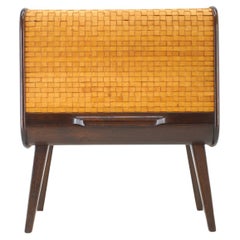
Danish Vintage Cabinet by Fredericia
By Fredericia
Located in London, GB
A stunning Danish vintage cabinet by Fredericia, dating from the 1960’s.
This has a beautiful design and is of amazing quality. The upper and lower cabinets have beautifully recesse...
Category
Vintage 1960s Danish Mid-Century Modern Cabinets
Materials
Wood
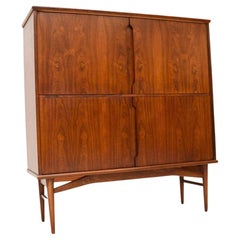
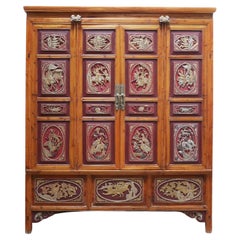
Old Chinese Wooden Cabinet
Located in AIGNAN, FR
Chinese wardrobe in solid wood, late 19th, early 20th century.
Aesthetic and practical, it will be perfect in a current decoration.
The color of the wood is bright and warm.
Of ...
Category
Antique Late 19th Century Chinese Furniture
Materials
Wood
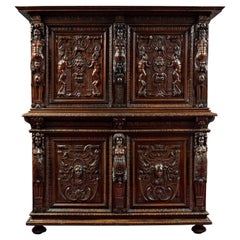
Renaissance Cabinet from Burgundy or Lyon Region
Located in Saint-Ouen, FR
Renaissance cabinet from Burgundy Or Lyon Region
Origin : Burgundy Or Lyon, France
Period : Second Half 16th Century, C. 1580
Height : 209cm
Length : 184cm
Depth : 71cm
Good condition
Walnut wood, original keys and keyholes
Around the middle of the 16th century the conception and ornamentation of French furniture evolves. The start of major building projects, such as the castle of Fontainebleau, gives artists a new impulse. Inventive and rich formulas are developed there, before spreading to all of Europe thanks to engravings and printed leaflets. Furthermore, Italian artists working on such construction sites bring French artists and patrons a renewed taste for the Antique.
Regarding the art of furnitures, the most complex scenes and figures are drawn from illustrated books, ornament and emblem compendiums and engraving compilations. Rather than copying those images the artisans feed their inspiration and decline the motifs in numerous variations.
The ornamental grammar marks a return to the Antique : palm leaf, acanthus, egg-and-dart, greek, scroll, fluted pilaster… It is in Primaticcio’s and Il Rosso’s stuccos made around 1540-1550 that we have to look for the origin of leather cut-outs, masks, chimaeras, harpies, sheathed figures, fruit and flower garlands that soon enrich every pieces of French furniture.
The structure of the pieces of furniture also evolve thanks to the re discovery of Antique architectures, rigorously used as a model.
This cabinet presents an imposing structure and a rich and original decor exemplifying the production of the late 16th century, infused with Italian, Antique and Fontainebleau influences.
It stands on a moulded base ornate with palm leaves. It opens with four door-leaves and two drawers in the belt. Six whimsical terms divide the facade.
The lower body is horizontally divided by three sheathed female terms. The two standing on the lateral posts are topped with fruits while the body is covered by acanthus leaves carved with precision, belted at the waist. The term standing on the central door-jamb is crowned with laurel leaves and is draped in the Antique fashion. A wincing mask hides the key hole.
The two door-leaves are centred by a beautiful mask carved in a strong relief. They wear stylised feathered headdress and are set on draperies. Straps, leather scrolls, acanthus leaves and a shell are spread around the masks. The recessed panels are secured in frames ornate with acanthus leaves.
The belt is flanked by two large mouldings enriched with variations of acanthus leaves. The drawers are carved with choux bourguignons and palm leaf motifs minutely executed. The consoles between each drawer bear tormented wincing masks, showing horns as if they were fauns or imps.
The upper body is framed by two male terms characterised by a strong and nervous musculature, their manhood hidden by drapes secured thanks to a winged lion head. The term on the left appears to be younger and is wincing while the one on the right has a beard. The central female term brings contrast with her youth and sensuality. As it is the case on the lower body, the key hole is hidden behind the mouth of a faun’s mask placed on the drapes barely covering the intimacy of the caryatid.
The panels of the upper body present an idealised architecture comprising pilasters and sinuous broken pediments. The pilasters are flanked by two satyrs with goat legs. In the centre appears an important lion mask.
The terms of the upper body support the cornice. The entablature carries palm leaves and roses alternating as well as an egg-and-dart frieze. The cornice is adorned with acanthus motifs.
On the sides, the carving is executed flat. A central rose is surrounded by scrolls, flowers and choux bourguignons.
We can admire the variety of the elements employed. The artist vary with great genius many different ornamental motifs : palm leaf, egg-and-dart, laurel leaf, roses, scrolls … But the artist went even further as each profile and each face is individualised and presents different features. You can take a look at the faces of the satyrs flanking the upper body’s panels. The talent of the artist is undeniable.
It makes no doubt the patron who commissioned this cabinet was an aesthete looking for the greatest quality.
The artist who authored this cabinet had a great mastery of composition both in the general design and in the individual panels. They probably drew inspiration from engravings and drawings made especially for the making of this piece of furniture or not. They seem to be familiar with the style of Jacques Androuet du Cerceau. Indeed, we can find in Du Cerceau’s engravings the same juxtapositions of leather cut-outs, masks and fruits. The terms and caryatids used on the facade could very well be inspired by his work as well. The cabinet-maker was also undoubtedly observant of Hugues Sambin, the most famous cabinet-maker and sculptor in the Burgundy of the time. Like Du Cerceau, Sambin left an important ensemble of models particularly useful for the design of cabinets. His publication De l’Oeuvre de la diversité des termes dont on use en architecture (1572) was an essential book for every artisan.
All the motifs testify of the artisan’s high knowledge of forms as well as the precision of their tools : super imposition of ornamental elements, foliages, architectural cut-outs, flat and high reliefs alternating, palm leaves inscribed in circular spaces, wincing faces. It is also a testimony of the artisan’s familiarity with Italian and Fontainebleau productions.
Because of the proficiency of the cabinet-maker in so many different models, this cabinet truly is a master-piece authored by the hand of an authentic master.
The generous carvings executed with great rigour and virtuosity evoke an origin close to Burgundy and Lyon workshops. This cabinet was made by a master of the region during the Second French Renaissance.
Literature
BOCCADOR Jacqueline, Le mobilier français du Moyen-Âge à la Renaissance, Édition d’art Morelle Mayot, 1996
BOS Agnès (dir.), Mobilier du Moyen âge et de la Renaissance, La collection du musée du Louvre, Louvre éditions...
Category
Antique 16th Century Renaissance Cabinets
Materials
Walnut