Jacksons Antique Metalwork
to
12
12
7
5
5
2
12
5
5
5
2
12
12
12
12
12
12
2
1
1
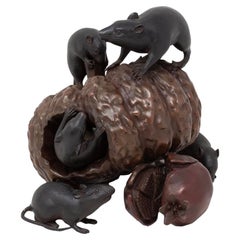
Japanese Meiji Bronze Rats Okimono by Shosai with Pumpkin and Pomegranate
Located in Newark, England
FREE WORLDWIDE SHIPPING
From our Japanese collection, we’re pleased to offer this finely cast Meiji period bronze okimono by Shosai. The group depicts several rats gathered around ...
Category
Antique Late 19th Century Japanese Meiji Metalwork
Materials
Bronze
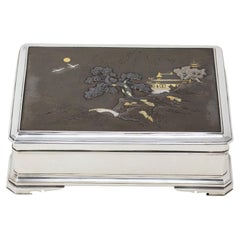
Japanese Silver and Shibuichi Box by Hiroteru Meiji Period
Located in Newark, England
FREE WORLDWIDE SHIPPING
From our Japanese collection, we’re delighted to offer this beautifully made Japanese Silver and Shibuichi Box by Hiroteru 廣照, dating to the late Meiji peri...
Category
Early 20th Century Japanese Meiji Metalwork
Materials
Metal, Gold, Silver
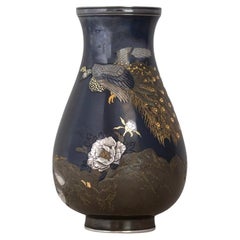
Japanese Shakudo and Mixed Metal Vase by Shuho Meiji Period
Located in Newark, England
FREE WORLD WIDE SHIPPING
From our Japanese collection, we’re thrilled to present this finely made Japanese mixed metals vase from the Meiji period (1868–1912), by Shuho.
The vase ...
Category
Early 20th Century Japanese Meiji Metalwork
Materials
Metal
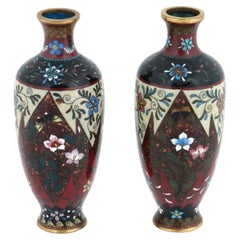
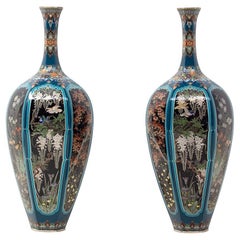
Japanese Cloisonné Enamel Vase Pair by Ota Hyozo, Meiji Period
Located in Newark, England
FREE WORLDWIDE SHIPPING ON ALL OUR COLLECTION - MORE IMAGES AVAILABLE UPON REQUEST
MEIJI PERIOD (1868-1912)
From our Japanese collection we are delighted to present this exceptio...
Category
Antique Late 19th Century Japanese Meiji Metalwork
Materials
Enamel
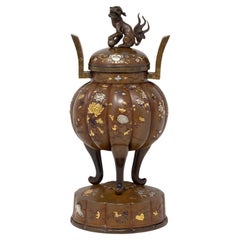
Japanese Bronze and Mixed Metals Koro by Kumagai, Meiji Period
Located in Newark, England
FREE WORLDWIDE SHIPPING
From our Japanese collection, we are pleased to present this Japanese Bronze and Mixed Metals Koro by Kumagai, dating to the Meiji Period (1868–1912).
The ...
Category
Antique Late 19th Century Japanese Meiji Metalwork
Materials
Gold, Silver, Bronze
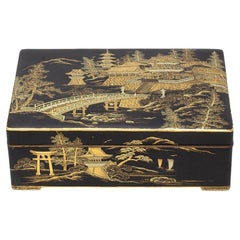
Japanese Mixed Metals Box by Fujii Yoshitoyo, Meiji Period
By Fujii Yoshitoyo
Located in Newark, England
IMPRESSIVE SIZE MIXED METALS BOX
From our Japanese collection, we are pleased to offer this Japanese Mixed Metals Box by Fujii Yoshitoyo.
This substantial rectangular box, raised u...
Category
Antique Late 19th Century Japanese Meiji Metalwork
Materials
Metal, Gold Plate, Silver, Brass
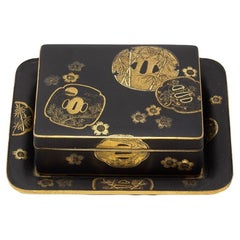
Antique Japanese Meiji Period Tsuba Decorated Box and Dish by Fujii Yoshitoyo
By Fujii Yoshitoyo
Located in Newark, England
Original Box and Dish Pair
From our Japanese collection, we are pleased to offer this Japanese Komai Style Box and Dish Fujii Yoshitoyo. The Box of slim rectangular shape seated upo...
Category
Antique Late 19th Century Japanese Meiji Metalwork
Materials
Metal
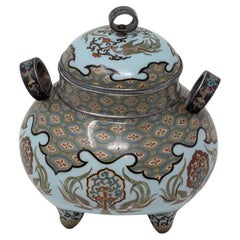
Japanese Meiji Period Cloisonne Enamel Koro Tsukamoto Hikokichi
By Tsukamoto Hikokichi
Located in Newark, England
Silver Mounted
From our Japanese collection, we are thrilled to offer this Japanese Cloisonne Enamel Koro by Tsukamoto Hikokichi. The Cloisonne Enamel Koro of exceptional quality sh...
Category
Early 20th Century Japanese Meiji Metalwork
Materials
Metal, Enamel
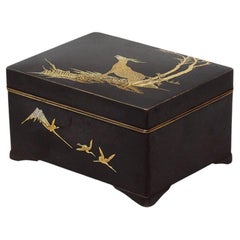
Japanese Meiji Period Damascene Box by Ashizuki with Gold and Silver
Located in Newark, England
INLAID WITH A GOLD AND SILVER DEER
From our Japanese collection we are pleased to offer this Japanese Damascene Box by Ashizuki. The Japanese Box of re...
Category
Antique 19th Century Japanese Meiji Metalwork
Materials
Gold, Silver, Brass, Iron
Japanese Antique Cloisonne Enamel Vase Hayashi Kodenji
Located in Newark, England
MEIJI PERIOD (1868-1912)
From our Japanese collection, we are delighted to introduce this good size Japanese Cloisonne Enamel Vase. The Vase of gently tapered form with a pinched n...
Category
Antique Early 1900s Japanese Meiji Metalwork
Materials
Gold, Silver, Enamel
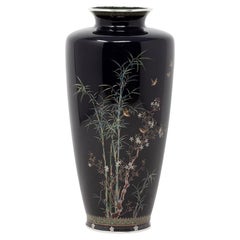
Japanese Meiji Period Cloisonne Enamel Vase by Ando Jubei
By Ando Jubei
Located in Newark, England
Free international shipping
Ando Cloisonne Company Mark
From our Japanese collection, we are delighted to introduce this Japanese Cloisonne Enamel Vase by Ando Jubei. The Cloisonn...
Category
Antique Early 1900s Japanese Meiji Metalwork
Materials
Enamel, Wire
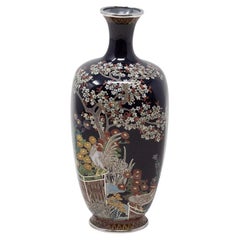
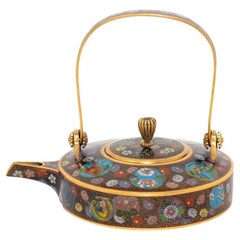
Japanese Meiji Period Cloisonne Enamel Sake Pot
Located in Newark, England
Fine Japanese Meiji period cloisonne enamel Sake pot. The Sake pot of rounded form with with clean edges profusely decorated with blossoming flowers throughout upon a black ground ba...
Category
Antique Late 19th Century Japanese Meiji Metalwork
Materials
Metal, Enamel
Related Items
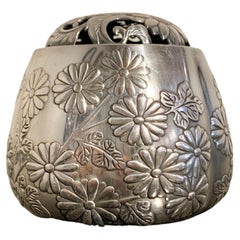
Japanese Silver Incense Burner, Akoda Koro, by Nomura, Meiji Period, Japan
Located in Austin, TX
A lovely and luxurious Japanese silver incense burner of lobed melon form, akoda koro, marked jungin and signed Nomura, Meiji Period, circa 1900, Japan.
The silver koro...
Category
Vintage 1910s Japanese Meiji Metalwork
Materials
Silver, Sterling Silver

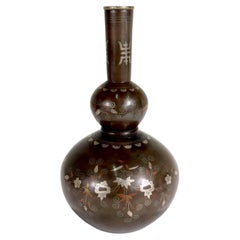
Antique Signed Japanese Meiji Period Mixed Metals Bronze Double Gourd Form Vase
Located in Philadelphia, PA
A fine antique Japanese bronze vase.
From the Meiji Period.
With copper and silver floral and vine and butterfly inlay as well a kanji symbol to the neck (possibly a stylized f...
Category
Early 20th Century Japanese Meiji Vases
Materials
Silver, Bronze, Copper
$895
H 6.88 in Dm 3.88 in
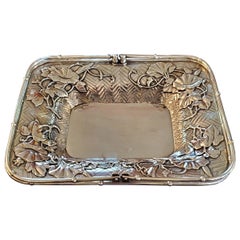
Japanese Meiji Period Sterling Silver 2 Handled Basket by Katsu Miyamoto
By Miyamoto Shoko 1
Located in Dallas, TX
PRESENTING a GORGEOUS, VERY HIGH QUALITY and EXTREMELY RARE piece of Japanese Meiji Period Sterling Silver 2 Handled Basket by Katsu Miyamoto.
EXQUISITE, EXCEPTIONAL, RARE & IMPORTANT!
This is definitely a Meiji Period piece due to the fact that it is marked with the sterling silver mark “jungin”.
The Meiji period was from 1868 to 1912 and in 1928 a law was introduced in Japan compelling the use of decimal marks for silver.
This pre-dates that decimalization law.
We are of the opinion that it is from circa 1900.
Miyamoto Shoko was founded in 1880 as the first silverware specialty shop. In 1899, Miyamoto Shoko’s silverwares were ordered by the family members of the Emperor of Japan, and to this day, they are making fine and graceful handicrafts with skillful craftsmen.
Loved by numerous customers since the Meiji era, Miyamoto Shoko’s products have also been given to Princess Mako and Princess Kako of Akishino, as well as Princess Aiko Toshinomiya, on their birthdays.
Katsu Miyamoto (宮本勝), in 1880, in order to increase the sales of tobacco and cigarettes to foreigners founded the Moyamoto Shoko company, which produced different silverwares in general and particularly silver cigarette cases. Miyamoto’s first name, Katsu (勝) in some sources is written as “Masaru”, since 勝 kanji can be pronounced in both ways.
This basket is of the HIGHEST QUALITY imaginable!
The top of the basket has the MOST GORGEOUS repousse work of flowers, probably lotus flowers, with leaves and foliage. It has an underlying chevron effect chasing, reflecting parquetry.
The 2 handles are cast in the form of bamboo handles.
The rim of the top likewise is cast as bamboo.
The base is equally stunning in a different way!
It is chased with a chevron effect, like parquetry flooring and the four feet simulate pieces of sliced bamboo with an interlinking gallery of support columns, likewise, simulating bamboo.
The QUALITY of WORKMANSHIP is OUTSTANDING!
The pieces weighs exactly 525 grams.
This piece takes my breath away!
This is one for the SERIOUS COLLECTOR of EXQUISITE AND RARE Japanese silver. You will not find another like it, for sale ANYWHERE ELSE IN THE WORLD …… I know as I have searched!
Provenance: Acquired from a Dallas Private Collector.
Dimensions: 9.6 inches wide, 7.6 inches deep and 2.75 inches tall ( 7.25 inches tall with handles up)
Condition: Very good. It looks like the base 4 legged gallery, has been repaired/re-attached to the base, but otherwise it is excellent and of Museum quality.
The Meiji period (明治時代 Meiji-jidai?), also known as the Meiji era, is a Japanese era which extended from October 23, 1868 through July 30, 1912.[1] This period represents the first half of the Empire of Japan during which Japanese society moved from being an isolated feudal society to its modern form. Fundamental changes affected its social structure, internal politics, economy, military, and foreign relations. The period corresponded with the reign of Emperor Meiji after 1868, and lasted until his death in 1912. It was succeeded by the Taishō period upon the accession of Emperor Taishō to the throne.
Solid silver pieces...
Category
Early 20th Century Japanese Meiji Metalwork
Materials
Sterling Silver
$7,250
H 7.25 in W 9.6 in D 7.6 in
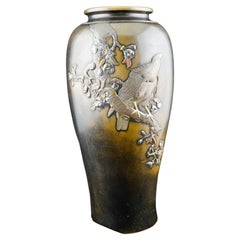
Japanese MIxed Metals and Bronze Meiji Period Vase by Nogawa
By Ando Jubei
Located in Sarasota, FL
Japanese mixed metal and bronze Meiji period finely cast and inlaid vase of an eagle in a tree. Marked for Nogawa workshop and signed by maker on the side.
Category
Antique Late 19th Century Anglo-Japanese Metalwork
Materials
Silver, Bronze
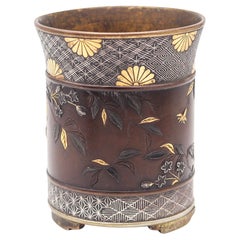
MEIJI Period Japan 1890 Imperial Shakudo Gold Mixed Metals Brush Vase-Pot
Located in Miami, FL
A brush pot from the Meiji imperial period.
This is a beautiful brush vase-pot created in the Imperial Japan during the early Meiji period (1868-1912), circa 1890. The fabulous roun...
Category
Antique 1890s Japanese Meiji Metalwork
Materials
Gold, Silver, Bronze
$4,025 Sale Price
30% Off
H 3.3 in Dm 2.75 in
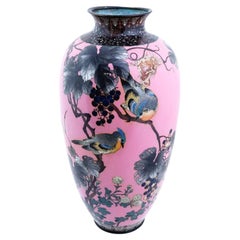
Large Antique Meiji Japanese Cloisonne Enamel Pink Vase W Birds
Located in Long Island City, NY
A large Japanese Meiji period cloisonne enameled vase with a scene of birds, butterflies, and flowers on the pink background and borders with colorful decoration. Collectible Orienta...
Category
Antique Late 19th Century Japanese Meiji Metalwork
Materials
Enamel
$2,250 Sale Price
50% Off
H 17 in Dm 8 in
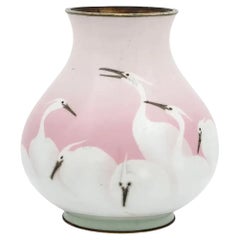
Japanese Meiji Era Wireless Cloisonne Pink Crane Enamel Vase
Located in Long Island City, NY
An antique Japanese copper vase with wireless cloisonne enamel design. Late Meiji era, before 1912. Round shape with pronounced base. The piece is decorated with a stork or crane bir...
Category
Antique Late 19th Century Japanese Meiji Metalwork
Materials
Copper, Enamel
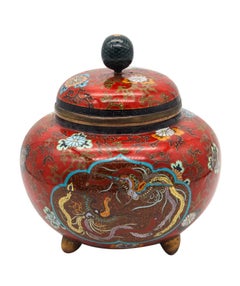
JAPAN IMPERIAL 1900 Meiji Period Tripode Koro Censer In Cloisonné Enamel With
Located in Miami, FL
Japanese tripod Koro from the Meiji Period (1868-1912).
This is a rare and beautiful antique koro censer, created in the imperial Japan during the Meiji period (1868-1912), circa 1900. It was carefully crafted in solid bronze and copper with silver wires and embellished with applications of polychromatic Cloisonné enamels and aventurine. The designs depict organics and natural motifs such mythological animals and flowers.
The Chrysanthemum Symbol
In Imperial Japan, the chrysanthemum (Kiku) was a potent symbol of the imperial family and the emperor himself, representing longevity, royalty, and divine power. The 16-petaled chrysanthemum is the Imperial Seal and crest, found on passports, coins, and the Chrysanthemum Throne. This association dates back to the Kamakura period (1185–1333), particularly with Emperor Go-Toba's fondness for the flower, establishing its link to imperial authority and lineage. The connection between the chrysanthemum and the imperial family began when Emperor Go-Toba adopted it as a personal emblem, aligning it with the strength and refinement of the emperor's rule. During the Meiji Period, the 16-petaled chrysanthemum crest, solidifying the association with the imperial family, was established during this time.
The Meiji Imperial Period
This is an era of Japanese history that extended from October 23, 1868 to July 30, 1912.The Meiji era was the first half of the Empire of Japan, when the Japanese people moved from being an isolated feudal society at risk of colonization by Western powers to the new paradigm of a modern, industrialized nation state and emergent great power, influenced by Western scientific, technological, philosophical, political, legal, and aesthetic ideas. As a result of such wholesale adoption of radically different ideas, the changes to Japan were profound, and affected its social structure, internal politics, economy, military, and foreign relations. The period corresponded to the reign of Emperor Meiji. It was preceded by the Keiō era and was succeeded by the Taishō era, upon the accession of Emperor Taishō.
Country: Imperial Japan.
Period: Meiji, 1890-1910.
Technique: Silver Wire Cloisonné over copper and bronze.
Weight: 416.80 Grams, (0.417 Kg).
Measurements:118 mm by 115 mm (4.65 x 4.52 Inches).
Koro
This term refers to a Japanese censer, incense burner, perfume burner or pastille burner is a vessel made for burning incense or perfume in some solid form. They vary greatly in size, form, and material of construction, and have been in use since ancient times throughout the world. They may consist of simple earthenware bowls or fire pots to intricately carved silver or gold vessels, small tabletop objects a few centimeters tall to as many as several meters high. Many designs use openwork to allow a flow of air. In many cultures, burning incense has spiritual and religious connotations, and this influences the design and decoration of the censer.
Cloisonné
This is an enameling technique in which the pattern is formed by wires soldered to the surface of the object to be decorated, which is usually made from copper, forming cells or cloisons, each of which holds a single colour of enamel paste which is then fired, and ground and polished. The champleve technique also uses an enameling technique, but the cells are formed by carving into the surface of the object, or in the casting. The cloisonne technique has been in use since the 12th century BC in the west, but the technique did not reach China until the 13th or 14th century. It became popular in China in the 18th century. Initially bronze or brass bodies were used, and in the 19th century copper, at which time the quality of the items produced began to decline. Chinese cloisonné is the best-known enamel cloisonné, though the Japanese produced large quantities from the mid-19th century, of very high technical quality. In the west the cloisonne technique was revived in the mid-19th century following imports from China, and its use continued in the Art Nouveau and Art Deco periods.
Condition: Basically, is in great antique condition, near mint, with insignificant and minimal usage, in great condition. All parts are secured in the settings. This Japanese Meiji Koro...
Category
Antique Early 1900s Japanese Meiji Metalwork
Materials
Silver, Bronze, Copper, Enamel
$1,398 Sale Price
30% Off
H 4.65 in Dm 4.52 in
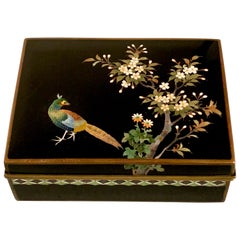
Japanese Cloisonne Box by Inaba, Meiji Period, circa 1900, Japan
By Inaba Cloisonne Co.
Located in Austin, TX
A fine Japanese cloisonne hinged box with pheasant and autumn foliage, by Inaba Nanaho and the Inaba Cloisonne Company, Meiji period, circa 1900, ...
Category
Antique Early 1900s Japanese Meiji Metalwork
Materials
Copper, Enamel, Metal
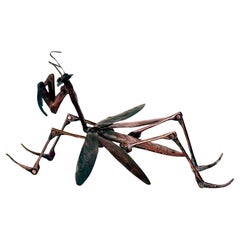
Japanese Articulate Praying Mantis Jizai Okimono Myochin Hiroyoshi Meiji
By Myochin Hiroyoshi
Located in Atlanta, GA
A rare articulate praying mantis made by Myochin Hiroyoshi in the late Meiji Period circa 1890-1900s. As an ornamental display item, this type of item is known in Japanese as Jizai O...
Category
Early 20th Century Japanese Meiji Metalwork
Materials
Copper
$2,000
H 2.5 in W 3 in D 4.5 in
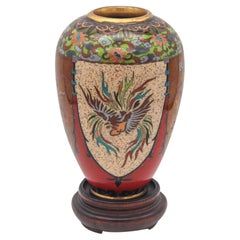
Japan 1890 Meiji Period Decorative Vase In Cloisonné Enamel With Wood Base
Located in Miami, FL
Japanese vase from the Meiji Period (1868-1912).
Beautiful antique decorative vase, created in Japan during the Meiji period (1868-1912), circa 1890s. It was carefully crafted in so...
Category
Antique 1890s Japanese Meiji Metalwork
Materials
Bronze, Enamel
$488 Sale Price / set
30% Off
H 4.5 in Dm 3.5 in
Antique Pair Of Meiji Japanese Cloisonne Enamel Vases
Located in Long Island City, NY
A pair of identical antique Japanese copper vases with cloisonne enamel design. Late Meiji period, before 1912. Elongated baluster shape with pronounced neck. Floral ornament against...
Category
Antique Late 19th Century Japanese Meiji Metalwork
Materials
Copper, Enamel