Jan s Co Fine French Antiques Inc. Vases
to
10
12
9
3
2
1
2
2
1
10
9
7
6
3
12
7
5
5
3
3
Height
to
Width
to
12
12
12
1
1
1
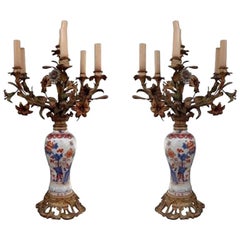
Pair 19th Century Japanese Porcelain and Gilt Bronze Mounted Torchere Floor Lamp
By Imari Porcelain
Located in Los Angeles, CA
A fine pair of 19th century Japanese porcelain and French gilt bronze mounted thirteen-light celadon torchiere, floor lamp candelabra. Wired for ...
Category
Antique 19th Century Japanese Rococo Floor Lamps
Materials
Bronze
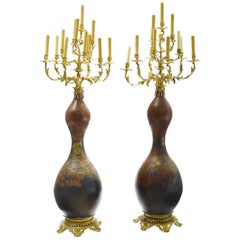
Impressive Pair 19th Century Japanese Meiji Period Export Blue Porcelain Vases
Located in Los Angeles, CA
A Large and Impressive 19th Century Pair of Japanese Meiji Period Export Blue-Celeste, White and Porcelain Vases. The ornately decorated bottle-shaped celadon vases, each with feline decorations amongst tree-branches and parcel-gilt and ruby-red painted flowers. The bottom of one signed in Japanese “Dai...
Category
Antique 19th Century Japanese Meiji Vases
Materials
Porcelain

$24,964 Sale Price / set
49% Off
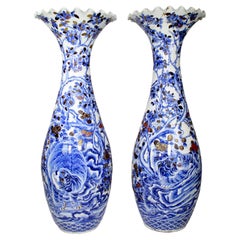
Fine 19th Century Vienna-Style Porcelain Vase
Search for Love
by Pirkenhammer
By Pirkenhammer
Located in Los Angeles, CA
A Very Fine and Impressive Bohemian 19th Century Vienna-Style Neoclassical Revival Style Pirkenhammer Porcelain Vase - Urn. The ovoid shaped finely painted all around body with allegorical scenes representing 'The Search for Love', with one side depicting a pensive maiden seated on a rock form by the seashore, the opposite side depicting a maiden, also seated by the seashore, being visited by a love-cupid (cherub or angel), flanked by a pair of finely detailed double-headed snake-form 24 carat gilt handles centered with mask terminals, raised on an attached circular gilt, cream and blue Celeste decorated plinth. Stamped with an underglaze black printed crossed hammers mark and further mark "O.P.C.N. / RAD" to the underside. The associated and later domed cobalt-blue, cream and gilt decorated porcelain cover-lid with a cream and gilt bud finial, not original to the vase. Signed "Al Eckardt". Circa: Bohemia, 1890-1894.
The porcelain painter A. Louis Eckardt is mentioned by Waltraud Neuwirth, Porzellanmaler-Lexicon (1977), Vol. I, p.251 as working from the Prager Strasse in Dresden in 1894. The Bohemian Pirkenhammer factory was founded in 1803, and in the second half of the 19th century the factory was exporting to Vienna and London. The Prikenhammer marks on these vases show they were made after 1887, and it is therefore likely this vase can be dated between the time of the introduction of the mark for this Bohemian factory, and the time Eckhardt returned to Dresden in 1894. Eckhardt is also recorded as a painter of Berlin plaques. The Pirkenhammer porcelain factory was established in 1802 in Karlovy Vary using...
Category
Antique Late 19th Century Czech Neoclassical Revival Vases
Materials
Porcelain
$12,850 Sale Price
48% Off
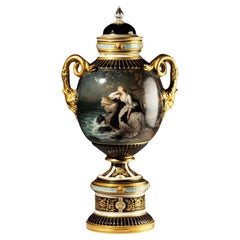
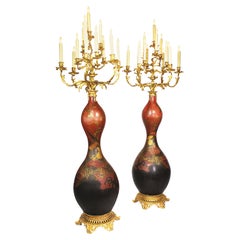
Pair 19th Century Japanese Imari Porcelain
Gilt-Bronze Torchere Candelabra
By Imari Porcelain
Located in Los Angeles, CA
A fine Pair of 19th century Japanese Imari Porcelain and French Gilt-Bronze Mounted Thirteen-Light Celadon Torchere Candelabra. The bottle-shaped Japonisme vases with a Royal red background, decorated with parcel-gilt and black soaring eagles in the hunt within a forestall scene. Each Vase fitted and surmounted with a French 19th century Louis XV Style 13-Light scrolled candelabrum and all raised on a circular pierced gilt-bronze plinth. circa: 1880.
Imari Porcelain (????) is the name for Japanese porcelain wares made in the town of Arita, in the former Hizen Province, northwestern Kyushu. They were exported to Europe extensively from the port of Imari, Saga, between the second half of the 17th century and the first half of the 18th century. The Japanese as well as Europeans called them Imari. In Japanese, these porcelains are also known as Arita-yaki (???). Imari or Arita porcelain has been continously produced up through the present day.
Characteristics
Though there are many types of Imari, Westerners' conception of Imari in the popular sense is associated only with a type of Imari produced and exported in large quantity in mid-17th century. This type is called Kinrande. Kinrande Imari is colored porcelain with cobalt blue underglaze and red and gold overglaze. The color combination was not seen in China at that time. Traditional Ming dynasty color porcelain used dominantly red and green, probably due to scarcity of gold in China, whereas gold was abundant in Japan in those days. The subject matter of Imari is diverse, ranging from foliage and flowers to people, scenery and abstractions. Some Imari design structures such as kraak style were adopted from China, but most designs were uniquely Japanese owing to the rich Japanese tradition of paintings and costume design. The porcelain has a gritty texture on the bases, where it is not covered by glaze. There is also blue and white Imari. Kakiemon style Imari is another type of Imari, but it tends to be categorized separately in Europe.
History
"Imari" was simply the trans-shipment port for Arita wares. It was the kilns at Arita which formed the heart of the Japanese porcelain industry.
Arita's kilns were set up in the 17th century, when kaolin was discovered in 1616 by the immigrant Korean potter, Yi Sam-pyeong (1579–1655). (He may also be known by the name, "Kanage Sambei".) Yi Sam-Pyeong, along with his extended family of 180 persons, left Korea on the offer of a privileged position in Japan. This decision was made after the occurrence of certain Japanese invasions of Korea. After Yi Sam-Pyeong's discovery, his kilns began to produce revised Korean-style blue and white porcelains, known as "Shoki-Imari".
In the mid-17th century there were also a lot of Chinese refugees in Northern Kyushu due to the turmoil on Chinese continent, and it is said one of them brought coloring technique to Arita. Thus Shoki-Imari developed into Ko-KutaniImari. Ko-Kutani was produced around 1650 for both export and domestic market. Blue and white porcelain continued to be produced and they are called Ai-Kutani. Ko-Kutani Imari for the export market usually adopted Chinese design structure such as kraak style, whereas Ai-Kutani for the domestic market were highly unique in design and are accordingly valued very much among collectors.
Ko-Kutani style evolved into Kakiemon style Imari, which was produced for about 50 years around 1700. Imari achieved its technical and aesthetic peak in Kakiemon style, and it dominated European market. Blue and white Kakiemon is called Ai-Kakiemon. Kakiemon style transformed into Kinrande in the 18th century. Kinrande used blue underglaze and red and gold overglaze, and later some other colors.
Imari began to be exported to Europe because the Chinese kilns at Ching-te-Chen were damaged in the political chaos and the new Qing dynasty government stopped trade in 1656–1684. Exports to Europe were made through the Dutch East India Company, but the designation "Imari Porcelain" in Europe connotes Arita wares of mostly Kinrande Imari.
Export of Imari to Europe stopped in mid-18th century when China began export to Europe again, since Imari was not able to compete against China due to high labor cost. By that time, however, both Imari and Kakiemon style were already so popular among Europeans, Chinese export porcelain copied both Imari and Kakiemon style, which is called Chinese Imari. At the same time, European kilns, such as Meisen also tried to copy Imari and Kakiemon.
Export of Imari surged again in late 19th century (Meiji era) when Japonism flourished in Europe. Thus in western world today, two kinds of Imari can...
Category
Antique 19th Century Japanese Japonisme Floor Lamps
Materials
Bronze, Ormolu
$18,950 Sale Price / set
61% Off
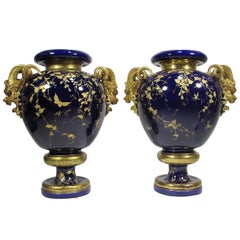
Fine Pair of 19th Century Cobalt-Blue and Parcel-Gilt Majolica Figural Vases
By Minton
Located in Los Angeles, CA
A very fine pair of 19th century cobalt-blue and parcel-gilt majolica figural vases, with figures of satyrs and gilt decorations of flowers and butterflies. Probably English, circa 1...
Category
Antique 19th Century British Other Vases
Materials
Ceramic
$19,850 Sale Price / set
43% Off
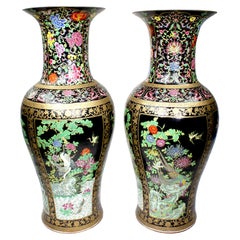
A Pair of Tall Chinese Export Porcelain Figural Vases with Birds and Flowers
Located in Los Angeles, CA
A Pair of Tall Chinese export porcelain figural vases. The ovoid porcelain bodies decorated with colorful flowers, tropical birds, tree...
Category
Late 20th Century Chinese Chinese Export Porcelain
Materials
Porcelain
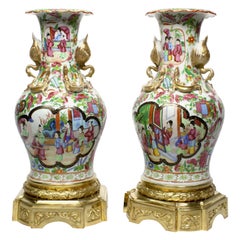
Pair Louis XVI Style Chinese-Export Ormolu Mounted Famille Rose Porcelain Vases
Located in Los Angeles, CA
A fine pair of Louis XVI style chinoiserie gilt-bronze mounted Chinese export famille rose porcelain vases. The ovoid hand painted porcelain body with dual scenes of a sword presenta...
Category
Antique Early 1900s Chinese Chinese Export Vases
Materials
Ormolu
$6,338 Sale Price / set
24% Off
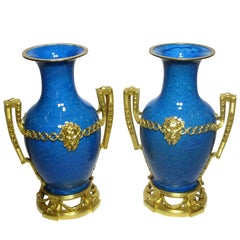
Pair French/Chinese 19th Century Louis XVI Style Ormolu-Mounted Porcelain Vases
Located in Los Angeles, CA
A very fine and impressive pair of French 19th century Louis XVI style ormolu-mounted blue-glazed enamel over bronze vases with allegorical masks, rings and wreaths. The porcelain is...
Category
Antique 19th Century French Louis XVI Vases
Materials
Bronze, Ormolu
$24,950 Sale Price / set
49% Off
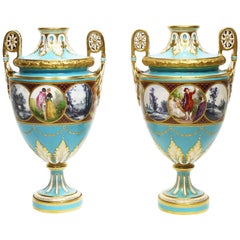
Pair of English 19th Century Turquoise Ground Painted Porcelain Vases by Minton
By Edouard Rischgitz, Minton
Located in Los Angeles, CA
A fine pair of English 19th century turquoise ground and parcel-gilt painted porcelain vases, urns by Minton. The tapered shaped urns raised on a slender stem with turquoise grounds ...
Category
Antique 19th Century English Romantic Vases
Materials
Porcelain
$3,450 Sale Price / set
22% Off
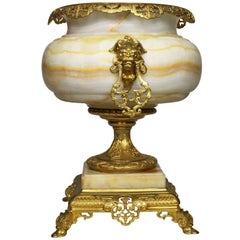
19th Century Onyx and Ormolu-Mounted Orientalist Urn, Attributed Eugène Cornu
By Eugène Cornu
Located in Los Angeles, CA
A large and impressive French 19th century onyx and ormolu-mounted Orientalist style figural urn, Attributed to Eugène Cornu (French, d. 1875) and G. Viot...
Category
Antique 19th Century French Revival Urns
Materials
Onyx, Bronze
$8,495 Sale Price
31% Off
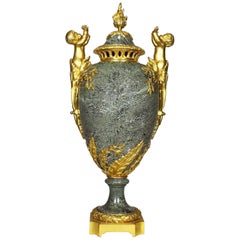
French 19th-20th Century Louis XVI Style Gilt-Bronze
Marble Urn with Children
Located in Los Angeles, CA
A fine French 19th-20th century Louis XVI style figural gilt bronze-mounted and Vert Maurin marble covered urn. The domed cover centred by a flambeau finial, the ovoid body flanked b...
Category
Antique Early 1900s French Louis XVI Urns
Materials
Marble, Bronze
$5,480 Sale Price
20% Off
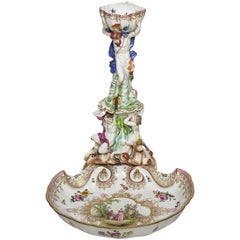
Fine and Rare German 19th Century Figural Porcelain Liquor Dispenser Fountain
By Meissen Porcelain
Located in Los Angeles, CA
A very fine and rare German, 19th century figural porcelain liquor dispenser fountain. The two-part allegorical Baroque style fountain depicting a sta...
Category
Antique 19th Century German Baroque Revival Porcelain
Materials
Bronze
$9,850 Sale Price
45% Off
Related Items
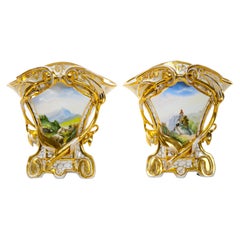
19th Century Parcel Gilt
Hand Painted Decorative Paris Porcelain Vases
Located in Tarry Town, NY
Discover the exquisite beauty of our 19th century hand painted and gilt porcelain decorative vase, adorned with a meticulously hand-decorated scene design. This remarkable piece is ...
Category
Antique 19th Century French Vases
Materials
Porcelain, Paint
$3,900 / set
H 12 in W 12 in D 8 in
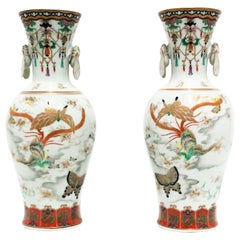
Art Deco Japanese Porcelain Vases Meiji Period, Pair
Located in New York, NY
A very beautiful pair of polychromed Kutani porcelain Japanese vases, circa early 20th century, Meiji period, Japan. Vases are hand painted and designed with two different sides; one...
Category
Early 20th Century Japanese Meiji Porcelain
Materials
Porcelain
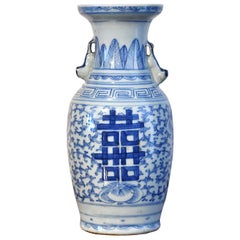
Chinese Qing Blue and White Porcelain Vase with Foo Dogs and Double Happiness
Located in INTERLAKEN, NY
A Qing Chinese porcelain vase with baluster-form, hand-painted with cobalt blue decoration of "shuang-xi" or "double happiness" symbol representing happiness in marriage, amid contin...
Category
Early 20th Century Chinese Qing Porcelain
Materials
Porcelain
$1,112 Sale Price
20% Off
H 10 in Dm 4.75 in
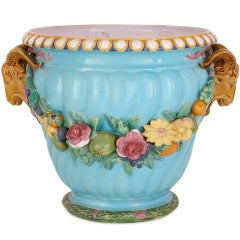
19th Century Majolica Jardinière by Minton and Carlo Marochetti
By Minton
Located in London, GB
This exquisite jardinière was manufactured by the celebrated English company Minton, who are famous for their ceramics. It was designed by Baron Carlo Marochetti (1805-1867), an Italian-born sculptor who worked in London in the latter part of his career. His most famous work is the bronze sculpture of Richard the Lionheart...
Category
Antique 19th Century English Victorian Planters, Cachepots and Jardinières
Materials
Majolica
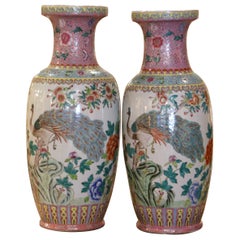
Pair of Mid-Century Chinese Famille Rose Hand Painted Porcelain Vases
By CANTON FAMILLE ROSE
Located in Dallas, TX
These elegant colorful Famille Rose vases were created in China circa 1950. Standing tall, the large vessels feature a flared rim and tapered body. Each body is adorned with vibrant ...
Category
Mid-20th Century Chinese Vases
Materials
Porcelain
$1,950 / set
H 23.5 in Dm 9.25 in
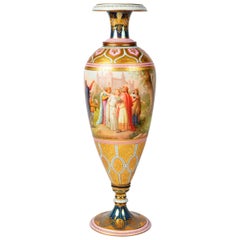
19th Century Vienna Porcelain Vase
By Imperial Vienna Porcelain
Located in Brighton, Sussex
A very good quality 19th century Vienna porcelain vase, depicting classical scenes and gilded borders.
Category
Antique 19th Century Austrian Vases
Materials
Porcelain
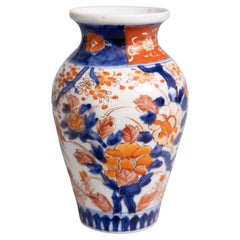
Antique 19th Century Japanese Imari Porcelain Vase
By Imari Porcelain
Located in Pearland, TX
19th-Century Japanese Imari porcelain vase. This fine vase have a lovely shape and hand painted floral designs in the traditional Imari colors.
Category
Antique 19th Century Japanese Japonisme Vases
Materials
Porcelain
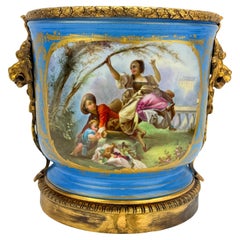
19th C. French Sevres-Style Porcelain Cachepot with Gilt Bronze Lion Mounts
By Cristalleries De Sevres
Located in Atlanta, GA
A richly decorated French porcelain cachepot in the style of Sèvres, dating to the late 19th century and mounted in finely chased gilt bronze. One side features a Rococo fête galante...
Category
Antique 19th Century French Rococo Planters, Cachepots and Jardinières
Materials
Bronze, Enamel
$1,250
H 9.5 in Dm 10.5 in
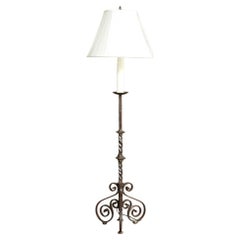
19th Century Torchere Wrought Iron Floor Lamp
Located in Dallas, TX
Forged from solid iron and still showing traces of its original painted finish that has achieved a Fine patina, this 19th century floor lamp was originally designed for a candle, and...
Category
Antique 1870s French Country Floor Lamps
Materials
Wrought Iron
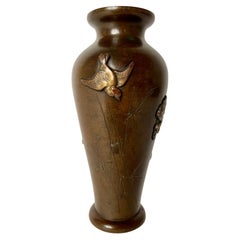
19th Century Japanese Bronze Vase With Gilt Decoration, Meiji Period
Located in Stamford, CT
19th century Meiji Period diminutive bronze vase with lovely etched and applied decoration. A raised gilt bird is shown flying above etched bamboo on one side, gilt applied lilies wi...
Category
Antique Late 19th Century Japanese Meiji Metalwork
Materials
Bronze
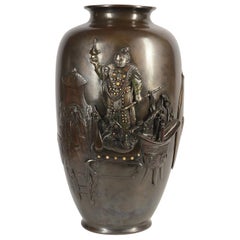
Large 19th Century Japanese Meiji Period Bronze Vase
Located in Brighton, Sussex
A large fine quality late 19th century (Meiji period 1868-1912) Japanese bronze vase. Having wonderful raised jeweled decoration depicting a merchant showing his wares. Measures: 58 ...
Category
Antique Late 19th Century Japanese Vases
Materials
Bronze
19th Century Pair of Imari Porcelaine Lamp Mounted Gilt Bronze
By Imari Porcelain
Located in Marseille, FR
19th century pair of porcelain lamp from Imari. Frame gilt bronze decorations of metal polychrome flowers.
Category
Antique 19th Century Chinese Chinese Export Ceramics
Materials
Porcelain