Johanna Schultz Wohnen Lacquer
to
1
1
1
1
1
1
1
1
1
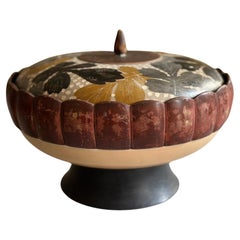
Antique Japanese lidded bowl from the Meiji period, lacquer
Located in Hamburg, DE
This antique Japanese lidded bowl from the Meiji period, around 1900, is a stunning example of traditional lacquer craftsmanship, combining aesthe...
Category
Antique Early 1900s Meiji Lacquer
Materials
Wood
Related Items
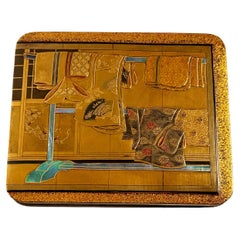
Japanese Tagasode (Whose Sleeves?) Lacquer Incense Box, Kobako, Meiji Period
Located in Austin, TX
A fine and unusual Japanese lacquer box for incense accessories, kobako, featuring a tagasode (whose sleeves?) design, Meiji Period, circa 1900, Japan.
The exquisite box of simple rectangular shape worked in maki-e lacquer, taka-maki-e, and raden, all against a lush ground of gold nashiji. Fitted with silver rims.
The main decorative element of the box depicts a six panel folding screen, byobu, showing an interior scene with kimono strewn over a rack, a motif known as tagasode (whose sleeves), all in raised taka-maki-e lacquer and inlaid raden.
The screen depicts an intimate room with tatami mats on the floor and sliding shoji doors in the background. The foreground depicts a large clothing...
Category
Antique Early 1900s Japanese Meiji Lacquer
Materials
Silver

$7,500
H 1 in W 4 in D 3.25 in
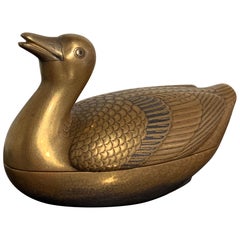
Small Japanese Lacquer Duck Incense Box, Kogo, Meiji Period, Late 19th Century
Located in Austin, TX
An exquisite Japanese Meiji Period small lacquer incense box, kogo, in the form of a duck or goose, late 19th century, Japan.
The delicate lacquer box, known as a kogo in Japanese, ...
Category
Antique Late 19th Century Japanese Meiji Lacquer
Materials
Lacquer
$2,900
H 1.5 in W 2.88 in D 1 in
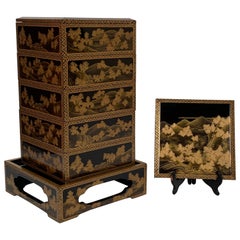
Japanese Maki-e Lacquer Stacking Box, Jubako, Meiji Period, Japan
Located in Austin, TX
A fine and impressive Japanese gold maki-e decorated black lacquer five-tier jubako with presentation tray, two lids, and the original tomobako storage box, Meiji period, late 19th c...
Category
Antique Late 19th Century Japanese Meiji Lacquer
Materials
Lacquer
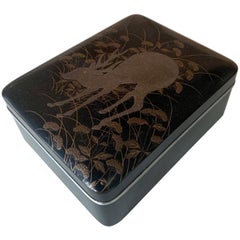
Japanese Rinpa Style Lacquer Box Meiji Period
Located in Atlanta, GA
A black lacquer tebako (hand box) with maki-e decoration and silver trim, circa late 19th century, Meiji period. The surface of the lid features a Rinpa style maki-e paint depicting ...
Category
Antique 1890s Japanese Japonisme Lacquer
Materials
Wood, Lacquer
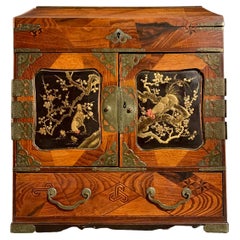
Japanese Marquetry and Lacquer Jewelry Chest, Meiji Period, circa 1900, Japan
Located in Austin, TX
A very attractive Japanese wood table top jewelry or collector's chest with marquetry and lacquer decoration, Meiji period, circa 1900, Japan. Previously in the collection of Asbjorn Lunde (1927 - 2017).
The chest is crafted in the form of a Chinese seal...
Category
Antique Early 1900s Japanese Meiji Lacquer
Materials
Wood, Softwood, Lacquer
$3,400
H 15.75 in W 14.25 in D 7 in
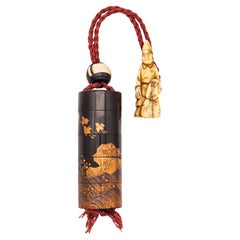
Japan 1870 Meiji Period Round Five Drawer Inro Lacquered Wood With Flying Cranes
Located in Miami, FL
Japanese Inro from the Meiji Period (1868-1912).
Beautiful Inro, created in Japan during the Meiji imperial period, circa 1870. It was carefully crafted in carved precious wood with applications of lacquer and decorated with orientalism patterns. All dan trays are attached together with a himo cord. The detailed craftsmanship was a true pleasure to behold.
Period: Meiji 1868-1912, Period of Emperor Mutsuhito.
Approximate Date: 1870.
Motif: Organic design with cascade landscape scene and five flying cranes.
Drawers: Five.
Shape: Cylinder. Very unusual and rare shape.
Technique: Carved wood, Lacquer, hiramaki-e, takamaki-e, Gilding.
Ojime: 17mm, round with Ebony wood.
Netsuke: Carved dressed...
Category
Antique 1870s Japanese Meiji Lacquer
Materials
Wood, Ebony, Giltwood, Lacquer
$2,089 Sale Price
30% Off
H 3.07 in Dm 1.18 in
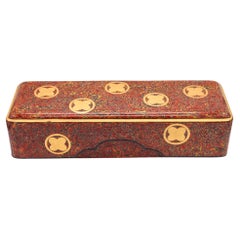
JAPAN 1900 Meiji Period Fubako Box In Hiramaki-e Lacquered Wood With Gilding
Located in Miami, FL
Fubako letters-box from the Japanese Meiji period (1868-1912).
Beautiful decorative Fubako letters box from the Japanese Imperial Meiji period, circa 1900. This box has been meticul...
Category
Antique Early 1900s Japanese Meiji Lacquer
Materials
Gold
$978 Sale Price
30% Off
H 2.75 in W 11.1 in D 3.75 in
JAPAN 1880 Meiji Period Tebako Box In Red Lacquered Wood With Abalone Inlaid
Located in Miami, FL
Presentation Tebako box from the Japanese Meiji period (1868-1912).
Beautiful decorative presentation Tebako box from the Japanese Imperial Meiji period, circa 1880. This box has been meticulously crafted in a squared cushioned shape in wood with kara coating Kobayashi red lacquer, gilding, black lacquer and inlaid decorations of abalone shell, Raden. Tebako literally means "portable box", it is a toilet box containing the objects necessary for washing and make-up, especially blush mirror...
Category
Antique 1880s Japanese Meiji Lacquer
Materials
Abalone, Wool, Lacquer

$2,695 Sale Price / set
30% Off
H 3.75 in W 6.75 in D 6.75 in
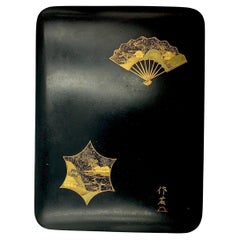
Japanese Meiji Period Antique Lacquer Box with Gold Maki-e Decoration
Located in New York, NY
A fine antique Japanese Meji Period lacquer box decorated with a fan and a stylized star shaped window in the maki-e technique. The fan at the top right corner, fully opened depictin...
Category
Antique 19th Century Japanese Meiji Lacquer
Materials
Lacquer
$1,700
H 4.5 in W 3.25 in D 1.88 in
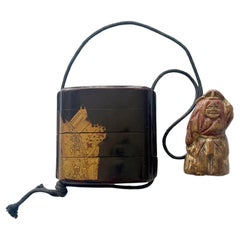
Japanese Lacquer Inro with Gold Maki-e and Carved Wood Netsuke Meiji Period
Located in Atlanta, GA
A Japanese four-case inro with a stringed carved wood netsuke circa 19th century. The inro has a near square form with rounded corners, The surface is decorated with gold hiramaki-e ...
Category
Antique 19th Century Japanese Meiji Lacquer
Materials
Wood, Lacquer
$1,500
H 2.4 in W 2.4 in D 0.5 in
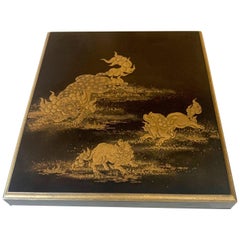
Japanese Lacquer Box with Fine Maki-e Decoration Meiji Period
Located in Atlanta, GA
A lacquered wood box with lid from Japan circa 19th century Meiji Period. The finely decorated box was used to store paper slips and small documents on the desk. It is overall finished with black lacquer (kuro) with sparse Mura-Nashiji effect outside and on the top surface of the lid, there are three Komainu, (sometimes known as Shishi or Japanese lions) frolicking and forming a circle in lively motion. Komainu are auspicious animals in Japanese cultures in both Shinto and Buddhism tradition. Originally from China, these animals symbolizes guardians to ward off evil spirits. Hiramaki-e was used in combination with carving and combing to render the lions with various surface textures. A gilt border with an slight angle was given to the lid and even the thin band is decorated with miniature floral scrolls. The interior of the box was finished in a dense nashiji. Underneath the lid, a cluster of peonies open lavishly by two gentle mounts. Takamaki-e (high relief) in both gold and silver were...
Category
Antique Late 19th Century Japanese Japonisme Lacquer
Materials
Wood, Lacquer
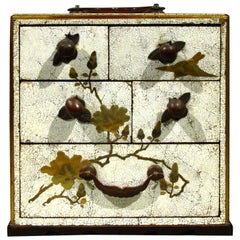
Signed Japanese White Lacquer and Maki-E Lacquer Tansu, Meiji Period
Located in Ottawa, Ontario
The case decorated overall in crackle-glaze white lacquer and fitted with a patinated metal carrying handle over three tiers of small drawers. The first two tiers are comprised of a ...
Category
Antique Late 19th Century Japanese Meiji Lacquer
Materials
Lacquer