Lincoln Glenn Mixed Media
to
5
13
8
6
5
6
Overall Width
to
Overall Height
to
1
35
2
1
3
1
8
9
5
4
3
18
12
1
20
14
1
1
22
17
13
9
6
4
4
4
3
1
22
10
38
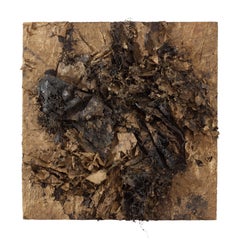
"Untitled" Gene Hedge, Mid Century, Abstract Collage, Urban Materials, Modernist
Located in New York, NY
Gene Hedge
Untitled, circa 1958
Mixed media
21 1/2 x 21 inches
Provenance
Estate of the artist
Gene Hedge was born (1928) and raised in rural Indiana. After military service, he b...
Category
1950s American Modern Mixed Media
Materials
Paper, Mixed Media
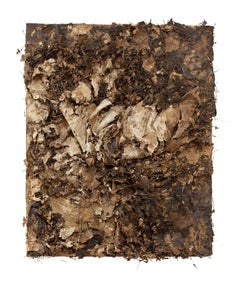
"Untitled" Gene Hedge, Modernist, Mid-Century, Abstract Collage, Dark Colors
Located in New York, NY
Gene Hedge
Untitled, 1963
Initialed and dated "H63" lower left
Mixed media
14 1/2 x 12 inches
Provenance
Estate of the artist
Gene Hedge was born (1928) and raised in rural Indian...
Category
1960s American Modern Mixed Media
Materials
Paper, Mixed Media
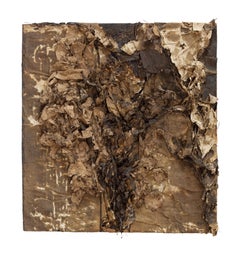
"Untitled" Gene Hedge, Mid-Century, Collage, Construction Materials, Urban
Located in New York, NY
Gene Hedge
Untitled, circa 1956
Mixed media
14 3/4 x 14 inches
Provenance
Estate of the artist
Gene Hedge was born (1928) and raised in rural Indiana. After military service, he b...
Category
1950s American Modern Mixed Media
Materials
Paper, Mixed Media
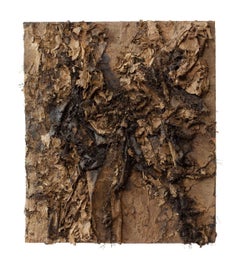
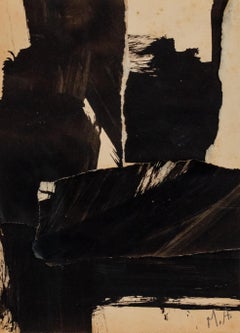
"Untitled" Gene Hedge, Abstract Composition, Dark Brown, Construction, Modernist
Located in New York, NY
Gene Hedge
Untitled, circa 1958
Mixed media
36 x 33 inches
Provenance
Estate of the artist
Gene Hedge was born (1928) and raised in rural Indiana. After military service, he brief...
Category
1950s American Modern Mixed Media
Materials
Paper, Mixed Media
"Untitled" Gene Hedge, Mid-Century, Modernist Mixed Media, Abstract Collage
Located in New York, NY
Gene Hedge
Untitled, circa 1958
Mixed media
48 x 32 1/2 inches
Provenance
Estate of the artist
Gene Hedge was born (1928) and raised in rural Indiana. After military service, he b...
Category
1950s American Modern Mixed Media
Materials
Mixed Media
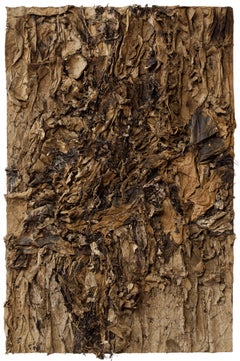
"Untitled" Gene Hedge, Found Objects, Metal, Abstract Modernist Composition
Located in New York, NY
Gene Hedge
Untitled, circa 1955
Mixed media
17 3/8 x 14 1/8 inches
Provenance
Estate of the artist
Gene Hedge was born (1928) and raised in rural Indiana. After military service, ...
Category
1950s American Modern Mixed Media
Materials
Metal
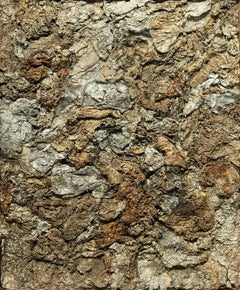
"Untitled" Gene Hedge, Mixed Media, Abstract Collage, Found Materials, Brown
Located in New York, NY
Gene Hedge
Untitled, circa 1956
Signed on the reverse
Mixed media
13 1/4 x 16 3/4 inches
Provenance
Estate of the artist
Gene Hedge was born (1928) and raised in rural Indiana. Af...
Category
1950s American Modern Mixed Media
Materials
Fiberglass, Mixed Media
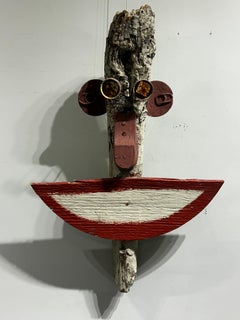
"Untitled - Face" Lonnie Holley, Mixed Media, Found and Assembled Objects
By Lonnie Holley
Located in New York, NY
Lonnie Holley
Untitled - Face , circa 1989
Mixed media sculpture, found and assembled objects
25 x 16 1/2 x 4 1/2 inches
Since 1979, Holley has dedicated his life to the realm of improvisational creativity. His artistic expressions and musical works, emerging from adversity and challenges, but even more so from a relentless curiosity and innate need, have taken form in various mediums such as drawing, painting, sculpture, photography, performance, music, and filmmaking. Holley’s sculptures are crafted from found objects, reflecting the ancient traditions of African American sculpture...
Category
1980s American Modern Mixed Media
Materials
Wood, Paint, Found Objects, Mixed Media
"Abare" Jules Olitski, Color-Field, Abstract Expressionist, Gestural Painting
By Jules Olitski
Located in New York, NY
Jules Olitski
Abare, 1987
Signed and dated on the reverse
Oil-based acrylic and water-based acrylic on plexiglass
44 3/4 x 23 5/8 inches
Provenance
The artist
Andre Emmerich Gallery...
Category
1980s Abstract Expressionist Abstract Paintings
Materials
Plexiglass, Oil, Acrylic
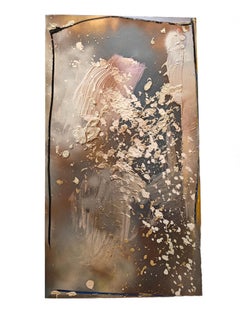
"Knickfaltung (Folded)" Herbert Zangs, Modernist, Folded Fabric, Textural Work
By Herbert Zangs
Located in New York, NY
Herbert Zangs
Knickfaltung (Folded), 1955
Signed and dated lower left
Cotton cloth folded and painted with dispersion
42 x 32 inches
Provenance
Private Collection, Krefeld, Germany
...
Category
1950s Abstract Mixed Media
Materials
Cotton, Paint
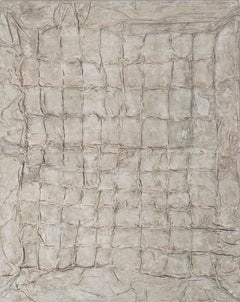
"Arches" Sam Gilliam, Acrylic and Glass Abstract, Washington Color School
By Sam Gilliam
Located in New York, NY
Sam Gilliam
Arches, 2014
Signed, titled and dated lower left; signed, titled, and inscribed "to Necia" on the reverse
Acrylic and glass on paper
10 1/4 x 14 inches
Provenance
The ar...
Category
2010s Color-Field Mixed Media
Materials
Glass, Mixed Media, Acrylic
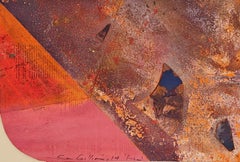
"Ruffled Waters" Harmony Hammond, Striped, Black and White, Abstract, Feminist
Located in New York, NY
Harmony Hammond
Ruffled Waters, 1980
Signed lower right
Mixed media on paper
18 1/8 x 24 inches
Provenance
Private Collection, New York
Heritage Auctions, Dallas, Contemporary Art W...
Category
1980s American Modern Mixed Media
Materials
Paper, Mixed Media
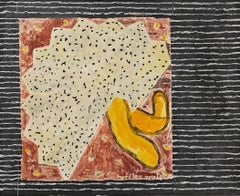
"Untitled" Seymour Franks, Mid-Century Abstract Swirling Composition
By Seymour Franks
Located in New York, NY
Seymour Franks
Untitled, circa 1948
Signed lower right
Mixed media on panel
15 1/4 x 22 1/2 inches
Seymour Franks, 1916-1981, originated from New York City, where he was born in 19...
Category
1940s Abstract Mixed Media
Materials
Mixed Media, Panel
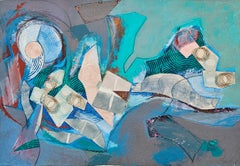
"Untitled" Judith Rothschild, Abstract Relief, White, Purple, Green, Geometric
By Judith Rothschild
Located in New York, NY
Judith Rothschild
Untitled, 1975
Signed lower left
Relief on board, acrylic case
16 7/8 x 40 x 2 inches
Provenance
The artist
Lee Ault & Company, New York
Annely Juda Fine Art, Lond...
Category
1970s Abstract Mixed Media
Materials
Paint, Paper, Board
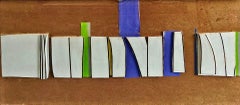
"Montage, Italian Minchiate Cards" Charles Green Shaw, Playing Cards Montage
By Charles Green Shaw
Located in New York, NY
Charles Green Shaw
Montage, Italian Minchiate Cards, circa 1935
Signed on label on verso
Antique Playing cards and mixed media
9 1/4 x 13 1/2 inches
Provenance
Washburn Gallery
Priv...
Category
1930s American Modern Mixed Media
Materials
Mixed Media
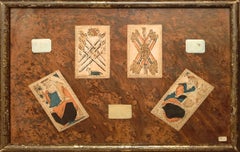
"Why Didn
t You Tell Me About Your Bicycle" Ray Johnson, Drawing, Mail Art
By Ray Johnson
Located in New York, NY
Ray Johnson
Why Didn't You Tell Me About Your Bicycle, Janurary 1968
Red ink on postcard
3 1/2 x 5 1/2 inches
Once described as New York’s “most famous unknown artist,” Ray Johnson...
Category
1960s Conceptual Mixed Media
Materials
Mixed Media
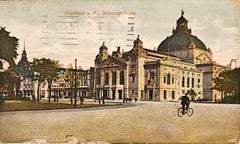
"Venice" Ray Johnson, Mail Art, Fluxus Mixed Media Collage, Dadaist Work
By Ray Johnson
Located in New York, NY
Ray Johnson
Venice
Signed lower right
Collage
6 x 4 1/2 inches
Once described as New York’s “most famous unknown artist,” Ray Johnson was a renowned maker of meticulous collages an...
Category
1960s Conceptual Mixed Media
Materials
Mixed Media
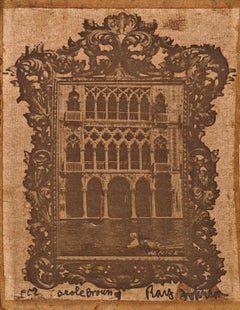
"Moon" Ray Johnson, Minimalist Mixed Media on Masonite, Fluxus Movement
By Ray Johnson
Located in New York, NY
Ray Johnson
Moon
Mixed media on Masonite
8 3/4 x 6 1/2 inches
Once described as New York’s “most famous unknown artist,” Ray Johnson was a renowned maker of meticulous collages and...
Category
1960s Conceptual Mixed Media
Materials
Masonite, Mixed Media
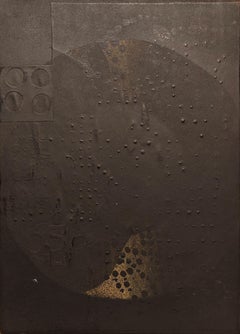
"Valentine" Ray Johnson, 2 Sided Collage, Pop Art, Dadaist, Mail Art, Fluxus
By Ray Johnson
Located in New York, NY
Ray Johnson
"Valentine"
Double sided collage
6 1/2 x 4 1/4 inches
Once described as New York’s “most famous unknown artist,” Ray Johnson was a renowned maker of meticulous collages...
Category
1960s Conceptual Mixed Media
Materials
Paper, Photographic Paper
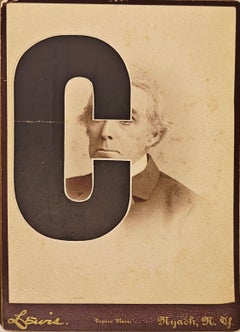
"Small Green Pale" Diana Kurz, Early 1960s Abstract Mixed Media Composition
By Diana Kurz
Located in New York, NY
Diana Kurz
Small Green Pale, circa 1960-61
Collage and mixed media on board
12 1/2 x 10 inches
Diana Kurz (born 1936) is an Austrian-born feminist painter. In 1938, Diana Kurz's fa...
Category
1960s Abstract Expressionist Mixed Media
Materials
Mixed Media, Board
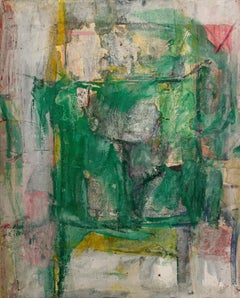
"Transparencies" Diana Kurz, Abstract Expressionist Mixed-Media Composition
By Diana Kurz
Located in New York, NY
Diana Kurz
Transparencies
Mixed media on board
16 x 12 inches
Diana Kurz (born 1936) is an Austrian-born feminist painter. In 1938, Diana Kurz's family fled Austria, first to Engla...
Category
1960s Abstract Expressionist Mixed Media
Materials
Mixed Media, Board
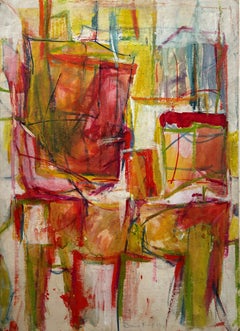
"Two Reds #4" Diana Kurz, Red and White Abstract Expressionist Mixed Media Work
By Diana Kurz
Located in New York, NY
Diana Kurz
Two Reds #4
Mixed media on paper
24 x 18 inches
Diana Kurz (born 1936) is an Austrian-born feminist painter. In 1938, Diana Kurz's family fled Austria, first to England ...
Category
1960s Abstract Expressionist Mixed Media
Materials
Paper, Mixed Media
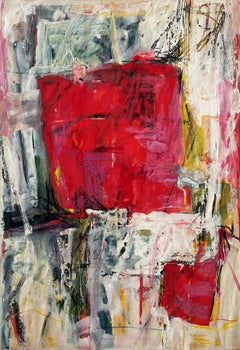
"June" Diana Kurz, Abstract Colorist Composition New York Abstract Expressionism
By Diana Kurz
Located in New York, NY
Diana Kurz
June
Watercolor and pastels on board
17 x 23 inches
Diana Kurz (born 1936) is an Austrian-born feminist painter. In 1938, Diana Kurz's family fled Austria, first to Engl...
Category
1960s Abstract Expressionist Abstract Drawings and Watercolors
Materials
Pastel, Watercolor, Board
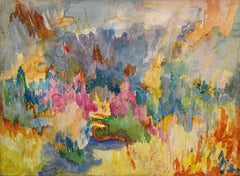
"Lumen" Rudolf Baranik, 1975 Political Abstract Imagery Collage Composition
Located in New York, NY
Rudolf Baranik
Lumen, 1975
Signed, titled, dated on the reverse
Collage on board
36 1/2 x 42 inches
Born in Lithuania, he immigrated to the United States in 1938, when his family sent him to live with a relative in Chicago. His parents were secular Jewish socialists and were killed by the Nazis during the Second World War. Baranik was well known in the art world for his political advocacy, and was one of the first artists to organize protests against the war in Vietnam. Some of his best known works are the Napalm Elegies, a series of 30 antiwar paintings created between 1967 and 1974. His art was inspired by his sense of the gross inequities around the world, and he led virtually every progressive political movement within the New York art world from the 1960s to the mid-1990s. Significant exhibitions and awards include:1981 Guggenheim Fellowship in Fine Arts, 1982 "Art Couples 1: May Stevens and Rudolf Baranik," P.S. 1, New York, NY, and 1966 Peace Tower. Baranik's art is included in many collections, including the Museum of Modern Art in New York, the Whitney Museum of American Art and the Hirshhorn Museum.
Baranik died in Eldorado, New Mexico in 1998.
The paintings of Rudolf Baranik are increasingly thought to be among the most important works of the New York School painting...
Category
1970s Abstract Mixed Media
Materials
Board

$15,000 Sale Price
40% Off
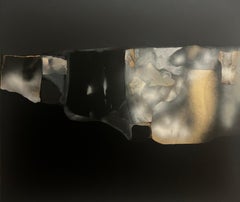
"Monument 8" Calvin Marcus, Mixed Media Construction Contemporary Sculpture
Located in New York, NY
Calvin Marcus
Monument 8, 2018
Wood, glass, hot glue, cardboard, plastic, paper pulp, sulfur, ash, gesso, Cel-Vinyl, flashe, watercolor and other media sculpture
22" high x 13 1/4" w...
Category
2010s Contemporary Figurative Sculptures
Materials
Glass, Plastic, Wood, Paper, Glue, Mixed Media, Watercolor, Cardboard
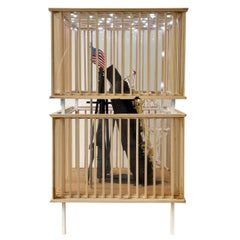
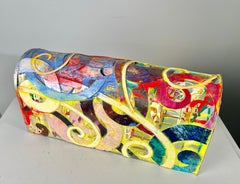
"Have a Nice Day" Al Loving, Abstract Expressionist Colorful Mailbox Sculpture
By Al Loving
Located in New York, NY
Al Loving
Have a Nice Day, 1992
Mailbox, acrylic paint, rag paper
8 1/2 inches high x 6 1/2 inches wide x 18 3/4 inches deep
Al Loving studied painting at the University of Illinoi...
Category
1990s Abstract Expressionist Abstract Sculptures
Materials
Metal
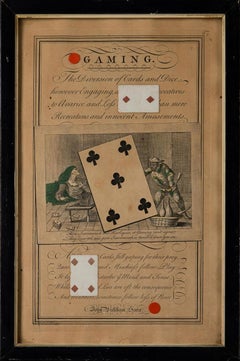
"Montage (Gaming)" Charles Green Shaw, Playing Cards Collage, Games
By Charles Green Shaw
Located in New York, NY
Charles Green Shaw
Montage (Gaming), circa 1935
18th Century print, playing cards
15 x 10 inches
Charles Green Shaw, born into a wealthy New York family, began painting when he was...
Category
1930s American Modern Mixed Media
Materials
Mixed Media
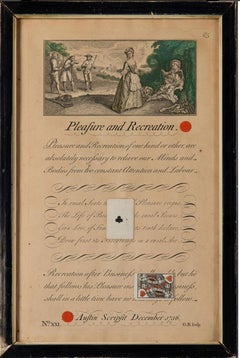
"Pleasure and Recreation" Charles Green Shaw, Playing Cards Collage, Games
By Charles Green Shaw
Located in New York, NY
Charles Green Shaw
Pleasure and Recreation, circa 1935
18th Century print, playing cards
15 x 10 inches
Charles Green Shaw, born into a wealthy New York family, began painting when...
Category
1930s American Modern Mixed Media
Materials
Paper
"Halloween" Blanche Lazzell, Batik Abstract Textile Composition, Cloth Dyeing
By Blanche Lazzell
Located in New York, NY
Blanche Lazzell
Halloween, circa 1920-22
Batik
15 1/2 x 9 inches
Provenance:
The artist
James & Janet Reed (gifted from the above)
John Cuthbert, Morgantown, West Virginia
Born ne...
Category
1920s Abstract Mixed Media
Materials
Textile, Dye
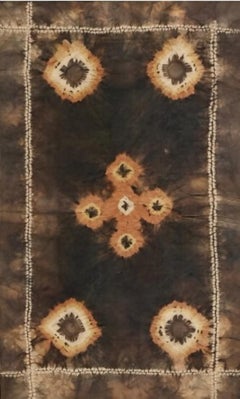
"Villa Adrienne #17" Georges Noel, Constructivist, Architectural
By Georges Noel
Located in New York, NY
Georges Noel
Villa Adrienne #17, 1976
Graphite, pigment, sand, and vinyl binder on canvas
Signed to verso
76 3/4 x 51 inches
The Pace Gallery label to verso
With restless strokes ...
Category
1970s Assemblage Mixed Media
Materials
Canvas, Vinyl, Graphite, Pigment
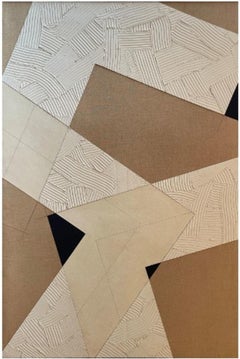
$23,200 Sale Price
20% Off
"Cronus View from the Cave" David Hare, Abstract Surrealist Composition
By David Hare
Located in New York, NY
David Hare
Cronus View from the Cave, 1971
Graphite, Ink wash, Paper Collage on Paper on Board
25 x 33 inches
“Freedom is what we want,” David Hare boldly stated in 1965, but then he added the caveat, “and what we are most afraid of.” No one could accuse David Hare of possessing such fear. Blithely unconcerned with the critics’ judgments, Hare flitted through most of the major art developments of the mid-twentieth century in the United States. He changed mediums several times; just when his fame as a sculptor had reached its apogee about 1960, he switched over to painting. Yet he remained attached to surrealism long after it had fallen out of official favor. “I can’t change what I do in order to fit what would make me popular,” he said. “Not because of moral reasons, but just because I can’t do it; I’m not interested in it.”
Hare was born in New York City in 1917; his family was both wealthy and familiar with the world of modern art. Meredith (1870-1932), his father, was a prominent corporate attorney. His mother, Elizabeth Sage Goodwin (1878-1948) was an art collector, a financial backer of the 1913 Armory Show, and a friend of artists such as Constantin Brancusi, Walt Kuhn, and Marcel Duchamp.
In the 1920s, the entire family moved to Santa Fe, New Mexico and later to Colorado Springs, in the hope that the change in altitude and climate would help to heal Meredith’s tuberculosis. In Colorado Springs, Elizabeth founded the Fountain Valley School where David attended high school after his father died in 1932. In the western United States, Hare developed a fascination for kachina dolls and other aspects of Native American culture that would become a recurring source of inspiration in his career.
After high school, Hare briefly attended Bard College (1936-37) in Annandale-on-Hudson. At a loss as to what to do next, he parlayed his mother’s contacts into opening a commercial photography studio and began dabbling in color photography, still a rarity at the time [Kodachrome was introduced in 1935]. At age 22, Hare had his first solo exhibition at Walker Gallery in New York City; his 30 color photographs included one of President Franklin Roosevelt.
As a photographer, Hare experimented with an automatist technique called “heatage” (or “melted negatives”) in which he heated the negative in order to distort the image. Hare described them as “antagonisms of matter.” The final products were usually abstractions tending towards surrealism and similar to processes used by Man Ray, Raoul Ubac, and Wolfgang Paalen.
In 1940, Hare moved to Roxbury, CT, where he fraternized with neighboring artists such as Alexander Calder and Arshile Gorky, as well as Yves Tanguy who was married to Hare’s cousin Kay Sage, and the art dealer Julian Levy. The same year, Hare received a commission from the American Museum of Natural History to document the Pueblo Indians. He traveled to Santa Fe and, for several months, he took portrait photographs of members of the Hopi, Navajo, and Zuni tribes that were published in book form in 1941.
World War II turned Hare’s life upside down. He became a conduit in the exchange of artistic and intellectual ideas between U.S. artists and the surrealist émigrés fleeing Europe. In 1942, Hare befriended Andre Breton, the principal theorist of surrealism. When Breton wanted to publish a magazine to promote the movement in the United States, he could not serve as an editor because he was a foreign national. Instead, Breton selected Hare to edit the journal, entitled VVV [shorth for “Victory, Victory, Victory”], which ran for four issues (the second and third issues were printed as a single volume) from June 1942 to February 1944. Each edition of VVV focused on “poetry, plastic arts, anthropology, sociology, (and) psychology,” and was extensively illustrated by surrealist artists including Giorgio de Chirico, Roberto Matta, and Yves Tanguy; Max Ernst and Marcel Duchamp served as editorial advisors.
At the suggestion of Jacqueline Lamba...
Category
1970s Abstract Abstract Paintings
Materials
Paper, Ink, Graphite
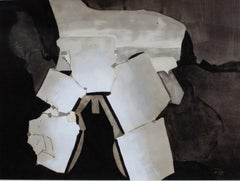
"Cronus Asleep in the Cave" David Hare, Surrealist Mythological Composition
By David Hare
Located in New York, NY
David Hare
Cronus Asleep in the Cave, 1971
Acrylic, ink wash, graphite, paper collage on paper on board
26 x 35 inches
“Freedom is what we want,” David Hare boldly stated in 1965, b...
Category
1970s Abstract Abstract Paintings
Materials
Acrylic, Paper, Ink, Graphite
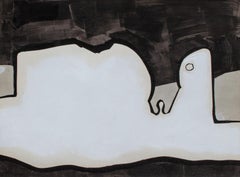
"Cronus Asleep in the Cave" David Hare, Surrealist Mythological Allegory
By David Hare
Located in New York, NY
David Hare
Cronus Asleep in the Cave, 1991
Acrylic on paper on board
26 X 34 1/4 inches
“Freedom is what we want,” David Hare boldly stated in 1965, but then he added the caveat, “and what we are most afraid of.” No one could accuse David Hare of possessing such fear. Blithely unconcerned with the critics’ judgments, Hare flitted through most of the major art developments of the mid-twentieth century in the United States. He changed mediums several times; just when his fame as a sculptor had reached its apogee about 1960, he switched over to painting. Yet he remained attached to surrealism long after it had fallen out of official favor. “I can’t change what I do in order to fit what would make me popular,” he said. “Not because of moral reasons, but just because I can’t do it; I’m not interested in it.”
Hare was born in New York City in 1917; his family was both wealthy and familiar with the world of modern art. Meredith (1870-1932), his father, was a prominent corporate attorney. His mother, Elizabeth Sage Goodwin (1878-1948) was an art collector, a financial backer of the 1913 Armory Show, and a friend of artists such as Constantin Brancusi, Walt Kuhn, and Marcel Duchamp.
In the 1920s, the entire family moved to Santa Fe, New Mexico and later to Colorado Springs, in the hope that the change in altitude and climate would help to heal Meredith’s tuberculosis. In Colorado Springs, Elizabeth founded the Fountain Valley School where David attended high school after his father died in 1932. In the western United States, Hare developed a fascination for kachina dolls and other aspects of Native American culture that would become a recurring source of inspiration in his career.
After high school, Hare briefly attended Bard College (1936-37) in Annandale-on-Hudson. At a loss as to what to do next, he parlayed his mother’s contacts into opening a commercial photography studio and began dabbling in color photography, still a rarity at the time [Kodachrome was introduced in 1935]. At age 22, Hare had his first solo exhibition at Walker Gallery in New York City; his 30 color photographs included one of President Franklin Roosevelt.
As a photographer, Hare experimented with an automatist technique called “heatage” (or “melted negatives”) in which he heated the negative in order to distort the image. Hare described them as “antagonisms of matter.” The final products were usually abstractions tending towards surrealism and similar to processes used by Man Ray, Raoul Ubac, and Wolfgang Paalen.
In 1940, Hare moved to Roxbury, CT, where he fraternized with neighboring artists such as Alexander Calder and Arshile Gorky, as well as Yves Tanguy who was married to Hare’s cousin Kay Sage, and the art dealer Julian Levy. The same year, Hare received a commission from the American Museum of Natural History to document the Pueblo Indians. He traveled to Santa Fe and, for several months, he took portrait photographs of members of the Hopi, Navajo, and Zuni tribes that were published in book form in 1941.
World War II turned Hare’s life upside down. He became a conduit in the exchange of artistic and intellectual ideas between U.S. artists and the surrealist émigrés fleeing Europe. In 1942, Hare befriended Andre Breton, the principal theorist of surrealism. When Breton wanted to publish a magazine to promote the movement in the United States, he could not serve as an editor because he was a foreign national. Instead, Breton selected Hare to edit the journal, entitled VVV [shorth for “Victory, Victory, Victory”], which ran for four issues (the second and third issues were printed as a single volume) from June 1942 to February 1944. Each edition of VVV focused on “poetry, plastic arts, anthropology, sociology, (and) psychology,” and was extensively illustrated by surrealist artists including Giorgio de Chirico, Roberto Matta, and Yves Tanguy; Max Ernst and Marcel Duchamp served as editorial advisors.
At the suggestion of Jacqueline Lamba...
Category
1990s Abstract Mixed Media
Materials
Paper, Acrylic, Board
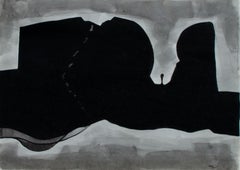
"Cronus Waiting" David Hare, Black and White Surrealist Composition
By David Hare
Located in New York, NY
David Hare
Cronus Waiting, 1990
Ink and Wash on Paper on Board
34 x 25 1/4 inches
“Freedom is what we want,” David Hare boldly stated in 1965, but then he added the caveat, “and what we are most afraid of.” No one could accuse David Hare of possessing such fear. Blithely unconcerned with the critics’ judgments, Hare flitted through most of the major art developments of the mid-twentieth century in the United States. He changed mediums several times; just when his fame as a sculptor had reached its apogee about 1960, he switched over to painting. Yet he remained attached to surrealism long after it had fallen out of official favor. “I can’t change what I do in order to fit what would make me popular,” he said. “Not because of moral reasons, but just because I can’t do it; I’m not interested in it.”
Hare was born in New York City in 1917; his family was both wealthy and familiar with the world of modern art. Meredith (1870-1932), his father, was a prominent corporate attorney. His mother, Elizabeth Sage Goodwin (1878-1948) was an art collector, a financial backer of the 1913 Armory Show, and a friend of artists such as Constantin Brancusi, Walt Kuhn, and Marcel Duchamp.
In the 1920s, the entire family moved to Santa Fe, New Mexico and later to Colorado Springs, in the hope that the change in altitude and climate would help to heal Meredith’s tuberculosis. In Colorado Springs, Elizabeth founded the Fountain Valley School where David attended high school after his father died in 1932. In the western United States, Hare developed a fascination for kachina dolls and other aspects of Native American culture that would become a recurring source of inspiration in his career.
After high school, Hare briefly attended Bard College (1936-37) in Annandale-on-Hudson. At a loss as to what to do next, he parlayed his mother’s contacts into opening a commercial photography studio and began dabbling in color photography, still a rarity at the time [Kodachrome was introduced in 1935]. At age 22, Hare had his first solo exhibition at Walker Gallery in New York City; his 30 color photographs included one of President Franklin Roosevelt.
As a photographer, Hare experimented with an automatist technique called “heatage” (or “melted negatives”) in which he heated the negative in order to distort the image. Hare described them as “antagonisms of matter.” The final products were usually abstractions tending towards surrealism and similar to processes used by Man Ray, Raoul Ubac, and Wolfgang Paalen.
In 1940, Hare moved to Roxbury, CT, where he fraternized with neighboring artists such as Alexander Calder and Arshile Gorky, as well as Yves Tanguy who was married to Hare’s cousin Kay Sage, and the art dealer Julian Levy. The same year, Hare received a commission from the American Museum of Natural History to document the Pueblo Indians. He traveled to Santa Fe and, for several months, he took portrait photographs of members of the Hopi, Navajo, and Zuni tribes that were published in book form in 1941.
World War II turned Hare’s life upside down. He became a conduit in the exchange of artistic and intellectual ideas between U.S. artists and the surrealist émigrés fleeing Europe. In 1942, Hare befriended Andre Breton, the principal theorist of surrealism. When Breton wanted to publish a magazine to promote the movement in the United States, he could not serve as an editor because he was a foreign national. Instead, Breton selected Hare to edit the journal, entitled VVV [shorth for “Victory, Victory, Victory”], which ran for four issues (the second and third issues were printed as a single volume) from June 1942 to February 1944. Each edition of VVV focused on “poetry, plastic arts, anthropology, sociology, (and) psychology,” and was extensively illustrated by surrealist artists including Giorgio de Chirico, Roberto Matta, and Yves Tanguy; Max Ernst and Marcel Duchamp served as editorial advisors.
At the suggestion of Jacqueline Lamba...
Category
1990s Abstract Mixed Media
Materials
Paper, Ink, Board
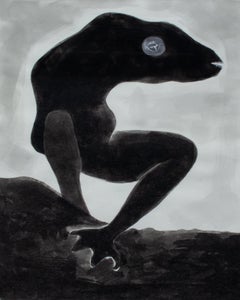
"The Artist
s Palette" John Haberle, Pyrography, Trompe L
oeil 19th Century
By John Haberle
Located in New York, NY
John Haberle
The Artist's Palette, circa 1890
Oil on panel with brushes & palette knife
18 x 27 inches
Provenance:
The artist
Mrs. Vera Demmer (artist's daughter), by descent
Kennedy Galleries, New York
Berry-Hill Galleries, New York
Private Collection, New York
Keno Auctions, New York, Americana: Paintings, Furniture and Decorative Arts, January 17, 2012, Lot 27
Arader Galleries, New York
Exhibited:
New York, Kennedy Galleries, John Haberle: An Exhibition of Paintings, Drawings and Watercolors, June 8, July 15, 1970, no. 17, p. 11, illustrated.
Fort Worth, Texas, Amon Carter Museum, John Haberle Master of Illusion, November 29, 1985- January 19, 1986, p. 28.
New Britain Museum of American Art, John Haberle American Master of Illusion, December 11, 2009 - March 11, 2010, p. 72; this exhibition later traveled to Chadds Ford, Pennsylvania, Brandywine River Museum, April 17 - July 11, 2010; Portland Museum of Art, Maine September 18 - December 12, 2010.
Literature:
Kennedy Galleries, Inc., Exhibition catalogue, American Still Lifes 19th & 20th Century, Kennedy Quarterly, Vol. XI, No. 2, November 1971, p. 109, (84).
William Gerdts, Exhibition Catalogue, Joseph Decker...
Category
1890s Mixed Media
Materials
Mixed Media, Oil, Board
$26,000 Sale Price
20% Off
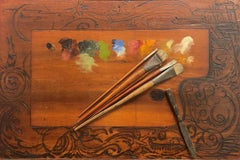
"Untitled (C82-142)" Hannelore Baron, Mixed Media Collage, Abstract
By Hannelore Baron
Located in New York, NY
Hannelore Baron
Untitled (C82-142), 1982
Signed and dated on the reverse
Mixed media collage
Sheet 12 1/4 x 10 1/2 inches
Provenance:
Manny Silverman ...
Category
1980s Abstract Mixed Media
Materials
Fabric, Paper, Mixed Media, Laid Paper
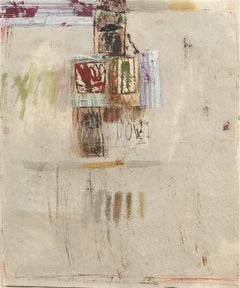
"Untitled" Mary Abbott, Abstract Expressionist Collage, Ninth Street Women
By Mary Abbott
Located in New York, NY
Mary Abbott
Untitled, circa 1953
Signed with initials lower right
Oil and torn paper collage
17 x 14 1/2 inches
Provenance:
Thomas McCormick Gallery, Chicago
Private Collection, New York (acquired directly from the above)
Exhibited:
Athens, Georgia, Georgia Museum of Art, Suitcase Paintings...
Category
1950s Abstract Expressionist Mixed Media
Materials
Paper
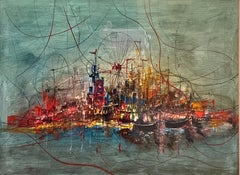
Abstract Modernist Urban Skyline Landscape, New York City Harbor Lights
Located in New York, NY
Artist Unknown (20th century)
New York City Skyline, 1950s
Oil, watercolor and gouache on paper
13 1/2 x 19 1/2 inches
A bright abstract skyline view of a metropolis on a blue / teal background with red, yellow, and blue lights...
Category
Mid-20th Century Abstract Expressionist Mixed Media
Materials
Oil, Watercolor, Gouache
$900 Sale Price
60% Off