Lincoln Glenn Figurative Prints
to
1
5
9
5
1
Overall Width
to
Overall Height
to
8
1
1
2
1
1
1
1
3
17
1
1
4
5
2
1
2
1
13
7
12
6
4
3
3
3
2
2
2
2
2
2
2
1
1
1
1
1
1
1
15
11
5
2
2
17
2
20
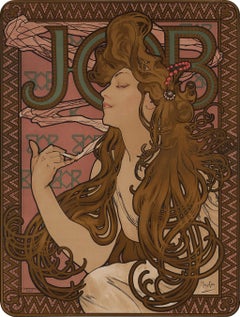
"Job" Alphonse Mucha, Art Nouveau, Female Form, Organic Flowing Design, Elegant
By Alphonse Mucha
Located in New York, NY
Alphonse Mucha
Job, 1896
Signed lower right in plate
Lithograph printed in colors and metallic ink on wove paper
Image 20 3/8 x 15 1/4 inches
Sheet 20 1/4 x 15 1/2 inches
Provenance...
Category
1890s Art Nouveau Figurative Prints
Materials
Paper, Ink, Lithograph
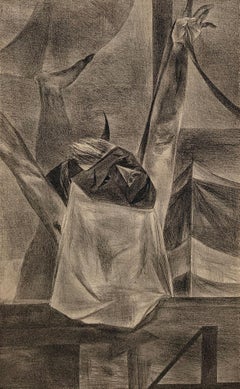
"Carnival" Yasuo Kuniyoshi, Modernist Figure, American Modernism, Expressive
By Yasuo Kuniyoshi
Located in New York, NY
Yasuo Kuniyoshi
Carnival, 1949
Signed in margin lower right
Lithograph on paper
15 3/4 x 9 3/4 inches
23 1/4 x 16 mat
Born in Okayama, Japan, Yasuo Kuniyoshi had no intention of be...
Category
1940s American Modern Figurative Prints
Materials
Paper, Lithograph
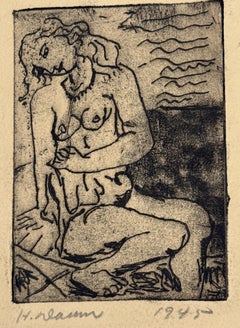
"Nude Woman" Howard Daum, Modernist, Female Nude, Black and White, Elegant
Located in New York, NY
Howard Daum
Nude Woman, 1945
Signed and dated in pencil in the margin
Etching on paper
Plate 3 3/4 x 2 1/2 inches
Sheet 4 1/4 x 3 1/4 inches
The artist
Ashby Gallery, New York
Carl ...
Category
1940s Modern Figurative Prints
Materials
Paper, Etching
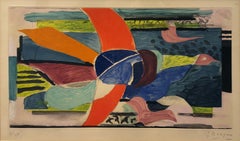
"L
Oiseau Multicolore" Georges Braque, Modernist Bird, Colorful, Cubist, Fauvist
By Georges Braque
Located in New York, NY
Georges Braque
L'Oiseau multicolore, circa 1950
Signed and numbered "30/200" in pencil
Aquatint in colors on BFK Rives wove paper
Image 10 1/4 x 19 1/4 inches
Sheet 17 5/8 x 24 5/8 i...
Category
1950s Modern Animal Prints
Materials
Paper, Aquatint
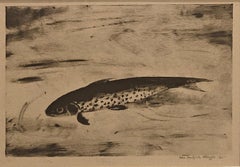
"The Fish" Ida Ten Eyck O
Keeffe, Trout, Black and White, Water, Animal Art
Located in New York, NY
Ida Ten Eyck O'Keeffe
The Fish, 1935
Signed and dated in pencil lower right
Monotype on paper
Image 6 x 8 1/2 inches
Exhibited
Dallas Museum of Art, Ida O'Keeffe: Escaping Georgia's...
Category
1930s American Modern Animal Prints
Materials
Paper, Monotype
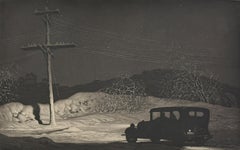
"Which Way?" Martin Lewis, Atmospheric, Snowy 1930s Setting, Outdoor Scene
By Martin Lewis
Located in New York, NY
Martin Lewis
Which Way?, 1932
Signed lower right
Aquatint etching on pale blue paper
Plate 10 1/4 x 15 3/4 inches
Sheet 14 1/4 x 19 1/2 inches
Edition of approximately 53
Provenance...
Category
1930s Realist Figurative Prints
Materials
Paper, Etching
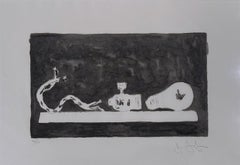
"Light Bulb" Jasper Johns, Mid-Century, Pop Art, Dada, Black Silhouette
By Jasper Johns
Located in New York, NY
Jasper Johns
Light Bulb, 1966
Signed and dated in pencil, numbered "36/45" in lower margin
Lithograph on J. Whatman paper
Image: 8 1/2 x 14 5/8 inches
Sheet: 19 1/2 x 24 1/4 inches
...
Category
1960s Pop Art Figurative Prints
Materials
Lithograph
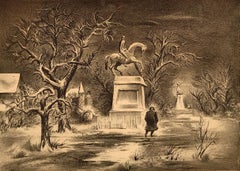
"City Park, Winter" Aaron Bohrod, Mid-Century, American Realist Nocturne
By Aaron Bohrod
Located in New York, NY
Aaron Bohrod
City Park, Winter, circa 1945
Signed in pencil lower right margin
Lithograph on wove paper
Image 9 1/2 x 13 1/2 inches
From the edition of 250
Aaron Bohrod's work has ...
Category
1940s American Realist Figurative Prints
Materials
Paper, Lithograph
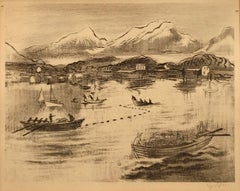
"Fishing Village" Joe Jones, Mid-Century, American Life, Small Town Scene
By Joe Jones
Located in New York, NY
Joe Jones
Fishing Village, 1949
Signed in pencil lower right margin
Lithograph on wove paper
Image 9 5/16 x 12 9/16 inches
Sheet 12 x 15 15/16 inches
From the edition of 250
The initial details of Jones' career are sparse, and this is intentional. The young artist was engaged in a process of self-reinvention, crafting a persona. When he submitted a work to the Sixteen Cities Exhibition at New York City's Museum of Modern Art in 1933, he briefly characterized himself: "Born St. Louis, 1909, self-taught. " Jones intentionally portrayed himself to the art community as an authentic working-class figure, backed by a compelling history. He was the youngest of five children in a family led by a one-armed house painter from St. Louis, a Welsh immigrant, and his German American spouse. At the age of ten, Jones found himself in a Missouri reformatory due to authorities' concerns over his graffiti activities. After completing elementary school, he traveled by freight car to California and back, even being arrested for vagrancy in Pueblo, Colorado. Returning to St. Louis, he attempted to settle down by working alongside his father. Yet, Jones felt a profound restlessness and was drawn toward a more elevated artistic pursuit in his late teenage years. He discovered a local collective of budding artists that formed St. Louis’s "Little Bohemia," sharing a studio and providing mutual support until he managed to secure his own modest workspace in a vacant garage.
Jones’s initial creations comprised still lifes, landscapes, and poignant portraits of those close to him. These subjects were not only accessible but also budget-friendly, as hiring models was beyond his means. He depicted himself, his father, mother, and eventually, his wife. In December 1930, at the age of 21, Jones wed Freda Sies, a modern dancer and political activist who was four years older than him.
By 1933, Jones had started gaining noteworthy local recognition through a solo exhibition at the Artists’ Guild of Saint Louis. Of the twenty-five paintings on display, one, titled River Front (private collection, previously with Hirschl and Adler Galleries), was selected to illustrate a feature article about his show in The Art Digest (February 15, 1933, p. 9). Shortly before this exhibition, a young surgeon named Dr. Robert Elman took an interest in Jones’s art, purchasing several pieces and forming a group of potential patrons committed to providing the emerging artist with a monthly stipend in exchange for art. This group was officially known as the "Co-operative Art Society," but it was informally dubbed the "Joe Jones Club. " Jones became an active participant in the St. Louis artistic scene, particularly within its bohemian segments. He embraced modernism and was a founding member of the "New Hat" movement in 1931, a playful rebellion against the conservative and traditional mainstream art establishment.
The summer of 1933 marked a significant shift in Jones’s journey. Sponsored by a dedicated ally, Mrs. Elizabeth Green, Jones, along with Freda and Green, embarked on an eastward road trip. In Washington, D. C., they explored the Corcoran Gallery of Art, the Freer Gallery (part of the Smithsonian Institution), the Library of Congress, and Mount Vernon. Following this whirlwind of art and American culture, they made their way to New York, where they visited various museums and galleries, including a stop at The New School for Social Research, which featured notable contemporary murals by fellow Missourian Thomas Hart Benton and the politically active Mexican artist, José Clemente Orozco. From June through August, Jones and Freda resided in the artist colony of Provincetown, Massachusetts, later returning home via Detroit to see Diego Rivera’s Detroit Industry mural housed at the Detroit Institute of Fine Arts.
While Elizabeth Green allegedly hoped that Jones would refine his artistic skills under the guidance of Charles Hawthorne or Richard Miller in Provincetown, Jones followed a different path. Rather than pursuing conservative mentors, he connected with an engaging network of leftist intellectuals, writers, and artists who dedicated their time to reading Marx and applying his theories to the American landscape. Jones's reaction to the traditional culture of New England was captured in his statement to a reporter from the St. Louis Post Dispatch: “Class consciousness . . . that’s what I got of my trip to New England. Those people [New Englanders] are like the Chinese—ancestor worshipers. They made me realize where I belong” (September 21, 1933). The stark social divisions he witnessed there prompted him to embrace his working-class identity even more fervently. Upon returning to St. Louis, he prominently identified himself as a Communist. This newfound political stance created friction with some of his local supporters. Many of his middle-class advocates withdrew their backing, likely influenced not only by Jones’s politics but also by his flamboyant and confrontational demeanor.
In December 1933, Jones initiated a complimentary art class for unemployed individuals in the Old Courthouse of St. Louis, the same location where the Dred Scott case was deliberated and where slave auctions formerly took place. Concurrently, the St. Louis Art League was offering paid courses. Emphasizing the theme of social activism, with a studio adorned with Soviet artwork, Jones’s institution operated for just over a year before being removed from the courthouse by local officials. The school’s political focus and unconventional teaching practices, along with its inclusion of a significant number of African American students during a period marked by rigid racial segregation, certainly contributed to its challenges. Under Jones’s guidance, the class created a large chalk pastel mural on board, measuring 16 by 37 feet, titled Social Unrest in St. Louis. Mural painting posed no challenge for the former housepainter, who was adept at handling large wall surfaces. His first significant commission in St. Louis in late 1931 was a mural that celebrated the city’s industrial and commercial fortitude for the local radio station, KMOX. This mural, aimed at conveying optimism amid severe economic hardship, showcased St. Louis's strengths in a modernist approach. When Jones resumed mural work in late 1933, his worldview had evolved considerably. The mural produced for the school in the courthouse, conceived by Jones, featured scenes of modern St. Louis selected to highlight political messages. Jones had observed the technique of utilizing self-contained scenes to craft visual narratives in the murals he encountered in the East. More locally, this compositional strategy was commonly employed by the renowned Missouri artist...
Category
1940s American Realist Landscape Prints
Materials
Paper, Lithograph
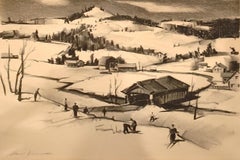
"The Slope Near the Bridge" Paul Sample, Mid-Century, American Snowy Landscape
By Paul Sample
Located in New York, NY
Paul Sample
The Slope Near the Bridge, 1950
Signed in pencil lower left
Lithograph on wove paper
Image 8 15/16 x 12 15/16 inches
Sheet 11 5/16 x 15 1/16 inches
From the edition of 25...
Category
1950s American Realist Figurative Prints
Materials
Paper, Lithograph
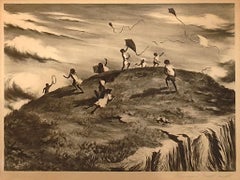
"Windy Hill" Lawrence Beall Smith, Mid-Century Realist Scene, American Life
By Lawrence Beall Smith
Located in New York, NY
Lawrence Beall Smith
Windy Hill, 1948
Signed in pencil lower right margin
Lithograph on wove paper
Image 10 3/8 x 13 1/16 inches
Sheet 11 15/16 x 16 inches
From the edition of 250
...
Category
1940s American Realist Figurative Prints
Materials
Paper, Lithograph
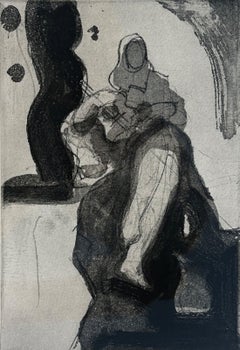
"Untitled" Paul Resika, Modernist, Black and White, Abstracted Composition
By Paul Resika
Located in New York, NY
Paul Resika
Untitled
Signed lower right
Etching on wove paper
10 1/2 x 6 inches
Paul Resika (born 1928, New York, New York) is primarily recognized for his artwork featuring the di...
Category
1990s American Modern Figurative Prints
Materials
Paper, Etching
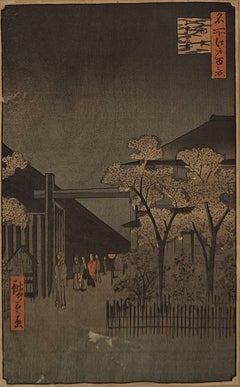
"Dawn Inside the Yoshiwara" Utagawa Hiroshige, Japanese Landscape, Ukiyo-e
By Utagawa Hiroshige
Located in New York, NY
Utagawa Hiroshige
Dawn Inside the Yoshiwara, circa 1857
Woodblock print
11 x 7 inches
Utagawa Hiroshige is recognized as a master of the ukiyo-e woodblock printing tradition, havin...
Category
1850s Naturalistic Figurative Prints
Materials
Paper, Ink, Woodcut
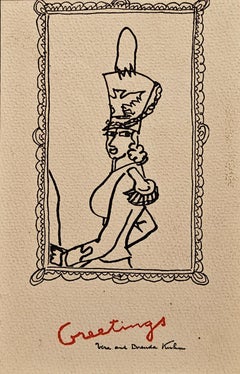
"Kuhn Family Holiday Card" Walt Kuhn, Greeting Card by American Modernist
By Walt Kuhn
Located in New York, NY
Walt Kuhn
Kuhn Family Holiday Card
Lithograph on paper
6 1/4 x 3 3/4 inches
Walter Kuhn was born on October 27, 1877 in Brooklyn, NY. His father, Francis Kuhn, was the owner of a s...
Category
1930s Modern Figurative Prints
Materials
Lithograph
"Kuhn Family Holiday Card" Walt Kuhn, Greeting Card by American Modernist
By Walt Kuhn
Located in New York, NY
Walt Kuhn
Kuhn Family Holiday Card
Lithograph on paper
5 1/2 x 4 inches
Walter Kuhn was born on October 27, 1877 in Brooklyn, NY. His father, Francis Kuhn, was the owner of a ship ...
Category
1930s Modern Figurative Prints
Materials
Lithograph

"Roma (from Urban Landscapes III)" Richard Estes, Photorealist Screenprint
By Richard Estes
Located in New York, NY
Richard Estes
Roma (from Urban Landscapes III), 1981
Signed and numbered "33/250" in pencil, lower margin
Color screenprint on white wove paper
14 x 20 inches
Edition 33/250
Richar...
Category
1980s Photorealist Figurative Prints
Materials
Screen
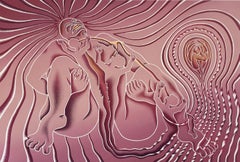
"Birth Tear/Tear" Judy Chicago, Abstracted Surreal Figure, Feminist Art
By Judy Chicago
Located in New York, NY
Judy Chicago
Birth Tear/Tear, 1985
Signed, dated, and numbered in margin
Serigraph on Stonehenge Natural White
Image 25 x 35 inches
Sheet 30 x 40 inches
Judy Chicago’s “Birth Tear/T...
Category
1980s Feminist Figurative Prints
Materials
Paper, Screen
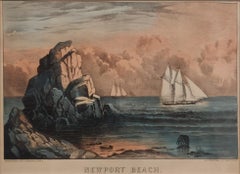
"Newport Beach" Currier
Ives, Hand-Colored Lithograph of Newport Beach
By Currier
Ives
Located in New York, NY
Currier & Ives
Newport Beach
Hand-colored lithograph
Sheet 10 x 13 1/4 inches
After undertaking apprenticeships in Boston and Philadelphia, Currier set up a print publishing compan...
Category
Late 19th Century Realist Figurative Prints
Materials
Lithograph
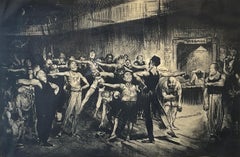
"Business-Men
s Class, Y.M.C.A." George Bellows, Ashcan School Print
By George Wesley Bellows
Located in New York, NY
George Bellows
Business-Men's Class, Y.M.C.A, 1916
Signed, numbered "No. 41" and titled lower margin
Lithograph on wove paper
11 1/2 x 17 1/8 inches
Edition of 64
Provenance:
Hirschl & Adler Galleries, New York
Private Collection, Ohio
Literature:
Mason, 20.
After his arrival from Columbus, Ohio in 1904, Bellows lived at the West Side YMCA. It was there that he met Eugene Speicher, another aspiring young artist who was to become his lifelong friend. Always interested in the anatomy of the human body, Bellows often satirized the various types who, while leading a sedentary life, feel compelled to devote a portion of their daily routine to physical self-improvement.
Throughout his brief but illustrious career, George Wesley Bellows created striking scenes that documented ordinary American life in all its beauty and banality. Considered an American Realist, the artist eschewed embellishment, finding inspiration in the gritty boroughs of New York City, the rocky coastline of Maine, and, later, in his friends and family. Bellows garnered early recognition for his arresting portrayals of illegal prizefighting, dramatic works executed in dark tonal palettes that underscore the brutality of the violent sport.
Bellows’ elderly Methodist parents hoped their son might pursue the ministry, a calling the extroverted athlete never received. The Columbus native competed on the baseball team at Ohio State University and also served as an illustrator for the college yearbook. In the fall of 1904—just months shy of his expected graduation—Bellows defied his father’s wishes and boarded a train to New York City in hopes of becoming a magazine illustrator like his idols Howard Chandler Christy and Charles Dana Gibson. Before leaving, he reportedly turned down an offer to play professional baseball with the Cincinnati Reds...
Category
1910s Ashcan School Figurative Prints
Materials
Paper, Lithograph
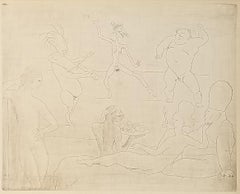
"La Danse Barbare (from Les Saltimbanques), " Pablo Picasso, Figurative Print
By Pablo Picasso
Located in New York, NY
Pablo Picasso (1881 - 1973)
La Danse Barbare (from La Suite des Saltimbanques), 1905, printed 1913
Etching on Van Gelder Zonen wove paper
Sheet 13 x 20 inches
From the edition of 250...
Category
Early 1900s Modern Figurative Prints
Materials
Paper, Etching

$9,600 Sale Price
20% Off
Related Items
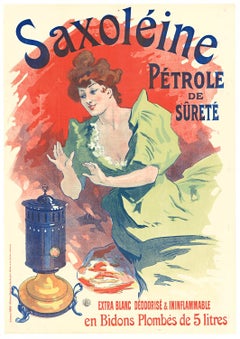
Original "Saxoleine Petrole Surete" vintage stone lithograph 1900
By Jules Chéret
Located in Spokane, WA
Original Saxoleine Petrole de Surete, artist Jules Cheret.
Linen-backed turn-of-the-century original stone lithograph poster advertising Saxoleine, a lamp oil. The glow from this l...
Category
Early 1900s Art Nouveau Figurative Prints
Materials
Lithograph
$3,519 Sale Price
20% Off
H 49.25 in W 24.75 in D 0.05 in
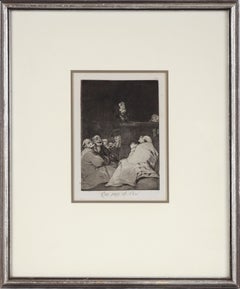
"Que pico de Oro" (What a Golden Beak) - Etching and Aquatint on Paper
By Francisco Goya
Located in Soquel, CA
"Que pico de Oro" (What a Golden Beak) - Etching and Aquatint on Paper
5th or 8th edition print of "Que pico de Oro" from the Los Caprichos with burnished aquatints, drypoints etchi...
Category
1790s Northern Renaissance Figurative Prints
Materials
Engraving, Etching, Aquatint, Laid Paper
$3,850
H 20 in W 16 in D 0.5 in
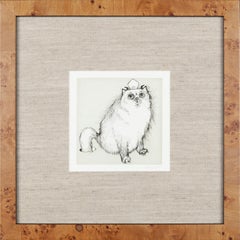
Chimera No. 2
By Leonor Fini
Located in Columbia, MO
Leonor Fini (Argentine-French, 1907 - 1996) was an independent and visionary artist whose work defied categorization within Surrealism, despite her association with its key figures i...
Category
20th Century Surrealist Animal Prints
Materials
Paper, Etching, Aquatint
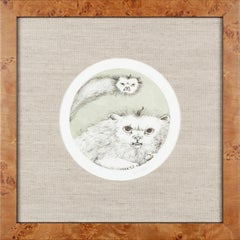
Chimera No. 1
By Leonor Fini
Located in Columbia, MO
Leonor Fini (Argentine-French, 1907 - 1996) was an independent and visionary artist whose work defied categorization within Surrealism, despite her association with its key figures i...
Category
20th Century Surrealist Animal Prints
Materials
Paper, Etching, Aquatint
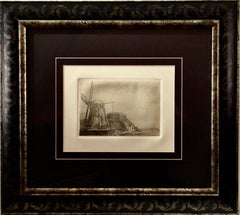
The Windmill
By Rembrandt van Rijn
Located in San Francisco, CA
This artwork titled "The Windmill" 1641 is an etching on paper After Rembrandt Van Rijn, 1606-1669, plate engraved By French renown engraver Charles Armand Durand, 1831-1905. Signatu...
Category
17th Century Realist Figurative Prints
Materials
Etching
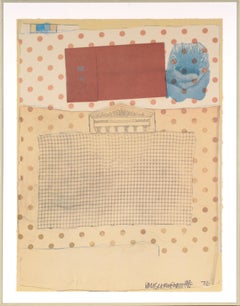
"Equal Justice Under Law" Screenprint #99/125 on Wove Paper
By Robert Rauschenberg
Located in Soquel, CA
"Equal Justice Under Law" Screenprint #99/125 on Wove Paper
Iconic composition by Robert Rauschenberg (American, 1925-2008). A red envelope and a hand holding sprouted grass the pli...
Category
1970s American Modern Abstract Prints
Materials
Laid Paper, Screen
$5,000
H 34 in W 26.5 in D 1.25 in
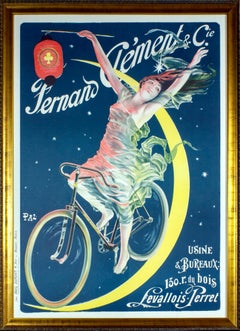
"Fernand Clement
Cie" lithograph print poster by Pal (Jean de Paléologue)
By Pal (Jean de Paléologue)
Located in Boca Raton, FL
"Fernand Clément & Cie" framed lithograph poster by Pal (Jean de Paléologue.) Inscription on side reads Imp. Paul Dupont, 4 Rue du Bouloi, Paris. Recreation 84 Wannabe Affiche, Ltd. ...
Category
1890s Art Nouveau Figurative Prints
Materials
Lithograph
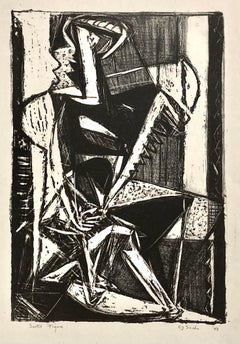
Edward Sacks, Seated Figure
Located in New York, NY
Little is known about the artist, Edward (Ed) Sacks, although this print may have been made at the Art Students League in NYC.
it is a cross between, as the title suggests, a Seated ...
Category
1940s American Modern Figurative Prints
Materials
Lithograph
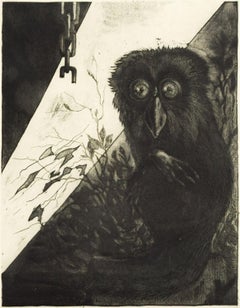
Owl - Etching by Leo Guida - 1972
By Leo Guida
Located in Roma, IT
Owl is an original black and white etching realized in 1972 by Leo Guida.
Hand-signed and dated by the artist on the lower margin.
Edition of 11/30.
Includes frame: 80 x 2.5 x 59 ...
Category
1970s Contemporary Figurative Prints
Materials
Etching, Aquatint
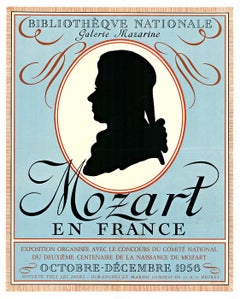
Original Mozart en France vintage French poster, 200th Birthday of Mozart
Located in Spokane, WA
“Mozart en France” – Original French Exhibition 1956 Poster, Linen-Backed. Grade A- condition, ready to frame. Fold marks restored.
A striking, authentic mid-century poster creat...
Category
1950s Art Nouveau Portrait Prints
Materials
Lithograph
$398
H 22 in W 17.75 in D 0.3 in
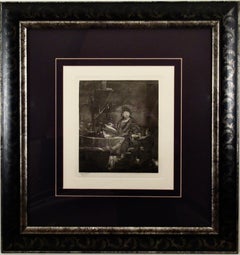
Jan Oytenbogaert
By Rembrandt van Rijn
Located in San Francisco, CA
This artwork titled Jan Uytenbogaert" 1639 is an etching on paper After Rembrandt Van Rijn, 1606-1669, plate engraved By French renown engraver Charles Armand Durand, 1831-1905. Sign...
Category
17th Century Realist Figurative Prints
Materials
Etching
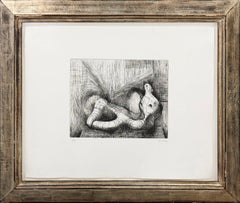
Reclining Figure: Piranesi Background II (hand signed etching)
By Henry Moore
Located in Aventura, FL
Etching on Rives paper. Hand signed lower right by Henry Moore. Hand numbered V/X lower left, one of ten artist's proofs, aside from the edition of 50. Sheet size 17.25 x 21 inch...
Category
1970s Modern Nude Prints
Materials
Paper, Etching
$3,712 Sale Price
25% Off
H 22.5 in W 26.5 in D 1 in