Lions Gallery More Prints

to
35
34
46
25
3
Overall Width
to
Overall Height
to
38
30
11
8
1
1
1
1
20
11
10
10
6
1
131
11
1
2
19
16
31
16
89
43
11
91
35
22
17
12
3
143
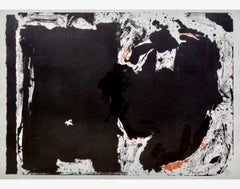
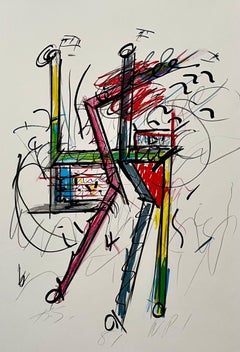
Large Robert Motherwell Lithograph Abstract Expressionist Lament for Lorca 1982
By Robert Motherwell
Located in Surfside, FL
Robert Motherwell (1915 – 1991) Lament for Lorca 1982 lithograph in colors on white Tyler Graphics Ltd. (TGL) handmade paper Printed with full margins; initialed and numbered 30/...
Category

1980s Abstract Expressionist Abstract Prints

Materials

Lithograph

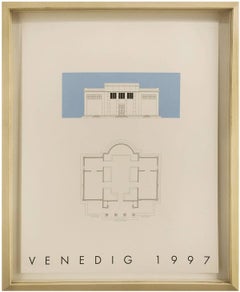
VENEDIG 1997, Silkscreen Print, Minimalist Conceptual Architectural Silkscreen
By Gerhard Merz
Located in Surfside, FL
From the 'Sequences' series, this silkscreen print depicts block color and architecture. Edition of 60. Gerhard Merz (born 25 May 1947 in Mammendorf , district of Fürstenfeldbruck )...
Category

Late 20th Century Contemporary More Prints

Materials

Paper

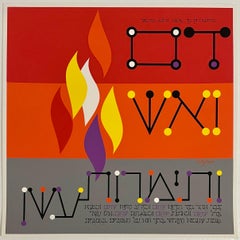
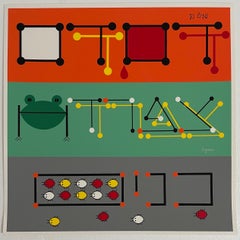
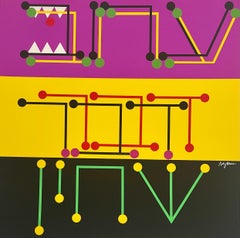
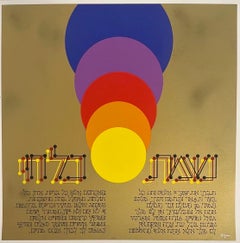
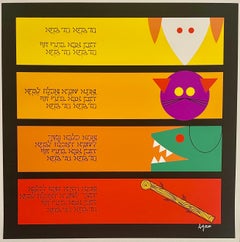
Agam Silkscreen Mod Judaica Lithograph Hand Signed Israeli Kinetic Op Art Print
By Yaacov Agam
Located in Surfside, FL
Yaacov Agam Israeli (b. 1928) Hand signed, not individually numbered but from edition of 180. I can include a copy of the title sheet with the edition size and his signature if you r...
Category

1980s Op Art Abstract Prints

Materials

Lithograph, Screen

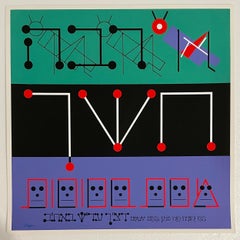
Agam Silkscreen Mod Judaica Lithograph Hand Signed Israeli Kinetic Op Art Print
By Yaacov Agam
Located in Surfside, FL
Yaacov Agam Israeli (b. 1928) Hand signed, not individually numbered but from edition of 180. I can include a copy of the title sheet with the edition size and his signature if you r...
Category

1980s Op Art Abstract Prints

Materials

Lithograph, Screen

Agam Silkscreen Mod Judaica Lithograph Hand Signed Israeli Kinetic Op Art Print
By Yaacov Agam
Located in Surfside, FL
Yaacov Agam Israeli (b. 1928) Hand signed, not individually numbered but from edition of 180. I can include a copy of the title sheet with the edition size and his signature if you r...
Category

1980s Op Art Abstract Prints

Materials

Lithograph, Screen

Agam Silkscreen Mod Judaica Lithograph Hand Signed Israeli Kinetic Op Art Print
By Yaacov Agam
Located in Surfside, FL
Yaacov Agam Israeli (b. 1928) Hand signed, not individually numbered but from edition of 180. I can include a copy of the title sheet with the edition size and his signature if you r...
Category

1980s Op Art Abstract Prints

Materials

Lithograph, Screen

Agam Silkscreen Mod Judaica Lithograph Hand Signed Israeli Kinetic Op Art Print
By Yaacov Agam
Located in Surfside, FL
Yaacov Agam Israeli (b. 1928) Hand signed, not individually numbered but from edition of 180. I can include a copy of the title sheet with the edition size and his signature if you r...
Category

1980s Op Art Abstract Prints

Materials

Lithograph, Screen

Agam Silkscreen Mod Judaica Lithograph Hand Signed Israeli Kinetic Op Art Print
By Yaacov Agam
Located in Surfside, FL
Yaacov Agam Israeli (b. 1928) Hand signed, not individually numbered but from edition of 180. I can include a copy of the title sheet with the edition size and his signature if you r...
Category

1980s Op Art Abstract Prints

Materials

Lithograph, Screen

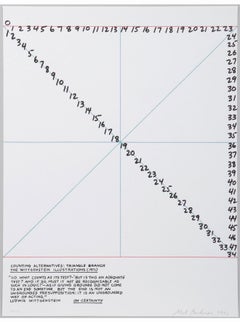
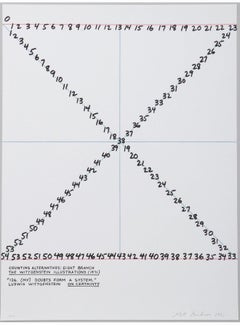
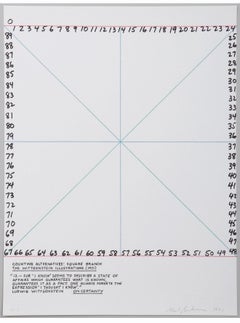
Conceptual Art Hand Signed Mel Bochner Lithograph Print Abstract Geometric Ed 30
By Mel Bochner
Located in Surfside, FL
Mel Bochner (American, 1940-2025) Color lithograph (color line photo-engraving on off-white wove paper) Hand signed and numbered in graphite pencil This is a PP (Printers Proof) outs...
Category

1990s Conceptual Abstract Prints

Materials

Lithograph

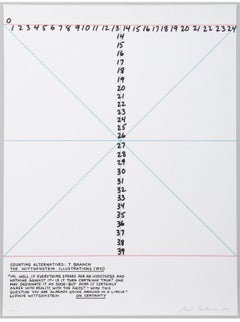
Conceptual Art Hand Signed Mel Bochner Lithograph Print Abstract Geometric Ed 30
By Mel Bochner
Located in Surfside, FL
Mel Bochner (American, 1940-2025) Color lithograph (color line photo-engraving on off-white wove paper) Hand signed and numbered in graphite pencil This is a PP (Printers Proof) outs...
Category

1990s Conceptual Abstract Prints

Materials

Lithograph

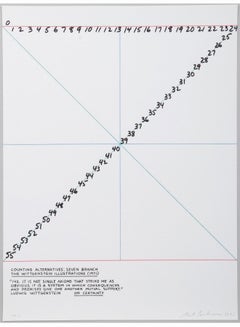
Conceptual Art Hand Signed Mel Bochner Lithograph Print Abstract Geometric Ed 30
By Mel Bochner
Located in Surfside, FL
Mel Bochner (American, 1940-2025) Color lithograph (color line photo-engraving on off-white wove paper) Hand signed and numbered in graphite pencil This is a PP (Printers Proof) outs...
Category

1990s Conceptual Abstract Prints

Materials

Lithograph

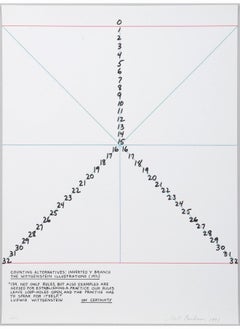
Conceptual Art Hand Signed Mel Bochner Lithograph Print Abstract Geometric Ed 30
By Mel Bochner
Located in Surfside, FL
Mel Bochner (American, 1940-2025) Color lithograph (color line photo-engraving on off-white wove paper) Hand signed and numbered in graphite pencil This is a PP (Printers Proof) outs...
Category

1990s Conceptual Abstract Prints

Materials

Lithograph

Conceptual Art Hand Signed Mel Bochner Lithograph Print Abstract Geometric Ed 30
By Mel Bochner
Located in Surfside, FL
Mel Bochner (American, 1940-2025) Color lithograph (color line photo-engraving on off-white wove paper) Hand signed and numbered in graphite pencil This is a PP (Printers Proof) outs...
Category

1990s Conceptual Abstract Prints

Materials

Lithograph

Conceptual Art Hand Signed Mel Bochner Lithograph Print Abstract Geometric Ed 30
By Mel Bochner
Located in Surfside, FL
Mel Bochner (American, 1940-2025) Color lithograph (color line photo-engraving on off-white wove paper) Hand signed and numbered in graphite pencil This is a PP (Printers Proof) outs...
Category

1990s Conceptual Abstract Prints

Materials

Lithograph

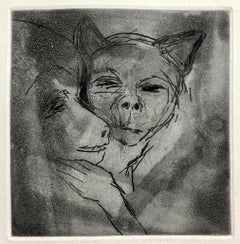
Small Beasts (Dog) Aquatint Etching Jim Dine Pop Art Print
By Jim Dine
Located in Surfside, FL
Jim Dine (American, b. 1935) Etching depicting a dog or wolf Published by Enitharmon Press for Whitman College, London 1999 Hand signed in pencil lower right. Measures 9" x 7" sheet...
Category

1990s Pop Art More Prints

Materials

Drypoint, Etching

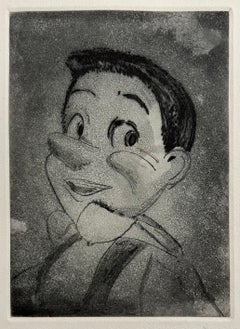
Small Pinocchio Aquatint Etching Jim Dine Pop Art Print
By Jim Dine
Located in Surfside, FL
Jim Dine (American, b. 1935) Etching depicting Pinocchio Published by Enitharmon Press for Whitman College, London 1999 Hand signed in pencil lower right. Measures 9" x 7" sheet siz...
Category

1990s Pop Art More Prints

Materials

Drypoint, Etching

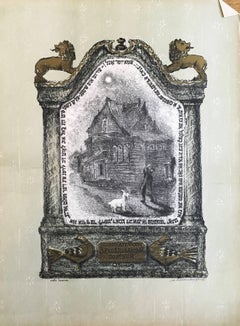
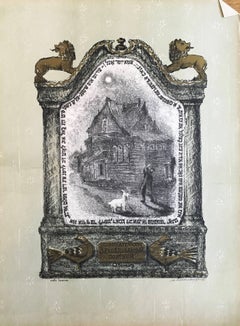
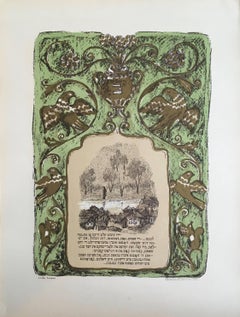
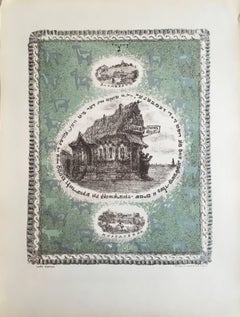
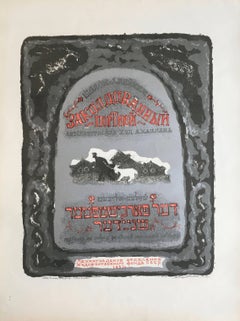
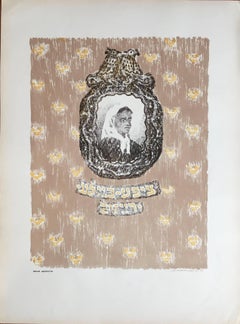
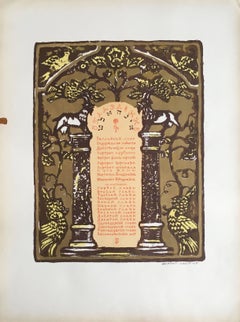
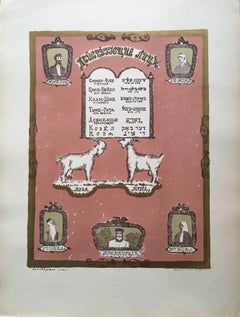
Vintage Russian Shtetl Scene, Judaica Lithograph
By Anatoli Lvovich Kaplan
Located in Surfside, FL
Pencil signed and dated, colored Judaica Lithograph. Anatoli Lwowitch Kaplan was a Russian painter, sculptor and printmaker, whose works often reflect his Jewish origins. his father ...
Category

Mid-20th Century Modern More Prints

Materials

Lithograph

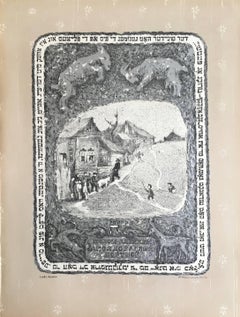
Vintage Russian Shtetl Scene, Judaica Lithograph
By Anatoli Lvovich Kaplan
Located in Surfside, FL
Pencil signed and dated, colored Judaica Lithograph. Anatoli Lwowitch Kaplan was a Russian painter, sculptor and printmaker, whose works often reflect his Jewish origins. his father ...
Category

Mid-20th Century Modern More Prints

Materials

Lithograph

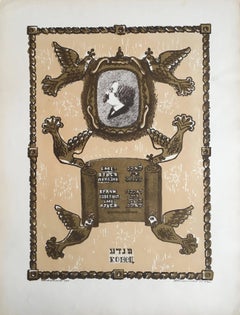
Vintage Russian Shtetl Scene, Judaica Lithograph
By Anatoli Lvovich Kaplan
Located in Surfside, FL
Pencil signed and dated, colored Judaica Lithograph. Anatoli Lwowitch Kaplan was a Russian painter, sculptor and printmaker, whose works often reflect his Jewish origins. his father...
Category

Mid-20th Century Modern More Prints

Materials

Lithograph

Vintage Russian Shtetl Scene, Judaica Lithograph
By Anatoli Lvovich Kaplan
Located in Surfside, FL
Pencil signed and dated, colored Judaica Lithograph. Anatoli Lwowitch Kaplan was a Russian painter, sculptor and printmaker, whose works often reflect his Jewish origins. his father...
Category

Mid-20th Century Modern More Prints

Materials

Lithograph

VIntage Russian Shtetl Scene, Judaica Lithograph
By Anatoli Lvovich Kaplan
Located in Surfside, FL
Pencil signed and dated, colored Judaica Lithograph. Anatoli Lwowitch Kaplan was a Russian painter, sculptor and printmaker, whose works often reflect his Jewish origins. his father...
Category

Mid-20th Century Modern More Prints

Materials

Lithograph

VIntage Russian Shtetl Scene, Judaica Lithograph
By Anatoli Lvovich Kaplan
Located in Surfside, FL
Pencil signed and dated, colored Judaica Lithograph. Anatoli Lwowitch Kaplan was a Russian painter, sculptor and printmaker, whose works often reflect his Jewish origins. His father...
Category

Mid-20th Century Modern More Prints

Materials

Lithograph

Vintage Russian Shtetl Scene, Judaica Lithograph
By Anatoli Lvovich Kaplan
Located in Surfside, FL
Pencil signed and dated, colored Judaica Lithograph. Anatoli Lwowitch Kaplan was a Russian painter, sculptor and printmaker, whose works often reflect his Jewish origins. His father...
Category

Mid-20th Century Modern More Prints

Materials

Lithograph

Vintage Russian Shtetl Scene, Jucaica Print
By Anatoli Lvovich Kaplan
Located in Surfside, FL
Pencil signed and dated, colored Judaica Lithograph. Anatoli Lwowitch Kaplan was a Russian painter, sculptor and printmaker, whose works often reflect his Jewish origins. His father...
Category

Mid-20th Century Modern More Prints

Materials

Lithograph

The Bewitched Tailor, Vintage Judaica Lithograph
By Anatoli Lvovich Kaplan
Located in Surfside, FL
Pencil signed and dated, colored Judaica Lithograph. Anatoli Lwowitch Kaplan was a Russian painter, sculptor and printmaker, whose works often reflect his Jewish origins. His father...
Category

Mid-20th Century Modern More Prints

Materials

Lithograph

VIntage Russian Shtetl Scene, Judaica Lithograph
By Anatoli Lvovich Kaplan
Located in Surfside, FL
Pencil signed and dated, colored Judaica Lithograph. Anatoli Lwowitch Kaplan was a Russian painter, sculptor and printmaker, whose works often reflect his Jewish origins. His father...
Category

Mid-20th Century Modern More Prints

Materials

Lithograph

Vintage Russian Shtetl, Scene Judaica Lithograph
By Anatoli Lvovich Kaplan
Located in Surfside, FL
Pencil signed and dated, colored Judaica Lithograph. Anatoli Lwowitch Kaplan was a Russian painter, sculptor and printmaker, whose works often reflect his Jewish origins. His father...
Category

Mid-20th Century Modern More Prints

Materials

Lithograph

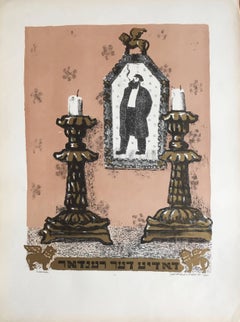
VIntage Russian Shtetl Shabbat Candlesticks, Judaica Lithograph
By Anatoli Lvovich Kaplan
Located in Surfside, FL
Pencil signed and dated, colored Judaica Lithograph. Anatoli Lwowitch Kaplan was a Russian painter, sculptor and printmaker, whose works often reflect his Jewish origins. His fathe...
Category

Mid-20th Century Modern More Prints

Materials

Lithograph

Vintage Russian Shtetl Judaica Lithograph
By Anatoli Lvovich Kaplan
Located in Surfside, FL
Pencil signed and dated, colored Judaica Lithograph. Anatoli Lwowitch Kaplan was a Russian painter, sculptor and printmaker, whose works often reflect his Jewish origins. His fathe...
Category

Mid-20th Century Modern More Prints

Materials

Lithograph

Vintage Russian Shtetl Lithograph
By Anatoli Lvovich Kaplan
Located in Surfside, FL
Pencil signed and dated, colored Judaica Lithograph. Anatoli Lwowitch Kaplan was a Russian painter, sculptor and printmaker, whose works often reflect his Jewish origins. His fathe...
Category

Mid-20th Century Modern More Prints

Materials

Lithograph

Vintage Russian Shtetl Judaica Lithograph
By Anatoli Lvovich Kaplan
Located in Surfside, FL
Pencil signed and dated, colored Judaica Lithograph. Anatoli Lwowitch Kaplan was a Russian painter, sculptor and printmaker, whose works often reflect his Jewish origins. His fathe...
Category

Mid-20th Century Modern More Prints

Materials

Lithograph

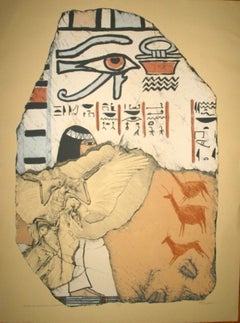
Egyptian Revival Lithograph
By Barbara Trupp
Located in Surfside, FL
(20th century) Theban Archaeopteryx Lithographica lithograph edition of 15 signed Barbara Trupp was born in Nebraska and spent her childhood in Montana. She studied at the Banff Ce...
Category

20th Century Art Deco More Prints

Materials

Lithograph

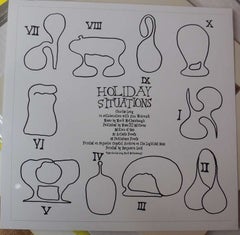
Holiday Situations
By Charles Long
Located in Surfside, FL
HOLIDAY SITUATIONS,1999, color c-prints on Fuji crystal archive paper, each initialed on verso and inscribed "BAT" sheets 11 ¾ x 11 ¾", printed & published by Muse X, Los Angeles. 19...
Category

1990s Conceptual More Prints

Materials

C Print

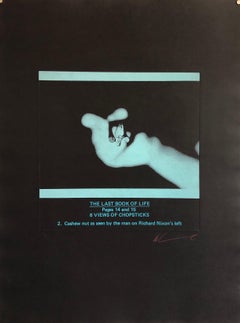
Large Conceptual "Last Book of Life" Photo Etching 1970s Pop Art Photograph
By Les Levine
Located in Surfside, FL
Last Book of Life. (Photos from a dinner of Richard Nixon’s with Chou En Lai’s various views of Chinese chopsticks) Photograph etchings Printed on Stonehedge black paper Hand signe...
Category

1970s Conceptual Abstract Prints

Materials

Etching, Photogravure

Max Ernst Dada Surrealist Hand Signed Lithograph Poster for a Jewish Museum
By Max Ernst
Located in Surfside, FL
Max Ernst (German, American, 1891-1976) Color lithograph Titled, "Poster For The Jewish Museum" 1966 Hand signed lower right Hand numbered HC I/XVII Dimensions: 34.75 x 28.5 sight 25 X 19.25 Max Ernst (German 1891 – 1976) was a German-born painter, sculptor, printmaker, graphic artist, and poet. A prolific artist, Ernst was a primary pioneer of the Dada movement and surrealism in Europe. He had no formal artistic training, but his experimental attitude toward the making of art resulted in his invention of frottage—a technique that uses pencil rubbings of textured objects and relief surfaces to create images—and grattage, an analogous technique in which paint is scraped across canvas to reveal the imprints of the objects placed beneath. Max Ernst showed for the first time in 1912 at the Galerie Feldman in Cologne. At the Sonderbund exhibition of that year in Cologne he saw the work of Paul Cezanne, Edvard Munch, Pablo Picasso, Paul Gauguin and Vincent van Gogh. In 1913 he met Guillaume Apollinaire and Robert Delaunay and traveled to Paris. Ernst participated that same year in the Erste deutsche Herbstsalon. In 1914 he met Jean Arp in Cologne who was to become a lifelong friend. In 1921 Ernst exhibited at the Galerie au Sans Pareil in Paris. He was involved in Surrealist activities in the early 1920s with Paul Eluard and André Breton. His work was exhibited that year together with that of the Das Junge Rheinland group, at Galerie Feldman in Cologne, and then in several group exhibitions in 1913. In his paintings of this period, Ernst adopted an ironic style that juxtaposed grotesque elements alongside Cubist and Expressionist motifs. Ernst fought in world war I. Several German Expressionist painters died in action during the war, among them August Macke and Franz Marc. In 1918, Ernst was demobilised and returned to Cologne. He soon married art history student Luise Straus, of Jewish ancestry, whom he had met in 1914. In 1919, he visited Paul Klee in Munich and studied paintings by Giorgio de Chirico. In the same year, inspired by de Chirico and mail-order catalogues, teaching-aide manuals and similar sources, he produced his first collage works (notably Fiat modes, a portfolio of lithographs), a technique which later dominated his artistic pursuits. Also in 1919, Ernst, social activist Johannes Theodor Baargeld and several colleagues founded the Cologne Dada group. In 1919–20, Ernst and Baargeld published various short-lived magazines such as Der Strom, die Schammade and organised Dada exhibitions. Ernst and Luise's son Ulrich Jimmy Ernst was born on 24 June 1920; he later would also become a painter. In 1921, he met Paul Éluard, who became a lifelong friend. Éluard bought two of Ernst's paintings (Celebes and Oedipus Rex) and selected six collages to illustrate his poetry collection Répétitions. A year later the two collaborated on Les malheurs des immortels and then with André Breton, whom Ernst met in 1921, on the magazine Littérature. Ernst developed a fascination with birds which was prevalent in his work. His alter ego in paintings, which he called Loplop, was a bird. He suggested that this alter-ego was an extension of himself stemming from an early confusion of birds and humans. In 1927, he married Marie-Berthe Aurenche and it is thought his relationship with her may have inspired the erotic subject matter of The Kiss and other works of that year. He collaborated with Joan Miro on designs for Sergei Diaghilev Ballet that same year. The following year the artist collaborated with Salvador Dali and the Surrealist Luis Bunuel on the film L'Age d'or. His first American show was held at the Julien Levy Gallery, New York, in 1932. In 1936 Ernst was represented in Fantastic Art, Dada, Surrealism at the Museum of Modern Art in New York. Ernst began to sculpt in 1934 and spent time with Alberto Giacometti. In 1938, the American heiress and artistic patron Peggy Guggenheim acquired a number of Max Ernst's works, which she displayed in her new gallery in London. Ernst and Guggenheim were married from 1942 to 1946. In September 1939, the outbreak of World War II caused Ernst, being German, to be interned as an "undesirable foreigner" in Camp des Milles, near Aix-en-Provence, along with fellow surrealist, Hans Bellmer, who had recently emigrated to Paris. He had been living with his lover and fellow surrealist painter, Leonora Carrington who, not knowing whether he would return, saw no option but to sell their house to repay their debts and leave for Spain. Thanks to the intercession of Paul Éluard and other friends, including the journalist Varian Fry, he was released a few weeks later. Soon after the German occupation of France, he was arrested again, this time by the Gestapo, but managed to escape to America with the help of Fry and Peggy Guggenheim, a member of a wealthy American art collecting family. Ernst and Peggy Guggenheim arrived in the United States in 1941 and were married at the end of the year. Along with other artists and friends (Marcel Duchamp and Marc Chagall) who had fled from the war and lived in New York City, Ernst helped inspire the development of abstract expressionism. His marriage to Guggenheim did not last. In October 1946 he married American surrealist painter Dorothea Tanning in a double ceremony with Man Ray and Juliet P. Browner in Beverly Hills, California. The couple made their home in Sedona, Arizona from 1946 to 1953. He and Tanning hosted intellectuals and European artists such as Henri Cartier-Bresson and Yves Tanguy. Sedona proved an inspiration for the artists and for Ernst, who compiled his book Beyond Painting and completed his sculptural masterpiece Capricorn while living in Sedona. As a result of the book and its publicity, Ernst began to achieve financial success. From the 1950s he lived mainly in France. In 1954 he was awarded the Grand Prize for painting at the Venice Biennale. In 2005, "Max Ernst: A Retrospective" opened at the Metropolitan Museum of Art. Contemporary artist tapestries have had their true believers. He produced a tapestry for Gloria Ross...
Category

1960s Surrealist Abstract Prints

Materials

Lithograph

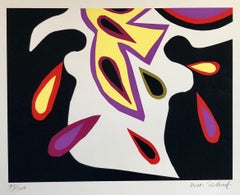
Bright Vibrant Pop Art Silkscreen Lithograph Print NYC Abstract Expressionist
By William Scharf
Located in Surfside, FL
Red Angel, intensely and seductively colored: swooning purples and reds, ecstatic lemon yellows, and black construction paper. Jostling shapes, geometric and biomorphic, lyrical and ...
Category

1970s Abstract Expressionist Abstract Prints

Materials

Lithograph, Screen

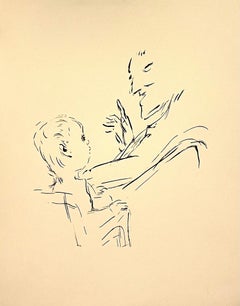
Pierre Bonnard Ltd Ed Lithograph Printed at Mourlot Paris 1958 Father and Son
By Pierre Bonnard
Located in Surfside, FL
This is from a limited edition portfolio of original lithographs print Fernand Mourlot in Paris in 1958 from work done in collaboration with Bonnard which began in 1928. This is f...
Category

20th Century Post-Impressionist More Prints

Materials

Lithograph

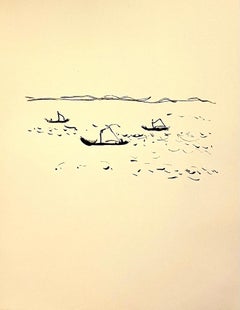
Pierre Bonnard Ltd Ed Lithograph Printed at Mourlot Paris 1958 Sail Boats, Lake
By Pierre Bonnard
Located in Surfside, FL
This is from a limited edition portfolio of original lithographs print Fernand Mourlot in Paris in 1958 from work done in collaboration with Bonnard which began in 1928. This is f...
Category

20th Century Post-Impressionist More Prints

Materials

Lithograph

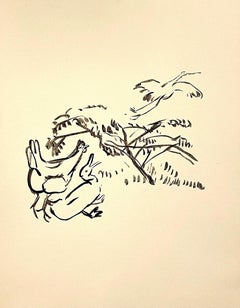
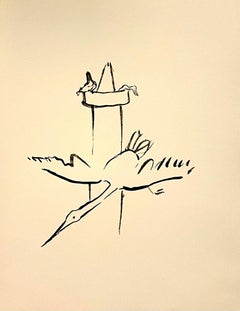
Pierre Bonnard Ltd Ed Lithograph Printed at Mourlot Paris 1958 Chickens and Swan
By Pierre Bonnard
Located in Surfside, FL
This is from a limited edition portfolio of original lithographs print Fernand Mourlot in Paris in 1958 from work done in collaboration with Bonnard which began in 1928. This is f...
Category

20th Century Post-Impressionist More Prints

Materials

Lithograph

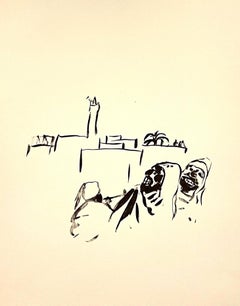
Pierre Bonnard Lithograph Printed at Mourlot Paris 1958 Mosque Minaret, Village
By Pierre Bonnard
Located in Surfside, FL
This is from a limited edition portfolio of original lithographs print Fernand Mourlot in Paris in 1958 from work done in collaboration with Bonnard which began in 1928. A walled ...
Category

20th Century Post-Impressionist More Prints

Materials

Lithograph

Pierre Bonnard Lithograph Printed at Mourlot Paris 1958 Mosque Minaret, Swan
By Pierre Bonnard
Located in Surfside, FL
This is from a limited edition portfolio of original lithographs print Fernand Mourlot in Paris in 1958 from work done in collaboration with Bonnard which began in 1928. A mosque ...
Category

20th Century Post-Impressionist Animal Prints

Materials

Lithograph

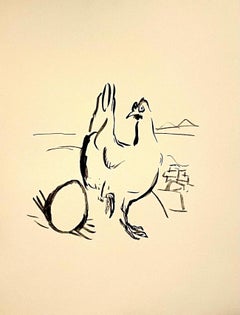
Pierre Bonnard ltd edition Lithograph Printed at Mourlot Paris 1958 Chicken, Egg
By Pierre Bonnard
Located in Surfside, FL
This is from a limited edition portfolio of original lithographs print Fernand Mourlot in Paris in 1958 from work done in collaboration with Bonnard which began in 1928. This is f...
Category

20th Century Post-Impressionist Animal Prints

Materials

Lithograph

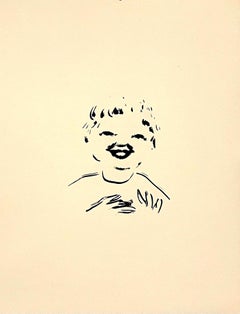
Pierre Bonnard ltd edition Lithograph Printed at Mourlot Paris 1958 Young Boy
By Pierre Bonnard
Located in Surfside, FL
This is from a limited edition portfolio of original lithographs print Fernand Mourlot in Paris in 1958 from work done in collaboration with Bonnard which began in 1928. This is f...
Category

20th Century Post-Impressionist Animal Prints

Materials

Lithograph

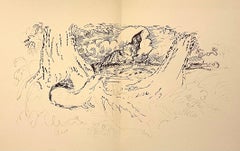
Pierre Bonnard ltd edition Lithograph Printed at Mourlot Paris 1958 Double Page
By Pierre Bonnard
Located in Surfside, FL
This is from a limited edition portfolio of original lithographs print Fernand Mourlot in Paris in 1958 from work done in collaboration with Bonnard which began in 1928. This is f...
Category

20th Century Post-Impressionist Animal Prints

Materials

Lithograph

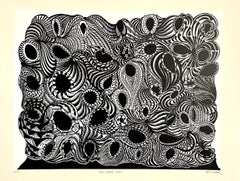
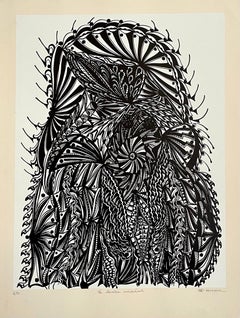
Large 1960s French Art Brut Lithograph Bold Black White Op Art Philippe Dereux
Located in Surfside, FL
Printed by Pierre Chave, Vence, published by Bianchi Frères in Nice, France ink on watermarked chiffon de Mandeure paper, hand signed in pencil lower right, "PH Dureux," numbered 4/5...
Category

1960s Outsider Art Abstract Prints

Materials

Archival Paper, Lithograph

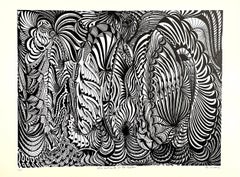
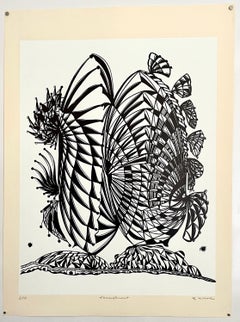
Large 1960s French Art Brut Lithograph Bold Black White Op Art Philippe Dereux
Located in Surfside, FL
Printed by Pierre Chave, Vence, published by Bianchi Frères in Nice, France ink on watermarked chiffon de Mandeure paper, hand signed in pencil lower right, "PH Dureux," numbered 4/5...
Category

1960s Outsider Art Abstract Prints

Materials

Archival Paper, Lithograph

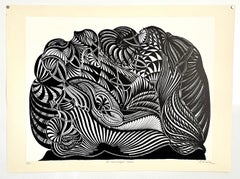
Large 1960s French Art Brut Lithograph Bold Black White Op Art Philippe Dereux
Located in Surfside, FL
Printed by Pierre Chave, Vence, published by Bianchi Frères in Nice, France ink on watermarked chiffon de Mandeure paper, hand signed in pencil lower right, "PH Dureux," numbered 4/5...
Category

1960s Outsider Art Abstract Prints

Materials

Archival Paper, Lithograph

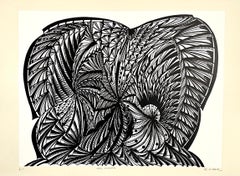
Large 1960s French Art Brut Lithograph Bold Black White Op Art Philippe Dereux
Located in Surfside, FL
Printed by Pierre Chave, Vence, published by Bianchi Frères in Nice, France ink on watermarked chiffon de Mandeure paper, hand signed in pencil lower right, "PH Dureux," numbered 4/5...
Category

1960s Outsider Art Abstract Prints

Materials

Archival Paper, Lithograph

Large 1960s French Art Brut Lithograph Bold Black White Op Art Philippe Dereux
Located in Surfside, FL
printed by Pierre Chave, Vence, published by Bianchi Frères in Nice, France ink on watermarked chiffon de Mandeure paper, hand signed in pencil lower right, "PH Dureux," numbered 4/5...
Category

1960s Outsider Art Abstract Prints

Materials

Archival Paper, Lithograph

Large 1960s French Art Brut Lithograph Bold Black White Op Art Philippe Dereux
Located in Surfside, FL
printed by Pierre Chave, Vence, published by Bianchi Frères in Nice, France ink on watermarked chiffon de Mandeure paper, hand signed in pencil lower right, "PH Dureux," numbered 4/5...
Category

1960s Outsider Art Abstract Prints

Materials

Archival Paper, Lithograph

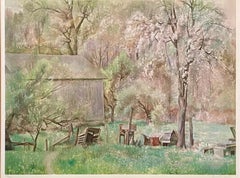
Brandywine Farm Collotype Lithograph Hand Signed Henriette Wyeth Americana Art
By Henriette Wyeth
Located in Surfside, FL
Henriette Wyeth-Hurd Hand signed, Collotype, Limited Edition of 490 Image Size: 20" x 26" framed 28.5 X 34.5 Provenance: printed at Triton Press and has their certificate of authenticity verso. Henriette Wyeth Hurd (1907 – 1997) was an American artist noted for her portraits and still life paintings. The eldest daughter of illustrator N.C. Wyeth, she studied painting with her father and brother Andrew Wyeth at their home and studio in Chadds Ford, Pennsylvania. Henrietta Wyeth was born in Wilmington, Delaware, into an artistic family. Wyeth was the eldest of the five children of noted illustrator N.C. Wyeth and his wife Carolyn Bockius. Her siblings Carolyn and Andrew also became artists, and all three studied with their father. Andrew Wyeth became the most well-known artist of this family. Henriette contracted polio at age 3, which altered her health and use of her right hand. As a result, she learned to draw with her left hand and paint with her right. She grew up on the family farm in Chadds Ford, Pennsylvania, and attended local Quaker schools. She and her siblings were eventually homeschooled because their father distrusted the public school system. She began formal art lessons with her father at age 11, making charcoal studies and geometric shapes. A child prodigy, at age 13 Wyeth was enrolled in the Normal Arts School in Boston, Massachusetts. The next year, in 1921, she entered the Boston Museum of Art Academy. Two years later she moved to Philadelphia to study painting at the Pennsylvania Academy of Fine Arts. By age 16, she was well known as a portraitist and received commissions for paintings of Wilmington residents. Deeply influenced by her father's unique realistic style, she rejected early 20th-century painting styles such as Impressionism and Cubism. She was also socially and politically conservative. As a result, later in life she rejected the progressive movements of the 1960s and 1970s, including the women's movement. She often criticized television and modern culture. At age 21, in 1929 Wyeth married artist Peter Hurd, a fellow student at the Pennsylvania Academy and her father's apprentice. The couple had three children together: Peter Jr., Carolyn, and Michael Hurd...
Category

1980s American Realist Landscape Prints

Materials

Lithograph

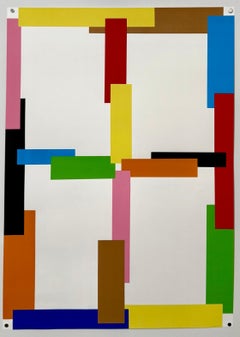
Swiss Contemporary Art Beat Zoderer Abstract Color Constructivist Screenprint
Located in Surfside, FL
Beat Zoderer (b. 1955): Untitled Screenprint (silkscreen serigraph or lithograph) in colors on wove paper 2000 Hand signed with initials, dated and numb...
Category

Early 2000s Abstract Prints

Materials

Screen

Spanish Post Modern Abstract Aquatint Color Etching Antoni Tapies
By Antoni Tàpies
Located in Surfside, FL
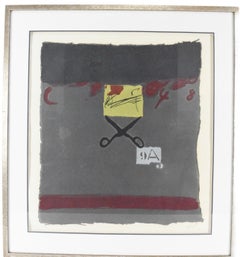
Antoni Tapies (Spanish, 1923-2012) Color Etching, aquatint and polychrome carborundum print Estisores-2, c. 1979 Hand signed and numbered 31/75 in pencil in the lower margin, publi...
Category

1970s Abstract Expressionist Abstract Prints

Materials

Etching, Aquatint

Vintage Galerie Alexandre Iolas Ballads Poster William Copley CPLY Mourlot Litho
Located in Surfside, FL
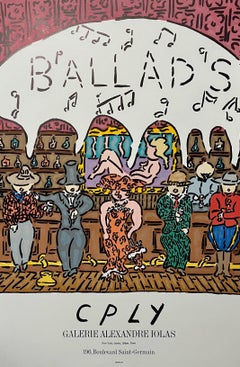
Ballads Galerie Alexandre Iolas Poster by William N. Copley (CPLY) New-York, Geneve, Milan, Paris 196, Boulevard Saint-Germain William Nelson Copley (January 24, 1919 – May 7, 1996) also known as CPLY, was an American painter, writer, gallerist, collector, patron, publisher and art entrepreneur. His works as an artist have been classified as late Surrealist and precursory to Pop Art. William N. Copley was born in New York City in 1919 to parents John and Flora Lodwell; they died shortly after in the 1919 Spanish Flu epidemic. Copley was adopted in 1921 by Ira C. Copley, the owner of sixteen newspaper companies in Chicago and San Diego. Copley was ten years old whereby the family moved to Coronado Island, California. Copley was sent to Phillips Andover and then Yale University by his adopted parents. He was drafted in the Second World War in the middle of his education at Yale, a decision negotiated by the school and the army. Copley experimented with politics upon returning home from the war, working as a reporter for his father's newspaper. By 1946, Copley met and married Marjorie Doris Wead, the daughter of a test pilot for the Navy. Doris's sister was married to John Ployardt, a Canadian-born animator and narrator at Walt Disney Studios. Copley and Ployardt soon became friends and Ployardt began introducing Copley to painting and Surrealism. The two traveled to Mexico and New York, discovering art, meeting the artists behind the works, and grasping Surrealist ideas. It was during this time that Copley and Ployardt decided to open a gallery in Los Angeles to exhibit Surrealist works. Copley and Ployardt tracked down Man Ray while living in Los Angeles. Ray then introduced them to Marcel Duchamp in New York City. There, Duchamp opened many doors for them, introducing the two to New York dealers in Surrealism. In 1948, Copley and Ployardt opened The Copley Galleries in Beverly Hills, displaying works by artists including René Magritte, Max Ernst, Yves Tanguy, Roberto Matta, Joseph Cornell, and Man Ray. Copley moved to Paris in 1949–50, leaving behind his wife and two children to continue to paint. During his time in Paris, he remained in Surrealist circles and continued to paint with a uniquely American style. Copley's first exhibition took place in Los Angeles in 1951 at Royer's Book Shop. From there Copley participated in numerous solo and group exhibitions worldwide. In 1961, Copley was given an exhibition in Amsterdam by the Stedelijk Museum. The museum became the first public institution to add a Copley to their collection. Copley's paintings throughout the 1950s and 60s dealt with ironic and humorous images of stereotypical American symbols like the Western saloon, cowboys, and pin-up girls combined with flags. His works during this period were often considered a combination of American and Mexican folk art and melded in well with the new young POP movement occurring in America when he returned to New York in the 1960s. Artists like Andy Warhol, Christo, Roy Lichtenstein and many others were frequent visitors at Copley's studio on Lower Broadway. Copley believed that pop art had always interested him, claiming American pop art had much to do with "self-disgust" and "satire." In 1967, after a divorce with his second wife, Noma, Copley and new friend Dmitri Petrov decided to publish portfolios of 20th-century artist collaborations with the abbreviation SMS (for "Shit Must Stop"). Copley's Upper West Side loft became a meeting place for performers, artists, curators, and composers to work together on the open-ended collective. The SMS portfolio...
Category

20th Century Abstract Figurative Prints

Materials

Paper, Lithograph, Offset

1981 American Post Minimalist Abstract Art Lithograph Neon Series Keith Sonnier
By Keith Sonnier
Located in Surfside, FL
Keith Sonnier, American (1941-2020) lithograph From Neon series circa 1980-1981 Bears the Waterstreet Press watermarks and Arches paper blind stamp to lower right corner. Pub. Edizioni Lucio Amelio Hand signed with initials in pencil Dimensions: 30 x 21 3/4 inches Post minimalist Abstract by Keith Sonnier Keith Sonnier (1941 – 2020) was a post minimalist sculptor, performance artist, video and light artist. Sonnier was one of the first artists to use light in sculpture in the 1960s. With his use of neon in combination with ephemeral materials he achieved international recognition. Sonnier was part of the Process Art movement. James Keith Sonnier was born July 31, 1941, in Mamou, Louisiana. His family was Cajun and Roman Catholic. His father was a hardware store owner, Joseph Sonnier, and his mother was a florist and singer, Mae Ledoux. He graduated in 1963 from Southwestern Louisiana Institute (now known as the University of Louisiana at Lafayette). In 1966, he graduated with his MFA degree from Rutgers University, where he studied under Allan Kaprow, Robert Watts, and Robert Morris. After graduation from Rutgers, he moved to New York City with Jackie Winsor and some of his former classmates. Sonnier died in Southampton, NY on July 18, 2020. Sonnier began experimenting with neon in 1968. Neon lights became a signature material used in his sculptural works. The common materials Sonnier employed included neon and fluorescent lights; reflective materials; aluminum and copper; and glass and wires. Of the generation of James Turrell and Dan Flavin, He was also associated with the Light and Space movement, a loosely affiliated art movement related to op art, minimalism and geometric abstraction originating in Southern California in the 1960s and influenced by John McLaughlin. It is characterized by a focus on perceptual phenomena, such as light, volume and scale, and the use of materials such as glass, neon, fluorescent lights, resin and cast acrylic, often forming installations conditioned by the work's surroundings. Artists included Ron Cooper...
Category

1980s Post-Minimalist Abstract Prints

Materials

Paper

1981 American Post Minimalist Abstract Art Lithograph Neon Series Keith Sonnier
By Keith Sonnier
Located in Surfside, FL
Keith Sonnier, American (1941-2020) lithograph From Neon series circa 1980-1981 Bears the Waterstreet Press watermarks and Arches paper blind stamp to lower right corner. Pub. Edizioni Lucio Amelio Hand signed with initials in pencil Dimensions: 30 x 21 3/4 inches Post minimalist Abstract by Keith Sonnier Keith Sonnier (1941 – 2020) was a post minimalist sculptor, performance artist, video and light artist. Sonnier was one of the first artists to use light in sculpture in the 1960s. With his use of neon in combination with ephemeral materials he achieved international recognition. Sonnier was part of the Process Art movement. James Keith Sonnier was born July 31, 1941, in Mamou, Louisiana. His family was Cajun and Roman Catholic. His father was a hardware store owner, Joseph Sonnier, and his mother was a florist and singer, Mae Ledoux. He graduated in 1963 from Southwestern Louisiana Institute (now known as the University of Louisiana at Lafayette). In 1966, he graduated with his MFA degree from Rutgers University, where he studied under Allan Kaprow, Robert Watts, and Robert Morris. After graduation from Rutgers, he moved to New York City with Jackie Winsor and some of his former classmates. Sonnier died in Southampton, NY on July 18, 2020. Sonnier began experimenting with neon in 1968. Neon lights became a signature material used in his sculptural works. The common materials Sonnier employed included neon and fluorescent lights; reflective materials; aluminum and copper; and glass and wires. Of the generation of James Turrell and Dan Flavin, He was also associated with the Light and Space movement, a loosely affiliated art movement related to op art, minimalism and geometric abstraction originating in Southern California in the 1960s and influenced by John McLaughlin. It is characterized by a focus on perceptual phenomena, such as light, volume and scale, and the use of materials such as glass, neon, fluorescent lights, resin and cast acrylic, often forming installations conditioned by the work's surroundings. Artists included Ron Cooper...
Category

1980s Post-Minimalist Abstract Prints

Materials

Paper, Lithograph

1981 American Post Minimalist Abstract Art Lithograph Neon Series Keith Sonnier
By Keith Sonnier
Located in Surfside, FL
Keith Sonnier, American (1941-2020) lithograph From Neon series circa 1980-1981 Bears the Waterstreet Press watermarks and Arches paper blind stamp to lower right corner. Pub. Edizioni Lucio Amelio Hand signed with initials in pencil Dimensions: 30 x 21 3/4 inches Post minimalist Abstract by Keith Sonnier Keith Sonnier (1941 – 2020) was a post minimalist sculptor, performance artist, video and light artist. Sonnier was one of the first artists to use light in sculpture in the 1960s. With his use of neon in combination with ephemeral materials he achieved international recognition. Sonnier was part of the Process Art movement. James Keith Sonnier was born July 31, 1941, in Mamou, Louisiana. His family was Cajun and Roman Catholic. His father was a hardware store owner, Joseph Sonnier, and his mother was a florist and singer, Mae Ledoux. He graduated in 1963 from Southwestern Louisiana Institute (now known as the University of Louisiana at Lafayette). In 1966, he graduated with his MFA degree from Rutgers University, where he studied under Allan Kaprow, Robert Watts, and Robert Morris. After graduation from Rutgers, he moved to New York City with Jackie Winsor and some of his former classmates. Sonnier died in Southampton, NY on July 18, 2020. Sonnier began experimenting with neon in 1968. Neon lights became a signature material used in his sculptural works. The common materials Sonnier employed included neon and fluorescent lights; reflective materials; aluminum and copper; and glass and wires. Of the generation of James Turrell and Dan Flavin, He was also associated with the Light and Space movement, a loosely affiliated art movement related to op art, minimalism and geometric abstraction originating in Southern California in the 1960s and influenced by John McLaughlin. It is characterized by a focus on perceptual phenomena, such as light, volume and scale, and the use of materials such as glass, neon, fluorescent lights, resin and cast acrylic, often forming installations conditioned by the work's surroundings. Artists included Ron Cooper...
Category

1980s Post-Minimalist Abstract Prints

Materials

Paper, Lithograph

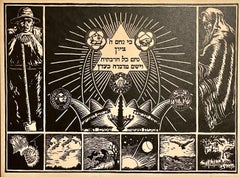
Rare 1922 German Jewish Judaica Zion Woodcut Woodblock Print Hermann Fechenbach
By Hermann Israel Fechenbach
Located in Surfside, FL
Title: Zion Subject: Various biblical images depicting Creation and prayer 1922 Medium: woodcut Frame: 14" x 18" Image: 12.5" x 16.75" Provenance: owned and signed verso by Peter Keil. Central panel shows the Jewish star over a crown, with inscription in Hebrew: "When God comforts Zion, He will comfort all its ruins and make its deserts look like Eden," and "You have sanctified the seventh day, the goal of creation of Heaven and Earth." This is flanked by a Palestinian farmer pioneer on the left and a Jew praying on the right. The lower tier shows six vignettes of the days of creation from Genesis. Hermann Fechenbach was born in 1897 in Württemberg, Germany. He grew up in Bad Mergentheim where his parents had an inn, which served as a meeting place for the local Jewish community. He left school early and through family connections with clothing retailers received training in window dressing. His skill with brush writing was quickly recognised by a big firm in Dortmund where he was responsible for the displays in 10 large windows. He received his conscription papers in 1916 and recalls “being as patriotic as any other fool”. In August 1917 he was involved in a grenade attack in which he was the sole survivor. With serious injuries to both legs he struggled to safety and was eventually transported to a front line “slaughterhouse” where the first of a series of amputations was performed which led to the loss of his left leg. As a result of his injuries his father dropped his opposition to him becoming an artist. His formal art education started in 1918 with training at a Stuttgart handcraft school for invalids. He attended the Academies in Stuttgart and Munich to learn painting and restoration for 3 years. He was influenced at this time by Max Liebermann. He has been compared to Kathe Kollwitz and was a contemporary of Jakob Steinhardt and hermann Struck. In 1923 he went to Florence for a year. While in Florence he started to produce a series of miniature wood engravings to illustrate the stories of Genesis. This was followed by periods in Pisa, Venice, Vienna and Amsterdam. In 1924 he returned to Stuttgart to paint in the contemporary style “Die Neue Sachlichkeit”. (The New Objectivity was a movement in German art that arose during the 1920s Weimar republic as a reaction against expressionism. The term was coined by Gustav Friedrich Hartlaub, the director of the Kunsthalle in Mannheim, who used it as the title of an art exhibition staged in 1925 to showcase artists who were working in a post-expressionist spirit. These artists—who included Max Beckmann, Otto Dix, George Grosz, Christian Schad, Rudolf Schlichter and Jeanne Mammen) Every spring and autumn he exhibited at the “Kunstgebit” which served as the showcase for all serious artists of the period. His professional status “Kunstmaler und Grafiker” was recognised by Berlin in 1926. Practically all his work from this period was sold following exhibition. In 1926 he collaborated with an architect friend to build a bungalow in Hohenheim, a non-Jewish area and a suburb of Stuttgart. Hermann alternately lived in his country bungalow and his town studio, producing portraits for sale or barter and wood engravings for his own pleasure. In 1930 he married a non-Jewish professional photographer – Greta Batze. They had a studio in Stuttgart, which was used to teach art to a group of 12 students. In 1933 the Nazi influence removed his name from the official state register together with the right to exhibit. By spending most of his time in his bungalow out of the Jewish quarter the Fechenbachs escaped being registered by the Nazis for some years. They were ostracised and abused by their non-Jewish neighbours. Hermann made weekly visits to friends in town to teach them the practical skills they would need assuming they were to escape from Germany. His energies were directed towards protection and survival. Ultimately the Nazi persecution forced the Fechenbachs to flee their homeland. They moved to Palestine for 3 months in 1938, but found the political and physical environment unsustainable. Greta arrived in England penniless in January 1939 to work as a domestic servant and to find a guarantor for her husband. Hermann arrived in May 1939. They moved to Blackheath a few months later. Hermann resumed his painting and engraving as a means of earning a living. He raised enough money to get his parents out of Germany to join his brothers in Argentina but was unable to save his twin sister Rosa who died in a Nazi concentration camp. In 1940 Hermann was interned in Bury as a suspect alien. He protested about his treatment by starting a hunger strike. Because of his persistence he was moved to a prison in Liverpool. From Liverpool he was moved to the Hutchinson Camp in the Isle of Man with fellow artist Kurt Schwitters. Arrangements were made for Greta to be accommodated near by. While interned he commenced work on “Refugee Impressions”, a series of linocut prints (no wood was available). In 1941 when released from internment the Fechenbachs came under the sponsorship of Dr. Bela Horovitz, the Austrian art publisher who in turn made an introduction to Professor Tancred Borenius. They were offered lodgings with a family in Oxford. Hermann had his first public exhibition for many years in a small gallery in Oxford in 1942. A second exhibition of oils, pencil drawings, coloured linocut and woodblock prints held later in the year was opened by the mayor of Oxford and critically acclaimed. In 1944 the first London exhibition took place at the Anglo-Palestinian club in Piccadilly. There were two exhibitions at the Ben Uri Art gallery during this period. In 1948 a second exhibition at the Anglo Palestinian club was inaugurated by a member of the Rothschild family and several members of Parliament. This was a great success. In 1944 the Fechenbachs moved to a top floor studio flat in Colet Gardens. Open exhibitions were held each Spring at the Embankment from 1946 to 1951. Movietone News produced a short feature on the artist, which was shown in cinemas in England and Germany. In 1969 he published the Genesis story in a hard back volume containing 137 prints. He started to research the fate of the entire Jewish community of Bad Mergentheim during the period of the second world war, liaising with historian Dr. Paul Sauer and Professor Max Miller, historian and theologian. In 1972 Kohlhammer published his partly autobiographical book “The last Jews of Mergentheim”. He exhibited at the Anglo-Palestinian Club & the Ben Uri Gallery in the 1940s. His works only came to prominence during the last year of his life when he exhibited at Blond Fine Art. Peter Keil part of the Junge Wilde. In 1978, the Junge Wilde painting style arose in the German-speaking world in opposition to established avant garde, minimal art and conceptual art. It was linked to the similar Transavanguardia movement in Italy, USA (neo-expressionism) and France (Figuration Libre). They were also known as the Neue Wilde. Artists included; Austria: Siegfried Anzinger, Erwin Bohatsch, Herbert Brandl, Gunter Damisch, Hubert Scheibl, Hubert Schmalix...
Category

1980s Impressionist Figurative Prints

Materials

Woodcut

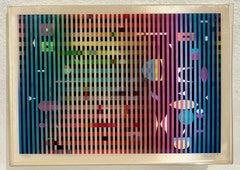
Agam Lenticular Kinetic Agamograph Hand Signed numbered Israeli Kinetic Op Art
By Yaacov Agam
Located in Surfside, FL
Yaacov Agam, Israeli (b. 1928) Hand signed, and numbered. Limited edition lenticular lens kinetic Agamograph Titled 'Sea Fathom'. Hand-signed and numbered edition 24/99, size of w...
Category

20th Century Op Art Abstract Prints

Materials

Lenticular, Screen

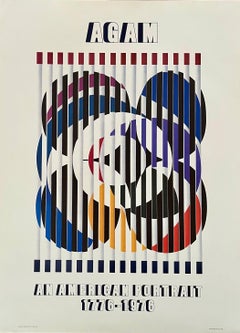
Vintage Agam American Portrait Abstract Modernist Offset Print Poster
By Yaacov Agam
Located in Surfside, FL
Yaacov Agam, Israeli (b. 1928) Offset Print Poster: Birth of a Flag: An American Portrait 1776-1976 Biographical info: The son of a rabbi, Yaacov Agam can trace his ancestry back s...
Category

20th Century Abstract Abstract Prints

Materials

Offset