Martyn Lawrence Bullard Atelier Sheffield and Silverplate
to
2
1
1
1
1
1
2
2
1
1
1
2
2
2
2
2
2
1
1
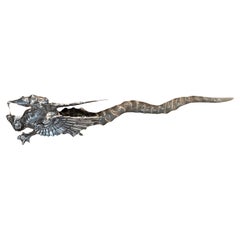
Antique Sheffield Electroplated Table Cigar Lighter, Circa 1900
By John Edward Bingham (Walker and Hall)
Located in West Hollywood, CA
Antique Sheffield Electroplated Table Cigar Lighter
This unique and collectible piece features a dragon design with an unscrewing head, meticulously crafted by Walker & Hall around 1900. The body is made from the horn of an Indian blackbuck antelope, adding to its exotic charm and historical value. This Sheffield electroplated cigar lighter is not just a functional item but a statement piece for any collector or enthusiast of antique smoking accessories.
Category
Antique Early 1900s British Sheffield and Silverplate
Materials
Silver, Sheffield Plate
Victorian Sterling Silver Clear Glass Claret Jug
By William Hutton
Sons
Located in West Hollywood, CA
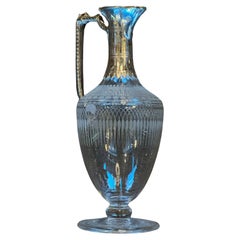
Victorian Sterling Silver Mounted Clear Glass Claret Jug
W & G Sessions, Sheffield and William Hutton & Sons LTD
Sourced from London, England Circa 18...
Category
Antique Late 19th Century British Victorian Sheffield and Silverplate
Materials
Sterling Silver
Related Items
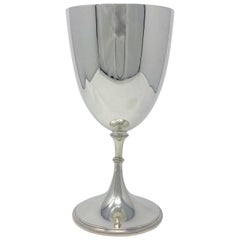
Antique English Sheffield Silver Goblet, circa 1890
Located in New Orleans, LA
Antique English Sheffield silver goblet, circa 1890.
GOB004
Category
Antique Late 19th Century English Sheffield and Silverplate
Materials
Silver Plate

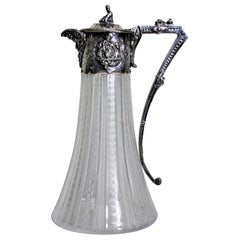
Antique English Silver Plated and Cut Glass Claret Jug or Decanter
Located in Hamilton, Ontario
This antique silver plate and cut glass claret jug was most likely made in England in circa 1900 in the Victorian style. The jug features a seated figural finial on the top of the li...
Category
Early 20th Century English Victorian Sheffield and Silverplate
Materials
Silver Plate
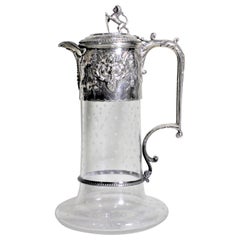
Antique English Silver Plated and Cut Glass Claret Jug or Decanter
Located in Hamilton, Ontario
This antique silver plate and cut crystal claret jug was most likely made in England in circa 1900 in the Victorian style. The jug features a standing figural lion holding a shield o...
Category
Early 20th Century English Victorian Sheffield and Silverplate
Materials
Silver Plate
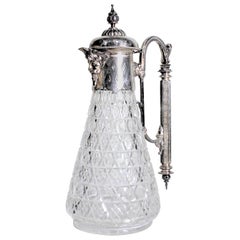
Antique English Silver Plated and Cut Glass Claret Jug or Decanter
Located in Hamilton, Ontario
This antique silver plate and cut crystal claret jug was most likely made in England in circa 1900 in the Victorian style. The jug features a large silver plated handle and nice rais...
Category
Early 20th Century English Victorian Sheffield and Silverplate
Materials
Silver Plate
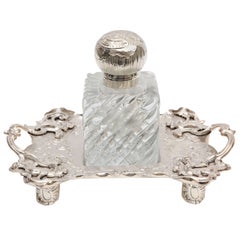
1900s English Crystal and Silver Plated Sheffield Inkwell on Tray
Located in Los Angeles, CA
1900s English crystal and silver plated Sheffield inkwell on handled tray. The tray measurement is:
Depth: 10 inches.
Height: 2.75 inches.
Width: 14 inches.
The measurement below...
Category
Antique Early 1900s European Inkwells
Materials
Crystal, Silver Plate
$3,950 / set
H 8 in W 4.25 in D 4.25 in
Tiffany
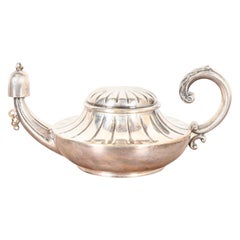
Co. Antique Silverplate Aladdin Lamp Form Table Cigar Lighter
By Tiffany
Co.
Located in South Bend, IN
A gorgeous antique Victorian silver soldered Aladdin lamp form table cigar lighter
By Tiffany & Co. (signed to the underside)
USA, Late 19th Century
Measures: 6"W x 3.75"D x 2.5"H...
Category
Antique Late 19th Century American Victorian Sheffield and Silverplate
Materials
Silver Plate
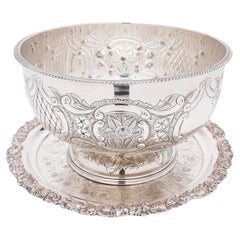
Vintage hand chased English Sheffield punch bowl
tray, c. 1900-50
Located in Kenilworth, IL
Vintage English Sheffield punch bowl & tray. The punch bowl is hand chased with repoussé images of a bounty of fruit and flowers and a cast gadroo...
Category
Early 20th Century British Sheffield and Silverplate
Materials
Sheffield Plate
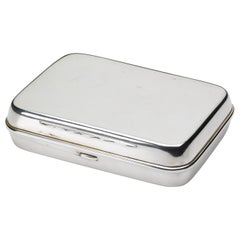
Hallmarked Silver Plated Keepsake Box, Sheffield, Uk, Circa 1900
Located in Colorado Springs, CO
Offered is a stunning Sheffield silver keepsake box dating to 1900, with associated hallmark. This small box includes a clean interior and rounded corners. The box is free of names or initials, but would have been used to house keepsakes such as jewelry or cufflinks. A well maintained, elegant piece, this antique silver box is an excellent addition to any silver collection.
Trinket or keepsake boxes have taken on many forms since their first conception in ancient times. However their purpose remains the same; to store jewelry and other items precious to the owner. Originally, these boxes were used specifically for jewelry. These were in common use as early as 5000 BC in Ancient Egypt, when the majority of Egyptians, both male and female, wore jewelry. Boxes were used to keep these gemstone encrusted items safe. In Ancient Rome, jewelry was a status symbol. Rings and brooches were utilized to represent ones status in society. Again, boxes were needed for security and storage purposes. Finding early examples of these are quite rare.
Victorian and Edwardian examples of trinket boxes are far more common. This is because owning jewellery was a luxury until the Victorian era- let alone possessing so much a box was needed to store it all. Fine jewelry and other items became available to the masses after the industrial revolution due to the reduction in production costs. This led to a demand for trinket boxes, which were much smaller than jewelry boxes and therefore better suited to the needs of the middle class who did not yet possess an abundance of jewelry.
In Victorian households, collectables and other items of interested were also stashed inside these boxes. This is why they are known as trinket or keepsake boxes, rather than just jewelry boxes, although of course jewelry was also stored in them. Trinket boxes were produced in large numbers around this time. Many were lined with colored plush or velvet or rich wood. More elaborate designs had interior divisions and trays for rings and other pieces of jewellery. It was also common to see trinket boxes so small that they could only contain one item, such as a single ring. Ornate exteriors were created to reflect the value of the trinket boxes contents.
The Edwardian era saw the introduction of new styles of trinket box. These included small circular or oblong boxes...
Category
Antique Early 1900s British Art Deco Decorative Boxes
Materials
Silver
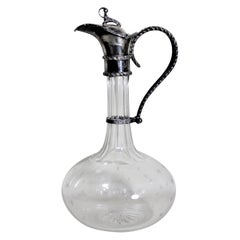
Antique English Silver Plated and Cut Glass Claret Jug or Decanter
Located in Hamilton, Ontario
This antique silver plate and cut glass claret jug was most likely made in England in circa 1900 in the Victorian style. The jug features a simple looped finial on the cover of the d...
Category
Early 20th Century English Victorian Sheffield and Silverplate
Materials
Silver Plate
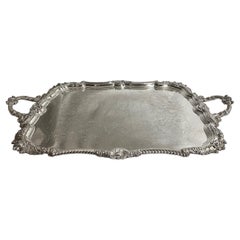
Antique English Sheffield Silver Plated Tray, Circa 1890.
Located in New Orleans, LA
Antique English Sheffield Silver Plated Tray, Circa 1890.
Category
Antique Late 19th Century English Sheffield and Silverplate
Materials
Sheffield Plate
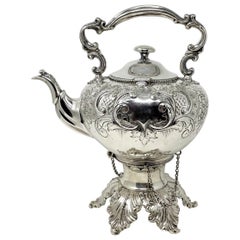
Antique English Sheffield Silver-Plate Footed Tea Pot with Etching, Circa 1860.
Located in New Orleans, LA
Antique English Sheffield Silver-Plate Footed Tea Pot with Etching, Circa 1860.
Category
Antique Mid-19th Century English Sheffield and Silverplate
Materials
Sheffield Plate
$2,000
H 12.5 in Dm 7.5 in
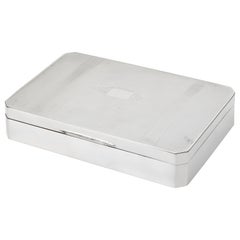
Hallmarked Silver Plated Keepsake Box, Sheffield, UK, circa 1900
Located in Colorado Springs, CO
Offered is a stunning silver plated keepsake box dating to 1900, with associated hallmark. This small box includes a wooden interior with two slots and a blank square on top where initials could have been engraved. A well maintained, elegant piece, this antique silver box is an excellent addition to any silver or home decor collection.
Trinket or keepsake boxes have taken on many forms since their first conception in ancient times. However their purpose remains the same; to store jewelry and other items precious to the owner. Originally, these boxes were used specifically for jewelry. These were in common use as early as 5000 BC in Ancient Egypt, when the majority of Egyptians, both male and female, wore jewelry. Boxes were used to keep these gemstone encrusted items safe. In Ancient Rome, jewelry was a status symbol. Rings and brooches were utilized to represent ones status in society. Again, boxes were needed for security and storage purposes. Finding early examples of these are quite rare.
Victorian and Edwardian examples of trinket boxes are far more common. This is because owning jewellery was a luxury until the Victorian era- let alone possessing so much a box was needed to store it all. Fine jewelry and other items became available to the masses after the industrial revolution due to the reduction in production costs. This led to a demand for trinket boxes, which were much smaller than jewelry boxes and therefore better suited to the needs of the middle class who did not yet possess an abundance of jewelry.
In Victorian households, collectables and other items of interested were also stashed inside these boxes. This is why they are known as trinket or keepsake boxes, rather than just jewelry boxes, although of course jewelry was also stored in them. Trinket boxes were produced in large numbers around this time. Many were lined with colored plush or velvet or rich wood. More elaborate designs had interior divisions and trays for rings and other pieces of jewellery. It was also common to see trinket boxes so small that they could only contain one item, such as a single ring. Ornate exteriors were created to reflect the value of the trinket boxes contents.
The Edwardian era saw the introduction of new styles of trinket box. These included small circular or oblong boxes...
Category
Antique Early 1900s English Art Deco Decorative Boxes
Materials
Silver
$600 Sale Price
20% Off
H 4.63 in W 7.63 in D 1.13 in