Marymont Plantation Antiques Decorative Objects
to
1
5
5
4
2
2
2
1
5
4
3
1
1
1
Height
to
Width
to
5
5
5
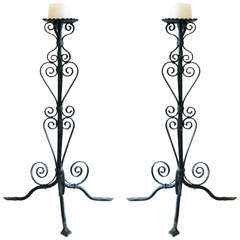
Pair of Iron Candlesticks
Located in Nashville, TN
Handmade iron candlesticks from France.
Category
Antique 19th Century French Candle Holders
Materials
Iron

$1,900 Sale Price / set
20% Off
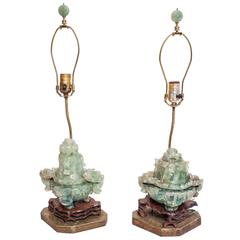
19th Century Chinese Pair of Madame Chiang Kai-Shek Quartz Lamps
Located in Nashville, TN
Pair of hand-carved quartz lamps were originally potpourri vessels that were converted to lamps in the 20th century. Mounted on rosewood bases. Remo...
Category
Antique 19th Century Chinese Table Lamps
Materials
Jade, Metal
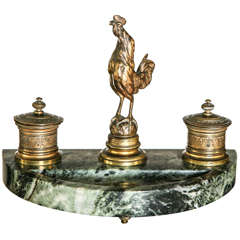
Bronze and Marble Inkwell
Located in Nashville, TN
Marble inkwell adorned with removable bronze rooster and two hinged top inkwells with glass liners. Bronze feet. Remnants of gilt overlay.
Category
Antique 19th Century French Inkwells
Materials
Marble, Bronze
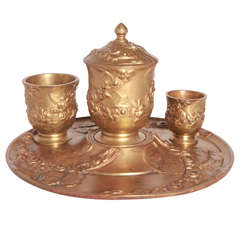
French Art Nouveau Bronze Inkwell
Located in Nashville, TN
Handmade bronze inkwell consists of three removable cups, the largest of which has a removable top. Inkwell depicts leaves and flowers. Signed VieiAard.
Category
Antique 19th Century French Inkwells
Materials
Bronze
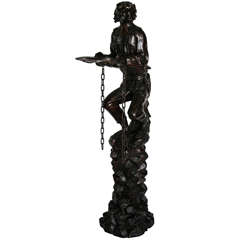
19th Century Venetian Figural Monkey Dumbwaiter
Located in Nashville, TN
Carved walnut in the form of a monkey with an attached tray and wood chain, seated on a rock work base.
Category
Antique 19th Century Italian Statues
Materials
Walnut
Related Items
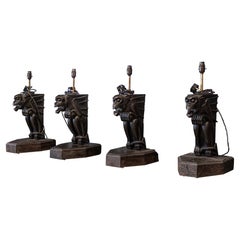
19th C Ebonised Carved Winged Serpent Gargoyle Table Lamps
Located in Staffordshire, GB
Circa 1890.
19th c large ebonised carved winged serpent gargoyle table lamps
Originally hand carved winged serpent gargoyle wall brackets.
Wired...
Category
Antique 1890s Central Asian Table Lamps
Materials
Hardwood
Rare
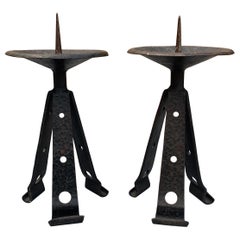
Sturdy Pair of Brutalist Forged Wrought Iron Candlesticks / Candleholders
Located in Lisse, NL
Stylish and very strong pair of timeless candle sticks.
If you are looking for beautiful Arts & Crafts antiques to grace your living space then this hand-crafted and timeless pair c...
Category
Early 20th Century English Arts and Crafts Candlesticks
Materials
Wrought Iron
$1,110 / set
H 11.5 in Dm 8.3 in
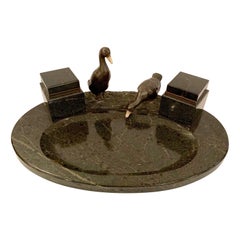
Impressive Black Marble Inkwell with Bronze Ducks
Located in Hopewell, NJ
Incredible black marble inkwell that is truly an objet d'arte, having two lyrical bronze ducks with bone beaks, as though perched at the side of a pond and two square ink wells lined in brass. Looks like it could be by the artist, Andre Villien...
Category
Early 20th Century French Art Deco Inkwells
Materials
Marble, Bronze
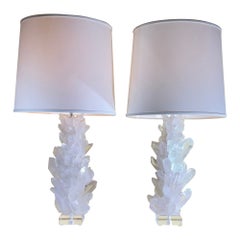
Pair of White Quartz Crystal Table Lamps by Joseph Malekan
By Joseph Malekan
Located in Delray Beach, FL
One of a kind pair of table lamps made of genuine crystal quartz shards and crystal points in white colors ,artistically put together to make beautiful...
Category
21st Century and Contemporary American Table Lamps
Materials
Quartz
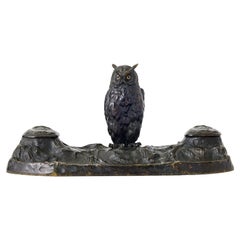
Art Nouveau Bronze Inkwell with an Owl
Located in Stockholm, SE
An Art Noveau or Jugend patinated bronze pen and inkwell with an owl sitting in the center. The owl have inset glass eyes. Made ca.1900. Possibly Swedish.
Symbolism of the owl: The...
Category
Antique Early 1900s European Art Nouveau Inkwells
Materials
Bronze
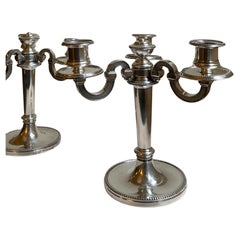
Pair of Christofle Candlesticks
By Christofle
Located in MADRID, ES
Pair of Christofle candlesticks with three arms of light decorated in Louis XVI style. France, 1950s.
Category
Vintage 1950s French Candlesticks
Materials
Silver
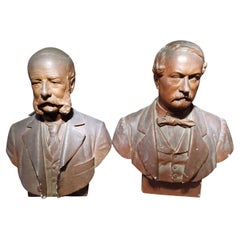
Pair of 19th Century Busts
Located in Madrid, ES
Pair of 19th century busts. These are 2 19th century Gesso painted busts of 2 archaeologists of the period. Measurements: 69 x 62 x 28 Y 65 x 60 x 30
Good condition.
Category
Antique 19th Century English Baroque Busts
Materials
Gesso
19th Century Classical Stone Bust
Located in NYC, NY
A good 19th century carved stone bust. The handsome figure in Greco-Roman attire with toga draped across the chest and a laurel wreath around his head.
...
Category
Antique 19th Century English Busts
Materials
Stone

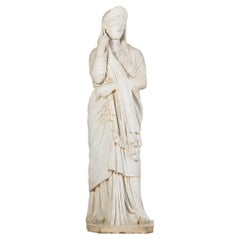
19th Century Marble Statue of Livia After the Antique
Located in Essex, MA
Grand Tour Carved Marble Statue of the Empress Livia Drusilla After the Antique. A true depiction of the Classical Statue of Rome's First Empress.
Livia Drusilla (30 January 59 BC – 28 September AD 29) was Roman empress...
Category
Antique 19th Century Italian Figurative Sculptures
Materials
Statuary Marble
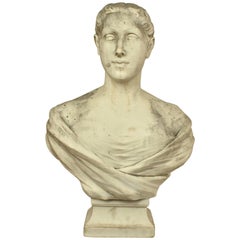
18th or 19th Century White Marble Bust of a Young Woman
Located in Berlin, DE
The marble bust facing frontal with her eyes looking to her right. The hair fastened in a skillfull knot behind, the drapery covers her shoulders and breasts, with another section un...
Category
Antique 19th Century French Louis XVI Busts
Materials
Carrara Marble
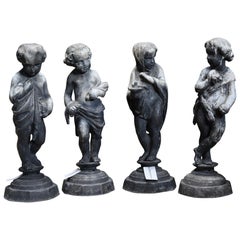
19th Century Lead Statues, Four Seasons
Located in Bloomfield Hills, MI
In the grand tradition of classical mythology, these four lead sculptures represent the original personifications of nature in all their seasonal aspects.
Each figure has been creat...
Category
Antique Late 19th Century English Late Victorian Statues
Materials
Lead
Pierre-Adrien DALPAYRAT French Art Nouveau Stoneware Inkwell, 1890
By Pierre-Adrien Dalpayrat
Located in Saint-Amans-des-Cots, FR
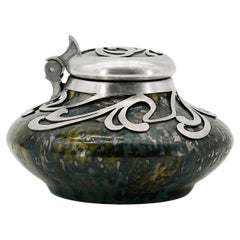
French Art Nouveau Inkwell by Pierre-Adrien Dalpayrat, France, circa 1890. A rare and exquisite Art Nouveau inkwell by renowned French ceramist Pierre-Adrien Dalpayrat (1844–1910). This finely crafted piece showcases Dalpayrat’s signature red copper-glazed stoneware, especially rich and luminous near the base. Elegantly mounted in pewter, the design exemplifies the organic flow and refined detail of the Art Nouveau period.
Dimensions: Height: 3.54 in. (9 cm) Diameter: 5.12 in. (13 cm)
Materials: Stoneware with pewter mount
Condition: Excellent+++++, museum-quality preservation
Markings: Incised signature "Dalpayrat 1500" under the base (see photo)
This inkwell is a collectible example of French ceramic art at the turn of the century—perfect for collectors of Art Nouveau, 19th-century French ceramics, or the works of Dalpayrat.
Adrien Dalpayrat (1844–1910): A Pioneer of French Ceramic Innovation
Adrien Dalpayrat was a French ceramicist and researcher who played a key role in the revival of stoneware at the end of the 19th century. Born in 1844 in Limoges, Dalpayrat studied drawing and porcelain painting in his hometown before beginning his professional career at the Jules Vieillard faience factory in Bordeaux. There, he met his wife, Marie Tallerie, with whom he had two sons—Albert and Adolphe—who would later become his primary collaborators.
Throughout his early career, Dalpayrat worked for several major ceramic manufacturers, including Ashwin (Valentine), Fouquet (Toulouse), François Blanc (Monaco), and Léon Sazerat (Limoges). In 1889, seeking greater independence, he moved to the Paris region and established his own studio in Bourg-la-Reine.
Collaborations and Artistic Evolution
Dalpayrat’s creative vision expanded through his collaboration with sculptor Alphonse Voisin-Delacroix. Together, they explored neo-Gothic and Palissy-inspired motifs, creating a remarkable ceramic bestiary. Following Voisin-Delacroix’s death in 1893, Dalpayrat partnered with Adèle Lesbros, which marked a shift in his work toward simpler, more refined vase forms influenced by Japonism.
Japanese art had been introduced to France during the 1867 Universal Exhibition, but it wasn’t until the 1878 Exhibition, particularly through the ceremonial stoneware used in the Japanese tea ceremony, that Japonism truly captivated French artists. This influence led Dalpayrat to create vessels with organic, vegetal, and animal-inspired forms.
Technical Mastery: The Secrets of Copper Red
Among all the ceramists of his time who sought to replicate the elusive Chinese “sang de boeuf” (oxblood) glaze, Adrien Dalpayrat was arguably the most successful. He didn’t simply reproduce the legendary copper red—he transformed it. By manipulating glaze thickness, firing temperature, atmosphere, and copper oxide content, he developed a unique palette of flamed and mottled red glazes that became his signature: the renowned Dalpayrat red.
He further enriched his pieces by introducing streaks and inclusions of turquoise, blue, green, and yellow—freeing the red glaze from monochromy and turning it into an expressive, living surface. His work pushed stoneware beyond function into expressive art, merging form and glaze in bold, sculptural harmony.
Beyond Ceramics: Bronze Mounts and Architectural Works
Dalpayrat also collaborated with renowned jewelers such as Ernest Cardeilhac and Keller to produce pieces mounted in gilt bronze, blending ceramics with decorative arts at the highest level.
In an effort to make his work more accessible, he opened a second faience workshop focused on simpler, more affordable pieces inspired by Nevers and Rouen ware. However, this venture faced financial difficulties and closed by 1900. The main family studio followed in 1906 as the popularity of Art Nouveau declined.
Dalpayrat then returned to Limoges, devoting his final years to painting and drawing until his death in 1910.
Legacy and Recognition
Despite financial struggles during his lifetime, Dalpayrat’s ceramics were widely acclaimed at major international exhibitions:
Bronze medal, World's Columbian Exposition, Chicago (1893)
Silver medal, Antwerp International Exhibition (1894)
Gold medal, Exposition Universelle, Paris (1900)
Today, his work is part of prestigious museum collections. In 2020, the Petit Palais in Paris acquired a large bird motif vase created in collaboration with Voisin-Delacroix, now on view in Room...
Category
Antique 1890s French Art Nouveau Inkwells
Materials
Pewter