Furniture

to
9
23
12
32
3
1
13
2
2
2
1
1
4
7
21
4
6
9
6
2
6
4
16
10
10
9
7
24
12
9
6
5
36
34
34
9
9
1
1
1
Furniture For Sale
Search Within: Beaufort
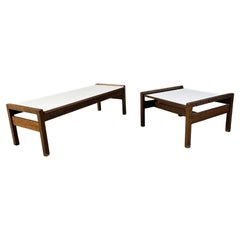
Belgian Coffee Table set in Wenge by Beaufort, 1960s
Located in Leuven, Vlaams Gewest
Mid century set of coffee tables by Beaufort, a Belgian furniture brand, also known for creating some beautiful lounge chairs/sofas. These coffee tables are no exception and are bea...
Category

1960s Belgian Mid-Century Modern Vintage Furniture

Materials

Formica, Wenge

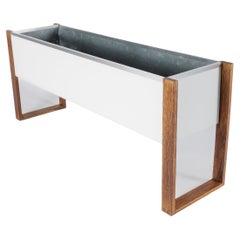
Vintage midcentury wengé indoor wooden planter by Beaufort Belgium
Located in Zemst, BE
Midcentury indoor planter Made by the belgian firm Beaufort. Made in a combination of Wengé wood, chrome and white melamine. The inside i...
Category

Late 20th Century Belgian Mid-Century Modern Furniture

Materials

Zinc

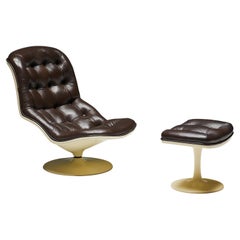
Lounge Chair by Georges van Rijck for Beaufort, Belgium, 1970s
Located in Antwerp, BE
"Shelby" lounge chair with ottoman designed by Georges van Rijck and manufactured by Beaufort in Belgium, circa 1970. This stunning ensemble showcases an elegant fusion of off-white ...
Category

1970s Mid-Century Modern Vintage Furniture

Materials

Leather, Polyester

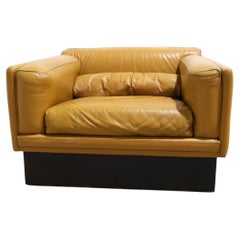
Mid Century Beaufort Leather low Cube Chair Georges van Rijck Belgium
Located in Brooklyn, NY
A Beautiful leather low cube chair on black Lacquer wooden plinth base Designed by Georges Van Rijck for Beaufort - Made in Belgium. Located in Brooklyn NYC. Dimensions: 38" x 35" x...
Category

1970s Belgian Mid-Century Modern Vintage Furniture

Materials

Leather, Wood, Lacquer

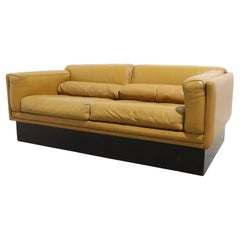
Mid Century Beaufort Leather Cube low Loveseat Georges van Rijck Belgium
Located in Brooklyn, NY
A Beautiful signed leather low cube Loveseat sofa on black Lacquer wooden plinth base. Lovely Design - Beautiful soft leather great color. Designed by Ge...
Category

1970s Belgian Mid-Century Modern Vintage Furniture

Materials

Leather, Wood, Lacquer

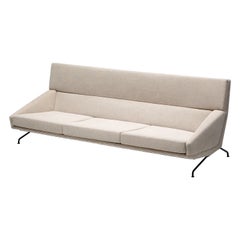
Three-Seater Sofa by Georges van Rijck for Beaufort, Belgium, 1960s
Located in Antwerp, BE
Three-seater sofa designed by Georges van Rijck and manufactured by Beaufort in Belgium. This piece merges the timeless design aesthetics of 1960s Belgium with contemporary elegance....
Category

1960s Belgian Mid-Century Modern Vintage Furniture

Materials

Metal

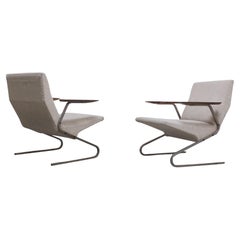
Rare Pair of Cantilever Lounge Chairs by Georges Van Rijck for Beaufort, 1960s
By Georges Vanrijk, Beaufort, Georges van Rijck
Located in Antwerpen, VAN
A very rare pair of Belgian modernist lounge chairs designed by Georges Van Rijck for Beaufort around 1960. This model is called ‘Cantilever’ and has a slight rocking function thanks...
Category

Mid-20th Century Belgian Mid-Century Modern Furniture

Materials

Metal

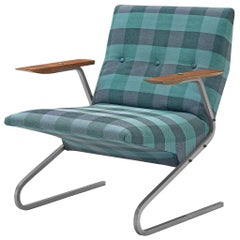
Georges van Rijck Cantilever Armchair in Blue Checkered Upholstery
Located in Waalwijk, NL
Georges van Rijck for Beaufort, 'Cantilever' lounge chair, fabric, wood and steel, Belgium, 1970s. This playful 'Cantilever' armchair is designed by ...
Category

1970s Belgian Mid-Century Modern Vintage Furniture

Materials

Steel

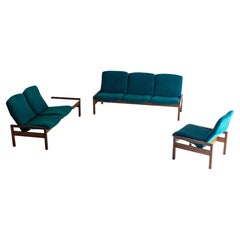
Rare mid-century sitting corner by Georges van Rijck, 1960s Belgium
Located in Antwerpen, VAN
Adorned in a luxurious petrol green upholstery, this unique set by georges van rijk for beaufort exudes a cool, confident vibe that’s both retro and refreshingly contemporary. The vi...
Category

1960s Belgian Mid-Century Modern Vintage Furniture

Materials

Fabric, Wenge

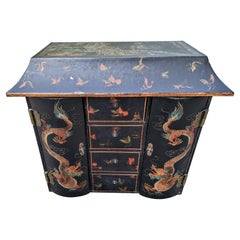
Antique Asian Chinoiserie Pagoda Shaped Tea / Apothecary Cabinet
Located in East Freetown, MA
Antique Asian tea/apothecary cabinet.. Pagoda shaped cabinet has two doors and four drawers. Wood with detailed brass fittings. Painted Chinoiserie ...
Category

Early 20th Century Chinese Chinoiserie Furniture

Materials

Wood

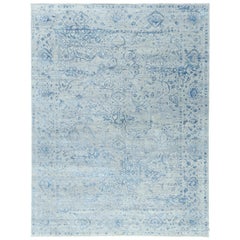
Beaufort Rug Transitional Design Allure Embossed Wool and Silk
Located in WEST HOLLYWOOD, CA
'Beaufort' is a beautiful transitional rug that is perfect for both traditional or contemporary settings. The silk embossed floral design brings quite the charm and sophistication th...
Category

21st Century and Contemporary Indian Furniture

Materials

Wool, Silk

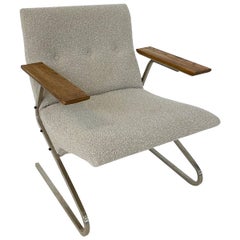
Mid-Century Modern Armchair ‘Cantilever’ by George van Rijck for Beaufort
Located in Brussels, BE
Mid-Century Modern Armchair ‘Cantilever’ by George van Rijck for Beaufort - Belgium 1960s
Category

1960s Belgian Vintage Furniture

Materials

Wood

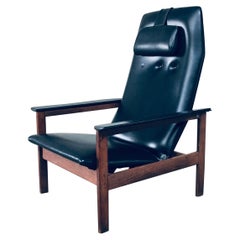
Lounge Chair by Georges Van Rijck for Beaufort, Belgium 1960 s
Located in Oud-Turnhout, VAN
Vintage Midcentury Modern Belgian Design Lounge Relax Chair by Georges Van Rijck for Beaufort. Made in Belgium, 1960's. Recliner arm chair with it's original head rest cushion.. Weng...
Category

1960s Belgian Mid-Century Modern Vintage Furniture

Materials

Faux Leather, Wenge

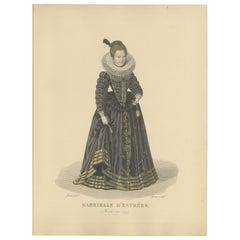
Hand Colored Engraving of Gabrielle D estrées, Duchess of Beaufort, 1900
Located in Langweer, NL
Antique print titled 'GABRIELLE D' ESTREES' Original antique print of Gabrielle d'Estrées, Duchess of Beaufort. Gabrielle d'Estrées, Duchess of Beaufort and Verneuil, Marchioness of Monceaux was a mistress, confidante and adviser of Henry IV of France. She persuaded Henry to renounce Protestantism in favour of Catholicism in 1593. Later she urged French Catholics...
Category

Early 20th Century French Furniture

Materials

Paper

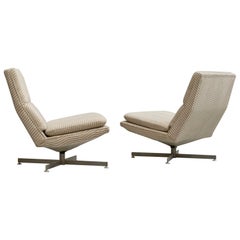
Georges Charles van Rijk Pair of Swivel Lounge Chairs for Beaufort Belgium 1960s
Located in Meer, VAN
Georges Charles van Rijk Pair of Swivel Lounge Chairs for Beaufort Belgium 1960s A rare pair of 1960s lounge chairs by designer, artist and photographer Georges van Rijk (1933-2015)...
Category

Mid-20th Century Belgian Mid-Century Modern Furniture

Materials

Steel

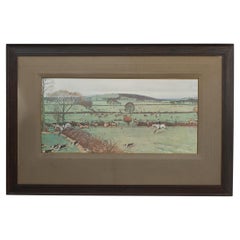
Signed Duke of Beaufort s Hunt, The Hunting Countries of England by Cecil Aldin
Located in Oxfordshire, GB
Hunting Countries Of England by Cecil Aldin, The Duke of Beaufort's Hunt. A single signed limited edition print, mounted and framed "The Duke of Beaufort's" by Cecil Aldin. This edit...
Category

Early 20th Century English Sporting Art Furniture

Materials

Paper, Wood

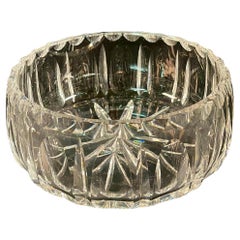
1960s French Crystal Saint Louis Credited Centerpiece
Located in Roma, IT
Enchanting glass bowl, thick crystal with perfectly executed cut decoration, undoubtedly attributable to St. Louis France, the oldest glass manufacturer in France. Founded in 1767, ...
Category

Mid-20th Century French Mid-Century Modern Furniture

Materials

Crystal

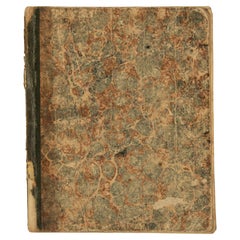
A Fascinating Ship’s Log And Journal Relating To The Whitway/Whiteway
Located in Lymington, Hampshire
A Fascinating Ship’s Log And Journal Relating To The Whitway/Whiteway Family of Bristol Mariners, Along With A Dispatch Letter From The Bureau in St Petersburg Relating to One Of The...
Category

Early 19th Century Antique Furniture

Materials

Paper

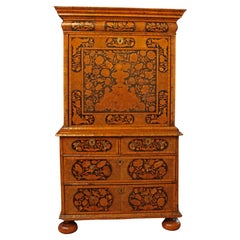
Circa 1680, William Mary Period, English Walnut Inlaid Escritoire
Located in Chapel Hill, NC
William Mary period, circa 1680, walnut inlaid escritoire, English. Extremely rare as not many of these exceptional pieces were made and few survive outside of museums; u...
Category

1680s English William and Mary Antique Furniture

Materials

Metal

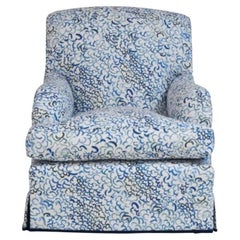
Camden Armchair
Located in London, GB
Our new Camden design emerged from a wish to create a traditional design with a handsome scrolled back and with Beaufort style arms. It works well and would also suit having no skirt...
Category

21st Century and Contemporary British Victorian Furniture

Materials

Beech

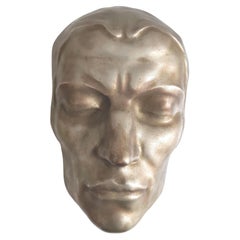
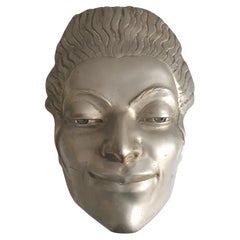
Art Deco Silvered Bronze Wall Mounted Sculpture by Doris Kathleen Flinn
Located in London, GB
Fine quality gilt bronze wall mask of a male subject with striking features, by Doris Kathleen Flinn. This piece could be wall hung, hung on a stand or even used to make a superb lam...
Category

1920s British Art Deco Vintage Furniture

Materials

Metal, Bronze

Art Deco Silvered Bronze Wall Sculpture by Doris Kathleen Flinn
Located in London, GB
Silvered bronze mask of a female, an original piece by Doris Kathleen Flinn. This was most likely of her partner who she often used as a model. It can be hung on the wall, mounted on...
Category

1920s British Art Deco Vintage Furniture

Materials

Bronze

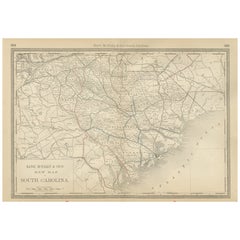
South Carolina Antique Map c.1888 – The Palmetto State, Railroads Counties
Located in Langweer, NL
Antique Map of South Carolina – Rand McNally, circa 1888 This antique map of South Carolina was published by Rand, McNally & Co. around 1888. Part of their celebrated late 19th-cent...
Category

Late 19th Century American Antique Furniture

Materials

Paper

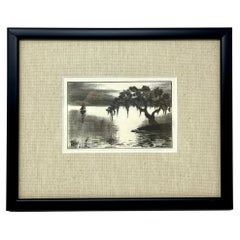
Lowcountry Charcoal on Paper Drawing by James Moore Rhett, Framed Reproduction
Located in Chicago, IL
Framed offset print of a charcoal drawing of the coastal South Carolina's Lowcountry by James Moore Rhett. Professionally matted in linen and framed in wood. Titled "Oak Tree and Sai...
Category

Early 20th Century American Anglo-Japanese Furniture

Materials

Paper

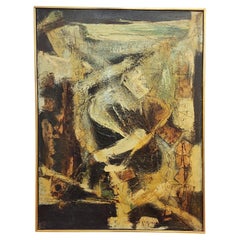
John David Rigsby Abstract Mixed Media on Canvas, American 1960
Located in Hudson, NY
A handsome and sophisticated mixed media on canvas by American artist John Rigsby. Found in a original state of preservation. His works are few and far between. The following biography was submitted by John David Rigsby, Jr., son of the artist. The author is Lisa Rigsby Peterson, daughter of the artist, and owner of the copyright of the biography. John David Rigsby was born on October 10, 1934, the seventh child of an Alabama Depression-era sharecropper's son. He and his family moved frequently, from one one-room structure to another, often with no running water, no plumbing, no heat but the stove. His father was killed in a car accident when Rigsby was just 9 years old. Life for the remaining eight family members proved tumultuous and difficult -- food wasn't plentiful, nor money. The family moved from place to place, following work -- Rigsby attended 30 different schools before graduating from high school. Despite living in poverty, Rigsby demonstrated academic and artistic aptitude at a young age. Two oil paintings on covers ripped off of old books that he painted when he was eight years old show the promise of an imaginative and gifted eye. Rigsby was drafted by the U.S. Army in 1953. As he later wrote, "When basic training at Fort Jackson, South Carolina, was over, I was told to go out and find a job. Jasper Johns was painting visual aids for the 28th Regimental Headquarters. He suggested the Band Training Unit." Rigsby played the clarinet in that unit, and after 2 years of service, he enrolled at the University of Alabama on the G.I. Bill to study art. After just two years, he left school and followed his mentor (and one of the greatest and longest-lasting influences on his art), Japanese artist and U of A art instructor Tatsu Heima, to New York City. Heima introduced him to Isamu Noguchi and suggested that Rigsby work as Noguchi's assistant. Instead, Rigsby chose a job as a guard at the Metropolitan Museum of Art, since "the notion of seeing all of that art appealed more to me than the boring task of studio assistant." The opportunity was a rich one for Rigsby. He had a chance to study the masters, and cited Rembrandt with his simplicity and elegance as another of the most important influences on his work. In the years between 1957 and 1963, when Rigsby eventually earned his BFA in sculpture, the artist traveled back and forth between New York and Tuscaloosa, alternating study with forays into the fertile New York art scene. Rigsby exhibited some of his early sculpture work in 1958 at a small New York gallery, which was also exhibiting the work of Willem and Elaine de Kooning and Theodore Stamos. Shortly thereafter, searching for an educational venue closer to New York City, Rigsby visited New Haven, Connecticut, and spent an afternoon speaking with Josef Albers at Yale. Albers agreed to accept Rigsby into the Yale program on the condition that he take freshman drawing all over again. A brilliant opportunity, but, in Rigsby's words, "When it was time to register, I was hitchhiking back to Alabama, looking for food and shelter." Rigsby had his first one-man show at the University of Alabama in 1959. A visiting critic from New York, J.F. Goosen, reviewed the show and wrote "here is a talent which produces art because that is the thing for a gifted person to do. In his effortless ease of conception and execution, he has already achieved a goal that eludes many artists for a lifetime." Finally, in 1963, Rigsby received his degree in sculpture, dissolved a short-lived marriage, visited his family, packed up his car and headed permanently for New York. That year, his work was included in a group show at the Delgado Museum in New Orleans - which led to a one-man exhibit at the Delgado in 1964. During 1964, Rigsby took drawing classes at Columbia University, and worked at the General Post Office at night. He met his future wife, Linda Palmieri, and married. In 1965, his daughter Lisa was born, followed in 1966 by the birth of his son, John David Jr. In 1966, Rigsby had a successful one-man show at the Pietrantonio Gallery in New York. Shortly thereafter, he and the family moved to Tunis, Tunisia at the suggestion of a colleague, who urged him to "come paint by the light of Klee." Rigsby worked for the United States Information Agency as a teacher, and he spent the next year and a half painting over ninety paintings inspired by the smells, light, and Phoenician and Roman art surrounding him. He also executed a number of character and landscape drawings, capturing the Tunisian way of life. During his time in Tunisia, Rigsby's work was shown there in two major exhibits. Upon the family's return to the U.S. in 1968, Rigsby once again exhibited at the Pietrantonio Gallery. Later that year, Rigsby enrolled in Southern Connecticut State College's Urban Studies program, earning a master's degree in 1970. During his time at SCSU, Rigsby worked as the city of Bridgeport's Curator of Exhibits, driving a mobile art gallery from schools to neighborhood fairs and housing projects. After completing his degree, Rigsby had an exhibit at the Telfair Museum in Savannah, Georgia. This exhibit caught the attention of a member of the search committee looking to hire an artist for a newly-developed program in neighboring South Carolina. In 1970, Rigsby was selected as the first Artist-in-Residence in the state of South Carolina for the National Endowment for the Arts Artists in Schools program. His work with the newly-integrated students at Beaufort (SC) High School over the term of his residency precluded substantial work on his own art. He did, however, set up a studio in downtown Beaufort, and was able to create a modest number of paintings, which were included in exhibits at the Columbia Museum in South Carolina in 1971 and Yale University in 1973. At the end of his residency in 1974, Rigsby was named the National Visual Arts Coordinator of the Artists in Schools program for the NEA, a post he held for two years. In this position, Rigsby traveled the country, reviewing grant applications, meeting with state leaders in government, education and the arts to promote program concepts and explore local opportunities. The message he repeated over and over again echoed that of one of the other major influences on Rigsby as an artist - Ruth Asawa Lanier, whose words taught him that all of the work that the artist does is the artist's work, not simply the paintings he creates. In his capacity as National Coordinator, as well as many times in the future, Rigsby stressed that artists function in the same way as any other person in society, and deserved the same respect and place for their work as did all other professions. After two years traveling the country, Rigsby was ready for a change, saying "for the first time in my adult life, there was not a body of paintings to show for the years put into my work." In 1976, a summer retreat to the mountain community of Central City, Colorado, led to a permanent relocation. Eventually settling in the small town of Evergreen, Rigsby followed his own advice about artists becoming actively involved in their communities, and he established the Evergreen Visual Arts Center. The Center provided working space for artists, classes for adults and children, and, most importantly, a place for Rigsby to create his own work. Buoyed by the opportunity to concentrate once again on his art, and inspired by his new surroundings, Rigsby entered an extremely prolific period in his career. In 1977, he organized a traveling exhibition of his paintings, which showed at the Kimball Arts Center in Utah, the Kennedy Center in Washington, D.C., and the Arvada Center in Colorado. 1978 brought more exhibits, notably in Aspen and Denver, as Rigsby's work continued. He took an extended trip to visit his mentor, Tatsu Heima, in Japan, where he climbed Mt. Fuji, followed by travels to Tehran, Delhi, and several European countries. He chronicled his impressions from his travels in a small collection of paintings upon his return to the U.S. - the beginning of a practice which would continue through the rest of his life. In 1979, Rigsby's marriage failed, and at the same time he lost the lease to his Evergreen studio to redevelopment plans. In response to the personal chaos around him, Rigsby began a series of what he called "hard-nosed process paintings," the watercolor paintings of dots which marked his work from this period. The paintings gained him an NEA Individual Artist grant in 1980, as well as a Yaddo fellowship in 1981. The polka dot paintings were followed by a series of cupcake-like images, again examining space and color. During the early 1980s, Rigsby lived in a suite of old dentists' offices in a rundown part of Denver, with a studio in an area that reminded him of the Bowery in New York. In 1984, Rigsby founded the Progreso Gallery in the building where he lived, using the space both to show his own work and also to mount shows of the work of many Colorado artists. The gallery also served as a focal point for Denver's local arts community, hosting weekly discussion groups and classes. In 1984, Rigsby traveled to the Baja Peninsula and then in 1985 to Yugoslavia. After each sojourn, Rigsby returned to create vibrant and explosive paintings based on his experiences, showing them at his Progreso gallery and another alternative gallery in Denver, the Edge Gallery. The economic recession of the mid-eighties hit the art market and Rigsby hard, however, and although he continued to create new works of art, major exhibitions were difficult to come by. In 1987, Rigsby decided to leave Denver and spent six months in Barcelona, Spain. It was an electrifying trip for him. Rigsby wrote of that time: "The streets alone are a visual feast, and the additions of museums from Saarinen, Picasso and Miro to 12th century icons produced artistic indigestion. My paintings are always about the way things look and feel. Barcelona was a time machine extending those sensory and emotional concerns back to the Middle Ages. I felt the need to reduce my work to essential elements of color, scale, drawing and format. The [resulting] color studies speak eloquently for themselves, and in doing so, redefine all of the work I've done in the past 35 years of painting." Rigsby completed over a hundred paintings while in Barcelona - color studies, street portraits of the characters he encountered on a daily basis, and a number of dark landscape paintings. He found time to run with the bulls in Pamplona, and began writing stories about his adventures that were later published. Upon his return to Denver in 1988, Rigsby continued to explore the alter egos of the color studies - he concentrated on a series of dark paintings, all prominently featuring back. He commented about these black paintings that he " decided it was time to explore the perception of the eye and physical space as defined by low -light conditions…I find these paintings elegant, joyous and light-filled, with no feeling of heaviness at all." In mid-1988, Rigsby moved permanently to Houston, Texas, where he would spend the last five years of his life. Once in Houston, Rigsby made a discovery that would serve as the inspiration and material for some of the last works of his career. In 1989, he discovered a salvage yard filled with scrap rubber, and he began working on black rubber sculptures, as well as paintings with rubber elements incorporated. He made strong connections in the Houston alternative arts scene, and became a regular contributor and art critic for a local weekly newspaper, The Public News. From 1989 through 1992, he exhibited his sculptures and paintings at Houston's Brent Gallery, Fountainhead Gallery, and Blaffer Gallery. He also produced an installation of his rubber sculptures on the roof of the Diverse Works Gallery in Houston. 1992 also marked Rigsby's return to Denver when he exhibited his sculptures at the Payton-Rule Gallery in Denver, leading to an Absolut Rigsby commission by Carillon Importers. The 1990s were a tremendous struggle for Rigsby, with financial crises compounded by physical trauma (he accidentally sawed off the top joint of the index finger of his left hand while working in his studio). Although his work was being shown, it wasn't selling, and the tremendous financial pressure he felt weighed heavily upon him. He spent an increasing proportion of his time going to flea markets and garage sales, rehabilitating and repairing the things he bought there, and then re-selling them simply to raise enough money to keep a roof over his head. He had little time to paint or sculpt, the things in life that had always, no matter what the circumstances, brought him joy. Rigsby's final works were a series of intricate paintings and drawings on used books that he purchased at the flea market. Most of these drawings, which he referred to as sculptural form drawings, were executed on page after page of science texts, music books, and a Korean bible and fill hundreds of pages. Additionally, Rigsby created an exquisite book he titled 28 de los Angeles, in which his twenty-eight simple and elegant drawings of angels resonated with the influence of Rembrandt he had so admired in his early days. In a sense, Rigsby's final works, art created on used books which were the only materials he could afford, brought his work and life full circle from his childhood days. Rigsby's life, though begun and ended in adversity, was nonetheless illuminated and enriched by the irresistible impulse he had to create art and beauty. John David Rigsby was killed in a one-car accident in Colorado in August, 1993. Biography from the Archives of askART Following is a review by Michael Paglia of the artist's July 2004 retrospective at the Denver Museum of Contemporary Art. It was submitted by John Rigsby, Jr., son of the artist. There's a magnificent retrospective at Denver's Museum of Contemporary Art devoted to the work of the late John David Rigsby, who was a major powerhouse in Colorado's art scene. "Dots, Blobs and Angels" surveys more than forty years' worth of the remarkable artist's paintings and sculptures. The year 1993 was strange, and by that I mean terrible. Many of the city's galleries closed because of bad economic times, and then the artists started dying. In a matter of a few months, Denver lost three significant artists: Rigsby, experimental photographer Wes Kennedy...
Category

1960s American Mid-Century Modern Vintage Furniture

Materials

Canvas, Paint

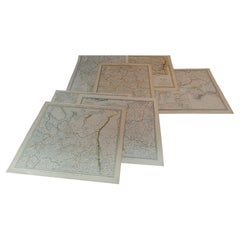
1844 Map "Russia in Eurpoe, Part II to Part VIII", 7 Maps Ric.r023
Located in Norton, MA
1844 Map "Russia in Eurpoe, Part II to Part VIII" 7 Maps Ric.r023 Fine, original, steel-engraved Map of Russia in Europe Part II t oPart VIII, by the Society for the Diffusion of Useful Knowledge. Detailed map of the regions to the northeast of Moscow. Including Arkhangel, Vologda, Viatka, Perm, Olonetz, Iaroslavl. The SDUK began its map publishing project under the leadership of Captain Francis Beaufort R.N. in 1829, and published the maps in parts, haltingly, over the next 15 years, completing the series in 1844, finally permitting the publication of a whole atlas. Many of the maps were actually drawn by Beaufort, who at the time was the Hydrographer to the Royal Navy, and all were closely supervised by him. J. & C. Walker worked closely with Beaufort in engraving the maps. Finely engraved, carefully researched, the maps set...
Category

19th Century Unknown Antique Furniture

Materials

Paper

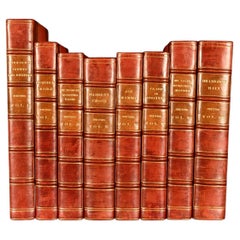
1853-88 The Sporting Novels of Robert Smith Surtees
By Robert Smith Surtees
Located in Bath, GB
A smart set of the sporting novels of Surtees, a set of eight volumes including three first edition, colourfully illustrated by hand throughout. The collected sporting novels of Rob...
Category

Mid-19th Century British Antique Furniture

Materials

Paper

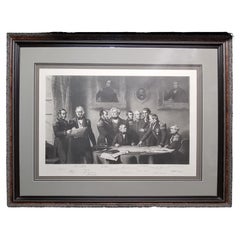
Arctic Council Discussing A Plan For The Search of The John Franklin Expedition
Located in Ottawa, Ontario
The Arctic Council Discussing The Plan for the Search of the The John Franklin Expedition After Stephen Pearce. Limited Edition reproduction copied f...
Category

Late 20th Century Canadian British Colonial Furniture

Materials

Paper

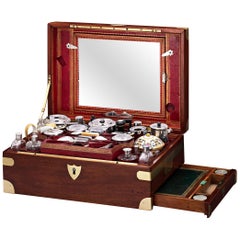
French Nécessaire de Voyage
Located in New Orleans, LA
This exceptional and rare French nécessaire de voyage is almost certainly the work of the highly respected Parisian manufacturer Pierre-Dominique ...
Category

Early 19th Century French Empire Antique Furniture

Materials

Crystal, Silver

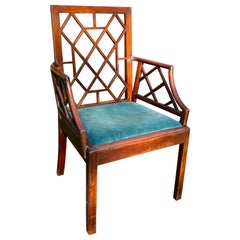
Rare 18th Century Mahogany Cockpen Armchair
Located in Lymington, GB
A rare 18th-century mahogany Cockpen open armchair of very good quality. George III-period, ca 1760. This antique armchair is in mahogany with a chinoiserie open-fretwork (or Chines...
Category

Mid-18th Century English George III Antique Furniture

Materials

Mahogany

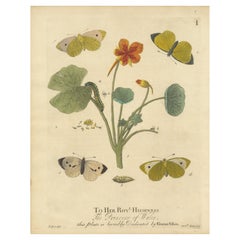
Elephant Hawk-Moth and Bedstraw from A Natural History of English Insects, 1749
Located in Langweer, NL
The image is an original antique handcolored plate from "A Natural History of English Insects" published in 1749 by Eleazar Albin. Albin, likely of German origin and known initially ...
Category

1740s Antique Furniture

Materials

Paper

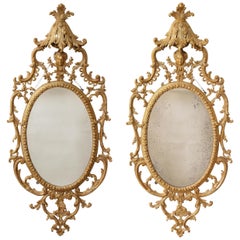
Pr. George III Gilt Carton-Pierre and Giltwood Oval Mirrors, Manner John Linnell
Located in New York, NY
A fantastic and extremely rare pair of George III period gilt Carton-Pierre and giltwood oval mirrors in the manner of John Linnell. Each mirror is gorgeously hand carved with meticulous detail and fine craftsmanship. The giltwood borders are designed with foliate crests above female masks, with aprons centered by a standing or recumbent left facing lamb. It is extremely rare to find a pair of mirrors of this date and in such amazing untouched condition, the mirror panels are most probably original and date to the late 1700s. Provenance: Jeremy, Ltd., London England, circa 1770 Carton-pierre, literal translation from the French - cardboard stone, was developed in the 18th century specifically to imitate wood and stone. The Formula typically included flour, chalk, sawdust, sand and plaster and bound with wax, resin, animal glues or gum arabic. The material could be moulded, bent and otherwise formed into the desired design. Preeminent makers like Gillows and John Linnell began using carton pierre in the late 1760s. The new material allowed for lacey decorative spandrels and festoons that could be made into nearly any length or shape required. These elements and the particular foliate umbrella canopy on this pair of mirrors relates to designs of William and John Linnell. The most famous example of this crest element is on the mirror supplied by Linnell to the 4th Duke of Beaufort for the State Bedroom at Badminton House...
Category

1770s English George III Antique Furniture

Materials

Mirror, Giltwood

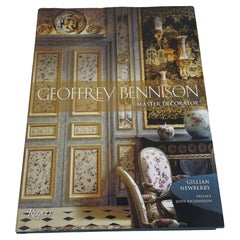
Geoffrey Bennison Master Decorator by Gillian Newberry and Sir John Richardson
Located in Moreno Valley, CA
Geoffrey Bennison Master Decorator by Gillian Newberry and Sir John Richardson hardcover book.Extremely rare, limited edition, collectible out of print.The first monograph on the wor...
Category

21st Century and Contemporary English Victorian Furniture

Materials

Paper

Geisha Motifs Terrace Parasol by Marcel Wanders
Located in Beverly Hills, CA
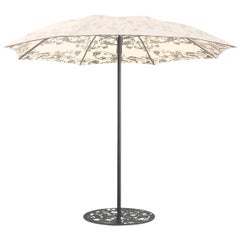
Scroll down and click "view all from Seller" to see more than 400 other unique products. Geisha is the new parasol developed by leading Dutch designer Marcel Wanders. This superb terrace parasol embodies the essence of the mysterious Japanese geisha tradition with its understated, relaxed ambiance. Wanders has designed stylized floral motifs for the interior of the parasol. The pole is crowned by a metal bow, the characteristic accessory to the geisha’s kimono...
Category

21st Century and Contemporary Belgian Modern Furniture

Materials

Stainless Steel

Rare 13 Star Civil War Flag in the Trumbull Pattern w/ 36 Stars on the Reverse
Located in York County, PA
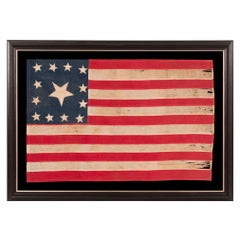
EXTRAORDINARY CIVIL WAR ERA FLAG, WITH 13 HAND-SEWN STARS ARRANGED IN A VARIANT OF WHAT IS KNOWN AS THE TRUMBULL PATTERN, FEATURING A HUGE, UPSIDE-DOWN CENTER STAR, AND THE EXTREMELY...
Category

Mid-19th Century American Antique Furniture

Materials

Cotton

19th Century Noble Gilt wooden Family photo Frame, American History
Located in Delft, NL
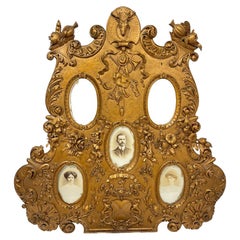
19th Century Noble Gilt wooden Family photo Frame, American History A gilded wooden family portrait frame with the Calhoun/Colquhoun family coat of arms. This portrait frame probably ended up in the Netherlands through the marriage of the American Julia Johnson Calhoun (1884-1970) in 1914 to Mr. Justinus Egbertus Hendericus baron van Nagell (1882-1963). The list contains three portrait photos of presumably members of the Calhoun family. The American statesman John Caldwell Calhoun (1782-1850) descended from a Scottish noble family with the name Colquhoun, who settled in the United States in the 18th century and achieved great prestige there. He started his career as a lawyer, married the daughter of an influential senator and was elected to the House of Representatives. After serving as Secretary of War, he became Vice President under President John Quincy Adams from 1825-1829 and then served a second term under President Andrew Jackson. This makes him one of only two American vice presidents to have served under two different presidents. His grandson, John Caldwell Calhoun (1843-1918), was a successful American businessman, landowner and managing director of the Baltimore Coal Mining and Railway Company. He married Linnie Adams, second cousin of US Vice President Richard Johnson. Their only daughter, Julia Johnson Calhoun (1884-1970), made her debut in New York and met mr. Justinus Egbertus Hendericus baron van Nagell (1882-1963), who was attached to the Dutch legation in Washington in diplomatic service. He descended from an old noble family from Westphalia, whose ancestor was first mentioned in 1385. In the 16th century, an ancestor settled in the Netherlands and in 1814 the family was included in the Dutch nobility with the title of baron. He grew up at Schaffelaar Castle in Barneveld and his father was mayor in this castle and he was also Grand Commander of the Knightly German Order. At the end of the 19th century, a real boom in marriages of wealthy American heirs to European nobility started. It was the 'Gilded Age', described in e.g., the books of Edith Wharton, in which millions of dollars crossed the Atlantic as a dowry. New money and European nobility bonded. One of the most famous marriages was that of Consuelo Vanderbilt to the English Duke of Marlborough. The Vanderbilt millions repaired the roof of Blenheim Palace and the gardens here were recreated in the French style. It prompted a visitor to remark: “American money has its use after all.” The Van Nagell-Calhoun wedding became a real social event in the winter of 1914 at the start of the nightlife season – one newspaper ran the headline GAYETIES OF WINTER SOCIAL SEASON BEGIN THIS WEEK – and newspapers detailed all the details. The bridal staff included the Dutch Count Van Rechteren Limpurg and as witness for the groom was Jonkheer De Beaufort, who was secretary of the Dutch legation in Washington. Baron Van Nagell had a glorious career in the diplomatic service, which over the years took him from Beijing to Washington and St Petersburg. Here he experienced the Russian Revolution in Saint Petersburg in 1917 up close. One evening he was sitting with company at a table in a restaurant. A waiter brought the bill to a group of Russian communists next to them. The bill did not like this, whereupon the waiter was shot dead. After Saint Petersburg, London, Bucharest, and Stockholm followed, where he finally became envoy extraordinary and minister plenipotentiary. The couple had three children: one daughter was born stillless and the only son and heir died in 1944 as a res. -2nd lieutenant pilot in the Royal Air Force over France. A second daughter married a jonkheer Clifford Kocq van Breugel...
Category

19th Century North American Antique Furniture

Materials

Fruitwood

Shop Unique Furniture on 1stDibs

When it comes to shopping for vintage, new and antique furniture — whether you’re finally moving into that long-coveted loft apartment, ranch-style home, townhouse or furnishing your weekend house on the lake — you should think of your home as a stage for the seating, tables, lighting, storage cabinets and other pieces that best match your personality.

Coziness, comfort and creating a welcoming space are among the important things to consider when buying furniture, whether that means seeking strict cohesion or rooms characterized by a mix-and-match assembly of varying shapes, colors and materials. And for those who now work from home, exercise, eat and relax within the same four walls every day, they’ll also want to think about flexibility and an innovative approach.

Have you built your dream kitchen?

Is your current living-room furniture all that it could be?

Does your toast-worthy bar or vintage bar cart exude equal parts class and cheeriness?

And importantly, is your home officebackyard or otherwise — a happy one, regardless of the design style you happen to gravitate toward?

Although mid-century modern, rustic, minimalist, Art Deco and contemporary looks remain popular, they aren’t the only styles available to design connoisseurs.

Furniture styles are nothing if not fluid, meaning what’s popular one year may not be the next. That’s why it’s crucial to not only pay attention to interior-design trends but also focus on the styles that speak to you. That way, you (and your interior designer, if that is in the plans) can work to create a home that’s entirely your own, complete with impressively modern decor as well as an array of history’s universally renowned iconic designs.

It’s difficult to single out well-recognized designs from what is a crowded pantheon of celebrated and seminal furnishings. Certain outstanding designs have such stellar quality they’ve endured for decades as bona fide cultural treasures, still being manufactured, in many cases, by the same venerable companies that shepherded them into being (think Herman Miller, Knoll and Fritz Hansen). Some works come immediately to mind as contenders for any short list. When you’re discussing the most popular mid-century modern chairs, for example, no tally would be complete without citing designs by Arne Jacobsen, Charlotte Perriand, Charles and Ray Eames and Hans Wegner.

Good furniture, be it authentic vintage furniture or new custom furniture, allows you to comfortably sit and tell your favorite stories. Great furniture tells a story of its own.

On 1stDibs, find everything from sofas to serveware to credenzas to coffee tables, and every other type of antique, vintage and new furniture you need to create a singular space that you’ll be proud to call home.

Still Thinking About These?

All Recently Viewed