Milord Antiques Metalwork
to
1
1
1
1
1
1
1
1
1
1
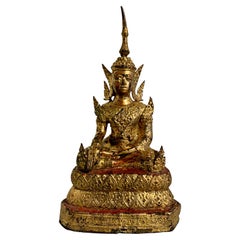
Large Gilt Bronze Thai Rattanakosin Buddha
Located in Montreal, QC
Large gilt bronze Thai Rattanakosin buddha eyes inlaid with mother pearl
Category
20th Century Thai Metalwork
Materials
Bronze
Related Items
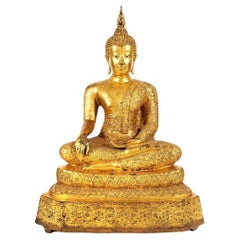
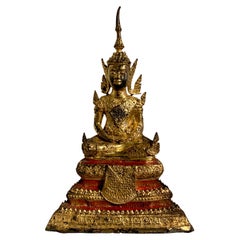
Thai Siam Bronze Gilt Rattanakosin Kingdom Seated Temple Shrine Buddha, 1800s
Located in Studio City, CA
A wonderful gem of a piece. This beautifully sculpted and adorned bronze and gilt seated meditation Buddha is from the Thai Rattanakosin Kingdom period (1782-1932) and has a nice patina and character acquired through age. The Buddha is in the Bhumisparsha (calling the earth to witness) mudra position symbolizing the moment when he attained enlightenment under the Bodhi tree...
Category
Antique Early 19th Century Thai Sculptures and Carvings
Materials
Bronze

$495
H 5.25 in W 3.5 in D 1.5 in
Antique Bronze Thai Rattanakosin Buddha from Thailand
Located in DEVENTER, NL
Material: bronze
72,3 cm high
16,8 cm wide and 16,5 cm deep
Weight: 6.760 kgs
Gilded with 24 krt. gold
Abhaya mudra
Originating from Thailand
19th century - Rattanakosin peri...
Category
Antique 19th Century Thai Sculptures and Carvings
Materials
Bronze
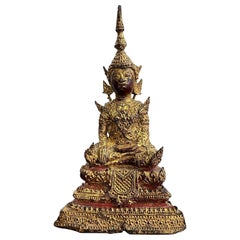
Thai Rattanakosin Gilt Bronze Buddha, Mid 19th Century, Thailand
Located in Austin, TX
A delightful Thai Rattanakosin Period lacquered and gilt cast bronze figure of the Buddha in royal attire, mid 19th century, Thailand.
The charming figure depicts the Buddha in dhyanasana, the gesture of meditation. The Buddha sits serenely in half lotus position, his hands resting comfortably upon his lap, one on top of the other.
The Buddha is dressed in elaborate robes, cast with floral and foliate designs in high relief. Over his robe, he wears the regalia of Thai kings, with a heavy cape...
Category
Antique Mid-19th Century Thai Sculptures and Carvings
Materials
Bronze
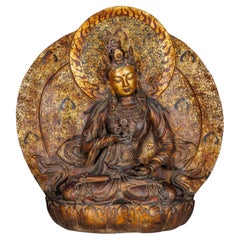
A Monumental Gilt-Lacquered Bronze Ornamental Buddha Sculpture of Vajravidarana
Located in Queens, NY
A Monumental Gilt-Lacquered Bronze Ornamental Buddha Sculpture of Vajravidarana:
A Masterpiece of Sino-Tibetan Craftsmanship, Late 19th Century, Qing Dynasty
This monumental gilt-lacquered bronze ornamental sculpture of Vajravidarana is an extraordinary and commanding piece of art, showcasing the pinnacle of Sino-Tibetan craftsmanship from the late 19th century. The figure of Vajravidarana, a powerful purification deity in Tibetan Buddhism, is meticulously sculpted to embody both spiritual authority and artistic excellence.
Vajravidarana is primarily known for his role in removing spiritual impurities and negativities. Unlike other deities associated with wisdom or compassion, Vajravidarana’s function is centered on purification and healing. He is typically depicted holding a vajra and a bell, symbolizing the cutting away of delusions and the resonance of divine truth. In this striking sculpture, Vajravidarana is shown holding a vishva vajra (the double vajra), a unique and powerful variation of the traditional iconography, which signifies ultimate protection and the dispelling of negative karma.
Vajravidarana: The Supreme Purifier and Protector
Vajravidarana is revered in Tibetan Buddhism as the deity of spiritual purification, called upon to cleanse practitioners of defilements and negative influences. His vajra represents the indestructibility of truth, while his bell signifies the wisdom that resonates through purification rituals. In this sculpture, the presence of the vishva vajra, or double vajra, enhances his association with supreme protection, ensuring the destruction of all spiritual obstacles and afflictions.
The figure’s powerful yet composed expression conveys a sense of unwavering resolve and divine authority. His posture, along with the carefully sculpted details of his robes and ornaments, highlights his function as a guardian against impurity. The inclusion of the vishva vajra rather than the usual single vajra reinforces his role as a supreme protector, capable of dispelling all forms of negativity and restoring balance.
Symbolism of the Mantras and Aureole:
Unlike deities that embody wisdom through duality, Vajravidarana’s iconography is centered on purification and exorcism. The aureole surrounding him is inscribed with sacred purification mantras rather than depictions of a consort. These mantras emphasize his function as a remover of obstacles and impurities, reinforcing his role in Buddhist healing rituals.
The presence of the sacred inscriptions elevates the sculpture’s spiritual significance, making it a focal point for meditation and ritual purification. Practitioners often visualize Vajravidarana radiating purifying light, dissolving afflictions and negative karma. This theme is mirrored in the sculptural repetition of the purification symbols on the aureole, reinforcing the deity’s role as a divine cleanser.
Gilt-Lacquered Bronze: The Artistry of Sino-Tibetan Metalwork:
The craftsmanship of this monumental figure reflects the expertise of late 19th-century Sino-Tibetan metalwork, where traditional Tibetan themes were infused with Chinese artistic sensibilities. Cast in bronze and finished with a rich gilt lacquer, the statue has an otherworldly glow, giving it an ethereal, almost divine presence. The gilding process—applied with exceptional skill—gives the sculpture a striking luminosity that enhances the fine details of the facial features, flowing robes, jewelry, and other elements of the deity’s attire.
The technique employed to create this figure speaks to the high level of craftsmanship that flourished during the late Qing Dynasty and early modern Tibetan art. The ornate details of the robes and the fine texture of the sculpture highlight the exceptional skill of the artisans who brought this work to life. The use of gold and lacquer not only reflects the preciousness of the sculpture but also its spiritual significance as an object meant to inspire reverence and meditation.
An Ornamental Sculpture of Monumental Scale:
Unlike smaller devotional objects, this sculpture is designed as an ornamental masterpiece, intended to make a grand visual and spiritual statement. Its monumental size allows it to dominate any space, offering a commanding presence that is both physically and symbolically impressive. In Buddhist practice, large sculptures of this nature are often placed in temples or meditation halls, where their imposing size and serene presence would encourage contemplation and devotion.
The grand scale of the statue further amplifies the spiritual power it is meant to convey. As a representation of Vajravidarana, it is not only a physical object of beauty but also a conduit for meditation, purification, and enlightenment. The scale of the sculpture also emphasizes the divine stature of the deity, highlighting his importance in the Buddhist tradition as the ultimate force for spiritual cleansing and protection.
Provenance:
Acquired in China in circa 1900
1905 Private Buddhist Temple, Northeast, USA
Private Sale
Solomon Treasure...
Category
Antique Late 19th Century Chinese Tibetan Metalwork
Materials
Bronze
$173,500
H 43 in W 43 in D 12 in
Large Thai Bronze Buddha
Located in Greenwich, CT
Large Thai bronze sitting buddha.
Category
Antique 19th Century Thai Other Sculptures and Carvings
Materials
Bronze

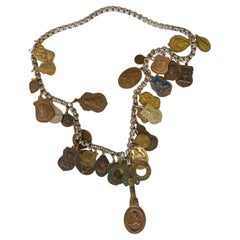
Antique Vintage Thai Buddha Buddhist Amulet Necklace with 33 Protective Charms
Located in Studio City, CA
A wonderful, quite special and unique Thai (Thailand) Buddhist sacred amulet/charm necklace featuring 32 silver and gold toned amulets/charms plus one main larger key shaped center p...
Category
20th Century Thai Folk Art Metalwork
Materials
Metal
$995
H 17 in W 4 in D 0.5 in
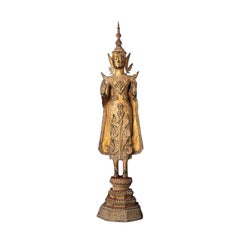
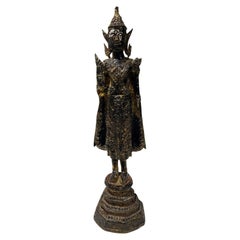
Thai Siam Bronze Gilt Rattanakosin Kingdom Standing Temple Shrine Buddha, 1800s
Located in Studio City, CA
A wonderful piece. This beautifully sculpted and adorned bronze and gilt, Buddha is from the Thai Rattanakosin Kingdom period (1782-1932) and has a nice patina and coloring acquired ...
Category
Antique Early 19th Century Thai Sculptures and Carvings
Materials
Bronze
$1,250
H 17.9 in W 4.75 in D 4.25 in
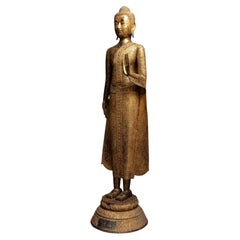
Life-Sized 19th Century Gilt Bronze Thai Buddha with Mother of Pearl Eyes
Located in New York, NY
A Life-Size 19th Century Gilt Bronze Thai Buddha with Mother of Pearl Eyes. This life-size Thai gilt bronze Buddha stands serenely in the Abha...
Category
Antique 1850s Thai Other Metalwork
Materials
Bronze
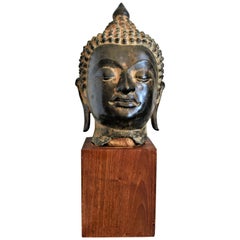
Antique Asian Cast Bronze Buddha Head Fragment Bust Sculpture Thai, 18th Century
Located in Hamilton, Ontario
Antique Asian and extremely detailed cast bronze fragment of the head of Buddha, dating from the 18 century and presumably having Thai or Tibetan origins. The sculpture fragment is s...
Category
Antique 18th Century Thai Tibetan Metalwork
Materials
Bronze
$1,750
H 13.6 in W 5 in D 6 in
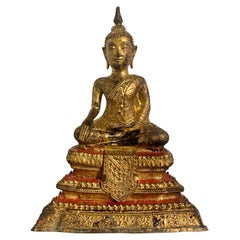
Thai Gilt Bronze Buddha Marvijaya, Rattanakosin Period, 19th Century, Thailand
Located in Austin, TX
A lovely Thai lacquered and gilt cast bronze figure of the historical Buddha, Shakyamuni, portrayed in Maravijaya, Rattanakosin Period, early to mid 19th century, Thailand.
The B...
Category
Antique Mid-19th Century Thai Sculptures and Carvings
Materials
Bronze
$3,700
H 12.5 in W 9 in D 4.25 in
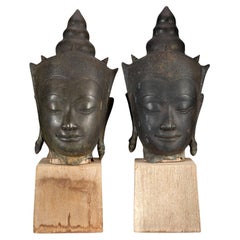
Pair of Antique Thai Ayutthaya Period Bronze Crowned Buddha Head on Wood Stand
Located in Forney, TX
A remarkable pair of Thai Ayutthaya period bronze crowned Buddha mounted on wood display stands. Thailand. 17th/18th Century
Dimensions: (approx)
Head: 15" High, 7.75" Wide, 6" Deep (tallest)
Overall: tbd
Provenance / Acquisition:
Acquired from the highly reputable auction house Heritage Auctions, Dallas, Texas.
2024 March Fine & Decorative Asian Art Signature Catalog Auction #8155 Lot #78357
Condition Report:
Attractive pair with beautifully aged patina, condition commensurate of age, use, and exposure. Scattered areas of desirable verdigris green patina and oxidation throughout to each. Minor loss to front shell point of one example. Small holes scattered throughout and scews/nails through each fixing both examples to wooden bases. Both well preserved and present superbly
History:
The first Crowned Buddha images or Jambupati Buddha statues are known to have been originated from the Pyu, where the Indian influence of Buddhist arts and non-Theravada Buddhism was extremely felt in those days. There may have been various background stories behind the crowned Buddha statues in the course of history but one of the most popular stories goes by the legend of Jambupati. This particular legend is not known in the home of Buddhism India, however the crowned Buddha statues have been attached to the name Jambupati as the Buddha is believed to have humbled a boastful and arrogant king Jambupati. The story goes on about how the Buddha transformed himself into a mighty king with a crown and jewelry and set himself a majestic yet incomparable palace. Seeing this, the king accepted the great ability of the Buddha and submitted himself to the Dharma and became a Buddhist monk. This particular story has gained a lot of popularity and stood the test of time in Burma as the number of Crowned Buddha statues in Burma is considerably great in amount.
There are also other versions of the background story of crowned statues...
Category
Antique 17th Century Thai Folk Art Metalwork
Materials
Bronze
$4,500 / set
H 15 in W 7.75 in D 6 in
Thai Rattanakosin Gilt Bronze Buddha, Mid 19th Century, Thailand
Located in Austin, TX
A wonderful Thai Rattanakosin Period lacquered and gilt cast bronze figure of the Buddha in royal attire, mid 19th century, Thailand.
The lovely figure depicts the Buddha in bhumisparsha mudra, the gesture of calling the earth to witness. Seated in full lotus position, with one hand resting in meditation in his lap, the other extended over the knee to touch the ground, this gesture commemorates the moment the Buddha attains enlightenment.
The Buddha is dressed in elaborate robes, cast with floral and foliate designs in high relief. Over his robe, he wears the regalia of Thai kings, with a heavy cape, diamond shaped pectoral, and a winged crown upon his head - all with studded designs in high relief, imitating heavy embroidery...
Category
Antique Mid-19th Century Thai Sculptures and Carvings
Materials
Bronze