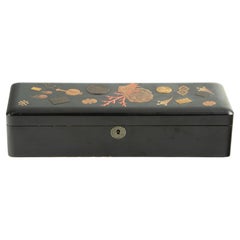
M.S. Rau Lacquer
to
6
6
1
4
1
1
6
4
3
1
1
6
4
3
1
6
6
6
Japanese Lacquer Box
Located in New Orleans, LA
This exquisite Meiji-period lacquer document box known as a ryoshibako showcases the meticulous artistry of maki-e, a technique of raised lacquer decoration. Adorned with gold and vi...
Category
Antique 19th Century Asian Meiji Lacquer
Materials
Gold
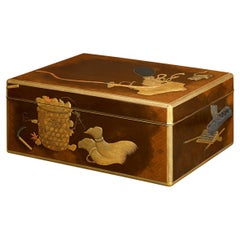

$39,850
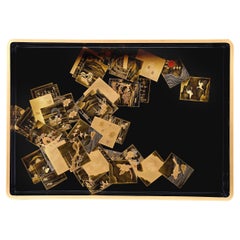
Japanese Lacquer Tray With Cards
Located in New Orleans, LA
This Meiji-period lacquer tray represents the mastery of Japanese craftsmen in the art of lacquer work. Precious materials are precisely inlaid in the lacquer base, creating a highly...
Category
Antique Late 19th Century Japanese Meiji Lacquer
Materials
Gold
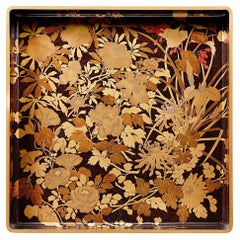
Japanese Lacquer and Gold Tray
Located in New Orleans, LA
This Meiji-period lacquer tray represents the mastery of Japanese craftsmen in the art of lacquer work. Precious materials are precisely inlaid in the lacquer base, creating a highly...
Category
Antique Late 19th Century Asian Meiji Lacquer
Materials
Gold
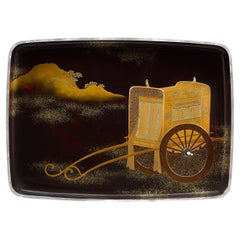
Japanese Lacquer Tray
Located in New Orleans, LA
Hailing from illustrious Meiji-period Japan, this lacquer tray showcases the mastery of Japanese craftsmen. Precious materials are precisely inlaid in the lacquer base, creating an a...
Category
Antique Late 19th Century Japanese Meiji Lacquer
Materials
Silver
$19,800
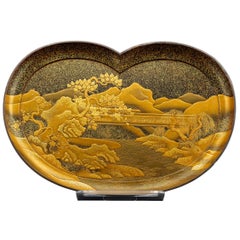
Japanese Lacquer Tray
Located in New Orleans, LA
As beautiful as it is practical, this Japanese Meiji-period lacquered tray is distinguished by its exceptional craftsmanship. It exhibits a phenomenal artistry as the entire tray is ...
Category
Early 20th Century Japanese Meiji Lacquer
Materials
Lacquer
$8,850
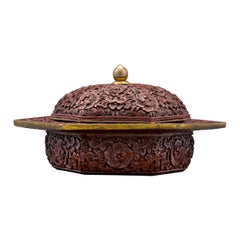
Chinese Cinnabar Lacquer Cuspidor
Located in New Orleans, LA
This intriguing Chinese zhadou is intricately carved of fine cinnabar lacquer. A work of exceptional artistry, this covered bowl is adorned with an intricately carved floral motif on all surfaces, including the cover and the wide rim. Also known as a cuspidor or spittoon, this rare container would have been used by members of the imperial family and scholar- officials at the court. Carved during the Kangxi period (1662-1722), this charming piece exhibits the high detail and charm associated with items from that period, making it a true treasure,
Early 18th century (Kangxi dynasty)
Measures: 6 ¼” wide x 3 ¼” high
Cinnabar has been revered for its color all over the world. It has been found in the royal burial chambers of the Mayas, in the rituals of India, and in the ruins of ancient Greece and Rome. In China, cinnabar and gold were the two most important elements in alchemy. Mined since the Neolithic Age, cinnabar is the ore of mercury, and as such, it can be incredibly toxic, especially when mining. In fact, during the Roman Empire, miners at Spain’s Almadén mine in Spain were frequently exposed to mercury fumes, and the subsequent, often fatal, sickness was considered an occupational hazard.
The most popular known use of cinnabar is in Chinese carved lacquer-ware, a technique that is believed to have originated in the Song Dynasty, in which cinnabar is ground to a powder and added to clear lacquer. As with mining, there was inherent danger of mercury poisoning for those who carved the lacquer, as mercury was also released into the air when artisans ground the pigments. Most antique cinnabar...
Category
Antique 18th Century Chinese Other Lacquer
Materials
Lacquer
Related Items
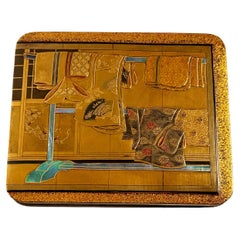
Japanese Tagasode (Whose Sleeves?) Lacquer Incense Box, Kobako, Meiji Period
Located in Austin, TX
A fine and unusual Japanese lacquer box for incense accessories, kobako, featuring a tagasode (whose sleeves?) design, Meiji Period, circa 1900, Japan.
The exquisite box of simple rectangular shape worked in maki-e lacquer, taka-maki-e, and raden, all against a lush ground of gold nashiji. Fitted with silver rims.
The main decorative element of the box depicts a six panel folding screen, byobu, showing an interior scene with kimono strewn over a rack, a motif known as tagasode (whose sleeves), all in raised taka-maki-e lacquer and inlaid raden.
The screen depicts an intimate room with tatami mats on the floor and sliding shoji doors in the background. The foreground depicts a large clothing...
Category
Antique Early 1900s Japanese Meiji Lacquer
Materials
Silver
$7,500
H 1 in W 4 in D 3.25 in
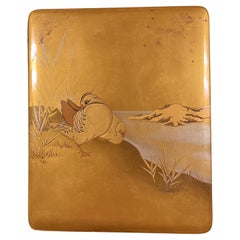
Japanese Lacquer Box with Mandarin Ducks
Located in Greenwich, CT
Japanese lacquer box with mandarin ducks motif on cover. One lacquer tray and one small lacquer plank inside the box.
Category
Vintage 1930s Japanese Lacquer
Materials
Wood
Japanese Lacquer Hokai Box, 19th Century
Located in Pasadena, CA
This is a good example of a traditional Japanese Hokai shell storage box for the Kai-awase game. This box is well-detailed in chased brass appliques and makie. The box is in overall ...
Category
Antique Late 19th Century Japanese Japonisme Lacquer
Materials
Wood, Lacquer
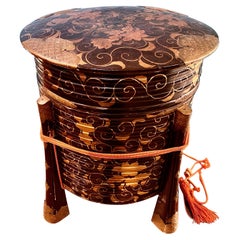
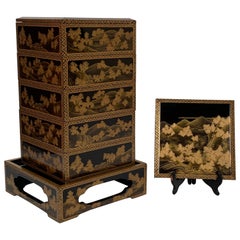
Japanese Maki-e Lacquer Stacking Box, Jubako, Meiji Period, Japan
Located in Austin, TX
A fine and impressive Japanese gold maki-e decorated black lacquer five-tier jubako with presentation tray, two lids, and the original tomobako storage box, Meiji period, late 19th c...
Category
Antique Late 19th Century Japanese Meiji Lacquer
Materials
Lacquer
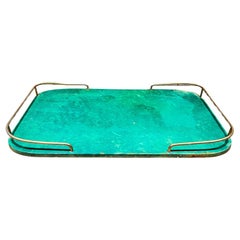
1950s Aldo Tura Green Serving Tray Lacquered Goatskin Milan
By Aldo Tura
Located in Chula Vista, CA
1950s Aldo Tura Green Serving Tray Lacquered Goatskin
22.25 w x 13 d x 2
Original vintage condition unrestored
Refer to all images for details.
Category
Mid-20th Century Italian Mid-Century Modern Platters and Serveware
Materials
Brass
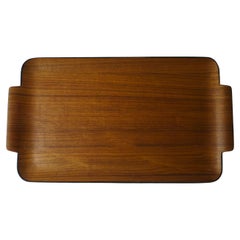
Japanese Teak Wood Tray Modern Minimalist
Located in New York, NY
A beautiful Japanese teak serving tray, Midcentury Modern design period, circa mid-20th century, 1960s, Japan. Tray is a warm brown teak, strategically arched design around, sleek 'h...
Category
Mid-20th Century Japanese Mid-Century Modern Platters and Serveware
Materials
Teak, Wood
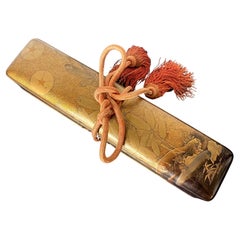
Japanese Lacquered Gold Maki-E Naga Fubako Meiji Period
Located in Atlanta, GA
A Japanese lacquered wood Naga Fubako (a long box used to store document or large scroll painting), circa 19th century Meiji period. The rectangular box features an unusually deep lipped lid with slightly rounded corners, a conforming lower box with bronze medallion rings with tasseled...
Category
Antique 19th Century Japanese Meiji Lacquer
Materials
Wood, Lacquer
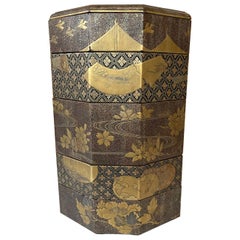
Japanese Maki-e Lacquer Stack Box Jubako
Located in Atlanta, GA
An antique jubako (stack boxes) with five tiers in an elongated octagon shape circa 19th century (end of Edo or beginning of Meiji period). jubako was traditionally used to store and...
Category
Antique 19th Century Japanese Japonisme Lacquer
Materials
Wood, Lacquer
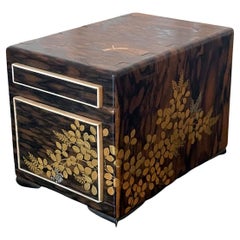
Fine Miniature Japanese Kodansu with Lacquer Inlays
Located in Atlanta, GA
A fine Japanese miniature kodansu constructed from Kaki wood (Persimmon) circa 19th century, late Meiji period. With its expressive exotic wood grains and exposed tenon construction,...
Category
Antique Late 19th Century Japanese Meiji Lacquer
Materials
Wood
Japanese Marquetry and Lacquer Jewelry Chest, Meiji Period, circa 1900, Japan
Located in Austin, TX
A very attractive Japanese wood table top jewelry or collector's chest with marquetry and lacquer decoration, Meiji period, circa 1900, Japan. Previously in the collection of Asbjorn Lunde (1927 - 2017).
The chest is crafted in the form of a Chinese seal...
Category
Antique Early 1900s Japanese Meiji Lacquer
Materials
Wood, Softwood, Lacquer
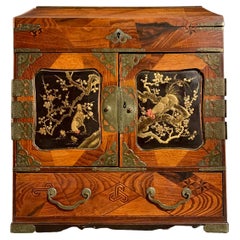
$3,400
H 15.75 in W 14.25 in D 7 in
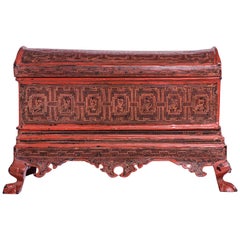
Burmese Lacquered and Engraved Wooden Box
Located in Alessandria, Piemonte
Splendid and vintage Burmese Box, red lacquered and engraved, unusual size.
O/5307 -
Category
Vintage 1930s Burmese Other Lacquer
Materials
Wood
Late 19th Century Japanese Lacquer Box with Coral Design
Located in New York, NY
Late Meiji to early Taishō period Japanese lacquer box (circa 1890–1920), decorated in the takaramono (宝物, “treasures”) motif, symbolizing prosperity, longevity, and good fortune. Th...
Category
Antique Late 19th Century Japanese Meiji Lacquer
Materials
Metal