M.S. Rau Scientific Instruments
to
10
10
2
1
2
7
1
8
7
3
2
2
8
6
6
1
10
10
10
1
1
1
1
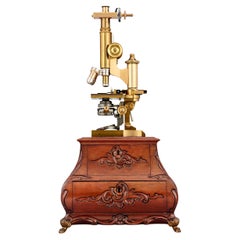
Leitz Brass Compound Microscope
By E. Leitz
Located in New Orleans, LA
Brass Compound Microscope in Case
Ernst Leitz
Dated 1897
This rare late 19th-century compound microscope was crafted by the renowned optical firm Ernst Leitz GmbH of Wetzlar, German...
Category
Antique 19th Century Scientific Instruments
Materials
Optical Glass, Wood
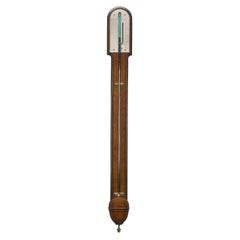
John Bennett Georgian Barometer
By John Bennett
Located in New Orleans, LA
This exceptional Georgian barometer by the leading London instrument-maker John Bennett strongly reflects the prevalent furniture style and archite...
Category
Antique 18th Century English Georgian Scientific Instruments
Materials
Brass
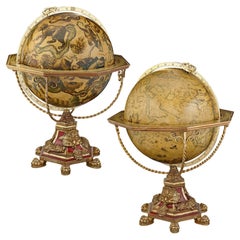
Pair of 32" Terrestrial and Celestial Globes
Located in New Orleans, LA
Pair of Terrestrial and Celestial Globes
G & T London
20th Century
This extraordinary pair of 32-inch terrestrial and celestial globes, crafted by G & T London, pays homage to the m...
Category
20th Century English Scientific Instruments
Materials
Metal
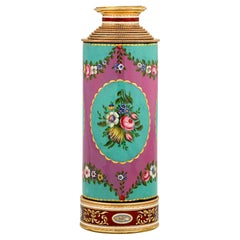
Swiss Enamel and Gold Telescope
Located in New Orleans, LA
Swiss Enamel and Gold Telescope
Circa 1820
This extraordinary telescope exemplifies a rare union of 19th-century Swiss scientific innovation and artis...
Category
Antique 19th Century Scientific Instruments
Materials
Metal, Gold, Enamel
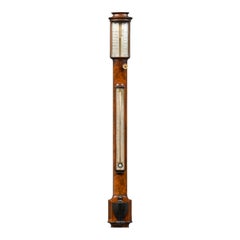
English Stick Barometer by Worthington of London
Located in New Orleans, LA
This exceptional English stick barometer is a classic example of these intriguing meteorological instruments. Crafted by the esteemed Worthington & All...
Category
Antique 19th Century English Georgian Scientific Instruments
Materials
Mahogany
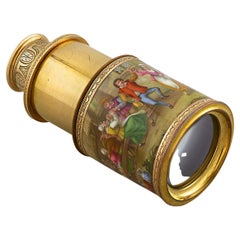
Swiss Gold and Enamel Telescope
Located in New Orleans, LA
Scientifically advanced and exquisitely crafted, this rare 19th-century gold and enamel Swiss telescope is an item of exceptional luxury. The Swiss cre...
Category
Antique 19th Century European Scientific Instruments
Materials
Gold, Enamel
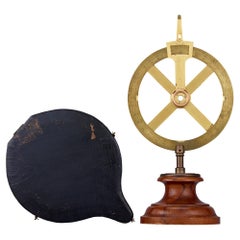
Holland Circle by Baumann and Kinzelbach
Located in New Orleans, LA
This intriguing item is almost certainly a Holland Circle by German scientific instrument makers Baumann & Kinzelbach. The Holland Circle, sometimes referred to as a Dutch Circle, was used in land surveying and is a precursor to the theodolite, an optical instrument for measuring angles. Baumann and Kinzelbach were based in Stuttgart, Germany, and in addition to crafting surveying instruments...
Category
Antique 19th Century German Scientific Instruments
Materials
Bronze
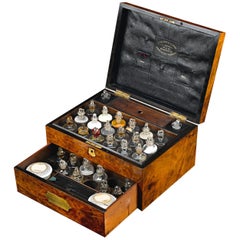
Domestic Medicine Chest by Thompson
Capper
By Thompson
Capper
Located in New Orleans, LA
An invaluable addition to the 19th century home, this domestic medicine chest contained nearly everything needed to nurse a member of the house...
Category
Antique 19th Century English Other Apothecary Cabinets
Materials
Brass
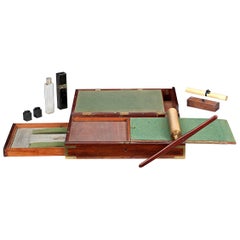
Portable Copying Machine by James Watt
Co.
By James Watt
Located in New Orleans, LA
Considered the first step into the world of modern photocopying, the copying machine was among the first widely used devices to successfully produce an ex...
Category
Antique 18th Century English Other Historical Memorabilia
Materials
Mahogany
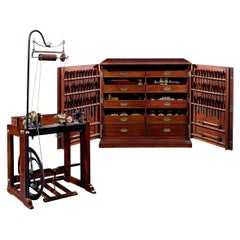
Ornamental Turning Lathe, No. 1906 by Holtzapffel
Co
Located in New Orleans, LA
An essential tool in the creation and finishing of furniture, this 19th-century English ornamental lathe is an object of beauty in and of itself. The extraordinary machine...
Category
Antique Late 19th Century English Victorian Scientific Instruments
Materials
Brass, Iron
Related Items
Decorative Antique Celestial Map – Zodiac, Stars
Hemel Globe, 1720
Located in Langweer, NL
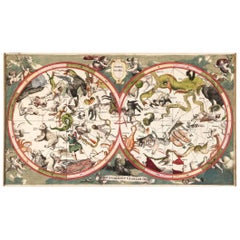
Antique Celestial Map – Hemel Globe, Zodiac & Constellations by Halma, 1720
This striking double-hemisphere celestial chart, titled Hemel Globe...
Category
Antique Early 18th Century Dutch Maps
Materials
Paper

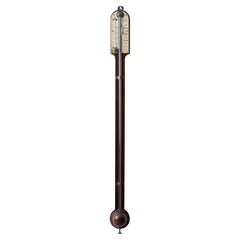
English Stick Barometer by Loftus, London, 19th Century
Located in Savannah, GA
A late 19th century rosewood stick barometer by Loftus of London.
3 ¼ inches wide by 36 inches tall; 3 inches deep
Category
Antique 19th Century English Scientific Instruments
Materials
Rosewood
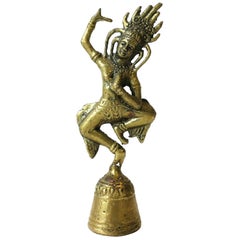
Brass Aspara Bell Sculpture
Located in New York, NY
A brass Aspara bell sculpture piece, circa 20th century, Asia.
Category
20th Century Asian Religious Items
Materials
Brass
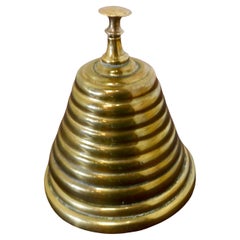
Victorian Brass Courtesy Counter Top Bell, Beehive Brass Bell
Located in Godshill, Isle of Wight
Victorian brass courtesy counter top bell, beehive brass bell
Made in the style of a beehive solid brass, good and ready to use with a high pitched di...
Category
Antique Late 19th Century Arts and Crafts Musical Instruments
Materials
Brass
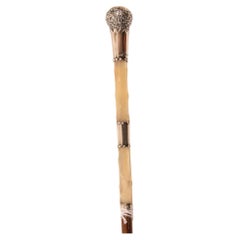
Antique English Walking Stick
Located in Alessandria, Piemonte
Antique English walking stick with silver handle and mother of pearl, from late nineteenth or early twentieth century. The city stamps and the date are not well legible: may be Birmi...
Category
Early 20th Century English Other Sports Equipment and Memorabilia
Materials
Silver
Antique Hammond
s 6-Inch Terrestrial Globe on Stand
By C.S. Hammond
Co.
Located in Philadelphia, PA
Offered here for your consideration is, A fine antique 6-inch terrestrial globe.
Additional Details:
By C.S. Hammond & Co.
The globe likely dates from 1927 to 1930 due to the ...
Category
20th Century Unknown Art Deco Globes
Materials
Wood, Paper
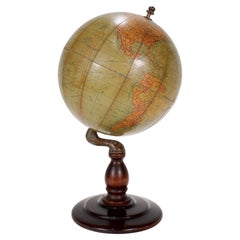
Large and Extremely Rare Terrestrial Globe by Newton
By Newton Globes - Planer
Newton
Located in Lymington, Hampshire
A large and extremely rare 24-inch terrestrial globe by Newton
Our most magnificent and rare globes were a pair of 24-inch Newton globes.
These too were updated in 1852 (terre...
Category
Antique Mid-19th Century English Globes
Materials
Mahogany
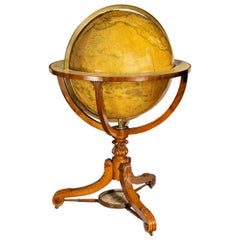
French Louis XVI Barometer
Located in Queens, NY
French Louis XVI (18th Century) barometer with original scientific illustrations and mercury vial framed with gilt foliate carvings & ebonized ...
Category
Antique 18th Century French Louis XVI Scientific Instruments
Materials
Giltwood, Glass
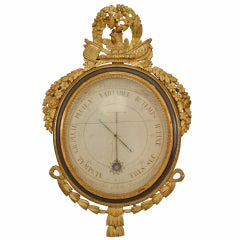
Antique Scholar
s Microscope, English, Brass, Scientific Instrument, Victorian
Located in Hele, Devon, GB
This is an antique scholar's microscope. An English, brass and enamelled metal scientific instrument by Henry Crouch, dating to the late Victorian period, circa 1900.
Appealing micr...
Category
Antique Late 19th Century British Late Victorian Scientific Instruments
Materials
Brass
$1,335
H 11.82 in W 6.89 in D 6.11 in
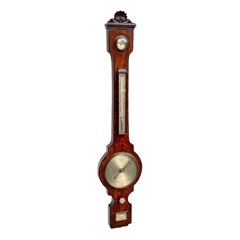
George III Mahogany Banjo Barometer Edinburgh
Located in Huntington, NY
George III Mahogany Banjo Barometer By Edie & Son. Edinburgh
Alexander James Adie FRSE MWS (7 November 1775, Edinburgh – 4 December 1858, Edinburgh) was a Scottish maker of medical ...
Category
Antique Late 18th Century English George III Scientific Instruments
Materials
Brass
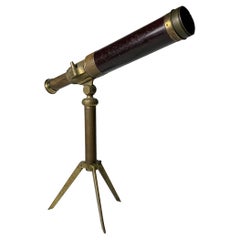
Charming Vintage Gentleman
s Library Telescope
Located in Chicago, IL
A vintage gentleman's library telescope
Not sure exactly of it's age. Estimated Mid Victorian Period ( 1860-1880). Uncertain to maker and origin.
...
Category
Antique Mid-19th Century Victorian Mounted Objects
Materials
Brass
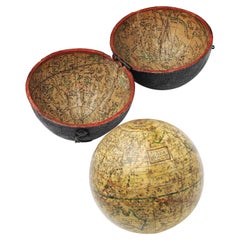
English Pocket Globe, London, Circa 1775-1798
By Herman Moll
Located in Milano, IT
Pocket globe
London, between 1775 and 1798
Re-edition of the globe of Hermann Moll (1678-1732) dated 1719
The globe is contained in its original case, which itself is covered in shark skin.
There are slight gaps in the original paint on the sphere. The case no longer closes.
The sphere measures 2.7 in (7 cm) in diameter whereas the case measures 2.9 in (7.4 cm) in diameter.
lb 0.22 (kg 0.1)
The globe is made up of twelve printed paper gores aligned and glued to the sphere.
In the North Pacific Ocean there is a cartouche with the inscription:
A Correct
Globe
with the new
Discoveries.
The celestial globe is depicted on the inside of the box and is divided into two hemispheres with the cartouche:
A correct globe
with ye new cons
relations of Dr.
Halley & c.
It shows the ecliptic divided into the days of the zodiacal calendar and the constellations represented as animals and mythological figures.
On the globe are delineated the equinoctial line, divided by degrees and hours, the ecliptic and the meridian (passing west of Greenwich). The continents are shaded and outlined in pink, green and yellow. It shows: the Cook routes; a wind rose in the Southern Indian Ocean; Antarctica without land; Africa with Negroland (Hermann Moll is considered the first geographer to name the West African region in his 1727 map. (Encyclopaedia Britannica, ed. 1902, under "States of Central Africa"); Tartary in Central Asia; the Mogul kingdom in northern India; in North America only New England, Virginia, Carolina, Florida, Mississippi are identified; California is already a peninsula; the northwest coast of America is "unknown parts" (Alaska is not described and it is only partially delineated, it was to become part of the United States in 1867); Mexico is named "Spain"; Central South America "Amazone America". Australia (which was to be so named after 1829) is called New Holland. The route of Admiral Anson is traced (1740) and the trade winds are indicated by arrows. (See Van der Krogt, P., Old Globes in the Netherlands, Utrecht 1984, p. 146 and Van der Krogt, P. - Dekker, E., Globes from the Western World, London 1993, pp. 115.)
Elly Dekker, comparing Moll’s 1719 globe and his re-edition (of which the one described above is a sample), identifies the differences between them: the two editions are quite similar to each other, but in the "anonymous" globe, compared to the previous globe of 1719, California looks like a proper peninsula - the reports of the Spanish explorers of the region had given rise to uncertainty over whether it was connected to the mainland or not. The geographical nature of California was confirmed after the explorations of Juan Bautista de Anza (1774-1776). The routes of Dampier's journey were partially erased and the route of Captain James Cook's first voyage was superimposed on them, and the geography of Australasia was adapted accordingly, including the denomination of the Cook Strait. See Dekker, Elly, Globes at Greenwich, 1999.
An important ante quem element is represented by Tasmania: it is not separated from Australia by the Bass Strait...
Category
Antique Late 18th Century English George III Globes
Materials
Shagreen, Paper