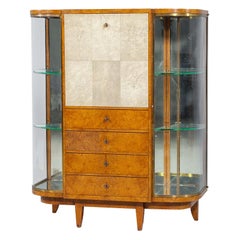
M.S. Rau Secretaires
to
Height
to
Width
to
Depth
to
3
3
1
1
2
1
3
2
2
1
1
3
2
2
1
3
3
3
1
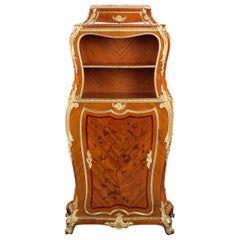
19th Century French Secrétaire by Durand
By Gervais Durand
Located in New Orleans, LA
Superior craftsmanship and intricate marquetry characterize this rare secrétaire by Gervais-Maximilien-Eugène Durand, one of the most popular French ébénistes of the 19th century. Th...
Category
Antique 19th Century French Louis XV Secretaires
Materials
Bronze, Ormolu
King George I Ambassadorial Secrétaire-Cabinet
Located in New Orleans, LA
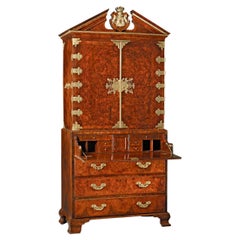
This highly important secrétaire-cabinet was crafted for and specially ordered by King George I for the British Ambassador to Russia. From its craftsmanship and materials to its exceptional artistry, it is a work of royal and historic significance that exudes power in each and every detail. The broken pediment at its apex features the simplified royal coat of arms bearing the king’s crown, while the interior is adorned by portraits of the British Royal Family. Placed within the ambassador’s St. Petersburg home, this entirely unique piece of furniture would have been a potent reminder of England's grandeur and political importance.
Relations between England and Russia during this period were at an all-time high. Peter the Great had traveled to England in 1698 as part of his widely known “Grand Embassy” tour, wherein he attempted to gain foreign support against the Ottoman Empire. He spent a period of nearly four months there, meeting with King William III and his court on numerous occasions. Noted academic Arthur MacGregor wrote concerning the impact of the trip, “For two decades following Peter's visit, British influence in Russia reached a peak. It manifested itself in social custom, in craft practice and in ships and naval organization... it reached a significant sector of the population before relations cooled once again and the two nations pulled back from this era of unprecedented cordiality.”
First and foremost, however, it is a reminder of British might and influence. By the reign of King George I, England had come into its own as a world power. Unique in its design, this cabinet is a reflection of the country’s might. It is crafted from the highest-quality solid walnut and burr walnut adorned by gilded lock plates and engraved hinges. The presence of ormolu at its apex and lining the doors was a rarity for this period, and its addition makes manifest the importance of the design.
The outer doors open to reveal multiple interiors, including fifteen separate drawers around a central cupboard; the cupboard doors each bear mezzotint portraits of George I and his father, Ernest Augustus, Elector of Hanover. An etching after the portrait of George I dating to circa 1716 is in London’s Royal Academy. A second, inner pair of doors are adorned by mezzotints of the Prince and Princess of Wales (later Queen Caroline and George II), which are both after portraits by Sir Godfrey Kneller dated 1716 in the Royal Collection. A final portrait is revealed on the very interior of the cabinet, where a mezzotint of Frederick, Anne, Amelia and Caroline, children of the Prince of Wales, resides. An etching (circa 1715-1720) after this portrait can be found in the National Portrait Gallery (London).
Apart from its abundance of royal portraiture, the cabinet features stunning painted decoration, including floral designs as well as clouds, birds and trees in a bucolic motif reminiscent of Eden. Its lower portion is a study in both form and function, featuring a fitted secrétaire-drawer above three additional drawers for storage. The cabinet appears in The Shorter Dictionary of English Furniture by R. Edwards from 1964, a text that is regarded as the bible of British furniture design. Edwards describes it as a “writing cabinet...given by George I to the British Ambassador at the Russian court.”
The cabinet was likely made for the 18th-century German diplomat and writer Friedrich Christian Weber, who represented English interests at the Russian court from 1714 until 1719. Although Weber’s tenure as ambassador was relatively short, while in St. Petersburg, he authored his account entitled Das veraenderte Russland (The Present State of Russia), which was published in three volumes in 1721, 1739 and 1740. It may, however, also have been made for George Douglas, 2nd Earl of Dumbarton, who served as ambassador alongside Weber in 1716. Diplomatic relations ceased between the two countries in 1721.
In 1928, the cabinet appeared for sale at the International Exhibition of Antiques & Works of Art in Olympia. It had previously been in the collection of the Woltner family of Bordeaux, the celebrated vintners who owned the estate Château Laville Haut-Brion and produced wine of the same name. According to the family, Monsieur Woltner was given the cabinet as a gift from an aunt who lived in Russia for many years. After leaving the Woltner collection, the cabinet was acquired by William Berry...
Category
Antique 18th Century English Georgian Secretaires
Materials
Brass
18th Century English Secretary
Located in New Orleans, LA
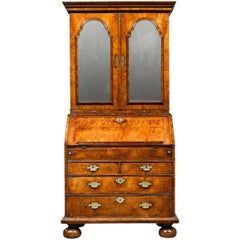
Queen Anne period furnishings such as this walnut secretary are incredibly rare and important examples of English cabinetmaking. This secretary is of the most outstanding caliber, boasting desirable double bonnet, mirrored cabinet doors...
Category
Antique 18th Century English Queen Anne Secretaires
Materials
Walnut
Related Items
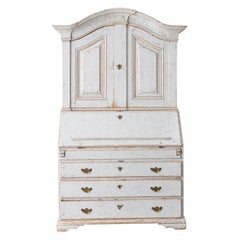
Light Gray 18th Century Period Swedish Two Part Secretary with Carved Pediment
Located in Tetbury, Gloucestershire
18th century period two part wood secretary with a decorative carved pediment. Two carved front doors open to storage, and beneath a fall front door ...
Category
Antique 18th Century Swedish Secretaires
Materials
Wood

$7,158
H 79.93 in W 48.82 in D 22.45 in
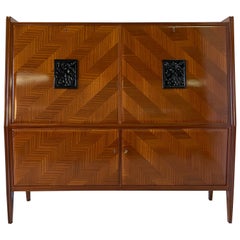
Italian Mahogany Secretaire Cabinet, 1950s
Located in Meda, MB
Precious cabinet secretaire produced in Italy in the 1950s,
The whole cabinet is veneered in mahogany with a fine solid wood carving in the center of the two doors representing two b...
Category
Vintage 1950s Italian Mid-Century Modern Cabinets
Materials
Mahogany, Maple
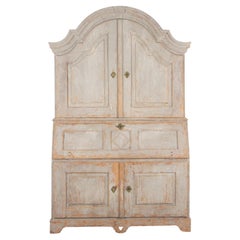
18th Century Swedish Secretary
Located in Tetbury, Gloucestershire
18th Century Swedish secretary with a decorative carved pediment.
Composed below doors opening to storage with below fall front desk opening to the drawer. Storage and workspace, be...
Category
Antique 18th Century Swedish Secretaires
Materials
Wood
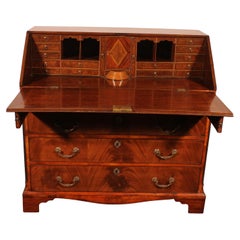
18th Century Mahogany Secretary Bureau
Located in Brussels, Brussels
Superb Georgian period secretary bureau from the late 18th century in mahogany.
superb quality desk with a surprising interior. It features a magnif...
Category
Antique 18th Century British Georgian Secretaires
Materials
Mahogany
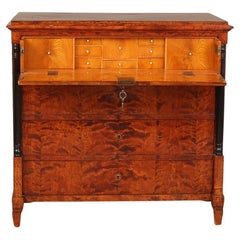
Biedermeier Drawers Writing Desk Secrétaire Cabinet Swedish Ormolu Detail 1800s
Located in Lewes, England
Exceptional Swedish antique Biedermeier writing desk chiffonier secrétaire cabinet in highly quilted golden birch veneers and finished in the Classic light honey color French polish....
Category
Antique Late 19th Century Swedish Biedermeier Secretaires
Materials
Birch
$6,552 Sale Price
20% Off
H 38.59 in W 40.56 in D 20.48 in
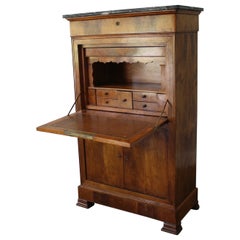
French 19th Century Secretaire
Located in Stockbridge, GA
This Louis-Philippe Secretaire Desk is made of blond flamed mahogany with a Sainte-Anne marble top with a lot of drawers.
Category
Antique Mid-19th Century French Louis Philippe Secretaires
Materials
Marble
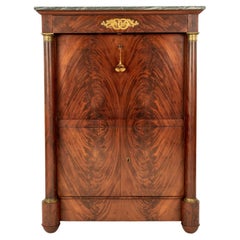
19th Century Empire Walnut Secretary
Located in Houston, TX
French first Empire period Secretaire à Abattant, also known as a drop-front secretary, fall front or cantilevered desk. Under the dark grey marble top is a secret, entablature drawe...
Category
Antique Early 19th Century French Empire Secretaires
Materials
Marble, Ormolu
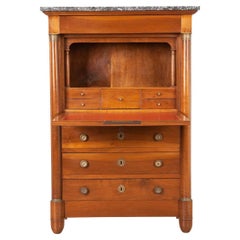
French 19th Century Empire Secrétaire à Abattant
Located in Baton Rouge, LA
A stately 19th century mahogany secretaire a abattant from France, circa 1810. This desk has an exceptional charcoal St. Anne marble top resting above a single drawer disguised into the apron. Just below the top drawer, the front of the desk folds forward to reveal a work area inset with vibrant red leather detailed with gold tooling. The leather is in great antique condition making this a comfortable place to work. When open, you can see the theatre is equipped with five drawers and a large, arched top cubby flanked with column forms. With the desk down the maximum depth is 32”; the writing surface is 28-½” above the floor. The desk front...
Category
Antique 19th Century French Empire Secretaires
Materials
Marble, Brass
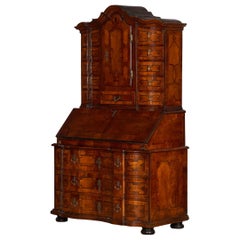
18th Century Baroque Bureau In Walnut With Inlays
Located in Kastrup, DK
A very beautiful Baroque bureau. Thick walnut veneer with inlays.
Hidden "secret" locking system for the drawers in the upper section.
Grate quality Ni...
Category
Antique 18th Century Italian Baroque Secretaires
Materials
Brass, Iron
$22,788 Sale Price
40% Off
H 80.71 in W 48.04 in D 23.63 in
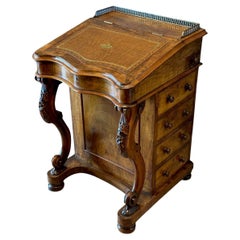
19th Century Davenport Secretaire
Located in Eindhoven, NL
Beautiful antique Davenport bureau in burl walnut. Light brown leather inlay with gold profiling. Under the writing surface there is 1 small drawer and 2 false drawer fronts. On the...
Category
Antique 1840s English Secretaires
Materials
Walnut
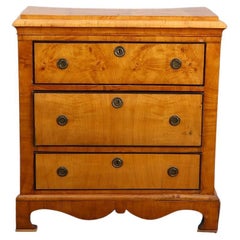
Biedermeier Drawers Writing Desk Secrétaire Cabinet Swedish Ormolu Detail
Located in Lewes, England
Swedish antique Biedermeier writing desk chiffonier secrétaire cabinet in highly quilted golden birch veneers and finished in the Classic light honey color French polish.
It has 2 m...
Category
Antique Late 19th Century Swedish Biedermeier Secretaires
Materials
Birch
$4,349 Sale Price
20% Off
H 38.98 in W 36.23 in D 17.72 in
Art Deco Secretaire Cabinet by Jules Deroubaix
By Jules Deroubaix
Located in North York, ON
This Jules Deroubaix display cabinet secretaire is timeless, functional, and effortlessly chic. Made of burl sandalwood, it showcases a drop door paneled wit...
Category
Vintage 1930s French Art Deco Secretaires
Materials
Brass, Chrome