MUZEION Antiquities
to
11
27
27
16
16
3
3
3
23
20
20
27
27
27
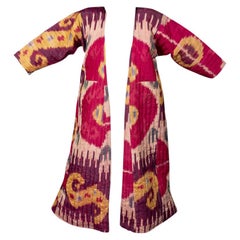
Beautiful Ikat Munisak, Uzbekistan, 19th Century
Located in San Pedro Garza Garcia, Nuevo Leon
A beautiful Ikat Munisak – a woman’s uzbek robe – in traditional pomegranate design symbolizing fertility. It has a square patch in Magenta with a flower mo...
Category
Antique 15th Century and Earlier Asian Antiquities
Materials
Cotton
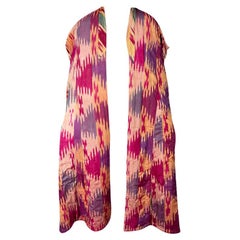
Ikat Chyrpy, Central Asia
Located in San Pedro Garza Garcia, Nuevo Leon
Striking hand-woven chyrpy with a checkered triangle pattern in vibrant colours. Women in Uzbekistan and Northern Afghanistan wore this outdoor veiling garment (paranja/chrypy) in tr...
Category
Antique 15th Century and Earlier Asian Antiquities
Materials
Cotton
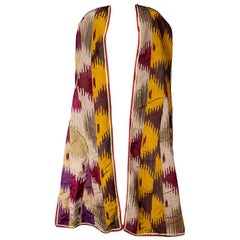
Ikat Chyrpy, Central Asia
Located in San Pedro Garza Garcia, Nuevo Leon
Spectacular hand-loomed Chyrpy with a checkered pattern, finished with a remarkable white wavy cotton edging. Women in Uzbekistan and Northern Afghanistan wore this outdoor veiling g...
Category
Antique 15th Century and Earlier Asian Antiquities
Materials
Cotton
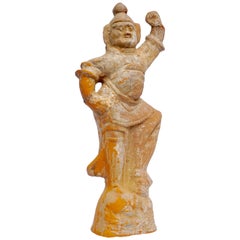
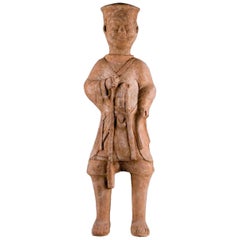
Han Dynasty Standing Horse Trainer “Palafrenieri”
Located in San Pedro Garza Garcia, Nuevo Leon
Huge hollow molded terracotta, standing male figure wearing a hip-length multi-layered robe with a collared neck. Implements suspended from his waist, holding a staff in his right ha...
Category
Antique 15th Century and Earlier Han Antiquities
Materials
Terracotta
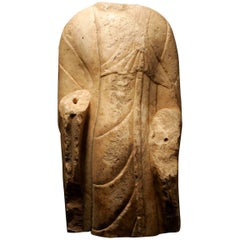
Monumental Buddha Torso White Marble Sculpture - Tang Dynasty China 618-907 AD
Located in San Pedro Garza Garcia, Nuevo Leon
Beautiful and impressive early Tang white marble sculpture of headless Buddha, dressed in an elegant pleated toga. China. 618-907 AD. A true collectors piece.
This magnificent piece...
Category
Antique 15th Century and Earlier Chinese Tang Antiquities
Materials
Marble
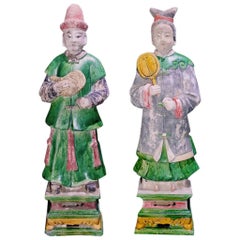
Magnificent Court Attendants in Terracotta - Ming Dynasty, China 1368-1644 AD TL
Located in San Pedro Garza Garcia, Nuevo Leon
A magnificent pair of male and female courtiers from the Ming Dynasty (1368-1644 CE) in excellent condition. They are wearing traditional Daopao robes in green and black garments wit...
Category
Antique 15th Century and Earlier Chinese Ming Antiquities
Materials
Terracotta
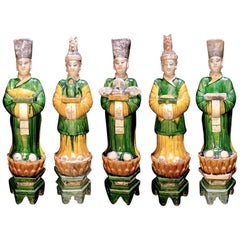
Superb Set of 5 Elegant Court Attendants, Ming Dynasty, 1368-1644 AD TL Tested
Located in San Pedro Garza Garcia, Nuevo Leon
A stunning set of 5 graceful terracotta figurines from the Ming Dynasty '1368-1644' AD. These elegant attendants are standing on a yellow glazed lotus flower over a high hexagonal green plinth and wear fine robes in matching green and yellow glazes. The unglazed areas have pigmented colors in red, black and white. Each is carrying essential offerings for the royal family. The head is detachable as often seen on the larger figures from this period. Meticulously detailed facial expressions have been hand-painted.
Condition: Mint, finely preserved glaze and pigment, undamaged and no repairs.
Provenance: Ex. Danish Collection.
This set is guaranteed authentic and comes with a Certificate of Authenticity and TL Test from Laboratory Kotalla in Germany (The Oldest Thermoluminescence Testing Laboratory in the World).
Dimensions: Average 54 H cms
Burial figurines of graceful dancers, mystical beasts, and everyday objects reveal both how people in early China approached death and how they lived. Since people viewed the afterlife as an extension of worldly life, these figurines, called mingqi, sometimes referred as “spirit utensils” or “vessels of ghosts” disclose details of routine existence and provide insights into belief systems over a thousand-year period.
The Ming dynasty was the ruling dynasty of China – then known as the Empire of the Great Ming – for 276 years (1368–1644 AD). Founded by Chu Yuan-chang, the rebel leader that was successful in removing the mongols from the throne. Chinese control was re-asserted in China and eastern Asia. Literature became more important, schools were created, and the justice system was reformed. The Ming dynasty is described by some as "one of the greatest eras of orderly government and social stability in human history,” was the last imperial dynasty in China ruled by ethnic Han Chinese.
The practice of burying ceramic objects with the deceased went into decline from the 10th to the 14th Century AD. There was a revival in placing miniature representations of glazed terracotta objects such a furniture, food offerings, horses, miniature statues...
Category
Antique 15th Century and Earlier Chinese Ming Antiquities
Materials
Terracotta
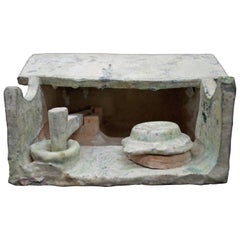
Eastern Han Dynasty Terracotta Model of a Paper Mill , China
206BC - 220AD
Located in San Pedro Garza Garcia, Nuevo Leon
Slab pottery constructed Model of a Paper Mill, in Green and Cream Color Glazed Terracotta having a peaked roof – open walled form with a mechanical pounder and a large round storage container. Light blue-green mottled glazed surface with some iridescence patina to the glaze. The Iridescence is a refraction of the layers on the glass that produces multicolor hues & metallic luster, and only develops after one thousand years of being buried in the ground. An unquestionable mark of antiquity, impossible to falsify.
Han Dynasty, dated 206 B.C-220 A.D.
Condition: Excellent, wear commensurate with age, an unusual example.
This fantastic piece is accompanied by a Certificate of Authenticity.
Sculptural effigies of domesticated animals were often interred in the tombs of nobility and elite members of the social hierarchy. Models like this one were made to represent everything from simple goat or pig pens to the most elaborate towers and palaces. Because very few ancient Chinese buildings have survived intact, these models, along with descriptions from ancient texts, give a good representation of what the buildings might have looked like.
Burial figurines of graceful dancers, mystical beasts, and everyday objects reveal both how people in early China approached death and how they lived. Since people viewed the afterlife as an extension of worldly life, these figurines, called mingqi, sometimes referred as “spirit utensils” or “vessels of ghosts” disclose details of routine existence and provide insights into belief systems over a thousand-year period. For the first time in Chinese history, we have images of rural and daily life during the Han in the form of contemporary records...
Category
Antique 15th Century and Earlier Chinese Han Antiquities
Materials
Terracotta
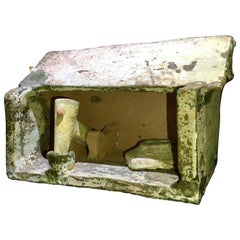
Eastern Han Dynasty Terracotta Barn Workshop, China
206BC - 220AD
Ex-Museum
Located in San Pedro Garza Garcia, Nuevo Leon
Slab pottery constructed barn workshop having a peaked roof – open walled form with a mechanical pounder and a large round covered storage container. Light blue-green mottled glazed surface with some iridescence patina to the glaze.
Condition: Intact, excellent condition, an unusual example.
Provenance: The Living Torah Museum, Brooklyn; ex. Sands of Time, 2002.
Sculptural effigies of domesticated animals were often interred in the tombs of nobility and elite members of the social hierarchy. Models like this one were made to represent everything from simple goat or pig pens to the most elaborate towers and palaces. Because very few ancient Chinese buildings have survived intact, these models, along with descriptions from ancient texts, give a good representation of what the buildings might have looked like.
This fantastic piece is accompanied by a Certificate of Authenticity.
Burial figurines of graceful dancers, mystical beasts, and everyday objects reveal both how people in early China approached death and how they lived. Since people viewed the afterlife as an extension of worldly life, these figurines, called mingqi, sometimes referred as “spirit utensils” or “vessels of ghosts” disclose details of routine existence and provide insights into belief systems over a thousand-year period. For the first time in Chinese history, we have images of rural and daily life during the Han in the form of contemporary...
Category
Antique 15th Century and Earlier Chinese Han Antiquities
Materials
Terracotta
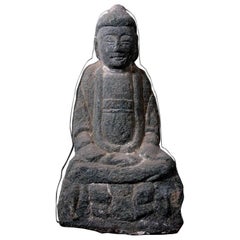
Shakyamuni, the Original Buddha Sculpted in Schist Stone, Originally from a Cave
Located in San Pedro Garza Garcia, Nuevo Leon
Shakyamuni, the original Buddha sculpted in schist stone. Originally from a cave.
Sui dynasty '589-618' AD
Gautama Buddha, also known as Siddhartha or simply the Buddha. He was an a...
Category
Antique 15th Century and Earlier Chinese Antiquities
Materials
Schist
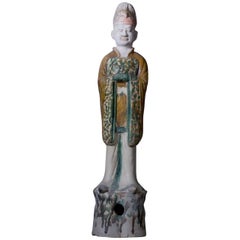
Tang Dynasty Court Official in Sancai Glazed Robes, China
618-907
- TL Tested
Located in San Pedro Garza Garcia, Nuevo Leon
A Tang dynasty sancai (three color) glazed pottery model of a Taoist official, TL tested by Ralf Kotalla - worldwide oldest private laboratory specialized for genuine thermoluminesce...
Category
Antique 15th Century and Earlier Chinese Tang Antiquities
Materials
Terracotta
Very Elegant Tang Dynasty Dignitary in Orange Terracotta, China
618-907 AD
Located in San Pedro Garza Garcia, Nuevo Leon
Very elegant terracotta dignitary in blue and red robes standing with the hands joined at the chest. He wears a blue headdress with a bird at its center. Orange Terracotta
This gorg...
Category
Antique 15th Century and Earlier Chinese Tang Antiquities
Materials
Terracotta
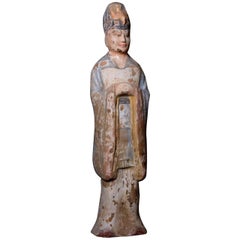
Chimera (Pixiu) Terracotta Mythological Being - Tang Dynasty, China
618-907 AD
Located in San Pedro Garza Garcia, Nuevo Leon
Magnificent Mythological Being "Chimera" with Human Face and Flaming Rays Halo. Orange Terracotta with Traces of Stucco and Painting.
This creature is commonly known as Pixiu. Fierc...
Category
Antique 15th Century and Earlier Chinese Tang Antiquities
Materials
Terracotta
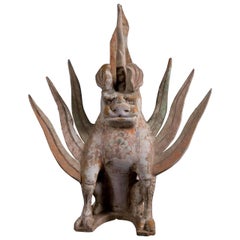
Elegant Han Dynasty Terracotta Warrior - China
206 BC - 220 AD
Located in San Pedro Garza Garcia, Nuevo Leon
Impressive terracotta warrior representing a banner bearer gripping a wooden staff with his hands (dematerialized through the ages); his gaze is ser...
Category
Antique 15th Century and Earlier Chinese Han Antiquities
Materials
Terracotta
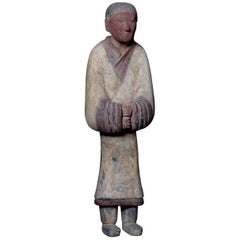
6 Elegant Ming Dynasty Court Attendants in Glazed Terracotta, China 1368-1644 AD
Located in San Pedro Garza Garcia, Nuevo Leon
A fine set of a six court attendants as in the Forbidden City of Beijing, elegantly dressed in a Green & Red Daopao – a traditional men’s formal attire from the Ming Dynasty dated 1368-1643 A.D. – with glazed robes and Red Pigment remains in their hat and belts. They stand in an honorary posture atop a red plinth, some with orifices in their hands, where spirit objects were placed to comfort or satisfy the deceased. The heads are detachable, as often seen on the larger figures from this period.
They are accompanied by a Certificate of Authenticity, and Certificate of Expertise by Jean-Yves Nathan - a leading authority specialized in Far East Archaeology from the CEDEA (The European Confederation of Art Experts).
Burial figurines of graceful dancers, mystical beasts, and everyday objects reveal both how people in early China approached death and how they lived. Since people viewed the afterlife as an extension of worldly life, these figurines, called mingqi, sometimes referred as “spirit utensils” or “vessels of ghosts” disclose details of routine existence and provide insights into belief systems over a thousand-year period.
The Ming dynasty was the ruling dynasty of China – then known as the Empire of the Great Ming – for 276 years (1368–1644 AD). Founded by Chu Yuan-chang, the rebel leader that was successful in removing the mongols from the throne. Chinese control was re-asserted in China and eastern Asia. Literature became more important, schools were created, and the justice system was reformed. The Ming dynasty is described by some as "one of the greatest eras of orderly government and social stability in human history,” was the last imperial dynasty in China ruled by ethnic Han Chinese.
The practice of burying ceramic objects with the deceased went into decline from the 10th to the 14th Century AD. There was a revival in placing miniature representations of glazed terracotta objects such a furniture, food offerings, horses, miniature statues...
Category
Antique 15th Century and Earlier Chinese Ming Antiquities
Materials
Terracotta

Lady Guanyin Bodhisattva Gilded Wood Carving - Ming Dynasty, China 1368-1644 AD
Located in San Pedro Garza Garcia, Nuevo Leon
Magnificent Lady Guanyin Bodhisattva seated in Royal Relaxation pose hand-carved in Gilded Wood with traces of paint still visible.
This expressi...
Category
Antique 15th Century and Earlier Chinese Ming Antiquities
Materials
Wood
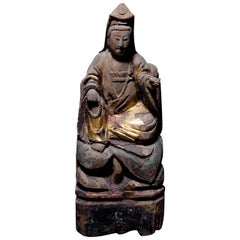
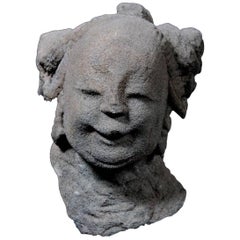
Ming Dynasty Celestial Deity Head Carved in Stone - China
1368-1644 AD
Located in San Pedro Garza Garcia, Nuevo Leon
Wonderful celestial deity head with a jovial expression in stone with a finely engraved cap. It is mounted on a custom lucite base.
This piece is accompanied by a Certificate of Authenticity, and Certificate of Expertise by Jean-Yves Nathan - Specialist in Asian Arts for the CEDEA (The European Confederation of Art Experts).
The Ming dynasty was the ruling dynasty of China – then known as the Empire of the Great Ming...
Category
Antique 15th Century and Earlier Chinese Ming Antiquities
Materials
Stone
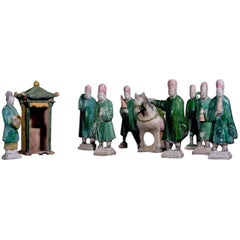
Impressive Terracotta Funerary Procession - Ming Dynasty, China
1368-1644 AD
Located in San Pedro Garza Garcia, Nuevo Leon
Impressive Funeral Ensamble of 10 Terracotta Glazed Figures in green and caramel colors depicting a votive procession with a palanquin, his four carriers, a horse, a stableman, two musicians, and an offering carrier.
This ensemble is accompanied by a Certificate of Authenticity, and Certificate of Expertise by Jean-Yves Nathan - Specialist in Asian Arts for the CEDEA (The European Confederation of Art Experts).
Burial figurines of graceful dancers, mystical beasts, and everyday objects reveal both how people in early China approached death and how they lived. Since people viewed the afterlife as an extension of worldly life, these figurines, called mingqi, sometimes referred as “spirit utensils” or “vessels of ghosts” disclose details of routine existence and provide insights into belief systems over a thousand-year period.
The Ming dynasty was the ruling dynasty of China – then known as the Empire of the Great Ming – for 276 years (1368–1644 AD). Founded by Chu Yuan-chang, the rebel leader that was successful in removing the mongols from the throne. Chinese control was re-asserted in China and eastern Asia. Literature became more important, schools were created, and the justice system was reformed. The Ming dynasty is described by some as "one of the greatest eras of orderly government and social stability in human history,” was the last imperial dynasty in China ruled by ethnic Han Chinese.
The practice of burying ceramic objects with the deceased went into decline from the 10th to the 14th Century AD. There was a revival in placing miniature representations of glazed terracotta objects such a furniture, food offerings, horses, miniature statues...
Category
Antique 15th Century and Earlier Chinese Ming Antiquities
Materials
Terracotta
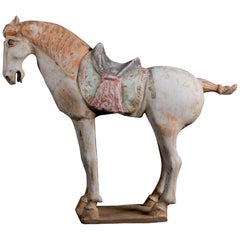
Stunning Terracotta Standing Horse, Tang Dynasty, China
618-907 AD
, TL Test
Located in San Pedro Garza Garcia, Nuevo Leon
Magnificent standing horse in orange terracotta and traces of painting. With a finely decorated saddle and with the mane and tail hair braided. TL Test by Ralph Kotalla Lab NE: 09K12...
Category
Antique 15th Century and Earlier Chinese Tang Antiquities
Materials
Terracotta
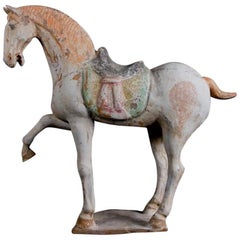
Majestic Prancing Horse, Tang Dynasty, China
618-907 AD
, TL Test by Kotalla
Located in San Pedro Garza Garcia, Nuevo Leon
Magnificent prancing horse in orange terracotta with traces of polychrome paint. Springing its right leg with a lively position and an expressive look. With a finely decorated saddle...
Category
Antique 15th Century and Earlier Chinese Tang Antiquities
Materials
Terracotta
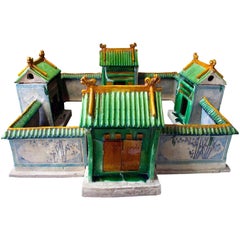
Ming Dynasty Chinese Countryside Villa - TL Tested
Located in San Pedro Garza Garcia, Nuevo Leon
Extremely rare Chinese model of a countryside villa for the royal courtiers and ministries of the Ming Dynasty -1368-1644 AD- showing three guest houses and one main entry. The villa is surrounded by a cuadrangular wall painted with bucolic scenes of garden, mountains, and bamboo forests. The roof tiles are glazed in green enamel with yellow finials – as the ones in the forbidden city – typical from the Ming epoch. Truly a museum piece. The doors swivel and are painted in ochre. State of preservation: impeccable mint condition with original paintings, all of the original parts are complete, except for one house which is missing part of the plinth (broken during transport). Each part has been tested for authenticity, consisting of eight separate TL tests...
Category
Antique 15th Century and Earlier Chinese Ming Antiquities
Materials
Terracotta
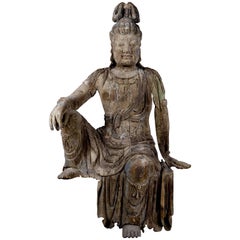
Monumental "Bigger Than Life Size" Wooden Bodhisattva
Located in San Pedro Garza Garcia, Nuevo Leon
Imposing figure of Bodhisattva sitting in a royal pose with a beautiful serene expression, with semi close eyes expressing beatitude, in very well carved robes and pearl strings on t...
Category
Antique Late 17th Century Chinese Antiquities
Materials
Wood
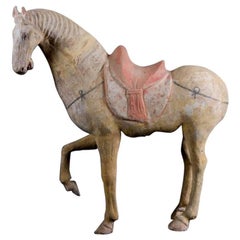
Magnificent Tang Dynasty Prancing Horse, TL Test by ASA Francine Maurer
Located in San Pedro Garza Garcia, Nuevo Leon
Magnificent Prancing Horse in Orange Terracotta with Traces of Yellow Painting. With its Anterior right Leg raised. TL Test by ASA Francine Maurer Laboratory. It was during the "gol...
Category
Antique 15th Century and Earlier Chinese Tang Antiquities
Materials
Terracotta
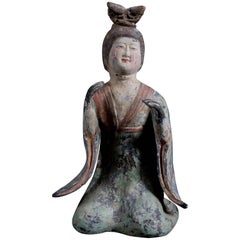
Tang Dynasty Expressive Imperial Court Singer - TL Tested
Located in San Pedro Garza Garcia, Nuevo Leon
Very expressive Imperial Court singer dressed in elegant ceremonial robes with long sleeves and hands in motion. Gray terracotta. Thermoluminescense Test by Ralph Kotalla Lab NE: 05K091003 (Worldwide oldest private laboratory specialized in TL testing...
Category
Antique 15th Century and Earlier Tang Antiquities
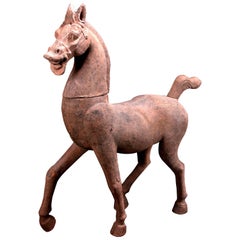
Monumental Han Dynasty Terracotta Horse - TL Tested - China,
206 BC–220 AD
Located in San Pedro Garza Garcia, Nuevo Leon
A massive pottery horse with separately made head and tail, standing on all fours and striding with its right hoof forward. Extended snout ends in parted lips showing teeth beneath i...
Category
Antique 15th Century and Earlier Chinese Han Antiquities
Materials
Terracotta
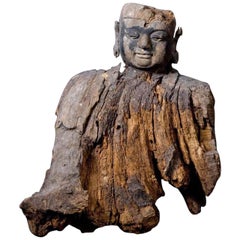
Ming Dynasty Very Rare Wooden Bust of Lohan
Located in San Pedro Garza Garcia, Nuevo Leon
Very serene depiction of a Lohan carved in wood, eroded with the pass of time. Lohan is the Chinese term, derived from the Sanskrit word Arhan, for a disciple or follower of Buddha w...
Category
Antique 15th Century and Earlier Ming Antiquities
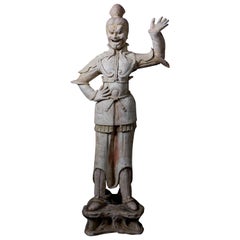
Tang Dynasty Imposing Terracota Lokapala Standing in Menacing Pose - TL Tested
Located in San Pedro Garza Garcia, Nuevo Leon
Imposing Lokapala figure standing in menacing pose. Terracotta with traces of old color pigments. China, Tang dynasty (618-907 AD.) Museum piece.
Lokapalas according to the Buddhist...
Category
Antique 15th Century and Earlier Tang Antiquities
Related Items
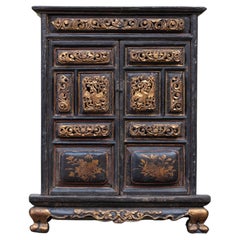
19th Century Chinese Small Altar Cabinet
Located in Singapore, SG
An antique carved box from Chaozhou city, in Guangdong, China. The black and gold colours, as well as the bulbous designs on the front are all disti...
Category
Antique 1880s Chinese Qing Antiquities
Materials
Pine

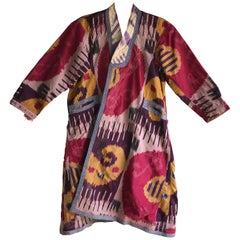
Antique Ikat Dyed Uzbek Silk Robe
Located in Delray Beach, FL
Beautiful bright and colorful Antique Ikat silk Dyed Uzbek Robe. Has minor wear and tear shown in photos. Colors: Fuchsia, light pink, purple, yellow and bl...
Category
Vintage 1920s Uzbek Textiles
Materials
Silk, Cotton
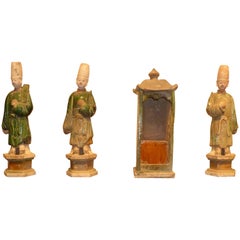
Set of Refine Ming Dynasty Green Glazed Attendants and a Sedan Chair
Located in Greenwich, CT
A set of very refined green glazed attendants and one sedan chair, each with benevolent facial expression, beautiful colors and lines, Ming dynasty 1368-1644. Three glazed attendants...
Category
Antique 15th Century and Earlier Chinese Ming Sculptures and Carvings
Materials
Pottery
$3,500 Sale Price / set
27% Off
H 16 in W 5 in D 4 in
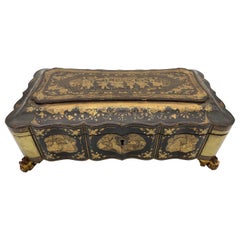
19th Century Chinese Lacquer Gaming Box
Located in Brea, CA
19th century Chinese lacquer gaming box from the Qing Dynasty. Black and golden drawing by hand with 3 gaming lacquer boxes, in very good ...
Category
Antique 19th Century Chinese Qing Lacquer
Materials
Lacquer
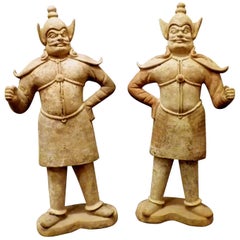
Pair of Very Refined Tang Dynasty Pottery Statue of Guardians, Oxford TL Tested
Located in Greenwich, CT
A pair of very refined standing pottery statue of guardians, dramatic facial expression, beautiful detail, early Tang dynasty 618-907, come with one Oxford authentication TL test cer...
Category
Antique 15th Century and Earlier Chinese Tang Antiquities
Materials
Terracotta
$19,000 Sale Price
24% Off
H 27 in W 12 in D 7 in
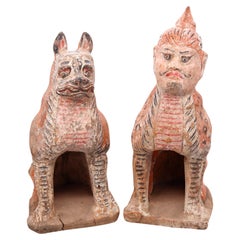
China 618-907 AD Tang Dynasty Pair Of Polychromate Earth Spirits Zhenmushou
Located in Miami, FL
Pair of Earths Spirits "Zhenmushou" from the China Tang Dynasty 618-907 AD.
A beautiful and rare pair of "Earths Spirits guardians" from the Yunnan province region in the ancient China. This was created in clay earthenware pottery during the Tang Dynasty period between 618 and 907 AD. Featuring the molded figures of two seated guardians with decorations with polychrome pigmentations. The figures are seated on their haunches with cloven hooves planted firmly on the base looking forward with their front legs in a straight position. Both with face and body alert expressions on a rectangular base.
Earth spirits usually appear in pairs, one with a human head and the other with a lion head. Their supernatural powers, indicated by antlers, spiky flanges and flames, enable them to confront evil spirits and protect any precincts within their gaze. Have been believed to protect the living by keeping the spirits of the dead from inappropriately roaming the world outside the tomb.
Zhenmushou or guardian deities, developed from a line of protective spirits found normally in pairs at the front of Tang dynasty tombs. They served both to protect the figure from untoward spirits, and the outside world from the roving spirit of the dead. Combining features from a number of animals to form the perfect mythic beast, these mythical creatures were perceived to be the ideal guardians of the dead
The semi human faced figure has a measures of 11.25 by 4.5 by 5.75 inches (28.57 x 11.43 x 14.60 Cm).
The mythological lion animal figure has a measures of 10 by 5 by 5.8 inches (24.5 x 12.7 x 14.73 Cm).
Tang dynasty or Tang Empire, was an imperial dynasty of China that ruled from 618 to 907, with an interregnum between 690 and 705. It was preceded by the Sui dynasty and followed by the Five Dynasties and Tend Kingdoms period. Historians generally regard the Tang as a high point in Chinese civilization, and a the golden age of cosmopolitan culture. Tang territory, acquired through the military campaigns of its early rulers, rivaled that of the Han dynasty.
The Li family founded the dynasty, seizing power during the decline and collapse of the Sui Empire and inaugurating a period of progress and stability in the first half of the dynasty's rule. The dynasty was formally interrupted during 690–705 when Empress Wu Zetian seized the throne, proclaiming the Wu Zhou dynasty...
Category
Antique 15th Century and Earlier Chinese Tang Antiquities
Materials
Earthenware, Pottery
$4,025 Sale Price / set
30% Off
H 11.25 in W 5.75 in D 4.25 in
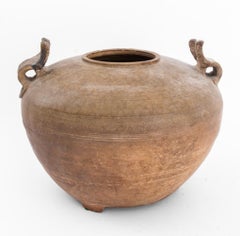
Chinese Han Dynasty Stoneware Storage Vessel
Located in Astoria, NY
Chinese Han Dynasty Stoneware Storage Vessel, with two applied animal form handles. 10" H x 12.5" Diameter. Provenance: From the Upper East Side Apartment of a Former Ambassador.
Category
Antique 15th Century and Earlier Chinese Han Ceramics
Materials
Stoneware
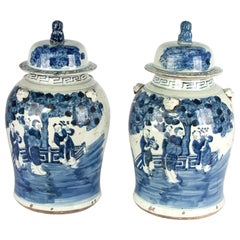
19th Century Chinese Ginger Jars
Located in Esbeek, NL
Beautiful set of Chinese ginger jars
18th century or earlier.
Category
Antique 18th Century Chinese Jars
Materials
Porcelain
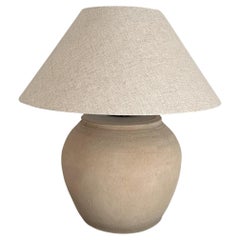
Han Style Sandcolor Vase Table Lamp
Located in Vosselaar, BE
A Chinese Han style vase turned in to a tablelamp. Made from unglazed grey earthenware in a pot shape with subtle sandgrain patina. This vase has a grea...
Category
Antique 19th Century Chinese Han Ceramics
Materials
Earthenware
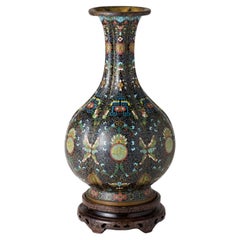
Cloisonné Vase, Qing Period, 19th Century
Located in seoul, KR
Cloisonné enamel vase of baluster form and lobed sides decorated with foliage and flowers on a black background, gilt copper neck and base. Around 1900
Period: Qing Dynasty
Type: Va...
Category
Antique 19th Century Hong Kong Qing Antiquities
Materials
Enamel
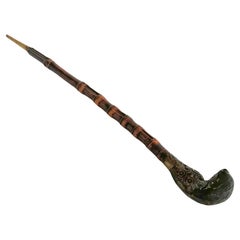
19th Century Chinese Bamboo Opium Pipe
Located in Atlanta, GA
An opium pipe is a pipe designed specifically for the vaporization and inhalation of opium. But these beautiful little antiques have become one-of-a-kind works of art.
This late 19th...
Category
Antique Late 19th Century Chinese Antiquities
Materials
Brass
Tang Dynasty Painted Terracotta Sculpture of a Lokapala
By Tang Dynasty
Located in Dallas, TX
Tang Dynasty terracotta Pottery Tomb figure of the Lokapala Warrier Deity. Figure molded wearing heavy armor, standing in a dynamic pose with left arm raised in a threatening gesture...
Category
Antique 15th Century and Earlier Chinese Tang Figurative Sculptures
Materials
Terracotta