MUZEION Ceramics
to
1
4
4
3
3
2
2
2
4
4
4
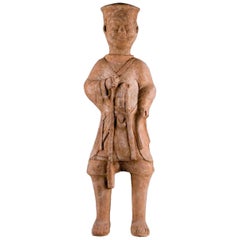
Han Dynasty Standing Horse Trainer “Palafrenieri”
Located in San Pedro Garza Garcia, Nuevo Leon
Huge hollow molded terracotta, standing male figure wearing a hip-length multi-layered robe with a collared neck. Implements suspended from his waist, holding a staff in his right ha...
Category
Antique 15th Century and Earlier Han Antiquities
Materials
Terracotta
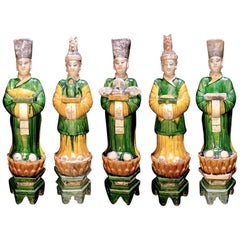
Superb Set of 5 Elegant Court Attendants, Ming Dynasty, 1368-1644 AD TL Tested
Located in San Pedro Garza Garcia, Nuevo Leon
A stunning set of 5 graceful terracotta figurines from the Ming Dynasty '1368-1644' AD. These elegant attendants are standing on a yellow glazed lotus flower over a high hexagonal green plinth and wear fine robes in matching green and yellow glazes. The unglazed areas have pigmented colors in red, black and white. Each is carrying essential offerings for the royal family. The head is detachable as often seen on the larger figures from this period. Meticulously detailed facial expressions have been hand-painted.
Condition: Mint, finely preserved glaze and pigment, undamaged and no repairs.
Provenance: Ex. Danish Collection.
This set is guaranteed authentic and comes with a Certificate of Authenticity and TL Test from Laboratory Kotalla in Germany (The Oldest Thermoluminescence Testing Laboratory in the World).
Dimensions: Average 54 H cms
Burial figurines of graceful dancers, mystical beasts, and everyday objects reveal both how people in early China approached death and how they lived. Since people viewed the afterlife as an extension of worldly life, these figurines, called mingqi, sometimes referred as “spirit utensils” or “vessels of ghosts” disclose details of routine existence and provide insights into belief systems over a thousand-year period.
The Ming dynasty was the ruling dynasty of China – then known as the Empire of the Great Ming – for 276 years (1368–1644 AD). Founded by Chu Yuan-chang, the rebel leader that was successful in removing the mongols from the throne. Chinese control was re-asserted in China and eastern Asia. Literature became more important, schools were created, and the justice system was reformed. The Ming dynasty is described by some as "one of the greatest eras of orderly government and social stability in human history,” was the last imperial dynasty in China ruled by ethnic Han Chinese.
The practice of burying ceramic objects with the deceased went into decline from the 10th to the 14th Century AD. There was a revival in placing miniature representations of glazed terracotta objects such a furniture, food offerings, horses, miniature statues...
Category
Antique 15th Century and Earlier Chinese Ming Antiquities
Materials
Terracotta
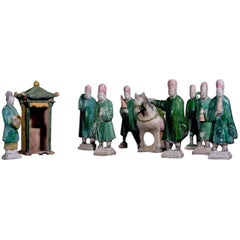
Impressive Terracotta Funerary Procession - Ming Dynasty, China
1368-1644 AD
Located in San Pedro Garza Garcia, Nuevo Leon
Impressive Funeral Ensamble of 10 Terracotta Glazed Figures in green and caramel colors depicting a votive procession with a palanquin, his four carriers, a horse, a stableman, two musicians, and an offering carrier.
This ensemble is accompanied by a Certificate of Authenticity, and Certificate of Expertise by Jean-Yves Nathan - Specialist in Asian Arts for the CEDEA (The European Confederation of Art Experts).
Burial figurines of graceful dancers, mystical beasts, and everyday objects reveal both how people in early China approached death and how they lived. Since people viewed the afterlife as an extension of worldly life, these figurines, called mingqi, sometimes referred as “spirit utensils” or “vessels of ghosts” disclose details of routine existence and provide insights into belief systems over a thousand-year period.
The Ming dynasty was the ruling dynasty of China – then known as the Empire of the Great Ming – for 276 years (1368–1644 AD). Founded by Chu Yuan-chang, the rebel leader that was successful in removing the mongols from the throne. Chinese control was re-asserted in China and eastern Asia. Literature became more important, schools were created, and the justice system was reformed. The Ming dynasty is described by some as "one of the greatest eras of orderly government and social stability in human history,” was the last imperial dynasty in China ruled by ethnic Han Chinese.
The practice of burying ceramic objects with the deceased went into decline from the 10th to the 14th Century AD. There was a revival in placing miniature representations of glazed terracotta objects such a furniture, food offerings, horses, miniature statues...
Category
Antique 15th Century and Earlier Chinese Ming Antiquities
Materials
Terracotta
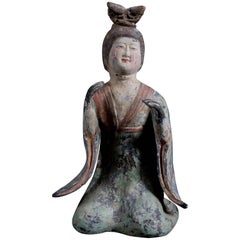
Tang Dynasty Expressive Imperial Court Singer - TL Tested
Located in San Pedro Garza Garcia, Nuevo Leon
Very expressive Imperial Court singer dressed in elegant ceremonial robes with long sleeves and hands in motion. Gray terracotta. Thermoluminescense Test by Ralph Kotalla Lab NE: 05K091003 (Worldwide oldest private laboratory specialized in TL testing...
Category
Antique 15th Century and Earlier Tang Antiquities
Related Items
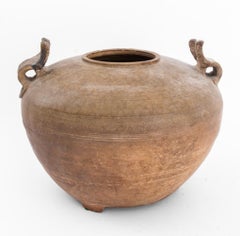
Chinese Han Dynasty Stoneware Storage Vessel
Located in Astoria, NY
Chinese Han Dynasty Stoneware Storage Vessel, with two applied animal form handles. 10" H x 12.5" Diameter. Provenance: From the Upper East Side Apartment of a Former Ambassador.
Category
Antique 15th Century and Earlier Chinese Han Ceramics
Materials
Stoneware

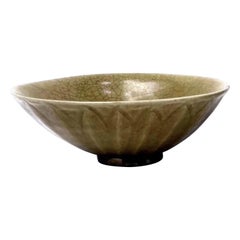
A Chinese Longquan Celadon Lotus Bowl, Ming Dynasty
Located in ARMADALE, VIC
A Chinese Longquan Celadon Lotus Bowl, Ming Dynasty
Diameter: 16.7 cm Height: 5.5 cm
Provenance: The Collection of Dr. John Yu AC
Dr. Yu was the Foundi...
Category
Antique 15th Century and Earlier Chinese Ming Ceramics
Materials
Ceramic
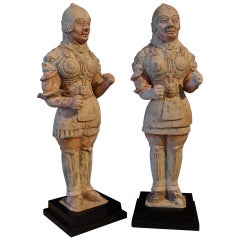
Pair of Tang Dynasty Painted Pottery Soldiers
Located in Austin, TX
A well modelled pair of Tang dynasty painted pottery soldiers.
The warriors portrayed standing, dressed in form fitting, elaborate layered Armor with fitted helmets. The breastplate...
Category
Antique 15th Century and Earlier Chinese Tang Figurative Sculptures
Materials
Pottery
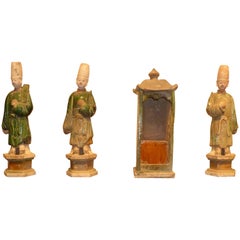
Set of Refine Ming Dynasty Green Glazed Attendants and a Sedan Chair
Located in Greenwich, CT
A set of very refined green glazed attendants and one sedan chair, each with benevolent facial expression, beautiful colors and lines, Ming dynasty 1368-1644. Three glazed attendants...
Category
Antique 15th Century and Earlier Chinese Ming Sculptures and Carvings
Materials
Pottery
$3,500 Sale Price / set
27% Off
H 16 in W 5 in D 4 in
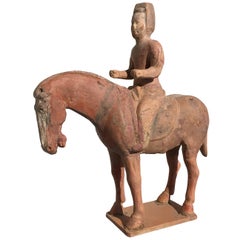
Tang Dynasty Painted Pottery Horse and Rider, TL Tested
Located in Austin, TX
A charming Tang dynasty painted pottery figure of a horse and mounted noble rider. TL tested by Oxford Authentication.
The horse portrayed standing fours...
Category
Antique 15th Century and Earlier Chinese Tang Antiquities
Materials
Earthenware
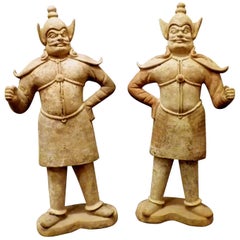
Pair of Very Refined Tang Dynasty Pottery Statue of Guardians, Oxford TL Tested
Located in Greenwich, CT
A pair of very refined standing pottery statue of guardians, dramatic facial expression, beautiful detail, early Tang dynasty 618-907, come with one Oxford authentication TL test cer...
Category
Antique 15th Century and Earlier Chinese Tang Antiquities
Materials
Terracotta
$19,000 Sale Price
24% Off
H 27 in W 12 in D 7 in
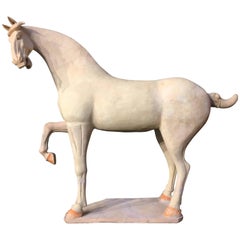
Large Early Tang Dynasty Painted Pottery Model of a Prancing Horse, TL Tested
Located in Austin, TX
A magnificent and large early Tang dynasty (618-906 AD) model of a prancing or dancing horse, circa 7th century.
The majestic animal is caught mid-motion, one leg raised, head grace...
Category
Antique 15th Century and Earlier Chinese Tang Antiquities
Materials
Pottery
$68,000
H 27 in W 34 in D 10 in
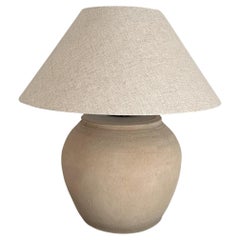
Han Style Sandcolor Vase Table Lamp
Located in Vosselaar, BE
A Chinese Han style vase turned in to a tablelamp. Made from unglazed grey earthenware in a pot shape with subtle sandgrain patina. This vase has a grea...
Category
Antique 19th Century Chinese Han Ceramics
Materials
Earthenware
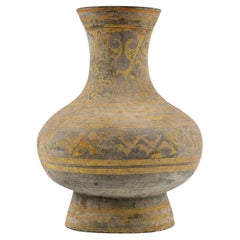
Earthenware Pottery Jar, Han Dynasty(206 BC-220 AD)
Located in seoul, KR
This jar would have served as a mortuary object (mingqi), placed in a tomb as a substitute for the more valuable bronze and lacquer vessels. Along with a variety of other funerary earthenware objects, attendant figures, and animals, richly decorated vessels of this kind were intended to serve the spirit of the deceased in the afterlife.
Period : Han dynasty
Type : Jar
Medium : Earthenware
Dimension : 28.5 cm(Height) x 11cm(Mouth Diameter)
Condition : Good(Overall in well-preserved ancient burial condition with some soil still adhering (showing minor abrasions and wear due to prolonged burial underground)
Provenance : Acquired in late 1990s from Hongkong
* Han Dynasty Earthenware...
Category
Antique 15th Century and Earlier Hong Kong Han Antiquities
Materials
Earthenware
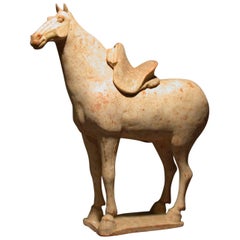
Fine Tang Dynasty Pottery Horse, Oxford TL Tested
Located in Greenwich, CT
Tang dynasty pottery statue of standing horse with removable saddle, Tang dynasty 618-907, come with Oxford authentication TL test certificate. Oxford test num...
Category
Antique 15th Century and Earlier Chinese Tang Sculptures and Carvings
Materials
Terracotta
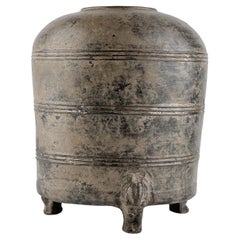
Grey Tripod Granary Jar, Han dynasty
Located in seoul, KR
The vessel consists of a rounded cylindrical body, a gently curved upper section, and a small circular opening, suggesting that it was used for storing grain or valuable goods.
Thre...
Category
Antique 15th Century and Earlier Hong Kong Han Antiquities
Materials
Earthenware
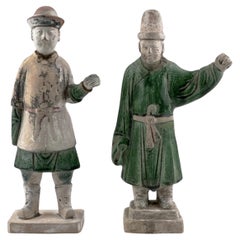
Two Figures of Attendants, Ming Period(1368-1644)
Located in seoul, KR
Statues of attendants crafted from terracotta, featuring glazes in green, Set on rectangular bases.
Period: Ming Dynasty
Medium: Glazed Pottery
Type: Figure
Condition : Excellent(It has soil on it, which is presumed to be evidence of excavation)
Provenance : Acquired in late 1990s from Hongkong
Reference :
1) Indianapolis Museum of Art - Dinastia ming, figure maschili, 1368-1644
(Type : Closely related)
2) V&A Museum - Accession number FE.295:1, 2-2005
(Type : Closely related)
3) Sotheby's 01 May 2007 - The Collection Of Paul Otto Taubert & Jewellery And Decorative Arts - Lot 233
(Price range : 5,000 - 7,000 AUD / Type : Closely related)
4) Asian Art Museum, San Francisco - Object number B60P1631 - Standing Man Tomb Figure
* Ming Dynasty Glazed Pottery Figures
Ming Dynasty glazed pottery figures are renowned for their bold color palette, intricate detailing, and lifelike forms, distinguishing them from earlier traditions. These figures, which depict officials, warriors, animals, and mythical creatures, are characterized by high-gloss lead-based glazes in green, amber, ochre, and sancai (three-color) combinations. The thickly applied glaze pools in recesses, creating depth and enhancing sculptural details. With dynamic postures, expressive facial features, and meticulously rendered drapery, these figures reflect the period’s advancement in ceramic craftsmanship, offering a greater sense of movement and realism compared to the rigid and stylized forms of earlier dynasties.
A defining characteristic of Ming glazed pottery is its elaborate surface detailing, often achieved through raised relief elements and contrasting glazes. Equestrian figures, for example, feature carefully sculpted saddles, harnesses, and decorative embellishments, while human figures are adorned with intricate robes and headdresses. The large scale of these tomb figures, often more imposing than those from previous periods, underscores the increasing importance of funerary art during the Ming era. Unlike later Qing Dynasty figures...
Category
Antique 15th Century and Earlier Hong Kong Ming Antiquities
Materials
Pottery