New River Fine Art Animal Prints
to
1
Overall Width
to
Overall Height
to
1
1
1
1
1
1
1
1
1
1
1
1
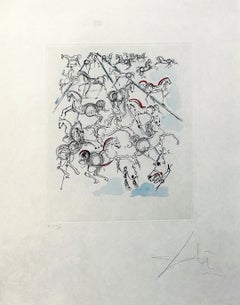
Blue Horses
By Salvador Dalí
Located in Fort Lauderdale, FL
The Salvador Dali Les Chevaux Bleus (Blue Horses) etching with hand coloring was published in 1967 by Pierre Argillet, Paris.
The total tirage is 335 on various papers. This etchin...
Category
Late 20th Century Modern Animal Prints
Materials
Archival Paper, Etching

Price Upon Request
Related Items
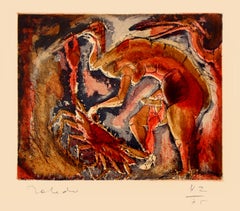
CANGREJO MANO LARGA
By Francisco Toledo
Located in New York, NY
paper: 22 x 15 in.
printed image: 4 3/4 x 6 in.
english translation: Long Hand Crab
Latin
Category
Late 20th Century Post-Modern Animal Prints
Materials
Archival Paper, Drypoint, Etching, Aquatint
"L
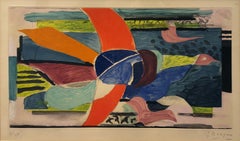
Oiseau Multicolore" Georges Braque, Modernist Bird, Colorful, Cubist, Fauvist
By Georges Braque
Located in New York, NY
Georges Braque
L'Oiseau multicolore, circa 1950
Signed and numbered "30/200" in pencil
Aquatint in colors on BFK Rives wove paper
Image 10 1/4 x 19 1/4 inches
Sheet 17 5/8 x 24 5/8 i...
Category
1950s Modern Animal Prints
Materials
Paper, Aquatint
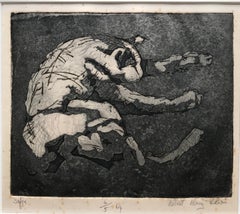
Robert Henry Lewis, Modernist etching of Sofie the sleeping cat
Located in Harkstead, GB
Robert Henry Lewis (mid 20th Century)
"Sofie: : A sleeping cat
Signed, numbered 4/5 and dated "(19)64" beneath in image in pencil
Titled, "Sofie"
Etching
5.5 x 6.5 inches (image)
14....
Category
Mid-20th Century Modern Animal Prints
Materials
Paper, Etching
$218 Sale Price
20% Off
H 5.5 in W 6.5 in D 1 in
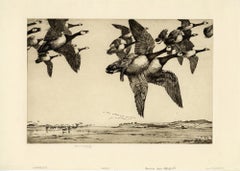
Barnacle Geese Affrighted
Located in Middletown, NY
Etching and drypoint on cream wove paper, full margins. Signed and numbered 59/75 in pencil, lower margin. Notations in pencil along the lower sheet edge, recto, well outside of ima...
Category
Mid-20th Century Modern Animal Prints
Materials
Handmade Paper, Drypoint, Etching
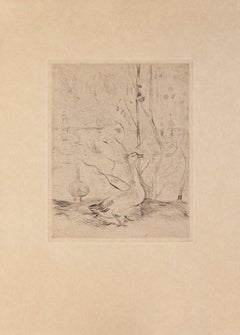
Swan - Original Etching on Paper - 19th Century
Located in Roma, IT
Swan is an original etching on paper realized by an unknown artist of the XIX century.
The State of preservation is very good.
Sheet dimension: 29 x 22.5 cm.
The artwork represen...
Category
Early 19th Century Modern Figurative Prints
Materials
Paper, Etching
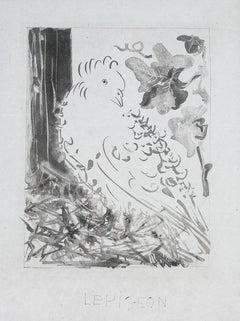
The Pigeon, 1942 (Histoire Naturelle - Textes de Buffon, B.347)
By Pablo Picasso
Located in Greenwich, CT
The Pigeon is an aquatint and drypoint print on chine from one of the deluxe copies of Picasso's 1942 Histoire Naturelle - Textes de Buffon series. The image size is 10.75x 8 inches, unsigned as issued, and framed in a contemporary silver and gray moulding. One of about 36 prints that exist with Picasso's remarqued title in French, from the edition of 262 (there were 226 portfolios, some with additional sets on varying papers).
Catalogue - Cramer #37
The exceptional etchings from Picasso’s Histoire Naturelle – Textes de Buffon are a masterful combination of sugar-lift aquatint and drypoint, showcasing a full range of gray tonalities. The etchings of animals, birds and insects are considered some of the most beautiful and most unusual examples of Picasso’s graphic work.
Roger Lacourière, Picasso’s master printer, pulled the prints for each etching between 1939-1942. It was Lacourière who taught Picasso the sugar-lift aquatint technique which allowed him to mimic the effect of brushstrokes in these etched images. Picasso first explored the technique in his plates for the Vollard Suite, but it was in the creation of the Buffon images that he fully realized its stunning, painterly potential.
For the edition, 226 portfolios were produced with the first thirty-six counting as deluxe compilations. These rare deluxe sets were on diverse papers (chine, japon or vergé ancien) and each included a complete additional suite showing Picasso’s title remarques along the bottom. As such, the remarqued versions of the prints are quite rare with just thirty-six of each produced for the edition (with the exception of The Wolf which is never remarqued – the image always fills the entire etching plate).
These prints are based on the writings of French naturalist Georges-Louis Leclerc, Comte de Buffon, who extensively documented the natural world in his monumental work Histoire Naturelle. Picasso’s association with the project to illustrate parts of the Buffon came during a tumultuous time in European history – the prelude to, and early years of, World War II. As the continent was ravaged, Picasso lived through the disaster in Paris, which the Germans occupied in 1940. These prints could be seen as a political statement – Picasso channeling his artistic expression into a form of resistance art...
Category
20th Century Modern Prints and Multiples
Materials
Drypoint, Aquatint
$14,850
H 24.125 in W 20.5 in
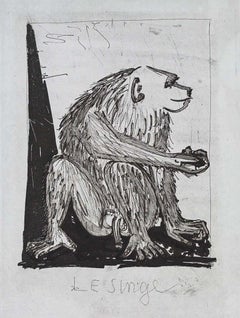
The Monkey, 1942 (Histoire Naturelle - Textes de Buffon, B.339)
By Pablo Picasso
Located in Greenwich, CT
The Monkey is an aquatint and drypoint print on chine from one of the deluxe copies of Picasso's 1942 Histoire Naturelle - Textes de Buffon series. The image size is 10.5 x 7.9 inche...
Category
20th Century Modern Prints and Multiples
Materials
Drypoint, Aquatint
$12,850
H 24.125 in W 20.5 in
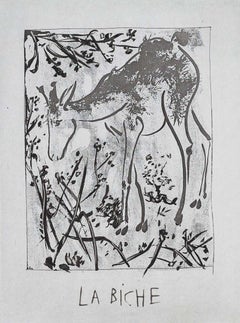
The Deer, 1942 (Histoire Naturelle - Textes de Buffon, B.336)
By Pablo Picasso
Located in Greenwich, CT
The Deer is an aquatint and drypoint print on chine from one of the deluxe copies of Picasso's 1942 Histoire Naturelle - Textes de Buffon series. The image size is 10.5 x 8.15 inches, unsigned as issued, and framed in a contemporary silver and gray moulding. One of about 36 prints that exist with Picasso's remarqued title in French, from the edition of 262 (there were 226 portfolios, some with additional sets on varying papers).
Catalogue - Cramer #37
The exceptional etchings from Picasso’s Histoire Naturelle – Textes de Buffon are a masterful combination of sugar-lift aquatint and drypoint, showcasing a full range of gray tonalities. The etchings of animals, birds and insects are considered some of the most beautiful and most unusual examples of Picasso’s graphic work.
Roger Lacourière, Picasso’s master printer, pulled the prints for each etching between 1939-1942. It was Lacourière who taught Picasso the sugar-lift aquatint technique which allowed him to mimic the effect of brushstrokes in these etched images. Picasso first explored the technique in his plates for the Vollard Suite, but it was in the creation of the Buffon images that he fully realized its stunning, painterly potential.
For the edition, 226 portfolios were produced with the first thirty-six counting as deluxe compilations. These rare deluxe sets were on diverse papers (chine, japon or vergé ancien) and each included a complete additional suite showing Picasso’s title remarques along the bottom. As such, the remarqued versions of the prints are quite rare with just thirty-six of each produced for the edition (with the exception of The Wolf which is never remarqued – the image always fills the entire etching plate).
These prints are based on the writings of French naturalist Georges-Louis Leclerc, Comte de Buffon, who extensively documented the natural world in his monumental work Histoire Naturelle. Picasso’s association with the project to illustrate parts of the Buffon came during a tumultuous time in European history – the prelude to, and early years of, World War II. As the continent was ravaged, Picasso lived through the disaster in Paris, which the Germans occupied in 1940. These prints could be seen as a political statement – Picasso channeling his artistic expression into a form of resistance art...
Category
20th Century Modern Prints and Multiples
Materials
Drypoint, Aquatint
$12,850
H 24.125 in W 20.5 in
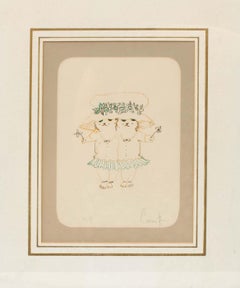
La Grande Parade des Chats etching by Surrealist Leonor Fini Cats Hats French
By Leonor Fini
Located in Buffalo, NY
An original hand signed and editioned etching by Leonor Fini from her "Parade des Chats " Cat Parade Series.
This is an E.A or an edition of the artist.
This piece comes in an ar...
Category
1970s Surrealist Animal Prints
Materials
Archival Paper, Etching
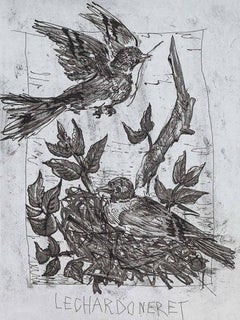
The Goldfinch, 1942 (Histoire Naturelle - Textes de Buffon, B.348 )
By Pablo Picasso
Located in Greenwich, CT
The Goldfinch is an aquatint and drypoint print on chine from one of the deluxe copies of Picasso's 1942 Histoire Naturelle - Textes de Buffon series. The image size is 11.2 x 8.25 inches, unsigned as issued, and framed in a contemporary silver and gray moulding. One of about 36 prints that exist with Picasso's remarqued title in French, from the edition of 262 (there were 226 portfolios, some with additional sets on varying papers).
Catalogue - Cramer #37
The exceptional etchings from Picasso’s Histoire Naturelle – Textes de Buffon are a masterful combination of sugar-lift aquatint and drypoint, showcasing a full range of gray tonalities. The etchings of animals, birds and insects are considered some of the most beautiful and most unusual examples of Picasso’s graphic work.
Roger Lacourière, Picasso’s master printer, pulled the prints for each etching between 1939-1942. It was Lacourière who taught Picasso the sugar-lift aquatint technique which allowed him to mimic the effect of brushstrokes in these etched images. Picasso first explored the technique in his plates for the Vollard Suite, but it was in the creation of the Buffon images that he fully realized its stunning, painterly potential.
For the edition, 226 portfolios were produced with the first thirty-six counting as deluxe compilations. These rare deluxe sets were on diverse papers (chine, japon or vergé ancien) and each included a complete additional suite showing Picasso’s title remarques along the bottom. As such, the remarqued versions of the prints are quite rare with just thirty-six of each produced for the edition (with the exception of The Wolf which is never remarqued – the image always fills the entire etching plate).
These prints are based on the writings of French naturalist Georges-Louis Leclerc, Comte de Buffon, who extensively documented the natural world in his monumental work Histoire Naturelle. Picasso’s association with the project to illustrate parts of the Buffon came during a tumultuous time in European history – the prelude to, and early years of, World War II. As the continent was ravaged, Picasso lived through the disaster in Paris, which the Germans occupied in 1940. These prints could be seen as a political statement – Picasso channeling his artistic expression into a form of resistance art...
Category
20th Century Modern Prints and Multiples
Materials
Drypoint, Aquatint
$12,850
H 24.125 in W 20.5 in
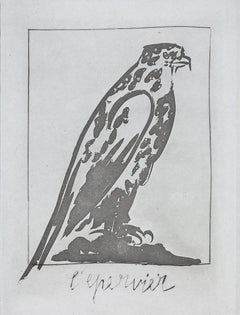
The Sparrow Hawk, 1942 (Histoire Naturelle - Textes de Buffon, B.342)
By Pablo Picasso
Located in Greenwich, CT
The Sparrow Hawk is an aquatint and drypoint print on chine from one of the deluxe copies of Picasso's 1942 Histoire Naturelle - Textes de Buffon series. The image size is 10.5 x 8 inches, unsigned as issued, and framed in a contemporary silver and gray moulding. One of about 36 prints that exist with Picasso's remarqued title in French, from the edition of 262 (there were 226 portfolios, some with additional sets on varying papers).
Catalogue - Cramer #37
The exceptional etchings from Picasso’s Histoire Naturelle – Textes de Buffon are a masterful combination of sugar-lift aquatint and drypoint, showcasing a full range of gray tonalities. The etchings of animals, birds and insects are considered some of the most beautiful and most unusual examples of Picasso’s graphic work.
Roger Lacourière, Picasso’s master printer, pulled the prints for each etching between 1939-1942. It was Lacourière who taught Picasso the sugar-lift aquatint technique which allowed him to mimic the effect of brushstrokes in these etched images. Picasso first explored the technique in his plates for the Vollard Suite, but it was in the creation of the Buffon images that he fully realized its stunning, painterly potential.
For the edition, 226 portfolios were produced with the first thirty-six counting as deluxe compilations. These rare deluxe sets were on diverse papers (chine, japon or vergé ancien) and each included a complete additional suite showing Picasso’s title remarques along the bottom. As such, the remarqued versions of the prints are quite rare with just thirty-six of each produced for the edition (with the exception of The Wolf which is never remarqued – the image always fills the entire etching plate).
These prints are based on the writings of French naturalist Georges-Louis Leclerc, Comte de Buffon, who extensively documented the natural world in his monumental work Histoire Naturelle. Picasso’s association with the project to illustrate parts of the Buffon came during a tumultuous time in European history – the prelude to, and early years of, World War II. As the continent was ravaged, Picasso lived through the disaster in Paris, which the Germans occupied in 1940. These prints could be seen as a political statement – Picasso channeling his artistic expression into a form of resistance art...
Category
20th Century Modern Prints and Multiples
Materials
Drypoint, Aquatint
$8,850
H 24.125 in W 20.5 in
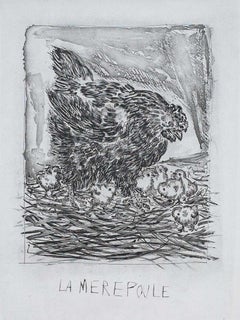
The Mother Hen, 1942 (Histoire Naturelle - Textes de Buffon, B.345)
By Pablo Picasso
Located in Greenwich, CT
The Mother Hen is an aquatint and drypoint print on chine from one of the deluxe copies of Picasso's 1942 Histoire Naturelle - Textes de Buffon series. The image size is 10.6 x 8 inc...
Category
20th Century Modern Prints and Multiples
Materials
Drypoint, Aquatint
$12,850
H 24.125 in W 20.5 in