Patrick Howard Antiques Scholar s Objects
to
2
1
2
1
1
1
1
1
2
2
1
1
2
2
2
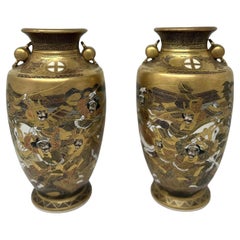
Antique Pair Japanese Satsuma Hand Painted Vase Urns Meiji Period 1868-1912
Located in Dublin, Ireland
Stunning Pair of early Meiji period Satsuma heavy gauge earthenware Rouleau Japanese Vases of Museum quality and generous proportions. These beautiful Satsuma-ware vases were made du...
Category
Antique 19th Century Japanese Anglo-Japanese Ceramics
Materials
Ceramic, Porcelain
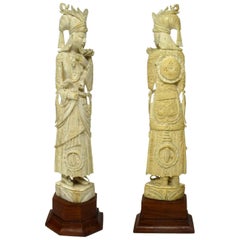
Antique Bone Figure of Indochina Male Dignitary Hardwood 19th Century Chinese
Located in Dublin, Ireland
An exquisitely hand carved bone Chinese dignitary standing figure portraying a lavishly dressed bearded male.
Difficult to date, in our opinion last quarter of the 19th century.
...
Category
Antique 19th Century Chinese Late Victorian Sculptures and Carvings
Materials
Hardwood, Bone
Related Items
Japanese Meiji Period (1868-1912) Satsuma Earthenware Vase Taizan for Hattori
Located in Newark, England
Meiji Period (1868-1912)
From our Japanese collection, we are delighted to offer Japanese Meiji Period Satsuma Vases. The Satsuma Vase of hexagonal form with a slight waisted neck and tight rounded rim is extensively decorated with multiple figures to two large scenes. The first scene features a beach with waves to the background and a plethora of figures including multiple geisha holding traditional Japanese wagasa’s. The second scene follows on from the first with a large building in the foreground holding figures on a large platform under a pagoda roof with a pagoda building in the background and further figures in the foreground. The scenes are framed by a full detailed border with gilt shapes, flowers amongst pink shaded backgrounds and butterflies around the neck. The Satsuma Vase is unusually signed Fine Art, Satsuma Ware, Dai Nippon (Great Japan), Hattori Made, Gosuido Works, Taizan Painted. 美術, サツマヤキ(薩摩焼), 大日本, 服部造, 五スイ堂工, 對山画 and dates to the Meiji Period (1868-1912) and the turn of the 20th century circa 1905.
Satsuma ware is a type of earthenware pottery originating from the Satsuma province in Southern Kyushu, Japan’s third largest island.
Wagasa are traditional Japanese umbrellas made of washi paper attached to a bamboo frame and treated to ensure it is waterproof.
Meiji Period was an era of Japanese history that spanned from 1868 to 1912. It was the first half of the Empire of Japan, when the Japanese people began to build a paradigm of a modern, industrialised nation state and emergent great power, influenced by Western countries and aesthetics. As a result of radically different ideas, the changes to Japan were profound and it affected the social structure, politics, economy, military, and foreign relations across the board. The period corresponded to the reign of Emperor Meiji and was preceded by the Keio era and was succeeded by the Taisho era.
Cultural Art during the Meiji Period was of particular interest to the government and they overhauled the art export market which in turn promoted Japanese arts via various world’s fairs, beginning in Vienna at the world fair in 1873. The government heavily funded the fairs and took an active role organising how Japan’s culture was presented to the world including creating a semi-public company named Kiritsu Kosho Kaisha (First Industrial Manufacturing Company). The Kiritsu Kosho Kaisha was used to promote and commercialise exports of Japanese art and established the Hakurankai Jimukyoku (Exhibition Bureau) to maintain quality standards. For the 1876 Centennial International Exhibition in Philadelphia, the Japanese government created a Centennial Office and sent a special envoy to secure space for the 30,000 items that would be displayed. The Imperial Household also took an active interest in arts and crafts, commissioning works by select artists to be given as gifts for foreign dignitaries further emphasising the high quality and importance of Japanese art. Just before the end of the 19th century in 1890, the Teishitsu Gigeiin (Artist to the Imperial Household) system was created to recognise distinguished artists. These artists were selected for their exceptionally high quality wares and talent in their own industry. Over a period of 54 years Seventy artists were appointed, amongst these were ceramicist Makuzu Kozan and cloisonné enamel artist...
Category
Antique Early 1900s Japanese Meiji Ceramics
Materials
Earthenware, Pottery


$3,164
H 4.63 in W 2.17 in D 2.37 in
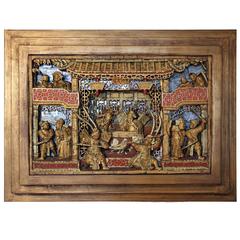
19th Century Chinese Carved Giltwood Panel
Located in San Diego, CA
Antique 19th century Chinese carved gold gilt and painted wood wall panel or plaque with scholar and warrior figures scene. Signed on back as p...
Category
Antique 19th Century Chinese Sculptures and Carvings
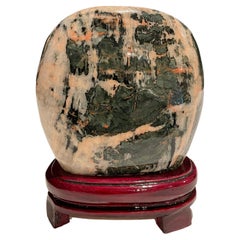
Quality Chinese Scholar Rock
Located in Norwood, NJ
Chinese Scholar stone, Meditation stone, Appreciation stone or Dream stone. All names for this beautiful natural stone that when studied evokes and por...
Category
Late 20th Century Chinese Scholar s Objects
Materials
Stone
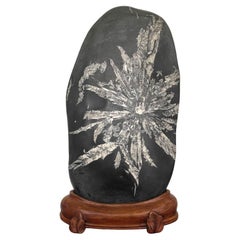
Chinese Scholar Rock Chrysanthemum Stone
Located in Atlanta, GA
An extraordinary specimen created by nature millions of years ago, this large and stunning Chinese black chrysanthemum stone features white crystalline mineral (calcite and chalcedon...
Category
Antique Late 19th Century Chinese Chinese Export Scholar s Objects
Materials
Stone
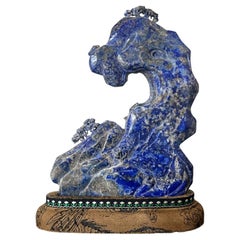
Chinese Carved Lapis Lazuli Scholar Stone
Located in Atlanta, GA
A Chinese scholar rock carved from a natural lapis stone and displayed on a brocade wrapped stand circa late 19th century Qing Dynasty. The brightly blue lapis was considered as am exotic gemstone in China and mostly imported from Persia through the silk road. While not a conventional rock types of materials for scholar stones, it is occasionally carved and polished into smaller Gongshi to be displayed and meditated upon in the scholar's study. Similar approaches were also done with jade, malachite and turquoise, even petrified wood, Chenxiang Agarwood, roots in spirited form, porcelain and even bronze in rock forms.
The lapis was carved into a mountain form with stacked rocks...
Category
Antique Late 19th Century Chinese Chinese Export Scholar s Objects
Materials
Stone
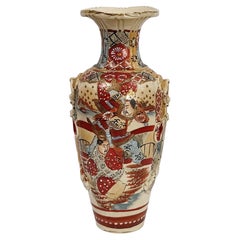
Antique Japanese Satsuma Vase, Hand-Painted Warrior Scene, Meiji-Era Masterpiece
By Satsuma
Located in Bochum, NRW
Antique Japanese Satsuma Vase – Hand-Painted Warrior Scene, Meiji-Era Masterpiece.
Japanese Satsuma ceramic vase with polychrome decorations of Japanese men and soldiers in armor. Go...
Category
Vintage 1930s Japanese Meiji Ceramics
Materials
Porcelain
$730 Sale Price
20% Off
H 14.57 in Dm 6.3 in
Japanese Meiji Period (1868-1912) Satsuma Vase by Kinkozan
By Kinkozan
Located in Newark, England
JAPANESE SATSUMA PROCESSIONAL VASE
From our Japanese collection, we are delighted to introduce to the market this Japanese Satsuma Vase by Kinkozan. The vase with a compressed body ...
Category
Antique Late 19th Century Japanese Meiji Ceramics
Materials
Ceramic, Earthenware, Pottery

Japanese Meiji Period Satsuma Vase by Ryokuzan
Located in Newark, England
From our Japanese Satsuma Collection, we are delighted to offer this Japanese Satsuma Vase by Ryokuzan 緑山. The Satsuma vase of ovoid shape with a tapered body, circular foot rim, wai...
Category
Antique Early 1900s Japanese Meiji Ceramics
Materials
Ceramic, Earthenware, Pottery

Antique Japanese Satsuma Vase – Hand-Painted Meiji-Era Masterpiece
By Satsuma
Located in Bochum, NRW
Antique Japanese Satsuma Vase – Hand-Painted Meiji-Era Masterpiece
Japanese Satsuma ceramic vase with polychrome decorations of Japanese men and soldiers in armor. Golden details. Ja...
Category
Vintage 1930s Japanese Meiji Ceramics
Materials
Porcelain
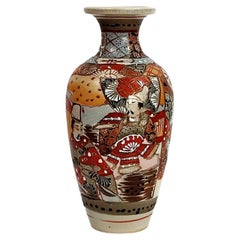
Antique Japanese Meiji Period Satsuma Vase by Ryozan
Located in Newark, England
MEIJI PERIOD 1868-1912
From our Japanese collection, we are delighted to offer this Japanese Satsuma Vase by Ryozan. The vase of tapered form with tightly pinched neck and flared to...
Category
Antique Late 19th Century Japanese Meiji Ceramics
Materials
Ceramic, Earthenware, Pottery
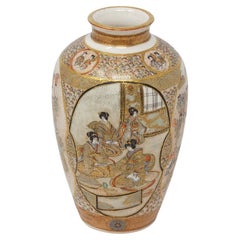
Japanese Antique Earthenware Satsuma Vase by Kinkozan Meiji Period
By Kinkozan
Located in Newark, England
FREE WORLDWIDE SHIPPING
MEIJI PERIOD (1868-1912)
From our Japanese Satsuma collection, we are delighted to present this exceptional Meiji period Satsuma vase by Kinkozan
This tal...
Category
Antique Late 19th Century Japanese Meiji Ceramics
Materials
Ceramic, Earthenware, Pottery
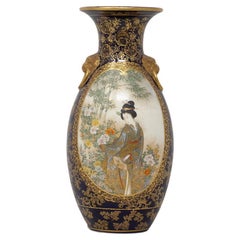
Japanese Antique Meiji Period Satsuma Vase by Kinkozan
By Kinkozan
Located in Newark, England
GLOBULAR FORM MINIATURE VASE
From our Japanese collection, we are delighted to offer this Japanese Satsuma Vase by Kinkozan. The Satsuma Vase made from earthenware pottery is potted...
Category
Antique Early 1900s Japanese Meiji Ceramics
Materials
Ceramic, Earthenware, Pottery
