R. S. Johnson Fine Art Portrait Prints
to
4
Overall Width
to
Overall Height
to
3
1
1
1
1
3
1
1
2
2
4
3
2
2
2
2
1
1
3
1
1
4
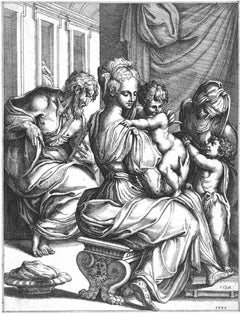
The Holy Family
By Fra Bonaventura Bisi
Located in Chicago, IL
The Holy Family, 1634
Etching after Parmigianino (Parma 1503 - 1540 Casal Maggiore)
305 x 230 mm.; 12 x 9 inches
References:
Nagler Monogrammisten II...
Category
17th Century Old Masters Portrait Prints
Materials
Etching
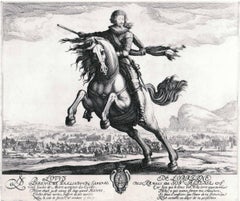
Portrait du Prince de Phalsbourg
By Jacques Callot
Located in Chicago, IL
Watermark:
Lion and Star (Lieure 38)
References:
Lieure No. 505
Notes:
An early impression of the only state of this major work.
According to Lieure (Jacques Callot: Catalogue de l...
Category
16th Century Old Masters Portrait Prints
Materials
Etching
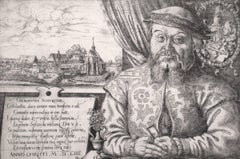
Hieronymus Schurstab (1st state)
By Hans Lautensack
Located in Chicago, IL
Etching
195 x 295 mm.; 7 3/4 x 11 3/4 inches
Exhibited:
Old Master Prints
Drawings: 1450 - 1850, R. S. Johnson Fine Art, December 1999: no. 21.
Reference:
Hollstein 68 I/II
...
Category
16th Century Old Masters Portrait Prints
Materials
Etching
Portrait of E.D.
By Jacques Villon
Located in Chicago, IL
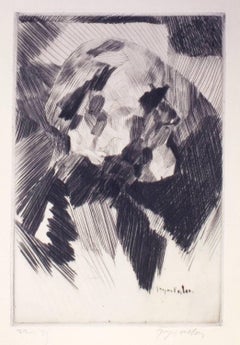
This impression is signed and numbered 24/25. The references for this work are: Auberty
Perussaux 191 and Ginestet
Pouillon E. 277.
This is one of Jacques Villon’s gr...
Category
1910s Cubist Portrait Prints
Materials
Drypoint
Related Items
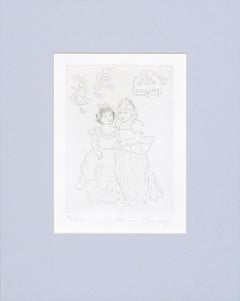
Figurative Etching of Two Girls in Gowns, Line Drawing
By Dorian Krausz
Located in Soquel, CA
Delicate drypoint etching of two girls by Dorian Krausz (American, b. 1948). Signed "Dorian Krausz" in the lower right corner. Numbered "196/300" in the lower left corner. Presented ...
Category
Late 20th Century Contemporary Figurative Prints
Materials
Paper, Ink, Drypoint

$372 Sale Price
20% Off
H 14 in W 11 in D 0.25 in
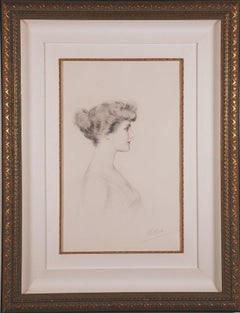
"Madame Georges Menier" Portrait, by Paul Cesar Helleu
By Paul César Helleu
Located in Hinsdale, IL
HELLEU, PAUL CÉSAR
(1859 -1927)
"MADAME GEORGES MENIER"
Montesquiou XXI
Drypoint in colors, c. 1900
Signed in pencil, lower right
Printed on wove paper
Full...
Category
Early 20th Century Art Nouveau Portrait Prints
Materials
Drypoint
$6,500
H 38.5 in W 28.5 in D 2 in
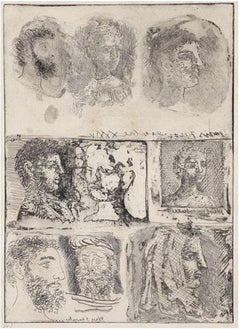
Feuille d
etudes Techniques: Neuf Tetes
By Pablo Picasso
Located in New York, NY
Etching and drypoint on laid paper, 1934. With Picasso's ink stamped signature lower right, and numbered 29/50 in pencil lower left.
Image 12.25 x 8.75 inches, full sheet 19.5 x 13...
Category
1930s Modern Portrait Prints
Materials
Etching, Drypoint
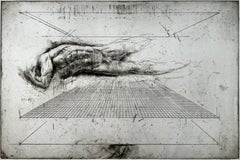
Shell Shedding, by Trevor Southey
By Trevor Southey
Located in Palm Springs, CA
Pencil signed, titled, and numbered 46/55 in the margin. Artist: Trevor Southey
Title: "Shell Shedding"
Medium: Drypoint Etching
Edition: 46/55
Male nude against an abstract back...
Category
1980s Contemporary Nude Prints
Materials
Etching, Drypoint
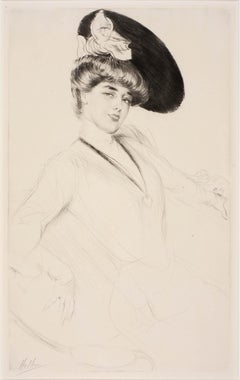
Miss Taylor
By Paul César Helleu
Located in Fairlawn, OH
Miss Taylor
Drypoint, c. 1900
Signed in pencil lower left (see photo)
Small edition, about 10
Very rich impression, full of burr
Condition: Excellent
Image size: 21-1/4 x 13-1/4"
She...
Category
Early 1900s Art Nouveau Portrait Prints
Materials
Drypoint
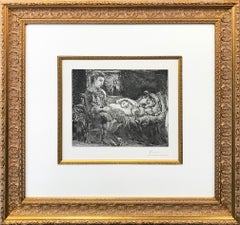
GARCON ET DORMEUSE A LA CHANDELLE (BLOCH 226)
By Pablo Picasso
Located in Aventura, FL
Plate 26 from La Suite Vollard. Bloch 226. Baer 440. Etching, engraving and aquatint, on Montval paper. Signed in pencil, from the edition of 260 (there was also an edition of 50 wit...
Category
1930s Cubist Nude Prints
Materials
Paper, Etching, Engraving, Aquatint
$39,600 Sale Price
43% Off
H 13.375 in W 17.5 in
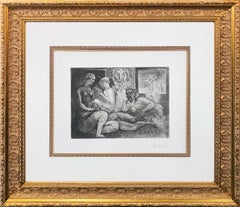
QUATRE FEMMES NUES ET TETE SCULPTEE (BLOCH 219)
By Pablo Picasso
Located in Aventura, FL
Plate 82 from La Suite Vollard. Bloch 219. Baer 424. Etching on Montval paper. Signed in pencil, from the edition of 260 (there was also an edition of 50 with larger margins). Number...
Category
1930s Cubist Nude Prints
Materials
Paper, Engraving
$50,000 Sale Price
41% Off
H 13.375 in W 17.375 in
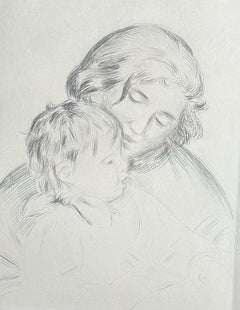
Pierre Auguste Renoir, "Mère et Enfant , " rare drypoint
By Pierre Auguste Renoir
Located in Chatsworth, CA
Pierre Auguste Renoir
Mère et Enfant, 1896
Drypoint in brown and green
From a very rare edition of 100 impressions on cream-toned Van Gelder laid paper
Reference: Delteil #10
Printed...
Category
Late 18th Century Impressionist Portrait Prints
Materials
Drypoint
$12,500
H 9.8 in W 7.8 in
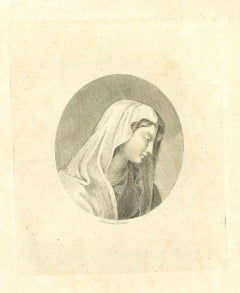
Portrait - Original Etching by Thomas Holloway - 1810
By Thomas Holloway
Located in Roma, IT
Portrait is an original artwork realized by Thomas Holloway (1748 - 1827).
Original Etching from J.C. Lavater's "Essays on Physiognomy, Designed to promote the Knowledge and the Lov...
Category
1810s Old Masters Portrait Prints
Materials
Etching
$355
H 6.11 in W 5.12 in D 0.04 in
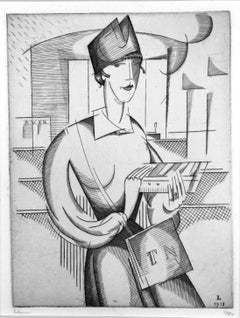
La Receveuse
By Jean-Emile Laboureur
Located in New York, NY
Jean-Emile Laboureur (1877-1943), La Receveuse, engraving, 1919-1920, signed in pencil lower left, numbered (2/38) lower right and annotated ”imp” [also with initials and the date 19...
Category
1910s Cubist Portrait Prints
Materials
Engraving
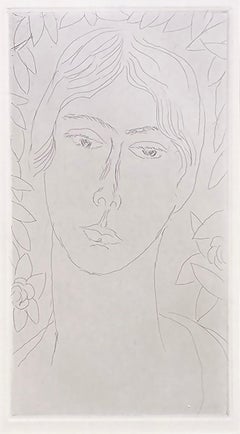
"Mlle Landsberg" (grade planche, pl. 16)
By Henri Matisse
Located in Missouri, MO
"Mlle Landsberg" (grade planche, pl. 16), 1914
Henri Matisse (French, 1869-1954)
Signed and Numbered Lower Right
Edition 12/15
Image size: 7 7/8 x 4 5/16 inches
Sheet size: 17 11/16 x 12 1/2 inches
With frame: 19 1/2 x 14 1/2 inches
Henri Matisse came from a family who were of Flemish origin and lived near the Belgian border. At eight o'clock on the evening of December 31, 1869, he was born in his grandparents' home in the town of Le Cateau in the cheerless far north of France. His father was a self-made seed merchant who was a mixture of determination and tightly coiled tension.
Henri had no clear idea of what he wanted to do with his life. He was a twenty-year-old law clerk convalescing from appendicitis when he first began to paint, using a box of colors given to him by his mother. Little more than a year later, in 1890, he had abandoned law and was studying art in Paris. The classes consisted of drawing from plaster casts and nude models and of copying paintings in the Louvre. He soon rebelled against the school's conservative atmosphere; he replaced the dark tones of his earliest works with brighter colors that reflected his awareness of Impressionism. Matisse was also a violinist; he took an odd pride in the notion that if his painting eye failed, he could support his family by fiddling on the streets of Paris.
Henri found a girlfriend while studying art, and he fathered a daughter, Marguerite, by her in 1894. In 1898 he married another woman, Amelie Parayre. She adopted the beloved Marguerite; they eventually had two sons, Jean, a sculptor and Pierre who became an eminent art dealer. Relations between Matisse and his wife were often strained. He often dallied with other women, and they finally separated in 1939 over a model who had been hired as a companion for Mme. Matisse. She was Madame Lydia, and after Mme. Matisse left, she remained with Matisse until he died.
Matisse spent the summer of 1905 working with Andre Derain in the small Mediterranean seaport of Collioure. They began using bright and dissonant colors. When they and their colleagues exhibited together, they caused a sensation. The critics and the public considered their paintings to be so crude and so roughly crafted that the group became known as Les Fauves (the wild beasts).
By 1907, Matisse moved on from the concerns of Fauvism and turned his attention to studies of the human figure. He had begun to sculpt a few years earlier. In 1910, when he saw an exhibition of Islamic art, he was fascinated with the multiple patterned areas and adapted the decorative universe of the miniatures to his interiors. As a continuation of his interest in the "exotic", Matisse made extended trips to Morocco in 1912 and 1913.
At the end of 1917, Matisse moved to Nice; he would spend part of each year there for the remainder of his life. A meticulous dandy, he wore a light tweed jacket amd a tie when he painted. He never used a palette, but instead squeezed his colors on to plain white kitchen dishes...
Category
1910s Fauvist Figurative Prints
Materials
Drypoint, Etching
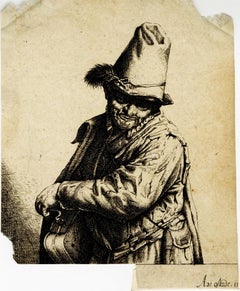
The Organ Grinder
By Adriaen van Ostade
Located in Middletown, NY
Etching on cream laid paper with a large heraldic watermark which is partially trimmed, 4 3/16 x 3 5/8 inches (105 x 84 mm), margins trimmed but preserving the signature in the lower...
Category
17th Century Old Masters Portrait Prints
Materials
Etching