Rockwell Antiques Metalwork
to
6
6
2
4
4
6
3
2
2
1
6
4
3
1
1
6
6
6
1
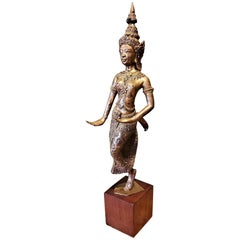
Early 20th Century Gilt Metal Thai Khon Dancer
Located in Dallas, TX
Presenting a beautiful early 20th century Gilt Metal Thai Khon Dancer.
Made in Thailand (South East Asia) circa 1920.
It features a gilt meta...
Category
Early 20th Century Thai Country Sculptures and Carvings
Materials
Metal
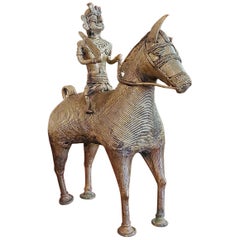
Antique Indian Dhokra Horse and Rider Sculpture
Located in Dallas, TX
Presenting a lovely antique Indian Dhokra horse and rider sculpture.
Probably from the late 19th or early 20th century as is evidenced by its natural patina and clear evidence of age.
It depicts an Indian Warrior with a sword in his right hand mounted on his horse/steed.
The warrior is in classical and ancient Southeast Asian Indian attire and he holds the horse’s reins in his left hand.
The body of the horse is a series of lines (in the Classic Dhokra Style) and it has a tribal headdress...
Category
Antique Late 19th Century Indian Anglo Raj Metalwork
Materials
Metal
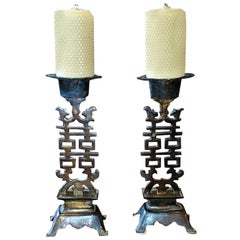
Vintage Pair of Chinese Double Happiness Bronzed Pewter Wedding Candlesticks
Located in Dallas, TX
PRESENTING a LOVELY Vintage Pair of Chinese Double Happiness Wedding Candlesticks – a Matching Pair.
Made in China in the early 20th Century of bronz...
Category
Early 20th Century Chinese Archaistic Metalwork
Materials
Pewter, Bronze
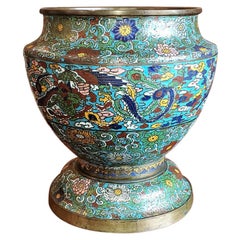
Japanese Meiji Champleve and Bronze Urn
Located in Dallas, TX
Presenting a gorgeous Japanese Meiji Champleve and bronze urn.
Made in Japan during the Meiji Period circa 1880.
The body of ...
Category
Antique Late 19th Century Japanese Meiji Metalwork
Materials
Bronze, Enamel
Japanese Meiji Period Sterling Silver 2 Handled Basket by Katsu Miyamoto
By Miyamoto Shoko 1
Located in Dallas, TX
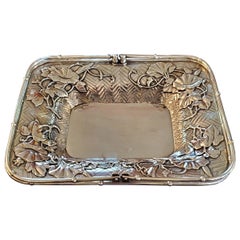
PRESENTING a GORGEOUS, VERY HIGH QUALITY and EXTREMELY RARE piece of Japanese Meiji Period Sterling Silver 2 Handled Basket by Katsu Miyamoto.
EXQUISITE, EXCEPTIONAL, RARE & IMPORTANT!
This is definitely a Meiji Period piece due to the fact that it is marked with the sterling silver mark “jungin”.
The Meiji period was from 1868 to 1912 and in 1928 a law was introduced in Japan compelling the use of decimal marks for silver.
This pre-dates that decimalization law.
We are of the opinion that it is from circa 1900.
Miyamoto Shoko was founded in 1880 as the first silverware specialty shop. In 1899, Miyamoto Shoko’s silverwares were ordered by the family members of the Emperor of Japan, and to this day, they are making fine and graceful handicrafts with skillful craftsmen.
Loved by numerous customers since the Meiji era, Miyamoto Shoko’s products have also been given to Princess Mako and Princess Kako of Akishino, as well as Princess Aiko Toshinomiya, on their birthdays.
Katsu Miyamoto (宮本勝), in 1880, in order to increase the sales of tobacco and cigarettes to foreigners founded the Moyamoto Shoko company, which produced different silverwares in general and particularly silver cigarette cases. Miyamoto’s first name, Katsu (勝) in some sources is written as “Masaru”, since 勝 kanji can be pronounced in both ways.
This basket is of the HIGHEST QUALITY imaginable!
The top of the basket has the MOST GORGEOUS repousse work of flowers, probably lotus flowers, with leaves and foliage. It has an underlying chevron effect chasing, reflecting parquetry.
The 2 handles are cast in the form of bamboo handles.
The rim of the top likewise is cast as bamboo.
The base is equally stunning in a different way!
It is chased with a chevron effect, like parquetry flooring and the four feet simulate pieces of sliced bamboo with an interlinking gallery of support columns, likewise, simulating bamboo.
The QUALITY of WORKMANSHIP is OUTSTANDING!
The pieces weighs exactly 525 grams.
This piece takes my breath away!
This is one for the SERIOUS COLLECTOR of EXQUISITE AND RARE Japanese silver. You will not find another like it, for sale ANYWHERE ELSE IN THE WORLD …… I know as I have searched!
Provenance: Acquired from a Dallas Private Collector.
Dimensions: 9.6 inches wide, 7.6 inches deep and 2.75 inches tall ( 7.25 inches tall with handles up)
Condition: Very good. It looks like the base 4 legged gallery, has been repaired/re-attached to the base, but otherwise it is excellent and of Museum quality.
The Meiji period (明治時代 Meiji-jidai?), also known as the Meiji era, is a Japanese era which extended from October 23, 1868 through July 30, 1912.[1] This period represents the first half of the Empire of Japan during which Japanese society moved from being an isolated feudal society to its modern form. Fundamental changes affected its social structure, internal politics, economy, military, and foreign relations. The period corresponded with the reign of Emperor Meiji after 1868, and lasted until his death in 1912. It was succeeded by the Taishō period upon the accession of Emperor Taishō to the throne.
Solid silver pieces...
Category
Early 20th Century Japanese Meiji Metalwork
Materials
Sterling Silver
Large Oriental Champleve Urn on Stand
Located in Dallas, TX
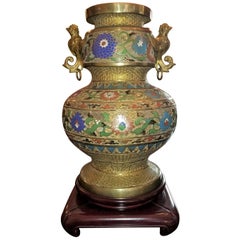
PRESENTING a BEAUTIFUL and VERY HIGH QUALITY Large Oriental Champleve Urn on Stand.
Early 20th Century, circa 1910 – 20.
Probably Japanese.
Marked, but we cannot decipher the mark...
Category
Early 20th Century Japanese Japonisme Metalwork
Materials
Brass, Bronze, Enamel
Related Items
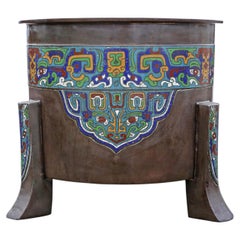
Antique Large Oriental Japanese Chinese Bronze Champleve Enamel Jardiniere Meiji
Located in Wisbech, Cambridgeshire
Antique large quality Oriental Japanese chinese bronze champleve enamel Jardiniere planter bowl C1920.
Would look amazing in the right location. Rare la...
Category
Vintage 1920s Japanese Planters and Jardinieres
Materials
Bronze

$1,769
H 11.82 in Dm 13 in
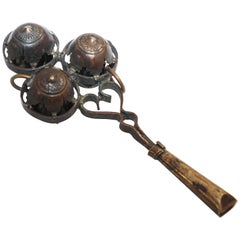
Antique Brass Baby Rattle Whistle Bell Dangles, India
Located in Moreno Valley, CA
Antique brass baby rattle whistle bell dangles, India.
Handcrafted baby rattle in openwork designs with whistle handle and three decorative bell dangles.
...
Category
Mid-20th Century Indian Folk Art Metalwork
Materials
Brass
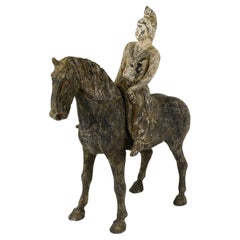
Tang Dynasty Horse and Detachable Rider
Located in Santa Monica, CA
Tang Equestrian with detachable rider 12h
Early Tang unglazed pottery is characterized by its realism and elegant shape of the horse. This equestrian has a detachable female rider. ...
Category
Antique 15th Century and Earlier Chinese Tang Sculptures and Carvings
Materials
Pottery
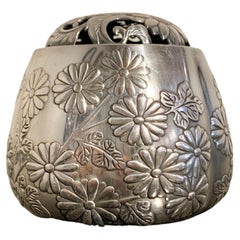
Japanese Silver Incense Burner, Akoda Koro, by Nomura, Meiji Period, Japan
Located in Austin, TX
A lovely and luxurious Japanese silver incense burner of lobed melon form, akoda koro, marked jungin and signed Nomura, Meiji Period, circa 1900, Japan.
The silver koro...
Category
Vintage 1910s Japanese Meiji Metalwork
Materials
Silver, Sterling Silver
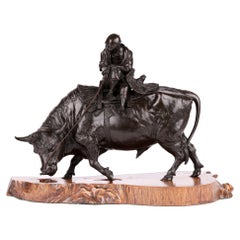
Genryusai Seiya Japanese Meiji Man
Water Buffalo Sculpture on Stand
Located in Bishop
s Stortford, Hertfordshire
An exceptional Japanese Meiji bronze sculpture of a man and water buffalo on a natural polished oak stand by renowned Japanese master craftsman Genryusai Seiya and dating from around 1880/90. The large bronze depicts an elderly man holding a pipe and tobacco pouch...
Category
Antique 1880s Japanese Anglo-Japanese Sculptures and Carvings
Materials
Bronze
$23,028
H 13.78 in W 17.33 in D 5.52 in
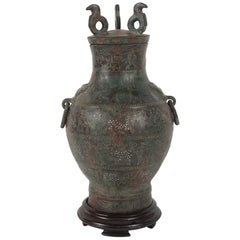
Chinese Zhou Dynasty Style Bronze Hue Inlaid with Gold
Silver Wire
Located in Hudson, NY
This cast bronze vessel was made in China as an honorific presentation circa 1920. Cast in the style of the Zhou dynasty it would have been used ritually ...
Category
Early 20th Century Chinese Archaistic Metalwork
Materials
Bronze
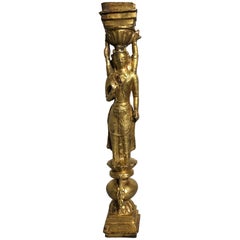
Densatil Gilt Bronze Caryatid Figure, Tibet, 15th Century
Located in Austin, TX
A heavy and solidly cast, richly gilt, bronze caryatid figure from Densatil Monastery, Central Tibet, early 15th century or earlier.
Cast in the form of two four armed figures standing back to back in tribhanga (thrice bent position) on a lotus platform, this piece would originally have served as a pillar for a larger seated deity...
Category
Antique 15th Century and Earlier Tibetan Tibetan Sculptures and Carvings
Materials
Bronze
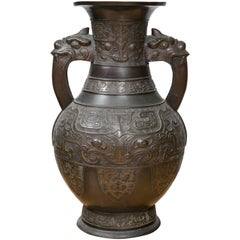
Large Chinese Archaistic Black Patina Bronze Altar Vase
Located in Mt Kisco, NY
Chinese bronze vase with decoration in the Archaistic style and dragon mythical beast loop handles.
Category
Antique 18th Century Chinese Archaistic Vases
Materials
Bronze
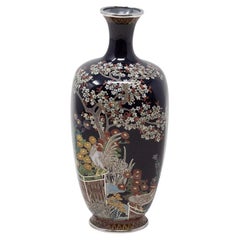
Japanese Meiji Period Cloisonne Enamel Vase by Ando Jubei
By Ando Jubei
Located in Newark, England
Free international shipping
Ando Cloisonne Company Mark
From our Japanese collection, we are delighted to introduce this Japanese Cloisonne Enamel Vase by Ando Jubei. The Cloisonn...
Category
Antique Early 1900s Japanese Meiji Metalwork
Materials
Enamel, Wire
Japanese Meiji Period Cloisonne Enamel Sake Pot
Located in Newark, England
Fine Japanese Meiji period cloisonne enamel Sake pot. The Sake pot of rounded form with with clean edges profusely decorated with blossoming flowers throughout upon a black ground ba...
Category
Antique Late 19th Century Japanese Meiji Metalwork
Materials
Metal, Enamel
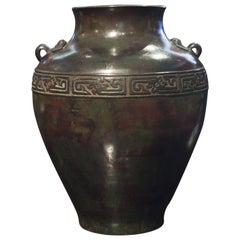
Chinese Archaic Patinated Bronze Vase, Early 20th Century
Located in Austin, TX
An elegant and beautifully cast early 20th century Chinese bronze vase in the archaic style with a gorgeous lacquer simulated patina in shades of brown, red and green.
The shoulders...
Category
Early 20th Century Chinese Archaistic Metalwork
Materials
Bronze
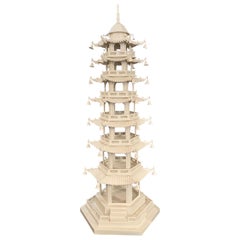
Large-Scale Chinoiserie Pagoda, Seven-Tier, White Painted Tôle
Located in Montreal, Quebec
Large-scale chinoiserie pagoda, seven-tier, white painted tôle
Vintage large-scale white metal (tôle) pagoda. Rare and stunning scale and detailing, including little bells on each tier. Each level graduates from 10" at the bottom level to 6" at the top level. It is an impressive piece, whimsical and charming, and very very chic. Can be easily dismantled in tiers for shipping.
Chinoiserie-inspired decoration has entranced generations of discerning collectors from 18th-Century France to Hollywood Regency. The architectural and columnar shape of this piece frames a space.
Probable prior provenance: John Rosselli Antiques.
Category
20th Century American Chinoiserie Metalwork
Materials
Metal