P.G. Ruskin Company LLC Asian Art and Furniture
to
14
14
1
7
7
2
2
2
1
2
7
7
6
3
2
12
9
6
3
2
14
14
14
1
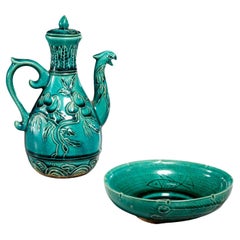
Late 19th C. Qing Guangxu Turquoise-Glazed Porcelain Dragon Ewer and Fish Dish
Located in Morristown, NJ
A vibrant pair of Qing Dynasty turquoise-glazed porcelain vessels including a molded ewer and a shallow dish, each rendered in brilliant peacock-green glaze with pronounced craquelur...
Category
Antique Late 19th Century Chinese Chinese Export Ceramics
Materials
Ceramic
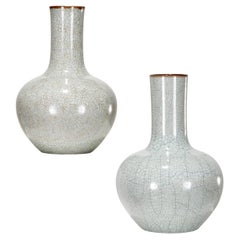
Near Pair of Monumental Chinese Ge-Ware Style Vases, 20th Century
By Liu Yucen
Located in Morristown, NJ
A dramatic and finely executed near pair of monumentally scaled 20th C. Chinese porcelain vases, masterfully crafted in homage to the celebrated Ge ware ceramics of the Song dynasty....
Category
Vintage 1950s Chinese Chinese Export Ceramics
Materials
Ceramic
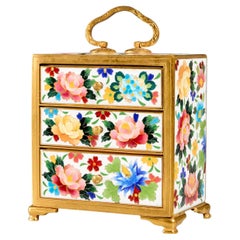
Late Meji Period Japanese Cloisonné Miniature 3 Drawer Chest by Inaba Nanaho
By Inaba Cloisonne Co.
Located in Morristown, NJ
An exquisite Japanese miniature cloisonné chest by Inaba Nanaho of Nagoya, finely crafted in the early 20th century, bridging the Meiji and Taishō ...
Category
Early 20th Century Japanese Meiji Metalwork
Materials
Metal, Enamel
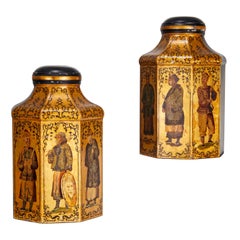
Rare Antique Pair of Very Large Victorian Chinoiserie Tole-ware Tea Canisters
Located in Morristown, NJ
19th C. Victorian England. 19th c., England, a rare pair of very large gilt, polychrome and black painted metal tea cannisters. These Victorian tole tea canisters are stunning exampl...
Category
Antique Late 19th Century English Chinoiserie Metalwork
Materials
Metal
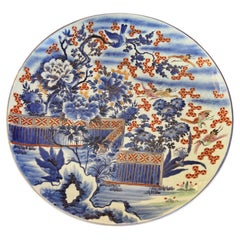
Large Antique Japanese Meiji Period Imari Porcelain Charger Marked Wanshan Zao
Located in Morristown, NJ
Late 19th C. large, decorative Japanese Imari plate featuring intricate hand-painted designs in blue, red, and gold. The central motif includes blue floral patterns with accents of r...
Category
Antique 1870s Japanese Meiji Ceramics
Materials
Clay, Porcelain, Paint
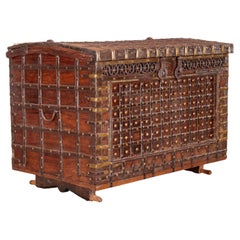
Large Antique Anglo-Indian Ironbound Pitara Coffer with Hammered Copper Elements
Located in Morristown, NJ
A large antique traditional Indian coffer known as a Pitara Chest, meaning Treasure Chest (or more literally ‘a box full of treasures’ in Hindi). 19th c....
Category
Antique Mid-19th Century Indian Anglo-Indian Furniture
Materials
Copper, Iron
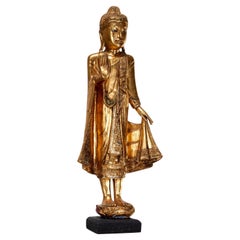
Vintage Large Standing Burmese Mandalay Giltwood Buddha with Mirrored Insets
Located in Morristown, NJ
A lovely vintage 20th c., carved and giltwood standing Burmese Mandalay Buddha, with green and clear mirrored inlaid details, on wooden stand.
The Buddha is depicted standing with a...
Category
Vintage 1970s Burmese Other Sculptures and Carvings
Materials
Mirror, Bentwood, Giltwood
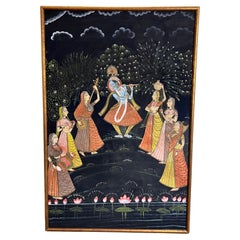
Large Vintage Framed Pichhavai Painting of Krishna Playing His Flute
Located in Morristown, NJ
Vintage Pichhavai painting on fabric of Krishna playing is flute with Radha and female Gopis gathered by his side. The colors, details and facial ex...
Category
Vintage 1970s Indian Folk Art Paintings and Screens
Materials
Fabric, Wood, Paint
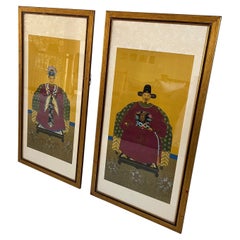
Framed Pair of Antique Chinese Qing Dynasty Ancestor Paintings on Silk
Located in Morristown, NJ
Antique pair of Qing dynasty ancestor portraits depicting a male and a female. Hand painted on silk and framed under glass within a large te...
Category
Antique Late 19th Century Chinese Qing Paintings and Screens
Materials
Silk, Glass, Wood, Paint
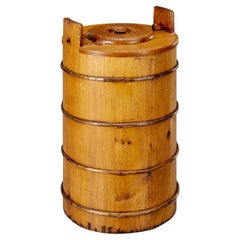
Large Vintage Chinese Floor Standing Wooden Storage Barrel with Lid
Located in Morristown, NJ
Early 20th century, floor standing storage barrel made of wood with applied bent bamboo. The lid is secured with two pegs. The interior has been converted to waste receptacle with a ...
Category
Early 20th Century Chinese Other More Asian Art, Objects and Furniture
Materials
Bamboo, Wood
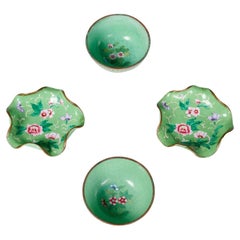
Pink
Green Antique Chinese Peking Enamel Cups and Dishes w. Floral Decoration
Located in Morristown, NJ
19th/20th c., Chinese enamelware, includes (2) cups and (2) small scalloped edge dishes, each with enameled floral design on a copper ground, unmarked.
This type of enamelling is known by several names, including Beijing, Canton and Peking enamel...
Category
Antique Late 19th Century Chinese Chinese Export Metalwork
Materials
Enamel
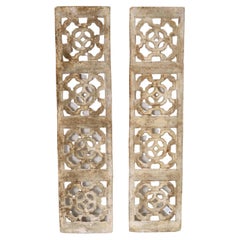
Mid-20th Century Cast Stone Architectural Panels, a Pair
Located in Morristown, NJ
20th C., cast stone panels with attractive patina. The panels could be used outdoors or for interior decoration. The back side of the panels have metal wall mounts.
Dimensions:
6...
Category
Mid-20th Century Unknown Chinoiserie Architectural Elements
Materials
Cast Stone, Metal
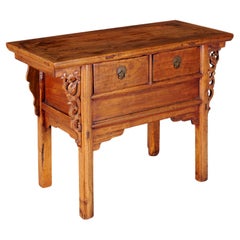
19th C. Chinese Two Drawer Altar Coffer with Floral Brass Door Pulls
Located in Morristown, NJ
Qing Dynasty (19th c), an elm wood, two drawer, altar coffer with brass flower-shaped ring pulls. The rectangular top sits over two frieze drawers above a plank panel and shaped apron, flanked by pierced openwork scrolling cloud molding, the whole raised on square to round...
Category
Antique 19th Century Chinese Qing Furniture
Materials
Brass
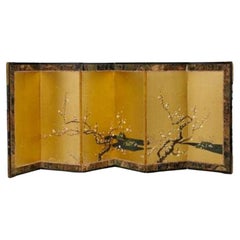
Early 20th Century Japanese 6-Panel Gouache and Gold Leaf Painted Table Screen
Located in Morristown, NJ
20th c., Showa period gouache and gold leaf Japanese screen. Depicting plum tree blossoms on a riverbank across 6 panels. Plum blossoms are often mentioned in Japanese poetry as a symbol of spring...
Category
20th Century Japanese Showa Paintings and Screens
Materials
Gold Leaf
Related Items
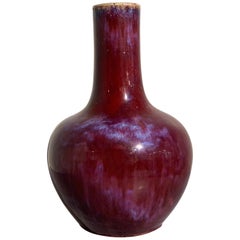
Chinese Qing Dynasty Flambé Glazed Bottle Vase, Tianqiuping, Late 19th Century
Located in Austin, TX
A gorgeous Chinese monochrome red flambé glazed bottle vase, called a tianqiuping, Qing Dynasty, late 19th century.
The voluptuous body o...
Category
Antique Late 19th Century Chinese Qing Vases
Materials
Porcelain

$6,500
H 14 in Dm 9.5 in
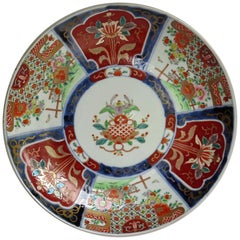
Japanese Porcelain Charger finely Hand Painted, Meiji Period circa 1880
Located in Lincoln, Lincolnshire
This is a good quality, hand decorated Japanese porcelain charger, large plate or bowl with an Imari pattern, dating to the late 19th centur...
Category
Antique Late 19th Century Japanese Meiji Ceramics
Materials
Porcelain
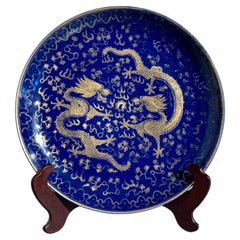
Chinese Porcelain Powder Blue Gilt Dragon Charger, Late Qing Dynasty, China
Located in Austin, TX
A magnificent Chinese powder blue glazed porcelain charger with painted gilt decoration, late Qing Dynasty, circa 1900, China.
The large and impressive Chinese porcelain charger gla...
Category
Antique Early 1900s Chinese Qing Ceramics
Materials
Porcelain
$6,800
H 2.63 in Dm 16.25 in
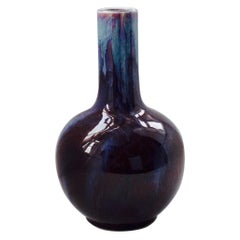
20th Century Chinese Flambe Glazed Bottle Vase
Located in Petworth, West Sussex
A Chinese flambe glazed bottle vase with Jingdezhen Zhi seal mark, 20th century, in Qing style, with a purple-streaked upper section, seal ma...
Category
Early 20th Century Chinese Qing Ceramics
Materials
Ceramic
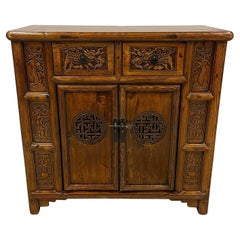
19th Century Antique Chinese Carved Coffer, Cabinet, Side Table
Located in Pomona, CA
Size: 39 1/2inH x 40in W x 17in D
Door opening: 24 1/2in H x 20 1/2in W
Drawer: 5 1/2in H x 10in W x 11in D
Origin: China
Circa: 1850 - 1900
Material: Wood
Condition: Ori...
Category
Antique 19th Century Chinese Chinese Export Furniture
Materials
Elm
Japanese Meiji Period Cloisonne Enamel Vase by Ando Jubei
By Ando Jubei
Located in Newark, England
Free international shipping
Ando Cloisonne Company Mark
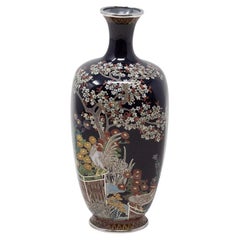
From our Japanese collection, we are delighted to introduce this Japanese Cloisonne Enamel Vase by Ando Jubei. The Cloisonn...
Category
Antique Early 1900s Japanese Meiji Metalwork
Materials
Enamel, Wire
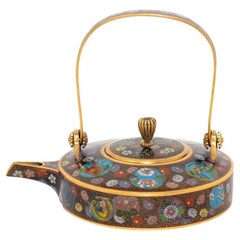
Japanese Meiji Period Cloisonne Enamel Sake Pot
Located in Newark, England
Fine Japanese Meiji period cloisonne enamel Sake pot. The Sake pot of rounded form with with clean edges profusely decorated with blossoming flowers throughout upon a black ground ba...
Category
Antique Late 19th Century Japanese Meiji Metalwork
Materials
Metal, Enamel
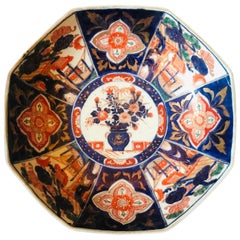
Meiji Period Large Japanese Imari Bowl Centerpiece
By Imari Porcelain
Located in Vero Beach, FL
Meiji period large Japanese Imari bowl centerpiece
This large, distinctive, octagonal porcelain Imari bowl is painted in rich, inky blue, co...
Category
Antique 19th Century Japanese Meiji Ceramics
Materials
Porcelain
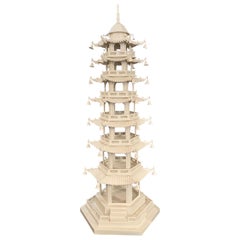
Large-Scale Chinoiserie Pagoda, Seven-Tier, White Painted Tôle
Located in Montreal, Quebec
Large-scale chinoiserie pagoda, seven-tier, white painted tôle
Vintage large-scale white metal (tôle) pagoda. Rare and stunning scale and detailing, including little bells on each tier. Each level graduates from 10" at the bottom level to 6" at the top level. It is an impressive piece, whimsical and charming, and very very chic. Can be easily dismantled in tiers for shipping.
Chinoiserie-inspired decoration has entranced generations of discerning collectors from 18th-Century France to Hollywood Regency. The architectural and columnar shape of this piece frames a space.
Probable prior provenance: John Rosselli Antiques.
Category
20th Century American Chinoiserie Metalwork
Materials
Metal
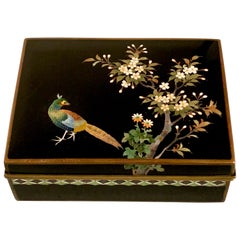
Japanese Cloisonne Box by Inaba, Meiji Period, circa 1900, Japan
By Inaba Cloisonne Co.
Located in Austin, TX
A fine Japanese cloisonne hinged box with pheasant and autumn foliage, by Inaba Nanaho and the Inaba Cloisonne Company, Meiji period, circa 1900, ...
Category
Antique Early 1900s Japanese Meiji Metalwork
Materials
Copper, Enamel, Metal
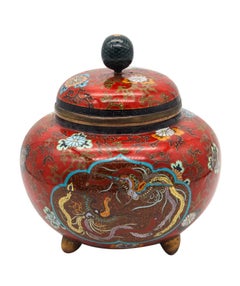
JAPAN IMPERIAL 1900 Meiji Period Tripode Koro Censer In Cloisonné Enamel With
Located in Miami, FL
Japanese tripod Koro from the Meiji Period (1868-1912).
This is a rare and beautiful antique koro censer, created in the imperial Japan during the Meiji period (1868-1912), circa 1900. It was carefully crafted in solid bronze and copper with silver wires and embellished with applications of polychromatic Cloisonné enamels and aventurine. The designs depict organics and natural motifs such mythological animals and flowers.
The Chrysanthemum Symbol
In Imperial Japan, the chrysanthemum (Kiku) was a potent symbol of the imperial family and the emperor himself, representing longevity, royalty, and divine power. The 16-petaled chrysanthemum is the Imperial Seal and crest, found on passports, coins, and the Chrysanthemum Throne. This association dates back to the Kamakura period (1185–1333), particularly with Emperor Go-Toba's fondness for the flower, establishing its link to imperial authority and lineage. The connection between the chrysanthemum and the imperial family began when Emperor Go-Toba adopted it as a personal emblem, aligning it with the strength and refinement of the emperor's rule. During the Meiji Period, the 16-petaled chrysanthemum crest, solidifying the association with the imperial family, was established during this time.
The Meiji Imperial Period
This is an era of Japanese history that extended from October 23, 1868 to July 30, 1912.The Meiji era was the first half of the Empire of Japan, when the Japanese people moved from being an isolated feudal society at risk of colonization by Western powers to the new paradigm of a modern, industrialized nation state and emergent great power, influenced by Western scientific, technological, philosophical, political, legal, and aesthetic ideas. As a result of such wholesale adoption of radically different ideas, the changes to Japan were profound, and affected its social structure, internal politics, economy, military, and foreign relations. The period corresponded to the reign of Emperor Meiji. It was preceded by the Keiō era and was succeeded by the Taishō era, upon the accession of Emperor Taishō.
Country: Imperial Japan.
Period: Meiji, 1890-1910.
Technique: Silver Wire Cloisonné over copper and bronze.
Weight: 416.80 Grams, (0.417 Kg).
Measurements:118 mm by 115 mm (4.65 x 4.52 Inches).
Koro
This term refers to a Japanese censer, incense burner, perfume burner or pastille burner is a vessel made for burning incense or perfume in some solid form. They vary greatly in size, form, and material of construction, and have been in use since ancient times throughout the world. They may consist of simple earthenware bowls or fire pots to intricately carved silver or gold vessels, small tabletop objects a few centimeters tall to as many as several meters high. Many designs use openwork to allow a flow of air. In many cultures, burning incense has spiritual and religious connotations, and this influences the design and decoration of the censer.
Cloisonné
This is an enameling technique in which the pattern is formed by wires soldered to the surface of the object to be decorated, which is usually made from copper, forming cells or cloisons, each of which holds a single colour of enamel paste which is then fired, and ground and polished. The champleve technique also uses an enameling technique, but the cells are formed by carving into the surface of the object, or in the casting. The cloisonne technique has been in use since the 12th century BC in the west, but the technique did not reach China until the 13th or 14th century. It became popular in China in the 18th century. Initially bronze or brass bodies were used, and in the 19th century copper, at which time the quality of the items produced began to decline. Chinese cloisonné is the best-known enamel cloisonné, though the Japanese produced large quantities from the mid-19th century, of very high technical quality. In the west the cloisonne technique was revived in the mid-19th century following imports from China, and its use continued in the Art Nouveau and Art Deco periods.
Condition: Basically, is in great antique condition, near mint, with insignificant and minimal usage, in great condition. All parts are secured in the settings. This Japanese Meiji Koro...
Category
Antique Early 1900s Japanese Meiji Metalwork
Materials
Silver, Bronze, Copper, Enamel
$1,398 Sale Price
30% Off
H 4.65 in Dm 4.52 in
Chinese Guan Type Celadon Yuhuchunging Vase, Late 20th Century
Located in Ottawa, Ontario
A Chinese guan type celadon
Yuhuchunping vase,
Late 20th century.
Covered overall with a soft, bluish-green glaze with broad crackles,
shading to brown at the rim, unglazed...
Category
Late 20th Century Chinese Chinese Export Vases
Materials
Celadon