Schneible Fine Arts LLC Antiquities
to
12
16
16
13
1
2
11
3
2
2
2
16
15
15
1
1
16
16
16
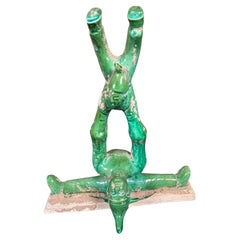
Chinese Ancient Acrobat Entertainers Collection, Ming Dynasty 1368-1644
Located in South Burlington, VT
Ancient Chinese collection of twelve (12) acrobatic entertainers each performing a unique twisting profile , some with with cymbal and drum attributes, Ming Dynasty 1368-1644.
Unmi...
Category
Antique 15th Century and Earlier Chinese Ming Sculptures and Carvings
Materials
Ceramic, Pottery
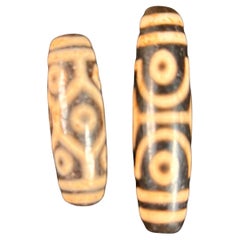
Tibet Vintage Pair Amulet Pendants Nine And Four Eye Dzi Beads
Located in South Burlington, VT
A unique pair (2), valuable and powerful Protection Amulet Dzi from Tibet
An old Tibetan or Central Asian nine and four eye agates Dzi Beads dating to the ...
Category
20th Century Chinese Qing Antiquities
Materials
Agate

$400 Sale Price / set
20% Off
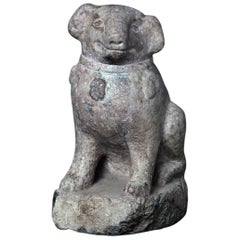
Important Ancient Chinese Effigy Pug Dog, Ming Dynasty 1368-1644
Located in South Burlington, VT
China, a carving of a canine “Pug”, Ming Dynasty, 1368-1644 CE
Dimensions: 38 cm, 15” High
Photographs taken indoors and out of doors for your viewing pleasure.
The hand carved limestone beast shown on its haunches with naturalistic joyful expression and a well defined compact head, ears, noes, eyes, feet, and tail parted to one side on reverse with distinctive collar ornament seated four square on a thick base all-over showing a weathered surface from significant age.
Formerly exhibited “Asia Week” New York City, Fuller Building, Hutton Gallery 2006.
Provenance: ex collection luoyang, Henan Province, China.
Includes custom display base as shown
Catalog reference: 35 years collecting 35 treasures, Number 35, p.76 (photo)
In ancient China, it is a well-known fact that several types of small dogs were bred and were favored pet gifts between emperors and kings including Lion Dogs, Pekingese and Lo-sze breeds. Some Lo-sze are pictured wearing collars with bells a frequent combination fancied by European royalty of the seventeenth and eighteenth centuries. Lo-sze or pugs were prized for their compact body, good bones, flat face, square jaw, short coat, curled tail, side set back ears, and temperate disposition.
History:
Placing stone animals in important tombs can be traced back at least to the Qin Dynasty (221-206 BCE), some two thousand years ago. In ancient times, stone animals and human figures placed before imperial tombs symbolized royal power and privilege in addition to decorative functions.
The first Ming tomb...
Category
Antique 15th Century and Earlier Chinese Ming Sculptures and Carvings
Materials
Limestone
$6,650 Sale Price
21% Off
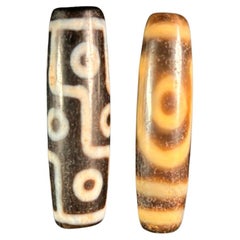
Tibet Vintage Amulet Pendant Eye Dzi Beads
Located in South Burlington, VT
A unique and valuable and powerful Protection Amulet Dzi from Tibet
An old Tibetan or Central Asian eye agates Dzi Beads dating to the early 20th century. ...
Category
20th Century Chinese Qing Antiquities
Materials
Agate
$400 Sale Price / set
20% Off
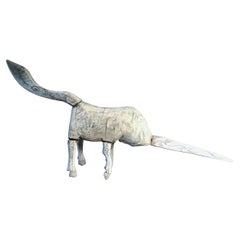
Chinese Ancient Hand Carved Unicorn
Located in South Burlington, VT
A Chinese hand carved and hand painted wooden effigy of an extraordinary unicorn dating to the Song dynasty before 1279 AD.
Please enjoy the beautiful remnants of its aged original ...
Category
Antique 15th Century and Earlier Chinese Antiquities
Materials
Wood
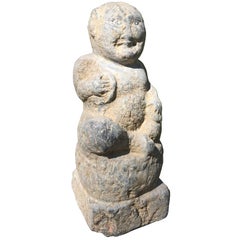
China Ancient Stone Entertainer, Han Dynasty 200 AD
Located in South Burlington, VT
China an ancient limestone figure of an Entertainer replete with hands holding tambourines and a top a drum, -for the afterlife- , Han dynasty 206 BC...
Category
Antique 15th Century and Earlier Chinese Han Sculptures and Carvings
Materials
Limestone
$12,000 Sale Price
20% Off
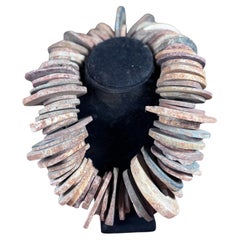
Chinese Cache Ancient Heavenly Green Jade Bi , 94 pieces
Located in South Burlington, VT
This is a guaranteed authentic ancient Chinese jade bi cache of ninety four (94) discs from the Qijia culture, Northwestern China, circa 3000-2000 BCE.
Including Our Certificate of ...
Category
Antique 15th Century and Earlier Chinese Antiquities
Materials
Jade
$1,600 Sale Price
20% Off
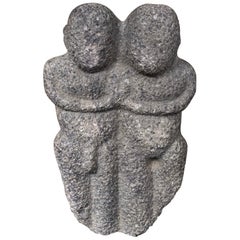
Chinese Ancient Hongshan Culture Pregnant Female Fertility Sculpture 4700-2900BC
Located in South Burlington, VT
China, a fine archaic conjoined bust sculpture of a male and female hand carved from a granular medium to dark gray stone. Neolithic period, Hongshan culture (circa 4700-2900 BC)
Likely a fertility - progeny sculpture. Please note the pecked surfaces and the stone carved hair line particularly on the back head area.
Quality: Fine original condition, no repairs, as collected. Dark varied patina from appropriate age.
This is likely a unique carving.
Dimensions: 12.25 inches tall and 4.25 inches width.
About Hongshan Culture:
The Hongshan culture was a Neolithic culture in northeastern China. Hongshan sites have been found in an area stretching from Inner Mongolia to Liaoning, and dated from about 4700-2900 BC. The culture is named after Hongshanhou, a site in Hongshan District, Chifeng. The Hongshanhou site was discovered by the Japanese archaeologist Torii Ryuzo in 1908 and extensively excavated in 1935 by Kosaku Hamada and Mizuno Seiichi.
Provenance:
Our private collection and accompanied by our Lifetime Guarantee of Authenticity. Originally collected in the area of Chifeng City, Inner Mongolia.
In addition, our Hongshan stone effigy...
Category
Antique 15th Century and Earlier Chinese Antiquities
Materials
Stone
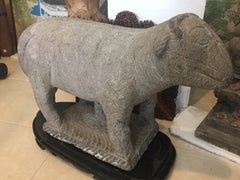
Ancient China Monumental Stone Ram Han Dynasty, 206BC-220AD
Located in South Burlington, VT
China, a large votive model of a stone ram, Han dynasty (206BC-220AD)
Dimensions: 45cm, 18 inches high and 65cm, 26 inches length and 25cm, 10 inches wi...
Category
Antique 15th Century and Earlier Chinese Han Sculptures and Carvings
Materials
Limestone
$17,600 Sale Price
54% Off
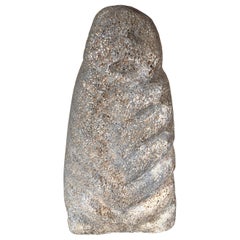
Chinese Ancient Hongshan Culture Stone Sculpture, 4700-2900 BC
Located in South Burlington, VT
China, a fine archaic human effigy hand-carved from a granular medium to dark gray volcanic stone with six (6) "V" sections carved front. Neolithic period, Hongshan culture...
Category
Antique 15th Century and Earlier Chinese Antiquities
Materials
Stone
$6,800 Sale Price
54% Off
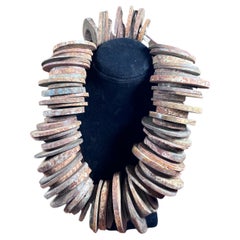
Chinese Cache Ancient Heavenly Green Jade Bi , 96 pieces
Located in South Burlington, VT
This is a guaranteed authentic ancient Chinese jade bi cache of ninety six (96) discs from the Qijia culture, Northwestern China, circa 3000-2000 BCE.
Including Our Certificate of A...
Category
Antique 15th Century and Earlier Chinese Antiquities
Materials
Jade
$1,520 Sale Price
20% Off
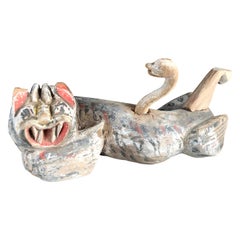
Chinese Ancient Hand Carved Wood Lion Guardian
Located in South Burlington, VT
A Chinese hand carved and hand painted wooden effigy of a fantastic Bixie dating to before Song dynasty 1279 AD.
Please enjoy the beautiful remnants of its aged original swirling painted surfaces. It has been traditionally carved and assembled in three sections. The tail may be a later replacement.
Period: Song dynasty
Dimensions: 6 inches high and 15 inches wide
About Bixie
The “bixie” is a mythological creature commonly thought to be able to ward off evil forces with its magical powers. In fact, its name means “to ward off evil” in Chinese. In the Han dynasty, “bixie” were commonly represented as winged, four-legged beasts, a form that was probably transmitted from Western Asia.
Provenance:
This is from a private collection and were acquired by us along with a larger wooden horse...
Category
Antique 15th Century and Earlier Chinese Antiquities
Materials
Wood
$1,200 Sale Price
50% Off
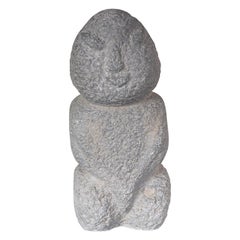
Chinese Stone Fertility Sculpture, 4700-2900 BC
Located in South Burlington, VT
China, a fine archaic male effigy hand carved from a granular medium to dark gray stone. Neolithic period, Hongshan culture (circa 4700-2900 BC)
Likely a fertility fetish. Note the pecked surfaces and the stone carved hair line top knot.
Quality: Fine original condition, no repairs, as collected. Dark varied patina from appropriate age.
Dimensions: 13.5 inches tall and 6 inches width.
About Hongshan Culture:
The Hongshan culture was a Neolithic culture in northeastern China. Hongshan sites have been found in an area stretching from Inner Mongolia to Liaoning, and dated from about 4700-2900 BC. The culture is named after Hongshanhou, a site in Hongshan District, Chifeng. The Hongshanhou site was discovered by the Japanese archaeologist Torii Ryuzo in 1908 and extensively excavated in 1935 by Kosaku Hamada and Mizuno Seiichi.
Provenance:
Our private collection and accompanied by our Lifetime Guarantee of Authenticity. Originally collected in the area of Chifeng City, Inner Mongolia.
In addition, our Hongshan stone effigy...
Category
Antique 15th Century and Earlier Chinese Antiquities
Materials
Stone
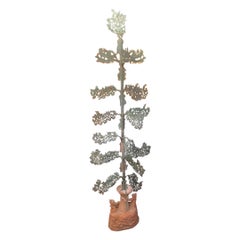
Important Chinese Ancient Bronze Money Tree, 25BC-220AD
Located in South Burlington, VT
China, Ancient Bronze “Money Tree” Yaoqian Shu with original pottery base, Han dynasty (25 BCE – 220 CE)
Dimensions: 155cm, 62 inches high
A sculpted terracotta pottery base in the form of a tortoise with attendants and inserted with five individual bronze pole segments with twenty four individual hanging bronze open work money “branches” attached in tiers, four per tier and topped with a figure of a bronze phoenix as apex most bearing varying degrees of malachite and azurite encrustation from ancient burial.
Important Description Details:
Pottery "tortoise" base: 14.5" high and 11" wide
Bronze sections:
7pcs pole bronze sections approximately 8" length each
1pc top "phoenix" bronze section approximately 7" high and 6" wide
20 pcs long bronze hanging wings approximately 10" long and 5" wide each
4 pcs short bronze hanging wings (near top) approximately 7" long and 4" wide each
Total 32 pcs with ancient green and blue azurite patina.
Catalog reference: Schneible Fine arts catalog - 35 Years Collecting Treasures- Number 11p. 28 (see photos)
Provenance: Provenance: Private family collection formerly exhibited “Asia Week” New York City, Fuller Building, Zabriskie Gallery, 2008.
History of money trees:
In the late Han Dynasty tombs...
Category
Antique 15th Century and Earlier Chinese Han Antiquities
Materials
Bronze
$100,000 Sale Price
33% Off
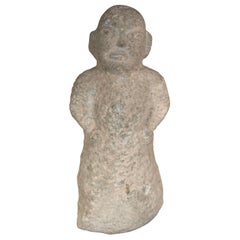
Chinese Ancient Stone Male Figure, 206 BC-220 AD
Located in South Burlington, VT
China, a rare hand carved stone male figure from the Han dynasty (206 BCE-220 CE).
Dimensions: 16 inches tall on its custom stand and and 6 inches wide
Condition: old patina wi...
Category
Antique 15th Century and Earlier Chinese Han Sculptures and Carvings
Materials
Stone
$2,800 Sale Price
27% Off
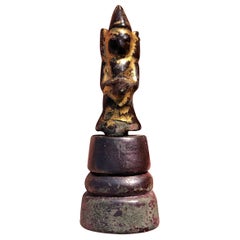
Miniature Gilt Buddha
Located in South Burlington, VT
Charming sculpture in miniature and with gilding
An antique fun loving handmade and hand caste gilt bronze seated Buddha, 18th-19th century.
These are handcrafted in quality ha...
Category
Antique 19th Century Burmese Sculptures and Carvings
Materials
Bronze
$80 Sale Price
58% Off
Related Items
Set of Refine Ming Dynasty Green Glazed Attendants and a Sedan Chair
Located in Greenwich, CT
A set of very refined green glazed attendants and one sedan chair, each with benevolent facial expression, beautiful colors and lines, Ming dynasty 1368-1644. Three glazed attendants...
Category
Antique 15th Century and Earlier Chinese Ming Sculptures and Carvings
Materials
Pottery
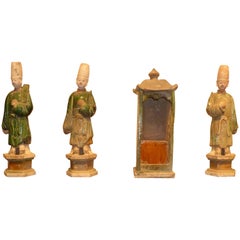
$3,500 Sale Price / set
27% Off
H 16 in W 5 in D 4 in
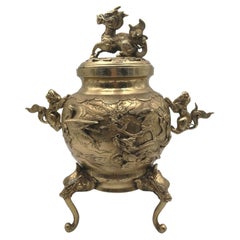
Japanese bronze Koro
Located in Beuzevillette, FR
Impressive handmade large and powerfully cast Japanese tripod bronze censer of the 19th century, made during the Meiji period and with mythical animals...
Category
Antique 19th Century Japanese Antiquities
Materials
Brass
Ancient Buddhist Stone Tabletop Altar with a Lotus Flower
Located in Antwerp, BE
An exceptional and very early Buddhist stone altar equipped with two handgrips for moving it to the spot of the planned sacrifice. Carved by hand from a si...
Category
Antique 15th Century and Earlier Asian Hellenistic Antiquities
Materials
Schist
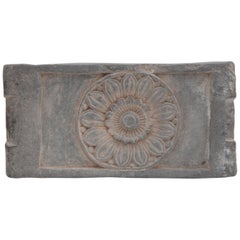
$7,211 Sale Price
20% Off
H 8.67 in W 18.12 in D 2.37 in
China 618-907 AD Tang Dynasty Pair Of Polychromate Earth Spirits Zhenmushou
Located in Miami, FL
Pair of Earths Spirits "Zhenmushou" from the China Tang Dynasty 618-907 AD.
A beautiful and rare pair of "Earths Spirits guardians" from the Yunnan province region in the ancient China. This was created in clay earthenware pottery during the Tang Dynasty period between 618 and 907 AD. Featuring the molded figures of two seated guardians with decorations with polychrome pigmentations. The figures are seated on their haunches with cloven hooves planted firmly on the base looking forward with their front legs in a straight position. Both with face and body alert expressions on a rectangular base.
Earth spirits usually appear in pairs, one with a human head and the other with a lion head. Their supernatural powers, indicated by antlers, spiky flanges and flames, enable them to confront evil spirits and protect any precincts within their gaze. Have been believed to protect the living by keeping the spirits of the dead from inappropriately roaming the world outside the tomb.
Zhenmushou or guardian deities, developed from a line of protective spirits found normally in pairs at the front of Tang dynasty tombs. They served both to protect the figure from untoward spirits, and the outside world from the roving spirit of the dead. Combining features from a number of animals to form the perfect mythic beast, these mythical creatures were perceived to be the ideal guardians of the dead
The semi human faced figure has a measures of 11.25 by 4.5 by 5.75 inches (28.57 x 11.43 x 14.60 Cm).
The mythological lion animal figure has a measures of 10 by 5 by 5.8 inches (24.5 x 12.7 x 14.73 Cm).
Tang dynasty or Tang Empire, was an imperial dynasty of China that ruled from 618 to 907, with an interregnum between 690 and 705. It was preceded by the Sui dynasty and followed by the Five Dynasties and Tend Kingdoms period. Historians generally regard the Tang as a high point in Chinese civilization, and a the golden age of cosmopolitan culture. Tang territory, acquired through the military campaigns of its early rulers, rivaled that of the Han dynasty.
The Li family founded the dynasty, seizing power during the decline and collapse of the Sui Empire and inaugurating a period of progress and stability in the first half of the dynasty's rule. The dynasty was formally interrupted during 690–705 when Empress Wu Zetian seized the throne, proclaiming the Wu Zhou dynasty...
Category
Antique 15th Century and Earlier Chinese Tang Antiquities
Materials
Earthenware, Pottery
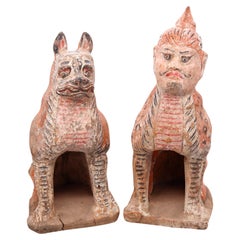
$4,025 Sale Price / set
30% Off
H 11.25 in W 5.75 in D 4.25 in
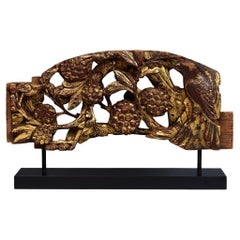
19th Century, Antique Chinese Wood Carving with Stand
Located in Sampantawong, TH
Chinese wood carving with stand
Age: China, 19th Century
Size: Height 22.5 / Width 50.8 C.M. / Thickness 5.7 C.M.
Size including stand: Height...
Category
Antique 19th Century Chinese Antiquities
Materials
Wood
$760 Sale Price
20% Off
H 12.13 in W 20.01 in D 2.25 in
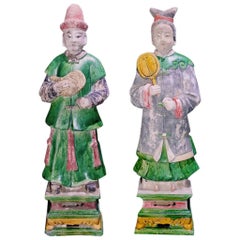
Magnificent Court Attendants in Terracotta - Ming Dynasty, China 1368-1644 AD TL
Located in San Pedro Garza Garcia, Nuevo Leon
A magnificent pair of male and female courtiers from the Ming Dynasty (1368-1644 CE) in excellent condition. They are wearing traditional Daopao robes in green and black garments wit...
Category
Antique 15th Century and Earlier Chinese Ming Antiquities
Materials
Terracotta
$21,250
H 25.4 in W 8 in D 5 in
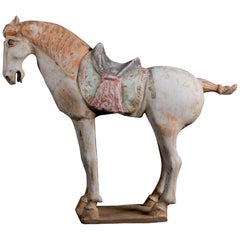
Stunning Terracotta Standing Horse, Tang Dynasty, China
618-907 AD
, TL Test
Located in San Pedro Garza Garcia, Nuevo Leon
Magnificent standing horse in orange terracotta and traces of painting. With a finely decorated saddle and with the mane and tail hair braided. TL Test by Ralph Kotalla Lab NE: 09K12...
Category
Antique 15th Century and Earlier Chinese Tang Antiquities
Materials
Terracotta
$21,875
H 18.25 in W 19.66 in D 7 in
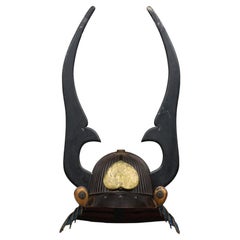
Japanese Edo-Period 62-Plate Kabuto 兜
Helmet
with Long Lacquer Wakidate
Located in Amsterdam, NL
An old and exceptional completely lacquered akoda-nari suji’bachi kabuto (helmet with raised ridges) with a bronze maedate (decorative front piece) shaped like a spade, and mounted b...
Category
Antique 18th Century Japanese Antiquities
Materials
Bronze, Copper, Iron
$11,418
H 27.96 in W 14.18 in D 12.6 in
Two Glazed Court Attendants, Ming Period (1368-1644)
Located in seoul, KR
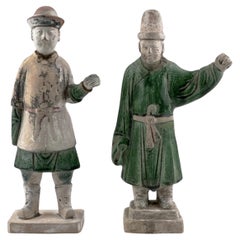
Two finely hollow-moulded terracotta statuettes from ancient China, dating to the Ming Dynasty. The figure is depicted standing, dressed in long, flowing robes, painted in vibrant blue or green and deep amber yellow. The hair is styled into an elaborate top-knot, painted in a muted brown. Areas left unpainted would have been 'cold-painted' after firing, contrasting with the vivid fired blue or green and amber pigments. The figure is shown with the left hand raised to the chest, as if holding something, possibly an offering or incense. Figurines like this were placed in tombs to guide the deceased on their journey to the afterlife.
The Ming Dynasty was known for its exceptional artistic achievements, partly due to its economic prosperity. Since the Han Dynasty, it was customary to bury terracotta miniatures of everyday objects with the deceased. These items, known as mingqi, or "spirit utensils" and "vessels for ghosts," were believed to help and assist the deceased in the afterlife. Mingqi were crafted in the form of cooking utensils, miniature replicas of houses, temples, furniture, and other items. Anthropomorphic and zoomorphic terracotta figures were also popular, designed to assist, entertain, and recreate the living world for the deceased.
Period: Ming Dynasty
Medium: Green/blue-glazed Pottery
Type: Figure
Provenance : Acquired in late 1990s from Hongkong
Reference :
1) Ancient & Oriental - Terracotta Tomb Attendants
(Type : Highly related)
2) La Maison De La Petite Sara S.r.l. - Archaeology section - A Black glazed Terracotta Statuette, Servant with Trumpet, Ming Dynasty
(Price realised : 700 GBP / Type : Highly related)
* Ming Dynasty Glazed Pottery Figures
Ming Dynasty glazed pottery figures are renowned for their bold color palette, intricate detailing, and lifelike forms, distinguishing them from earlier traditions. These figures, which depict officials, warriors, animals, and mythical creatures, are characterized by high-gloss lead-based glazes in green, amber, ochre, and sancai (three-color) combinations. The thickly applied glaze pools in recesses, creating depth and enhancing sculptural details. With dynamic postures, expressive facial features, and meticulously rendered drapery, these figures reflect the period’s advancement in ceramic craftsmanship, offering a greater sense of movement and realism compared to the rigid and stylized forms of earlier dynasties.
A defining characteristic of Ming glazed pottery is its elaborate surface detailing, often achieved through raised relief elements and contrasting glazes. Equestrian figures, for example, feature carefully sculpted saddles, harnesses, and decorative embellishments, while human figures are adorned with intricate robes and headdresses. The large scale of these tomb figures, often more imposing than those from previous periods, underscores the increasing importance of funerary art during the Ming era. Unlike later Qing Dynasty figures...
Category
Antique 15th Century and Earlier Hong Kong Ming Antiquities
Materials
Pottery

Two Figures of Attendants, Ming Period(1368-1644)
Located in seoul, KR
Statues of attendants crafted from terracotta, featuring glazes in green, Set on rectangular bases.
Period: Ming Dynasty
Medium: Glazed Pottery
Type: Figure
Condition : Excellent(It has soil on it, which is presumed to be evidence of excavation)
Provenance : Acquired in late 1990s from Hongkong
Reference :
1) Indianapolis Museum of Art - Dinastia ming, figure maschili, 1368-1644
(Type : Closely related)
2) V&A Museum - Accession number FE.295:1, 2-2005
(Type : Closely related)
3) Sotheby's 01 May 2007 - The Collection Of Paul Otto Taubert & Jewellery And Decorative Arts - Lot 233
(Price range : 5,000 - 7,000 AUD / Type : Closely related)
4) Asian Art Museum, San Francisco - Object number B60P1631 - Standing Man Tomb Figure
* Ming Dynasty Glazed Pottery Figures
Ming Dynasty glazed pottery figures are renowned for their bold color palette, intricate detailing, and lifelike forms, distinguishing them from earlier traditions. These figures, which depict officials, warriors, animals, and mythical creatures, are characterized by high-gloss lead-based glazes in green, amber, ochre, and sancai (three-color) combinations. The thickly applied glaze pools in recesses, creating depth and enhancing sculptural details. With dynamic postures, expressive facial features, and meticulously rendered drapery, these figures reflect the period’s advancement in ceramic craftsmanship, offering a greater sense of movement and realism compared to the rigid and stylized forms of earlier dynasties.
A defining characteristic of Ming glazed pottery is its elaborate surface detailing, often achieved through raised relief elements and contrasting glazes. Equestrian figures, for example, feature carefully sculpted saddles, harnesses, and decorative embellishments, while human figures are adorned with intricate robes and headdresses. The large scale of these tomb figures, often more imposing than those from previous periods, underscores the increasing importance of funerary art during the Ming era. Unlike later Qing Dynasty figures...
Category
Antique 15th Century and Earlier Hong Kong Ming Antiquities
Materials
Pottery
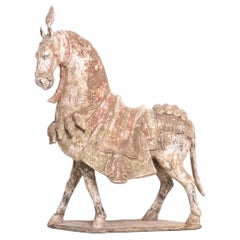
China 549-577 AD Northern Qi Dynasty Ancient Caparisoned Horse in Earthenware
Located in Miami, FL
Extremely rare Chinese pottery caparisoned horse from the Northern Qi region.
A beautiful large sculptural piece, created in China during the Northern Qi dynasty period, between the 549 and 577 AD. This horse statue is extremely finely modeled of earthenware pottery, standing in a very elegant and majestic position striding on a trapezoidal shaped base.
The animal has a gracefully arched neck to the left looking forward and its extremely well modeled. The head is adorned with a large detailed tassels of plumes and the body is embellished with a beautiful saddle and intricate harnesses. The trapping around the chest and rump is adorned with elaborated tassels and the straps are accented with multiples florets and bosses in high relief. Decorated with dotted and circles patterns.
The surface is treated with applications of natural color pigments such; red, white and others.
Has a measurements of 435 mm by 319 mm by 243 mm (17.10 x 12.55 x 9.55 Inches) (43.5 x 31.9 x 24.3 Cm).
Northern Qi, was the successor state of the Chinese Xianbei state of Eastern Wei...
Category
Antique 15th Century and Earlier Chinese Archaistic Antiquities
Materials
Earthenware, Clay, Paint
$26,495 Sale Price
30% Off
H 17.1 in W 12.55 in D 9.44 in
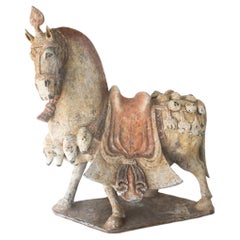
China 549-577 AD Northern Qi Dynasty Ancient Caparisoned Horse In Earthenware
Located in Miami, FL
Exceedingly rare Chinese pottery caparisoned horse from the Northern Qi region.
A beautiful sculptural piece, created in China during the Northern Qi dynasty period, between the 549 and 577 AD. This horse statue is extremely finely modeled of earthenware pottery, standing in a very elegant and majestic position striding on a trapezoidal shaped base.
The animal has a gracefully arched neck to the left and its extremely well modeled. The head is adorned with a large detailed tassels of plumes and the body is embellished with a beautiful saddle and intricate harnesses. The trapping around the chest and rump is adorned with elaborated tassels and the straps are accented with multiples florets and bosses in high relief.
The surface is treated with applications of natural pigments such; red, white and others.
Has a measurements of 394 mm by 343 mm by 257 mm (15.53 x 13.52 x 10.15 Inches) (39.4 x 34.3 x 25.7 Cm).
Northern Qi, was the successor state of the Chinese Xianbei state of Eastern Wei...
Category
Antique 15th Century and Earlier Chinese Archaistic Sculptures and Carvings
Materials
Earthenware, Pottery
$27,989 Sale Price
30% Off
H 15.53 in W 13.52 in D 10.15 in