Shapero Gallery Figurative Prints
to
6
9
8
4
Overall Width
to
Overall Height
to
3
4
7
14
6
6
7
15
11
1
7
5
5
3
3
2
2
2
2
1
1
1
1
1
1
1
1
1
1
1
15
12
11
6
6
10
27
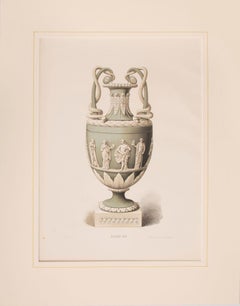
A Vase in grey-blue Jasper, with reliefs of the Muses, &c. Pl. XII
Located in London, London
RATHBONE, Frederick
A Vase in grey-blue Jasper, with reliefs of the Muses, &c. Pl. XII
Published by Bernard Quartich, London 1898
Original chromolithograph by W. Griggs from Old ...
Category
1890s Naturalistic Figurative Prints
Materials
Paper, Lithograph
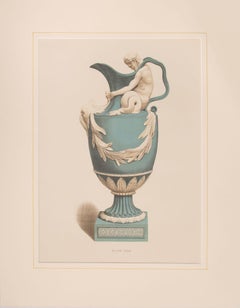
The Water Vase. Jasper.
Located in London, London
RATHBONE, Frederick
The Water Vase. Jasper.
Published by Bernard Quartich, London 1898
Original chromolithograph by W. Griggs from Old Wedgewood, the Decorative or Artistic Ceram...
Category
1890s Naturalistic More Prints
Materials
Paper, Lithograph
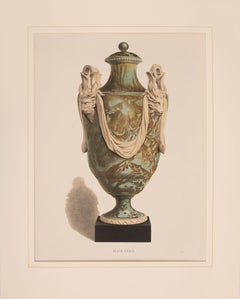
“Crystaline Agate” Vase with four handles. Pl. XXXIX
Located in London, London
RATHBONE, Frederick
“Crystaline Agate” Vase with four handles. Pl. XXXIX
Published by Bernard Quartich, London 1898
Original chromolithograph by W. Griggs from Old Wedgewood, the...
Category
1880s Naturalistic Figurative Prints
Materials
Paper, Lithograph
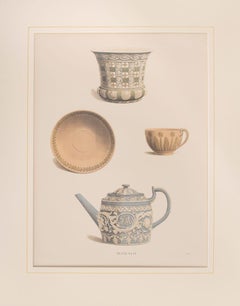
A Cup and Saucer, Flower Pot, Teapot. Jasper. Pl. XLIV
Located in London, London
RATHBONE, Frederick
A Cup and Saucer, Flower Pot, Teapot. Jasper. Pl. XLIV
Published by Bernard Quartich, London 1898
Original chromolithograph by W. Griggs from Old Wedgewood, t...
Category
1890s Naturalistic More Prints
Materials
Paper, Lithograph
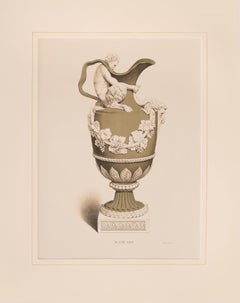
The Wine Vase. Jasper. Pl. XXVI
Located in London, London
RATHBONE, Frederick
The Wine Vase. Jasper. Pl. XXVI
Published by Bernard Quartich, London 1898
Original chromolithograph by W. Griggs from Old Wedgewood, the Decorative or Artist...
Category
1890s Naturalistic Figurative Prints
Materials
Paper, Lithograph
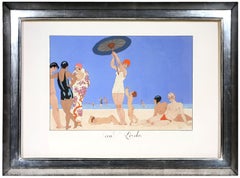
Le Bonheur du Jour - Group of six Art Deco lithographs.
By George Barbier
Located in London, London
BARBIER, George
Le Bonheur du Jour ou les Graces à la Mode, texte et dessins par George Barbier.
Chez Meyniel, Paris, 1924.
Group of six lithographs, hand-...
Category
1820s Art Deco More Prints
Materials
Paper, Lithograph
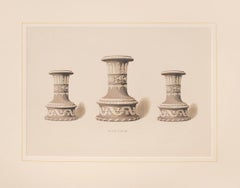
Three Vases in Grey-Blue Jasper. Pl. XXXVIII
Located in London, London
RATHBONE, Frederick
Three Vases in Grey-Blue Jasper. Pl. XXXVIII
Published by Bernard Quartich, London 1898
Original chromolithograph by W. Griggs from Old Wedgewood, the Decorat...
Category
1890s Naturalistic Still-life Prints
Materials
Paper, Lithograph
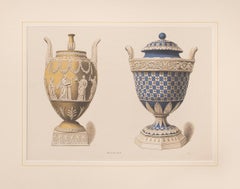
Wedgewood Vases, Green and Tri-colour Jaspar. Pl. XLV
Located in London, London
RATHBONE, Frederick
Wedgewood Vases, Green and Tri-colour Jaspar. Pl. XLV
Published by Bernard Quartich, London 1898
Original chromolithograph by W. Griggs from Old Wedgewood, th...
Category
1890s Naturalistic More Prints
Materials
Paper, Lithograph
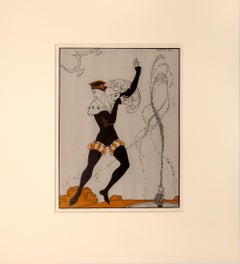
Vaslav Nijinsky as Siegfried in Swan Lake.
By George Barbier
Located in London, London
BARBIER, George.
Vaslav Nijinsky as Siegfried in Swan Lake.
London, C. W. Beaumont, 1913.
‘The designs, although somewhat fantastic in treatment, do convey the impression produced...
Category
1910s Art Nouveau Figurative Prints
Materials
Lithograph
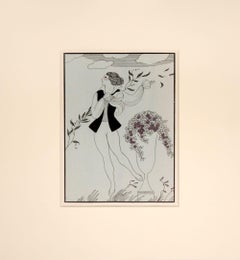
Nijinsky as
the poet
in Les Sylphides.
By George Barbier
Located in London, London
BARBIER, George.
Nijinsky as 'the poet' in Les Sylphides.
London, C. W. Beaumont, 1913.
‘The designs, although somewhat fantastic in treatment, do convey the impression produced b...
Category
1910s Art Nouveau Figurative Prints
Materials
Lithograph
Nijinsky in Cleopatre.
By George Barbier
Located in London, London
BARBIER, George.
Nijinsky in Cleopatre.
London, C. W. Beaumont, 1913.
‘The designs, although somewhat fantastic in treatment, do convey the impression produced by Nijinsky in hi...
Category
1910s Art Nouveau Figurative Prints
Materials
Lithograph
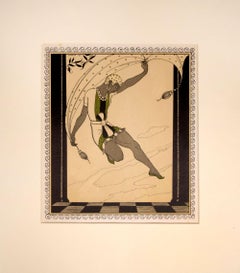
Nijinsky in Scheherazade.
By George Barbier
Located in London, London
BARBIER, George.
Nijinsky in Scheherazade.
London, C. W. Beaumont, 1913.
‘The designs, although somewhat fantastic in treatment, do convey the impression produced by Nijinsky in h...
Category
1910s Art Nouveau Figurative Prints
Materials
Lithograph
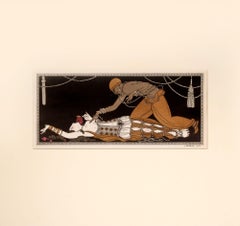
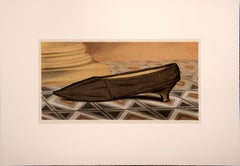
Lady Mary Mordaunt
s black silk shoe.
Located in London, London
GREIG, T. Watson.
Lady Mary Mordaunt's black silk shoe.
Edinburgh, David Douglas, 1885-1889.
Plate from Ladies’ Old-Fashioned Shoes by Greig, T. Watson. An important illustrated m...
Category
1880s Naturalistic Figurative Prints
Materials
Color
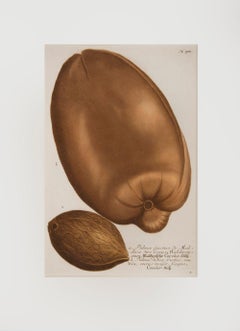
Coconut/Palm Nut
By Johann Wilhelm Weinmann
Located in London, London
WEINMANN, Johann Wilhelm.
Coconut/Palm Nut
Hieronymous Lenzius, Regensburg, [1735]-1737-1745.
attractive plates, being one of the earliest examples of colour printing.
Johann Wei...
Category
Early 18th Century Naturalistic Figurative Prints
Materials
Laid Paper, Mezzotint
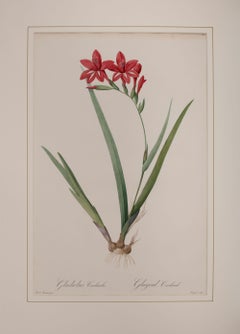
Gladiolus Cardinalis
By Pierre-Joseph Redouté
Located in London, London
REDOUTÉ, Pierre-Joseph.
Gladiolus Cardinalis
Paris, Chez L’Auteur, 1802-16
The highest peak of Redoute's artistic and botanical achievement... Among the most important monuments...
Category
19th Century Naturalistic Figurative Prints
Materials
Handmade Paper, Engraving
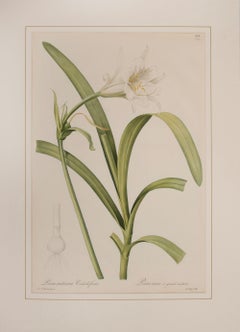
Pancratium Calathiforme
By Pierre-Joseph Redouté
Located in London, London
REDOUTÉ, Pierre-Joseph.
Pancratium Calathiforme
Paris, Chez L’Auteur, 1802-16
The highest peak of Redoute's artistic and botanical achievement... Among the most important monume...
Category
19th Century Naturalistic Figurative Prints
Materials
Handmade Paper, Engraving
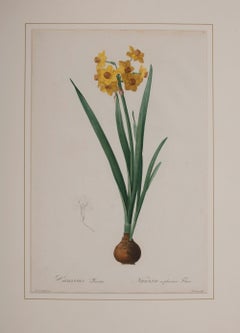
Narcissus
By Pierre-Joseph Redouté
Located in London, London
REDOUTE, Pierre-Joseph.
Narcissus
Paris, Chez L’Auteur, 1802-16
The highest peak of Redoute's artistic and botanical achievement... Among the most important monuments of botanic...
Category
19th Century Naturalistic Figurative Prints
Materials
Handmade Paper, Engraving

$3,275
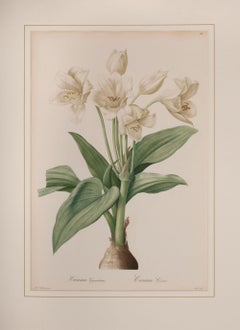
Crinium Giganteum
By Pierre-Joseph Redouté
Located in London, London
REDOUTÉ, Pierre-Joseph.
Crinium Giganteum
Paris, Chez L’Auteur, 1802-16
The highest peak of Redoute's artistic and botanical achievement... Among the most important monuments of...
Category
Early 19th Century Naturalistic Figurative Prints
Materials
Handmade Paper, Engraving
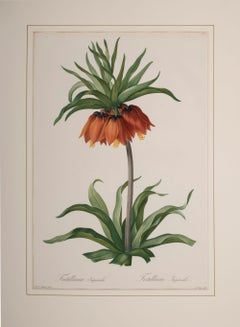
Fritillaria Imperialis
By Pierre-Joseph Redouté
Located in London, London
REDOUTÉ, Pierre-Joseph.
Fritillaria Imperialis
Paris, Chez L’Auteur, 1802-16
The highest peak of Redoute's artistic and botanical achievement... Among the most important monument...
Category
Early 19th Century Naturalistic Figurative Prints
Materials
Handmade Paper, Engraving
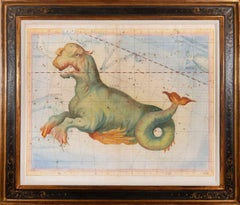
18th-century celestial - Cetus
Located in London, London
18th-century celestial
FLAMSTEED, John.
Cetus
London, C. Nourse, 1753.
A fine star chart from the Atlas Coelestis, the largest and most accurate star atlas published up to that ti...
Category
1750s Naturalistic Figurative Prints
Materials
Watercolor, Engraving
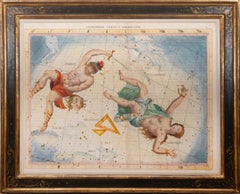
18th-century celestial - Andromeda Perseus Triangulum
Located in London, London
18th-century celestial
FLAMSTEED, John.
Andromeda Perseus Triangulum
London, C. Nourse, 1753.
A fine star chart from the Atlas Coelestis, the largest and most accurate star atlas ...
Category
1750s Naturalistic Figurative Prints
Materials
Watercolor, Engraving
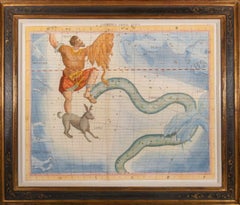
18th-century celestial - Eridanus Orion Lepus
Located in London, London
18th-century celestial
FLAMSTEED, John.
Eridanus Orion Lepus
London, C. Nourse, 1753.
A fine star chart from the Atlas Coelestis, the largest and most accurate star atlas publish...
Category
1750s Naturalistic Figurative Prints
Materials
Watercolor, Engraving
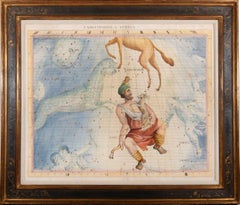
18th-century celestial - Camelopardal
Auriga
Located in London, London
18th-century celestial
FLAMSTEED, John.
Camelopardal & Auriga
London, C. Nourse, 1753.
Hand coloured star chart heightened with gold and silver, engraved by John Mynde, from the s...
Category
1750s Naturalistic Figurative Prints
Materials
Watercolor, Engraving
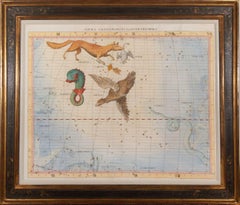
18th-century celestial - Aquila Sagitta.Vulpecula
Anser Delphinus
Located in London, London
18th-century celestial
FLAMSTEED, John.
Aquila Sagitta.Vulpecula & Anser Delphinus
London, C. Nourse, 1753.
Hand coloured star chart heightened with gold and silver, engraved by ...
Category
Mid-18th Century Naturalistic Figurative Prints
Materials
Watercolor, Gouache
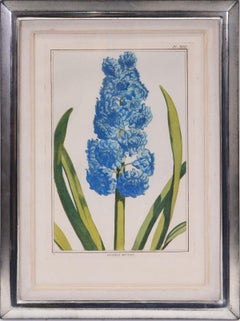
A Group of Six Hyacinths
Located in London, London
BUCHOZ, Pierre Joseph
A Group of Six Hyacinths. Collection coloriée des plus belles variétés de Jacinthes, qu'on monte aux Curieux dans les Jardins des Fleuristes d’Harlem.
Paris, T...
Category
1780s Naturalistic Figurative Prints
Materials
Paper, Watercolor, Gouache, Engraving
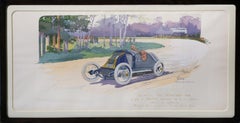
La Voiture Th. Schneider, Car - 1912
Located in London, London
GAMY and MONTAUT, Ernest.
La Voiture Th. Schneider, 1912 gagne à Dieppe Dinant et à la Sarthe vitesse et régularité / Magneto Bosch Corburateur Claudel Roues Riley.
Mabileau & Co., ...
Category
1910s Art Deco Figurative Prints
Materials
Screen, Stencil
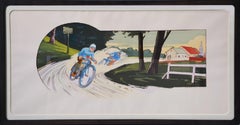
Cycles Motos Alcyon.
Located in London, London
GAMY and MONTAUT, Ernest.
Cycles Motos Alcyon.
[Paris: Mabileau & Co., c. 1914].
Hand-coloured pochoir print. Framed and glazed, overall size: 93.6cm x 49.2cm.
The Gamy-Montaut ...
Category
1910s Art Deco Figurative Prints
Materials
Screen, Stencil
Related Items
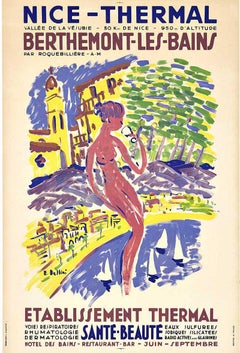
Original Nice-Themal spa Berthemont - Les -Bains antique French vintage poster
By Emmanuel Bellini
Located in Spokane, WA
Original French travel poster: Nice - Thermal health spa original vintage poster created by artist Emmanuel Bellini.
Original linen backed, large French travel size: Nice - Therm...
Category
1950s Impressionist Figurative Prints
Materials
Lithograph
$796 Sale Price
20% Off
H 47 in W 32 in D 0.07 in
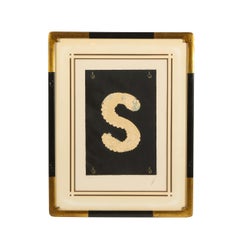
Letter "S" from Alphabet Suite (Signed Erté)
By Erté
Located in New York, NY
From the celebrated Alphabet Suite, this stunning Art Deco lithograph/serigraph was designed by the Russian-born French artist and designer known by the pseudonym Erté, and produced ...
Category
1970s Art Deco Figurative Prints
Materials
Lithograph
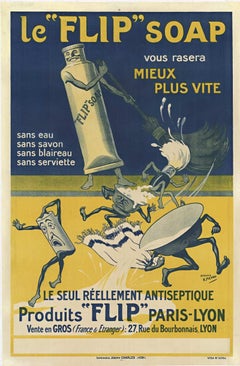
Le "FLIP" Soap original vintage French antique poster
Located in Spokane, WA
Original French vintage poster.
le "Flip" Soap.
This fun image shows the tube of 'Flip" pushing away the shaving bowl, towel, and shaving brush. I...
Category
1920s Art Deco Figurative Prints
Materials
Lithograph
$1,279 Sale Price
20% Off
H 47.5 in W 31.5 in D 0.12 in
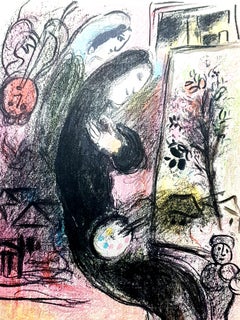
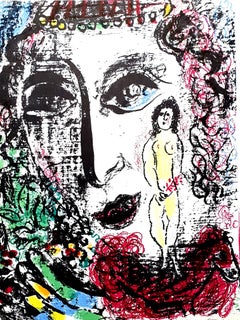
Marc Chagall - Inspiration - Original Lithograph from "Chagall Lithographe" v. 2
By Marc Chagall
Located in Collonge Bellerive, Geneve, CH
Marc Chagall
Original Lithograph from Chagall Lithographe 1957-1962. VOLUME II.
1963
Dimensions: 32 x 24 cm
From the unsigned edition of 10000 copies without margins
Reference: Mourlot 398
Condition : Excellent
Marc Chagall (born in 1887)
Marc Chagall was born in Belarus in 1887 and developed an early interest in art. After studying painting, in 1907 he left Russia for Paris, where he lived in an artist colony on the city’s outskirts. Fusing his own personal, dreamlike imagery with hints of the fauvism and cubism popular in France at the time, Chagall created his most lasting work—including I and the Village (1911)—some of which would be featured in the Salon des Indépendants exhibitions. After returning to Vitebsk for a visit in 1914, the outbreak of WWI trapped Chagall in Russia. He returned to France in 1923 but was forced to flee the country and Nazi persecution during WWII. Finding asylum in the U.S., Chagall became involved in set and costume design before returning to France in 1948. In his later years, he experimented with new art forms and was commissioned to produce numerous large-scale works. Chagall died in St.-Paul-de-Vence in 1985.
The Village
Marc Chagall was born in a small Hassidic community on the outskirts of Vitebsk, Belarus, on July 7, 1887. His father was a fishmonger, and his mother ran a small sundries shop in the village. As a child, Chagall attended the Jewish elementary school, where he studied Hebrew and the Bible, before later attending the Russian public school. He began to learn the fundamentals of drawing during this time, but perhaps more importantly, he absorbed the world around him, storing away the imagery and themes that would feature largely in most of his later work.
At age 19 Chagall enrolled at a private, all-Jewish art school and began his formal education in painting, studying briefly with portrait artist Yehuda Pen. However, he left the school after several months, moving to St. Petersburg in 1907 to study at the Imperial Society for the Protection of Fine Arts. The following year, he enrolled at the Svanseva School, studying with set designer Léon Bakst, whose work had been featured in Sergei Diaghilev's Ballets Russes. This early experience would prove important to Chagall’s later career as well.
Despite this formal instruction, and the widespread popularity of realism in Russia at the time, Chagall was already establishing his own personal style, which featured a more dreamlike unreality and the people, places and imagery that were close to his heart. Some examples from this period are his Window Vitebsk (1908) and My Fianceé with Black Gloves (1909), which pictured Bella Rosenfeld, to whom he had recently become engaged.
The Beehive
Despite his romance with Bella, in 1911 an allowance from Russian parliament member and art patron Maxim Binaver enabled Chagall to move to Paris, France. After settling briefly in the Montparnasse neighborhood, Chagall moved further afield to an artist colony known as La Ruche (“The Beehive”), where he began to work side by side with abstract painters such as Amedeo Modigliani and Fernand Léger as well as the avant-garde poet Guillaume Apollinaire. At their urging, and under the influence of the wildly popular fauvism and cubism, Chagall lightened his palette and pushed his style ever further from reality. I and the Village (1911) and Homage to Apollinaire (1912) are among his early Parisian works, widely considered to be his most successful and representative period.
Though his work stood stylistically apart from his cubist contemporaries, from 1912 to 1914 Chagall exhibited several paintings at the annual Salon des Indépendants exhibition, where works by the likes of Juan Gris, Marcel Duchamp and Robert Delaunay were causing a stir in the Paris art world. Chagall’s popularity began to spread beyond La Ruche, and in May 1914 he traveled to Berlin to help organize his first solo exhibition, at Der Sturm Gallery. Chagall remained in the city until the highly acclaimed show opened that June. He then returned to Vitebsk, unaware of the fateful events to come.
War, Peace and Revolution
In August 1914 the outbreak of World War I precluded Chagall’s plans to return to Paris. The conflict did little to stem the flow of his creative output, however, instead merely giving him direct access to the childhood scenes so essential to his work, as seen in paintings such as Jew in Green (1914) and Over Vitebsk (1914). His paintings from this period also occasionally featured images of the war’s impact on the region, as with Wounded Soldier (1914) and Marching (1915). But despite the hardships of life during wartime, this would also prove to be a joyful period for Chagall. In July 1915 he married Bella, and she gave birth to a daughter, Ida, the following year. Their appearance in works such as Birthday (1915), Bella and Ida by the Window (1917) and several of his “Lovers” paintings give a glimpse of the island of domestic bliss that was Chagall’s amidst the chaos.
To avoid military service and stay with his new family, Chagall took a position as a clerk in the Ministry of War Economy in St. Petersburg. While there he began work on his autobiography and also immersed himself in the local art scene, befriending novelist Boris Pasternak, among others. He also exhibited his work in the city and soon gained considerable recognition. That notoriety would prove important in the aftermath of the 1917 Russian Revolution when he was appointed as the Commissar of Fine Arts in Vitebsk. In his new post, Chagall undertook various projects in the region, including the 1919 founding of the Academy of the Arts. Despite these endeavors, differences among his colleagues eventually disillusioned Chagall. In 1920 he relinquished his position and moved his family to Moscow, the post-revolution capital of Russia.
In Moscow, Chagall was soon commissioned to create sets and costumes for various productions at the Moscow State Yiddish Theater...
Category
1960s Surrealist Figurative Prints
Materials
Lithograph
$1,479
H 9.45 in W 12.6 in D 0.04 in
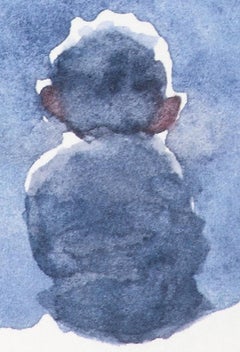
Starry Night - Limited Edition, Figurative, Contemporary, Star, Night, Child
By Charlie Mackesy
Located in Knowle Lane, Cranleigh
Starry Night is a lithograph based on a watercolour by Charlie Mackesy. The edition is limited to 150 and each piece has been signed by Charlie Mackesy...
Category
2010s Other Art Style Figurative Prints
Materials
Lithograph
$3,412
H 11.82 in W 7.88 in D 0.4 in
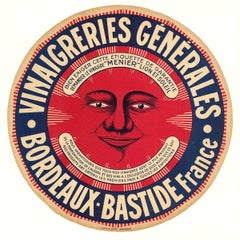
Original Vinaigreries Generals Bordeaux Bastide vintage vinegar poster, round
Located in Spokane, WA
Original vintage poster: VINAIGRERIES GENERALS BORDEAUX BASTIDE, FRANCE. A more unique vintage poster that is round. The poster features a sun in the middle in deep red, with th...
Category
Mid-20th Century Art Deco Figurative Prints
Materials
Lithograph
$385
H 15 in W 15 in D 0.05 in
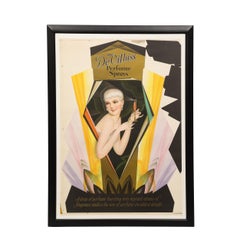
DeVilbiss Purfume Art Deco Poster by George Petty for the A.C. Schultz Company
Located in New York, NY
This beautiful Art Deco poster was realized by the esteemed American Artist George Petty for the A.C. Schultz Company in 1926. The work is an advertisement for DeVilbiss Perfume, which depicts a "Petty Girl" (as they came to be known) in the center of the composition floating in a pentagonal black color block. With short cropped silvery white hair and red lipstick, the female figure in center (suggestive of a stylized flapper) squeezes the atomizer of her perfume bottle misting herself in fragrance. Skyscraper style geometric forms suggesting elaborately faceted gemstones- in hues of rose, lavender, orange sapphire and yellow diamond- explode around her, suggesting the stage design for the set of the iconic film "Metropolis". The top of the composition features a bronze color block reading "DeVilbiss Perfume sprays" and in scrolling Deco lettering text reads “A drop of perfume bursting into myriad atoms of fragrance makes the use of perfume an added delight” near the bottom of the piece. Additionally, there is a solid black color block with crystalline black forms emanating outwards at the base of the composition, as well as a geometric abstract form on the right side of the piece imbuing it with a distinctly modernist inflection. With its quintessentially Art Deco sensibility, this piece is sure to delight discerning collectors of the period as well as those with a distinct appreciation for unusual (and stunning) fine art pieces. its vibrant palate and clean modernist lines make this piece a winning addition to any style of interior from classic Deco to contemporary. The piece comes presented in a custom gallery frame and is in excellent vintage condition.
George Petty was an American illustrator known for his series of pin-ups known as "Petty Girls" which he created for Esquire magazine. The Petty Girl were coquettish women whose legs were elongated to create idealized female forms. They were featured on magazine centerfolds, billboards, and calendars for companies such as Ridgid Tools. Born George Brown Petty IV on April 27, 1894 in Abbeville, LA, Petty received his formal training at the School of the Art Institute of Chicago under Ruth Van Sickle Ford...
Category
1920s Art Deco Figurative Prints
Materials
Lithograph
$2,975
H 42 in W 29 in D 1 in
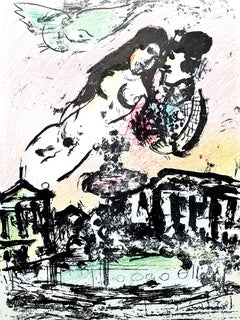
Marc Chagall - Original Lithograph
By Marc Chagall
Located in Collonge Bellerive, Geneve, CH
Marc Chagall
Original Lithograph
1963
Dimensions: 32 x 24 cm
Reference: Chagall Lithographe 1957-1962. VOLUME II.
Condition : Excellent
Marc Chagall (born in 1887)
Marc Chagall was born in Belarus in 1887 and developed an early interest in art. After studying painting, in 1907 he left Russia for Paris, where he lived in an artist colony on the city’s outskirts. Fusing his own personal, dreamlike imagery with hints of the fauvism and cubism popular in France at the time, Chagall created his most lasting work—including I and the Village (1911)—some of which would be featured in the Salon des Indépendants exhibitions. After returning to Vitebsk for a visit in 1914, the outbreak of WWI trapped Chagall in Russia. He returned to France in 1923 but was forced to flee the country and Nazi persecution during WWII. Finding asylum in the U.S., Chagall became involved in set and costume design before returning to France in 1948. In his later years, he experimented with new art forms and was commissioned to produce numerous large-scale works. Chagall died in St.-Paul-de-Vence in 1985.
The Village
Marc Chagall was born in a small Hassidic community on the outskirts of Vitebsk, Belarus, on July 7, 1887. His father was a fishmonger, and his mother ran a small sundries shop in the village. As a child, Chagall attended the Jewish elementary school, where he studied Hebrew and the Bible, before later attending the Russian public school. He began to learn the fundamentals of drawing during this time, but perhaps more importantly, he absorbed the world around him, storing away the imagery and themes that would feature largely in most of his later work.
At age 19 Chagall enrolled at a private, all-Jewish art school and began his formal education in painting, studying briefly with portrait artist Yehuda Pen. However, he left the school after several months, moving to St. Petersburg in 1907 to study at the Imperial Society for the Protection of Fine Arts. The following year, he enrolled at the Svanseva School, studying with set designer Léon Bakst, whose work had been featured in Sergei Diaghilev's Ballets Russes. This early experience would prove important to Chagall’s later career as well.
Despite this formal instruction, and the widespread popularity of realism in Russia at the time, Chagall was already establishing his own personal style, which featured a more dreamlike unreality and the people, places and imagery that were close to his heart. Some examples from this period are his Window Vitebsk (1908) and My Fianceé with Black Gloves (1909), which pictured Bella Rosenfeld, to whom he had recently become engaged.
The Beehive
Despite his romance with Bella, in 1911 an allowance from Russian parliament member and art patron Maxim Binaver enabled Chagall to move to Paris, France. After settling briefly in the Montparnasse neighborhood, Chagall moved further afield to an artist colony known as La Ruche (“The Beehive”), where he began to work side by side with abstract painters such as Amedeo Modigliani and Fernand Léger as well as the avant-garde poet Guillaume Apollinaire. At their urging, and under the influence of the wildly popular fauvism and cubism, Chagall lightened his palette and pushed his style ever further from reality. I and the Village (1911) and Homage to Apollinaire (1912) are among his early Parisian works, widely considered to be his most successful and representative period.
Though his work stood stylistically apart from his cubist contemporaries, from 1912 to 1914 Chagall exhibited several paintings at the annual Salon des Indépendants exhibition, where works by the likes of Juan Gris, Marcel Duchamp and Robert Delaunay were causing a stir in the Paris art world. Chagall’s popularity began to spread beyond La Ruche, and in May 1914 he traveled to Berlin to help organize his first solo exhibition, at Der Sturm Gallery. Chagall remained in the city until the highly acclaimed show opened that June. He then returned to Vitebsk, unaware of the fateful events to come.
War, Peace and Revolution
In August 1914 the outbreak of World War I precluded Chagall’s plans to return to Paris. The conflict did little to stem the flow of his creative output, however, instead merely giving him direct access to the childhood scenes so essential to his work, as seen in paintings such as Jew in Green (1914) and Over Vitebsk (1914). His paintings from this period also occasionally featured images of the war’s impact on the region, as with Wounded Soldier (1914) and Marching (1915). But despite the hardships of life during wartime, this would also prove to be a joyful period for Chagall. In July 1915 he married Bella, and she gave birth to a daughter, Ida, the following year. Their appearance in works such as Birthday (1915), Bella and Ida by the Window (1917) and several of his “Lovers” paintings give a glimpse of the island of domestic bliss that was Chagall’s amidst the chaos.
To avoid military service and stay with his new family, Chagall took a position as a clerk in the Ministry of War Economy in St. Petersburg. While there he began work on his autobiography and also immersed himself in the local art scene, befriending novelist Boris Pasternak, among others. He also exhibited his work in the city and soon gained considerable recognition. That notoriety would prove important in the aftermath of the 1917 Russian Revolution when he was appointed as the Commissar of Fine Arts in Vitebsk. In his new post, Chagall undertook various projects in the region, including the 1919 founding of the Academy of the Arts. Despite these endeavors, differences among his colleagues eventually disillusioned Chagall. In 1920 he relinquished his position and moved his family to Moscow, the post-revolution capital of Russia.
In Moscow, Chagall was soon commissioned to create sets and costumes for various productions at the Moscow State Yiddish Theater...
Category
1960s Surrealist Figurative Prints
Materials
Lithograph
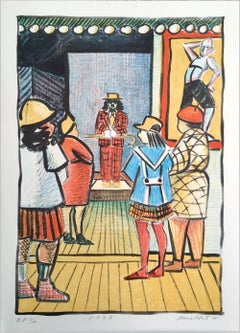
C F S I, Signed Lithograph, Coney Island, Comic Character Figures
By Marie Roberts
Located in Union City, NJ
C F S I is an original hand drawn lithograph by the New York woman artist Marie Roberts printed using hand lithography techniques on archival Arches paper 100% acid free. C F S I portrays a Coney Island Sideshow Performance with several onlookers standing by the stage watching the show. C F S I is a skillfully expressed comic character figure drawing printed in black ink shaded with colored crayon line textures in shades of red, yellow and blue. C F S I is a very fine impression exemplifying the magic and artistic mastery of hand crafted lithography with its nuanced tusche brush strokes and pencil crayon line textures and shading.
Print size - 29.5 x 21.25 in, unframed, excellent condition, hand signed in pencil by Marie Roberts
Image size - 26.25 x 18.25 in
Year published - 1995
Edition size - 25
Marie Roberts, a Coney Island native is best known for her banners for the Coney Island Circus Sideshow...
Category
1990s Contemporary Figurative Prints
Materials
Lithograph
$600 Sale Price
31% Off
H 29.5 in W 21.25 in
Marc Chagall - Original Lithograph
By Marc Chagall
Located in Collonge Bellerive, Geneve, CH
Marc Chagall
Original Lithograph
1963
Dimensions: 32 x 24 cm
Reference: Chagall Lithographe 1957-1962. VOLUME II.
Condition : Excellent
Marc Chagall (born in 1887)
Marc Chagall was born in Belarus in 1887 and developed an early interest in art. After studying painting, in 1907 he left Russia for Paris, where he lived in an artist colony on the city’s outskirts. Fusing his own personal, dreamlike imagery with hints of the fauvism and cubism popular in France at the time, Chagall created his most lasting work—including I and the Village (1911)—some of which would be featured in the Salon des Indépendants exhibitions. After returning to Vitebsk for a visit in 1914, the outbreak of WWI trapped Chagall in Russia. He returned to France in 1923 but was forced to flee the country and Nazi persecution during WWII. Finding asylum in the U.S., Chagall became involved in set and costume design before returning to France in 1948. In his later years, he experimented with new art forms and was commissioned to produce numerous large-scale works. Chagall died in St.-Paul-de-Vence in 1985.
The Village
Marc Chagall was born in a small Hassidic community on the outskirts of Vitebsk, Belarus, on July 7, 1887. His father was a fishmonger, and his mother ran a small sundries shop in the village. As a child, Chagall attended the Jewish elementary school, where he studied Hebrew and the Bible, before later attending the Russian public school. He began to learn the fundamentals of drawing during this time, but perhaps more importantly, he absorbed the world around him, storing away the imagery and themes that would feature largely in most of his later work.
At age 19 Chagall enrolled at a private, all-Jewish art school and began his formal education in painting, studying briefly with portrait artist Yehuda Pen. However, he left the school after several months, moving to St. Petersburg in 1907 to study at the Imperial Society for the Protection of Fine Arts. The following year, he enrolled at the Svanseva School, studying with set designer Léon Bakst, whose work had been featured in Sergei Diaghilev's Ballets Russes. This early experience would prove important to Chagall’s later career as well.
Despite this formal instruction, and the widespread popularity of realism in Russia at the time, Chagall was already establishing his own personal style, which featured a more dreamlike unreality and the people, places and imagery that were close to his heart. Some examples from this period are his Window Vitebsk (1908) and My Fianceé with Black Gloves (1909), which pictured Bella Rosenfeld, to whom he had recently become engaged.
The Beehive
Despite his romance with Bella, in 1911 an allowance from Russian parliament member and art patron Maxim Binaver enabled Chagall to move to Paris, France. After settling briefly in the Montparnasse neighborhood, Chagall moved further afield to an artist colony known as La Ruche (“The Beehive”), where he began to work side by side with abstract painters such as Amedeo Modigliani and Fernand Léger as well as the avant-garde poet Guillaume Apollinaire. At their urging, and under the influence of the wildly popular fauvism and cubism, Chagall lightened his palette and pushed his style ever further from reality. I and the Village (1911) and Homage to Apollinaire (1912) are among his early Parisian works, widely considered to be his most successful and representative period.
Though his work stood stylistically apart from his cubist contemporaries, from 1912 to 1914 Chagall exhibited several paintings at the annual Salon des Indépendants exhibition, where works by the likes of Juan Gris, Marcel Duchamp and Robert Delaunay were causing a stir in the Paris art world. Chagall’s popularity began to spread beyond La Ruche, and in May 1914 he traveled to Berlin to help organize his first solo exhibition, at Der Sturm Gallery. Chagall remained in the city until the highly acclaimed show opened that June. He then returned to Vitebsk, unaware of the fateful events to come.
War, Peace and Revolution
In August 1914 the outbreak of World War I precluded Chagall’s plans to return to Paris. The conflict did little to stem the flow of his creative output, however, instead merely giving him direct access to the childhood scenes so essential to his work, as seen in paintings such as Jew in Green (1914) and Over Vitebsk (1914). His paintings from this period also occasionally featured images of the war’s impact on the region, as with Wounded Soldier (1914) and Marching (1915). But despite the hardships of life during wartime, this would also prove to be a joyful period for Chagall. In July 1915 he married Bella, and she gave birth to a daughter, Ida, the following year. Their appearance in works such as Birthday (1915), Bella and Ida by the Window (1917) and several of his “Lovers” paintings give a glimpse of the island of domestic bliss that was Chagall’s amidst the chaos.
To avoid military service and stay with his new family, Chagall took a position as a clerk in the Ministry of War Economy in St. Petersburg. While there he began work on his autobiography and also immersed himself in the local art scene, befriending novelist Boris Pasternak, among others. He also exhibited his work in the city and soon gained considerable recognition. That notoriety would prove important in the aftermath of the 1917 Russian Revolution when he was appointed as the Commissar of Fine Arts in Vitebsk. In his new post, Chagall undertook various projects in the region, including the 1919 founding of the Academy of the Arts. Despite these endeavors, differences among his colleagues eventually disillusioned Chagall. In 1920 he relinquished his position and moved his family to Moscow, the post-revolution capital of Russia.
In Moscow, Chagall was soon commissioned to create sets and costumes for various productions at the Moscow State Yiddish Theater...
Category
1960s Surrealist Figurative Prints
Materials
Lithograph
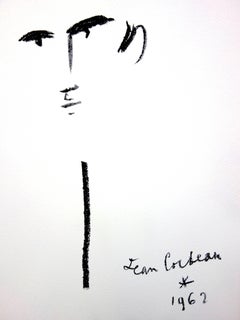
Jean Cocteau - Portrait - Original Lithograph
By Jean Cocteau
Located in Collonge Bellerive, Geneve, CH
Original Lithograph by Jean Cocteau
Title: Taureaux
Signed in the plate
Dimensions: 40 x 30 cm
Edition: 200
Luxury print edition from the portfolio of Trinckvel
1965
Jean Cocteau
W...
Category
1960s Modern More Prints
Materials
Lithograph
$1,420
H 15.75 in W 11.82 in D 0.04 in
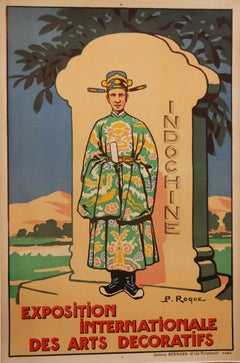
P. ROQUE, poster for the International Exhibition of Decorative Arts
Located in Paris, FR
- Lithographic poster for the International Exhibition of Decorative Arts, 1925.
- Printed by Edmond Bernard, Paris.
Dimensions
H : 121,2 cm L : 80,4 cm/H: 47.72 in W: 31.65 in
Category
1920s Art Deco Figurative Prints
Materials
Lithograph
$5,917
H 47.72 in W 31.66 in