Solomon Treasure Sculptures
to
4
2
4
5
3
3
Overall Width
to
Overall Height
to
1
15
1
14
12
9
9
8
4
4
2
1
1
1
1
1
1
1
1
1
1
1
1
10
9
6
5
3
1
1
1
1
17
A Monumental Patinated Bronze Bust of George Washington, after William Rush (181
Located in Queens, NY
A Monumental Patinated Bronze Bust of George Washington, after William Rush (1817)
This commanding bronze bust of George Washington is modeled after the celebrated 1817 portrait by ...
Category
19th Century Figurative Sculptures
Materials
Bronze

A Monumental Patinated Bronze Bust of Jesus Christ by Clesinger and Barbedienne
By Ferdinand Barbedienne
Located in Queens, NY
A Monumental and Truly Exceptional French Patinated Bronze Bust of Jesus Christ, Circa 1858, Signed J. Clesinger, Rome 1858
F. Barbedienne Fondeur
This monumental and extraord...
Category
19th Century Figurative Sculptures
Materials
Bronze

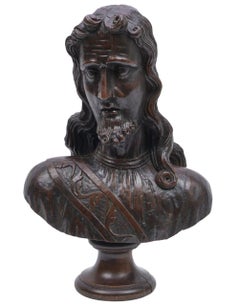
A Monumental 16th Century Renaissance Carved Oak Bust of Jesus Christ
Located in Queens, NY
Magnificent and Monumental 16th Century Renaissance Carved Oak Bust of Christ, Flemish Netherlandish, C. 1550
A powerful and deeply expressive Renaissance carved oak bust of Jesus C...
Category
16th Century Figurative Sculptures
Materials
Oak
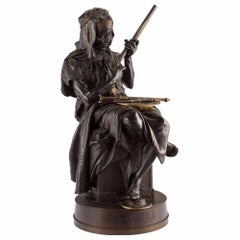
Emile-Edmond Peynot "Albaya
El Tunsi" The Tunisian Merchant Bronze, 1883
Located in Queens, NY
Émile-Edmond Peynot, (French, 1850 -1932)
An exceptional, exquisite and rare orientalist bronze sculpture titled Albaya' El Tunsi / The Tunisian Merchant / The Arab rifleman.
Dep...
Category
19th Century Figurative Sculptures
Materials
Bronze
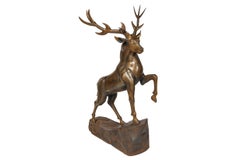
An Exceptional Life-Size Middle Eastern Gold-Inlaid Steel Deer Sculpture
Located in Queens, NY
An Exceptional Life-Size Middle Eastern Gold-Inlaid Steel Deer Sculpture
This extraordinary life-size Middle Eastern deer sculpture exemplifies the pinnacle of artistic craftsmanshi...
Category
20th Century Figurative Sculptures
Materials
Steel
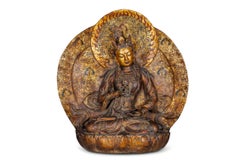
A Monumental Gilt-Lacquered Bronze Ornamental Sculpture of Vajravidarana
Located in Queens, NY
A Monumental Gilt-Lacquered Bronze Ornamental Buddha Sculpture of Vajravidarana:
A Masterpiece of Sino-Tibetan Craftsmanship, Late 19th Century, Qing Dynasty
This monumental gilt-lacquered bronze ornamental sculpture of Vajravidarana is an extraordinary and commanding piece of art, showcasing the pinnacle of Sino-Tibetan craftsmanship from the late 19th century. The figure of Vajravidarana, a powerful purification deity in Tibetan Buddhism, is meticulously sculpted to embody both spiritual authority and artistic excellence.
Vajravidarana is primarily known for his role in removing spiritual impurities and negativities. Unlike other deities associated with wisdom or compassion, Vajravidarana’s function is centered on purification and healing. He is typically depicted holding a vajra and a bell, symbolizing the cutting away of delusions and the resonance of divine truth. In this striking sculpture, Vajravidarana is shown holding a vishva vajra (the double vajra), a unique and powerful variation of the traditional iconography, which signifies ultimate protection and the dispelling of negative karma.
Vajravidarana: The Supreme Purifier and Protector
Vajravidarana is revered in Tibetan Buddhism as the deity of spiritual purification, called upon to cleanse practitioners of defilements and negative influences. His vajra represents the indestructibility of truth, while his bell signifies the wisdom that resonates through purification rituals. In this sculpture, the presence of the vishva vajra, or double vajra, enhances his association with supreme protection, ensuring the destruction of all spiritual obstacles and afflictions.
The figure’s powerful yet composed expression conveys a sense of unwavering resolve and divine authority. His posture, along with the carefully sculpted details of his robes and ornaments, highlights his function as a guardian against impurity. The inclusion of the vishva vajra rather than the usual single vajra reinforces his role as a supreme protector, capable of dispelling all forms of negativity and restoring balance.
Symbolism of the Mantras and Aureole:
Unlike deities that embody wisdom through duality, Vajravidarana’s iconography is centered on purification and exorcism. The aureole surrounding him is inscribed with sacred purification mantras rather than depictions of a consort. These mantras emphasize his function as a remover of obstacles and impurities, reinforcing his role in Buddhist healing rituals.
The presence of the sacred inscriptions elevates the sculpture’s spiritual significance, making it a focal point for meditation and ritual purification. Practitioners often visualize Vajravidarana radiating purifying light, dissolving afflictions and negative karma. This theme is mirrored in the sculptural repetition of the purification symbols on the aureole, reinforcing the deity’s role as a divine cleanser.
Gilt-Lacquered Bronze: The Artistry of Sino-Tibetan Metalwork:
The craftsmanship of this monumental figure reflects the expertise of late 19th-century Sino-Tibetan metalwork, where traditional Tibetan themes were infused with Chinese artistic sensibilities. Cast in bronze and finished with a rich gilt lacquer, the statue has an otherworldly glow, giving it an ethereal, almost divine presence. The gilding process—applied with exceptional skill—gives the sculpture a striking luminosity that enhances the fine details of the facial features, flowing robes, jewelry, and other elements of the deity’s attire.
The technique employed to create this figure speaks to the high level of craftsmanship that flourished during the late Qing Dynasty and early modern Tibetan art. The ornate details of the robes and the fine texture of the sculpture highlight the exceptional skill of the artisans who brought this work to life. The use of gold and lacquer not only reflects the preciousness of the sculpture but also its spiritual significance as an object meant to inspire reverence and meditation.
An Ornamental Sculpture of Monumental Scale:
Unlike smaller devotional objects, this sculpture is designed as an ornamental masterpiece, intended to make a grand visual and spiritual statement. Its monumental size allows it to dominate any space, offering a commanding presence that is both physically and symbolically impressive. In Buddhist practice, large sculptures of this nature are often placed in temples or meditation halls, where their imposing size and serene presence would encourage contemplation and devotion.
The grand scale of the statue further amplifies the spiritual power it is meant to convey. As a representation of Vajravidarana, it is not only a physical object of beauty but also a conduit for meditation, purification, and enlightenment. The scale of the sculpture also emphasizes the divine stature of the deity, highlighting his importance in the Buddhist tradition as the ultimate force for spiritual cleansing and protection.
Provenance:
Acquired in China in circa 1900
1905 Private Buddhist Temple, Northeast, USA
Private Sale
Solomon Treasure...
Category
19th Century Figurative Sculptures
Materials
Bronze
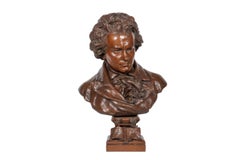
A Monumental, Richly Patinated Bronze Bust of Beethoven by G. Leroux
By Gaston Leroux
Located in Queens, NY
A Monumental, Richly Patinated Bronze Bust of Beethoven by Gaston Veuvenot Leroux (1854-1942) Eugène Blot, Fondeur
This magnificent sculpture powerfully captures the iconic composer...
Category
19th Century Figurative Sculptures
Materials
Bronze

$16,250 Sale Price
35% Off
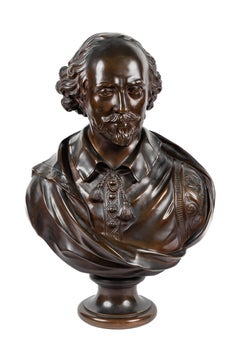
A Monumental French Patinated Bronze Bust of William Shakespeare, after Houdon
By F. Barbedienne Foundry
Located in Queens, NY
A Monumental French Patinated Bronze Bust of William Shakespeare, after Houdon, by F. Barbedienne Foundry, circa 1870.
Masterfully and realistically sculpted in solid bronze, this b...
Category
19th Century Figurative Sculptures
Materials
Bronze
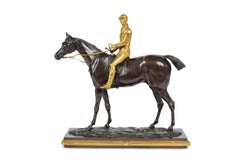
A Rare Gilt and Patinated Bronze Jockey on A Horse, circa 1875
By Isidore Jules Bonheur
Located in Queens, NY
Isidore-Jules Bonheur (French, 1827–1901)
A Rare Gilt and Patinated Bronze Jockey on A Horse, circa 1875.
Introducing a truly exceptional and highly so...
Category
19th Century Figurative Sculptures
Materials
Bronze
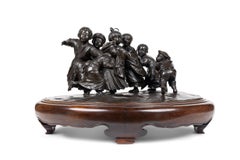
A Large and Exceptional Japanese Meiji Period Tokyo School Bronze Sculpture
Located in Queens, NY
Presenting an extraordinary Large and Exceptional Japanese Meiji Period Tokyo School Bronze Sculpture depicting a delightful ensemble of six energe...
Category
19th Century Figurative Sculptures
Materials
Bronze
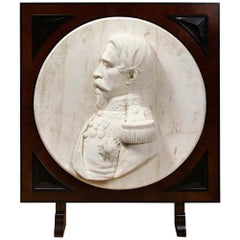
Museum Quality French White Marble Roundel Relief of Emperor Napoleon III, 1860
Located in Queens, NY
A Museum Quality French White Marble Roundel Relief of Emperor Napoleon III, circa 1860.
The quality of this marble sculpture of Napoleon III is trul...
Category
19th Century Figurative Sculptures
Materials
Marble
$35,000 Sale Price
30% Off
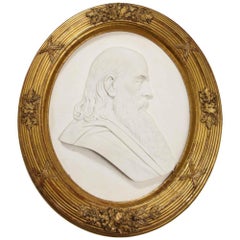
Margaret Foley (American, 1827-1877) Marble Bust "Head of Prophet Zephaniah"
Located in Queens, NY
Margaret Foley (American, 1827-1877) Marble Bust "Head of Prophet Zephaniah"
A rare and important marble bust head relief portrait on The Prophet Ze...
Category
19th Century Figurative Sculptures
Materials
Marble
$26,000 Sale Price
60% Off
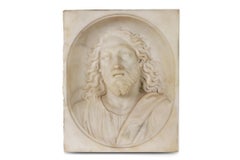
Rare and Important Italian White Marble Bust Sculpture of Jesus Christ, C. 1850
Located in Queens, NY
Rare and Important Italian White Marble Bust Sculpture of Jesus Christ, C. 1850
A truly exceptionally carved marble relief of Holy Jesus Christ. Ver...
Category
19th Century Renaissance Figurative Sculptures
Materials
Marble
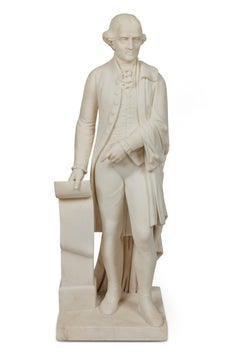
A Rare and Important American Marble Sculpture of Thomas Jefferson, Circa 1870
Located in Queens, NY
A Rare and Important American White Marble Sculpture of Thomas Jefferson Holding The Declaration of Independence. Circa 1870, in the Manner of Horatio Stone (1808 –1875).
Inscribed on scroll: 'The Declaration of Independence, It becomes necessary for one people to dissolve the political bands which have connected them with another. etc. etc. T. Jefferson.
The present work is unsigned but is reminiscent of Horatio Stone's life-size marble figure of John Hancock...
Category
19th Century Figurative Sculptures
Materials
Marble
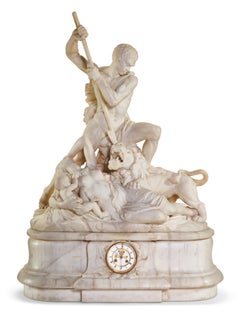
An Exceptional White Marble Figural Sculpture Clock, "A Nubian Slaying The Lion"
Located in Queens, NY
An Exceptional and Monumental White Marble Figural Sculpture Clock, "A Nubian Slaying The Lion" by Jean-Joseph Jacquet (Belgian, 1822–1898), circa 1860
This extremely impressive whi...
Category
19th Century Figurative Sculptures
Materials
Marble
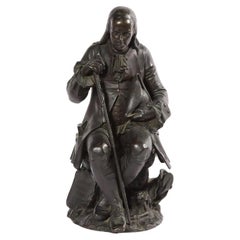
Rare Patinated Bronze Sculpture of Benjamin Franklin, by A. Carrier-Belleuse
By Albert-Ernest Carrier-Belleuse
Located in Queens, NY
Albert-Ernest Carrier-Belleuse (France, 1824-1887)
A rare seated bronze statue of Benjamin Franklin holding his walking stick and hat, with a book in his ri...
Category
19th Century Academic Figurative Sculptures
Materials
Bronze
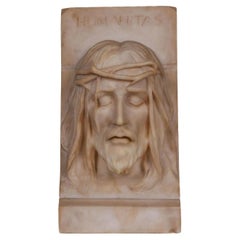
Rare and Important Italian Alabaster Bust Sculpture of Jesus Christ, C. 1860
Located in Queens, NY
A rare and important Italian alabaster bust sculpture of Jesus Christ, C. 1860
A modeled bust of Holy Christ wearing a crown of thorns, exceptional...
Category
19th Century Baroque Figurative Sculptures
Materials
Alabaster
Related Items
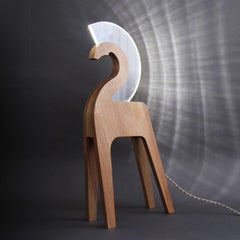
"GORBUNOK" Sculptural Lamp by 25" x 13" inch Grigorii Gorkovenko
By Grigorii Gorkovenko
Located in Culver City, CA
"GORBUNOK" Sculptural Lamp by 25" x 13" inch Grigorii Gorkovenko
A desk lamp which is made of genuine wood and filled with special energy and handmade work by the “GV design” master...
Category
21st Century and Contemporary Contemporary Figurative Sculptures
Materials
Plastic, Wood
"Felicity" Bronze Sculpture 15" x 16" x 9.5" inch by Sarkis Tossonian
By Sarkis Tossonian
Located in Culver City, CA
"Felicity" Bronze Sculpture 15" x 16" x 9.5" inch by Sarkis Tossonian
Sarkis Tossoonian was born in Alexandria in 1953. He graduated from the Faculty of Fine Arts/Sculpture in 1979....
Category
21st Century and Contemporary Contemporary Abstract Sculptures
Materials
Bronze
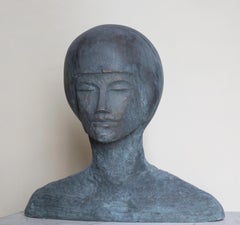
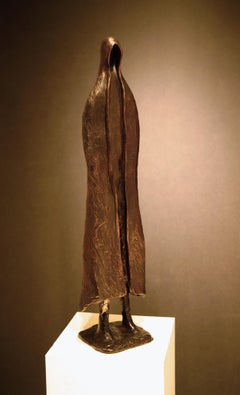
$6,300
H 5.91 in W 6.3 in D 3.75 in
Bronze Sculpture “Understander”
By Frank Arnold
Located in Fresno, CA
Frank Arnold is thought by many to be one of the foremost abstract figurative painters and sculptors of our time. He is a living master whose work is considered to be both personal a...
Category
2010s Abstract Abstract Sculptures
Materials
Bronze
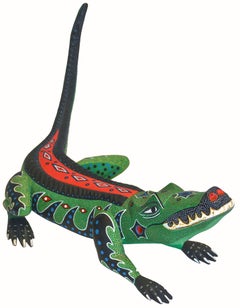
Vintage Alligator by Oaxacan Master Carver Gerardo Ramirez Morales
By Gerardo Ramirez Morales
Located in Los Angeles, CA
Alligator
1989
Gerardo Ramirez Morales
San Antonio Arrazola, Oaxaca, Mexico
Copal wood, acrylic paint
Signed
22.25 inches L. x 6.50 inches H. (at tail) x 8 inches W.
This amazing al...
Category
Late 20th Century Folk Art Figurative Sculptures
Materials
Wood, Acrylic
$1,500
H 6.5 in W 8 in D 22.25 in
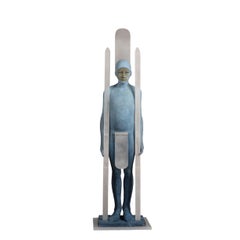
Snow - Hooded Bronze Figure with Skis, Light Blue Patina
By Jesus Curia Perez
Located in Chicago, IL
Jesús Curiá Perez
Snow
bronze and methacrylate
29.50h x 8.75w x 7d in
74.93h x 22.23w x 17.78d cm
ed. 1/8
JCP057
Jesús Curiá's sculptures arouse something more than purely aesthetic...
Category
21st Century and Contemporary Contemporary Figurative Sculptures
Materials
Bronze, Steel
$6,850
H 29.5 in W 8.75 in D 7 in
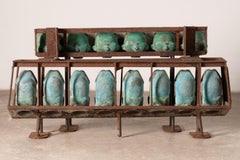
Set of Six Bronze Doll Head and set of Eight Bronze Doll Torso Molds
Located in Dallas, TX
Set of six doll head molds and set of eight bronze doll torsos constructed o f bronze. The molds were used in the manufacturing process in the 1920s for making plastic dolls, are mou...
Category
1920s Figurative Sculptures
Materials
Bronze, Iron
$4,800
H 12.75 in W 34 in D 5.5 in
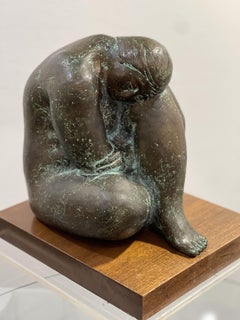
Mujer Agachada (Crouching Woman), 1972, (III/VI)
By Felipe Castañeda
Located in San Francisco, CA
Felipe Castañeda
Mujer Agachada (Crouching Woman), 1972
Bronze, wood base
12 x 9.5 x 11.5 inches
Edition III/VI
Most recent owners acquired this limited-edition bronze sculpture fro...
Category
Late 20th Century Expressionist Nude Sculptures
Materials
Bronze
$12,000 Sale Price
20% Off
H 12 in W 9.5 in D 11.5 in
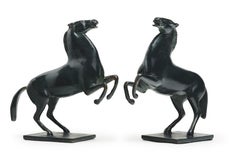
Pair of Prancing Horses, two bronzes signed and numbered by Arno Breker
Located in PARIS, FR
An official artist of the Nazi regime, trained in Montparnasse in the 1930s, Arno Breker continued to sculpt after the fall of the Third Reich, producing large-scale public commissions in Germany and portraits of prominent figures. The two small bronzes presented here, dated around 1978, are part of a long tradition of prancing horses dating back to antiquity. The asymmetrical treatment of the two front legs and the inclination of the head make these two copies of the same artwork a highly decorative pair.
1. Arno Breker, a prolific sculptor, from the Bohemia of Montparnasse to the commissions from the Third Reich ... and from the Federal Republic of Germany
The son of a stone carver, Arno Breker studied fine art and anatomy in his native Elberfeld. At the age of 20, he entered the Düsseldorf Academy of Art. He moved to Paris in 1926, where he continued his training in the studio of Maillol, who dubbed him "the German Michelangelo of the twentieth century". He shared a studio with Alexandre Calder and frequented Jean Cocteau, Foujita, Brancusi, Pablo Picasso and other artists of the bohemian Paris of the time. It was also in Paris in 1933 that he met Demetra Messala, the daughter of a Greek diplomat who posed for Maillol and Picasso, whom he married in 1937. Having won the Prussian Prix de Rome in 1932, he left Paris to stay at the Villa Massimo, the German Academy in Rome.
Returning to Germany in 1934, his style evolved towards a more marked imitation of ancient sculpture. He created two monumental statues for Berlin's Olympic Stadium, before being appointed professor at the Berlin College of Fine Arts in 1937. He came to the attention of the Reich Propaganda Ministry, which awarded him several commissions and provided him with three large studios in which Breker produced many monumental sculptures to the glory of the regime. On June 23, 1940, Breker accompanied Adolf Hitler during a visit to Paris. During the Occupation, his political connections enabled him to intervene on behalf of many artists pursued by the Nazis: for example, he protected Pablo Picasso (then a Communist) from Kommandantur officers.
Most of Arno Breker's work was destroyed in Berlin at the end of the war in 1945 by bombing and intentional destruction perpetrated by soldiers of the victorious powers. After the fall of the Nazi regime, however, Arno Breker was never prosecuted. He opened a new studio in Düsseldorf, where he sculpted until his death in 1991.
He then carried out several public commissions in Germany (Bayreuth, Wuppertal), as well as portraits of numerous personalities, including King Mohammed V of Morocco, Léopold Sedar Senghor (commissioned by the Académie Française in 1978) and the two chancellors of the Federal Republic of Germany, Konrad Adenauer and Ludwig Erhard. The Arno Breker Museum in Nörvenich is now exhibiting some of his artworks.
2. Related artworks: from the Wild Horses of the Quirinal to the Horses of Marly
The prancing horse is a major iconographic theme, found in a series of sculptures from Antiquity, the Renaissance and the Classical Age. Various photos from Arno Breker's studio in Berlin confirm the predominant place of equine representations in his work (alongside male nude statues), and confirm that this reduced version created in 1978 is part of the artist's preferred repertoire.
Prancing horses are generally associated with a male figure in a group that, through a reference drawn from Antiquity, symbolizes man's domination over nature. In this respect, it is very interesting to compare our small bronzes with the horse forming part of a large sculpture by Arno Breker (made in 1936 and probably destroyed in 1945) depicting Alexander taming Bucephalus.
This statue is itself directly inspired by one of the best-known works of 18th-century French sculpture...
Category
1970s Art Deco Figurative Sculptures
Materials
Bronze
$3,362
H 4.88 in W 4.75 in D 2 in
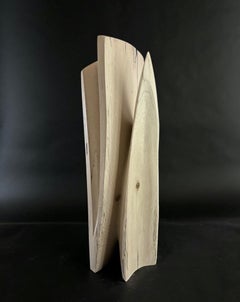
Joel Urruty - Free form #2, Sculpture 2024
By Joel Urruty
Located in Stamford, CT
Medium: oak
As an artist I strive to create elegant sculptures that capture the true essence of the subject matter. Form, line and surface are used as the visual language. The figur...
Category
2010s Contemporary Abstract Sculptures
Materials
Steel
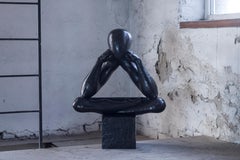
"The Man Without a Rod №3" Bronze Sculpture 26x20x9in Ed. 3/8 by Sergii Shaulis
By Sergii Shaulis
Located in Culver City, CA
"The Man Without a Rod №3" Bronze Sculpture 26x20x9in Ed. 3/8 by Sergii Shaulis
Limited Edition 3/8
From "The man without a rod" series
Approximate weight 77 lbs.
The artist spent almost ten years of his life in the making of this eight-piece series. It is an introspective representation of what he calls absolute hopelessness. “It's about the emptiness of the soul, but it's also about starting anew; when you feel nothing but finding the power inside of you to stand up and move.”
ABOUT ARTIST
Born on 27 May 1985 in Kharkiv, Ukraine. From 2005 to 2011 studied at the Kharkiv State Academy of Design and Arts, at the Faculty of "Fine Arts" specialty "Easel and monumental sculpture." Now studying postgraduate at Kharkiv State Academy of Design and Arts. Works are in private collections in Ukraine, Israel, Germany, USA, Australia, Finland, Holland, Spain, Belgium, England.
Education
2002‑2005 Faculty of Engineering and Physics (NTU KhPI)
2005‑2011 Easel and monumental sculpture (KSADA)
2012-2016 postgraduate education (KSADA)
Exhibitions
2007-15 City exhibition HONSKHU. Kharkiv.
2007-14 Ukrainian Exhibition KONSKHU. Kyiv.
2008-11 "The maestro and his students", KSADA. Kharkiv (Audience Award 2009)
2008 11 International Triennial of sculpture. Kyiv .
2009 “Male portrait”, gallery KSADA. Kharkiv .
2009 "You get SMS ", Kharkiv ( Grand Prix "The best sculpture project ").
2009 “Gogol-fest”, Museum Arsenal. Kyiv.
2016 "Corpus", Come in gallery, Kharkiv.
2016 KSADA "Loft", Kharkiv.
2017 “Art seasons”, M17. Kyiv.
2017 Gallery "Semiradskiy", Kharkiv.
2017 "Mundi contraria", M17. Kyiv.
2018 "More than sculpture", ArtUkraineGallery. Kyiv.
2018 “Auguste Rodin. "Premonition of the future...
Category
21st Century and Contemporary Abstract Abstract Sculptures
Materials
Bronze
$12,000
H 26 in W 20 in D 9 in
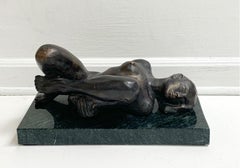
Woman - XXI century Contemporary figurative bronze sculpture, Classical, Realism
By Ryszard Piotrowski
Located in Warsaw, PL
RYSZARD PIOTROWSKI (born in 1952) Sculptor. He graduated from the Academy of Fine Arts in Warsaw. His works include intimate, small forms in marble, bronze and silver. He specializes...
Category
21st Century and Contemporary Contemporary Figurative Sculptures
Materials
Marble, Bronze
$4,443
H 6.11 in W 12.21 in D 6.7 in
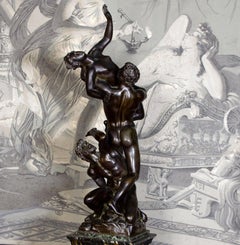
The Rape of Sabine Iconic Bronze Sculpture 1930
Located in Rome, IT
Fine Group of Sculptures in Bronze after Jean de Boulogne (Giambologna)
The torturously twisting Rape of the Sabine Women is one of the finest and most technically difficult sculpt...
Category
1920s Mannerist Figurative Sculptures
Materials
Bronze
$6,725 Sale Price
30% Off
H 35.44 in W 8.27 in D 8.27 in