Solomon Treasure Asian Art and Furniture
to
5
25
25
2
15
8
5
1
1
1
1
16
11
6
6
5
23
20
13
7
3
25
25
25
2
1
1
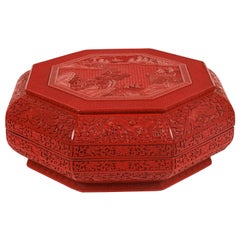
Rare Palace Size Chinese Carved Cinnabar Lacquer Figural Box and Cover, Qing
Located in Queens, NY
A rare palace size Chinese carved cinnabar lacquer figural box and cover, Qing Dynasty
This palace size box and cover is a rare and exquisite piece of a...
Category
Antique 19th Century Chinese Lacquer
Materials
Lacquer
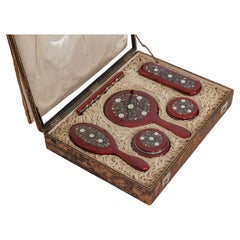
Exquisite Japanese Cloisonné Red Enamel Six-Piece Dressing Table Set, Ando Jubei
By Ando Jubei
Located in Queens, NY
Japanese Ando Jubei Cloisonné Enamel Six-Piece Dressing Table Set with Ando Marks and Original Fitted Case
A rare Japanese cloisonné enamel six-piece dressing table set by Ando Jube...
Category
Early 20th Century Japanese Meiji Metalwork
Materials
Copper, Enamel
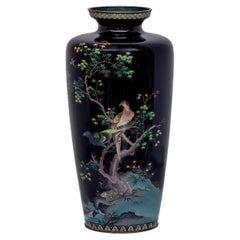
Magnificent Japanese Meiji Cloisonné Enamel Vase with Pheasants, Inaba Co.
By Inaba Cloisonne Co.
Located in Queens, NY
A Magnificent Japanese Meiji Period Silver-Wire Cloisonné Enamel Vase with Pheasants and Maple Leaves, Attributed to Inaba
An exceptional Japanese cloisonné enamel vase from the Mei...
Category
Antique 19th Century Japanese Meiji Metalwork
Materials
Copper, Enamel
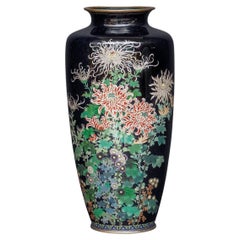
Japanese Meiji Silver-Wire Cloisonné Enamel Vase with Chrysanthemums, Inaba Co.
By Inaba Cloisonne Co.
Located in Queens, NY
A Japanese Meiji Period Silver-Wire Cloisonné Enamel Vase with Chrysanthemums on a Midnight Ground, Attributed to Inaba
A magnificent Japanese cloisonné enamel vase from the Meiji p...
Category
Antique 19th Century Japanese Meiji Metalwork
Materials
Copper, Enamel
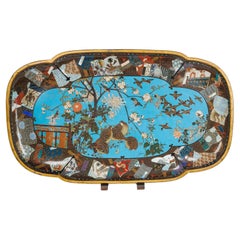
A Grand Meiji Cloisonné Enamel Tray Featuring Cherry Blossoms and Birds
Located in Queens, NY
A Grand Meiji Japanese Cloisonné Enamel Tray – Lush Cherry Blossom Garden with Sparrows, Quail, and Japanese Fountain, Circa 1890
This monumental exhibition-size Meiji period Japane...
Category
Antique 19th Century Japanese Meiji Metalwork
Materials
Enamel

$35,750 Sale Price
35% Off
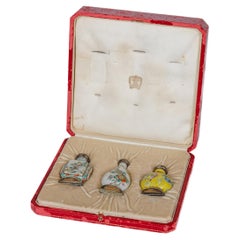
Cartier Silver-Mounted Chinese Porcelain Snuff Bottles in Original Box
By Cartier
Located in Queens, NY
An Exquisite Suite of Three French Silver-Mounted Chinese Porcelain Snuff Bottles with Coral and Sapphire Adornments by Cartier, Presented in Original Fitted Box
This exceptional su...
Category
Early 20th Century French Qing Ceramics
Materials
Coral, Silver
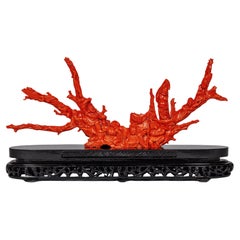
Magnificent, Large Japanese Carved Coral Figural Group, Seven Figures with Fish
Located in Queens, NY
Magnificent and Large Japanese Carved Coral Masterpiece – Seven Figures Amid a Reef with Fish and Storks
A breathtaking celebration of artistry and natural beauty, this exceptional ...
Category
Vintage 1960s Japanese Sculptures and Carvings
Materials
Coral
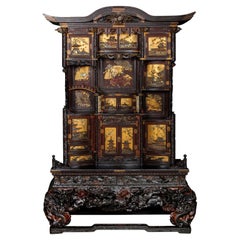
An Imperial Japanese Meiji Shibayama Tea Cabinet by The Tokugawa Samurai Clan
Located in Queens, NY
An Imperial Japanese Meiji Shibayama Tea Ceremony Cabinet by The Tokugawa Samurai Clan.
This extraordinary Meiji-period shibayama cabinet, attributed to the Tokugawa samurai clan, s...
Category
Antique 19th Century Japanese Meiji Furniture
Materials
Mother-of-Pearl, Wood, Lacquer
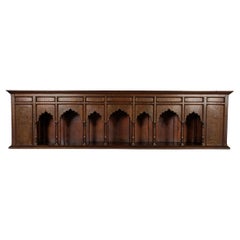
A Large Indian Architectural Gold Wire-Inlaid Wall-Hanging Cabinet Facade
Located in Queens, NY
A Large Indian Architectural Gold Wire-Inlaid Wall-Hanging Cabinet Facade Depicting a Mughal Pavilion, Circa 1850
This extraordinary wall-hanging cabinet facade is a remarkable exam...
Category
Antique Early 19th Century Indian Anglo-Indian Furniture
Materials
Wood
$46,750 Sale Price
44% Off
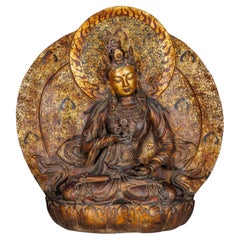
A Monumental Gilt-Lacquered Bronze Ornamental Buddha Sculpture of Vajravidarana
Located in Queens, NY
A Monumental Gilt-Lacquered Bronze Ornamental Buddha Sculpture of Vajravidarana:
A Masterpiece of Sino-Tibetan Craftsmanship, Late 19th Century, Qing Dynasty
This monumental gilt-lacquered bronze ornamental sculpture of Vajravidarana is an extraordinary and commanding piece of art, showcasing the pinnacle of Sino-Tibetan craftsmanship from the late 19th century. The figure of Vajravidarana, a powerful purification deity in Tibetan Buddhism, is meticulously sculpted to embody both spiritual authority and artistic excellence.
Vajravidarana is primarily known for his role in removing spiritual impurities and negativities. Unlike other deities associated with wisdom or compassion, Vajravidarana’s function is centered on purification and healing. He is typically depicted holding a vajra and a bell, symbolizing the cutting away of delusions and the resonance of divine truth. In this striking sculpture, Vajravidarana is shown holding a vishva vajra (the double vajra), a unique and powerful variation of the traditional iconography, which signifies ultimate protection and the dispelling of negative karma.
Vajravidarana: The Supreme Purifier and Protector
Vajravidarana is revered in Tibetan Buddhism as the deity of spiritual purification, called upon to cleanse practitioners of defilements and negative influences. His vajra represents the indestructibility of truth, while his bell signifies the wisdom that resonates through purification rituals. In this sculpture, the presence of the vishva vajra, or double vajra, enhances his association with supreme protection, ensuring the destruction of all spiritual obstacles and afflictions.
The figure’s powerful yet composed expression conveys a sense of unwavering resolve and divine authority. His posture, along with the carefully sculpted details of his robes and ornaments, highlights his function as a guardian against impurity. The inclusion of the vishva vajra rather than the usual single vajra reinforces his role as a supreme protector, capable of dispelling all forms of negativity and restoring balance.
Symbolism of the Mantras and Aureole:
Unlike deities that embody wisdom through duality, Vajravidarana’s iconography is centered on purification and exorcism. The aureole surrounding him is inscribed with sacred purification mantras rather than depictions of a consort. These mantras emphasize his function as a remover of obstacles and impurities, reinforcing his role in Buddhist healing rituals.
The presence of the sacred inscriptions elevates the sculpture’s spiritual significance, making it a focal point for meditation and ritual purification. Practitioners often visualize Vajravidarana radiating purifying light, dissolving afflictions and negative karma. This theme is mirrored in the sculptural repetition of the purification symbols on the aureole, reinforcing the deity’s role as a divine cleanser.
Gilt-Lacquered Bronze: The Artistry of Sino-Tibetan Metalwork:
The craftsmanship of this monumental figure reflects the expertise of late 19th-century Sino-Tibetan metalwork, where traditional Tibetan themes were infused with Chinese artistic sensibilities. Cast in bronze and finished with a rich gilt lacquer, the statue has an otherworldly glow, giving it an ethereal, almost divine presence. The gilding process—applied with exceptional skill—gives the sculpture a striking luminosity that enhances the fine details of the facial features, flowing robes, jewelry, and other elements of the deity’s attire.
The technique employed to create this figure speaks to the high level of craftsmanship that flourished during the late Qing Dynasty and early modern Tibetan art. The ornate details of the robes and the fine texture of the sculpture highlight the exceptional skill of the artisans who brought this work to life. The use of gold and lacquer not only reflects the preciousness of the sculpture but also its spiritual significance as an object meant to inspire reverence and meditation.
An Ornamental Sculpture of Monumental Scale:
Unlike smaller devotional objects, this sculpture is designed as an ornamental masterpiece, intended to make a grand visual and spiritual statement. Its monumental size allows it to dominate any space, offering a commanding presence that is both physically and symbolically impressive. In Buddhist practice, large sculptures of this nature are often placed in temples or meditation halls, where their imposing size and serene presence would encourage contemplation and devotion.
The grand scale of the statue further amplifies the spiritual power it is meant to convey. As a representation of Vajravidarana, it is not only a physical object of beauty but also a conduit for meditation, purification, and enlightenment. The scale of the sculpture also emphasizes the divine stature of the deity, highlighting his importance in the Buddhist tradition as the ultimate force for spiritual cleansing and protection.
Provenance:
Acquired in China in circa 1900
1905 Private Buddhist Temple, Northeast, USA
Private Sale
Solomon Treasure...
Category
Antique Late 19th Century Chinese Tibetan Metalwork
Materials
Bronze
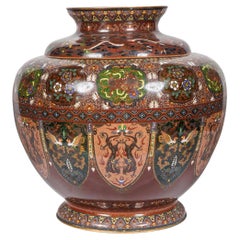
Meiji Masterpiece by Ando Jubei: A Maroon Cloisonné Vase with Dragons
Phoenix
By Ando Jubei
Located in Queens, NY
Meiji Masterpiece attributed to Ando Jubei: A Maroon Cloisonné Vase with Dragons
Phoenix, circa 1895
This monumental Meiji period Japanese cloisonné vase, attributed to the es...
Category
Antique 19th Century Japanese Meiji Metalwork
Materials
Enamel
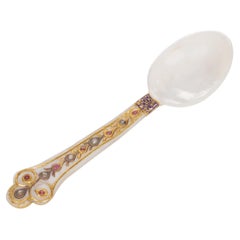
A Rare Mughal Indian Gold and Enamel Mother of Pearl Spoon with Diamonds
Located in Queens, NY
A Rare Mughal Indian Gold and Enamel Mother of Pearl Spoon with Diamonds
Discover the exquisite craftsmanship of Mughal India with this rare and...
Category
Antique Late 18th Century Indian Scholar s Objects
Materials
Gold, Enamel
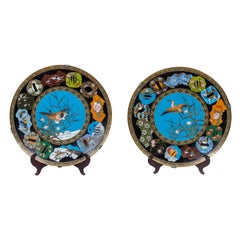
An Exquisite Large Pair of Meiji Period Cloisonné Enamel Plates with Tsubas
Located in Queens, NY
An Exquisite and Large Pair of Meiji Period Japanese Cloisonné Enamel Plates with Tsuba Fittings and Nature Scenes, circa 1885
This exquisite pair of large Meiji period Japanese clo...
Category
Antique 19th Century Japanese Meiji Metalwork
Materials
Enamel
$25,200 Sale Price
40% Off
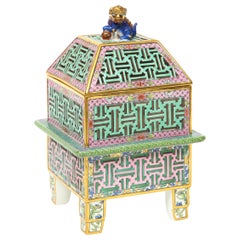
Rare Meissen Marcolini Porcelain Chinoiserie Incense Burner Vase and Cover
By Meissen Porcelain
Located in Queens, NY
A rare Meissen Marcolini Porcelain Chinoiserie incense burner vase and cover, made for the Chinese market, circa 1800, blue cross swords and star mark, Pressnummer 58
A Museum Quality Piece.
Painted in the sought after famille rose palette with sprigs of indianische Blumen and enriched in gilding, the simulated pierced body supported by four feet painted with stylized dragons, the pierced cover with a Buddhist lion finial.
10" high x 6" wide x 6" deep
The shape of this piece, which appears to be unrecorded in the literature, is inspired by similar Chinese porcelain censers from the Qing Dynasty, Kangxi Period (1654-1722). An example in the Palace Museum, Beijing, is illustrated by Li Yi-hua in Qing Porcelain of Kangxi, Yongzheng and Qianlong Periods from the Palace Museum Collection, Hong Kong, 1989, pl. 65. Another in the British Museum, London (museum no. PDF, A.812) is catalogued as a perfume-holder.
These porcelain examples are in turn inspired by ancient Chinese bronzes from both the Shang (1600-1046 BC) and the Zhou (1046-246 BCE) dynasties, an example of which was sold anonymously by Christie's New York, 22 March 2019, lot 1601. This chain of inspiration tracking backwards from the 19th century to antiquity provides a clear example of how ceramics, and indeed other mediums, are able to influence and motivate the works of later generations.
For a Meissen porcelain snuff...
Category
Antique Late 18th Century German Chinoiserie Ceramics
Materials
Porcelain
$30,000 Sale Price
40% Off
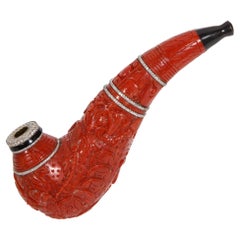
Contemporary Coral, 18K Gold, Diamonds, and Onyx Pipe
Located in Queens, NY
A contemporary coral, 18K gold, diamonds, and onyx pipe.
The carved coral pipe engraved with Chinese ornaments enhanced with brilliant-cut pave diamo...
Category
20th Century Chinese Tobacco Accessories
Materials
Coral, Onyx, Gold
$17,500 Sale Price
30% Off
An Exquisite Pair Of Japanese Cloisonné Enamel Vases with Chrysanthemum Blossoms
Located in Queens, NY
An Exquisite Pair Of Japanese Cloisonné Enamel Vases with Chrysanthemum Blossoms, Attributed to Hayashi, Meiji Period.
Experience the exquisite craftsmanship of the Meiji period wit...
Category
Antique 19th Century Japanese Meiji Metalwork
Materials
Enamel
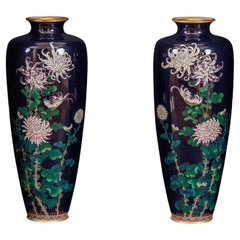
A Monumental and Rare Pair of Chinese Cinnabar Carved Lacquer Vases, Qianlong
Located in Queens, NY
Introducing an extraordinary and exceptionally rare pair of Chinese Cinnabar Carved Lacquer Vases from the Qianlong period. These monumental vases stand as magnificent examples of Ch...
Category
Antique 19th Century Chinese Lacquer
Materials
Lacquer
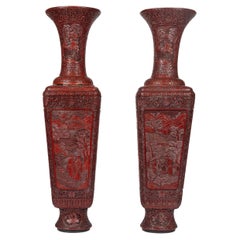
A Large and Exceptional Japanese Meiji Period Tokyo School Bronze Sculpture
Located in Queens, NY
Presenting an extraordinary Large and Exceptional Japanese Meiji Period Tokyo School Bronze Sculpture depicting a delightful ensemble of six energe...
Category
Antique 19th Century Japanese Meiji Sculptures and Carvings
Materials
Bronze
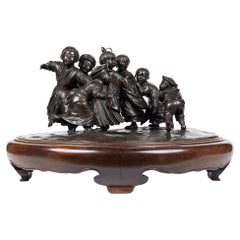
Large Pair of Meiji Period Japanese Cloisonne Enamel Double Dragon Vases
Located in Queens, NY
A large pair of Meiji Period Japanese Cloisonne Enamel Double Dragon Vases, 19th century.
Japanese cloisonne enamel dragon vases are highly ...
Category
Antique 19th Century Japanese Meiji Metalwork
Materials
Copper, Enamel
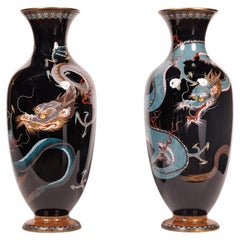
Large Pair of Japanese Cloisonne Enamel Vases Attributed to Honda Yasaburo
Located in Queens, NY
A large pair of Japanese Cloisonne Enamel vases attributed to Honda Yasaburo, 19th century.
Finley decorated with the rich enamel colors of orange and green, these vases are desig...
Category
Antique 19th Century Japanese Meiji Metalwork
Materials
Copper, Enamel
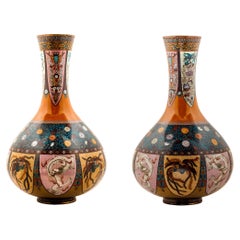
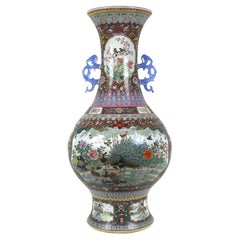
Monumental Chinese Famille Rose Porcelain "Peacock" Palace Vase
Located in Queens, NY
A monumental Chinese famille rose porcelain "Peacock" palace vase, Republic period.
Magnificent quality and palace sized Chinese hu-form vase with side h...
Category
Late 20th Century Chinese Qing Ceramics
Materials
Porcelain
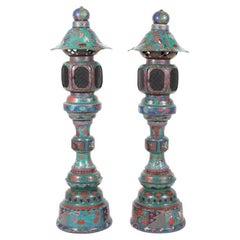
Large Pair of Japanese Cloisonne Enamel Lanterns Attributed to Hayashi Kodenji
Located in Queens, NY
A Large Pair of Japanese Cloisonne Enamel Lanterns Attributed to Hayashi Kodenji, Edo Period, 19th century
Japanese cloisonne lanterns were made during the Meiji period, from the la...
Category
Antique 19th Century Japanese Edo Metalwork
Materials
Copper, Enamel
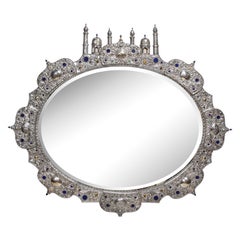
Rare and Magnificent Thai Silver, Gold
Jeweled Palace Mirror for Indian Palace
Located in Queens, NY
A rare and magnificent silver, gold
jeweled palace mirror, certainly made for an Indian Maharaja, circa 1900.
A special commission for an Indian palace from the late Victorian era, likely produced in Thailand.
This palace size hand-hammered Indian mirror is made from pure silver. A truly exceptional work of art with floral design topped with miniatures structures...
Category
Antique Early 1900s Indian Wall Mirrors
Materials
Lapis Lazuli, Malachite, Multi-gemstone, Gold, Silver
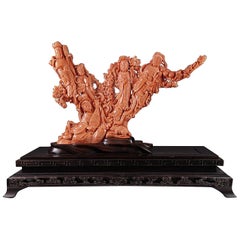
Exceptional Chinese Carved Coral Figural Group of a Guanyin Kwan Yin Phoenix
Located in Queens, NY
An exceptional Chinese carved coral figural group of a Guanyin, Kwan Yin with a Phoenix.
Very finely carved. In a custom made glass...
Category
Early 20th Century Chinese Sculptures and Carvings
Materials
Coral
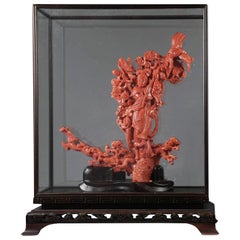
Exceptional Large Chinese Carved Coral Figural Group Statue of Female Immortals
Located in Queens, NY
An exceptional and large Chinese carved coral figural group / statue of female Immortals.
Very finely carved, very large and heav...
Category
Early 20th Century Chinese Sculptures and Carvings
Materials
Coral
Related Items
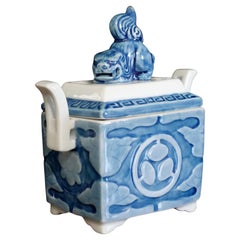
Old Japanese Porcelain Lidded Incense Burner in the Original Box
Located in Norton, MA
Old Japanese porcelain lidded incense burner in the original box
The lid with the lion, two pierced handles on each side, and four feet at the four corners to stand.
This is an old...
Category
Mid-20th Century Ceramics
Materials
Porcelain
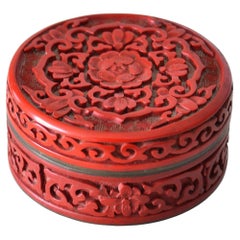
Antique Chinese Cinnabar, Brass and Enamel Box
Located in Miami, FL
A crisply carved antique Chinese red cinnabar lacquer lidded round box with blue enamel interior and brass fittings. The "dragon's blood" trinket box has a fine peony, foliate and fl...
Category
Antique 19th Century Chinese Qing Lacquer
Materials
Brass, Enamel
Fine Pair of Antique Japanese Cloisonné Enamel Vase Attributed to Ando Jubei
By Ando Jubei
Located in San Diego, CA
Fine pair of antique Japanese cloisonné enamel vases dating from the early 1900s. The both are marked by the artist on the bottom. These are attributed to master artist Ando Jubei. B...
Category
Early 20th Century Japanese Metalwork
Materials
Enamel
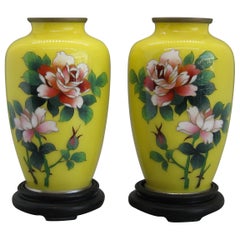
$520 Sale Price / set
20% Off
H 5.5 in W 3 in D 3 in
Japanese Cloisonné Vase Ando Jubei with Storage Box
By Ando Jubei
Located in Atlanta, GA
A beautifully decorated cloisonné vase with silver rims by Ando Jubei (1876-1956), the celebrated Japanese Shippo studio. The piece is dated to late Meiji to early Showa period circa...
Category
Early 20th Century Japanese Japonisme Metalwork
Materials
Metal, Silver, Enamel
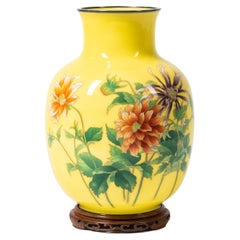
Large Antique Meiji Japanese Cloisonne Enamel Pink Vase W Birds
Located in Long Island City, NY
A large Japanese Meiji period cloisonne enameled vase with a scene of birds, butterflies, and flowers on the pink background and borders with colorful decoration. Collectible Orienta...
Category
Antique Late 19th Century Japanese Meiji Metalwork
Materials
Enamel
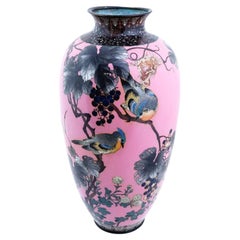
$2,250 Sale Price
50% Off
H 17 in Dm 8 in
Chinese Porcelain Snuff Bottle Blue
White Hand Painted, Circa 1940
Located in Lincoln, Lincolnshire
This is a good Chinese Export snuff bottle, made from porcelain and hand painted in cobalt blue, dating to the mid 20th century, circa 1940.
This piece is well potted with a balus...
Category
Mid-20th Century Chinese Chinese Export Bottles
Materials
Porcelain
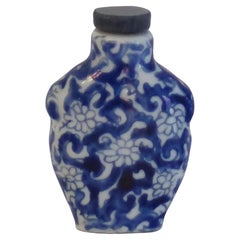
Japanese Meiji Period Cloisonne Enamel Vase by Ando Jubei
By Ando Jubei
Located in Newark, England
Free international shipping
Ando Cloisonne Company Mark
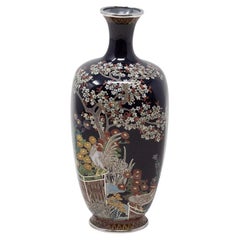
From our Japanese collection, we are delighted to introduce this Japanese Cloisonne Enamel Vase by Ando Jubei. The Cloisonn...
Category
Antique Early 1900s Japanese Meiji Metalwork
Materials
Enamel, Wire
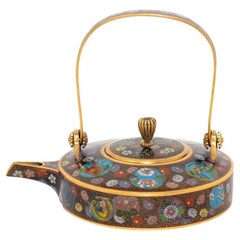
Japanese Meiji Period Cloisonne Enamel Sake Pot
Located in Newark, England
Fine Japanese Meiji period cloisonne enamel Sake pot. The Sake pot of rounded form with with clean edges profusely decorated with blossoming flowers throughout upon a black ground ba...
Category
Antique Late 19th Century Japanese Meiji Metalwork
Materials
Metal, Enamel
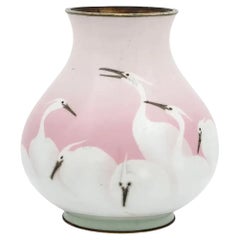
Japanese Meiji Era Wireless Cloisonne Pink Crane Enamel Vase
Located in Long Island City, NY
An antique Japanese copper vase with wireless cloisonne enamel design. Late Meiji era, before 1912. Round shape with pronounced base. The piece is decorated with a stork or crane bir...
Category
Antique Late 19th Century Japanese Meiji Metalwork
Materials
Copper, Enamel
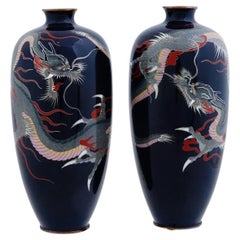
Pair Of Meiji Japanese Cloisonne Dragons Silver Wire Enamel Vases
Located in Long Island City, NY
A pair of Japanese silver wire enamel vases. The vases have an urn shaped body and a fluted neck. Each ware is enameled with a polychrome image of dragons on the dark blue ground mad...
Category
Antique 19th Century Japanese Metalwork
Materials
Enamel
$5,625 Sale Price / set
25% Off
H 7.5 in Dm 4 in
Japanese Cloisonne Box by Inaba, Meiji Period, circa 1900, Japan
By Inaba Cloisonne Co.
Located in Austin, TX
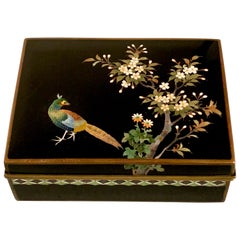
A fine Japanese cloisonne hinged box with pheasant and autumn foliage, by Inaba Nanaho and the Inaba Cloisonne Company, Meiji period, circa 1900, ...
Category
Antique Early 1900s Japanese Meiji Metalwork
Materials
Copper, Enamel, Metal
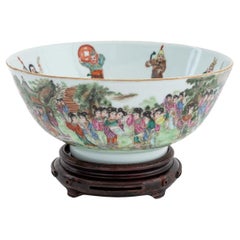
Chinese Famille Rose Porcelain Bowl
Located in Astoria, NY
Chinese Famille Rose Porcelain Bowl, hand-enameled with ladies in a landscape scene to exterior and the eight immortals inside, red six character mark to underside, together with har...
Category
20th Century Chinese Qing Ceramics
Materials
Porcelain, Hardwood