TISHU Tribal Art
to
2
20
16
4
2
3
1
12
4
3
5
1
1
1
9
6
4
3
2
10
6
5
5
4
20
20
20
2
1
1
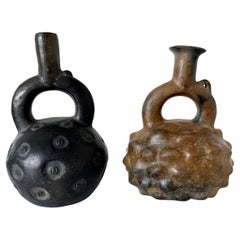
Collection of Two Pre-Columbian Cupisnique Stirrup Ceramic Vessels Peru
Located in Atlanta, GA
A collection of two small pre-Columbian ceramic stirrup vessels in Cupisnique style circa 700-500BCE. These ancient vessels from the formative period are distinct in a robust form wi...
Category
Antique 15th Century and Earlier Peruvian Pre-Columbian Tribal Art
Materials
Ceramic
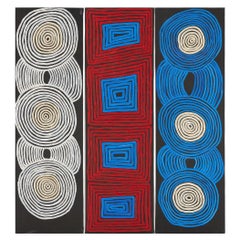
Triptych Australian Aboriginal Paintings Tingari Ronnie Tjampitjinpa
By Ronnie Tjampitjinpa
Located in Atlanta, GA
A triptych panel painting by Australian Aboriginal artist Ronnie Tjampitjinpa (1943-2023). Entitled "Tingari Cycle", the artwork was painted in 2002 for Art Mob, Tasmania in oil on c...
Category
Early 2000s Australian Modern Paintings
Materials
Canvas
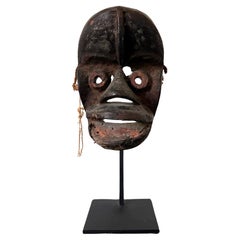
Guere Mask from Cote d
Ivoire Africa with Sotheby
s Sticker
Located in Atlanta, GA
A Guere wood mask with paint and fiber remnant from We people displayed on a metal stand. The We people (also known as the Krahn or Guere) are an indigenous African people that inhabit areas in nowadays eastern Liberia and western Côte d'Ivoire. Their material culture shares many aspects with the neighboring Dan tribe. Like the Dans, the We use a wide variety of masquerades, which hold important regulatory position within their small, egalitarian communities. Masks are owned by families and used by individual lineage members in contexts of social control, ritual ceremony and entertainment. This type of Guere mask, however, has a distinct fearsome character. The ferocious design with jagged facial expression, bulging tubular eyes are intended for use in mediations between community members, as visual aids during moral lessons, as well as forms of entertainment. By portraying the more frightening nature of the animal, the mask is viewed as powerful and may have been used as part of social control methods prior to the introduction of Western law systems during the colonial period.
The mask on offer, based on our examination, appears to be an original one that was used natively instead of reproduction made for the tourist market. The surface presents apparently genuine patina consistent with use. The red paint that highlights the eyes and gapping mouth also appear original. There are small losses flanking the nose ridge by the eyes, extensive surface accretion, remain of some fiber tassels. The back of the mask reveals chisel marks from hand tools and importantly, stain marks that were likely from repetitive contacts from the nose of the wearer.
The mask is 9" in height, and it retains an old Sotheby’s catalog...
Category
20th Century Ivorian Tribal Tribal Art
Materials
Wood
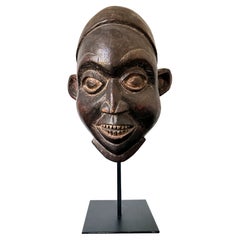
Helmet Crest Ngoin Mask from Cameroon Africa
Located in Atlanta, GA
This Helmet Crest mask is categorized as a “Babanki” style Ngoin mask from Northwestern provinces of Cameroon circa first half of 20th century. In part of highland area called “Camer...
Category
20th Century Cameroonian Tribal Tribal Art
Materials
Wood
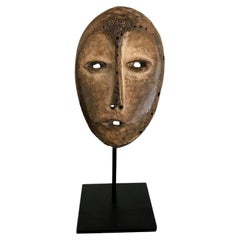
Lega Bwami Society Mask on Display Stand with Provenance
Located in Atlanta, GA
On offer is a Lega Bwami society wooden mask from the Democratic Republic of Congo. It was likely from the first half of the 20th century and an authentic in-field piece. The mask di...
Category
Mid-20th Century Congolese Tribal Tribal Art
Materials
Wood
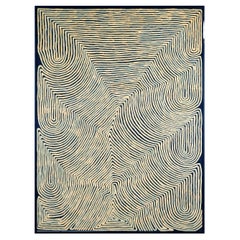
Australian Aboriginal Painting Rain Dreaming Ronnie Tjampitjinpa
By Ronnie Tjampitjinpa
Located in Atlanta, GA
A contemporary painting by Australian Aboriginal artist Ronnie Tjampitjinpa (1943-2023). Entitled "Rain Dreaming", the artwork was acrylic on canvas and painted in 1999
Fully documented: originally purchased in 1999 from Kimberley Australian Aboriginal Art, Melbourne, cat. no. KA 708/99; The in the collection of The Kelton Foundation, Santa Monica; It was exhibited in: "G'Day LA" Australia Week, in partnership with the Australian Consulate Los Angeles, Pacific Design Center, West Hollywood, CA, 15-25 January 2004. It is housed in a black thin wood frame.
Ronnie Tjampitjinpa was born in Pintupi land at Muyinnga, about 100 kilometres west of the Kintore Range, just across the Western Australian border. He is the son of Uta Uta Tjangala’s older brother, Minpuru Tjangala (c.1899–1976).
Artist's Biography (Courtesy of Art Gallery NSW)
After his initiation into Pintupi law at the site of Yumari, Tjampitjinpa and his younger brother Smithy Zimran Tjampitjinpa walked into the Aboriginal community of Yuendumu. They later joined their parents and other siblings – who had come in to Ikuntji (Haasts Bluff) in 1956 from the Dover Hills/Yumari area – at the new settlement of Papunya. Tjampitjinpa worked as a labourer, assisting with the fencing of the aerodromes at Papunya and Ikuntji. He was one of the youngest of the group of men who began painting at the start of the Western Desert art movement in 1971, and was a founder of Paunya Tula Artists.
During the 1970s, Tjampitjinpa was preoccupied with returning to his traditional lands and became a strong advocate for the outstation movement, travelling between meetings in Papunya, Yuendumu, Wirrimanu (Balgo) and Mount Doreen Station. His goal was finally achieved with the establishment of the Walungurru (Kintore) settlement in 1981. Tjampitjinpa moved there with his young family in 1983, establishing an outstation at Ininti (Redbank) and serving as chairman of the Kintore Outstation Council. During this period, he emerged as one of Papunya Tula Artists’ major painters, pioneering the bold, scaled-up, linear style that came to dominate many of the Walungurru painters’ work during the 1990s. His distinctive aesthetic preoccupa-tion is exemplified in the untitled works of 1994 and 2001. Now one of the last founding members of Papunya Tula Artists, Tjampitjinpa’s career spans more than 40 years. He has had six solo exhibitions since 1989 in Australia, most recently at Utopia Art, Sydney.
Throughout the 1980s Tjampitjinpa worked devotedly on a land claim for Ininti, holding meetings in Darwin, Warmun (Turkey Creek...
Category
1990s Australian Modern Paintings
Materials
Canvas, Acrylic
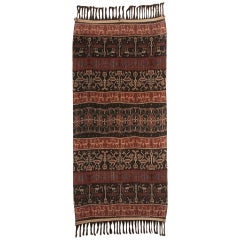
Large framed Antique Indonesia Ceremonial Ikat Hinggi from Sumba
Located in Atlanta, GA
A large and striking woven Ikat from Sumba, Indonesia, circa early 20th century or earlier. This ceremonial cotton Hinggi with fringes is made from two panels joined together, which ...
Category
Early 20th Century Indonesian Tribal Tribal Art
Materials
Cotton

$5,000 Sale Price
23% Off
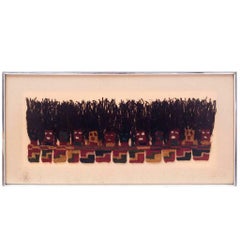
Framed Pre-Columbian Proto Nazca Textile Frangment
Located in Atlanta, GA
A Proto-Nazca textile fragment from Southern Peru circa 100BC-200AD. The linked munecas ("dolls" in Spanish) figures were woven with fibers likely from l...
Category
Antique 15th Century and Earlier Peruvian Pre-Columbian Tapestries
Materials
Wool
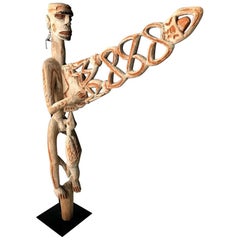
Bis Pole Sculpture by Asmat People
Located in Atlanta, GA
A ritual artifact from the tribe of the Asmat poeple, an ethnic group of New Guinea living in the Papua province of Indonesia and South-western regions of Papua New Guinea, bis or bisj pole is carved out of a wild Mangrove tree and can reach a stunning height Their carvings depict stacked human and animal figures standing and on top always phallic symbols, in the shape of a canoe prow. Bis poles...
Category
20th Century Papua New Guinean Tribal Tribal Art
Materials
Wood
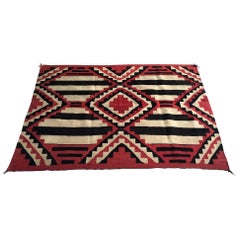
Antique Navajo Chief Blanket
Located in Atlanta, GA
Sometimes categorized as the fourth-phase chief blanket, this wonderful piece of Navajo textile art is well preserved and can be dated to 1890-1910. Wov...
Category
Antique 1890s American Navajo Native American Objects
Materials
Wool
$12,500
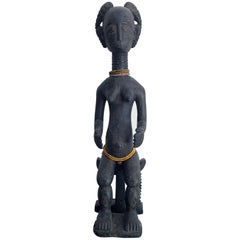
Ashanti Maternal Fertility Figure
Located in Atlanta, GA
On offer is an Ashanti female fertility figure from Ghana, West Africa, circa Mid-20th century. Carved from a single block of wood, the statue depicts a female with typical coiffure ...
Category
Mid-20th Century Ghanaian Tribal Figurative Sculptures
Materials
Glass, Wood
$2,000 Sale Price
33% Off
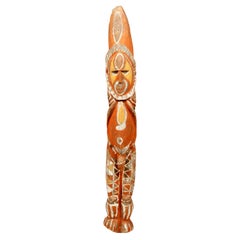
Yam Ancestor Figure TOTEM Pole Papua New Guinea with Provenance
Located in Atlanta, GA
A yam ancestor TOTEM pole from the mid-Sepik River region of Papua New Guinea. Carved out of a solid wood by the Abelam people, who cultivated yams as their main crop, the pole featu...
Category
Early 20th Century Papua New Guinean Tribal Tribal Art
Materials
Wood
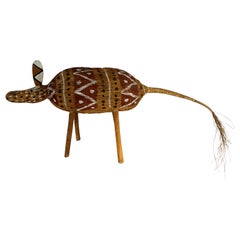
Aboriginal Contemporary Fiber Art Camp Dog
By Yolanda Rostron
Located in Atlanta, GA
Aboriginal fiber art camp dog, known as Jamu.
Artist: Yolanda Rostron.
Year of birth: 1979.
Nationality: Australian.
Region: South Central Arnhem Land.
Language group: Rembarrng...
Category
21st Century and Contemporary Australian Tribal Outsider and Self Taught...
Materials
Natural Fiber
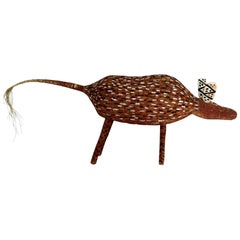
Aboriginal Contemporary Fiber Art Camp Dog
By Lena Yarinkura
Located in Atlanta, GA
Known as Jamu in Bolkdjam, Northern Territory, Australia, the camp dog was woven Pandanus fibers and painted with earth pigment and ochre. The ears and legs are from found wood and s...
Category
21st Century and Contemporary Australian Tribal Outsider and Self Taught...
Materials
Natural Fiber
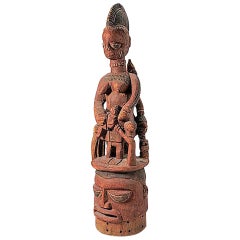
African Nigeria Epa Helmit Mask with Provenance
Located in Atlanta, GA
An Epa helmet mask, Nigeria, Africa.
Fully carved mother and child; painted red and black with touches of white;
Provenance: The Children's Museum of Indianapolis; The Eiteljorg Mu...
Category
Vintage 1950s Nigerian Tribal Tribal Art
Materials
Wood
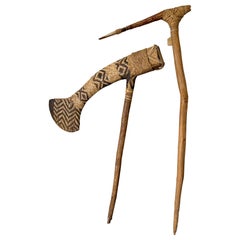
Two Ceremonial Weapon from Highlands of Papua New Guinea Provenance
Located in Atlanta, GA
Two Oceanic ceremonial weapons from PNG highlands circa 20th century. It consists of two pieces. The first is an ax with a wood shaft and a flat elongated he...
Category
Mid-20th Century Papua New Guinean Tribal Tribal Art
Materials
Rattan, Wood
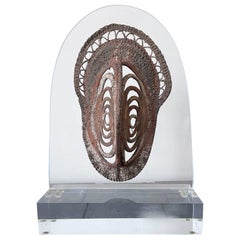
Fiber Polychrome Mask Yam Ancestor Papua New Guinea
Located in Atlanta, GA
A well preserved Yam Ancestor mask professionally presented on a museum quality acrylic display stand. The mask was a classic tribal art piece from Abela...
Category
Mid-20th Century Papua New Guinean Tribal Masks
Materials
Natural Fiber, Acrylic
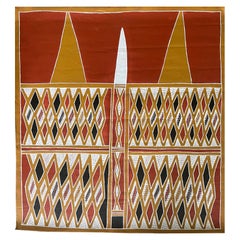
Aboriginal Body Painting Terrence Gurruwiwi Elcho Island, Australia
Located in Atlanta, GA
Title: Gumatj Ceremonial chest paint
Medium: Acrylic on canvas
Size: 32" H x 28.5" W
Date created: November 2006
Artist: Terrence Gaypamany Gurruwiwi
Language: Glapu
Date of birth: 06/09/1984
The painting depicts the traditional body paint onto the chest during ceremonies of the local aboriginal communities. It is
signed by the artist on verso as shown and also retains a stamp from Elcho Island Art...
Category
Early 2000s Australian Tribal Paintings
Materials
Canvas
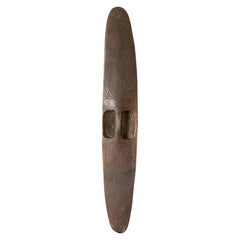
Carved Wood Aboriginal Shield, Western Australia
Located in Atlanta, GA
A tall and narrow parrying shield from the Aboriginal people living in the Western Australia. The piece was carved out of a single block of hard wood t...
Category
Early 20th Century Australian Tribal Tribal Art
Materials
Wood
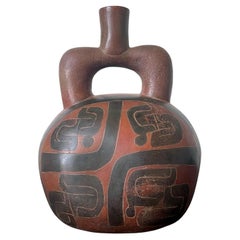
Pre-Columbian Cupisnique Stirrup Vessel from Peru
Located in Atlanta, GA
A pre-Columbian ceramic stirrup vessel in Cupisnique style circa 700-500BCE. This ancient vessel features a robust squatted body and a short thick stirr...
Category
Antique 15th Century and Earlier Peruvian Pre-Columbian Tribal Art
Materials
Ceramic
Related Items
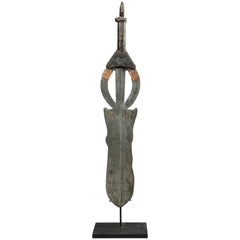
Poto African Iron Sword, Congo Africa on Stand
Located in Point Richmond, CA
Poto African sword, Congo Africa on stand.
A forged iron sword with fine incised design, inlaid brass dots, overlaid brass strips, finely carved wood ha...
Category
Early 20th Century Congolese Tribal Tribal Art
Materials
Wrought Iron
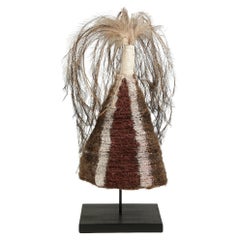
Conical Hat Mornington Island, Queensland Australia Woven Fiber on Stand
Located in Point Richmond, CA
Early to mid-20th century woven fiber and palm leaf conical hat with two vertical painted stripes on the front, from Mornigton Island, Queensland, Austral...
Category
Mid-20th Century Australian Tribal Tribal Art
Materials
Organic Material
$900 Sale Price
40% Off
H 16 in W 9 in D 9 in
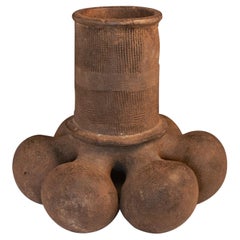
Mid-20th Century Globular Vessel, Mangbetu People, D. R. Congo
Located in Point Richmond, CA
Mid-20th Century Globular Vessel, Mangbetu People, D. R. Congo
An unusually large and striking non-figurative vessel from the Mangbetu people, comprised of six lobes joined to a c...
Category
Mid-20th Century Congolese Tribal Urns
Materials
Ceramic
Expressive Early Classic Cubist Dan Mask Early 20th Century Liberia, ex Sothebys
Located in Point Richmond, CA
Expressive early classic cubist Dan mask with refined expressive look, narrow open eyes and mouth and fine line scarification marks around outside of face. Created early 20th century by the Dan People...
Category
Early 20th Century Liberian Tribal Masks
Materials
Wood
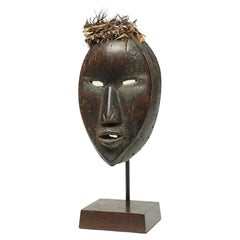
$9,500
H 9.5 in W 5.75 in D 3.75 in
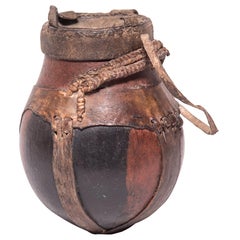
Ethiopian Milk Vessel
Located in Chicago, IL
The Borana Oromo people of southern Ethiopia and northern Kenya are historically a cattle-keeping culture, and each household keeps a number of traditional vessels for storing and ch...
Category
Mid-20th Century Ethiopian Tribal Bottles
Materials
Other
Peru Pre Inca 100-700 Ad Moche Pre Columbian Personified Vessel in Earthenware
Located in Miami, FL
Rare pre Hispanic Moche culture, pre-Inca earthenware vessel.
A beautiful interesting piece, created in the southern Peru region around the 100-700 AD by the Moche culture. This rare early period...
Category
Antique 15th Century and Earlier Peruvian Pre-Columbian Antiquities
Materials
Earthenware, Pottery
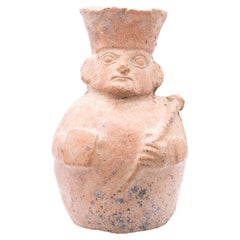
$1,645 Sale Price
30% Off
H 8.75 in W 5 in D 4.25 in
Nocturnal Bird Mask, Nigeria, Africa, circa 1950
Located in San Pedro Garza Garcia, Nuevo Leon
Very beautiful mask with large pronounced eyes with the circular cavity shape. The mask depicts a nocturnal bird that can see in the darkness and manifest the presence of divinities ...
Category
Mid-20th Century Nigerian Tribal Masks
Materials
Wood
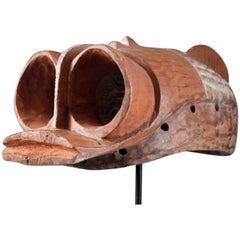
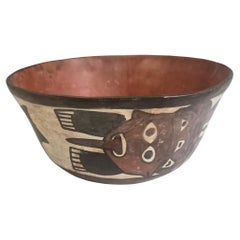
Pre-Columbian Nazca Polychrome Bowl South American art
Located in London, GB
Pre-Columbian Nazca Polychrome Bowl
South Coast Peru, Nazca Culture, c. 200–600 AD
A fine hand-coiled pottery bowl decorated in classic Nazca polychrome pigments—cream, black, red,...
Category
Antique 15th Century and Earlier Peruvian Antiquities
Materials
Ceramic, Pottery
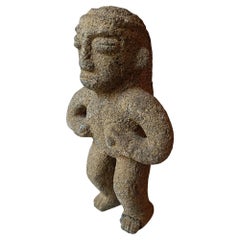
Pre Columbian Female Stone Fertility figure Costa Rica
Located in London, GB
Pre Columbian Female Stone Fertility figure Costa Rica
Pre-Columbian, Central America, Costa Rica, Central Highlands, Atlantic Watershed, C. 1000 to 1400 CE.
A carved volcanic stone ...
Category
Antique 15th Century and Earlier Costa Rican Antiquities
Materials
Stone
$598 Sale Price
35% Off
H 10.24 in W 5.52 in D 1.97 in
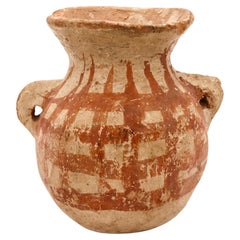
Peru Pre-Inca 900 / 1470 AD Chimu Pre Columbian Vessel In Earthenware Pottery
Located in Miami, FL
A pre-Inca Chimu culture, pre Columbian vase in earth ware.
This beautiful little vessel vase, was created in the northern Peruvian region by the Chimu culture between the 900 / 1...
Category
Antique 15th Century and Earlier Peruvian Pre-Columbian Antiquities
Materials
Earthenware, Pottery
$416 Sale Price
30% Off
H 3.25 in W 3.16 in D 3 in
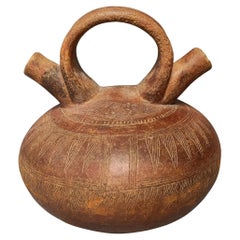
Pre Columbian Calima vessel Columbia ancient South America
Located in London, GB
Pre Columbian Calima vessel Columbia ancient South America
A Calima vessel featuring double spouted stirrup vessel with incised design in red clay
Calima circa 200 BC- 400 AD Col...
Category
Antique 15th Century and Earlier Colombian Antiquities
Materials
Clay
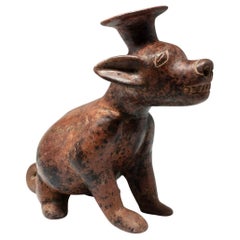
Pre-Columbian Earthenware Dog Vessel, Colima, Western Mexico
Located in Point Richmond, CA
Pre-Columbian Earthenware Dog Vessel, Colima, Western Mexico
A lively pre-Columbian Colima dog vessel sitting back on its haunches, with one foot slightly lifted off the ground as i...
Category
Antique 15th Century and Earlier Mexican Pre-Columbian Jars
Materials
Terracotta