Tschechisches Wohndesign Folk Art
to
6
6
1
1
1
1
1
4
4
4
2
2
1
1
3
3
2
2
2
6
6
6
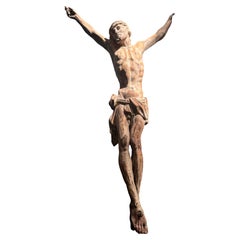
18th Century Bohemian Corpus of Christ
Located in Wien, AT
An expressive hand-carved wooden corpus of Christ from 18th century Bohemia, originally mounted on a wooden cross for devotional use.
Executed in the late Baroque style, the figure s...
Category
Antique 18th Century Czech Baroque Sculptures and Carvings
Materials
Wood
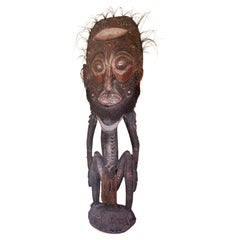
Monumental Papua New Guinea Spirit Figure, Mid-20th Century
Located in Wien, AT
Impressively carved from a single block of wood, this monumental male spirit or ancestor figure originates from the Middle Sepik region of Papua New Guinea.
The figure combines stron...
Category
Mid-20th Century Papua New Guinean Tribal Tribal Art
Materials
Hardwood, Feathers
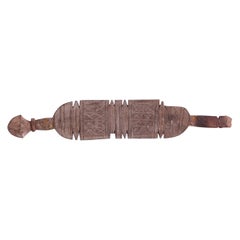
Tuareg Tent Poles Mid-Century
Located in Wien, AT
These big wooden beams from bedouin tents from the Sahara were Mid-20 century made.
The rich carving gives information about the respective tribal affilia...
Category
Mid-20th Century Moroccan Tribal Tribal Art
Materials
Cedar
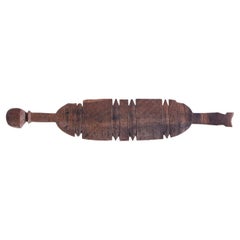
Tuareg Tent Poles, Mid Century
Located in Wien, AT
These big wooden beams from bedouin tents from the Sahara were Mid-20 Century made.
The rich carving gives information about the respective tribal affilia...
Category
Mid-20th Century Moroccan Tribal Tribal Art
Materials
Cedar
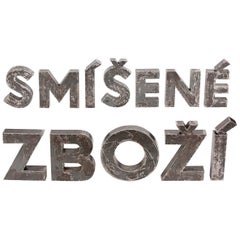
Vintage Czech Shop Sign, 1960s
Located in Wien, AT
This set of shop sign letters is made of steel sheet and spells out the Czech words "Smisene Zbozi" in upper case which is Czech for grocery store. Restored thick steel sheet with ve...
Category
Mid-20th Century Czech Industrial Signs
Materials
Steel

$2,600 / set
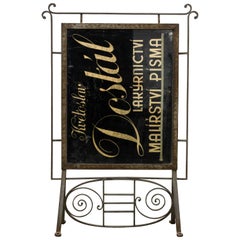
Letter Painter Kvetoslav Dostal Shop Sign, circa 1900
Located in Wien, AT
This vintage sign comes from the shop of Prague letter painter Kvetoslav Dostal. It was probably manufactured circa 1900, as the wrought iron frame construction shows Art Nouveau inf...
Category
Antique Late 19th Century Czech Arts and Crafts Signs
Materials
Iron
Related Items
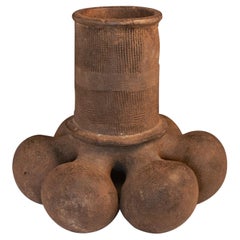
Mid-20th Century Globular Vessel, Mangbetu People, D. R. Congo
Located in Point Richmond, CA
Mid-20th Century Globular Vessel, Mangbetu People, D. R. Congo
An unusually large and striking non-figurative vessel from the Mangbetu people, comprised of six lobes joined to a c...
Category
Mid-20th Century Congolese Tribal Urns
Materials
Ceramic
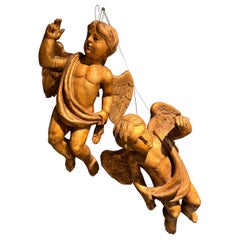
A pair of 18th century Austrian winged cherubs
Located in London, GB
A beautiful pair of 18th century Austrian carved gilt wood angel cherubs with their original hooks to the back .
Category
Antique Mid-18th Century Austrian Rococo Sculptures and Carvings
Materials
Giltwood
$2,091 Sale Price / set
20% Off
H 11.82 in W 6.7 in D 4.73 in
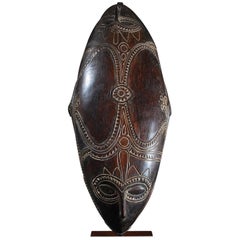
Mid-20th Century Tami Islands Papua New Guinea Tribal Wooden Feast Bowl
Located in Point Richmond, CA
mid-20th century Tami Islands Papua new guinea wooden feast bowl
Of classic form, each end carved with raised and incised imagery depicting stylized sea cr...
Category
Mid-20th Century Papua New Guinean Tribal Art
Materials
Kaolin, Wood
$4,200
H 4 in W 22 in D 9.5 in
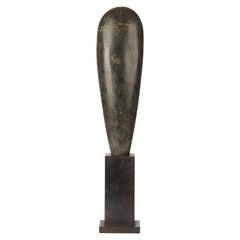
Papau New Guinea Sentani Mounted Nephrite Axe, Early 20th Century
Located in Bishop
s Stortford, Hertfordshire
Large and exceptional vintage tribal carved green jade/nephrite axe from Sentani, Papau New Guinea. The Axe is mounted in a custom made bronze base and is...
Category
Early 20th Century Papua New Guinean Tribal Mounted Objects
Materials
Stone
$1,100
H 17.72 in W 3.94 in D 3.35 in
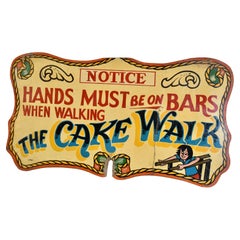
1960s English Carnival Sign
Located in High Point, NC
1960s carnival art sign from England. It is advertising a cake walk on one side of the sign, and on the back has a charming message "Have a nice Victorian day". Great sign for any co...
Category
Vintage 1960s English Folk Art Carnival Art
Materials
Wood
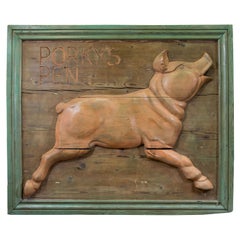
1900s Butcher
s Pig Trade Sign
Located in Coeur d
Alene, ID
Vintage carved and painted pine butcher's trade sign. Molded frame, insized text reading "Porkies Pen" pig in relief. 33" x 40"
Period: First quarter of the 20th century or earlier
...
Category
Early 20th Century French Antiquities
Materials
Wood
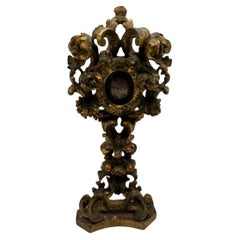
Opulent 18th Century Baroque Reliquary of Blood of Saint St. Francis
15th Cent
Located in North Miami, FL
Opulent 18th century Baroque carved giltwood reliquary (a container for relics) monstrance with curled scroll design. It houses a first-class relic of the blood of the15th Century sa...
Category
Antique 15th Century and Earlier Rococo Sculptures and Carvings
Materials
Wood, Giltwood
$4,950
H 11 in W 6 in D 2 in
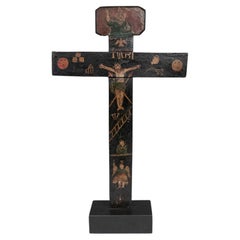
18th Century Wooden Cross, Guanajuato, Mexico
Located in Point Richmond, CA
Wooden cross
Guanajuato, Mexico
Wood, paint
22 x 13 inches, (56 cm x 33 cm)
18th century
A wonderful old wooden cross with a painted crucified Christ figure, an angel, possibly Mary Magdelene...
Category
Antique 18th Century Mexican Folk Art Mounted Objects
Materials
Wood, Paint
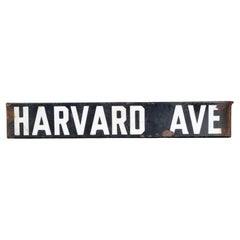
Antique Harvard Ave. Porcelain Sign c.1900-1910
Located in San Francisco, CA
ABOUT
An original double sided enameled porcelain Harvard Ave street sign.
Shown with life size hand model for scale.
CREATOR Unknown.
DATE OF MANUFACTURE c.1900-1900.
...
Category
Early 20th Century Industrial Signs
Materials
Enamel, Steel
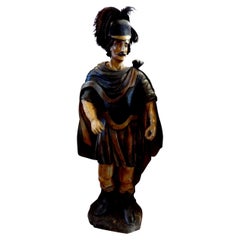
18th Century, Spanish Conquistador Carved Wood Figure
Located in Houston, TX
18th century Spanish Conquistador carved wood figure.
18th century Carved and painted wood Spanish Conquistador figure or sculpture. This beautif...
Category
Antique 18th Century Spanish Baroque Figurative Sculptures
Materials
Wood
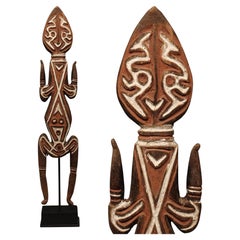
Papuan Gulf New Guinea Bioma Standing Red/White Figure Tod Barlin col
Located in Point Richmond, CA
Papua New Guinea standing figure from the Bioma peoples with raised designs, stylized classic face, and additional face in stomach. Mounted on custom metal and wood base. Traces of...
Category
Mid-20th Century Papua New Guinean Tribal Tribal Art
Materials
Wood
$1,560 Sale Price
47% Off
H 20.5 in W 4.25 in D 1 in
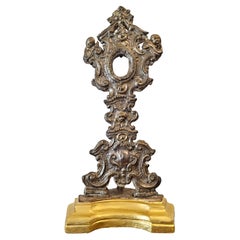
18th/19th Century Italian Baroque Silvered Metal Altar Monstrance Reliquary
Located in Forney, TX
A stunning antique Italian Baroque style silvered metal gilded wood monstrance reliquary. circa 1770-1820
Handmade in Italy in the late 18th / early 19th century, commissioned by the church to display an important religious relic, sculptural painted wood form, mounted with decorative silver repousse metal facing, open oval window where the philatory relic was once housed, rising on a gold gilt painted shaped plinth base.
Dimensions: (approx)
17" High, 8" Wide, 5" Deep, 1.25lbs
History:
Reliquaries (also referred to as a shrine or châsse in French), are containers used to protect and display relics. A portable reliquary may be called a fereter, and a chapel in which it is housed a feretory. A monstrance, also known as an ostensorium (or an ostensory), is a vessel used in Roman Catholic, Old Catholic, High Church Lutheran and Anglican churches for the display on an altar of some object of piety, such as the consecrated Eucharistic host during Eucharistic adoration or Benediction of the Blessed Sacrament. It is also used as reliquary for the public display of relics of some saints.
The use of reliquaries became an important part of Christian practices from at least the 4th century, initially in the Eastern Churches, which adopted the practice of moving and dividing the bodies of saints much earlier than the West, probably in part because the new capital of Constantinople, unlike Rome, lacked buried saints. Relics are venerated in the Oriental Orthodox, Eastern Orthodox, Roman Catholic and some Anglican Churches. Reliquaries provide a means of protecting and displaying relics. While frequently taking the form of caskets, they range in size from simple pendants or rings to very elaborate ossuaries.
The relics were enshrined in containers crafted of or covered with gold, silver, gems, and enamel. These objects constituted a important form of artistic production across Europe and Byzantium throughout the Middle Ages.
Many were designed with portability in mind, often being exhibited in public or carried in procession on the saint's feast day or on other holy days. Pilgrimages often centered on the veneration of relics. The faithful often venerate relics by bowing before the reliquary or kissing it; those churches which observe the veneration of relics distinguish between the honor given to the saints and the worship that is due to God alone.
Sixteenth-century reformers such as Martin Luther opposed the use of relics since many had no proof of historical authenticity and objected to a cult of saints. Many reliquaries, particularly in northern Europe, were destroyed by Calvinists or Calvinist sympathizers during the Reformation...
Category
Antique Early 19th Century Italian Baroque Sculptures and Carvings
Materials
Metal
$2,250
H 17 in W 8 in D 5 in