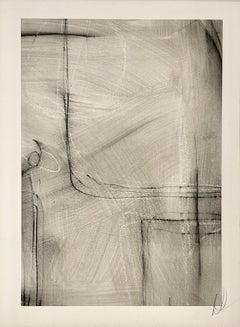
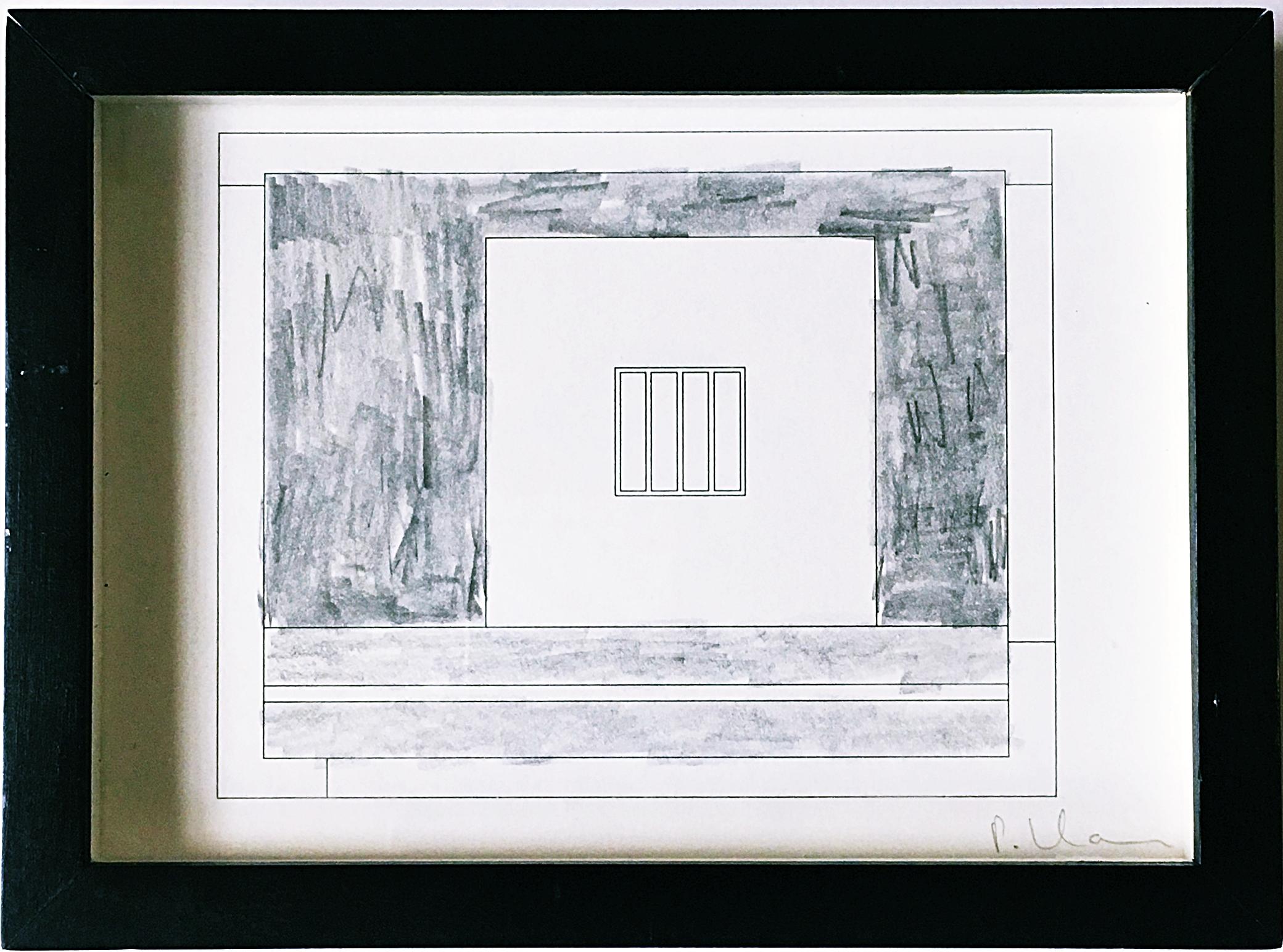
Artículos similares a Peter Halley - Prison 30, unique signed drawing, geometric abstraction, Framed
¿Quieres más imágenes o vídeos?
Solicita imágenes o vídeos adicionales al vendedor
1 de 7
Peter HalleyPeter Halley - Prison 30, unique signed drawing, geometric abstraction, Framed1995
1995
3895,33 €
Acerca del artículo
Peter Halley
Prison 30, 1995
Original graphite drawing on paper
Pencil signed on the on the front. Titled and dated on the back
This unique work on paper was created by Peter Halley in 1995 to benefit the AIDS Community Research Initiative of America (ACRIA) in New York. It is featured in the hardback book, "Unframed: Artists Respond to AIDS, AIDS Community Research Initiative of America," pg. 21.
This work has been elegantly floated and framed in a museum quality wood frame under UV plexiglass with a die-cut window in the back to reveal the title in the artist's hand
Measurements:
Framed:
14 inches (vertical) by 15 inches (horizontal) by 1.5 inches
Artwork:
5 inches (vertical) x 7 inches (horizontal)
"My paintings have a very simple vocabulary: I call the rectangles either prisons or cells, and they’re connected by lines that I call conduits. For whatever reason, ever since I was a very young person, I made geometric paintings, and I grew up in the era of Minimalism. And the Minimalist artists generally said “these forms don’t refer to anything; they’re geometric forms, they have no relationship to the outside world.” And to me, that didn’t make sense. I thought, “our whole technological world is full of geometric forms.” And for the Minimalist artists, geometry represented a kind of ideal form: Platonic squares and circles. But for me, I began to think, “well, geometry is also kind of a prison. If you’re in your office or in front of your computer, it’s also kind of keeping you in a box.” So my vocabulary came about in reaction to Minimalism, trying to bring back a relationship between Geometric Abstraction and the world we live in….” - Peter Halley
Peter Halley Biography
Peter Halley was born in 1953 in New York. He began his formal training at Phillips Academy in Andover, Massachusetts, from which he graduated in 1971. During that time, Halley read Josef Albers’s Interaction of Color (1981), which would influence him throughout his career. From 1973 to 1974 Halley lived in New Orleans, where he absorbed the vibrant cultural influences of the city, began using commercial materials in his art, and first became acquainted with the writings of earthwork artist Robert Smithson. In 1975 the artist graduated from Yale University, New Haven, with a degree in art history. After Yale, Halley returned to New Orleans, where he received an MFA in painting from the University of New Orleans in 1978. He had his first solo exhibition at the Contemporary Art Center, New Orleans, that same year.
In 1978 Halley spent a semester teaching art at the University of Louisiana, Lafayette. He has continued to teach throughout his career. In 1980, Halley moved back to New York and had his first solo exhibition in the city at PS122 Gallery. At this time, Halley was drawn to the pop themes and social issues addressed in New Wave music. Inspired by New York’s intense urban environment, Halley set out to use the language of geometric abstraction to describe the actual geometricized space around him. He also began his iconic use of fluorescent Day-Glo paint.
In 1984, Halley started to exhibit with the International With Monument gallery, becoming closely associated with the organization and its artists, who exhibited conceptually rigorous work in a market-savvy, coolly presented space that stood in stark contrast to the bohemian, Neo-Expressionist flair of the East Village art scene at the time. In 1986, an exhibition of four artists from International With Monument at the Sonnabend Gallery in New York heralded the group’s growing success. By the late 1980s, Halley was exhibiting with prominent galleries in the United States and Europe. In 1989, an exhibition of his paintings traveled to the Museum Haus Esters, Krefeld, Germany; Maison de la culture et de la communication de Saint-Étienne, France; and Institute of Contemporary Arts, London. From 1991 to 1992, a retrospective toured Europe, with presentations at the CAPC Musée d’art contemporain de Bordeaux, France; Musée d’art contemporain, Lausanne, Switzerland; Museo nacional centro de arte Reina Sofía, Madrid; and Stedelijk Museum, Amsterdam. In 1992, the Des Moines Art Center hosted his first solo exhibition at a U.S. museum.
While developing his visual language, Halley became interested in French post-structuralist writers, including Jean Baudrillard, Guy Debord, Michel Foucault, and Paul Virillio, all of whom shared his concern with the character of social spaces in a post-industrial society. In 1981, he published his first essay “Beat, Minimalism, New Wave, and Robert Smithson” in Arts, a New York–based magazine that would publish eight of his essays before the decade’s end. Halley’s writings became the basis for Neo-Geometric Conceptualism (also known as Neo-Geo), the offshoot of Neo-Conceptualism associated with the work of Ashley Bickerton, Halley, and Jeff Koons. In 1988, the artist’s writings were anthologized in Collected Essays, 1981–1987, and again in 1997 in a second anthology, Recent Essays, 1990–1996.
In the mid-1990s, Halley began to produce site-specific installations for museums, galleries, and public spaces. These characteristically brought together a range of imagery and mediums, including paintings, wall-size flowcharts, and digitally generated wallpaper prints. Halley has executed permanent installations at the Dallas/Fort Worth International Airport, Texas, and the Gallatin School of Individualized Study at New York University. In 2011, his installation of digital prints Judgment Day was installed in the Palazzo Bembo in Venice as a part of the exhibition Personal Structures during the Venice Biennale. Halley has taught at the School of Visual Arts, New York; the University of California, Los Angeles; and Columbia University. He subsequently served as the Director of Graduate Studies in Painting and Printmaking at the Yale University School of Art from 2002 to 2011. From 1996 to 2006 he also published index magazine. Halley lives and works in New York.
-Courtesy Guggenheim
- Creador:Peter Halley (1953, Americana)
- Año de creación:1995
- Dimensiones:Altura: 12,7 cm (5 in)Anchura: 17,78 cm (7 in)
- Medio:
- Movimiento y estilo:
- Época:
- Estado:minor, unobtrusive pinholes to the corners.
- Ubicación de la galería:New York, NY
- Número de referencia:1stDibs: LU1745217388182
Sobre el vendedor
5,0
Vendedor Oro
Vendedores premium que mantienen una calificación de +4,3 y tiempos de respuesta de 24 horas
Establecido en 2007
Vendedor de 1stDibs desde 2022
477 ventas en 1stDibs
Tiempo de respuesta usual: 1 hora
- EnvíoRecuperando presupuesto…Envío desde: New York, NY
- Política de devolución
Partes de esta página se han traducido automáticamente. 1stDibs no puede garantizar la exactitud de las traducciones. El inglés es el idioma predeterminado de este sitio web.
Más de este vendedor
Ver todoPeter Halley - Prison 14, Unique, signed, Graphite pencil
ink drawing Framed
Por Peter Halley
Peter Halley
Prison 14, 1995
Graphite pencil and ink drawing on paper. Hand signed. Titled. Dated. Framed.
Hand signed on lower right front corner
Unique
Frame included
Unique earli...
Categoría
Década de 1990, Geométrico abstracto, Dibujos y acuarelas abstractos
Materiales
Tinta, Grafito
Peter Halley, Dibujo original en tinta y grafito, firmado y fechado a mano; único Enmarcado
Por Peter Halley
PETER HALLEY
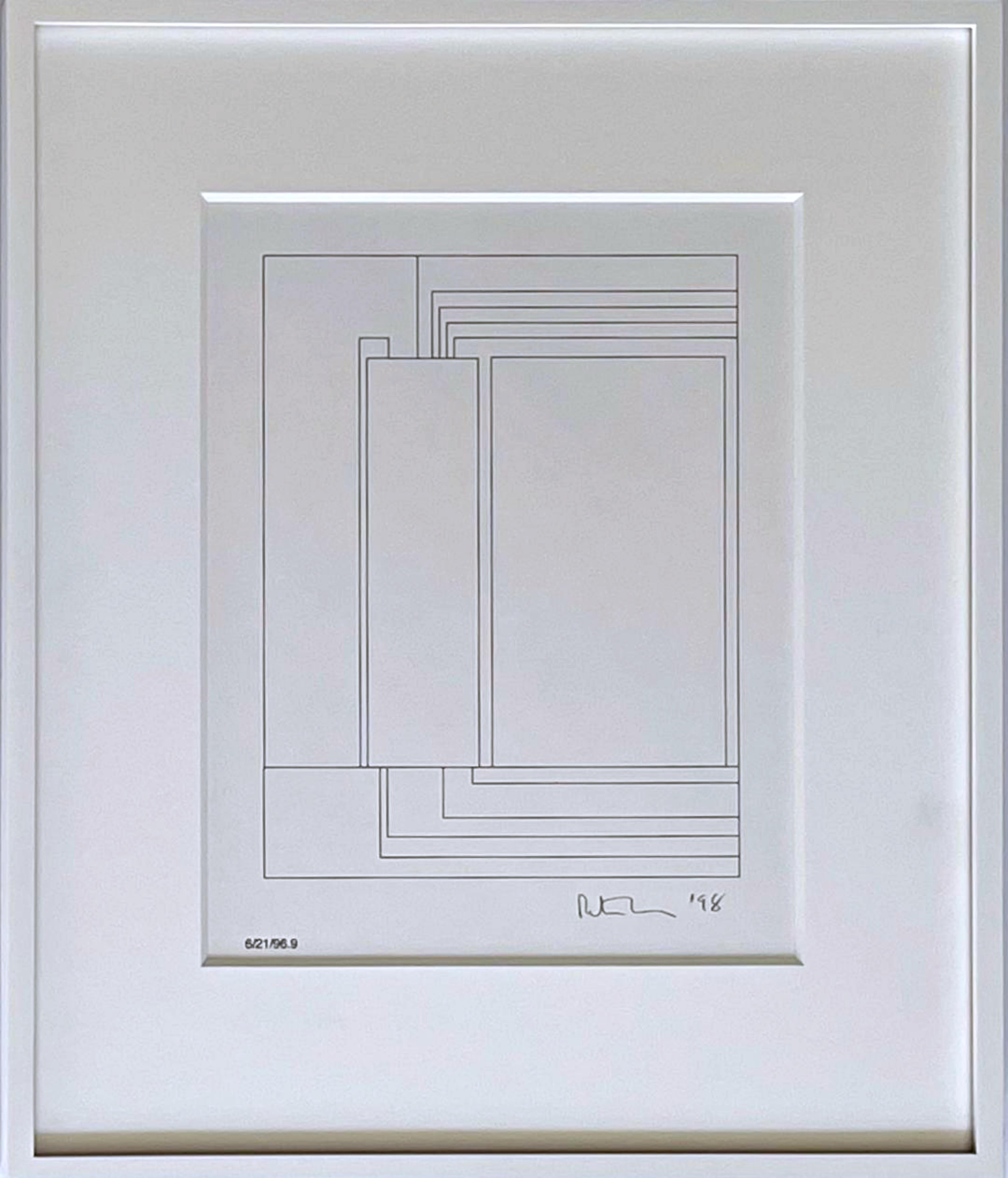
6/21/96.9, 1998
Dibujo en grafito y tinta
Firmado a mano por el artista, firmado y fechado en grafito en la parte delantera inferior derecha; en la parte delantera infer...
Categoría
Década de 1990, Geométrico abstracto, Dibujos y acuarelas abstractos
Materiales
Tinta, Grafito
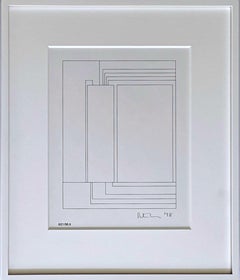
Abstracción geométrica (dibujo de grafito único y firmado, regalado a un colega artista)
Por Peter Halley
Peter Halley
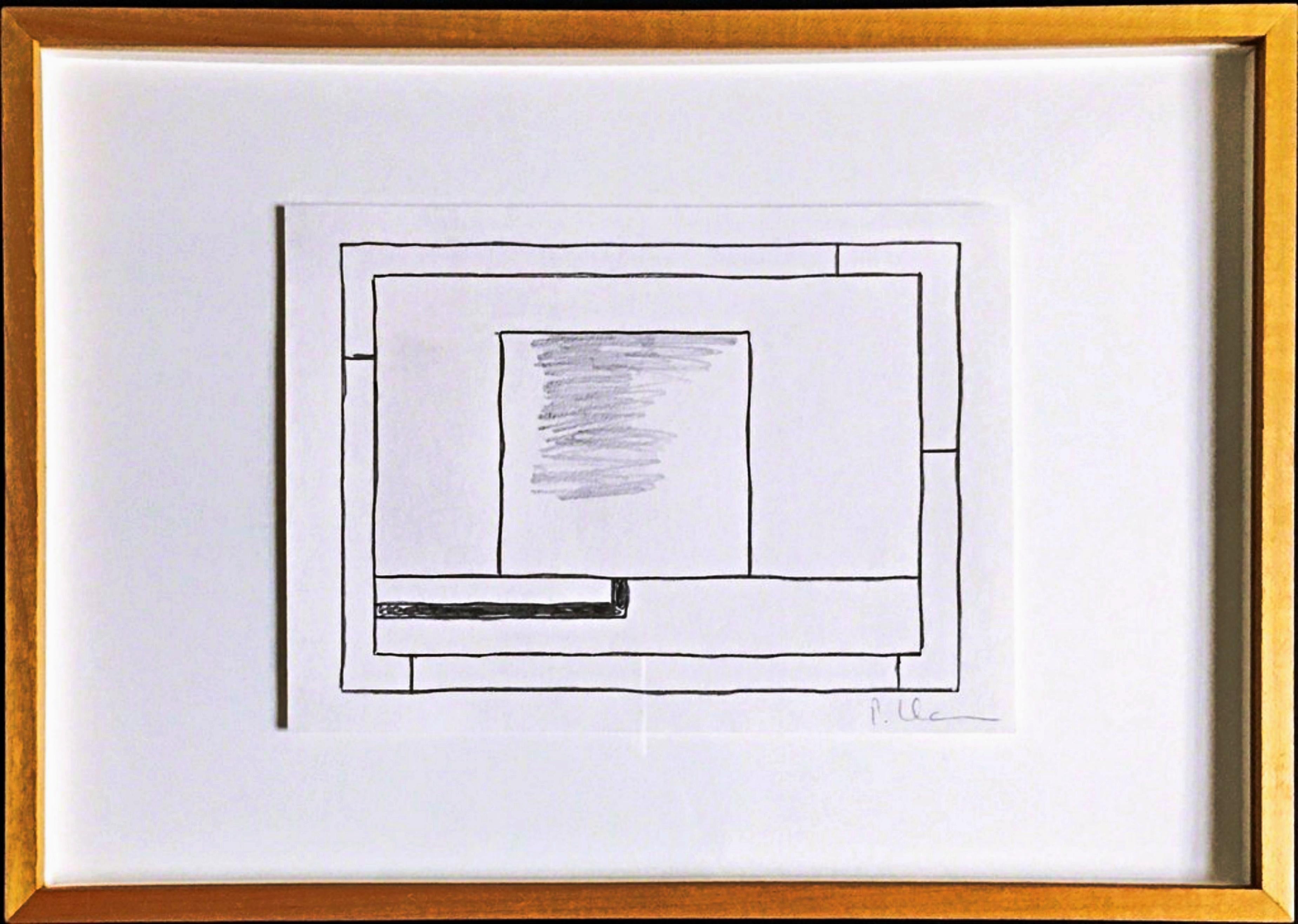
Abstracción geométrica sin título, ca. 1990
Grafito y tinta
Firmado a lápiz de grafito por Peter Halley; parte inferior derecha delantera
Marco incluido: flotado y enmar...
Categoría
Década de 1990, Geométrico abstracto, Dibujos y acuarelas abstractos
Materiales
Tinta, Grafito
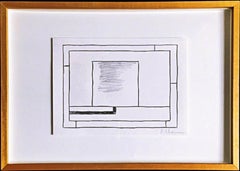
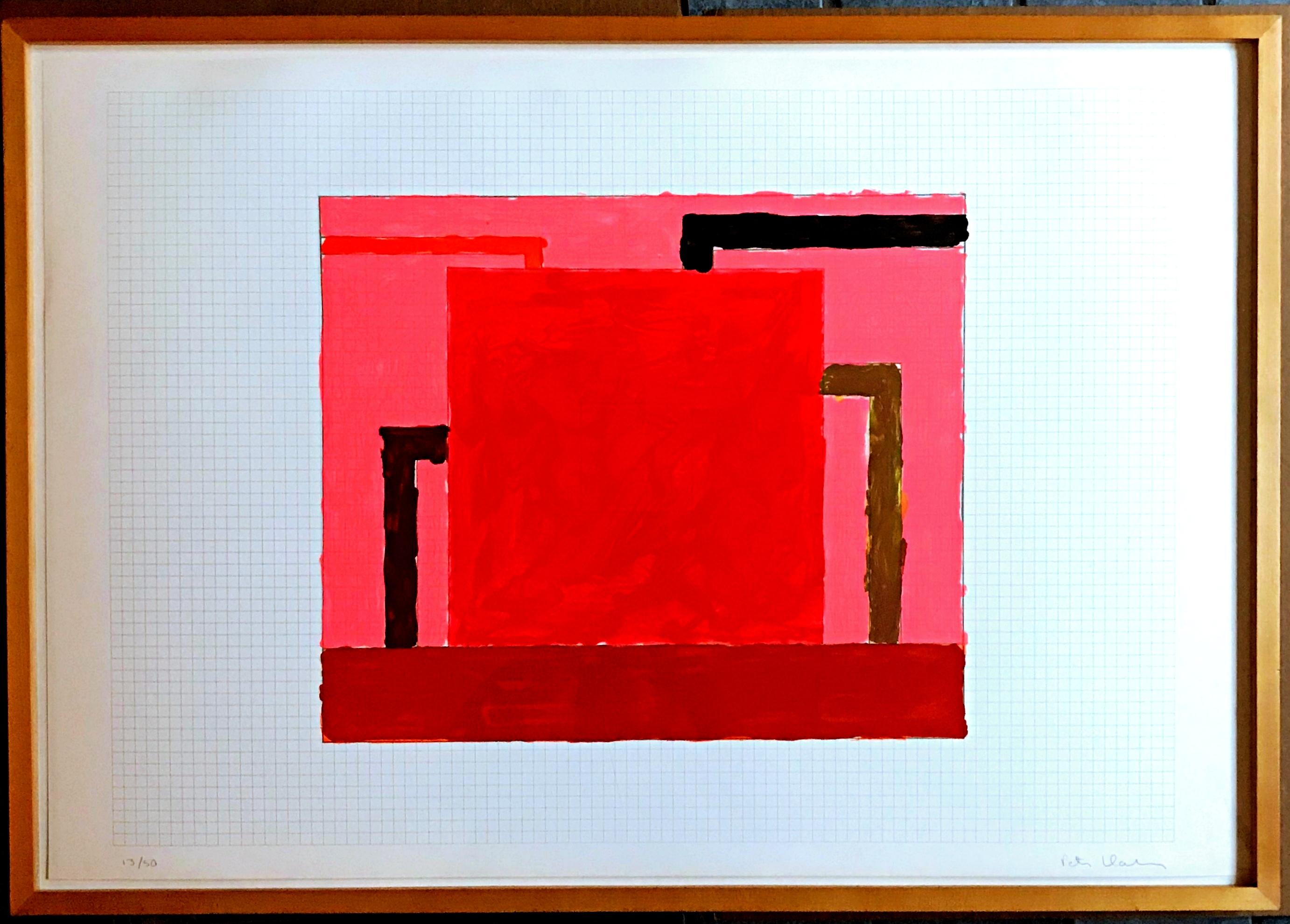
Peter Halley - CORE Geometric Abstraction Silkscreen, Lithograph Signed/N Framed
Por Peter Halley
Peter Halley
Core, 1991
Limited Edition Silkscreen with lithography on Coventry Rag paper.
Pencil signed and numbered 13/50 on the front
Publisher: Edition Schellmann
Pace Edit...
Categoría
Década de 1990, Geométrico abstracto, Impresiones abstractas
Materiales
Litografía, Pantalla
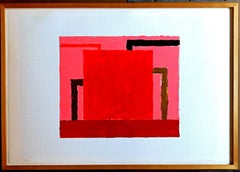
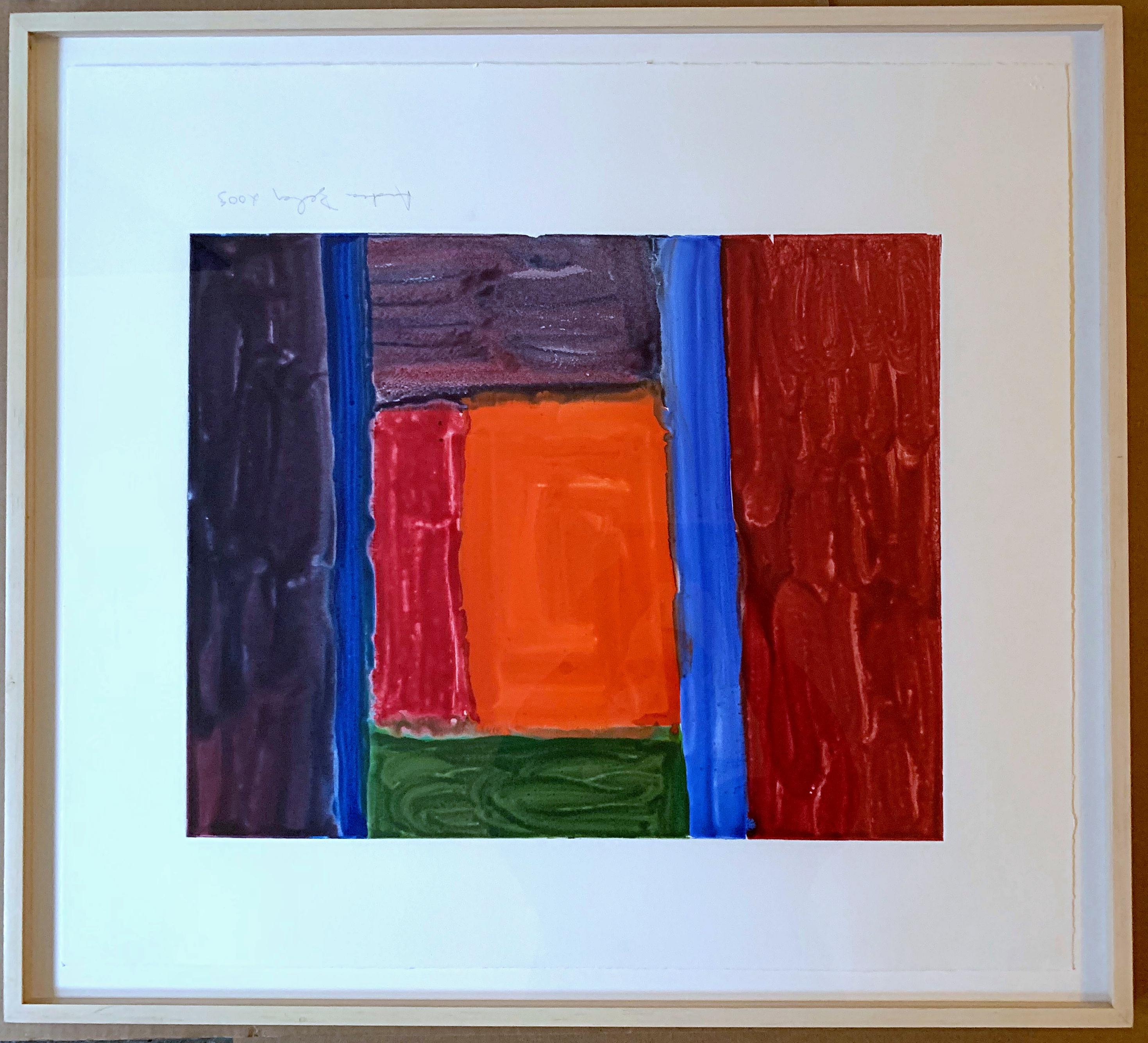
Sin título, de la Colección de Arte Lehman Brothers monotipo único enmarcado y firmado
Por Andrea Belag
Andrea Belag
Sin título, de la Colección de Arte de Lehman Brothers, 2003
Monotipo acuarela sobre papel
Firmado a lápiz y fechado en el anverso
Enmarcado
Precioso monotipo de acuarel...
Categoría
Principios de los 2000, Abstracto, Dibujos y acuarelas abstractos
Materiales
Acuarela, Monotipia, Grafito
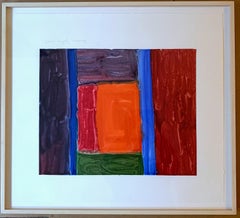
Abstracción geométrica sin título - obra única firmada e inscrita -enmarcada
Paul Pagk
Abstracción geométrica sin título, 1989
Gouache y acuarela sobre papel
Firmado, fechado e inscrito "A Jacqueline".
Marco incluido
Excelente obra única sobre papel del artis...
Categoría
Década de 1980, Geométrico abstracto, Dibujos y acuarelas abstractos
Materiales
Acuarela, Gouache, Lápiz, Grafito

También te puede gustar
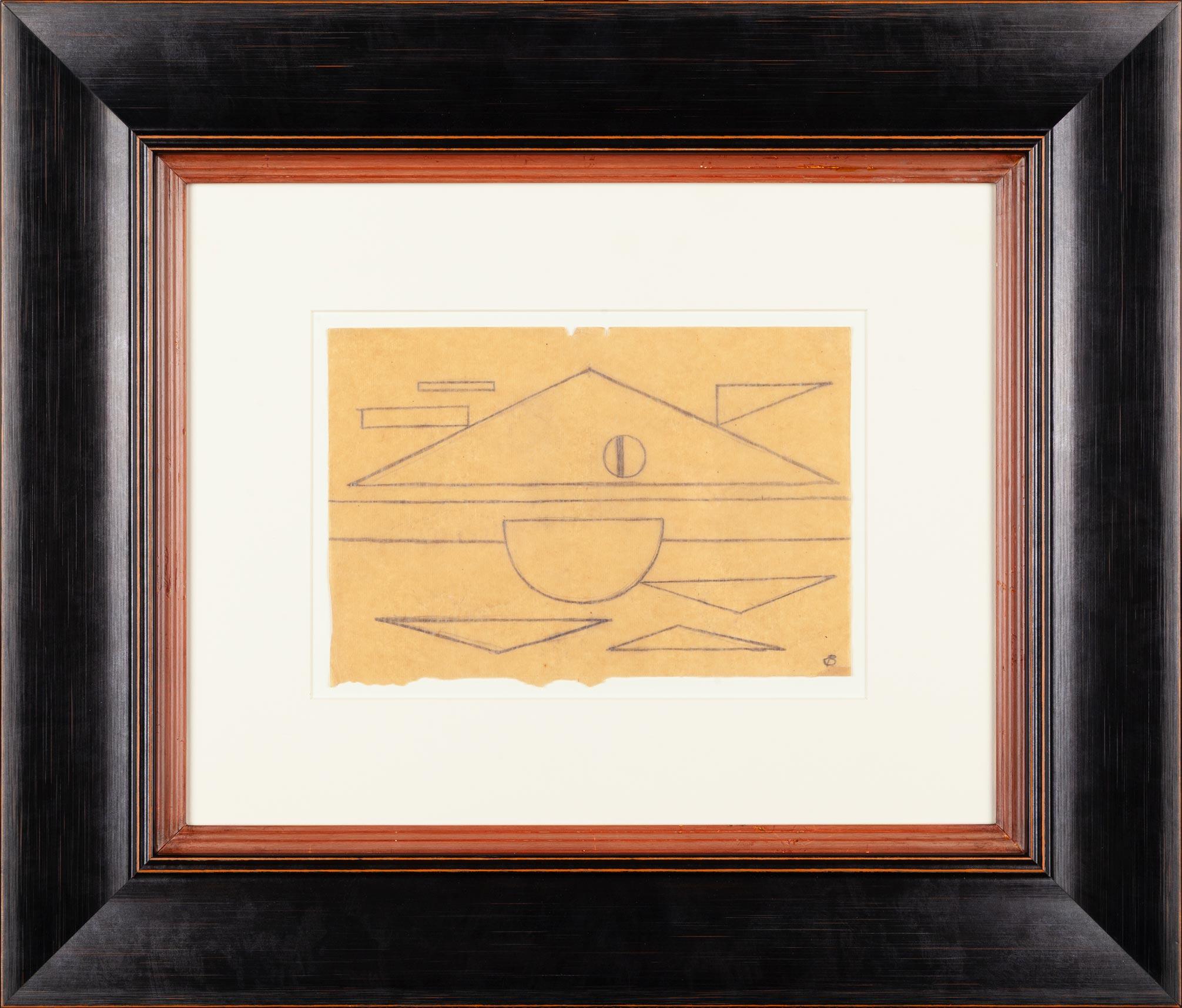
Sin título (Dibujo de la cárcel)
Por Rudolf Bauer
Rudolf Bauer nació en 1889 en el seno de una familia acomodada, aunque no acomodada, en la frontera entre Alemania y Polonia, y poco después se trasladaron a Berlín. Aunque se mostró...
Categoría
principios del siglo XX, Geométrico abstracto, Dibujos y acuarelas abstr...
Materiales
Papel, Lápiz
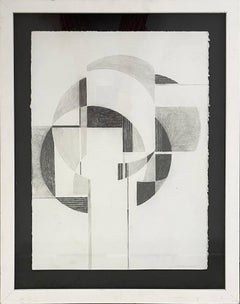
Oculus III (Dibujo enmarcado sobre papel de abstracción geométrica en blanco y negro)
Por David Dew Bruner
Dibujo geométrico abstracto en grafito inspirado en la luna
"Oculus III" de David Dew Bruner
2024
grafito sobre papel
15 x 11 pulgadas sin enmarcar / 19 x 15 pulgadas enmarcado
Davi...
Categoría
2.º década del siglo XXI, Contemporáneo, Dibujos y acuarelas abstractos
Materiales
Papel, Grafito
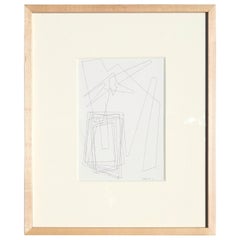
Dibujo geométrico abstracto a pluma y tinta de John Sennhauser, 1944
Por John Sennhauser
Dibujo original a pluma y tinta del artista abstracto neoyorquino John Sennhauser (1907-1978)
Firmado abajo a la derecha "J. Sennhauser" y fechado en el 44.
Titulado y fechado en el ...
Categoría
mediados del siglo XX, Dibujos y acuarelas abstractos
Materiales
Papel
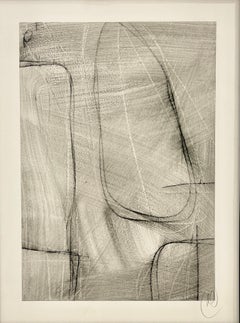
Estudio de líneas geométricas C- 5 por Murray Duncan Técnica mixta sobre papel
Por Murray Duncan
Estudios de líneas geométricas C-5 es una obra original de técnica mixta sobre papel del artista de Toronto Murray Duncan, que forma parte de su continua exploración de la geometría ...
Categoría
Siglo XXI y contemporáneo, Geométrico abstracto, Pinturas abstractas
Materiales
Pintura, Papel, Tinta, Lápiz
Oculus I (Dibujo enmarcado sobre papel de abstracción geométrica en blanco y negro)
Por David Dew Bruner
Dibujo geométrico abstracto en grafito inspirado en la luna
Oculus I de David Dew Bruner
2024
grafito sobre papel
15 x 11 pulgadas sin enmarcar / 19 x 15 pulgadas enmarcado
David De...
Categoría
2.º década del siglo XXI, Contemporáneo, Dibujos y acuarelas abstractos
Materiales
Papel, Grafito
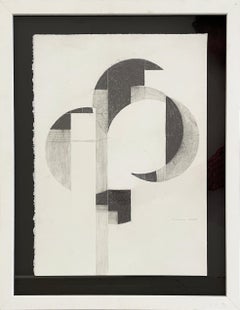
Estudios de líneas geométricas C-2 por Murray Duncan Técnica mixta sobre papel
Por Murray Duncan
Estudios de líneas geométricas C-2 es una obra original de técnica mixta sobre papel del artista de Toronto Murray Duncan, que forma parte de su continua exploración de la geometría ...
Categoría
Siglo XXI y contemporáneo, Geométrico abstracto, Pinturas abstractas
Materiales
Pintura, Papel, Tinta, Lápiz