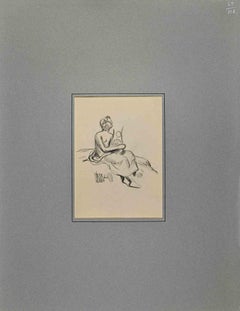
Artículos similares a Musician, The Lute Player, 1945 circa - Watercolour Painting by Duncan Grant
¿Quieres más imágenes o vídeos?
Solicita imágenes o vídeos adicionales al vendedor
1 de 8
Duncan GrantMusician, The Lute Player, 1945 circa - Watercolour Painting by Duncan Grant1945, circa
1945, circa
12.894,14 €
Acerca del artículo
Estate of Paul Roche, the Artist's partner. Unsigned.
Duncan Grant was a British artist, designer and prominent member of the Bloomsbury Group.
His father was Bartle Grant, a major in the army, and much of his early childhood was spent in India and Burma. He was a grandson of John Peter Grant, 12th Laird of Rothiemurchus and sometime Lt-Governor of Bengal. Duncan was also the first cousin twice removed of John Grant, 13th Earl of Dysart.
Grant was born in Rothiemurchus, Scotland, though much of his early childhood was spent in India and Burma. After returning to Britain permanently, he was educated at Hillbrow School, Rugby, and St. Paul's School, London. Grant showed little enthusiasm for studying, enjoying only his art classes, so was encouraged by his art teacher and his aunt, Lady Strachey, who organised drawing lessons for him. Grant’s father wanted him to join the army and turn his back on his desire to become an artist, though was eventually persuaded to allow his son to attend Westminster School of Art in 1902. This was followed by study at the Slade School, in Italy and in Paris.
He was a cousin and, for some time, a lover of Lytton Strachey. Through the Stracheys, Duncan was introduced to the Bloomsbury Group, where the economist John Maynard Keynes became another of his lovers.
Grant is best known for his painting style, which developed following the French post-impressionist exhibitions mounted in London in 1910. These were organised in part by Roger Fry, another member of the Bloomsbury Group whom Grant often worked with and was influenced by. For portraits of Fry by the Group, see the National Portrait Gallery here.
After Fry founded the Omega Workshops design house in 1913, Grant became co-director with Vanessa Bell, who was then involved with Fry. Although Grant had always been actively homosexual, a relationship with Vanessa blossomed, which was both creative and personal, and he eventually moved in with her and her two sons by her husband Clive Bell. In 1916, in support of his application for recognition as a conscientious objector, Grant joined his new lover, David Garnett, in setting up as fruit farmers in Suffolk. Both their applications were initially unsuccessful, but eventually the Central Tribunal agreed to recognise them on condition of their finding more appropriate premises. Vanessa Bell found the house named Charleston near Firle in Sussex. Relationships with Clive Bell remained amicable, and Bell stayed with them for long periods fairly often - sometimes accompanied by his own mistress, Mary Hutchinson. Their relationships were briefly summarised by his biographer Frances Spalding in the Independent, Amanda Coe in the BBC's 'Life in Squares' and recounted in many books, including this by Derek Ryan and Stephen Ross. For a summary of the interiors of the House, see Emily Senior's 2020 piece in House and Garden.
In 2020, the Charleston Trust acquired a group of erotic drawings that Grant had gifted to his friend Edward le Bas on his death.
Grant's work is included in many public collections, including that of the Courtauld, London.
In 1935 Grant was selected along with nearly 30 other prominent British artists of the day to provide works of art for the RMS Queen Mary then being built in Scotland. Grant was commissioned to provide paintings and fabrics for the first class Main Lounge. In early 1936, after his work was installed in the Lounge, directors from the Cunard Line made a walk-through inspection of the ship. When they saw what Grant had created, they immediately rejected his works and ordered it removed.
Grant is quoted in the book The Mary: The Inevitable Ship, by Neil Potter and Jack Frost:
"I was not only to paint some large murals to go over the fireplaces, but arrange for the carpets, curtains, textiles, all of which were to be chosen or designed by me. After my initial designs had been passed by the committee I worked on the actual designs for four months. I was then told the committee objected to the scale of the figures on the panels. I consented to alter these, and although it entailed considerable changes, I got a written assurance that I should not be asked to make further alterations. I carried on, and from that time my work was seen constantly by the Company's (Cunard's) representative.
When it was all ready I sent the panels to the ship to put the finishing touches to them when hanging. A few days later I received a visit from the Company's man, who told me that the Chairman had, on his own authority, turned down the panels, refusing to give any reason.
From then on, nothing went right. My carpet designs were rejected and my textiles were not required. The whole thing had taken me about a year..... I never got any reason for the rejection of my work. The company simply said they were not suitable, paid my fee, and that was that."
Duncan Grant
Duncan Grant nació en el Reino Unido en 1885. Fue un miembro destacado del grupo de Bloomsbury. Su estilo pictórico se desarrolló en la estela del postimpresionismo francés. Grant trabajó a menudo con Roger Fry y fue codirector de los Talleres Omega con Vanessa Bell. Aunque era homosexual activo, su relación con Vanessa Bell floreció. En 1916, para apoyar su solicitud de reconocimiento como objetor de conciencia, Grant y su nuevo amante, David Garner, se establecieron como fruticultores en Suffolk.
Sobre el vendedor
Aún no hay opiniones
Vendedor profesional aprobado
Todos los vendedores superan estrictas normas de autenticidad y confiabilidad
Establecido en 2010
Vendedor de 1stDibs desde 2024
44 ventas en 1stDibs
Tiempo de respuesta usual: 5 horas
- EnvíoRecuperando presupuesto…Envío desde: Kingsclere, Reino Unido
- Política de devolución
Partes de esta página se han traducido automáticamente. 1stDibs no puede garantizar la exactitud de las traducciones. El inglés es el idioma predeterminado de este sitio web.
Más de este vendedor
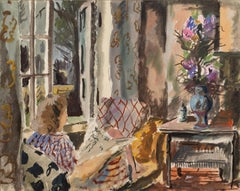
Ver todoElizabeth Reading, circa 1940 - Pintura interior en acuarela del siglo XX
Por Rowland Suddaby
Rowland Suddaby fue pintor e ilustrador, principalmente de paisajes. Suddaby nació en Kimberworth, Yorkshire, y estudió en el Sheffield College of Art desde 1926, donde obtuvo una be...
Categoría
mediados del siglo XX, Dibujos y acuarelas de interiores
Materiales
Acuarela, Gouache
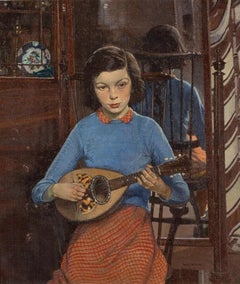
Interior con niña de Ernest Herbert Whydale, Retrato al óleo, Principios del siglo XX
Por Ernest Herbert Whydale
Interior con chica joven
Categoría
siglo XX, Pinturas
Materiales
Lienzo, Óleo
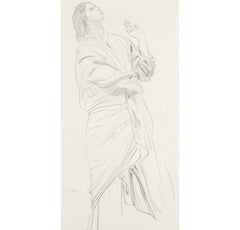
Dorelia mirando hacia arriba, Dibujo a lápiz sobre papel de Augustus John
Por Augustus John
Dorelia mirando hacia arriba, dibujo a lápiz sobre papel de Augustus John 1878-1961
Más información:
Medio: Lápiz sobre papel
39.4 x 20.3 cm
15 1/2 x 8 in
Firmado
Procedencia
Arthu...
Categoría
siglo XX, Dibujos y acuarelas de retratos
Materiales
Lápiz
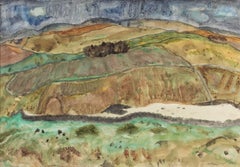
En la carretera de Meldons, acuarela de William George Gillies, hacia 1940
En la carretera de Meldons, acuarela de William George Gillies, hacia 1940
Más información:
Técnica Acuarela
41,5 x 59 cm
16 3/8 x 23 1/4 pulg.
Firmado
William George Gillies RA RS...
Categoría
siglo XX, Dibujos y acuarelas de paisajes
Materiales
Acuarela
Vida estudiantil, El artista orientalista tomando el té, Chelsea, Pintura, 1941
Vida estudiantil, El artista orientalista tomando el té, Chelsea, Pintura, 1941
Más información:
Técnica: Acuarela sobre pluma y tinta
10 x 15 in
25.4 x 38.1 cm
Firmado y fechado; a...
Categoría
siglo XX, Dibujos y acuarelas figurativos
Materiales
Acuarela
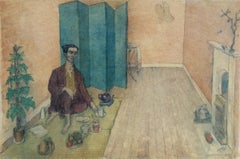
Thalia, de las Nueve Musas - Impresión aguatinta roja, naranja y blanca con figura
Por Joe Tilson
Joe Tilson 1928-2023
Thalia, de Las Nueve Musas, 2005
aguatinta
50 x 35.5 cm
19 3/4 x 14 in
firmado, inscrito y fechado a lápiz
Tras servir en la Royal Air Force (1946-49), Tilson e...
Categoría
Siglo XXI y contemporáneo, Más impresiones
Materiales
Acuatinta
También te puede gustar
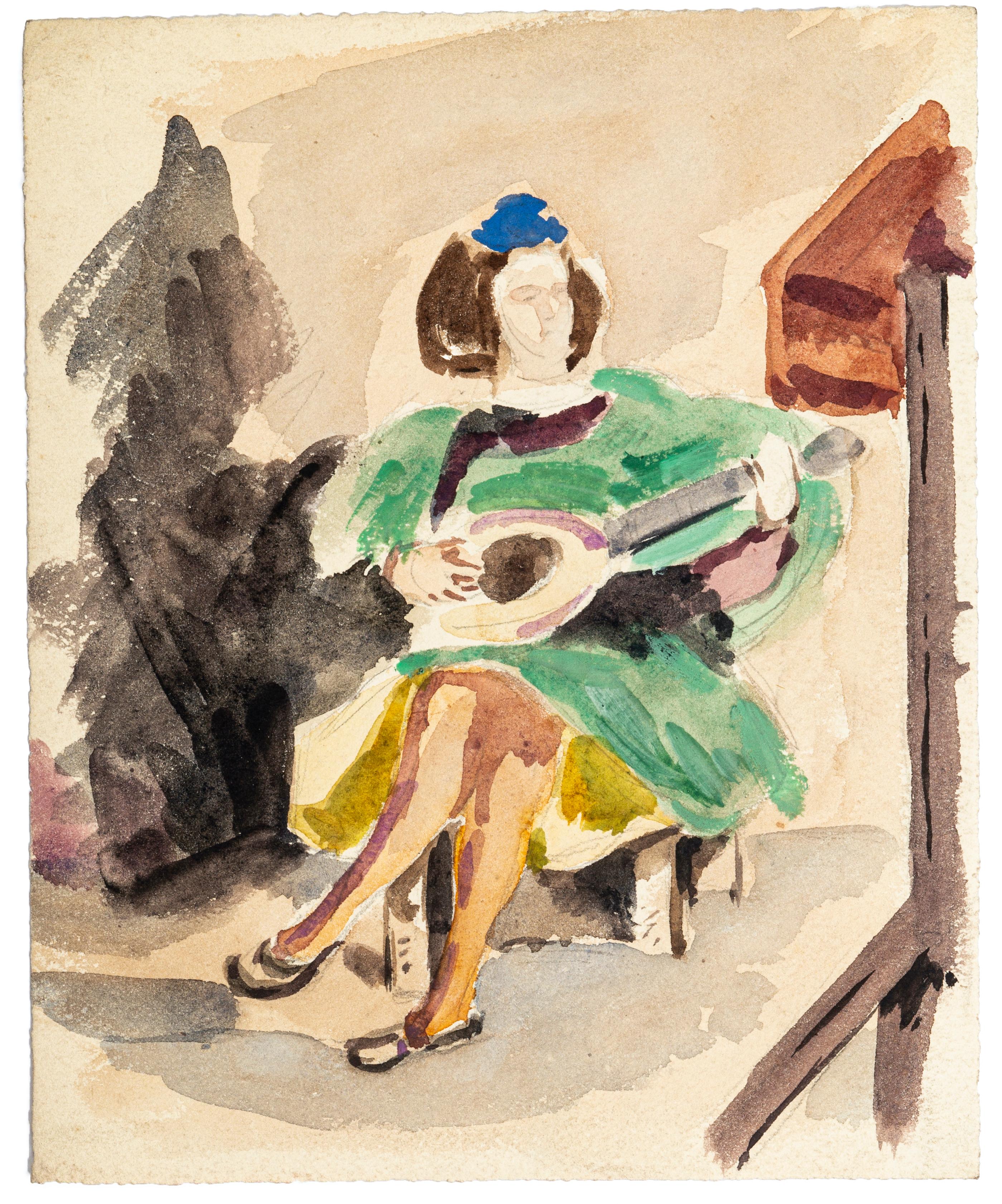
La Guitarrista - Dibujo en tinta china y acuarela de Jean Chapin - Principios de 1900
Por Jean Chapin
La Guitarrista es una acuarela coloreada realizada por Jean Chapin en la primera mitad del siglo XX.
La obra representa a una mujer tocando la guitarra.
Buenas condiciones.
Jean...
Categoría
principios del siglo XX, Dibujos y acuarelas figurativos
Materiales
Tinta, Acuarela

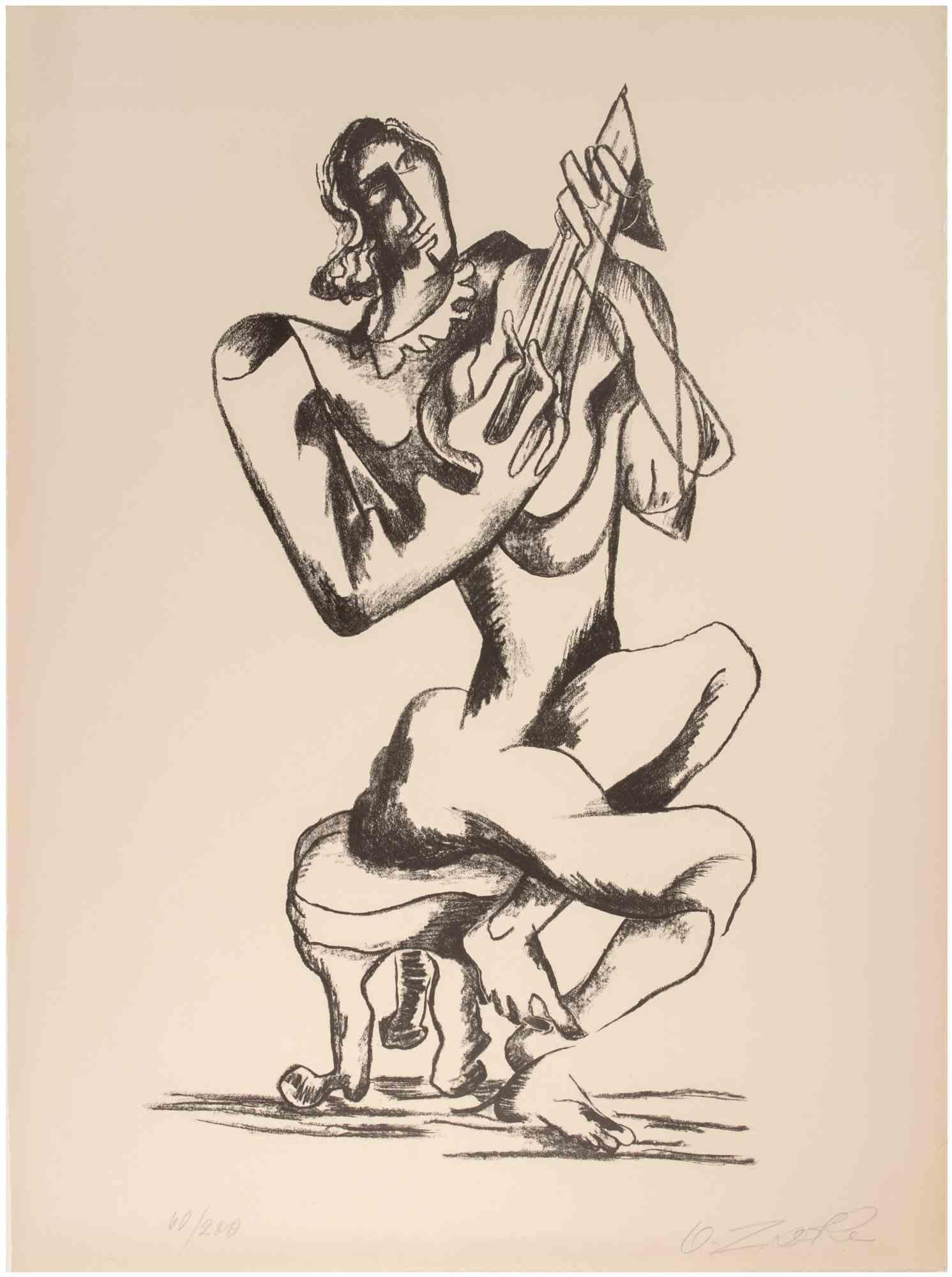
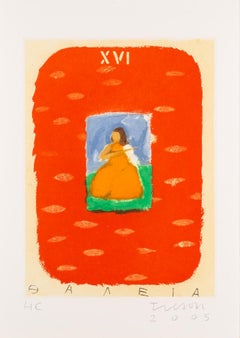
Tocador de laúd - Litografía de Ossip Zadkine - mediados del siglo XX
Por Ossip Zadkine
Tocador de Laúd es una obra de arte contemporáneo realizada por Ossip Zadkine.
Litografía sobre BFK Rives, con marca de agua y sello seco "Bodensee Verlag".
Incluye passepartout ca...
Categoría
mediados del siglo XX, Cubista, Más impresiones
Materiales
Litografía
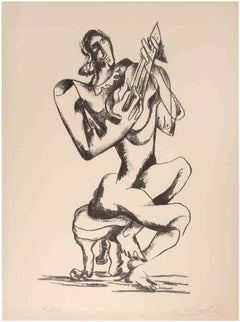
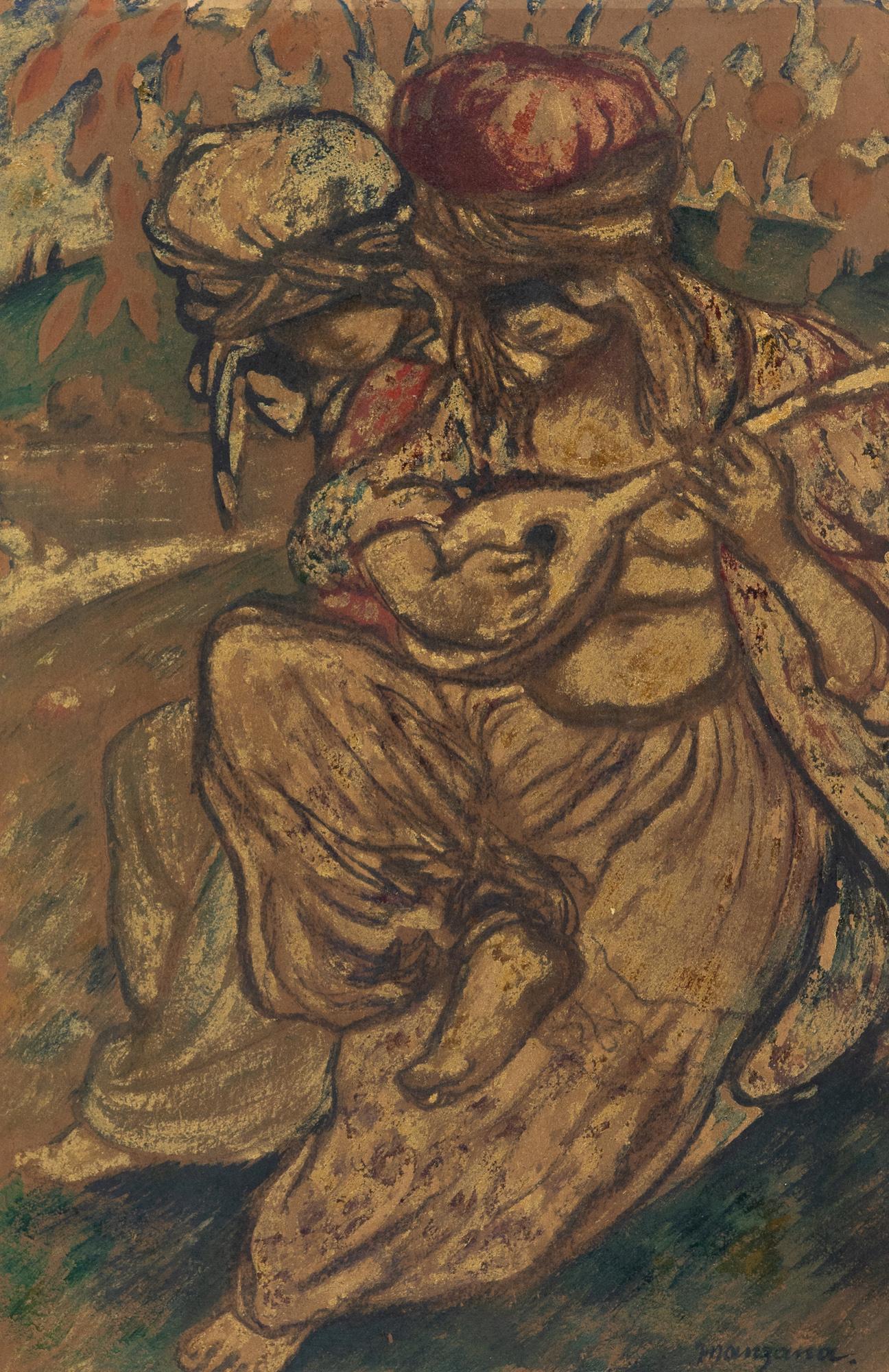
Femme à la mandoline de Georges Manzana Pissarro - Técnica mixta sobre papel
Por Georges Henri Manzana Pissarro
Femme à la mandoline de Georges Manzana Pissarro (1871-1961)
Técnica mixta sobre papel
48 x 31 cm (18 ⁷/₈ x 12 ¹/₄ pulgadas)
Firmado abajo a la derecha, manzana.
Ejecutado hacia 1910...
Categoría
Década de 1910, Posimpresionista, Técnica mixta
Materiales
Papel, Técnica mixta
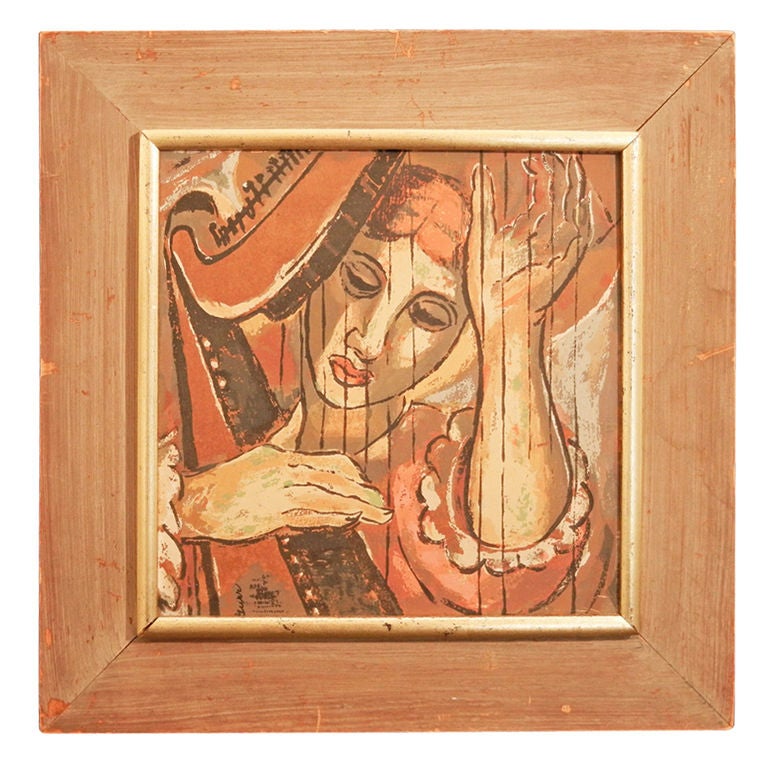
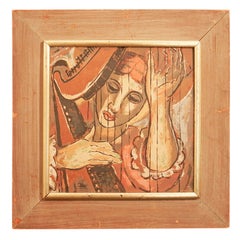
"Arpista", serigrafía de los años 30 de Lena Gurr
Por Lena Gurr
Bellamente enmarcada y elaborada, esta vista muy recortada de una arpista, vista a través de las cuerdas de su instrumento, fue pintada por Lena Gurr, una artista neoyorquina. Su ri...
Categoría
Vintage, Década de 1930, Estadounidense, Pinturas
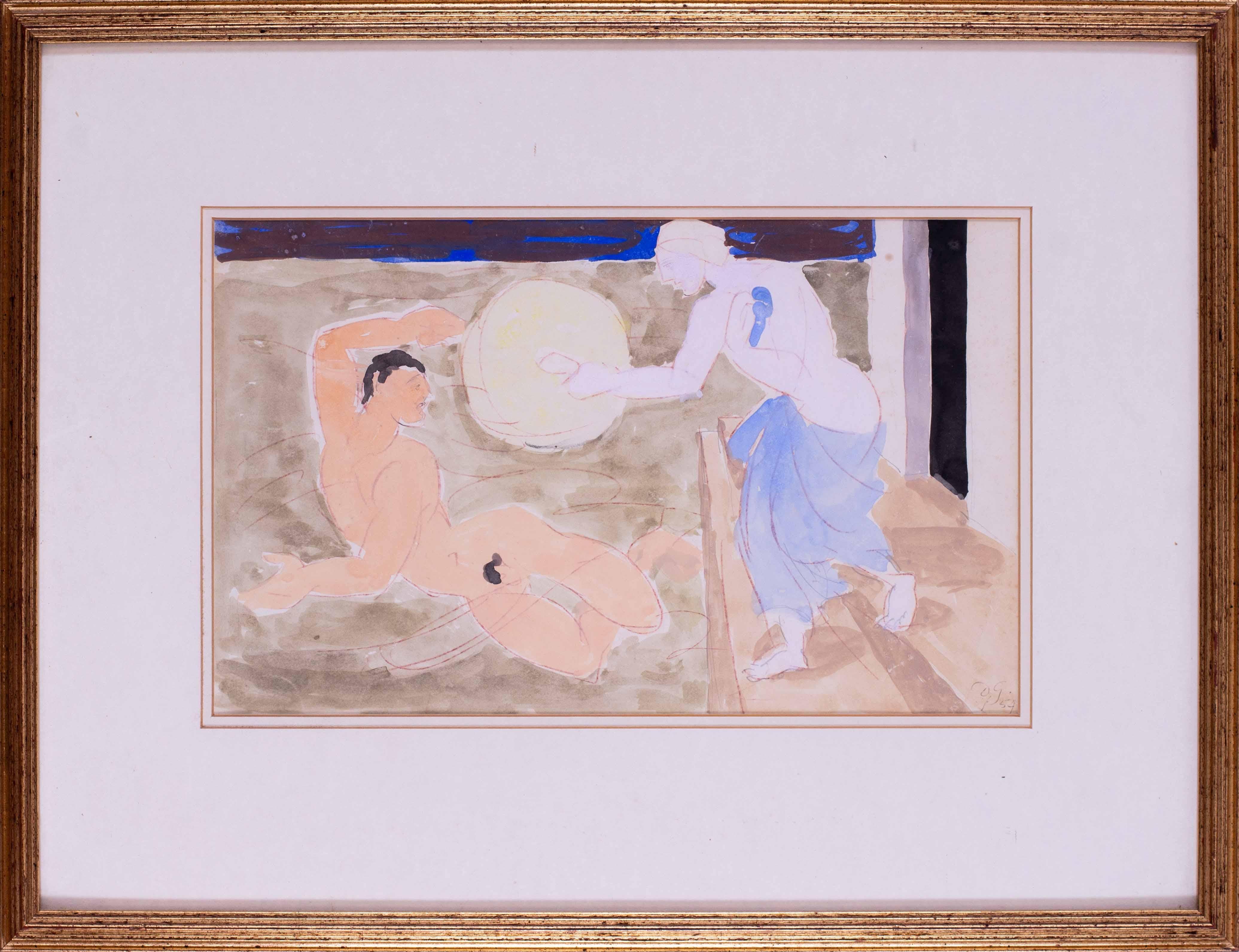
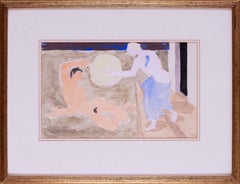
Duncan Grant acuarela original de 1954 "Hero y Leander", firmada con iniciales
Por Duncan Grant
Duncan Grant (británico, 1885 - 1978)
Héroe y Leandro, 1954
Acuarela y gouache con lápiz de color
Firmado con iniciales y fechado "DG. / 54" (abajo a la derecha)
8.3/4 x 13.7/8 in. (...
Categoría
siglo XX, Moderno, Dibujos y acuarelas figurativos
Materiales
Papel, Crayón, Acuarela, Gouache
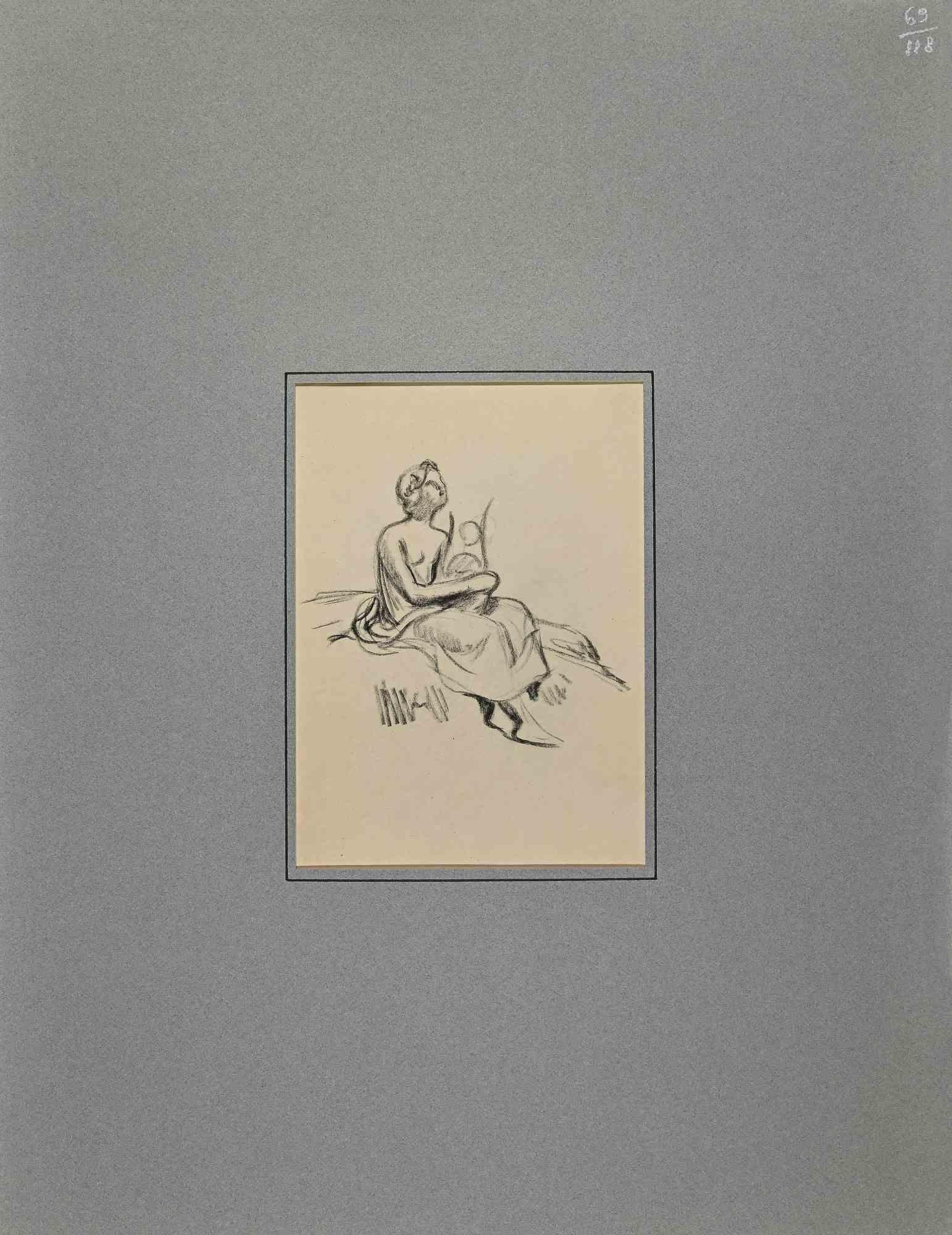
Arpista - Dibujo - Mediados del siglo XX
Arpista es un dibujo en Carboncillo sobre papel realizado por a mediados del siglo XX.
Buenas condiciones.
La obra está representada mediante trazos suaves en una composición bien ...
Categoría
mediados del siglo XX, Art Decó, Dibujos y acuarelas figurativos
Materiales
Carbón