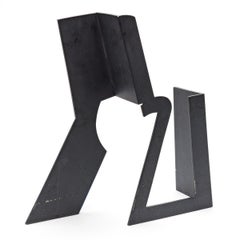
Artículos similares a Seymour Lipton - Maquette for Laureate (unique sculpture) Christie
s/Marlborough
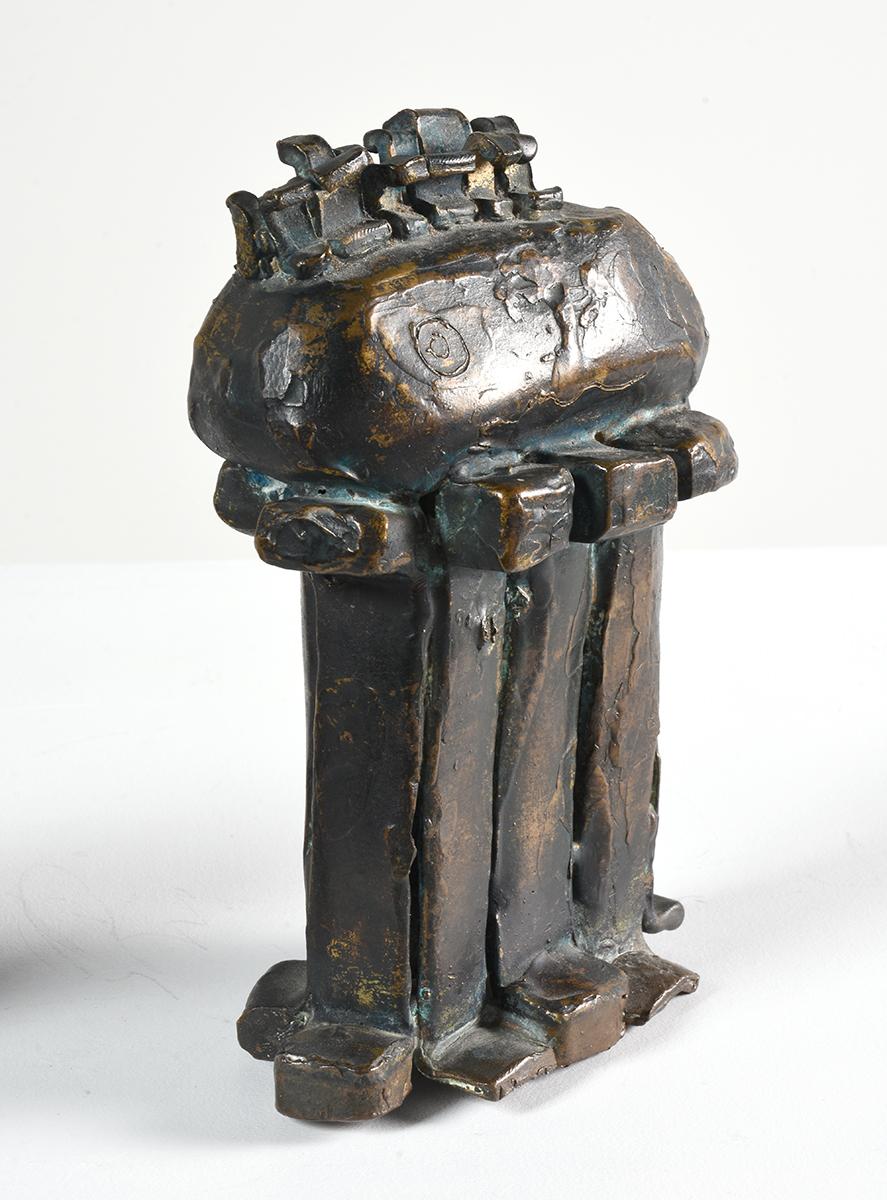
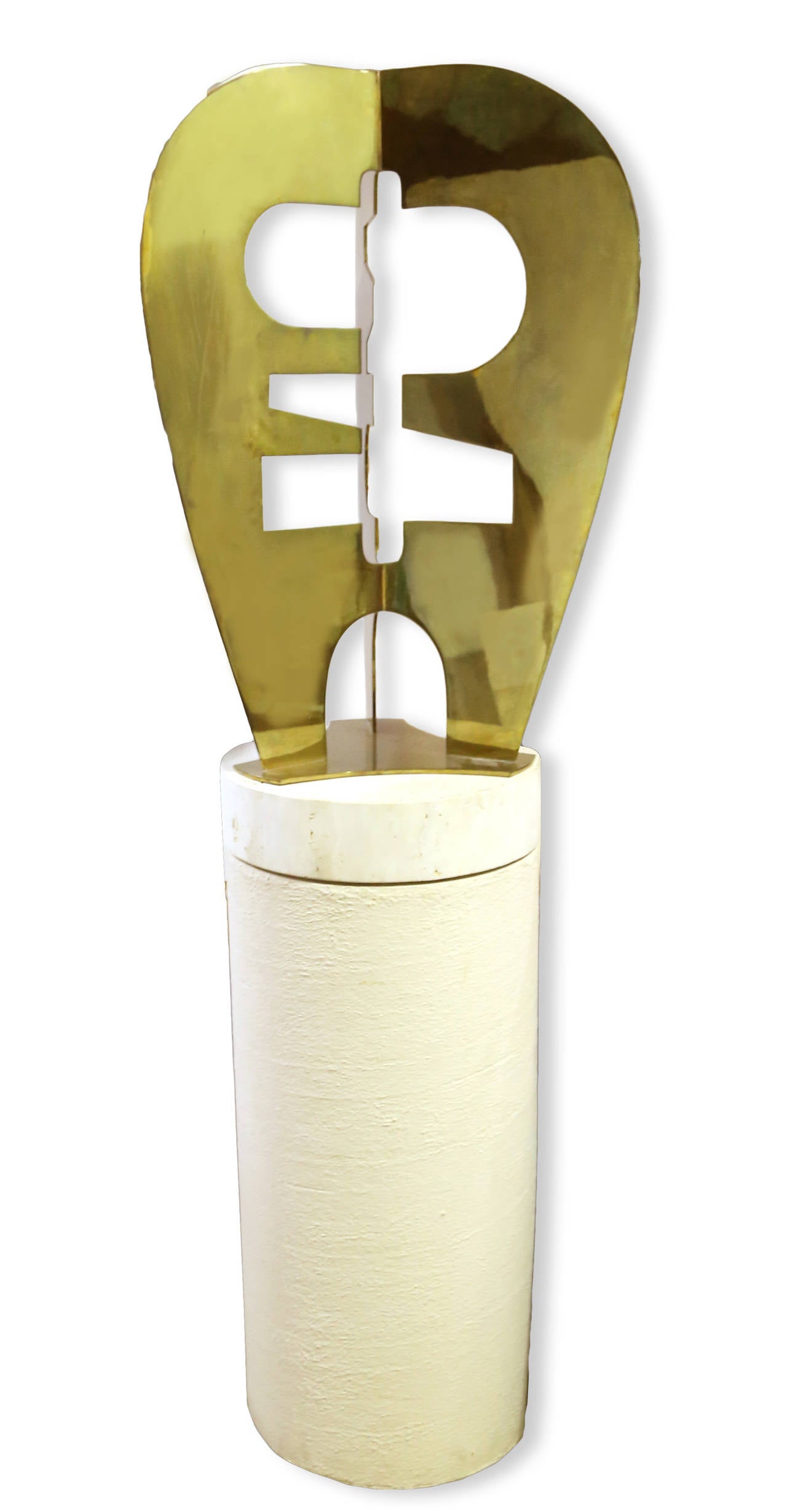
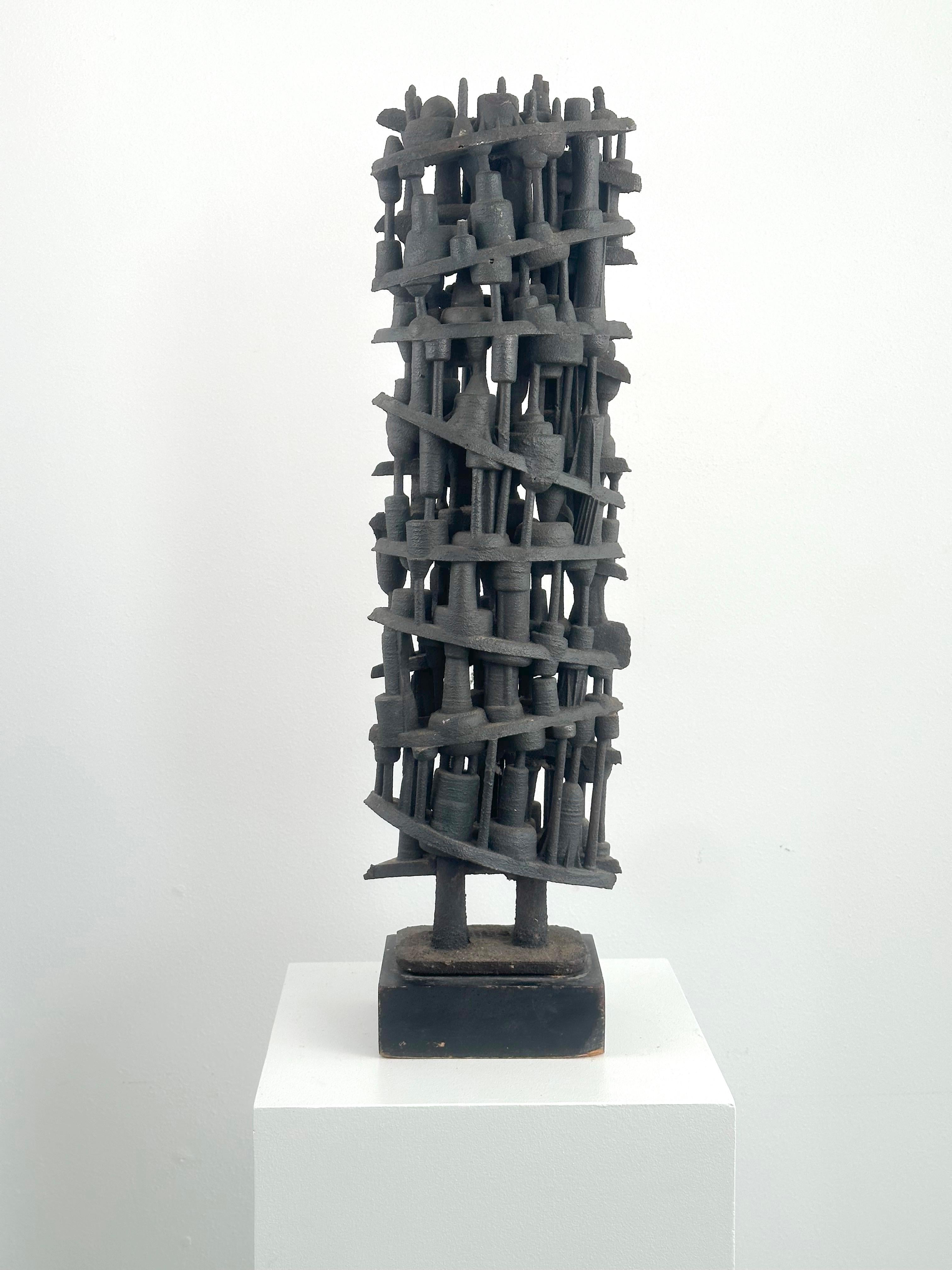
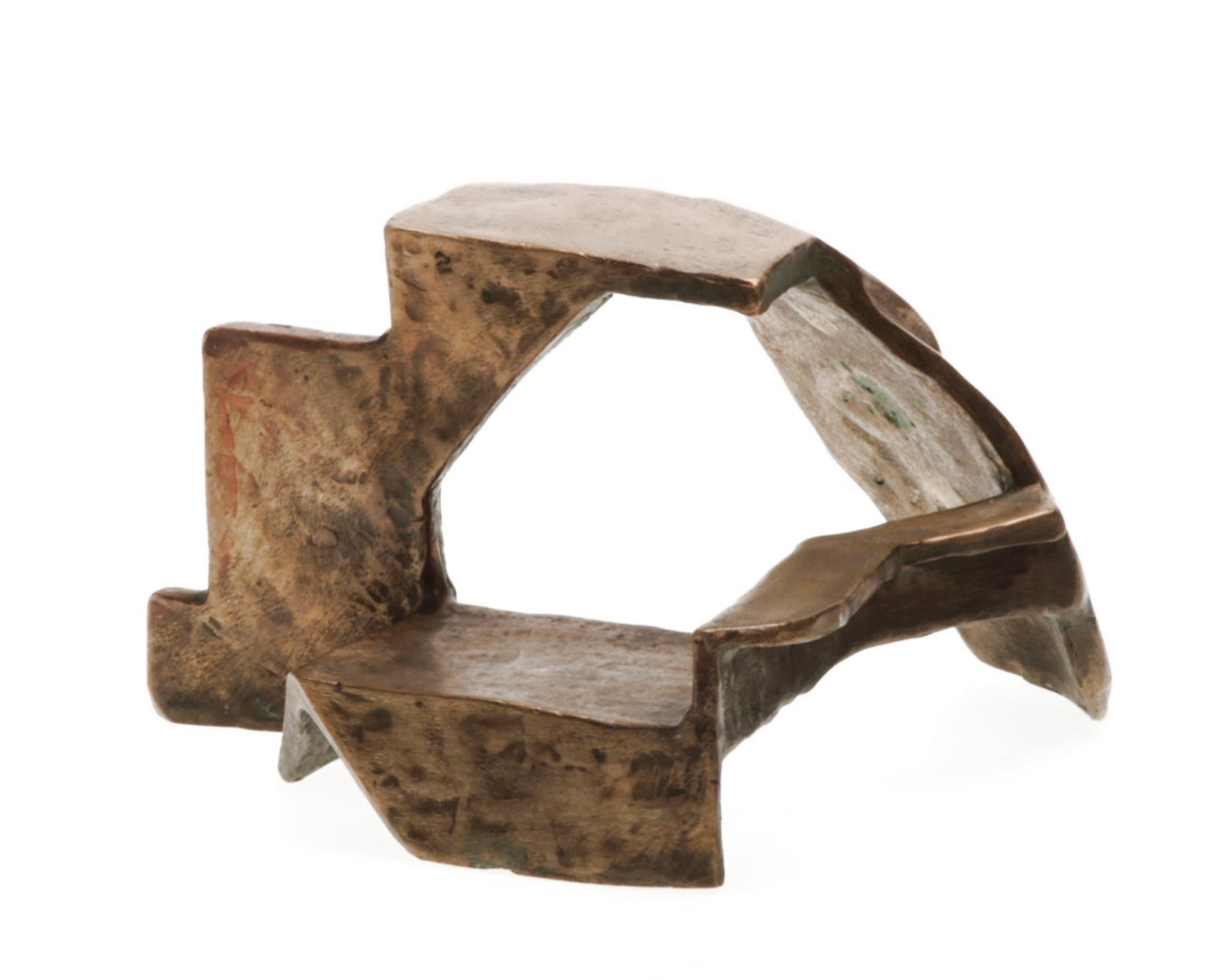

¿Quieres más imágenes o vídeos?
Solicita imágenes o vídeos adicionales al vendedor
1 de 3
Seymour LiptonSeymour Lipton - Maquette for Laureate (unique sculpture) Christie
s/Marlborough1968-1969
1968-1969
83.487,68 €
Acerca del artículo
Seymour Lipton
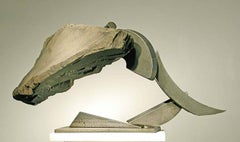
Maquette for Laureate, ca. 1968-1969
Nickel silver on monel metal
Unique
18 × 8 1/2 × 7 inches
Marlborough-Gerson Gallery, New York
Acquired from the above by the previous owner, 1969
thence by descent
Christie's New York: Monday, June 30, 2008 [Lot 00199]
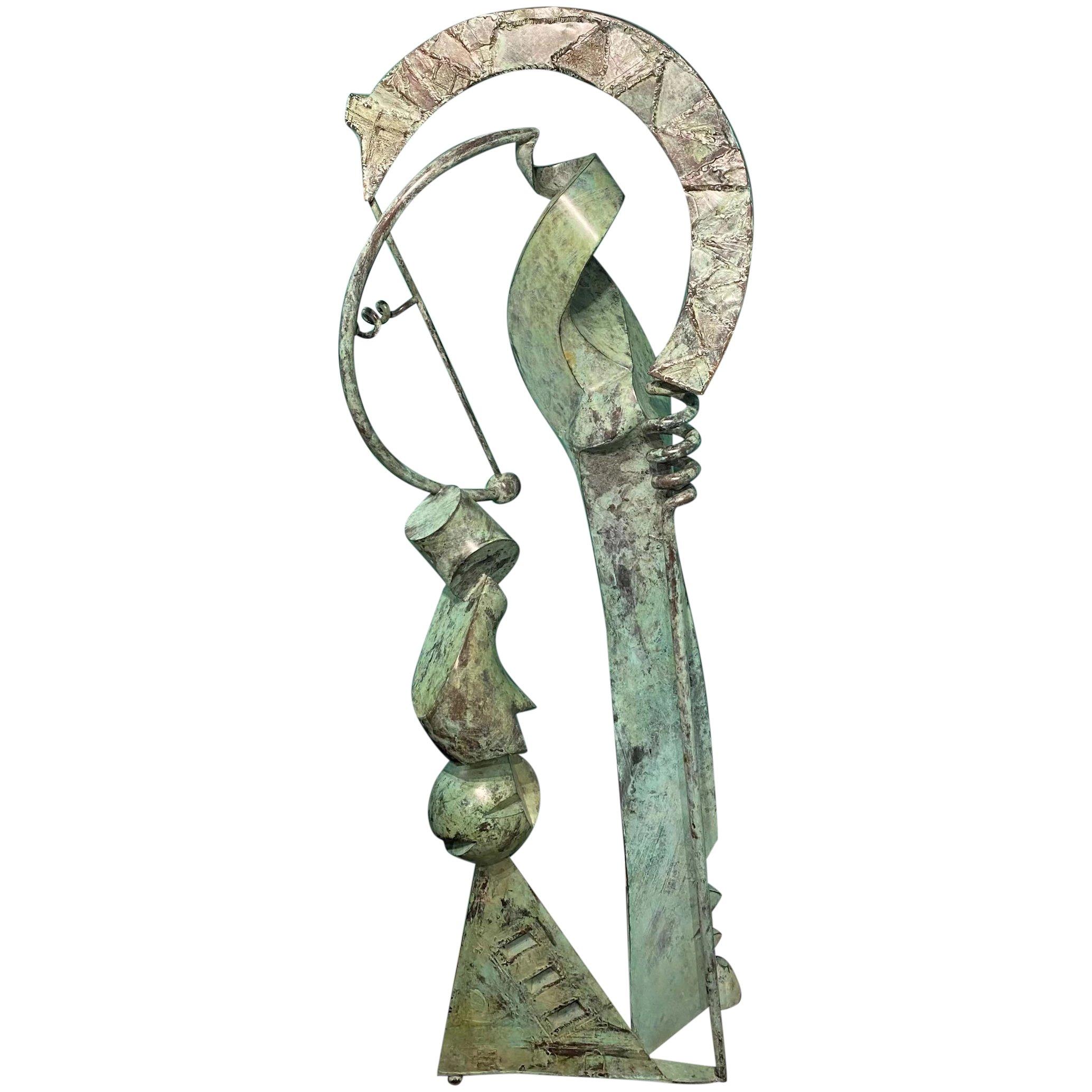
Acquired from the above Christie's sale This unique sculpture by important Abstract Expressionist sculptor Seymour Lipton is a maquette of the monumental sculpture "Laureate" - one of Lipton's most iconic and influential works located on the Riverwalk in downtown Milwaukee, Wisconsin. Laureate is a masterpiece that was commissioned by the Allen-Bradley Company in memory of Harry Lynde Bradley and as an enhancement for the newly constructed Performing Arts Center. It is located on the east bank of the Milwaukee River at 929 North Water Street. The Bradley family in Milwaukee were renowned patrons of modernist sculpture, known for their excellent taste who also founded an eponymous sculpture park. For reference only is an image of the monumental "Laureate" one of Milwaukee's most beloved public sculptures. According to the Smithsonian, which owns a different unique variation of this work, "The full-size sculpture Laureate was commissioned by the Marcus Center for the Performing Arts in Milwaukee. In the initial drawings, Seymour Lipton combined details from the architectural plan with a wide variety of images, ranging from musical instruments to a lighthouse on the island of Tobago. He transformed the basic shapes from these sketches into a welded sculpture, which evokes a figure composed of columns, harp strings, and coiled rope. Lipton created this piece to celebrate achievement in the arts. The dramatic silhouette commands your attention, reflecting the title Laureate, which means worthy of honor and distinction. The final version of the piece is over twelve feet high and stands out against the pale, flat buildings of the arts center.,,"
Provenance
Marlborough-Gerson Gallery, New York
Acquired from the above by the previous owner, 1969
thence by descent
Christie's New York: Monday, June 30, 2008 [Lot 00199]
Acquired from the above Christie's sale
About Seymour Lipton:
Born in New York City in 1903, Seymour Lipton (1903-1986) grew up in a Bronx tenement at a time when much of the borough was still farmland. These rural surroundings enabled Lipton to explore the botanical and animal forms that would later become sources for his work. Lipton’s interest in the dialogue between artistic creation and natural phenomena was nurtured by a supportive family and cultivated through numerous visits to New York’s Museum of Natural History as well as its many botanical gardens and its zoos. In the early 1920s, with the encouragement of his family, Lipton studied electrical engineering at Brooklyn Polytechnic Institute and pursued a liberal arts education at City College. Ultimately, like fellow sculptor Herbert Ferber, Lipton became a dentist, receiving his degree from Columbia University in 1927. In the late 1920s, he began to explore sculpture, creating clay portraits of family members and friends.
In addition to providing him with financial security, dentistry gave Lipton a foundation in working with metal, a material he would later use in his artwork. In the early 1930s, though, Lipton’s primary sculptural medium was wood. Lipton led a comfortable life, but he was also aware of the economic and psychological devastation the Depression had caused New York. In response, he generally worked using direct carving techniques—a form of sculpting where the artist “finds” the sculpture within the wood in the process of carving it and without the use of models and maquettes. The immediacy of this practice enabled Lipton to create a rich, emotional and visual language with which to articulate the desperation of the downtrodden and the unwavering strength of the disenfranchised. In 1935, he exhibited one such early sculpture at the John Reed Club Gallery in New York, and three years later, ACA Gallery mounted Lipton’s first solo show, which featured these social-realist-inspired wooden works. In 1940, this largely self-taught artist began teaching sculpture at the New School for Social Research, a position he held until 1965.
In the 1940s, Lipton began to devote an increasing amount of time to his art, deviating from wood and working with brass, lead, and bronze. Choosing these metals for their visual simplicity, which he believed exemplified the universal heroism of the “everyman,” Lipton could also now explore various forms of abstraction. Lipton’s turn towards increasing abstraction in the 1940s allowed him to fully develop his metaphorical style, which in turn gave him a stronger lexicon for representing the horrors of World War II and questioning the ambiguities of human experience. He began his metal work with cast bronze sculptures, but, in 1946, he started welding sheet metal and lead. Lipton preferred welding because, as direct carving did with wood, this approach allowed “a more direct contact with the metal.”[ii] From this, Lipton developed the technique he would use for the remainder of his career: “He cut sheet metal, manipulated it to the desired shapes, then joined, soldered, or welded the pieces together. Next, he brazed a metal coating to the outside to produce a uniform texture.”[iii]
In 1950, Lipton arrived at his mature style of brazing on Monel metal. He also began to draw extensively, exploring the automatism that abstract expressionist painters were boasting at the time. Like contemporaries such as Jackson Pollock, Lipton was strongly influenced by Carl Jung’s work on the unconscious mind and the regenerative forces of nature. He translated these two-dimensional drawings into three-dimensional maquettes that enabled him to revise his ideas before creating the final sculpture.The forms that Lipton produced during this period were often zoomorphic, exemplifying the tension between the souls of nature and the automatism of the machine.
In the years following the 1950s, Lipton’s optimism began to rise, and the size of his work grew in proportion. The oxyacetylene torch—invented during the Second World War—allowed him to rework the surfaces of metal sculptures, thus eliminating some of the risks involved with producing large-scale finished works. In 1958, Lipton was awarded a solo exhibition at the Venice Biennale and was thus internationally recognized as part of a small group of highly regarded avant-garde constructivist sculptors. In 1960, he received a prestigious Guggenheim Award, which was followed by several prominent public commissions, including his heroic Archangel, currently residing in Lincoln Center’s David Geffen Hall.
A number of important solo exhibitions of his work followed at The Phillips Collection in Washington, DC (1964); the Milwaukee Art Center and University of Wisconsin, Milwaukee (1969); the Virginia Museum of Fine Arts in Richmond (1972); the Everson Museum in Syracuse, NY (1973); the Herbert E. Johnson Museum of Art of Cornell University in Ithaca, NY (1973); the National Collection of Fine Arts, Smithsonian Institution (now the Smithsonian American Art Museum) in Washington, DC (1978); and a retrospective in 1979 at The Jewish Museum in New York. In 1982 and 1984 alone, two exhibitions of his sculpture, organized respectively by the Mint Museum (Charlotte, NC) and the Hillwood Art Gallery of Long Island University (Greenvale, NY), traveled extensively across museums and university galleries around the nation. In 2000, the traveling exhibition An American Sculptor: Seymour Lipton was first presented by the Palmer Museum of Art of Pennsylvania State University in University Park. Most recently, in 2009, the Ackland Art Museum in Chapel Hill, NC mounted The Guardian and the Avant-Garde: Seymour Lipton’s Sentinel II in Context.
Since 2004, Michael Rosenfeld Gallery has been the exclusive representative of the Estate of Seymour Lipton and has presented two solo exhibitions of his work—Seymour Lipton: Abstract Expressionist Sculptor (2005) and Seymour Lipton: Metal (2008). In 2013, Michael Rosenfeld Gallery presented Abstract Expressionism, In Context: Seymour Lipton, which included twelve major sculptures by the artist, along with works by Charles Alston, Norman Bluhm, Beauford Delaney, Willem de Kooning, Jay DeFeo, Michael Goldberg, Adolph Gottlieb, Hans Hofmann, Lee Krasner, Norman Lewis, Conrad Marca-Relli, Boris Margo, Alfonso Ossorio, Richard Pousette-Dart, Milton Resnick, Charles Seliger, Alma Thomas, Mark Tobey, Jack Tworkov and Hale Woodruff.
Other notable group exhibitions in recent years include: Abstract Expressionist New York at the Museum of Modern Art in New York (2010); Encounters with the 1930s at the Museo Nacional Centro de Arte Reina Sofía in Madrid, Spain (2012); Its Surreal Thing: The Temptation of Objects at the Sheldon Museum of Art, University of Nebraska in Lincoln (2013); Abstraction: Drawings by Sculptors at The Metropolitan Museum of Art in New York (2015) and Marvelous Objects: Surrealist Sculpture from Paris to New York at the Hirshhorn Museum and Sculpture Garden in Washington, DC (2015). In 2018, the Art Gallery of Ontario in Toronto included Lipton’s work in the reinstallation of their permanent collection, Look:Forward.
Seymour Lipton’s works are in numerous museum collections worldwide including the Albright-Knox Art Gallery, Buffalo, NY; Arkansas Art Center, Little Rock, AR; Art Gallery of Ontario, Toronto, Canada; Baltimore Museum of Art, Baltimore, MD; Brooklyn Museum of Art, Brooklyn, NY; Cantor Art Center, Stanford University, Palo Alto, CA; Cleveland Museum of Art, Cleveland, OH; Columbus Museum of Art, Columbus, OH; Corcoran Museum of Art, Washington, DC; Crystal Bridges Museum of Art, Bentonville, AR; Dallas Museum of Art, Dallas, TX; Delaware Art Museum, Wilmington, DE; Denver Art Museum, Denver, CO; Des Moines Art Center, Des Moines, IA; Detroit Institute of Arts, Detroit, MI; Didrichsen Museum, Helsinki, Finland; Governor Nelson A. Rockefeller Empire State Plaza Art Collection, Albany, NY; Grey Art Gallery, New York University, New York, NY; Hammer Art Museum, Los Angeles, CA; Herbert F. Johnson Museum of Art, Cornell University, Ithaca, NY; Hillwood Art Museum, Long Island University, Brookville, NY; Hirshhorn Museum and Sculpture Garden, Smithsonian Institution, Washington, DC; The Jewish Museum, New York, NY; The Metropolitan Museum of Art, New York, NY; The Mint Museum of Art, Charlotte, NC; Mobile Museum of Art, Mobile, AL; Museum of Art, Rhode Island School of Design, Providence, RI; Museum of Fine Arts, Boston, MA; The Museum of Modern Art, New York, NY; The Nelson-Atkins Museum of Art, Kansas City, MO; National Gallery of Art, Washington, DC; Neuberger Museum of Art, Purchase College, State University of New York, Purchase, NY; New Britain Museum of Art, New Britain, CT; New Orleans Museum of Art, New Orleans, LA; Newark Museum, Newark, NJ; Oklahoma City Museum of Art, Oklahoma City, OK; Pennsylvania Academy of Fine Arts, Philadelphia, PA; Philadelphia Museum of Art, Philadelphia, PA; The Phillips Collection, Washington, DC; Phoenix Art Museum, Phoenix, AZ; Portland Art Museum, Portland, OR; San Diego Museum of Art, San Diego, CA; San Francisco Museum of Modern Art, San Francisco, CA; San José Museum of Art, San José, CA; Santa Barbara Museum, Santa Barbara, CA; São Paulo Museum, São Paulo, Brazil; Smithsonian American Art Museum, Washington, DC; Tamayo Museum, Mexico City, Mexico; Tel Aviv Museum, Tel Aviv, Israel; Tucson Museum of Art, Tucson, AZ; Virginia Museum of Fine Art, Richmond, VA; Wadsworth Atheneum Museum of Art, Hartford, CT; Whitney Museum of American Art, New York, NY; Wichita Art Museum, Wichita, KS; and Yale University Art Gallery, New Haven, CT.
- Courtesy of Micheal Rosenfeld
- Creador:Seymour Lipton (1903 - 1986, Americana)
- Año de creación:1968-1969
- Dimensiones:Altura: 45,72 cm (18 in)Anchura: 21,59 cm (8,5 in)Profundidad: 17,78 cm (7 in)
- Medio:
- Movimiento y estilo:
- Época:
- Estado:
- Ubicación de la galería:New York, NY
- Número de referencia:1stDibs: LU1745217502012
Seymour Lipton
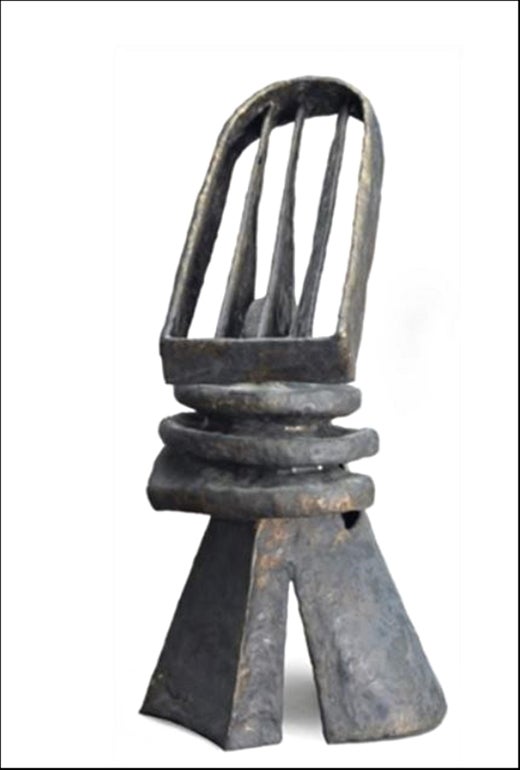
Seymour Lipton fue un escultor expresionista abstracto estadounidense. Fue miembro de la Escuela de Nueva York que obtuvo un amplio reconocimiento en la década de 1950. Sus primeras elecciones de medio pasaron de la madera al plomo y luego al bronce, y es más conocido por su trabajo en metal. Realizó varias innovaciones técnicas, como la soldadura de varillas de níquel-plata en láminas de Monel para crear formas resistentes a la oxidación. A través de la escultura de metal, Lipton se esforzó por retratar las complejidades internas de la psique humana mediante formas que se encierran y se oponen entre sí, interrelacionando formas convexas y cóncavas, sólidas y huecas. Aunque su imaginería se basaba a menudo en estímulos visuales, sus expresivas abstracciones nunca fueron traducciones literales del mundo visible. Alteraba y ordenaba las formas para crear esculturas que simbolizaran conceptos intangibles y universales absorbidos de la sociología, la psicología y el mito.
Sobre el vendedor
5,0
Vendedor Platino
Vendedores premium con una calificación de +4,7 y tiempos de respuesta de 24 horas
Establecido en 2007
Vendedor de 1stDibs desde 2022
480 ventas en 1stDibs
Tiempo de respuesta usual: 2 horas
- EnvíoRecuperando presupuesto…Envío desde: New York, NY
- Política de devolución
Partes de esta página se han traducido automáticamente. 1stDibs no puede garantizar la exactitud de las traducciones. El inglés es el idioma predeterminado de este sitio web.
Más de este vendedor
Ver todoEscultura abstracta de bronce, Obra única firmada procedente del patrimonio de Arthur Carr
Por Peter Reginato
Peter Reginato
Escultura abstracta de bronce, ca. 1987
Bronce
Firmado en la parte inferior
4 × 6 1/2 × 5 1/2 pulgadas
Esta escultura de bronce es obra del escultor abstracto estadoun...
Categoría
Década de 1980, Abstracto, Esculturas abstractas
Materiales
Bronce
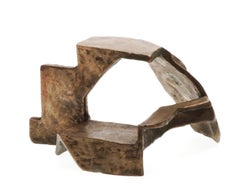
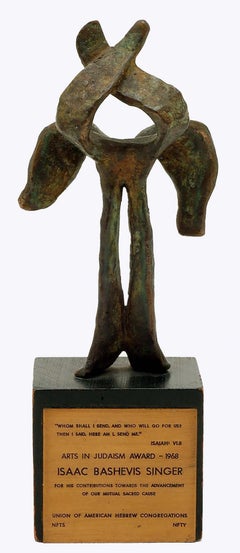
Nathaniel Kaz - Escultura para el Premio Isaac Bashevis Singer de las Artes en el Judaísmo Firmada
Por Nathaniel Kaz
Nathaniel Kaz
Escultura de bronce a Isaac Bashevis Singer por el Premio de las Artes en el Judaísmo, 1966
Bronce, Base cuadrada de madera, Etiqueta metálica
Firmado y fechado "66" en...
Categoría
Década de 1960, Expresionismo abstracto, Esculturas abstractas
Materiales
Metal, Bronce
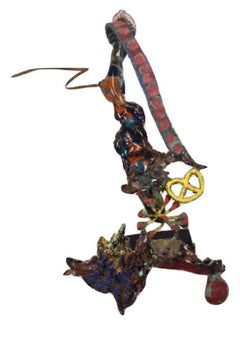
Escultura única de bronce patinado firmada por la famosa escultora Nancy Graves Premio NY
Por Nancy Graves
Nancy Graves
Premio de las Artes del Gobernador del Estado de Nueva York, 1988
Bronce, pátina policromada y esmalte al horno en la base con placa de Premio
10 1/4 × 7 × 10 1/4 pulgad...
Categoría
Década de 1980, Expresionismo abstracto, Esculturas abstractas
Materiales
Bronce, Esmalte
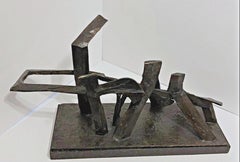
Uxmal, escultura de bronce única del escultor greco-americano y profesor de Harvard
Dimitri Hadzi
Uxmal, 1991
Bronce fundido sobre base de granito hecha a medida
17 × 30 1/2 × 14 pulgadas
El título UXMAL, hace referencia a la antigua ciudad maya de Uxmal, que es con...
Categoría
Década de 1990, Abstracto, Esculturas abstractas
Materiales
Granito, Bronce
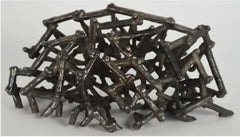
Escultura firmada sin título, de la colección de Dick Polich, Fundición Tallix
Por Stephen Talasnik
Stephen Talasnik
Escultura sin título, de la colección de Dick Polich, Fundición Tallix, ca. 1997
Fundición de metal ligero
firmada por el artista en la obra (ver fotografía de cerca...
Categoría
Década de 1990, Expresionismo abstracto, Esculturas abstractas
Materiales
Metal
Maqueta Rydbo, 1989-2000, escultura geométrica única del renombrado artista británico
Por Nigel Hall
NIGEL HALL
Maqueta Rydbo, 1989-2000
Acero pintado
Único
La autenticidad de esta obra ha sido confirmada por el artista
Procedencia:
Christie's Nueva York: 25 de julio de 2014 (Lote ...
Categoría
Principios de los 2000, Minimalista, Esculturas abstractas
Materiales
Acero
También te puede gustar
Eugene Caples "Escultura de bronce II" Escultura abstracta de bronce
Por Eugene Caples
Esta pequeña y exquisita "Escultura de bronce II" está en excelentes condiciones y es un ejemplo perfecto de la artesanía de Eugene Caples. Es principalmente abstracto, con algunos e...
Categoría
finales del siglo XX, moderno estadounidense, Esculturas abstractas
Materiales
Bronce

Escultura de bronce sin título
Por Henry Moretti
Artista: Henry Moretti, francés/americano
Título: Sin título
Medio: Escultura de bronce
Tamaño: 88,9 x 60,96 x 58,42 cm (35 x 24 x 23 pulg.)
Base: 37 x 17 x 17 pulgadas
Categoría
siglo XX, Contemporáneo, Esculturas abstractas
Materiales
Bronce
Escultura abstracta modernista
Maravillosa gran escultura modernista abstracta de bronce con formas geométricas del artista estadounidense Rodger Allen Mack (1938-2002). Mack nació en Barberton, Ohio, se graduó en...
Categoría
siglo XX, Expresionismo abstracto, Esculturas abstractas
Materiales
Bronce
Escultura moderna de mediados de siglo expresionista abstracta sin título
Por Thomas Morin
Thomas Morin (1934-2017)
Sin título, 1962.
Hierro fundido sobre base de madera. La escultura de fundición mide 24 x 7 x 5 pulgadas y pesa 49 libras. Mide 26 pulgadas de alto sobr...
Categoría
mediados del siglo XX, Expresionismo abstracto, Esculturas abstractas
Materiales
Hierro
2109 € Precio de venta
Descuento del 40 %
John Van Alstine - FLECHE, Escultura 2005
Por John Van Alstine
Pizarra, Acero
La piedra y el metal, normalmente granito o pizarra y acero de objetos encontrados, son fundamentales en mi escultura. La interacción de estos materiales es uno de lo...
Categoría
Principios de los 2000, Abstracto, Esculturas abstractas
Materiales
Piedra, Pizarra, Acero, Acero de corte, Acero inoxidable
"Roland", George Sugarman, Escultura abstracta de acero
Por George Sugarman
George Sugarman (1912 - 1999)
Roland, 1970
Acero patinado
17 3/8 x 16 x 5 1/4 pulgadas
Inciso con la firma del artista y numerado "15/17" en la parte inferior
Fabricado por Lippincot...
Categoría
Década de 1970, Abstracto, Esculturas abstractas
Materiales
Acero