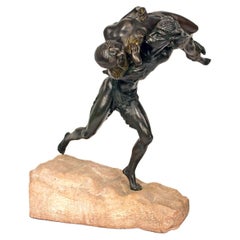
Artículos similares a Centaur abducting a woman
¿Quieres más imágenes o vídeos?
Solicita imágenes o vídeos adicionales al vendedor
1 de 15
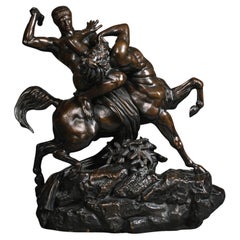
Aimé-Jules DalouCentaur abducting a womancirca 1895-1902
circa 1895-1902
27.000 €IVA incluido
Acerca del artículo
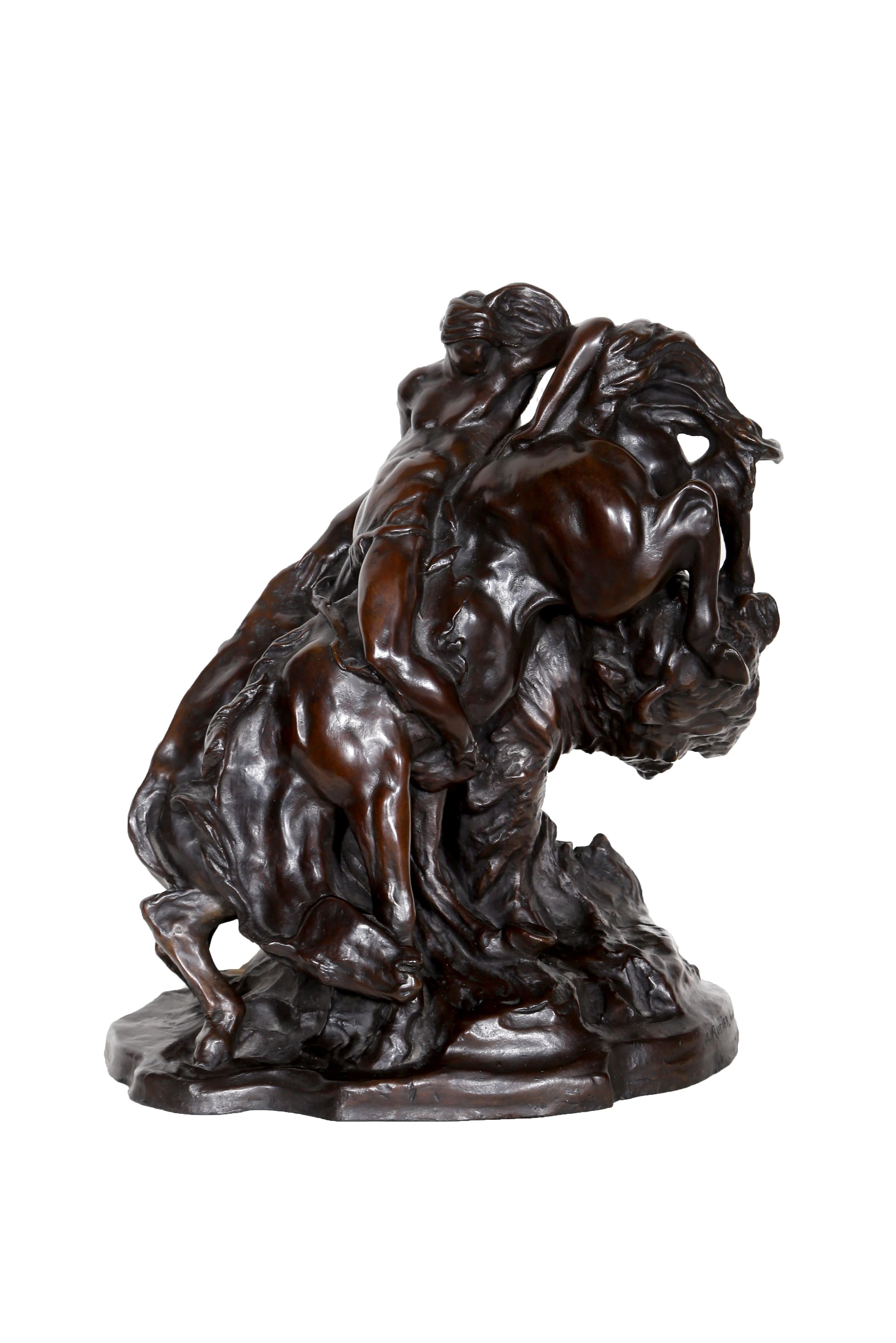
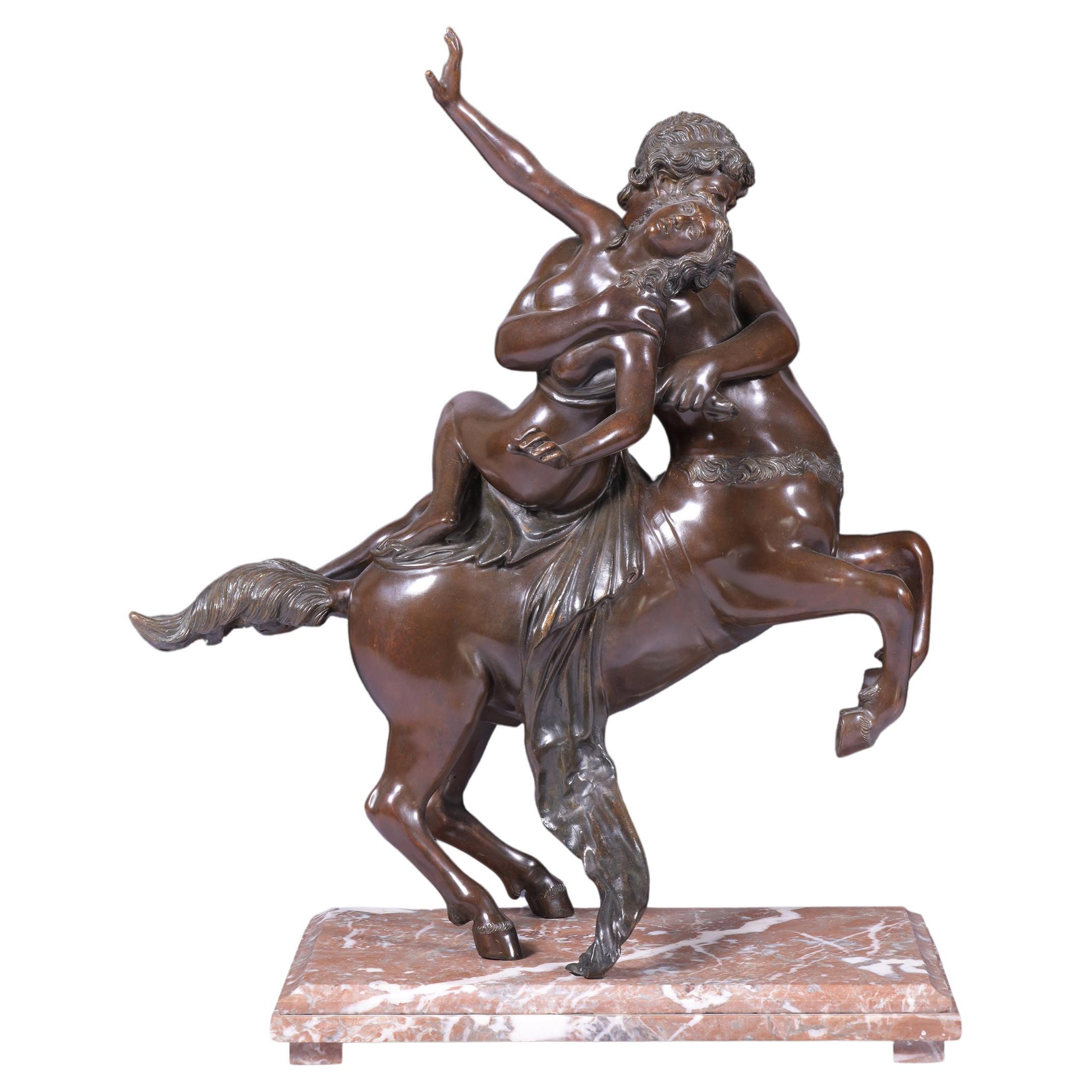
Centaur abducting a woman
by Aimé-Jules DALOU (1838-1902)
A bronze group sculpture with a dark brown patina
Signed on the base "Dalou"
Cast by "A.A. Hébrard" (with the foundry stamp)
The casts by Hébrard are always the finest ones regarding Dalou's works. Perfect in quality of cast and patina.
France
posthumous cast around 1910
height 27 cm
width 21 cm
depth 15,5 cm
A similar model reproduced in "Jules Dalou, le sculpteur de la République", Exhibition held at the Musée du Petit Palais, Paris, 2013, page 415, n°337.
Biography :
Aimé-Jules Dalou, said Jules Dalou (1838-1902) was a French sculptor, born from Protestants glovers craftsmen who raised in secularism and love of the Republic. Jules Dalou was very young talented for modeling and drawing, which earned him the attention of Jean-Baptiste Carpeaux, who made him entered in 1852 in the Little School, the future National School of Decorative Arts in Paris. In 1854, he was admitted to the School of Fine Arts in Paris, where he studied painting in the workshop of Abel de Pujol and sculpture in the workshop of Francisque Duret. He began to earn his living by working for decorators, and began his friendship with Auguste Rodin. Dalou then produced decorative sculptures for buildings on major Parisian avenues, such as the Hotel de la Paiva, on the Champs-Elysees Avenue. He presented but failed four times to Rome prize competition, but exhibited at the 1869 Salon his "Daphnis and Chloe" and the "Embroiderer" at the Salon of 1870, two pieces acquired by the French state. Dalou had one child, Georgette, a girl born with a mental handicap. This is to ensure funding for her daughter's life accommodation in the Orphanage of Arts, that Dalou bequeathed the funds from his workshop to this institution.
After the bloody week of May 1871 Dalou, his wife and their daughter were threatened as Communards, forced into exile and requested asylum. They then joined England and were greeted by his former fellows of the Little School, the painter Alphonse Legros. With Legros, much introduced in the City, he made a serie of terracotta statuettes inspired by boulonnaise peasants or intimate subjects (readers, lullabies), and portraits of the English aristocracy. He became professor for modeling at the National Art Training School, his influence was decisive for many British sculptors. He received orders for a public fountain in marble titled "Charity" (1877) near the Royal Exchange in London, and a monument dedicated to Queen Victoria's grandchildren located in the private chapel of Frogmore at Windsor Castle.
In May 1874, the Paris War Council condemned Dalou in absentia to hard labor for life. Having refused to beg for mercy, he was only in May 1879 being granted amnesty and his family finally returned from exile. His group "The Triumph of the Republic", originally planned for the Place de la Republique in Paris, was finally erected on the Place du Trône, renamed Place de La Nation in 1880. Dalou devoted twenty years to the realization of this monument. The years 1881 and 1882 were difficult, but the 1883 Salon finally revealed him to the French public. He exhibited his two high reliefs: "The Brotherhood of Peoples" and "Mirabeau answering Dreux-Brézé", for which he was awarded the Medal of Honor. Fleeing the world and living in family, Dalou engaged in considerable work and many orders both private and public. For the Universal Exhibition of 1889, was inaugurated on the Place de la Nation the plaster of "The Triumph of the Republic" commissioned by the city of Paris in 1879. Although the bronze version of the group was inaugurated in 1899, this work won the grand prize for sculpture in the exhibition. Dalou left the French Society of Artists in 1890 to expose at the National Society of Fine Arts, of which he was a founding member with Ernest Meissonier, Auguste Rodin and Pierre Puvis de Chavannes. Awarded Knight of the Legion of Honor in 1883, and promoted to officer by President Carnot in 1889, he was elevated to the rank of Commander of the same order in 1899 by President Loubet at the inauguration of the monument of "The Triumph of the Republic".
Dalou had no time to complete his last great project, a monument dedicated to workers, the idea came to him in 1889 after the first opening of "TheTriumph of the Republic". The formality of the ceremony and military parades held the people away from the official event. Dalou was disappointed. True to its republican ideals, he had hoped that this inauguration was an opportunity of great popular democratic party (as it was at the inauguration of the bronze in 1899). His idea was then to pay tribute to the world of workers, craftsmen and peasants with this work being the central subject. At the end of his career Dalou described the project as follows: "I think I have finally found the monument to the workers that I seek since 1889. Sober, without molding or ornament, I wish it'd be severe and imposing. Will I execute it? There is the question. I am old and my health is so weak."
- Creador:Aimé-Jules Dalou (1838 - 1902, Francés)
- Año de creación:circa 1895-1902
- Dimensiones:Altura: 27 cm (10,63 in)Anchura: 21 cm (8,27 in)Profundidad: 15,5 cm (6,11 in)
- Medio:
- Movimiento y estilo:
- Época:
- Estado:
- Ubicación de la galería:PARIS, FR
- Número de referencia:Vendedor: N.X1stDibs: LU2514216390642

Aimé-Jules Dalou
Aimé-Jules Dalou (1838-1902) fue uno de los pocos escultores franceses destacados de finales del siglo XIX, cuya reputación quizá sólo fue superada por la de sus contemporáneos Henri Chapu (1833-1891) y Marius Jean Antonin Mercié (1845-1916). Dalou ejerció una enorme influencia y fue miembro fundador de la Société des Artistes Français y, más tarde, fundador de la Société Nationale des Beaux-Arts. Fue recompensado oficialmente con el más alto grado de la Legión de Honor dos años antes de su muerte, con la inauguración del Triunfo de la República, en 1899. Comenzó su formación artística en 1852 en la Pequeña Escuela, animado por Jean-Baptiste Carpeaux, donde estudió dibujo y modelado. Carpeaux siguió apoyando a Dalou durante toda su carrera e influyó mucho en su escultura. Dalou comenzó a trabajar en el campo de la escultura decorativa trabajando para dos empresas de París, los orfebres Lefèvre y Favière. Durante este tiempo contribuyó a las características arquitectónicas del Hôtel de la Païva, el entonces hogar de la infame cortesana francesa Esther Lachmann, conocida como La Païva. La singularidad de Dalou radicaba en su amplio abanico de fuentes temáticas, pictóricas y escultóricas, a través de las cuales absorbía un impresionante espectro de inspiración. La obra de un escultor del siglo XVIII, Louis-François Roubiliac, desempeñó un papel importante en el desarrollo artístico de Dalou, cuyas esculturas estudió durante su estancia en Londres. La obra de Dalou incluye frisos, maquetas, relieves y figuras individuales de bronce. Es conocido por sus composiciones de grupo alegóricas de inspiración barroca, así como por sus representaciones de las clases trabajadoras rurales francesas. Dalou animó a los estudiantes de arte a liberarse de las limitaciones de las tradiciones establecidas, y se cree que su estilo y sus enseñanzas despertaron una nueva generación de jóvenes escultores británicos cuya obra se alineó posteriormente con el movimiento de la Nueva Escultura.
Sobre el vendedor
5,0
Vendedor reconocido
Estos prestigiosos vendedores son líderes del sector y representan el escalón más alto en cuanto a calidad y diseño de artículos.
Establecido en 1992
Vendedor de 1stDibs desde 2023
11 ventas en 1stDibs
Tiempo de respuesta usual: 1 hora
- EnvíoRecuperando presupuesto…Envío desde: PARIS, Francia
- Política de devolución
Partes de esta página se han traducido automáticamente. 1stDibs no puede garantizar la exactitud de las traducciones. El inglés es el idioma predeterminado de este sitio web.
Más de este vendedor
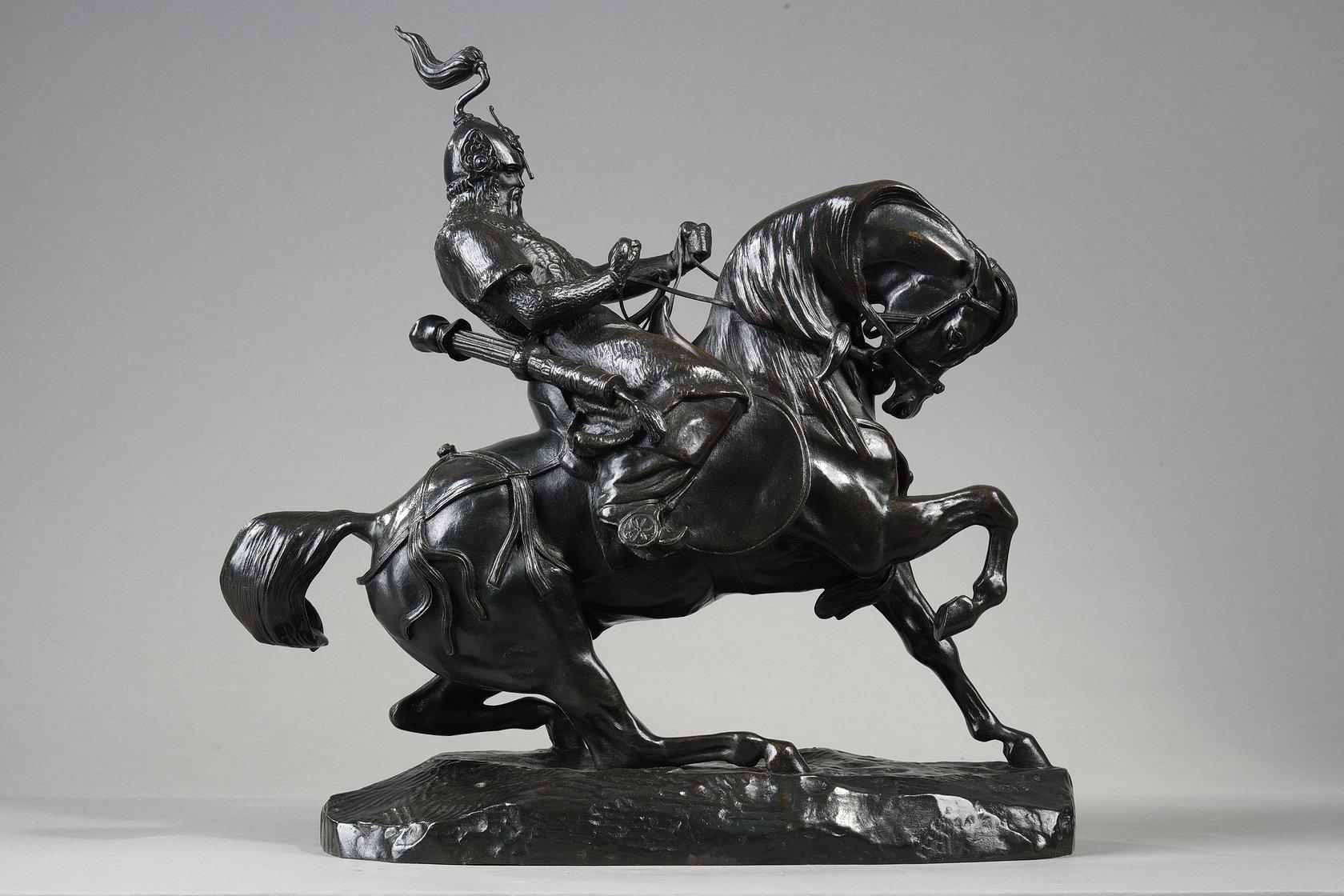
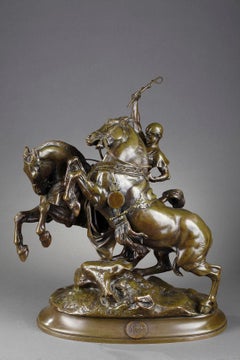
Ver todoGuerrero tártaro deteniendo su caballo
Por Antoine-Louis Barye
Guerrero tártaro deteniendo su caballo
de Antoine-Louis BARYE (1796-1875)
Grupo ecuestre de bronce con pátina marrón verdosa oscura matizada
cualquier marca de fundición
reparto ed...
Categoría
Fines del siglo XIX, Escuela francesa, Esculturas figurativas
Materiales
Bronce
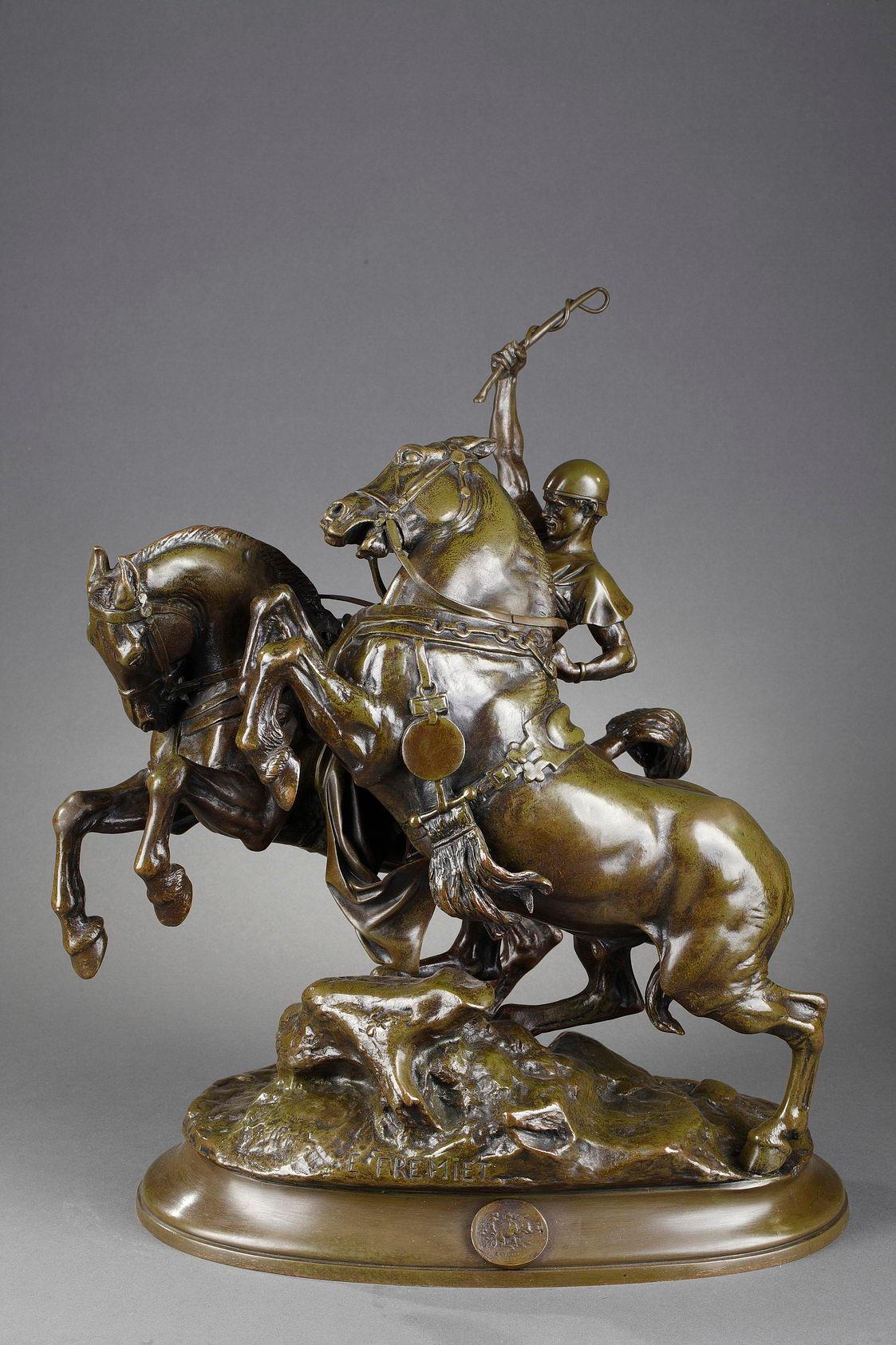
Conductor romano en su carro
Por Emmanuel Fremiet
Conductor romano en su carro
de Emmanuel Fremiet (1824-1910)
Grupo de bronce con su pátina verde matizada original
firmado en la base " E. Fremiet ".
fundido por Más
Francia
hacia ...
Categoría
Fines del siglo XIX, Escuela francesa, Esculturas figurativas
Materiales
Bronce
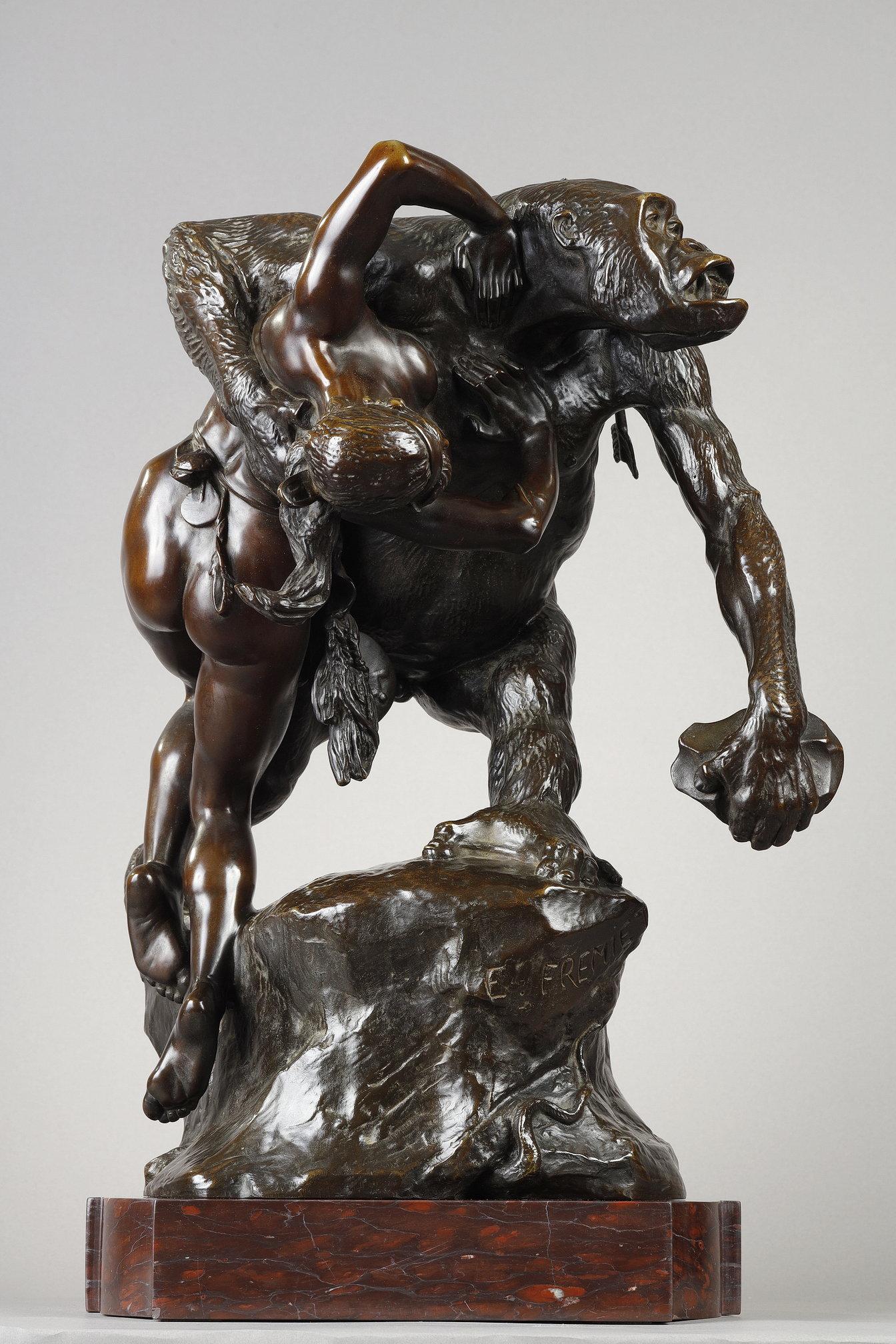
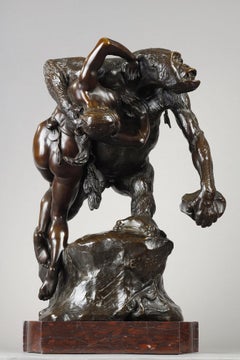
Gorila secuestrando a una mujer
Por Emmanuel Fremiet
Emmanuel FREMIET (1824-1910)
Gorila secuestrando a una mujer
Un raro grupo de bronce con pátina marrón oscura verdosa
firmada "E. Fremiet" en la base
fundido por " F. Barbedienne F...
Categoría
Fines del siglo XIX, Escuela francesa, Esculturas figurativas
Materiales
Bronce
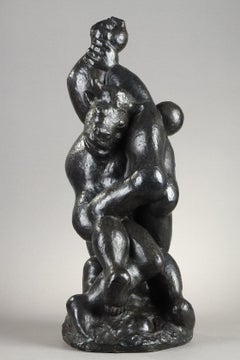
Teseo y el Minotauro
Por Baltasar Lobo
Teseo y el Minotauro
por Baltasar LOBO (1910-1993)
Un grupo de bronce con pátina marrón oscura verdosa
Firmado en la parte inferior trasera " Lobo ".
Fundido por " Susse Fondeur Par...
Categoría
Década de 1970, Escuela francesa, Esculturas figurativas
Materiales
Bronce
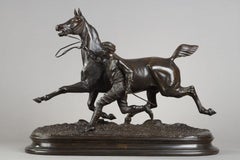
Entrenamiento de caballos con su mozo de cuadra
Entrenamiento de caballos con su mozo de cuadra
de Arthur Marie Gabriel comte du Passage (1838-1909)
Un grupo de bronce con pátina marrón oscura matizada
Firmado en la base " Cte du...
Categoría
Fines del siglo XIX, Escuela francesa, Esculturas figurativas
Materiales
Bronce
Caricia de amor
Por Albert-Ernest Carrier-Belleuse
"Caricia de Amor"
de Albert-Ernest CARRIER-BELLEUSE (1824-1887)
Escultura colectiva de bronce con una pátina marrón oscura matizada
Firmado al dorso "A. Carrier-Belleuse".
Descansa...
Categoría
Década de 1870, Escuela francesa, Esculturas figurativas
Materiales
Bronce
También te puede gustar
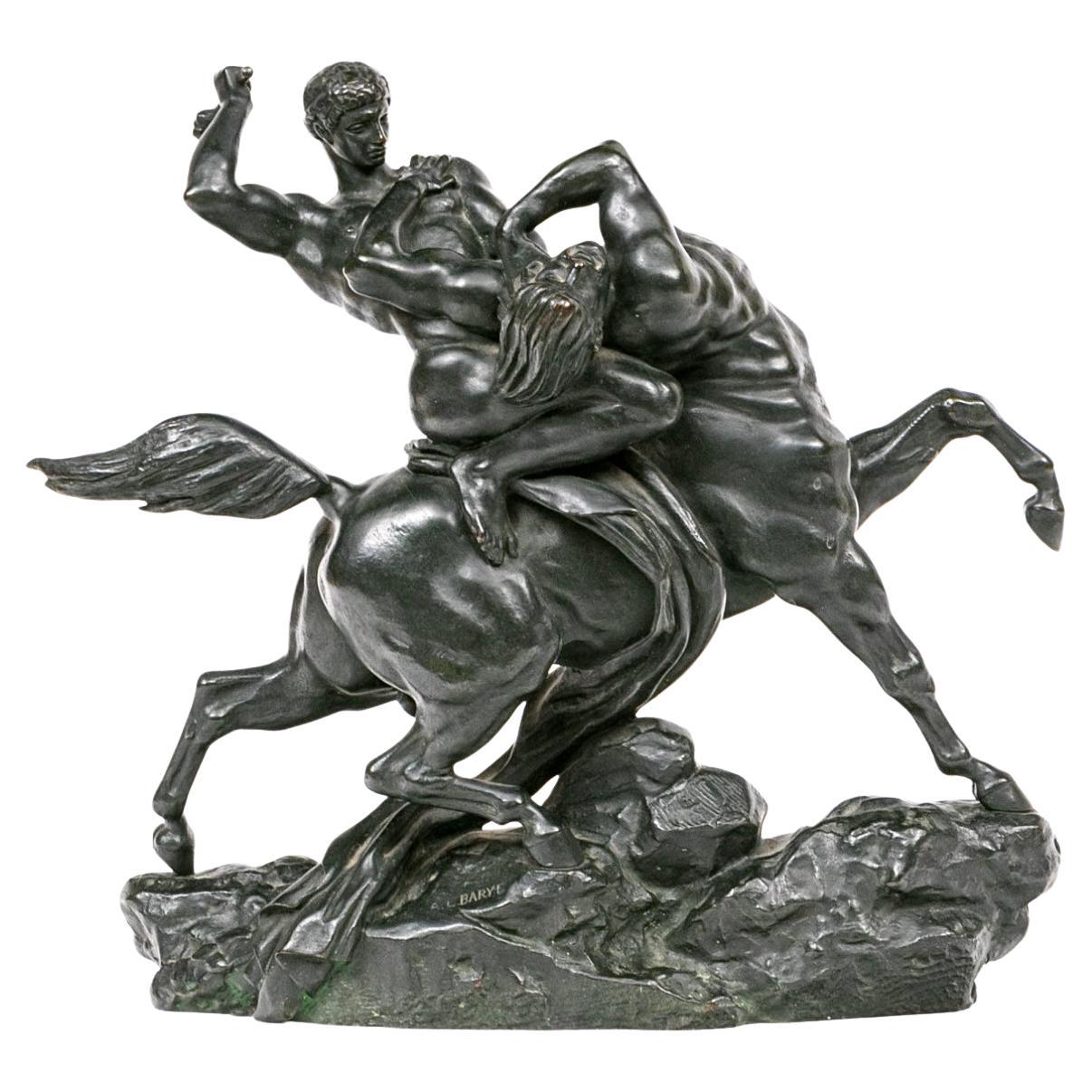
Antoine-Louis Barye Teseo matando al centauro Bienor Bronce
Por Antoine-Louis Barye
Antoine-Louis Barye Teseo matando al centauro Bienor Grupo de bronce patinado negro.
Grupo de bronce francés titulado "Thesee combattant le centaure Bienor, esquisse" (Teseo matando...
Categoría
Antiguo, Década de 1850, Francés, Bellas artes, Esculturas figurativas
Materiales
Bronce
Combate: Indio, Caballo y Búfalo
Combate: indio, caballo y búfalo: Arthur Putnam (6 de septiembre de 1873 - 27 de mayo de 1930) fue un escultor y animalista estadounidense reconocido por sus esculturas en bronce de ...
Categoría
principios del siglo XX, Romántico, Esculturas figurativas
Materiales
Bronce
Precio a petición
Grupo de bronce francés del siglo XIX de Neso raptando a Deianira
Por Giambologna
Grupo de bronce de Neso raptando a Deianira, según Giambologna, sobre base de mármol.
Según el modelo de Giambologna
Alrededor de 1880
Francés
Nota a pie de página:
El p...
Categoría
Antiguo, siglo XIX, Francés, Griego clásico, Esculturas figurativas
Materiales
Mármol, Bronce
Perseo libera a Andrómeda
JEAN-LÉON GRÉGOIRE
Francés, (1840-1890)
Perseo libera a Andrómeda
Bronce patinado; Firmado 'L. GREGOIRE
25 1/2 x 13 x 11 pulgadas
Notas:
Jean-Léon Grégoire empezó a exponer en...
Categoría
Década de 1870, Esculturas figurativas
Materiales
Bronce
Antoine Louis Barye (1795-1875), "Teseo luchando contra el centauro Bianor".
Por Antoine-Louis Barye
Fino grupo de bronce patinado, titulado "Thesée Combattant le Centaure Bianor" ("Teseo luchando contra el centauro Bianor"), fundido por Ferdinand Barbedienne, a partir del modelo de...
Categoría
Antiguo, siglo XIX, Francés, Griego clásico, Esculturas figurativas
Materiales
Bronce
Art Deco Satyr Abducting a Nymph Sculpture by Marcel Bouraine
Por Marcel-André Bouraine
Escultura Art Déco de bronce patinado en frío de Marcel-André Bouraine titulada Sátiro raptando a una ninfa. La pieza descansa en una roca esculpida a mano.
Fabricado en Francia
C...
Categoría
siglo XX, Francés, Art Decó, Esculturas figurativas
Materiales
Caliza, Bronce