Ir al contenido principal
¿Quieres más imágenes o vídeos?
Solicita imágenes o vídeos adicionales al vendedor
1 de 19

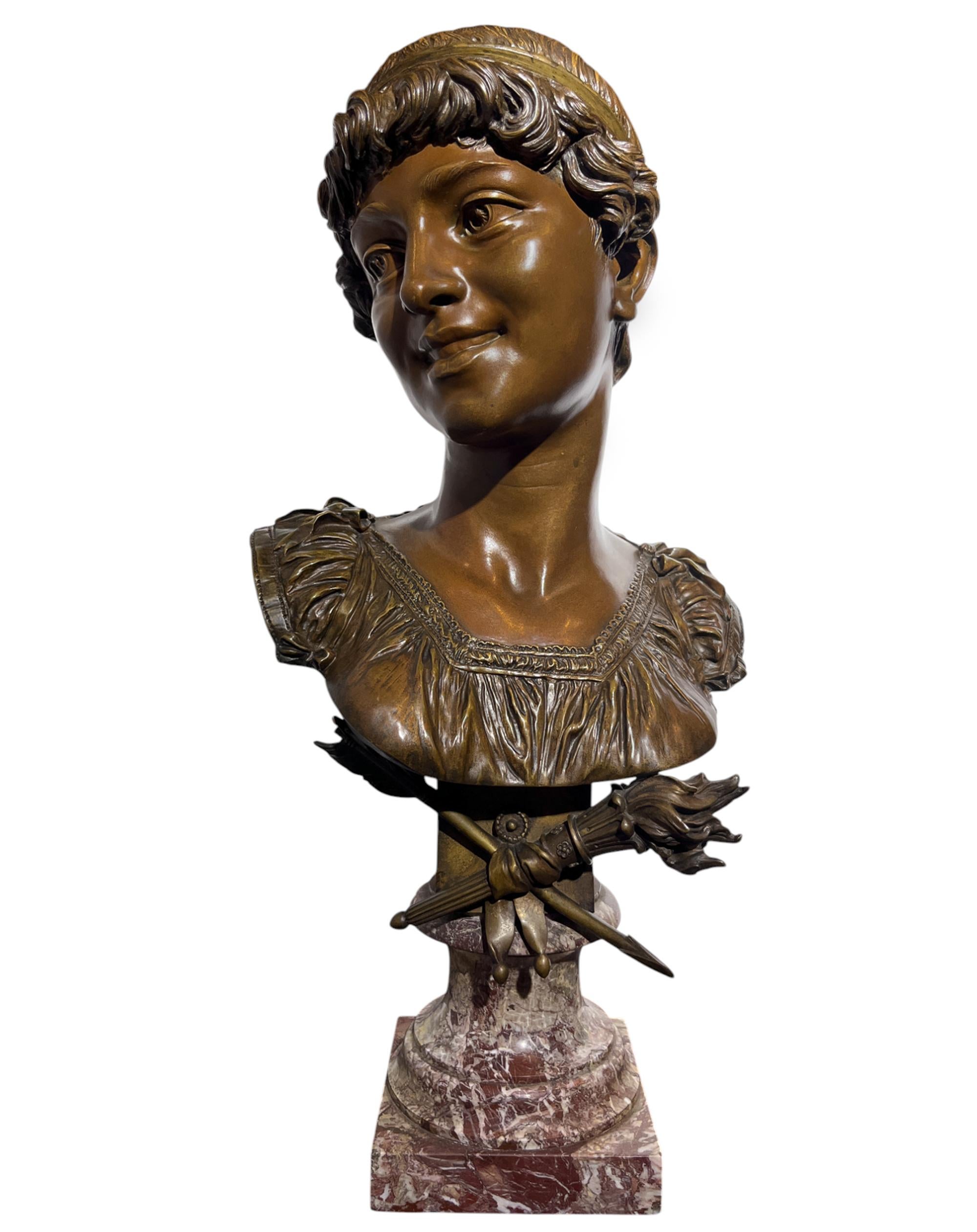
Albert-Ernest Carrier-Belleuse
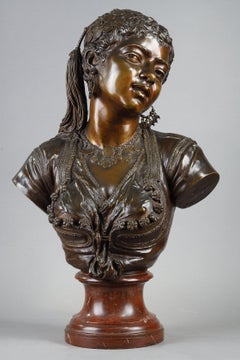
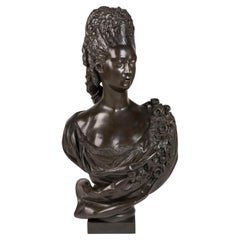
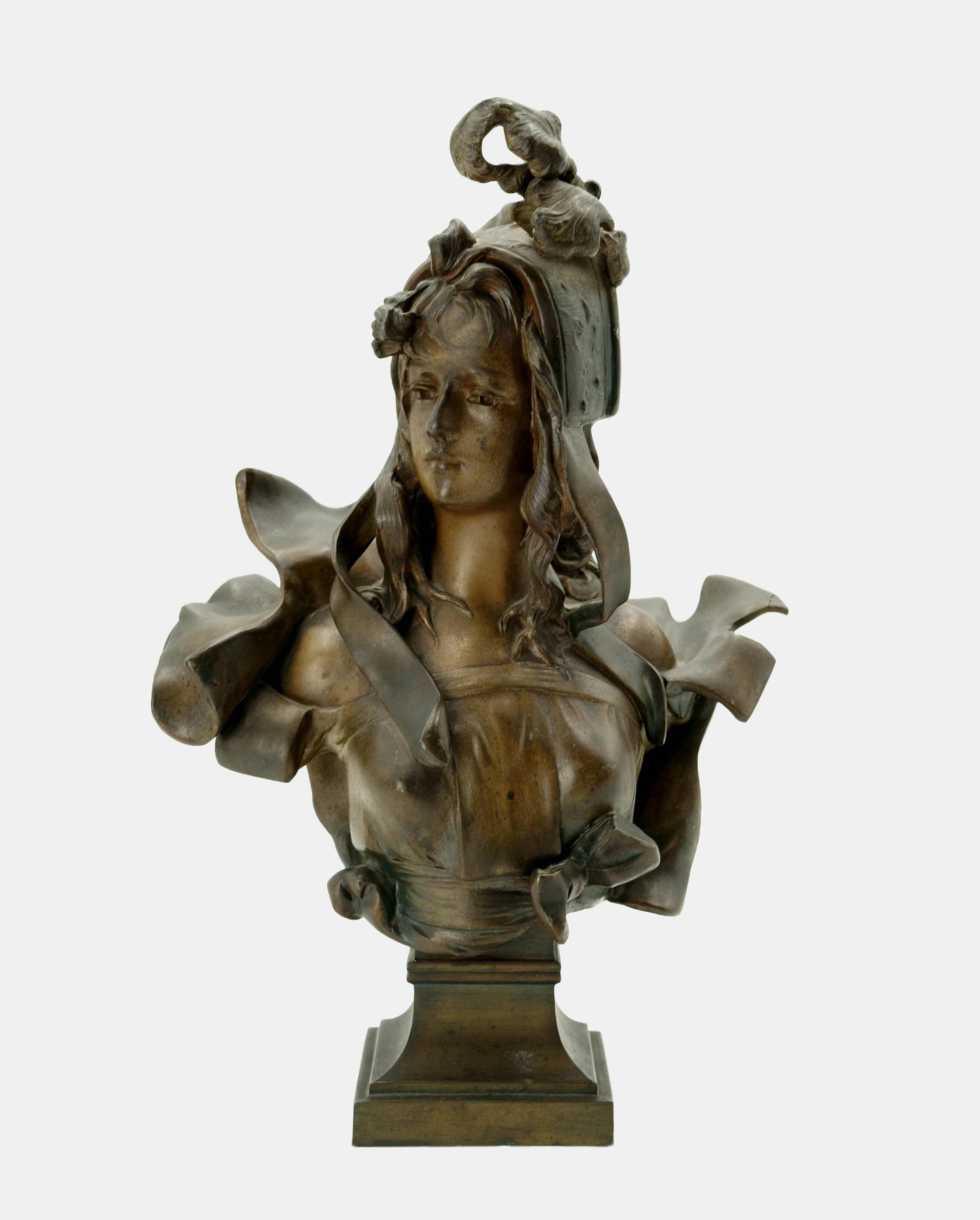
Bust of a Young woman wearing a tiara

circa 1870

12.800 €IVA incluido

Acerca del artículo

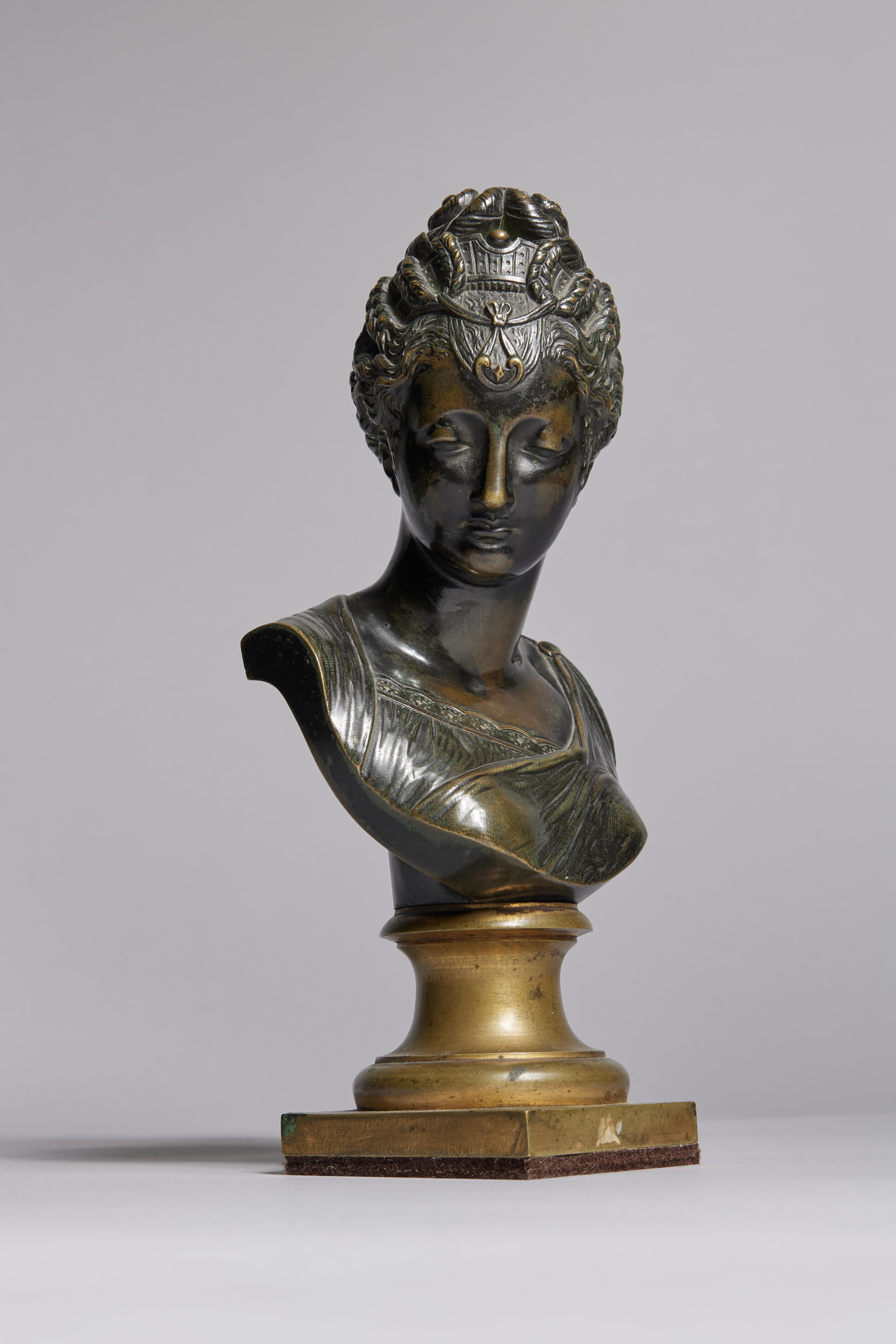
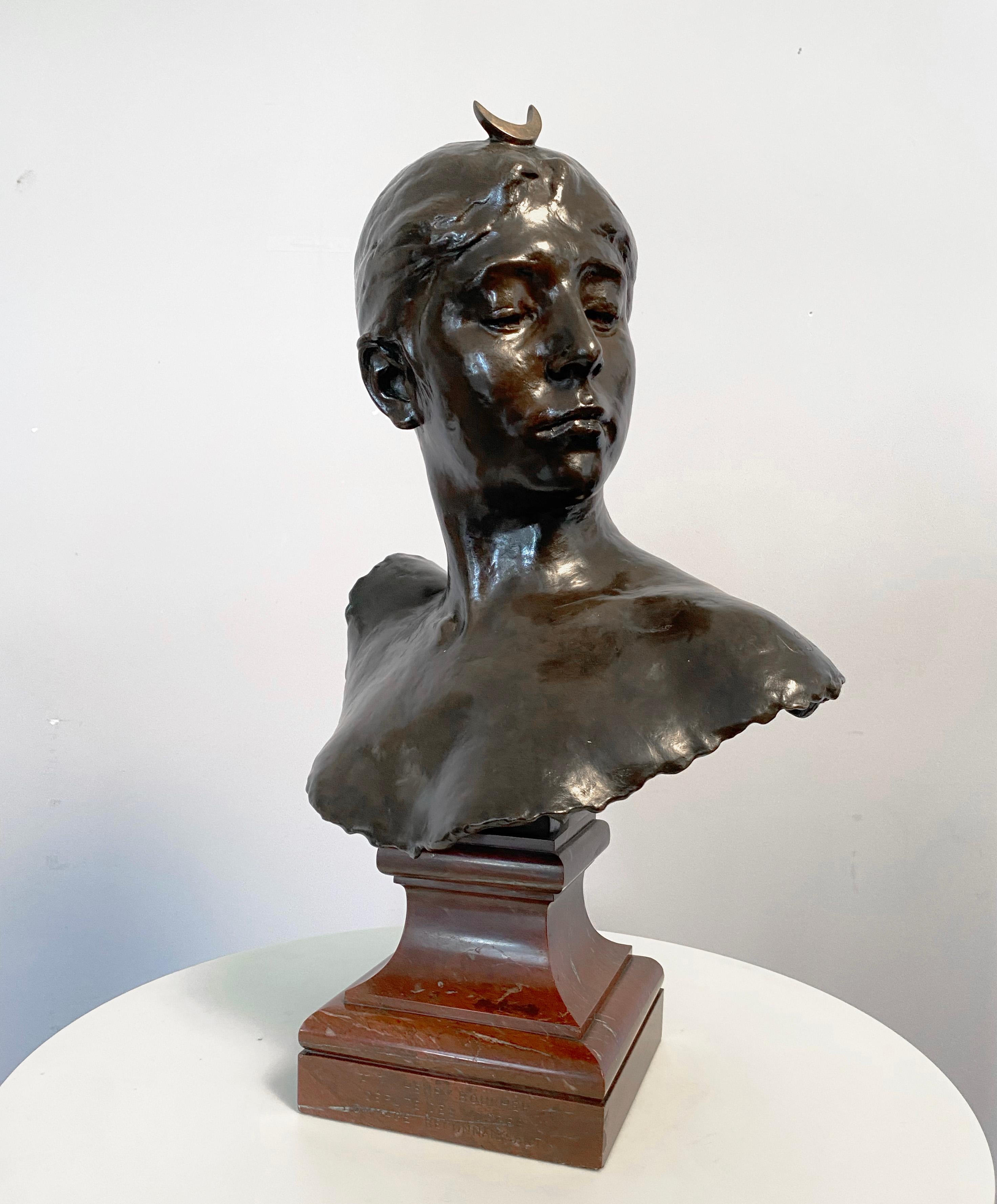
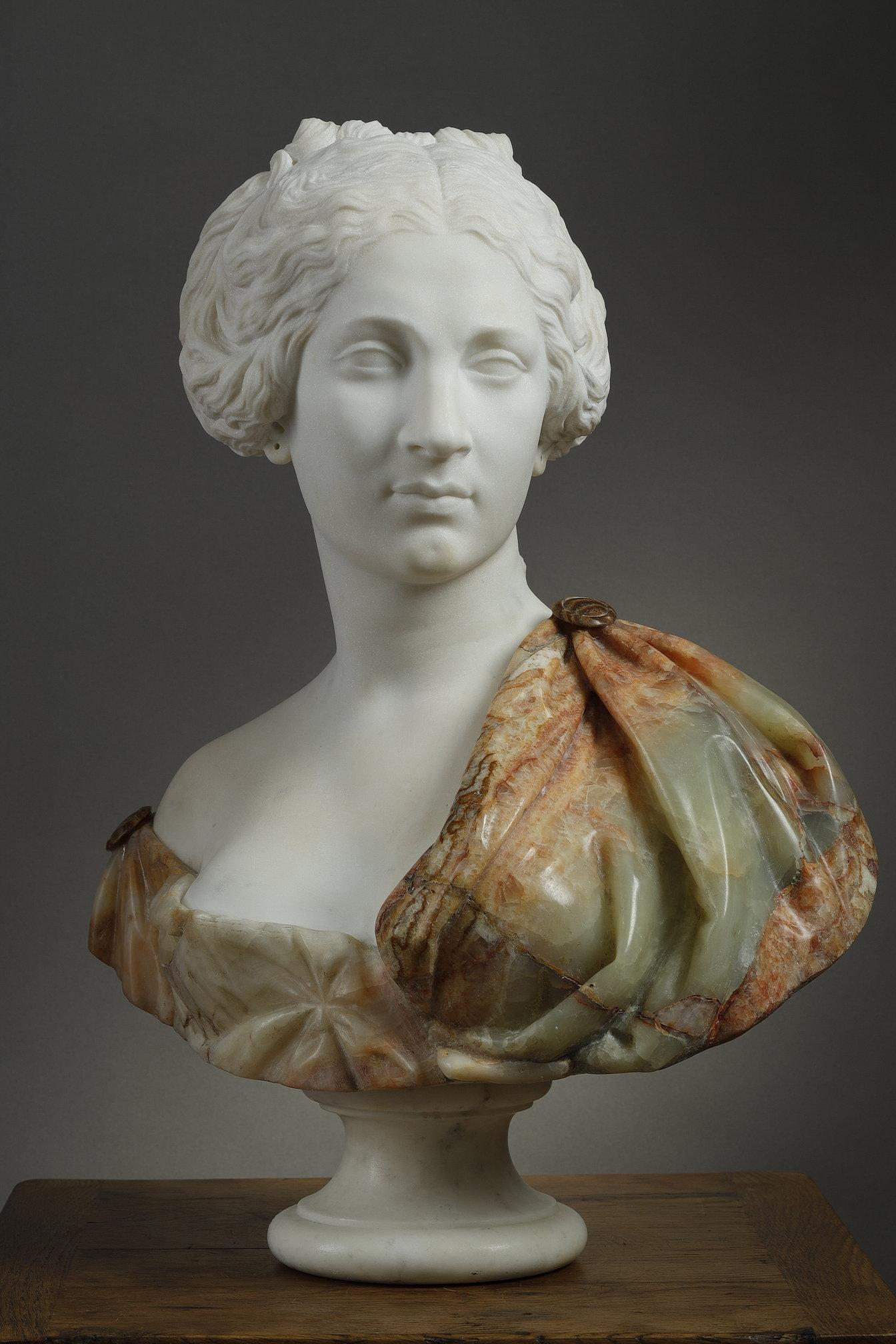
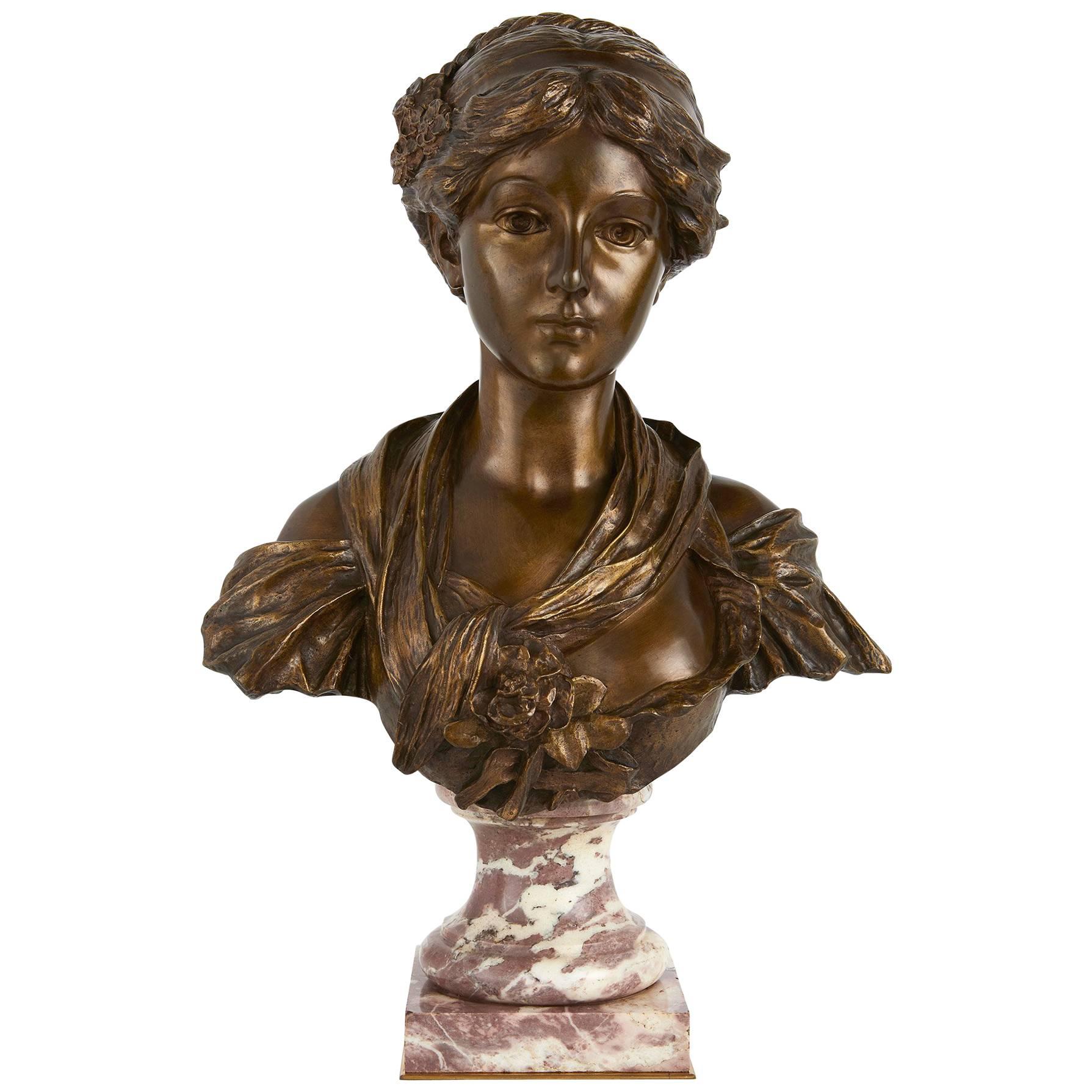
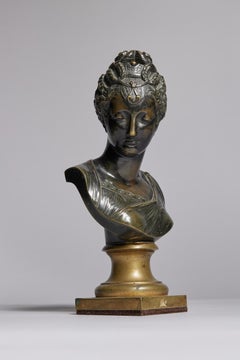
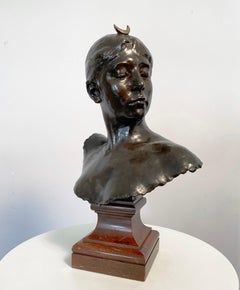
Bust of a Young woman wearing a tiara by Albert-Ernest CARRIER-BELLEUSE (1824-1887) Sculpture in bronze with a nuanced dark brown patina signed on the shoulder "A. Carrier Belleuse" cast by "Jules Graux fondeur" (with the foundry mark) reposing on an onyx base France circa 1870 height of the bronze 55 cm total height with the base 58,5 cm width 29 cm depth 18 cm Biography : Albert-Ernest Carrier de Belleuse known as Carrier-Belleuse (1824-1887) was one of the most prolific artists of the century and had the greatest successes under the Second Empire, enjoying the personal support of Napoleon III. His work was greatly influenced by the style of the Italian Renaissance and that of the 18th century, which he helped to bring up to date. In 1837, the young Carrier-Belleuse apprenticed in the workshop of the engraver Bauchery. He was admitted soon after to the goldsmith Jacques Henri Fauconnier. Through François Arago, he met the sculptor David d'Angers who facilitated his admission to the School of Fine Arts. Carrier-Belleuse entered it in 1840. Noted for his skill by the great bronze companies in Paris such as Barbedienne and Denière, he soon received numerous orders for models for candelabras, pendulums, fittings for fireplaces, etc. In 1848, probably at the initiative of François Arago, who became head of state, he received his first public order for a small statue of "Mademoiselle Rachel singing La Marseillaise". In 1851, he appeared for the first time at the Salon of French Artists, where he presented two bronze medallions. From 1851 to 1855, Carrier-Belleuse stayed in England, in Stoke-on-Trent where he served as director of the modeling and drawing school of the Minton house, a large porcelain manufacturer. Back in France, Carrier-Belleuse moved to Paris in a large workshop located 15 rue de la Tour d´Auvergne. From 1857, he made regular sendings to the Salon and became famous thanks to the success of large marbles, such as the "Bacchante" exhibited at the Salon in 1863, and acquired by Napoleon III, "Angelica" (1866) or even "Hebe asleep" (1869). At the Salon of 1867, his group entitled "Messiah" earned him the medal of honor of sculpture. It was acquired by the State to adorn the Chapel of the Virgin in the Saint-Vincent-de-Paul church. Carrier-Belleuse acquired a great reputation in parallel for his terracotta busts which, in many respects, recall those of 18th century artists. He made portraits of a large number of celebrities of his time. He produced, among others, the busts of Napoleon III, Renan, Thiers, Grévy, Arago, Marguerite Bellanger, Théophile Gautier, Honoré Daumier, Delacroix, Hortense Schneider, Réjane… He also modelled numerous busts of mythological inspiration and historical and artistic portraits like Marie Stuart, Shakespeare or even Mozart. Carrier-Belleuse used and trained in his workshop in the rue de la Tour d´Auvergne many young talented artists such as Alexandre Falguière, Jules Desbois, Eugène Delaplanche, Jules Dalou or Joseph Chéret; but he was best known for having been the master of Auguste Rodin who entered his studio as a practitioner in 1864. Carrier-Belleuse devoted himself a lot to decorative sculpture. He contributed to the decorations of many important buildings. We owe him in particular the caryatids of the Renaissance theater in Paris, the pediment of the main entrance to the Banque de France, the stucco ceilings of the Lesdiguières and La Trémoïlle pavilions at the Louvre Palace, the frieze of the Palais de la Bourse in Brussels, or the decoration of the Hôtel de la Païva on the Champs-Elysées in Paris. He also received State commissions for monuments: that of Jean-Jacques Rousseau in Montmorency, of Alexandre Dumas, in Villers-Cotterêts, of Masséna in Nice. Abroad, he produced the equestrian statue of Michael the brave in Bucharest and the tomb of José de San Martín in Buenos Aires. In 1873, Carrier-Belleuse took part in the construction of the Paris Opera house, directed by his friend Charles Garnier. He created the two monumental torchieres flanking the grand staircase in the main hall and the caryatids of the chimney of the grand foyer. In 1875, he was appointed director of works of art at the Porcelain Manufacture de Sèvres. He imprinted on it a very modern impulse which manifested itself in the creation of a complete range of vases.
  • Creador:
    Albert-Ernest Carrier-Belleuse (1824 - 1887, Francés)
  • Año de creación:
    circa 1870
  • Dimensiones:
    Altura: 58,5 cm (23,04 in)Anchura: 29 cm (11,42 in)Profundidad: 18 cm (7,09 in)
  • Medio:
  • Movimiento y estilo:
  • Época:
  • Estado:
  • Ubicación de la galería:
    PARIS, FR
  • Número de referencia:
    Vendedor: N.81201stDibs: LU2514217381272

Más de este vendedor

Ver todo
Retrato de una dama
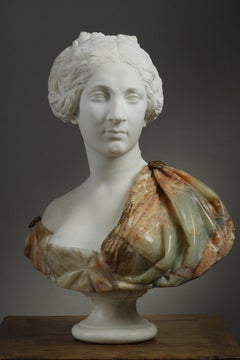
Retrato de una dama de Charles CORDIER (1827-1905) Un raro busto de mármol blanco de Carrara y ónix para la cortina Firmado en el reverso " C. Cordier ". Presentado sobre una base r...
Categoría

Década de 1860, Escuela francesa, Esculturas figurativas

Materiales

Mármol

La Rieuse napolitaine
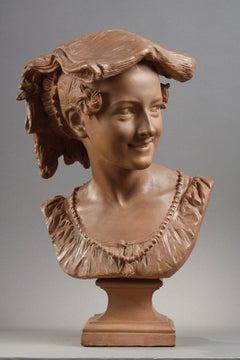
La Rieuse napolitaine (La napolitana que ríe) de Jean-Baptiste CARPEAUX (1827-1875) Busto en terracota, en "Propriété Carpeaux" Firmado en el lateral " JBte Carpeaux ". Marcado con...
Categoría

Década de 1870, Escuela francesa, Esculturas figurativas

Materiales

Terracota

Busto de mujer oriental
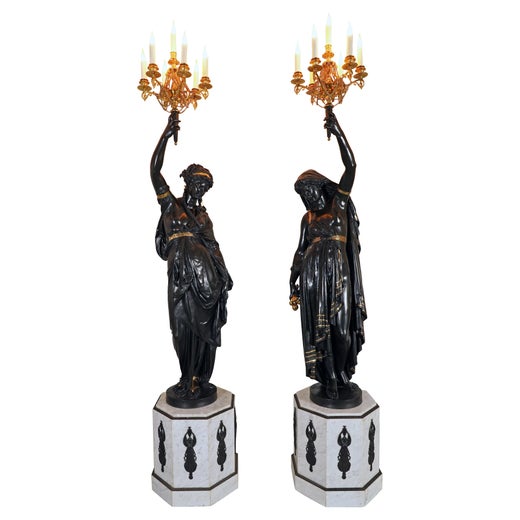
Busto de mujer oriental de Emile GUILLEMIN (1841-1907) Escultura orientalista de bronce con doble pátina matizada. reparto de época Sobre su base original de mármol rojo. Firmado e...
Categoría

Década de 1870, Escuela francesa, Esculturas figurativas

Materiales

Bronce

Susanna
Por Albert-Ernest Carrier-Belleuse
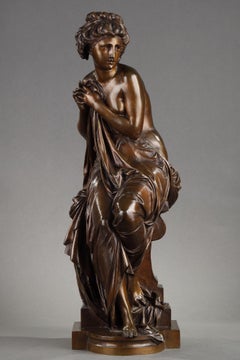
Susanna de Albert-Ernest Carrier-Belleuse (1824-1887) Escultura de bronce con pátina marrón matizada firmado al lado " A. Carrier ". reparto de época Francia hacia 1860 altura 62...
Categoría

Década de 1860, Escuela francesa, Esculturas figurativas

Materiales

Bronce

Busto de Niño
Por Aimé-Jules Dalou
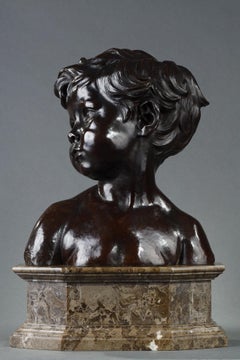
Busto de Niño Aimé-Jules Dalou (1838-1902) Una bella escultura de bronce con pátina marrón oscura Muy bello molde de Hébrard Elevado sobre su base de mármol original Francia Model...
Categoría

principios del siglo XX, Escuela francesa, Esculturas figurativas

Materiales

Bronce

Joven de Bou-Saada
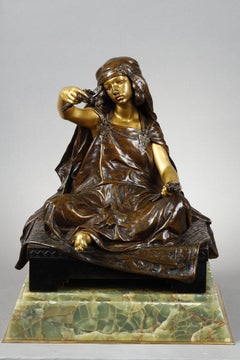
Joven de Bou-Saada por Louis Ernest BARRIAS (1841-1905) Rara escultura de bronce con una pátina triple, marrón oscuro, marrón matizado y dorado Firmado en la base " E. Barrias ". Fu...
Categoría

Principios del 1900, Escuela francesa, Esculturas figurativas

Materiales

Bronce

También te puede gustar

Busto de mujer joven / - La opulencia de la belleza -
Anton Nelson (es decir, Antoine Joseph van den Kerckhoven) (1849 Bruselas - después de 1910 ibíd.), Busto de mujer joven, c. 1890. Bronce patinado sobre base de fundición, 30 cm (alt...
Categoría

Década de 1890, Art Nouveau, Esculturas figurativas

Materiales

Bronce

Busto de Diana de Poitiers, Escultura de bronce de una noble francesa
Según Jean Goujon (francés, 1510-1568) Busto de Diana de Poitiers Bronce con base de zócalo dorada 9 x 3,75 x 2,75 pulgadas Procedencia: Retirado de una residencia privada del Hotel ...
Categoría

siglo XIX, Esculturas figurativas

Materiales

Bronce

Busto de Diana
Entre las grandes obras de Falguière destaca como obra maestra su figura de la cazadora Diana, cuyo busto sobresale como una de las cabezas idealizadas más logradas y reconocibles de...
Categoría

Década de 1880, Académico, Esculturas figurativas

Materiales

Bronce

Busto antiguo de bronce patinado de una joven dama, según Greuze
Por Jean-Baptiste Greuze
Sobre una base de mármol veteado; según Jean-Baptiste Greuze, inscripción en el reverso "D'Apres Greuze (Musee Du Louvre)". Este hermoso busto de bronce patinado representa a una ...
Categoría

Antiguo, Principios del 1900, Francés, Bustos

Materiales

Mármol, Bronce

Busto antiguo de bronce de una mujer francesa de provincias C. 1882 por Émile Guillemin
Por Émile Coriolan-Hippolyte Guillemin (francés, 1841-1907) Busto animado de una joven francesa; esculpido dinámicamente con una adorable sonrisa respingona y ojos brillantes, en un...
Categoría

Fines del siglo XIX, Académico, Esculturas figurativas

Materiales

Mármol, Bronce

Busto de bronce del siglo XIX de la princesa Marie Adélaïde de Francia
Por Félix Lecomte
Un busto de bronce patinado De Marie Adélaïde, Princesa de Francia María Adelaida de Francia (1732-1800) fue una figura destacada durante el reinado de su sobrino Luis XVI. Como pri...
Categoría

Antiguo, siglo XIX, Francés, Bustos

Materiales

Bronce