

¿Quieres más imágenes o vídeos?
Solicita imágenes o vídeos adicionales al vendedor
1 de 19
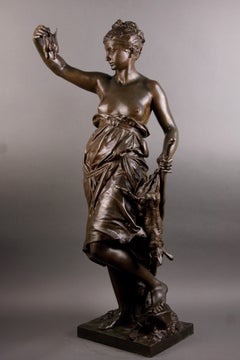
Albert-Ernest Carrier-BelleuseSummercirca 1870
circa 1870
5800 €IVA incluido
Acerca del artículo
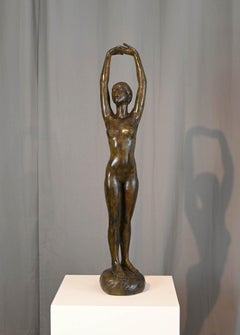
"Summer"
by Albert-Ernest CARRIER-BELLEUSE (1824-1887)
A bronze group with nuanced dark brown patina
signed on the base " Carrier-Belleuse "
France
circa 1870
height 69 cm
width 25 cm
depth 21 cm
Biography :
Albert-Ernest Carrier de Belleuse known as Carrier-Belleuse (1824-1887) was one of the most prolific artists of the century and had the greatest successes under the Second Empire, enjoying the personal support of Napoleon III. His work was greatly influenced by the style of the Italian Renaissance and that of the 18th century, which he helped to bring up to date.
In 1837, the young Carrier-Belleuse apprenticed in the workshop of the engraver Bauchery. He was admitted soon after to the goldsmith Jacques Henri Fauconnier. Through François Arago, he met the sculptor David d'Angers who facilitated his admission to the School of Fine Arts. Carrier-Belleuse entered it in 1840. Noted for his skill by the great bronze companies in Paris such as Barbedienne and Denière, he soon received numerous orders for models for candelabras, pendulums, fittings for fireplaces, etc. In 1848, probably at the initiative of François Arago, who became head of state, he received his first public order for a small statue of "Mademoiselle Rachel singing La Marseillaise". In 1851, he appeared for the first time at the Salon of French Artists, where he presented two bronze medallions. From 1851 to 1855, Carrier-Belleuse stayed in England, in Stoke-on-Trent where he served as director of the modeling and drawing school of the Minton house, a large porcelain manufacturer.
Back in France, Carrier-Belleuse moved to Paris in a large workshop located 15 rue de la Tour d´Auvergne. From 1857, he made regular sendings to the Salon and became famous thanks to the success of large marbles, such as the "Bacchante" exhibited at the Salon in 1863, and acquired by Napoleon III, "Angelica" (1866) or even "Hebe asleep" (1869). At the Salon of 1867, his group entitled "Messiah" earned him the medal of honor of sculpture. It was acquired by the State to adorn the Chapel of the Virgin in the Saint-Vincent-de-Paul church.
Carrier-Belleuse acquired a great reputation in parallel for his terracotta busts which, in many respects, recall those of 18th century artists. He made portraits of a large number of celebrities of his time. He produced, among others, the busts of Napoleon III, Renan, Thiers, Grévy, Arago, Marguerite Bellanger, Théophile Gautier, Honoré Daumier, Delacroix, Hortense Schneider, Réjane… He also modelled numerous busts of mythological inspiration and historical and artistic portraits like Marie Stuart, Shakespeare or even Mozart.
Carrier-Belleuse used and trained in his workshop in the rue de la Tour d´Auvergne many young talented artists such as Alexandre Falguière, Jules Desbois, Eugène Delaplanche, Jules Dalou or Joseph Chéret; but he was best known for having been the master of Auguste Rodin who entered his studio as a practitioner in 1864.
Carrier-Belleuse devoted himself a lot to decorative sculpture. He contributed to the decorations of many important buildings. We owe him in particular the caryatids of the Renaissance theater in Paris, the pediment of the main entrance to the Banque de France, the stucco ceilings of the Lesdiguières and La Trémoïlle pavilions at the Louvre Palace, the frieze of the Palais de la Bourse in Brussels, or the decoration of the Hôtel de la Païva on the Champs-Elysées in Paris. He also received State commissions for monuments: that of Jean-Jacques Rousseau in Montmorency, of Alexandre Dumas, in Villers-Cotterêts, of Masséna in Nice. Abroad, he produced the equestrian statue of Michael the brave in Bucharest and the tomb of José de San Martín in Buenos Aires.
In 1873, Carrier-Belleuse took part in the construction of the Paris Opera house, directed by his friend Charles Garnier. He created the two monumental torchieres flanking the grand staircase in the main hall and the caryatids of the chimney of the grand foyer. In 1875, he was appointed director of works of art at the Porcelain Manufacture de Sèvres. He imprinted on it a very modern impulse which manifested itself in the creation of a complete range of vases.
- Creador:Albert-Ernest Carrier-Belleuse (1824 - 1887, Francés)
- Año de creación:circa 1870
- Dimensiones:Altura: 69 cm (27,17 in)Anchura: 25 cm (9,85 in)Profundidad: 21 cm (8,27 in)
- Medio:
- Movimiento y estilo:
- Época:
- Estado:
- Ubicación de la galería:PARIS, FR
- Número de referencia:Vendedor: N.80841stDibs: LU2514217516412
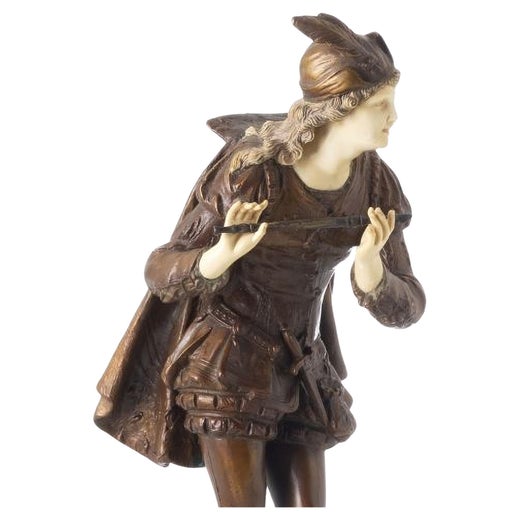
Albert-Ernest Carrier-Belleuse
Albert-Ernest Carrier-Belleuse fue un escultor francés. Carrier-Belleuse nació el 12 de junio de 1824 en Anizy-le-Château, Aisne, Francia. Comenzó su formación como aprendiz de orfebre. Fue alumno de David d'Angers y estudió brevemente en la Escuela de Bellas Artes. Su carrera se distingue por su polivalencia y su trabajo fuera de Francia, en Inglaterra entre 1850-55 y en Bruselas hacia 1871. Su nombre es quizá más conocido porque Auguste Rodin trabajó como ayudante suyo entre 1864 y 1870. Ambos viajaron a Bruselas en 1871 y, según algunos testimonios, Rodin colaboró en la escultura arquitectónica de Carrier-Belleuse para la Bolsa de Bruselas.
Sobre el vendedor
5,0
Vendedor reconocido
Estos prestigiosos vendedores son líderes del sector y representan el escalón más alto en cuanto a calidad y diseño de artículos.
Establecido en 1992
Vendedor de 1stDibs desde 2023
11 ventas en 1stDibs
Tiempo de respuesta usual: 14 horas
- EnvíoRecuperando presupuesto…Envío desde: PARIS, Francia
- Política de devolución
Partes de esta página se han traducido automáticamente. 1stDibs no puede garantizar la exactitud de las traducciones. El inglés es el idioma predeterminado de este sitio web.
Más de este vendedor
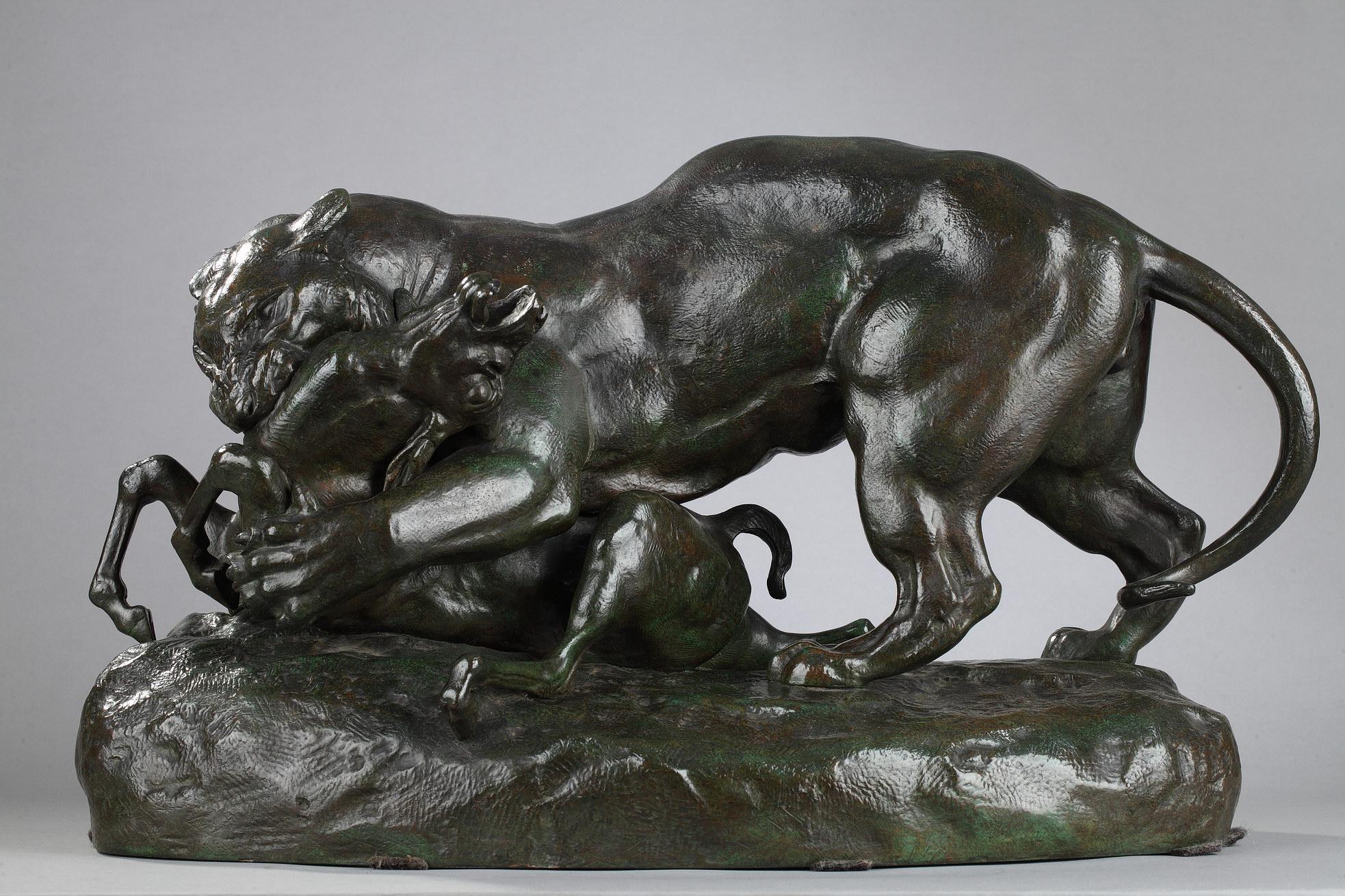
Ver todoTigre sorprendiendo a un antílope
Por Antoine-Louis Barye
Antoine-Louis BARYE (1796-1875)
Tigre sorprendiendo a un antílope
Bronce con pátina marrón verdosa oscura matizada
Firmado en la base " Barye ".
Fundido por el propio taller de Bary...
Categoría
Década de 1870, Escuela francesa, Esculturas figurativas
Materiales
Bronce
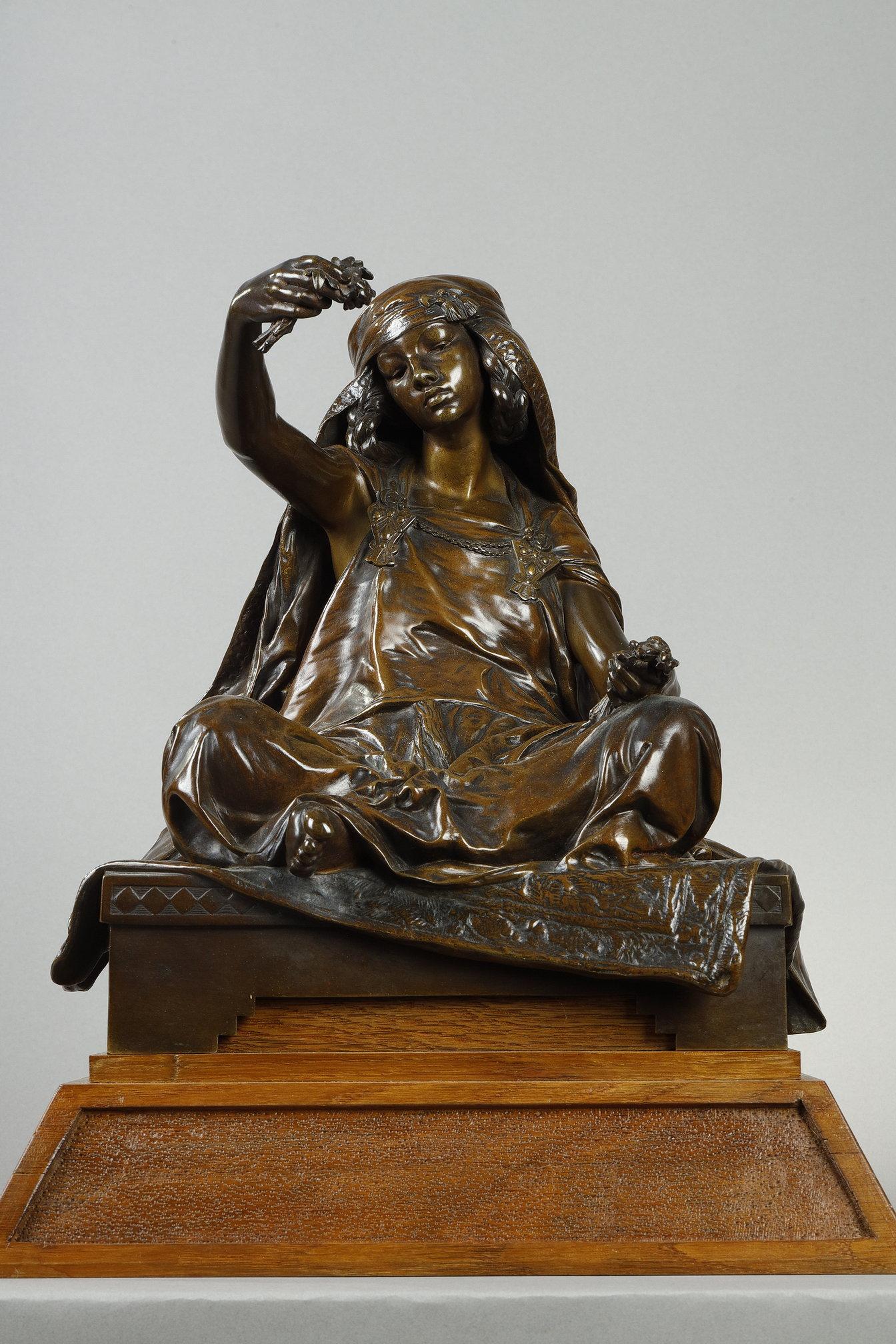
Joven de Bou-Saada
Joven de Bou-Saada
por Louis Ernest BARRIAS (1841-1905)
Escultura de bronce con una pátina marrón oscura matizada
Firmado en la base " E. Barrias ".
Fundido por " Susse Fres Edrs à ...
Categoría
principios del siglo XX, Escuela francesa, Esculturas figurativas
Materiales
Bronce
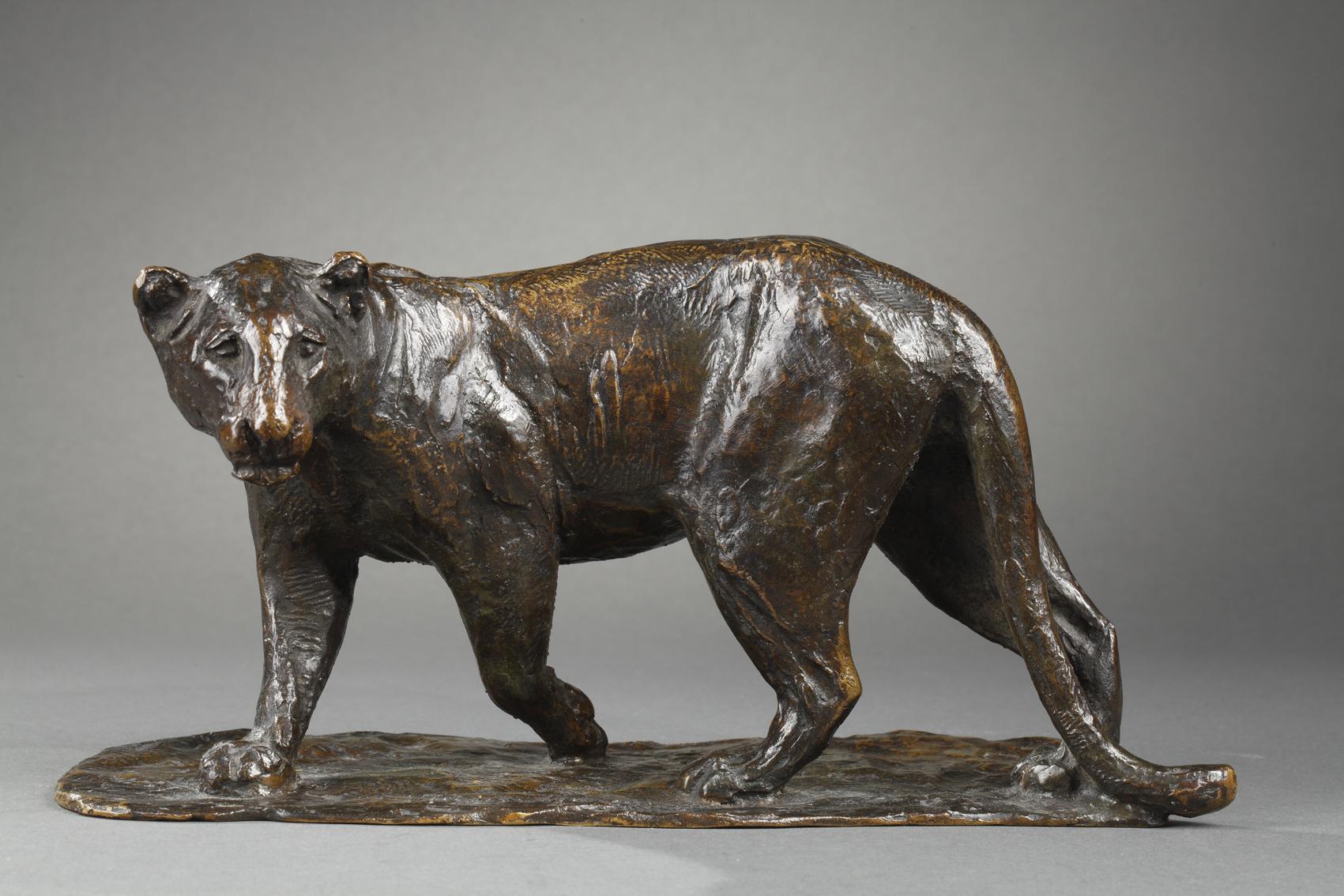
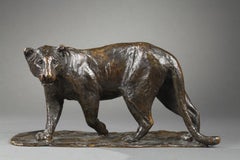
Giro de la Leona
Giro de la Leona
de Roger GODCHAUX (1878-1958)
Una escultura de bronce muy fina con pátina marrón oscura matizada
Firmado " Roger Godchaux " en la base
Marcado y sellado por el fun...
Categoría
Década de 1930, Escuela francesa, Esculturas figurativas
Materiales
Bronce
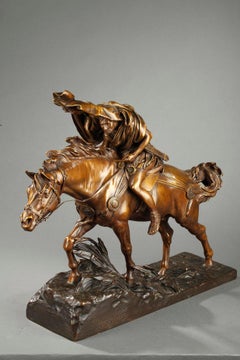
César franchissant le Rubicon
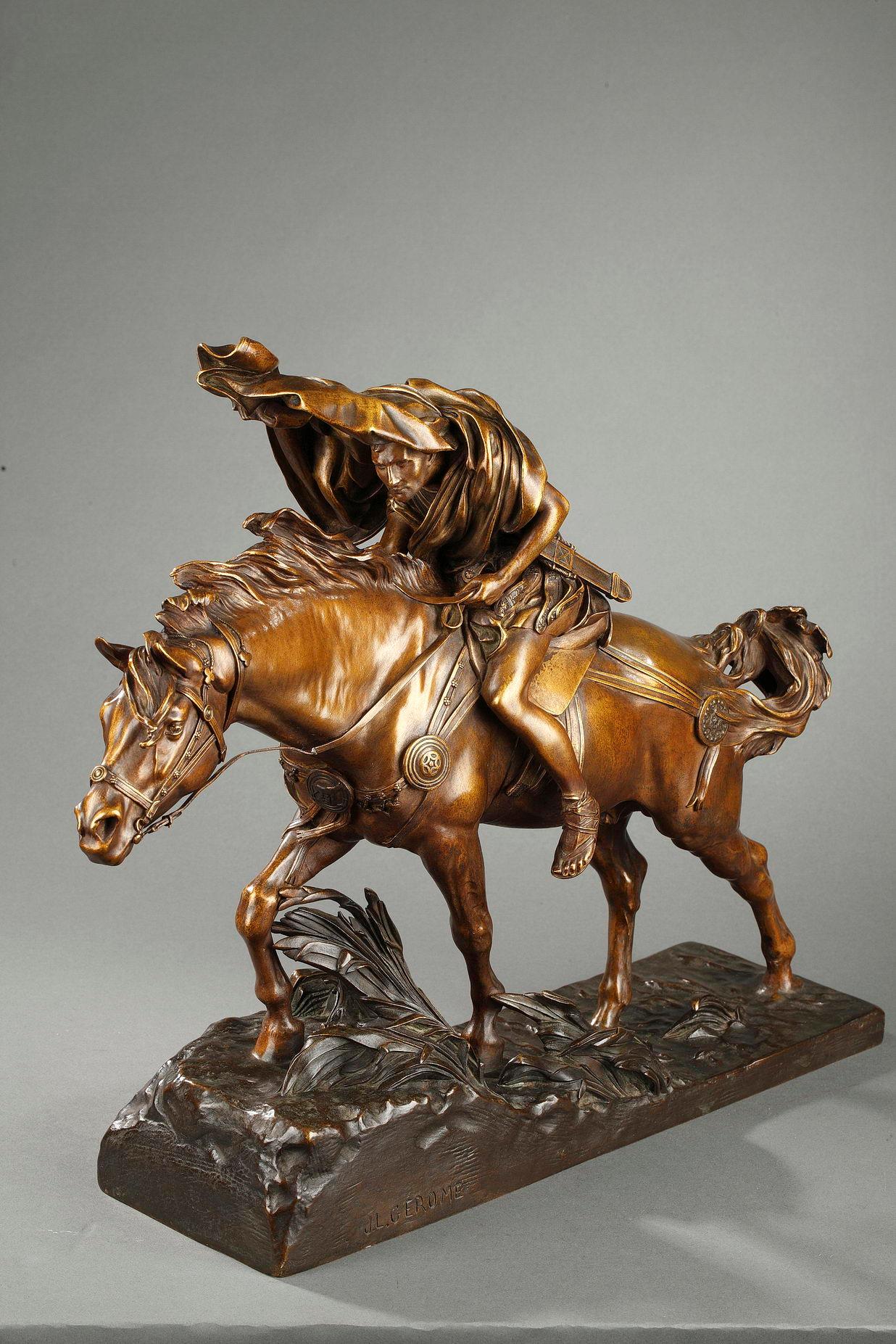
Por Jean-Léon Gérôme
"César cruza el Rubicón"
de Jean-Léon Gérôme (1824-1904)
Bronce con triple pátina, dorado, marrón y marrón oscuro
Reparto por SIOT
Francia
hacia 1900
altura 38 cm
longitud de la b...
Categoría
principios del siglo XX, Escuela francesa, Esculturas figurativas
Materiales
Bronce
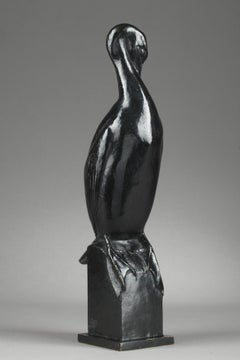
Cormorán
Cormorán
por Auguste TREMONT (1892-1980)
Raro bronce con pátina negra
firmado en la parte inferior de la base "A. Tremont"
fundición antigua de "C. Valsuani, cire perdue" (con el se...
Categoría
mediados del siglo XX, Escuela francesa, Esculturas figurativas
Materiales
Bronce
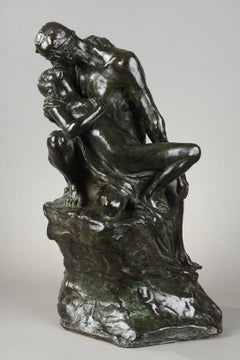
El beso
El beso
por Alfred PINA (1887-1966)
Grupo de bronce con pátina verde oscura pardusca
firmado en la base "A. Pina"
fundido por "A. Valsuani" (sello de fundición)
Francia
hacia 1927...
Categoría
Década de 1920, Escuela francesa, Esculturas de desnudos
Materiales
Bronce
67.500 €
También te puede gustar
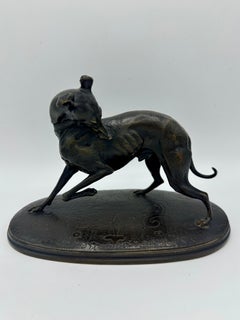
Bronce animalier francés del siglo XIX de un galgo
Por Joseph Francois Victor Chemin
Figura de bronce de finales del siglo XIX de un galgo, con la pata delantera levantada y la cabeza vuelta hacia atrás mientras se acicala el pelaje. Figura finamente detallada con pá...
Categoría
Fines del siglo XIX, Escuela francesa, Esculturas figurativas
Materiales
Bronce
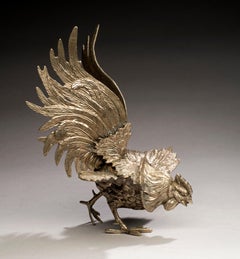
Gallo antiguo de bronce plateado, Francia hacia el siglo XIX
Gallo antiguo de bronce plateado
Francia, hacia 1900
10 1/4 x 9 1/2 (A x P) pulgadas
Una estatuilla de bronce muy fina y vivaz de un Gallo acicalándose. Muy bien fundido y tallado y...
Categoría
siglo XIX, Escuela francesa, Esculturas figurativas
Materiales
Silver, Bronce
1657 € Precio de venta
Descuento del 20 %
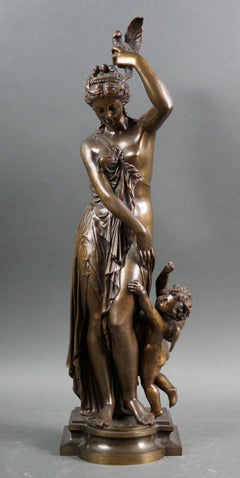
"Venus y el amor" Fundición SUSSE Fréres Grupo de bronce francés mediados del siglo XIX
Jean BULIO (1827-1911), "Venus y el Amor", grupo de bronce patinado con medalla firmado en la base.
Marca de fundición Susse Frères grabada en el reverso.
Excelente estado de cons...
Categoría
Mid-19th Century, Escuela francesa, Esculturas figurativas
Materiales
Bronce
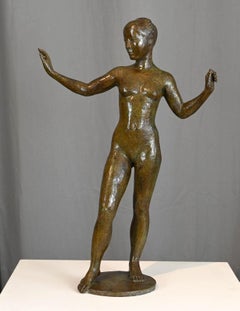
Marie
Jacques COQUILLAY (nacido en 1935)
Marie
Bronce original
Tamaño : 56x39x17cm
Ejemplar nº 4/8
Firma y numeración en la base.
Bronce original hecho a la "cera perdida
La edición de ...
Categoría
Principios de los 2000, Escuela francesa, Esculturas de desnudos
Materiales
Bronce
Victoire
Jacques COQUILLAY (nacido en 1935)
Victoire
Bronce original
Tamaño : 105 x 22 x 20 cm
Copia nº 1/8
Firma y numeración en la base.
Bronce original hecho a la "cera perdida
La edici...
Categoría
Principios de los 2000, Escuela francesa, Esculturas de desnudos
Materiales
Bronce
13.365 €
La Caza Gran Escultura de Bronce Ferdinand Barbedienne Fondeur Napoleón III
Por Louis Ernest Barrias
Louis-Ernest Barrias (1841-1905) 'La caza'.
Impresionante escultura de bronce con pátina marrón, 98 cm de altura. Firma "E. Barrias" en la roca; "F. Barbedienne fondeur Paris" y sell...
Categoría
Late 19th Century, Escuela francesa, Esculturas figurativas
Materiales
Bronce