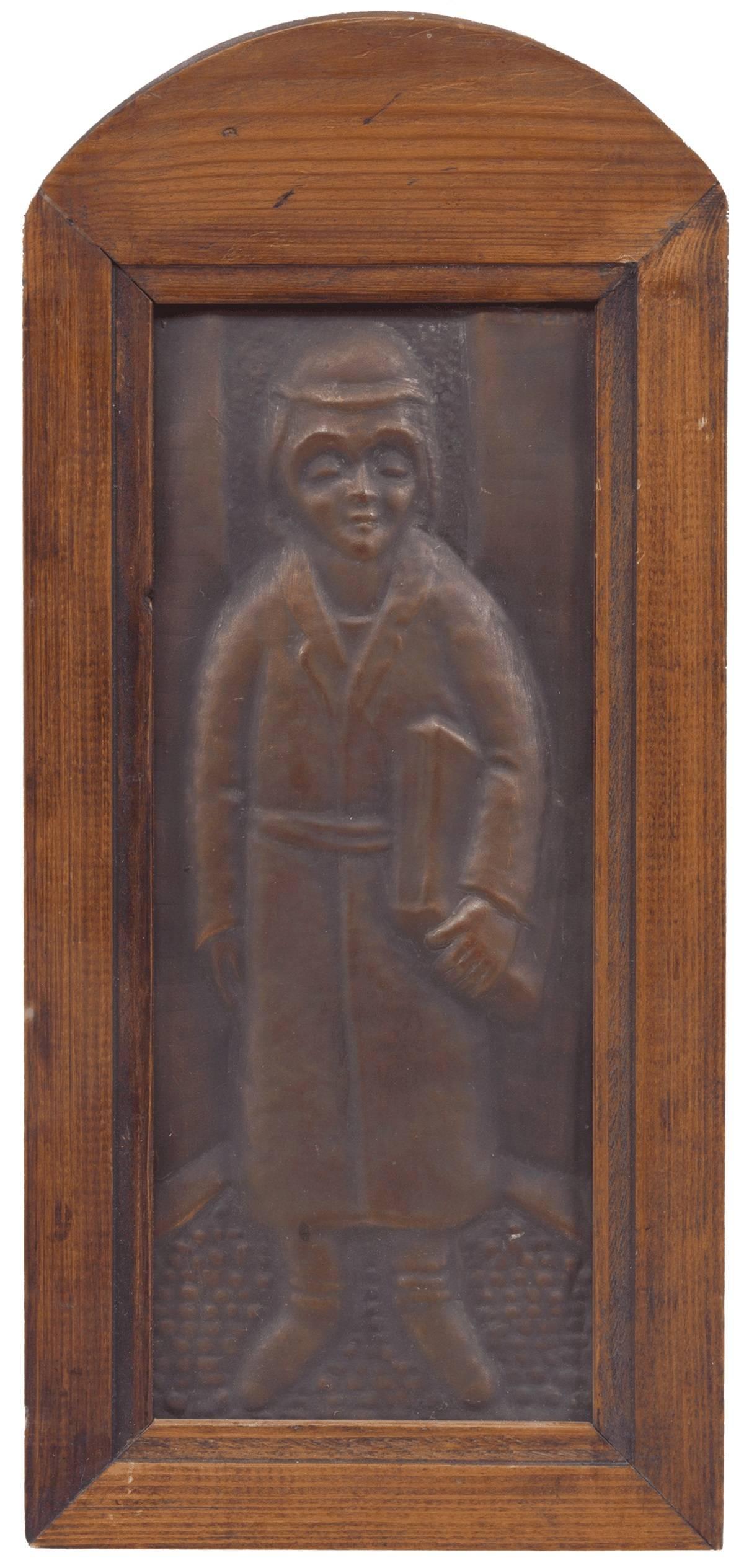
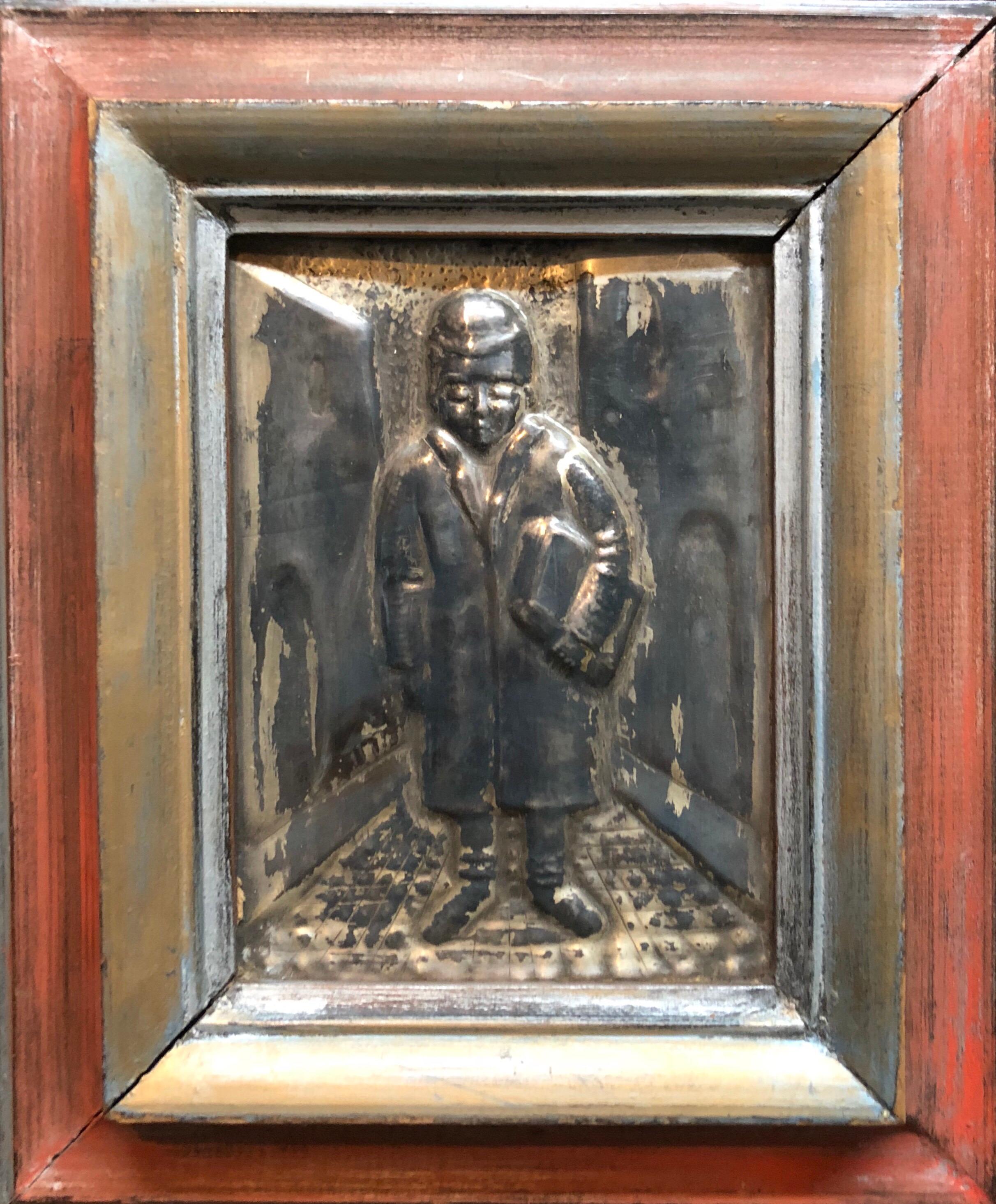
Artículos similares a Jerusalem Rabbi, Repousse Sculpture Relief Plaque Israeli Judaica
¿Quieres más imágenes o vídeos?
Solicita imágenes o vídeos adicionales al vendedor
1 de 5
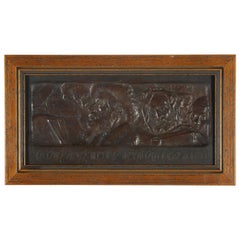
Arieh MerzerJerusalem Rabbi, Repousse Sculpture Relief Plaque Israeli Judaica
1559,43 €
Acerca del artículo
Arieh Merzer was a prominent Israeli artist and metal worker.
Arie Merzer, an artist who worked in hand-hammered copper, was born in Warsaw, Poland in 1905, the scion of a large Hassidic family. He graduated from the Academy of Arts in Warsaw, and became the pupil of Professor Adam Richtarsky. He later worked with a group of Jewish artists who wanted to resuscitate the ancient oriental-Jewish craft of hand-hammering metal (metaloplastics), which was passed on to us as a legacy by far-off generations from the time of the Bible.
In 1928 Arieh Merzer exhibited his works in Warsaw for the first time. From 1930 he lived and worked in Paris. He was one of the Jewish artists who gathered there and were known as the Jewish 'Ecole de Paris.' Merzer regularly exhibited in the well-known 'Salon d'Automne' and 'Salon des Tuileries,' as well as in solo exhibitions in Paris and throughout France.
Arieh Merzer's work was highly acclaimed well before the Holocaust, before it became a memorial to a world destroyed. He portrayed the story of the Jewish spirit on copper, on silver, and on gold: stories from the Bible, the life-styles of the Jews in their shtetls and ghettos, of Chassidim and Kabbalists of renown, of wars of liberation and revival.
A special stress was placed on the link between the new Jewish experience and its historical nucleus. His major innovation was the moulding of mystic and traditional Jewish motifs, that surrounded the Holy Ark in Europe's burning synagogues, and presenting the results before the world of modern art. As a result he became generally recognized as an international Jewish artist.
In 1943, when France was conquered by the Nazis, Arieh Merzer escaped from a concentration camp, and after a stint in the maquis, he crossed the border into Switzerland and was sent to a labor camp. Later, he arrived in Geneva, where an album of sketches of his works was put out. In 1945 he made aliyah to Israel with his family, settled in Safed, and helped to found the Artists' Quarter there.
Arieh Merzer lived and worked in Israel for twenty-one years. His exhibitions in the country include: 1946 in the Tel Aviv Museum; 1947 in the Pevsner Artists' Pavilion in Haifa; 1951 in the Artists' Pavilion in Tel Aviv; 1955 in the Museum for Modern Art in Haifa; 1955 in the Artists' Pavilion in Jerusalem; and 1957 in the Tel Aviv Museum. His works were also on permanent show in his atelier in Safed. He was awarded prizes, including: the Herman Struck prize in 1946; the Dizengoff prize in 1951 and then again in 1965; and the Mayor of Haifa's prize in 1954. His works appear in numerous museums and collections throughout the country and abroad. His heart stopped beating on the eve of Holocaust Day, 1966.
Arieh Merzer, who was brought up in a Hassidic family, was drawn to the world of art from an early age; he was influenced by the moods and new ideals of the socialist circles and prepared himself to study art in the academy. On Passover eve , after clearing out the bread, while the rest of the household was busy preparing for the Holiday, a book fell from the bookcase and from out its pages flew dozens of sketches and drawings of nudes that the young Arieh had prepared for his folio for the entrance examinations to the academy. His sisters tore up the drawings with cries of treyfe treyfe (ritually non-kosher) and many months' hard work went down the drain. As a result of this, he left his home at the age of fifteen, and later joined a group of young artists who wanted to revive the ancient art of hand-hammered copper - metaloplastics - bequeathed to them by past generations who lived in Bible times.
Thus did he part from his family - mother, father, thirteen brothers and sisters - who all perished in the Holocaust. He alone survived, and made an oath that he would commemorate in copper all who had died.
The pictures do not do justice to this magnificent item.
- Creador:Arieh Merzer (1905 - 1966, Francés)
- Dimensiones:Altura: 24,13 cm (9,5 in)Anchura: 19,05 cm (7,5 in)Profundidad: 2,54 cm (1 in)
- Medio:
- Movimiento y estilo:
- Época:
- Estado:Original frame, has wear, see photos. Measurements include frame.
- Ubicación de la galería:Surfside, FL
- Número de referencia:1stDibs: LU38217398552
Sobre el vendedor
4,9
Vendedor Platino
Vendedores premium con una calificación de +4,7 y tiempos de respuesta de 24 horas
Establecido en 1995
Vendedor de 1stDibs desde 2014
1849 ventas en 1stDibs
Tiempo de respuesta usual: <1 hora
- EnvíoRecuperando presupuesto…Envío desde: Surfside, FL
- Política de devolución
Partes de esta página se han traducido automáticamente. 1stDibs no puede garantizar la exactitud de las traducciones. El inglés es el idioma predeterminado de este sitio web.
Más de este vendedor
Ver todoPlaca de Bronce Escultura Judaica Figura de Rabino Retrato Modernista Americano de Boston
Por David Aronson
Pequeña placa en relieve con retrato judío
Firmado y numerado en números romanos a partir de una edición limitada
Aronson, David 1923-
David Aronson, hijo de un rabino, nació en Litu...
Categoría
siglo XX, Expresionista, Esculturas figurativas
Materiales
Bronce

Judaica Placa de cobre Artista israelí Mordechai Avniel, Palestina, Escuela Bezalel
Por Mordechai Avniel
MORDECHAI AVNIEL
Minsk, Bielorrusia, n. 1900, m. 1989
Mordechai Avniel es conocido sobre todo por su hábil y singular obra paisajística.
An He dijo de sus escenas de Israel:
"Me e...
Categoría
siglo XX, Moderno, Más arte
Materiales
Cobre
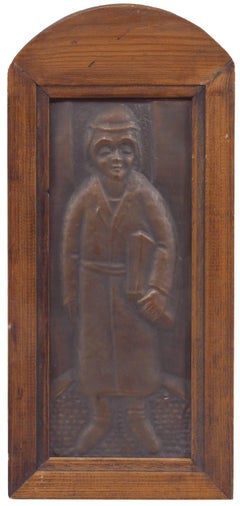
Rara placa judaica de cobre repujado de los años 40 "Shtetl Cheder Boy
Por Arieh Merzer
Arieh Merzer fue un destacado artista y metalúrgico israelí.
Arie Merzer, artista que trabajaba el cobre martillado a mano, nació en Varsovia (Polonia) en 1905, vástago de una gran ...
Categoría
Década de 1940, Esculturas figurativas
Materiales
Cobre
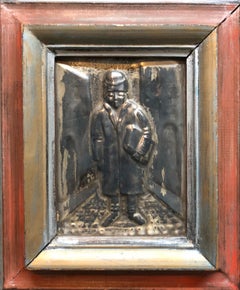
Judaica Cobre Plateado Repousse Escultura Relieve Placa Shtetl Yeshiva Bochur
Por Arieh Merzer
Arieh Merzer fue un destacado artista y metalúrgico israelí.
Arie Merzer, artista que trabajaba el cobre martillado a mano, nació en Varsovia (Polonia) en 1905, vástago de una gran ...
Categoría
mediados del siglo XX, Esculturas figurativas
Materiales
Metal
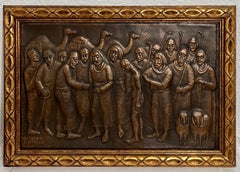
Gran Judaica Escultura de cobre repujada Placa en relieve Arie Merzer Época de Bezalel
Por Arieh Merzer
Arieh Merzer (israelí, 1905-1966)
Panel de escultura en relieve de cobre en marco dorado
Dimensiones enmarcadas 18 X 26,25, cobre 14,5 X 22,5
Arieh Merzer fue un destacado artista...
Categoría
mediados del siglo XX, Esculturas figurativas
Materiales
Metal, Cobre
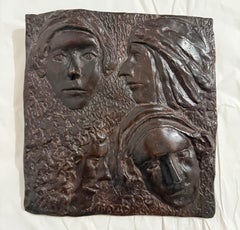
Escultura de bronce Relieve de pared Judaica Matriarcas judías Modernista Leonard Baskin
Por Leonard Baskin
Leonard Baskin (1922-2000)
Matriarcas judías, Sara, Rebeca, Raquel y Lea
con caligrafía hebrea
Bronce, 1998
9,5 X 9 pulgadas
Bronce bíblico judaico de las madres judías.
Leonard Ba...
Categoría
siglo XX, Moderno, Esculturas figurativas
Materiales
Bronce
También te puede gustar
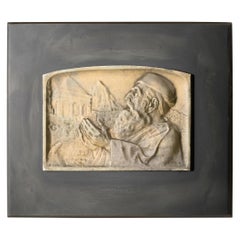
Judío en la Tumba de Zacarías-Placa de bronce de Moshe Murro para Bezalel, Jerusalén
Placa de bronce con el retrato de un judío con la Tumba de Zacarías al fondo.
Fabricado en la escuela de Bezalel, Jerusalén, por Moshe Murro, hacia 1915.
Firmado: "Bezalel Jerusalé...
Categoría
principios del siglo XX, Israelí, Arte decorativo
Materiales
Bronce
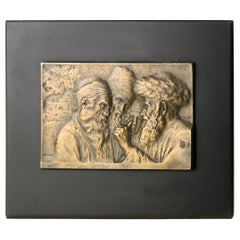
Judíos en la Tumba de Raquel - Placa de bronce de principios del siglo XX de Moshe Murro, Jerusalén
Placa de bronce con una reproducción de las figuras de tres ancianos judíos y un joven judío con la Tumba de Raquel al fondo.
Fabricado en la escuela de Bezalel, Jerusalén, por Mosh...
Categoría
principios del siglo XX, Israelí, Arte decorativo
Materiales
Bronce
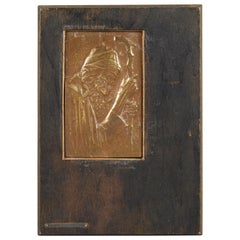
Placa de latón de principios del siglo XX de la Escuela de Bezalel Jerusalén
Placa de latón de Bezalel que representa a un anciano judío junto al Muro de las Lamentaciones, fabricada en Jerusalén hacia 1920, con una pequeña etiqueta metálica grabada "Bezalel ...
Categoría
principios del siglo XX, Israelí, Arte decorativo
Materiales
Latón
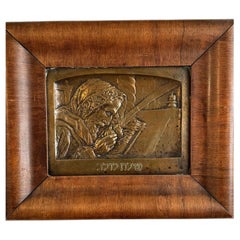
Placa de bronce de principios del siglo XX "Netilat Lulav" de Boris Schatz, Bezalel
Maciza placa de bronce que representa el acto de "Netilat Lulav" que tiene lugar durante la festividad judía de Sucot. La placa fue realizada y firmada por Boris Schatz, que formó pa...
Categoría
principios del siglo XX, Israelí, Neoclásico, Esculturas de pared
Materiales
Bronce
Tisha B
Av, Placa de Bronce de Boris Schatz, Escuela Bezalel Jerusalén
Placa de bronce de Boris Schatz En bronce fundido en alto relieve por expertos. Representación de hombres barbudos en el suelo de la Sinagoga leyendo kinnot (poemas tristes / elegías...
Categoría
principios del siglo XX, Israelí, Arte decorativo
Materiales
Bronce
Placa de plata de principios del siglo XX de la Escuela de Bezalel Jerusalén
Placa de plata de Bezalel que representa a Moisés en el monte Sinaí, fabricada en Jerusalén, hacia 1925, con la inscripción "Bezalel Jerushalem" en hebreo y "Made in Palestine", marc...
Categoría
principios del siglo XX, Israelí, Arte decorativo
Materiales
Chapado en plata