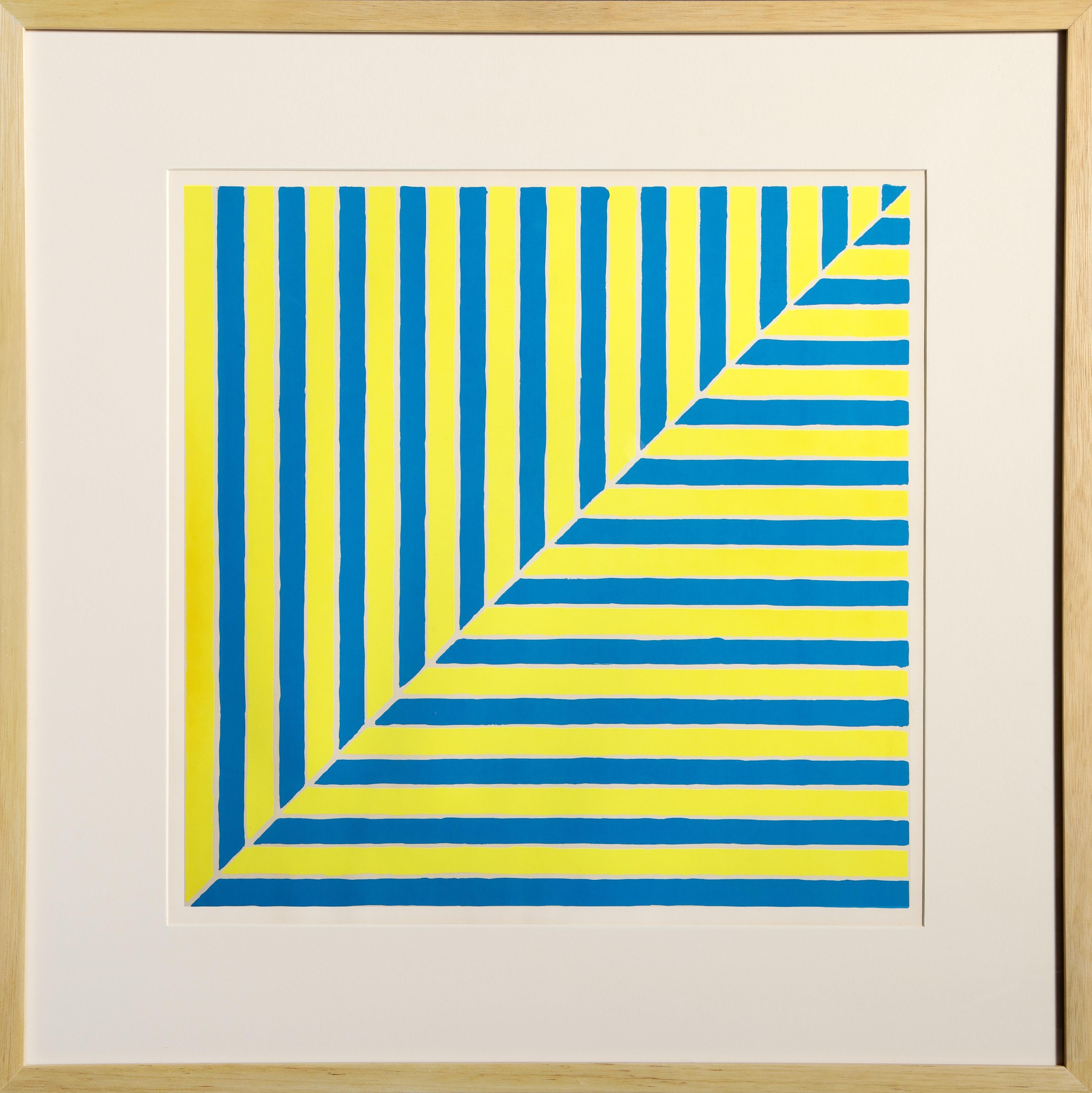
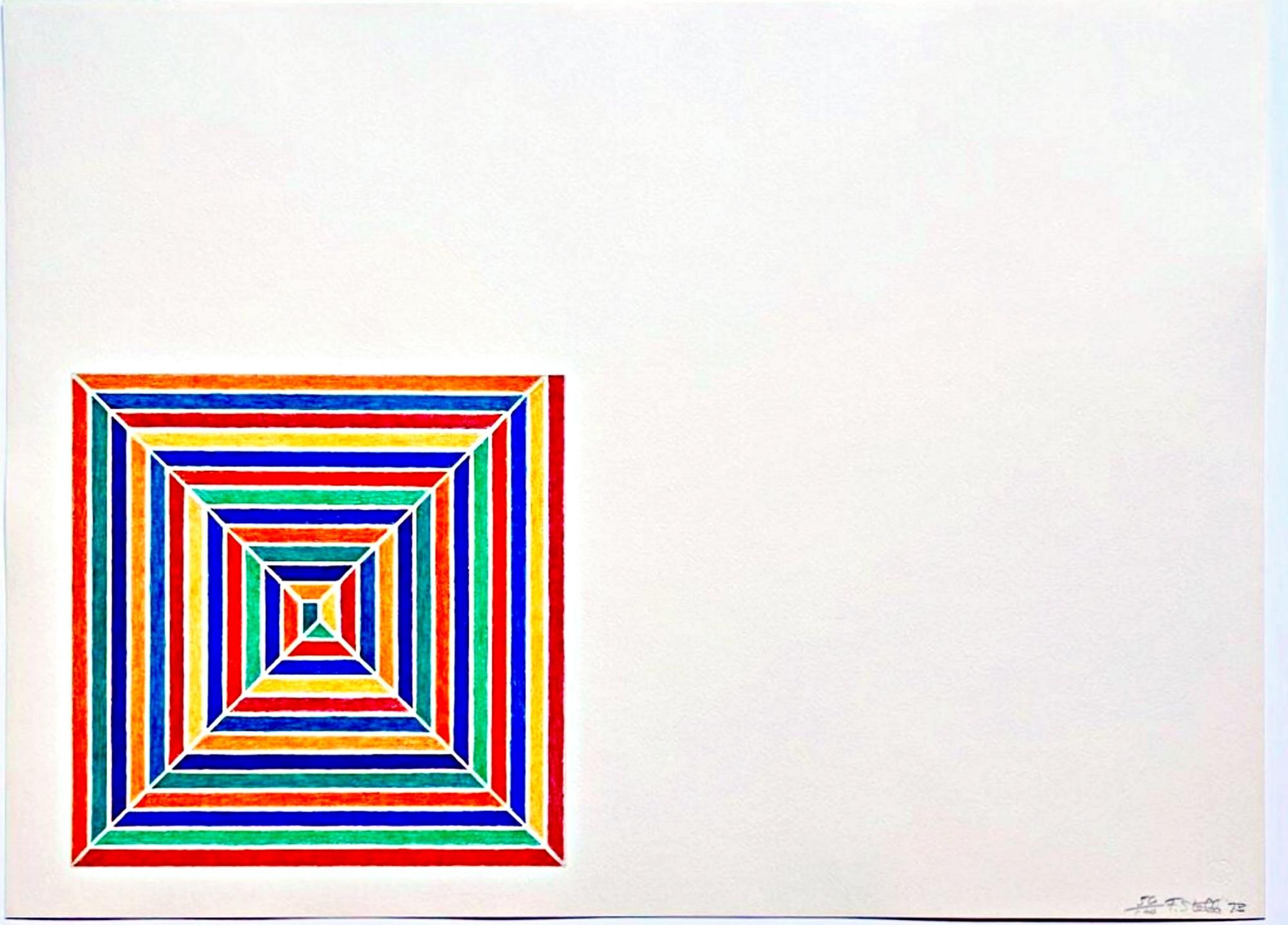
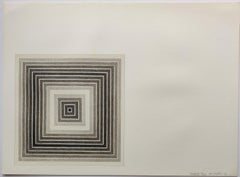
Frank StellaFrank Stella -Attica Defense Fund historic LtEd Geometric abstraction lithograph1974
1974
Acerca del artículo
- Creador:Frank Stella (1936, Americana)
- Año de creación:1974
- Dimensiones:Altura: 74,93 cm (29,5 in)Anchura: 74,93 cm (29,5 in)
- Medio:
- Movimiento y estilo:
- Época:
- Estado:
- Ubicación de la galería:New York, NY
- Número de referencia:1stDibs: LU1745217369442
Frank Stella
Frank Stella fue una de las figuras centrales del arte estadounidense de posguerra. Defensor del minimalismo y de la abstracción no representativa, Stella fue pintor, grabador y escultor.
Natural de Massachusetts, Stella asistió a la Phillips Academy de Andover y se licenció en Princeton, donde estudió arte y teoría del color con Josef Albers y Hans Hofmann. Stella frecuentaba las galerías de Nueva York cuando era estudiante y le intrigaba la obra de Jackson Pollock y Franz Kline, ambos en la cima de su poder creativo a finales de la década de 1950.
Tras trasladarse a Nueva York en 1958, Stella gravitó hacia la abstracción geométrica y el estilo pictórico sobrio de Barnett Newman y Jasper Johns.
Las imágenes planas y gráficas de Johns de objetos comunes como dianas y banderas incitan al espectador a cuestionarse la naturaleza esencial de la representación y si estos cuadros son realmente pinturas o simplemente nuevas iteraciones de los propios objetos. Stella llevó más lejos el razonamiento de Johns, considerando las pinturas sobre lienzo como objetos por derecho propio, como esculturas, en lugar de representaciones. Esto le llevó a rechazar ciertas convenciones formales, evitando los bocetos y utilizando a menudo materiales no tradicionales, como la pintura doméstica.
En 1959, Stella creó su serie "Pinturas negras", en la que bandas de pintura negra están separadas por finas y precisas franjas de lienzo desnudo. En una época en la que la pintura contemporánea era todo gestos salvajes, pintura espesa y abandono formal, estas piezas crearon sensación. Ese mismo año, la obra de Stella se incluyó en la exposición "Sixteen Americans" en el Museo de Arte Moderno de Nueva York, y se unió a la lista de artistas representados por la Galería Leo Castelli. En 1960, empezó a introducir el color en su obra y utilizando lienzos de formas poco convencionales para complementar sus composiciones.
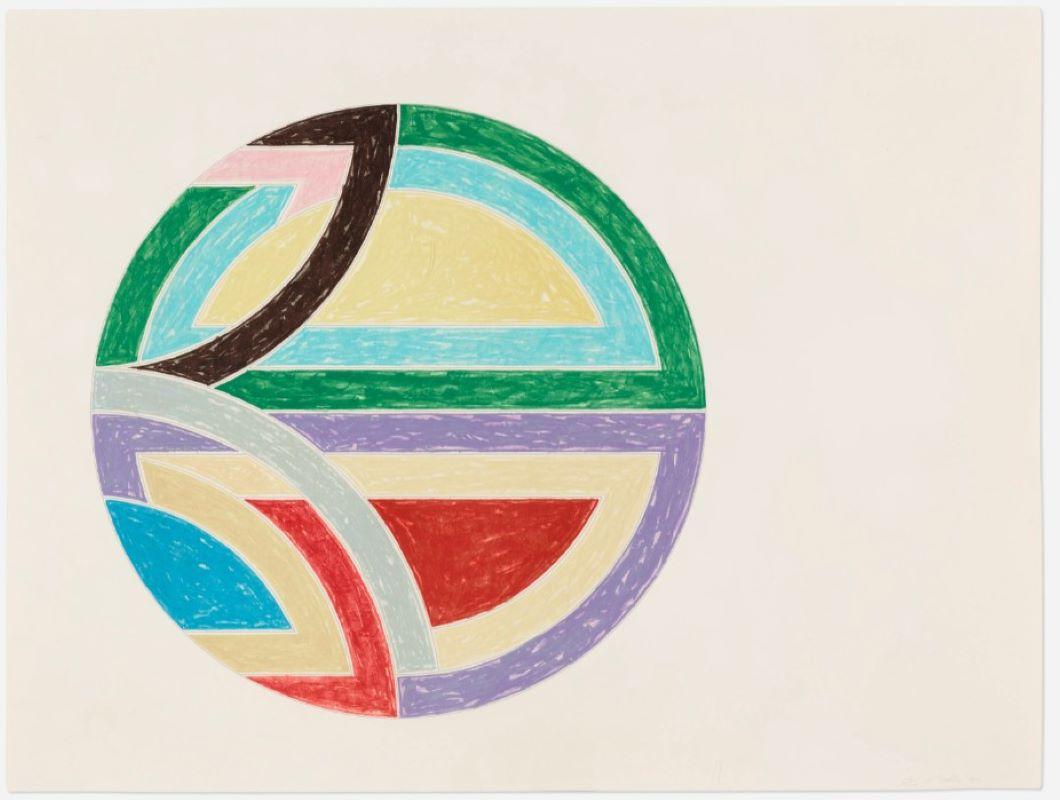
En su serie "Polígono excéntrico", de 1965 y 66, Stella adopta la asimetría y el color atrevido, creando formas delineadas por campos pintados y por los bordes del lienzo. A esta serie le siguió la serie "Transportador" de 1967-70, caracterizada por círculos y arcos de colores. Bautizadas con el nombre de las antiguas ciudades en cuyos planos circulares se había fijado Stella mientras viajaba por Oriente Próximo durante la década de 1960, estas obras solían constar de varios lienzos colocados unos al ras de otros, de modo que las figuras geométricas de cada sección se unían en un todo mayor y más complejo.
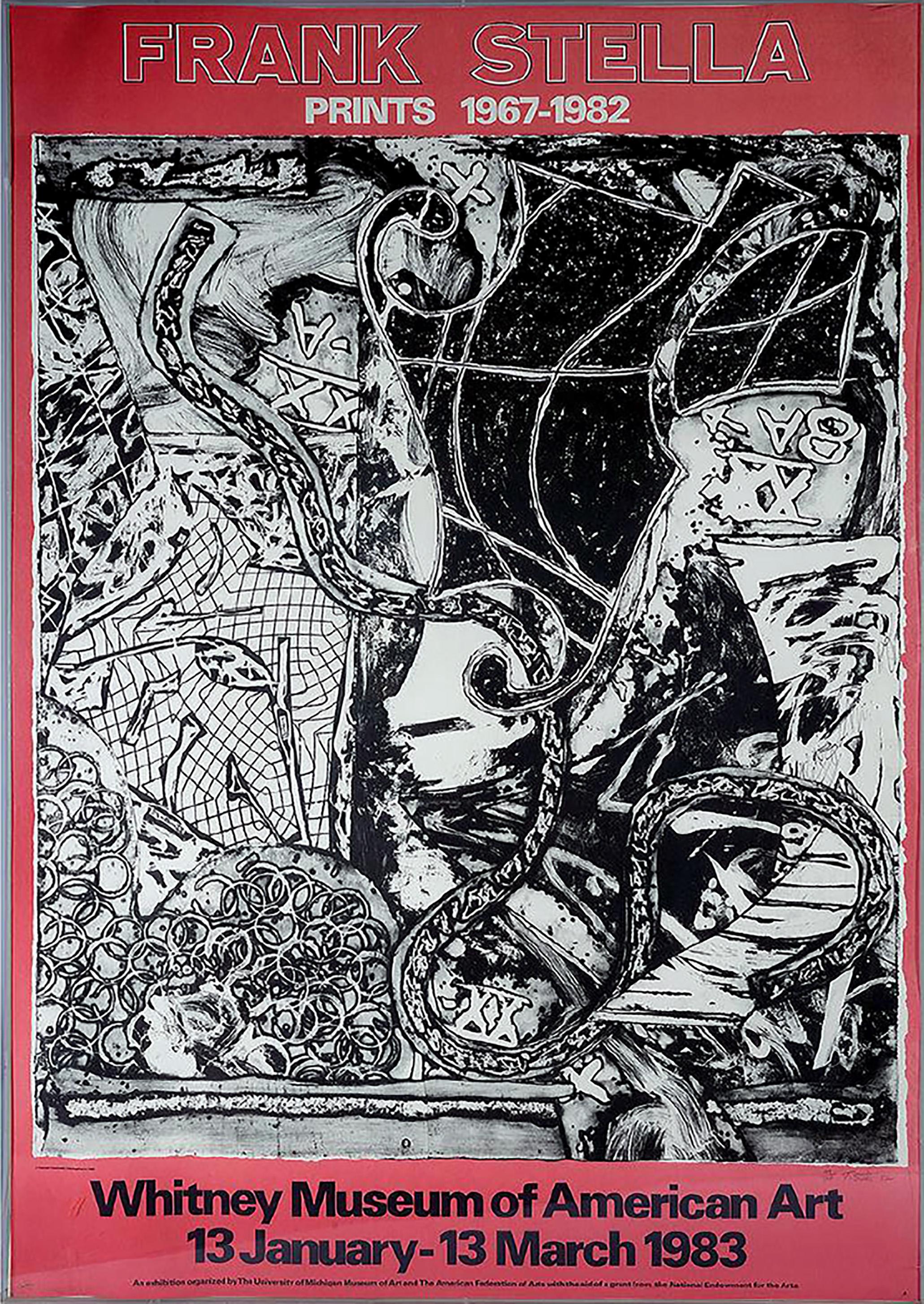
También a mediados de la década de 1960, Stella empezó a explorar el grabado, trabajando inicialmente con Kenneth Tyler, de Gemini G.E.L., y más tarde instalando equipos de impresión en su propio estudio. En 1968, creó la serie "V" de litografías, que incluía el grabado Quathlamba I. Tras una exposición individual en el Museo de Arte Moderno en 1970, Stella empezó a trabajar en tres dimensiones, añadiendo elementos en relieve a los cuadros, que casi podrían considerarse esculturas montadas en la pared.
La serie "Pueblo polaco" de Stella de 1970-73 se inspiró en fotos documentales y dibujos arquitectónicos de sinagogas polacas que habían sido destruidas por los nazis durante la II Guerra Mundial. Las obras resultantes -compuestas principalmente de pintura y tela sobre madera contrachapada- son más ásperas y menos pulidas que sus series anteriores.
La obra de Herman Melville Moby Dick fue la musa de Stella para una serie de obras tridimensionales que creó en la década de 1980, en las que las formas ondulatorias, los elementos arquitectónicos y los sólidos platónicos desempeñan un papel destacado. Durante este periodo, Stella adoptó un estilo nuevo y exuberante que se ejemplifica en "La Scienza della Fiacca".
En 1997, el artista supervisó la creación del Proyecto Stella, una obra de 5.000 pies cuadrados en el interior del Moores Opera House de la Universidad de Houston. Una gran escultura exenta de Stella se encuentra en el exterior de la Galería Nacional de Arte en Washington, D.C.
La obra de Stella forma parte de las colecciones de numerosos museos importantes de todo el mundo, como el Museo de Arte Moderno de Nueva York y el Museo Metropolitano de Arte; la Colección Menil, en Houston; el Museo y Jardín de Esculturas Hirshhorn, en Washington, D.C.; y el Museo de Arte Moderno de San Francisco. El presidente Obama le concedió la Medalla Nacional de las Artes en 2009, y el Centro Internacional de Escultura le otorgó el Premio a la Trayectoria en Escultura Contemporánea en 2011.
Encuentra arte original de Frank Stella a la venta en 1stDibs.
- EnvíoRecuperando presupuesto…Envío desde: New York, NY
- Política de devolución
Más de este vendedor
Ver todoDécada de 1970, Geométrico abstracto, Impresiones abstractas
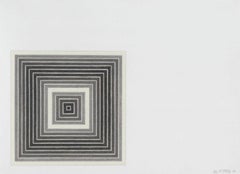
Litografía
Década de 1980, Expresionismo abstracto, Impresiones abstractas
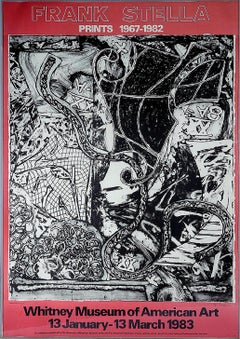
Litografía, Offset
Década de 1970, Geométrico abstracto, Impresiones abstractas
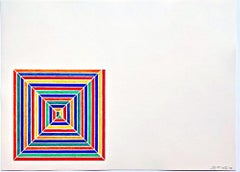
Litografía
Década de 1980, Expresionismo abstracto, Impresiones abstractas
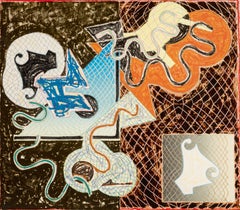
Técnica mixta, Litografía, Pantalla
Principios de los 2000, Expresionismo abstracto, Impresiones abstractas
Litografía, Offset

Década de 1980, Expresionismo abstracto, Impresiones abstractas
Litografía, Offset
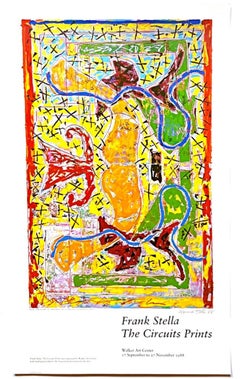
También te puede gustar
Década de 1970, Geométrico abstracto, Impresiones abstractas
Litografía
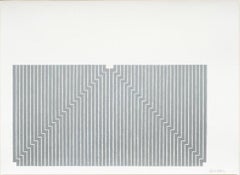
Década de 1960, Geométrico abstracto, Impresiones abstractas
Pantalla
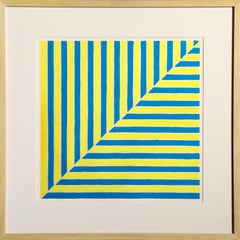
Década de 1970, Geométrico abstracto, Impresiones y múltiplos
Litografía, Pantalla
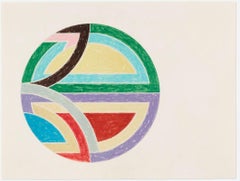
Década de 1970, Impresiones y múltiplos
Litografía
Década de 1970, Geométrico abstracto, Impresiones y múltiplos
Litografía, Pantalla
mediados del siglo XX, Estadounidense, Moderno de mediados de siglo, Imp...
Papel