Artículos similares a The Rabbi 1977 Soviet Non Conformist Avant Garde Print
¿Quieres más imágenes o vídeos?
Solicita imágenes o vídeos adicionales al vendedor
1 de 6
Alek RapoportThe Rabbi 1977 Soviet Non Conformist Avant Garde Print1977
1977
1090,56 €
Acerca del artículo
Dimensions w/Frame: 25 3/4" x 20 3/4"
Alek Rapoport (November 24, 1933, Kharkiv, Ukraine SSR – February 4, 1997, San Francisco) was a Russian Nonconformist artist, art theorist and teacher.
Alek Rapoport spent his childhood in Kiev (Ukraine SSR). During Stalin's "purges" both his parents were arrested. His father was shot and his mother spent ten years in a Siberian labor camp. Rapoport lived with his aunt. At the beginning of World War II, he was evacuated to the city of Ufa (the Bashkir Autonomous Soviet Socialist Republic). A time of extreme loneliness, cold, hunger and deprivation, this period also marked the beginning of Rapoport's drawing studies.
After the war, Rapoport lived in Chernovtsy (Western Ukraine), a city with a certain European flair. At the local House of Folk Arts, he found his first art teacher, E.Sagaidachny (1886–1961), a former member of the nonconformist artist groups Union of the Youth (Soyuz Molodyozhi) and Donkey's Tail, popular during the 1910s–1920s. His other art teacher was I. Beklemisheva (1903–1988). Impressed by Rapoport's talent, she later (1950) organized his move to Leningrad, where he entered the famous V.Serov School of Art (the former School of the Imperial Society for the Promotion of Arts, OPKh, later the Tavricheskaya Art School).
His association with this school lasted eight years, first as a student, and then, from 1965 to 1968, as a teacher. With "Socialist realism" the only official style during this time, most of the art school's faculty had to conceal any prior involvement in non-conformist art movements. Ya.K.Shablovsky, V.M.Sudakov, A.A.Gromov introduced their students to Constructivism only through clandestine means.
(1959–1963) Rapoport studied stage design at the Leningrad Institute of Theater, Music and Cinema under the supervision of the famous artist and stage director N.P.Akimov. Akimov taught a unique course based on theories of Russian Suprematism and Constructivism, while encouraging his graduate students to apply their knowledge to every field of art design. Despite differences in personal artistic taste with Akimov, who was drawn to Vermeer and Dalí, Rapoport was influenced by Akimov's personality and liberalism, as well as the logical style of his art.
In 1963, Rapoport graduated from the institute. His highly acclaimed MFA work involved the stage and costume design for I.Babel's play Sunset. In preparation, he traveled to the southwest regions of the Soviet Union, where he accumulated many objects of Judaic iconography from former ghettos, disappearing synagogues and old cemeteries. He wandered Odessa in search of Babel's characters and the atmosphere of his books.
He organized a new liberal course in technical aesthetics, introducing his students to Lotman's theory of semiotics, the Modulor of Le Corbusier, the Bauhaus school, Russian Constructivism, Russian icons and contemporary Western art. As a result of his "radicalism," Rapoport was fired for "ideological conspiracy."
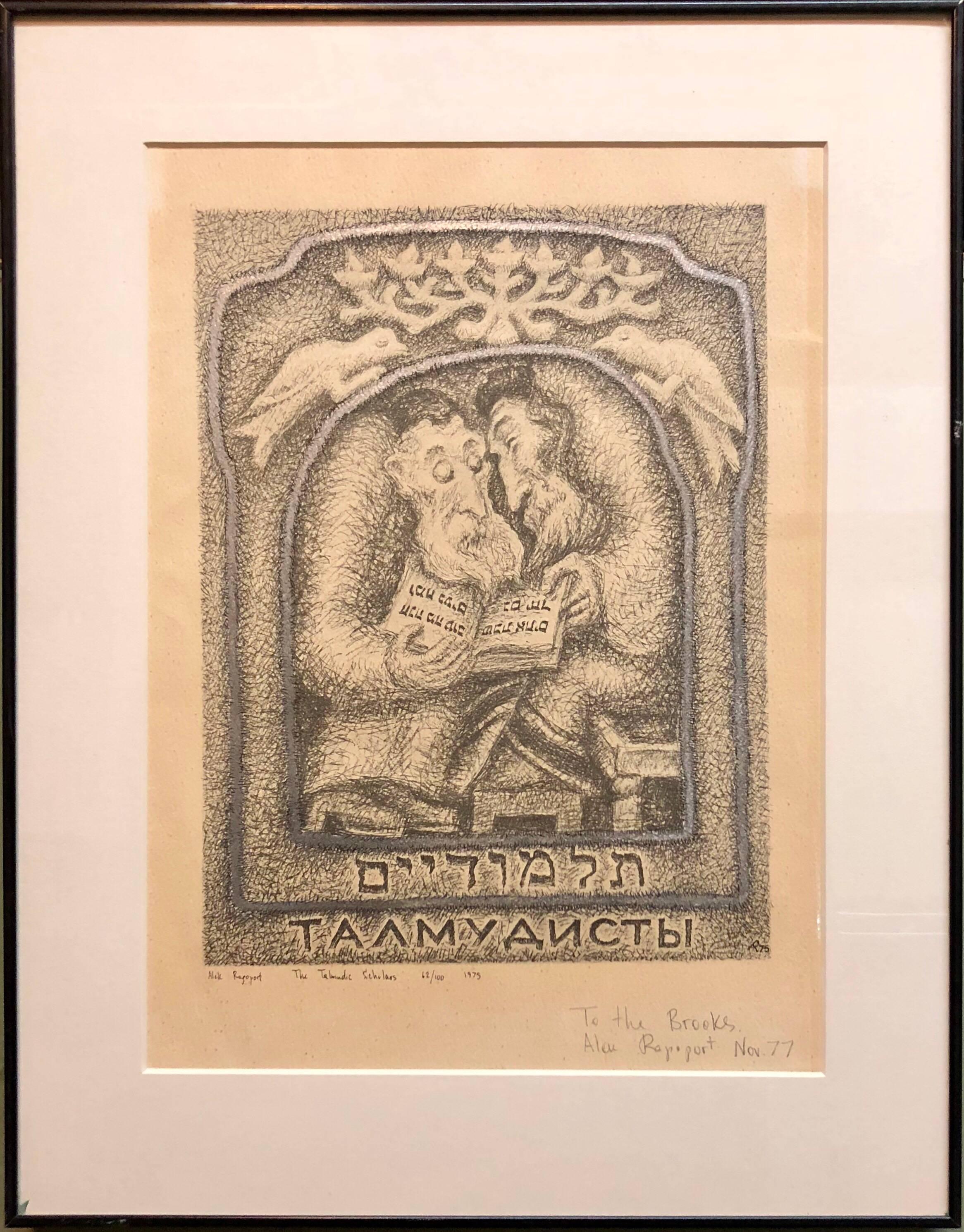
He sought to cultivate himself as Jewish artist. This became particularly noticeable after the Six-Day War, when the Israeli victory led intellectuals, including the Jewish intelligentsia, to feel a heightened interest in Jewish culture and its Biblical roots. Rapoport's works of this period include Three Figures, a series of images of Talmudic Scholars, and works dealing with anti-Semitism. In the 1970s Rapoport joined the non-conformist movement, which opposed the dogmas of "Socialist realism" in art, along with Soviet censorship. The movement sought to preserve the traditions of Russian iconography and the Constructivist/Suprematist style of the 1910s. Despite the authorities' persecutions of nonconformist artists (including arrests, forced evictions, terminations of employment, and various forms of routine hassling), they united in a group, "TEV – Fellowship of Experimental Exhibitions." TEV's exhibitions proved tremendously successful.
In the same period, Rapoport became one of the initiators of another anti-establishment group, ALEF (Union of Leningrad's Jewish Artists). In the United States this group was known as "Twelve from the Soviet Underground." Rapoport's involvement with this group increased tension with the authorities and attracted KGB scrutiny, including "friendly conversations," surveillance, detentions and house arrests. It became increasingly dangerous for him to live and work in the USSR. In October 1976, Rapoport with his wife and son were forced to leave Russia.
In Italy, Rapoport exhibited at the Venice Biennale, "La Nuova Arte Sovietica-Una prospettiva non-ufficiale" (1977), participated in television programs about nonconformist art in the Soviet Union, and created lithographic works continuing his theme of Jewish characters from Babel's play Sunset.
In 1977, Rapoport's family was granted U.S. immigration status and settled in San Francisco. a significant event in Rapoport's life occurred in his meeting with San Francisco gallery owner Michael Dunev, who became his friend and representative, organizing all his exhibitions until the artist's death.
Toward the end of the 1980s and beginning of the 1990s, Rapoport completed his most ambitious works on the theme of the Old Testament prophets: Samson Destroying the House of the Philistines (1989), Lamentation and Mourning and Woe (1990), the four paintings Angel and Prophets (1990–1991) and Three Deeds of Moses (1992).
In 1992, the artist's friends in St. Petersburg organized the first exhibition of his works there since his departure into exile, with works patiently gathered from collectors and art museums. This exhibition, held in the City Museum of St. Petersburg and accompanied by headlines such as "A St. Petersburg artist returns to his town," was followed by much larger ones in 1993 (St. Petersburg and Moscow), organized in collaboration with Michael Dunev Gallery under the name California Branches – Russian Roots.
He Exhibited in "Soviet Artists, Jewish Themes," an exhibit of Nonconformist art of over 40 Jewish artists from the Soviet Union.
The variety of Jewish themes range from rural, village scenes to images of the Holocaust, to mystical interpretations based on Kabbalistic texts by artists such as Grisha Bruskin, Anatolii Kaplan, Vitaly Komar, Alexander Melamid, Leonid Lamm, Dmitrii Lion, and Alek Rapoport.
The exhibit focused on the work of Jewish artist in times of social oppression and were created in private, and were mostly kept hidden from the public eye.
Main personal exhibitions
1980 – Gallerie "Trifalco," Rome, Italy
1981 – Images of San Francisco, Eduard Nakhamkin Gallery, New York, NY.
1984 – Images of San Francisco, University of the Pacific Gallery, Stockton, CA.
1986 – Images of San Francisco, Michael Dunev Gallery, San Francisco, CA.
1988 – Ecumenical Works, Michael Dunev Gallery, San Francisco, CA.
1992 – Russia-USA, The Museum of the City of St. Petersburg, St. Petersburg, Russia.
1993 – California Branches-Russian Roots, Manege Exhibition Hall, St. Petersburg, Russia; National Exhibition Hall, Moscow, Russia.
1996 – Ecumenical Paintings, SOMAR Gallery, San Francisco, CA.
1997 – The Last Paintings: A Memorial Exhibition, Michael Dunev Gallery, San Francisco, CA; The Early Drawings. A Memorial Exhibition. George Krevsky Fine Art, San Francisco, CA; Sacred Inspiration: Icons by Alek Rapoport, The Marian Library, IMRI, Dayton University, Dayton, OH.[14]
1998 – Angel and Prophet, Center for Art and Religion, Washington, DC.
2004 – Images of San Francisco, Diaghilev Art Center, St. Petersburg, Russia.
2007 – Alek Rapoport: A Memorial Exhibition, Belcher Studios Gallery, San Francisco, CA.
- Creador:Alek Rapoport (1933, Ruso)
- Año de creación:1977
- Dimensiones:Altura: 65,41 cm (25,75 in)Anchura: 52,71 cm (20,75 in)
- Medio:
- Movimiento y estilo:
- Época:
- Estado:
- Ubicación de la galería:Surfside, FL
- Número de referencia:1stDibs: LU38217436582
Sobre el vendedor
4,9
Vendedor Platino
Vendedores premium con una calificación de +4,7 y tiempos de respuesta de 24 horas
Establecido en 1995
Vendedor de 1stDibs desde 2014
1858 ventas en 1stDibs
Tiempo de respuesta usual: <1 hora
- EnvíoRecuperando presupuesto…Envío desde: Surfside, FL
- Política de devolución
Partes de esta página se han traducido automáticamente. 1stDibs no puede garantizar la exactitud de las traducciones. El inglés es el idioma predeterminado de este sitio web.
Más de este vendedor
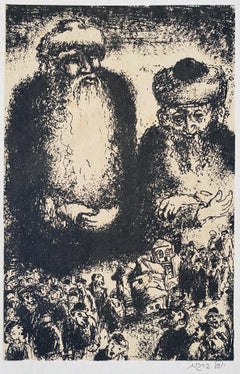
Ver todoLos Talmudistas Litografía Avant Garde Judaica Post Soviética No Conformista
Por Alek Rapoport
Dimensiones con marco: 18.5 X 14.5
Alek Rapoport (24 de noviembre de 1933, Járkov, RSS de Ucrania - 4 de febrero de 1997, San Francisco) fue un artista inconformista, teórico del ar...
Categoría
Década de 1970, Posmoderno, Impresiones figurativas
Materiales
Litografía
Litografía modernista del expresionista israelí Yosl Bergner
Por Yosl Bergner
Firmado a mano en hebreo, abajo a la derecha. Dimensiones: H 19,5" x 13,5"
Bergner, Yosl (Vladimir Jossif) (Viena, 13 de octubre de 1920). surrealista, surrealismo. pertenece a la...
Categoría
mediados del siglo XX, Moderno, Impresiones figurativas
Materiales
Litografía
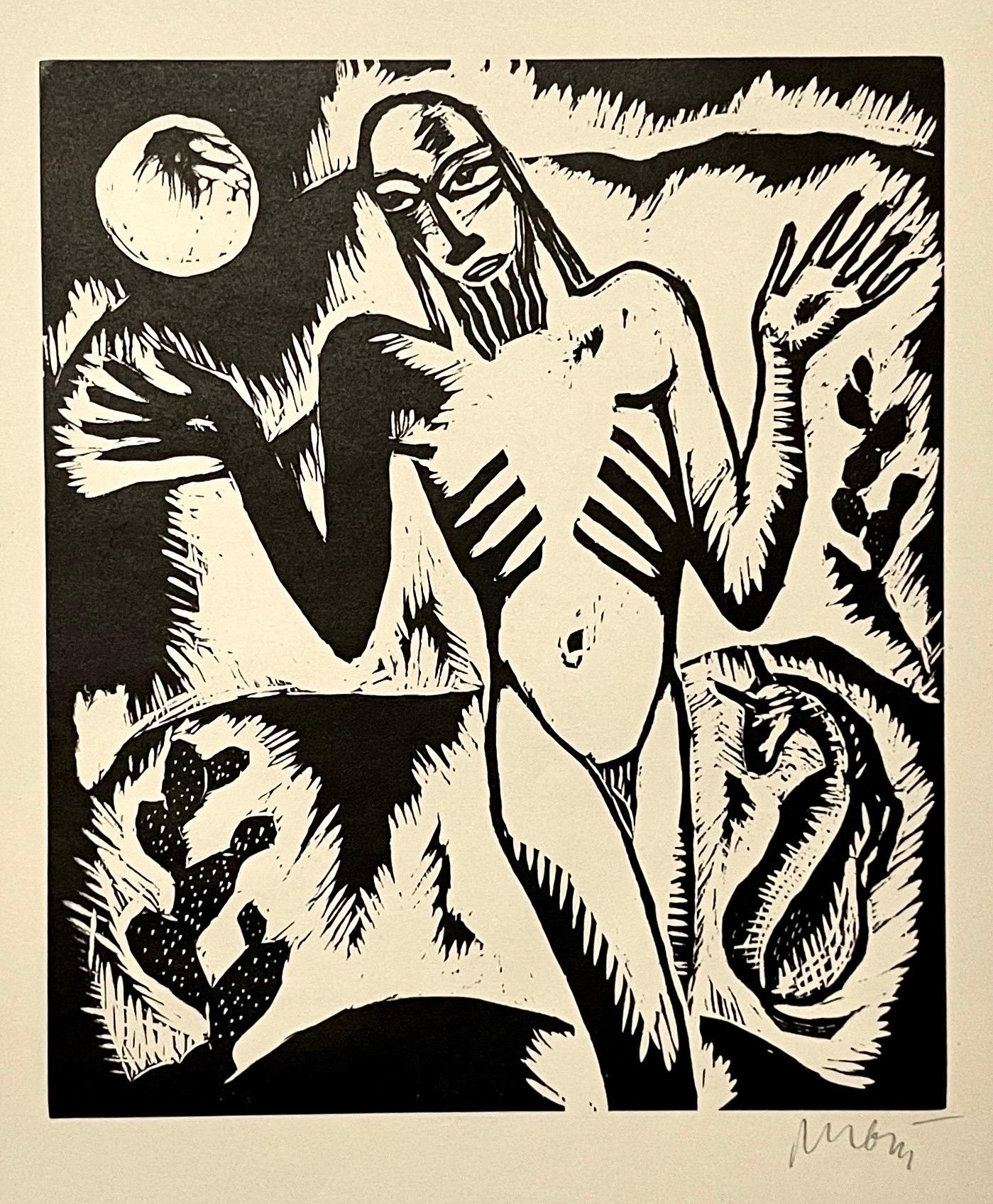
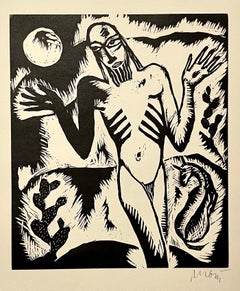
Raro grabado en madera cubista de 1923 de Reuven Rubin Grabado de cábala Judaica israelí
Por Reuven Rubin
Se trata de la primera edición original de 1923. hubo una edición muy posterior a estos originales.
Están firmados individualmente a mano con lápiz por el artista, tal como se emiti...
Categoría
Década de 1920, Abstracto, Impresiones figurativas
Materiales
Grabado en madera
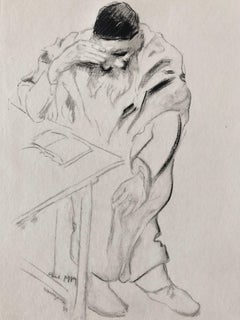
Judaica Jewish Shtetl Aguafuerte Rabino Jasídico "Problema Difícil" Impresión Jasídica
Por Paul Jeffay
"Probleme ardu".
Chico jasídico, estudiante de Yeshiva con el libro abierto. Judaica, escenas judías de un gueto.
Saul Yaffie, alias Paul Jeffay, (1898-1957) fue un artista judío es...
Categoría
siglo XX, Expresionista, Impresiones figurativas
Materiales
Grabado químico
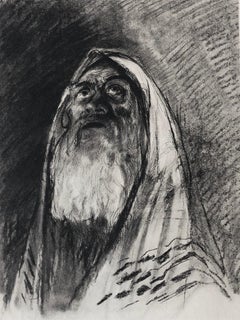
Judaica Jewish Shtetl Grabado Hasidic Rabbi, Meditation Vintage Chassidic Print
Por Paul Jeffay
"El cielo está abierto"
Rabino jasídico mayor aprendiendo con un libro abierto, judaica, escenas judías de un gueto.
Saul Yaffie, alias Paul Jeffay, (1898-1957) fue un artista jud...
Categoría
siglo XX, Expresionista, Impresiones figurativas
Materiales
Grabado químico
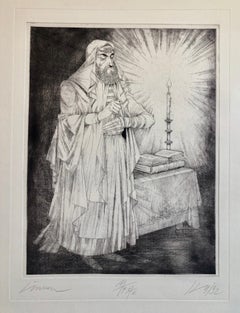
Grabado al aguafuerte judaico modernista húngaro Teffilin, rabino judío en oración
Por Janos Kass
De una edición muy reducida de 15 ejemplares en papel hecho a mano con molde, con marca de agua de la estrella judía Magen David. De la edición de lujo en caja portafolios. Firmado a...
Categoría
Década de 1990, Expresionista, Impresiones figurativas
Materiales
Grabado químico
También te puede gustar
Viejo judío, litografía surrealista de Peter Paone
Peter Paone, estadounidense (1936 - ) - Viejo judío, Año: hacia 1963, Medio: Litografía sobre Rives, firmada, titulada y numerada a lápiz, Edición: 11/50, Tamaño de la imagen: 20 x...
Categoría
Década de 1960, Surrealista, Impresiones de retratos
Materiales
Litografía
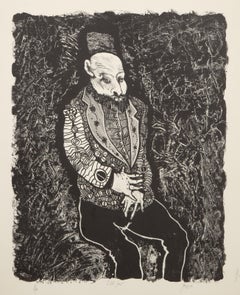
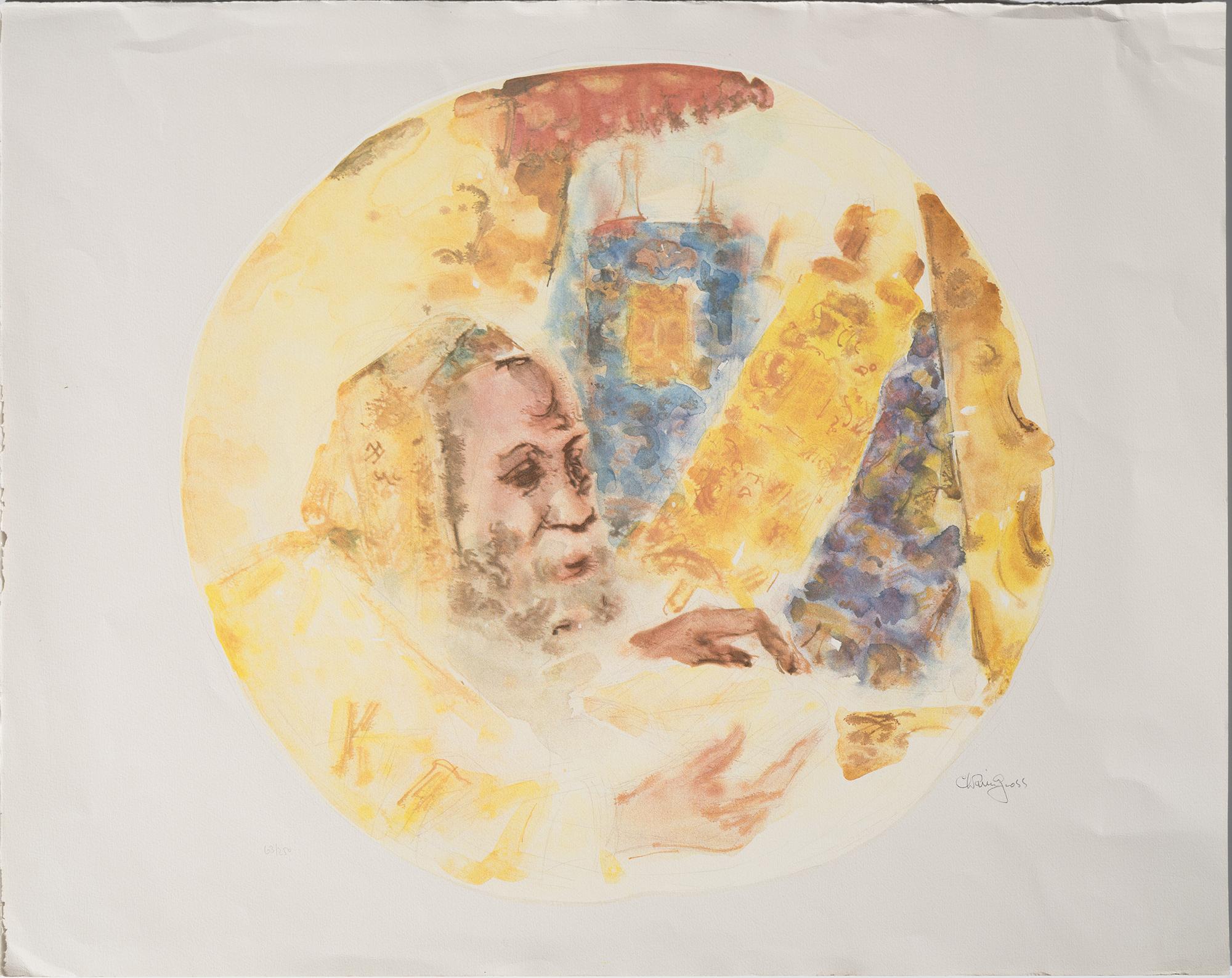
"El rabino y la Torá" litografía sin marco firmada a mano por el artista Chaim Gross
Por Chaim Gross
"El rabino y la Torá" litografía sin marco sobre papel de bellas artes del artista Chaim Gross de una edición limitada de 250 ejemplares. Firmado a mano por Chaim Gross y numerado a ...
Categoría
siglo XX, Moderno, Impresiones de retratos
Materiales
Litografía
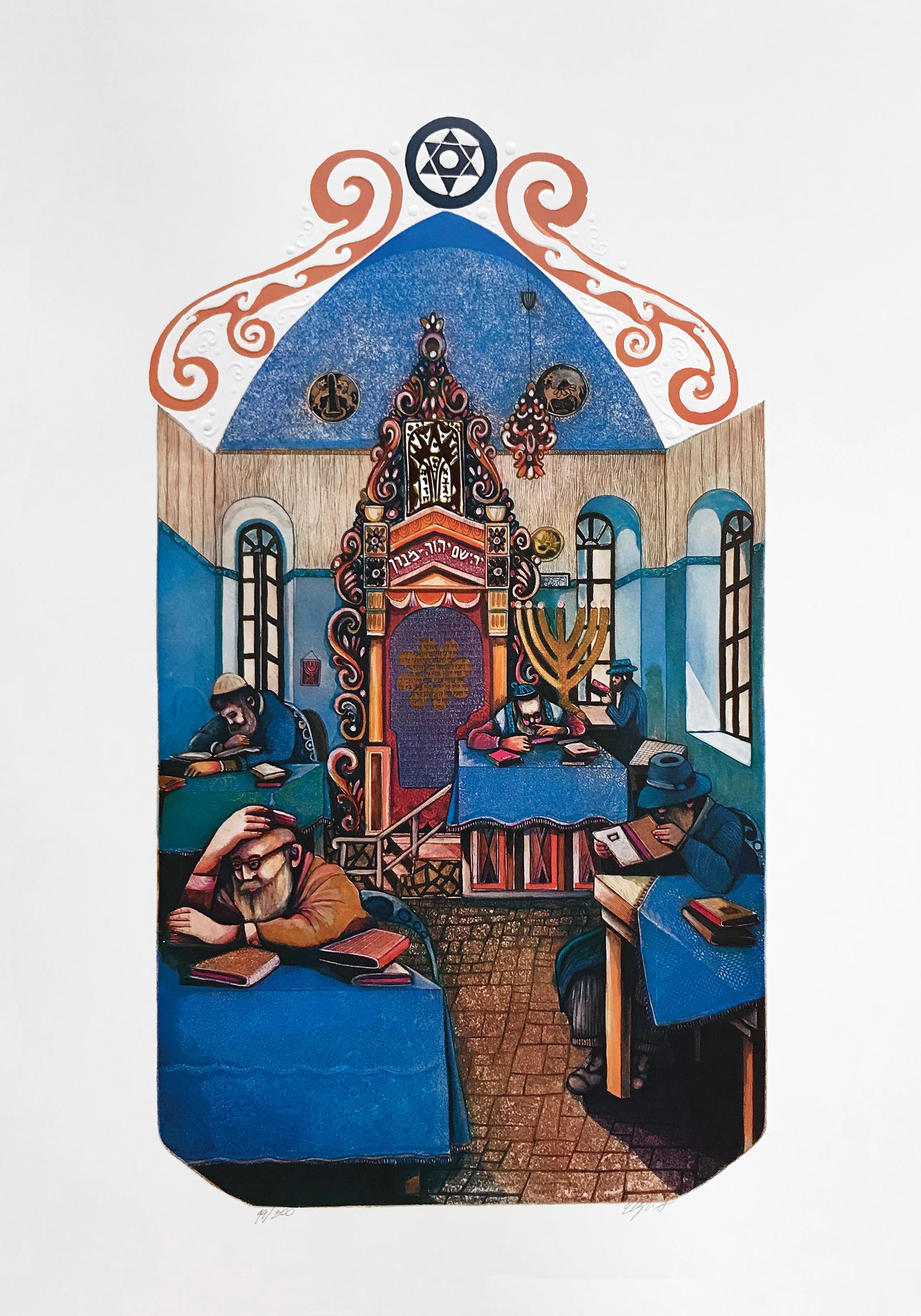
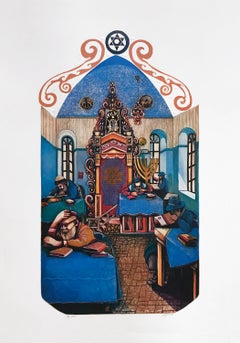
YASHIVA EN JERUSALÉN (ARTE JUDAICO)
Por Amram Ebgi
Litografía en relieve con estampación en lámina sobre papel. Firmado y numerado a mano por el artista. De la edición de 300.
La obra está en excelente estado. Certificado de auten...
Categoría
finales del siglo XX, Contemporáneo, Impresiones figurativas
Materiales
Papel metalizado
87 € Precio de venta
Descuento del 50 %
VII de Visiones de la Biblia, litografía moderna de Reuven Rubin
Por Reuven Rubin
Reuven Rubin, israelí (1893 - 1974) - VII de Visiones de la Biblia, Año: 1972, Medio: Litografía, firmada y numerada a lápiz, Edición: 83/150, Tamaño de la imagen: 25 x 18 pulgad...
Categoría
Década de 1970, Moderno, Impresiones figurativas
Materiales
Litografía
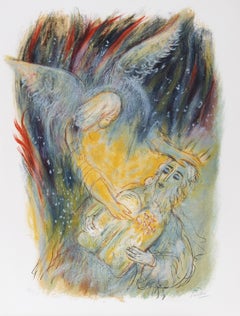
Rabino con libro - I, Arte popular Tinta sobre papel de Ira Moskowitz
Por Ira Moskowitz
Ira Moskowitz, polaco/americano (1912 - 2001) - Rabino con libro - I, Año: hacia 1989, Medio: Tinta sobre papel, firmado, Tamaño: 33,02 cm x 25,4 cm, Descripción: Colocando las mano...
Categoría
Década de 1980, Arte popular, Dibujos y acuarelas de retratos
Materiales
Tinta
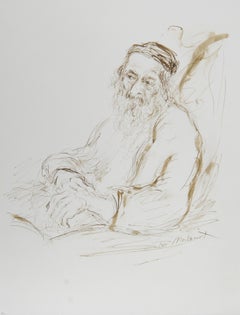
Grisha Bruskin, Nota D, serigrafía del disidente judío ruso-americano Firmado/N
Por Grisha Bruskin
Grisha Bruskin
Nota D, 1991
Serigrafía en color sobre papel Somerset
34 × 27 pulgadas
Edición 74/75
Firmado y numerado en negrita en el anverso con lápiz de grafito.
Publicado por Ma...
Categoría
Década de 1980, Moderno, Impresiones abstractas
Materiales
Pantalla