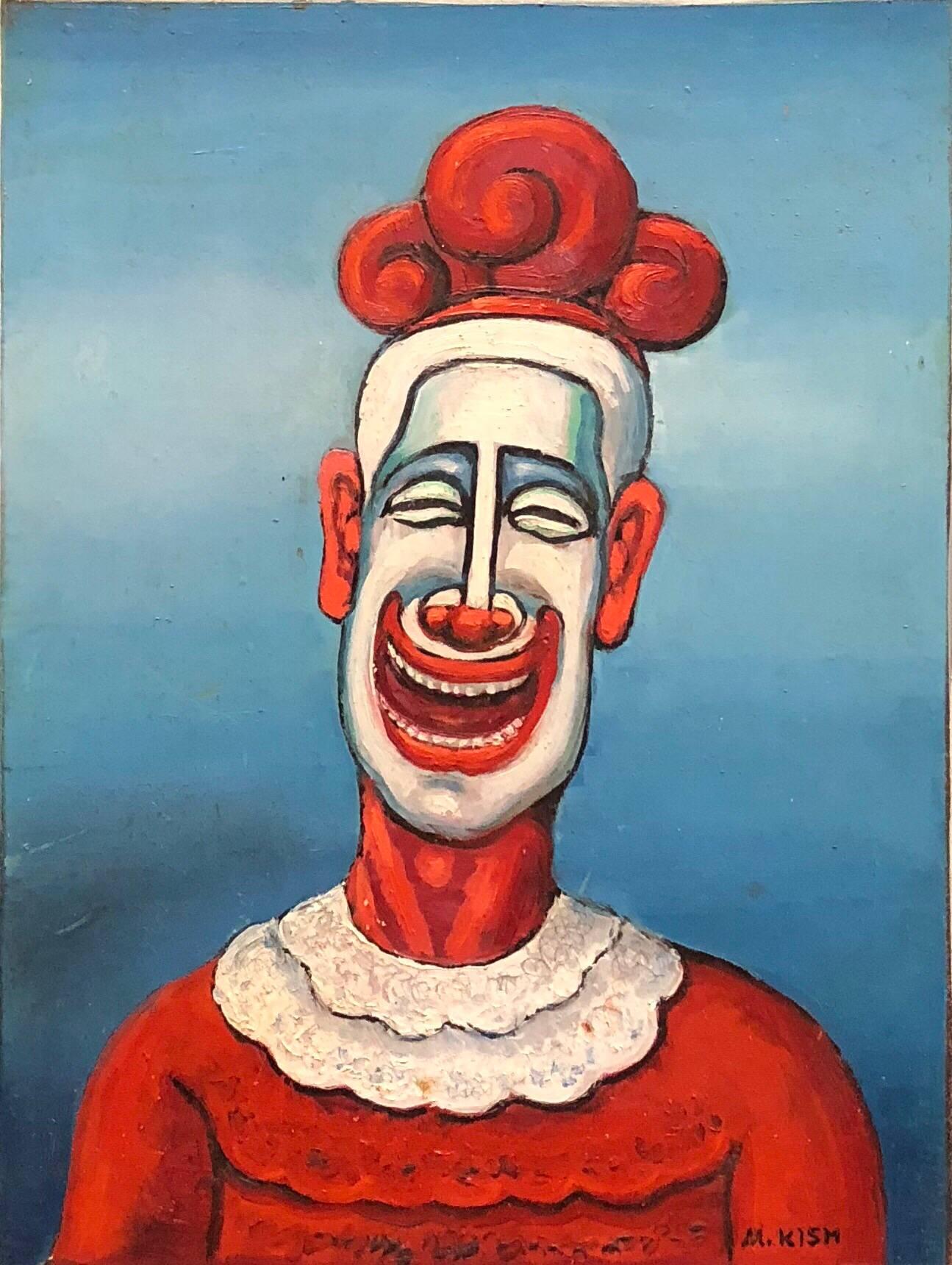
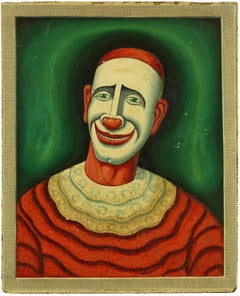
Artículos similares a The Clown Surrealist Oil Painting Maurice Kish WPA Artist American Modernist
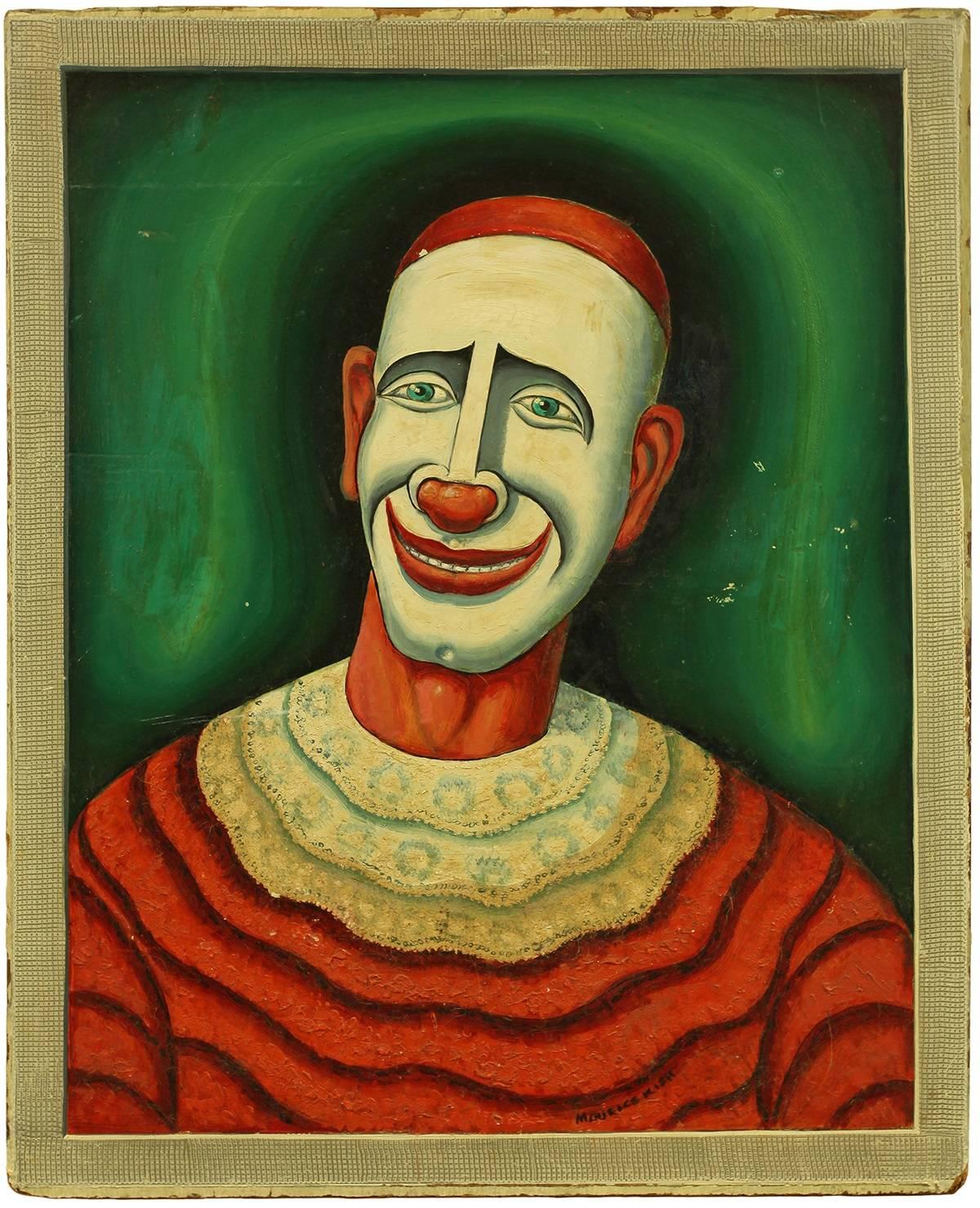
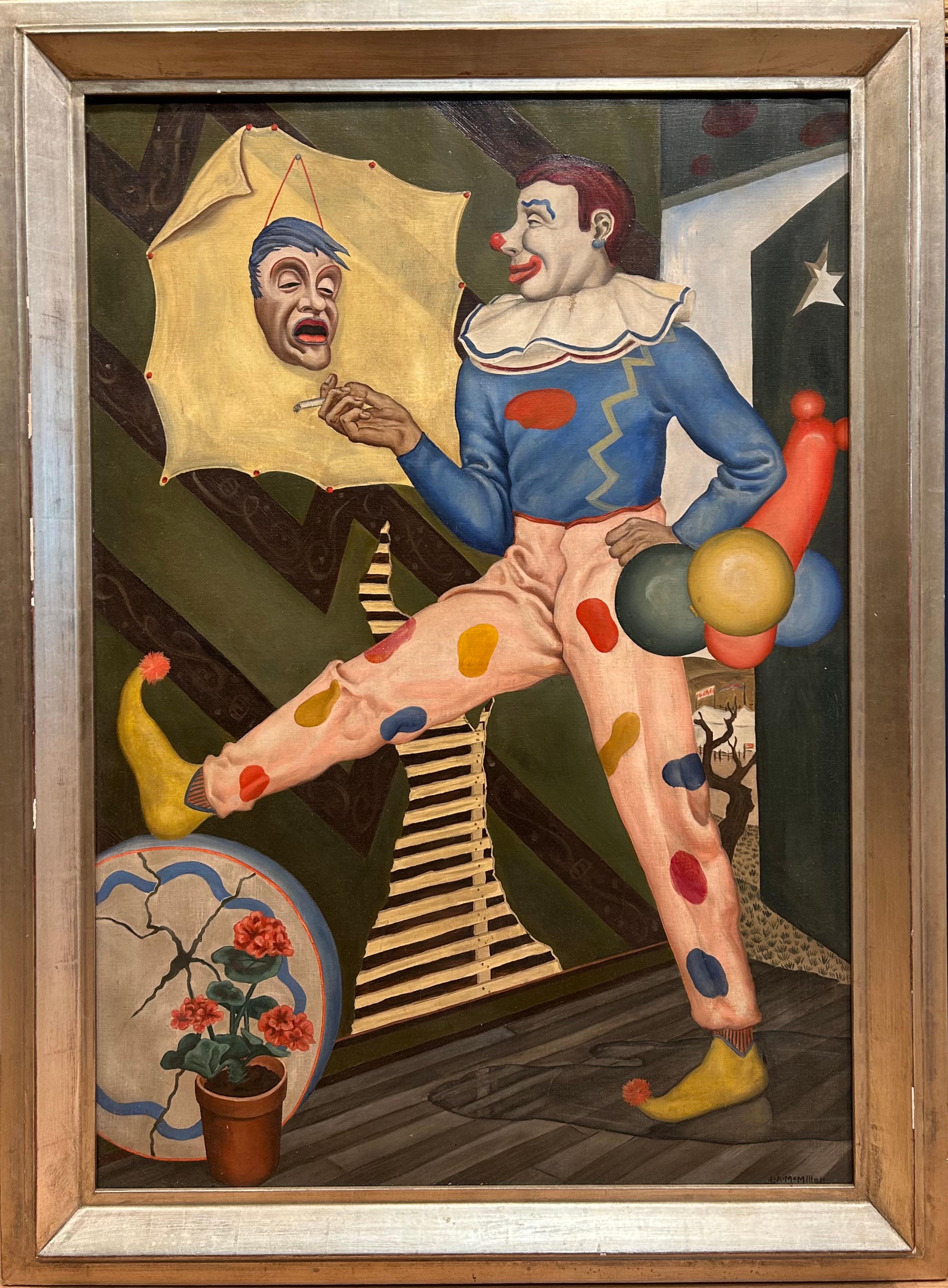
¿Quieres más imágenes o vídeos?
Solicita imágenes o vídeos adicionales al vendedor
1 de 8
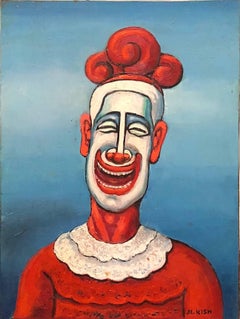
Maurice KishThe Clown Surrealist Oil Painting Maurice Kish WPA Artist American Modernistc.1940
c.1940
1737,13 €
Acerca del artículo
The imagery of Maurice Kish (1895-1987), whether factories or carousels, reliably subverts expectations. His vision hovers just around the unraveling edge of things, where what is solid and clear becomes ambiguous. He is fascinated, often delighted, by the falling apart. This unexpected, fresh perspective results in oddly affecting pictures of a now long-gone New York.
Born Moishe in a town called Dvinsk, Russia (what is now Daugavpils, Latvia), Kish came with his family to New York when he was in his teens. The family settled in Brownsville, and for the rest of Kish’s life Brooklyn remained his home, though he moved from one neighborhood to another. He was close to his parents, who recognized his talent and supported his desire to become an artist.
Kish attended the National Academy of Design as well as Cooper Union. His fellow students included many other immigrants and children of immigrants who were particularly receptive to the Modernism coming from Europe. As his career progressed, Kish himself applied different strains of Modernism to different purposes. For him, the story was held above all else.
For years, Kish used the skills he acquired in art school to earn his living at a Manhattan glass factory where he painted floral designs on vases. During the Depression, Kish became a WPA painter in the Federal Art Project (FAP). FAP artists were given a mandate to create works that celebrated labor. The artists tended to be socially progressive, as Kish certainly was. Kish's work from this period, with its dark colors and rolling clouds, reveals the influence of Social Realists like Thomas Hart Benton. Apparent, too, is Kish's interest in the urban monumentality of Charles Sheeler. Kish's structures, however, lack Sheeler's almost dehumanized precision. Rather than the soulless, sleek machines of a typical modern urban dystopia, Kish's factories are shaggy old beasts as worn out as the laborers who troop through their doors. In End of Day's Toil, now at the Smithsonian, the viewer feels some affection for that rambly grandfather of a building all the tired small workers are leaving behind.
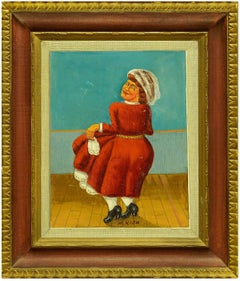
Much of Kish's work, for the FAP and elsewhere, undermines received truths in a similar way. Some early works with themes from Yiddish culture are overtly humorous: a painting of a big jolly wedding guest, looking invitingly over her shoulder; a big fiddler on a small roof. Later, the humor becomes more ironic and reflective. In another work, the rather imposing organ grinder of the late 1930s looms above a child, yet his intermediary the cockatoo is bright and appealing, and offers the girl a fortune with his beak. This could read as an allegory for capitalism as easily as a straightforward colorful street scene. A small painting of a snowy day in Washington Square gives a bird's eye view of people bent against the wind walking alone or in pairs. The huge triumphal arch at the middle of it has no connection to their movements or their lives. Kish makes its size and centrality a quiet joke about the futility of grandiose gestures. Like the buildings in his FAP works, the arch has a personality. It is a landmark that looks a bit lost.
A favorite location for Kish was Coney Island. For the laborers of the city, this was a place of great freedom and possibility. There were no bosses! Anyone could go to ride the rides and swim in the sea. For Kish, Coney Island, and especially Luna Park, became a place richly symbolic of workers’ rights. For the dreamlike paintings he set there, Kish looked past the Social Realists to the Expressionists. His colors are brilliant and his lines are wild. These images, joyfully unrestrained, give full voice to an anarchic vision merely hinted at in other works. If the structures of the earlier pictures came further out of the background than expected, these Coney Island structures completely take over the scene.
Kish made several variations on the theme of the carousel as a site of revolution. In the moonlight, the horses have broken from their poles and spin away from the calm center. The workers have come to manic life, have released themselves from the yoke of labor and have abandoned their master, the merry-go-round. They escape to different corners of the pleasure park, dance together and ride the ferris wheel. One horse pretends to be a ticket seller. It is another allegory, one that depicts a worker's holiday paradise in carnival fashion.
A painter who embraced ambiguity, Kish was himself a man who occupied many worlds simultaneously. Even during the period when he had shows at prestigious galleries and belonged to several artists' groups, he identified most strongly as an outsider, a Yiddischer. He wrote poetry in Yiddish throughout his life. In 1968, he published a volume of fifty years of these poems, Di Velt ist Mayn Lid (The World is My Song) in Yiddish, with no English translation, for his peers. Kish also translated English-language poetry into Yiddish and acted as a guide to help other Yiddish writers. Long after the art organizations ceased to provide meaning and fulfillment, Kish was a devoted member of the Yiddish Culture Association.
In addition to painting and poetry, Kish was a dancer who taught during the summers at various Jewish resorts in the Catskills. Small but lithe, he also spent some years as an amateur boxer. Well into his eighties, Kish was proud of the quality of his handball game.
By the 1940s, Kish’s career was going well, but his descriptive style of working began to fall out of fashion, supplanted by a more formal Abstraction. Kish was never able to support himself solely through his art, yet in the midst of all of his other activities, Kish continued to create his distinctive images of an immigrant's New York. He departed far from the mainstream, and in later years, seldom showed his work, preferring to keep it for himself (although he sometimes traded paintings for rent).
Of making art, Kish said, "It is a sacred mission to enrich, to elevate and to make our lives more complete." His works, though frequently playful, encourage a second look at ordinary things. His irreverence elevates by revealing flaws where his audience, all workers and outsiders of a kind, can get a purchase. Kish's art fondly celebrates the beauty of the irregular.
- Creador:Maurice Kish (1895-1987, Americana)
- Año de creación:c.1940
- Dimensiones:Altura: 33,66 cm (13,25 in)Anchura: 28,58 cm (11,25 in)
- Medio:
- Movimiento y estilo:
- Época:
- Estado:Measurements include frame.
- Ubicación de la galería:Surfside, FL
- Número de referencia:1stDibs: LU38217346702
Sobre el vendedor
4,9
Vendedor Platino
Vendedores premium con una calificación de +4,7 y tiempos de respuesta de 24 horas
Establecido en 1995
Vendedor de 1stDibs desde 2014
1843 ventas en 1stDibs
Tiempo de respuesta usual: 1 hora
- EnvíoRecuperando presupuesto…Envío desde: Surfside, FL
- Política de devolución
Partes de esta página se han traducido automáticamente. 1stDibs no puede garantizar la exactitud de las traducciones. El inglés es el idioma predeterminado de este sitio web.
Más de este vendedor
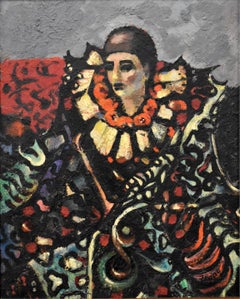
Ver todoPayaso, pintura al óleo modernista sobre tabla Artista WPA
Por Maurice Kish
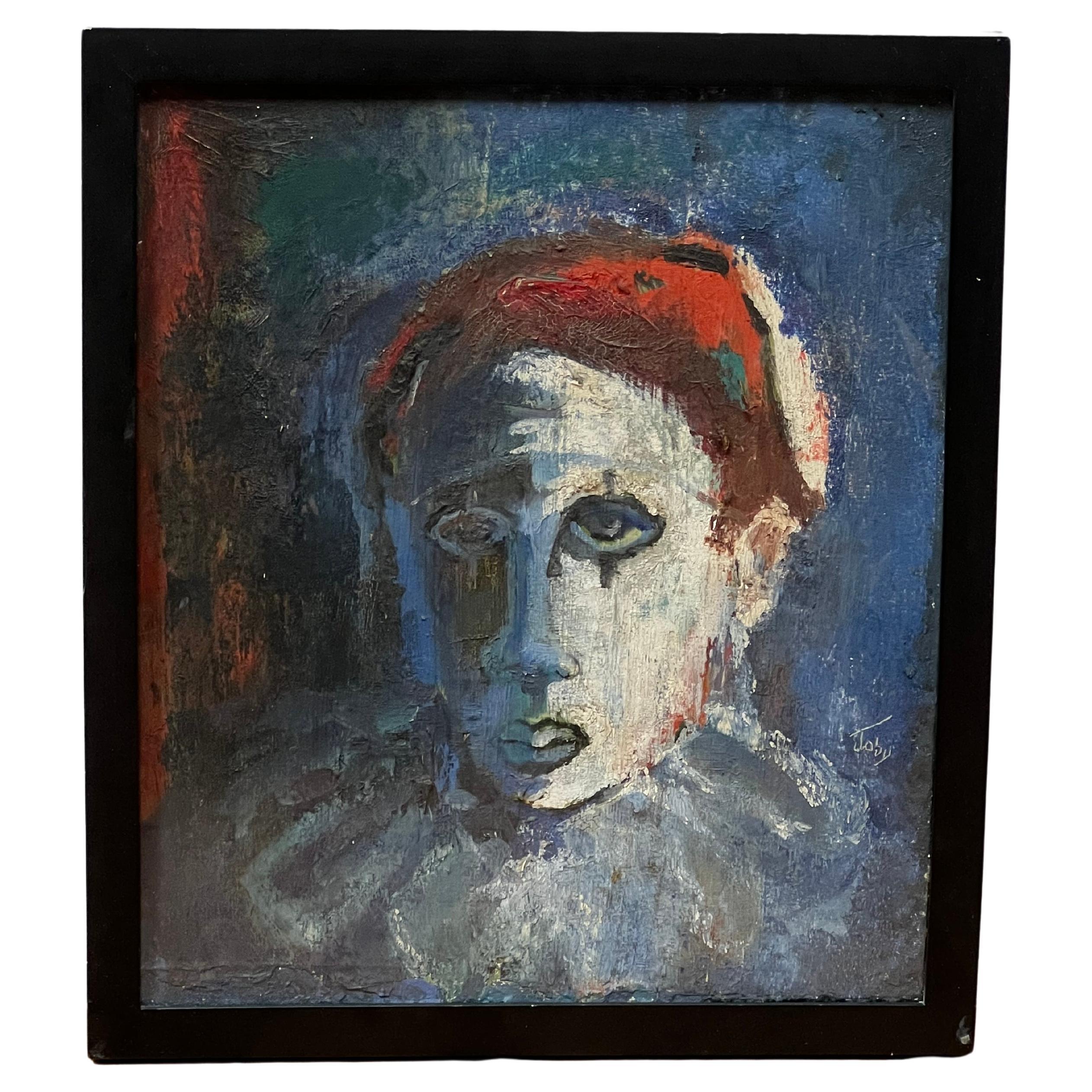
Este retrato de un payaso de Maurice Kish forma parte de una serie de figuras de carnaval, payasos de circo y caballos y jinetes de carrusel que realizó en los años 30 y 40. El artis...
Categoría
principios del siglo XX, Moderno, Pinturas de retratos
Materiales
Óleo, Tablero
Payaso, Pintura al óleo juguetona sobre tabla de principios del siglo XX
Por Maurice Kish
Este retrato de un payaso de Maurice Kish forma parte de una serie de figuras de carnaval, payasos de circo y caballos y jinetes de carrusel que realizó en los años 30 y 40. El artis...
Categoría
principios del siglo XX, Moderno, Pinturas de retratos
Materiales
Óleo, Tablero
El suegro feliz, Pintura al óleo
Por Maurice Kish
La imaginería de Maurice Kish (1895-1987), ya sean fábricas o carruseles, subvierte las expectativas de forma fiable. Su visión planea justo alrededor del borde desenredado de las co...
Categoría
siglo XX, Arte popular, Pinturas figurativas
Materiales
Óleo, Tablero
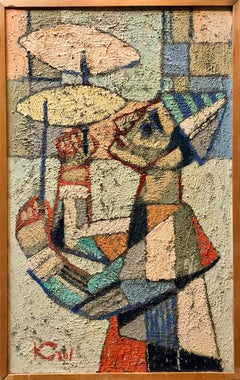
Pintura al óleo modernista de mediados de siglo de la Escuela de París francesa polaca Payaso malabarista
Por Abram Krol
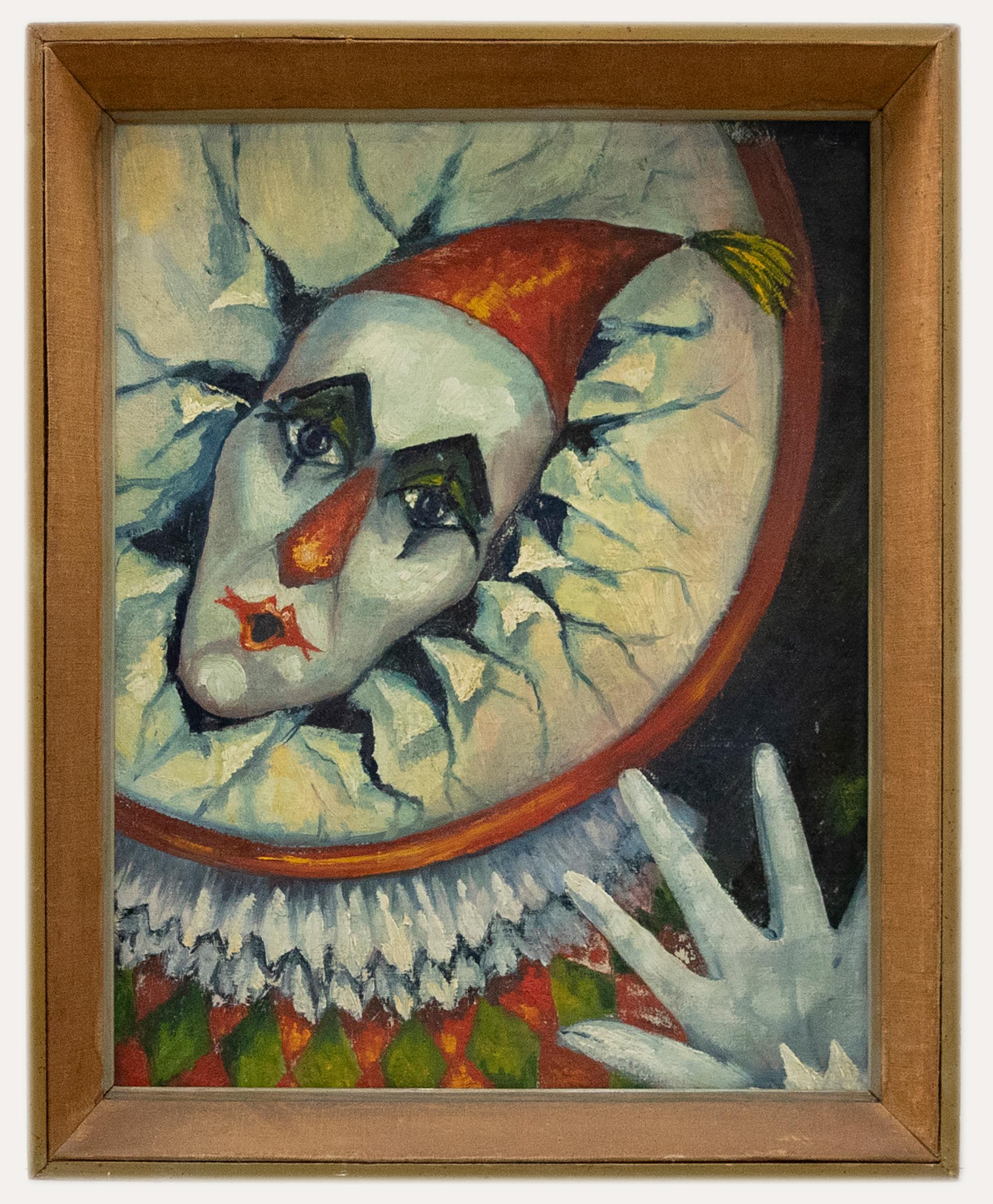
Abram Abraham Krol nació el 22 de enero de 1919 en Pabianice (Lodz), Polonia.
Abram Krol fue a Francia en 1938 para estudiar ingeniería civil en la Universidad de Caen. En 1939, al...
Categoría
Década de 1950, Moderno, Pinturas figurativas
Materiales
Lienzo, Óleo
Pintura al óleo modernista de mediados de siglo de la Escuela de París francesa polaca Payaso malabarista
Por Abram Krol
Abram Abraham Krol nació el 22 de enero de 1919 en Pabianice (Lodz), Polonia.
Abram Krol fue a Francia en 1938 para estudiar ingeniería civil en la Universidad de Caen. En 1939, al...
Categoría
Década de 1950, Moderno, Pinturas figurativas
Materiales
Lienzo, Óleo
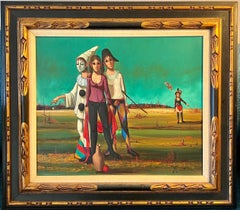
Pintura al Óleo Francesa Mod Surrealista Commedia dell
arte Escena de circo J.P. Serrier
Por Jean Pierre Serrier
Jean Pierre Serrier (francés, 1934-1989)
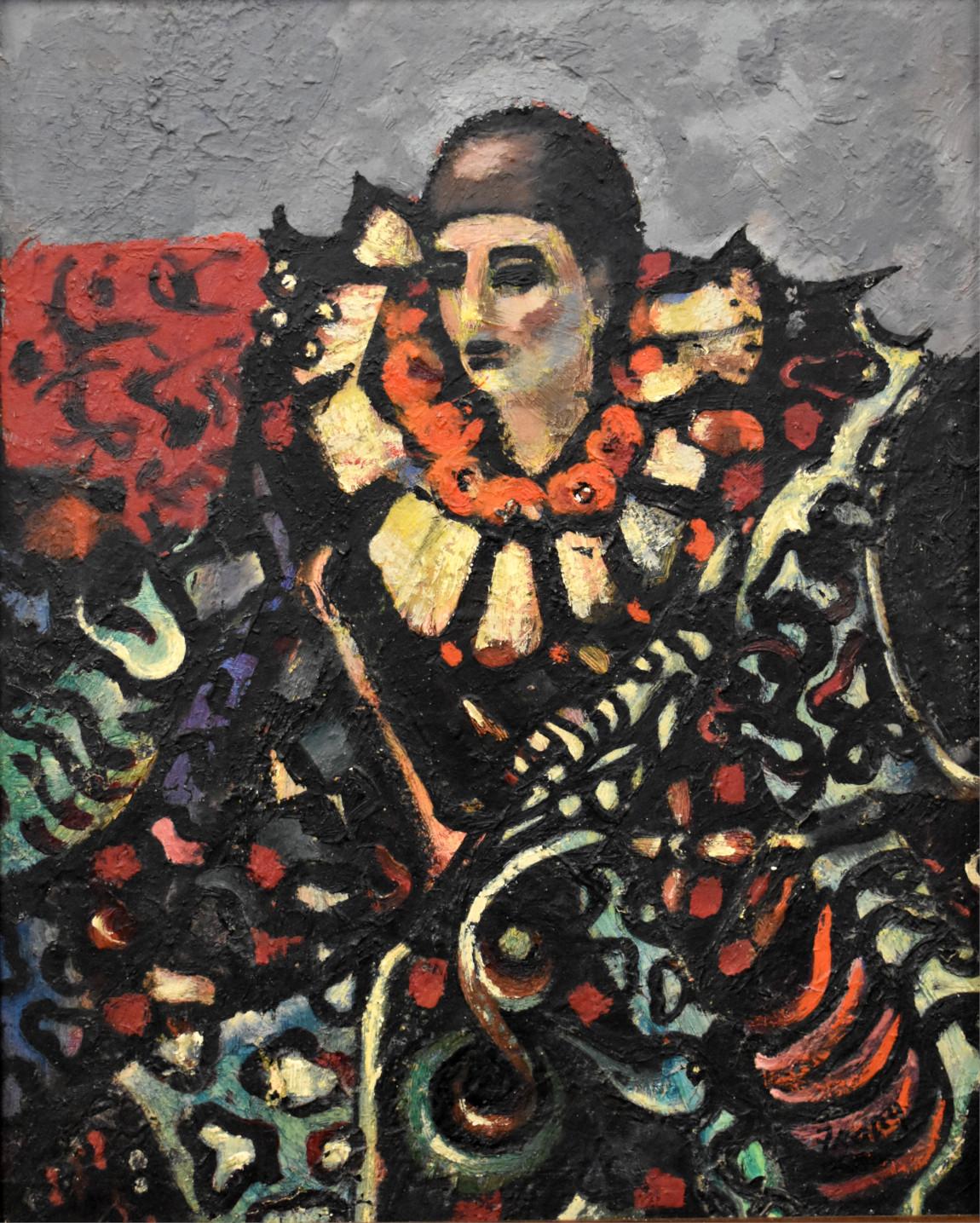
Pintura al óleo sobre lienzo que representa cuatro figuras
Firmado a mano abajo a la derecha.
Medidas (marco) 26,5" x 30" de ancho, y (vist...
Categoría
mediados del siglo XX, Surrealista, Pinturas figurativas
Materiales
Lienzo, Óleo
También te puede gustar
Pintura al óleo de Payaso
Se trata de una pintura realizada por el artista estadounidense L.A. McMillen. Está firmada abajo a la derecha y se encuentra en excelente estado para la época. Muestra una escena de...
Categoría
principios del siglo XX, Surrealista, Pinturas figurativas
Materiales
Lienzo, Óleo
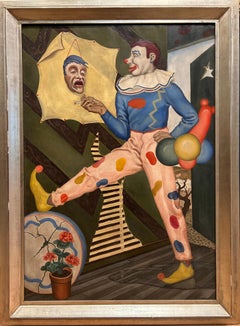
"El payaso" Pintura al óleo de pintor desconocido
Cuando se trata de imágenes pictóricas sobre el tema de los payasos, surge la complejidad, que a menudo revela múltiples capas de interpretación. Más allá de la risa y la diversión a...
Categoría
mediados del siglo XX, Estadounidense, Moderno de mediados de siglo, Pin...
Materiales
Lienzo
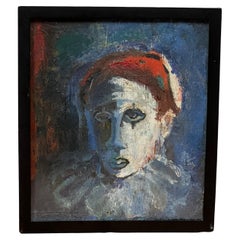
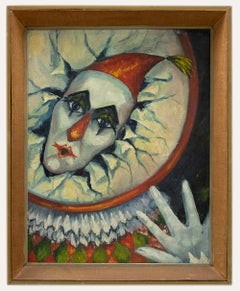
20th Century Oil - El payaso
Un llamativo retrato de un payaso disfrazado. El artista capta al personaje con colores vivos que complementan la atrevida composición. Sin firmar. Presentado en un marco de caja con...
Categoría
siglo XX, Pinturas figurativas
Materiales
Óleo
227 € Precio de venta
Descuento del 20 %
"EL PAYASO" MICHAEL FRARY ARTISTA TEXANO MODERNO DE MEDIADOS DE SIGLO
Por Michael Frary
Michael Frary
(1918 - 2005)
Artista de Austin
Tamaño de la imagen: 16 x 12,5
Técnica: Óleo
"El Payaso"
Biografía
Michael Frary (1918 - 2005)
Michael Frary nació en Santa Monica, Cali...
Categoría
Década de 1960, moderno estadounidense, Pinturas figurativas
Materiales
Óleo
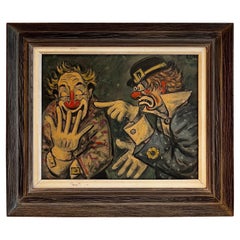
Pintura expresiva de un payaso, firmada, c. 1950
Pintura expresiva de un payaso - firmada "Jen"
circa 1950 - gran marco
Tamaño del marco = 22,5 x 26,5
Tamaño de la imagen = 15,5 x 19,5.
Categoría
mediados del siglo XX, Estadounidense, Moderno de mediados de siglo, Pin...
Materiales
Pintura
651 € Precio de venta
Descuento del 60 %
Artista europeo. Óleo sobre tabla. Retrato de un payaso. Fechado en 1962
Artista europeo.
Óleo sobre tabla.
Retrato de un payaso.
Estilo expresionista con trazos empastados. Paleta colorista.
Fechado en 1962 en el reverso.
Firmado indistintamente.
En perf...
Categoría
Vintage, Década de 1960, Desconocido, Moderno, Pinturas
Materiales
Otro