Artículos similares a Portrait of a senior naval officer, c. 1750s
¿Quieres más imágenes o vídeos?
Solicita imágenes o vídeos adicionales al vendedor
1 de 10
Thomas HudsonPortrait of a senior naval officer, c. 1750s1750s
1750s
28.664,57 €
Acerca del artículo
Thomas Hudson (Devon 1701 - London 1779)
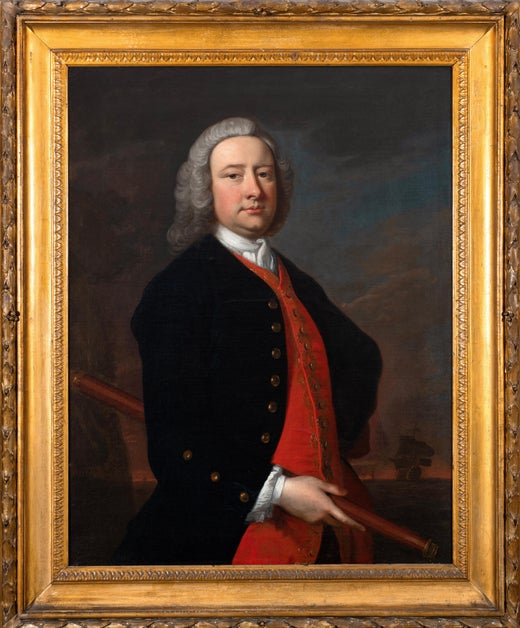
Portrait of a senior naval officer, c. 1750s
Probably a captain or admiral; half-length, holding a telescope, with a warship beyond
Oil on canvas
91.3 x 71.1 cm.; (within frame) 114.3 x 93.8 cm.
Provenance:
Christie’s, London, 22 November 1985, lot 105 (as Thomas Hudson);
Private collection, United Kingdom;
Haynes Fine Art, Broadway, Worcestershire;
Where acquired, private collection, United States, 16 August 1988;
Neal Auction, New Orleans, 14 September 2025, lot 302 (as Attributed to Thomas Hudson);
Where acquired by Haveron Fine Art.
Literature:
Bridgeman Art Library, The Bridgeman Art Library (London: The Library, 1995), p. 89
Christie’s, London, Important English Pictures (London: Christie’s, 22 November 1985)
Archival:
Witt Library, Courtauld Institute of Art (no. 061487);
Heinz Archive and Library, National Portrait Gallery, 1725-50, Thomas Hudson: Men Authentic (1) (Box)
This attractive and quintessential half-length is exemplary of Hudson’s leading portrait practice, produced at the height of his decade-long dominance over the London market beginning in 1749. Typical of Hudson's 1750s output, the portrait was likely made after his five-week visit to Rome and Naples, and bares the stylistic merits of this continental excursion. Indeed, the trip seemed to fortify a gradual refinement of Hudson’s technique: namely the emphasis of directional brushstrokes, which sensitively follow the contours of the facial features. The resulting feathery quality is combined here with a striking chiaroscuro effect, which Hudson borrowed directly from Rembrandt. Amalgamating the rich colouring of the Rococo with a mannered Baroque posing, Hudson renders the senior naval officer with a characteristic presence.
Resting one hand assuredly at his hip, the finely worked telescope illustrates the officer’s seniority; the warship sailing on the horizon beyond provides further indication of his commanding rank. The telescope is held by a hand modelled with sculptural poise, and the typically Van Dyck manner (seen elsewhere, e.g. Princess Amelia Sophia Eleonore of Great Britain, YCBA B2001.2.246) further illustrates Hudson's studied grounding. Despite the apparent stylistic placement of the work, an earlier date is possible, since the officer wears civilian clothes and not the naval officer’s uniform first introduced in 1747 (which officers afterwards invariably chose to be shown in). The officer has previously been suggested as Edward Henry Sartorius, of the prominent naval Sartorius family; however, this identification is improbable on biographical and documentary grounds.
Hudson was regularly commissioned by leading naval officers, and produced highly satisfactory portraits praised for their great likeness and genteel swagger. He charged 24 guineas for a standard 50 x 40 inch half-length in the 1750s period, and the present work (somewhat smaller in size) would have cost not much less. Comparable works include those of Admirals of the Fleet George Anson, 1st Baron Anson, and Sir John Norris; Admiral Sir George Pocock; Admiral Sir Peter Warren; Vice-Admiral The Honourable John Byng; and Rear-Admiral Richard Tyrrell. The present portrait is particularly similar in composition to Hudson’s Portrait of a Flag Officer of The White Squadron, which similarly employs the narrative device of a telescope held at a dynamic angle across the composition, with a warship to the left side of the officer’s retracted arm.
Thomas Hudson (Devon 1701 - London 1799)
Thomas Hudson rose to become the leading British portraitist of the mid-18th century, albeit in close competition with his Scottish counterpart Allan Ramsay. Born in Devon, Hudson studied alongside George Knapton under Jonathan Richardson the Elder (marrying his daughter in 1725, expressly against Richardson’s wishes), and inherited a dignified formality jointly derived from Van Loo. His work is first recorded in 1728, and between 1730-40 he practised in Bath and the West Country, where in addition to portrait commissions, he was employed to retouch and reline old pictures. He returned permanently to London thereafter, and devised a series of stock poses to which he would return with variation throughout his career. Beginning in 1745 with the death of Richardson and the departure of Van Loo, Hudson became the city’s most successful portraitist, and embarked on ambitious defining works such as his Portrait of Theodore Jacobsen ‒ not drastically unlike the continental heights of Pompeo Batoni in conception. Profiting from his success, he relocated from Lincoln’s Inn Fields to a house in Great Queen Street previously inhabited by Van Loo, and one door down from Kneller’s old rooms. An exceptionally productive period began in 1749 which lasted until the late 1750s. Among this output were highly praised portraits of the Prince and Princess of Wales, commissions for most of the preeminent aristocrats, and superlative group portraits including Benn’s Club of Aldermen, and those of the Thistlethwayte, Marlborough and Radcliffe families.
Hudson relocated to King Street, Covent Garden, operating a prolific studio operation which resulted in some four hundred paintings ‒ of which at least eighty were engraved. A prodigious assembly of young pupils included Sir Joshua Reynolds (1740-3), Joseph Wright of Derby (1751-3, 1756), Richard Cosway, John Hamilton Mortimer, and the drapery painters Joseph and Alexander van Aken (also employed by Ramsay). As one later reviewer expressed: ‘Hudson, his art may well display to sight / Who gave Mankind a Reynolds and a Wright’ (Miles, ‘Introduction’). The ambitious young Reynolds made many drawings from classical statuary under Hudson’s instruction, and wrote home that, ‘While doing this I am the happiest creature Alive (sic.)’ (Sweetser, p.12). However, he was later dismissed from his pupilage some two years prematurely for refusing to carry a painting to Van Aken’s studio in the rain. It was at this point that Reynolds returned to Plymouth (Devonport), and produced some thirty portraits of the local gentry (including one example presently owned by Haveron Fine Art).
Hudson was one of a number of artists who congregated in Old Slaughter’s Coffee House, alongside Hogarth, Ramsay, Hayman, and Rysbrack. Together they supported Thomas Coram’s Foundling Hospital, of which they each belonged to the 600 governors (in whom Hudson met many of his future clients), and promoted the building as London’s first public space of artistic exhibition. He visited the Netherlands and France for five weeks in 1748 accompanied by St Martin’s Lane colleagues, and was arrested with Hogarth for making drawings of the Bastille fortifications. He afterwards stayed in Rome and Naples in 1752 with Roubiliac, meeting Reynolds twice on the return journey. He returned to England and bought a house at Cross Deep, Twickenham (upstream from Pope’s villa), and made an effective museum of the space. He lived there with his second wife, a wealthy widow named Mrs Fynes. Having been involved with early attempts to establish a royal academy of the arts, Hudson exhibited at the Society of Arts in 1761 and 1766, although he had effectively retired from painting by the latter date. His last painting was in 1767, and he died at Twickenham in January 1779 aged seventy-eight.
Hudson was also exceptional for the extensive collection of artworks which he amassed during his lifetime. The collection was thoroughly impressive in extent, and included outstanding Old Masters: Breughel, Canaletto, van Dyck, Hals, Holbein, Kneller, Lely, Michelangelo, Parmigianino, Poussin, Raphael, Rembrandt, Rubens, Tintoretto, Titian, Vasari, and Velázquez. His earliest recorded purchase was in 1741, and he spent heavily at the sale of his father-in-law, even buying works jointly with Van Aken. Likewise, at the posthumous 1750 sale of Van Aken, Hudson spent £215 on the second day (nearly half that day’s sale total). As a pupil, Reynolds had been sent to bid for Hudson in Lord Oxford’s sale of 1742, and proudly recalled having been greeted with a handshake by Hudson’s friend Pope at another picture sale. Hudson also collected extensively from within his own generation, acquiring works by contemporaries including Gainsborough, Reynolds, Richardson, Rysbrack, Vanderbank, and his predecessor Van Loo. Following his death, the works were dispersed in two sales at Messrs. Langford, with the finer works sold at Christie’s in 1785 after the death of his second wife. However, his connoisseurship was not without flaw ‒ having outbid Benjamin Wilson for a Rembrandt drawing, Wilson etched and printed a new ‘Rembrandt’ plate which was sold to Hudson through a dealer, before later being exposed with delight by Wilson and Hogarth.
I am grateful to Ellen Miles (National Portrait Gallery, Smithsonian Institution), for her expertise, having published some of the more thorough writings on Hudson's life and works. I am also thankful to Dr Nicholas Rodger (Emeritus Fellow, All Souls, Oxford) for his assistance and insight into the naval history of the period.
Bibliography and further reading:
Greater London Council, Thomas Hudson, 1701-1779, Portrait Painter and Collector, A Bicentenary Exhibition (London: Greater London Council, 1979)
Ellen G. Miles, ‘Introduction’, in Thomas Hudson, 1701-1779, Portrait Painter and Collector, A Bicentenary Exhibition (London: Greater London Council, 1979)
Ellen G. Miles, “Portraitist to the British Establishment” (Yale University, 1976)
Moses Foster Sweetser, Artist Biographies, Vol. 3 (Boston: Houghton, Osgood and Company, 1880)
Jane Turner, The Dictionary of Art, Vol. 14 (London: Macmillan, 1996), pp. 841-842
- Creador:Thomas Hudson (1701 - 1779, Británico)
- Año de creación:1750s
- Dimensiones:Altura: 114,3 cm (45,01 in)Anchura: 93,8 cm (36,93 in)
- Medio:
- Movimiento y estilo:
- Época:1750-1759
- Estado:
- Ubicación de la galería:Henley-on-Thames, GB
- Número de referencia:1stDibs: LU2820217413642
Thomas Hudson
Thomas Hudson (1701-1779) fue un pintor inglés, casi exclusivamente de retratos. Hudson nació en Devonshire en 1701.
Se desconoce su lugar exacto de nacimiento. Estudió con Jonathan Richardson en Londres y, en contra de la voluntad de éste, se casó con la hija de Richardson en algún momento antes de 1725.
Hudson fue más prolífico entre 1740 y 1760 y, desde 1745 hasta 1755, fue el retratista londinense de más éxito. Tenía muchos ayudantes y empleaba al pintor especializado en paños Joseph van Aken.
Joshua Reynolds, Joseph Wright y el pintor de paños Peter Toms fueron sus alumnos.
Hudson visitó los Países Bajos en 1748 e Italia en 1752.
En 1753 compró una casa en Cross Deep, Twickenham, justo aguas arriba de Pope's Villa.
Se retiró a finales de la década de 1750. William Hickey describió así al anciano Hudson: "Su figura era bastante grotesca, pues era de baja estatura, tenía una barriga prodigiosa y llevaba constantemente una gran peluca blanca y tupida. Tenía muy buen carácter y era uno de mis favoritos de primera clase, a pesar de que a menudo me decía que sin duda me colgarían".
He murió en Twickenham en 1779. Su extensa colección privada de arte se vendió en tres ventas distintas.
Muchas de las obras de Hudson pueden verse en galerías de arte de todo el Reino Unido. Entre ellos están la National Portrait Gallery, el National Maritime Museum, la Tate, el Barnstaple Guildhall, el Foundling Museum y el Bristol City Museum and Art Gallery.
Sobre el vendedor
Aún no hay opiniones
Vendedor profesional aprobado
Todos los vendedores superan estrictas normas de autenticidad y confiabilidad
Establecido en 2024
Vendedor de 1stDibs desde 2024
- EnvíoRecuperando presupuesto…Envío desde: Henley-on-Thames, Reino Unido
- Política de devolución
Partes de esta página se han traducido automáticamente. 1stDibs no puede garantizar la exactitud de las traducciones. El inglés es el idioma predeterminado de este sitio web.
Más de este vendedor
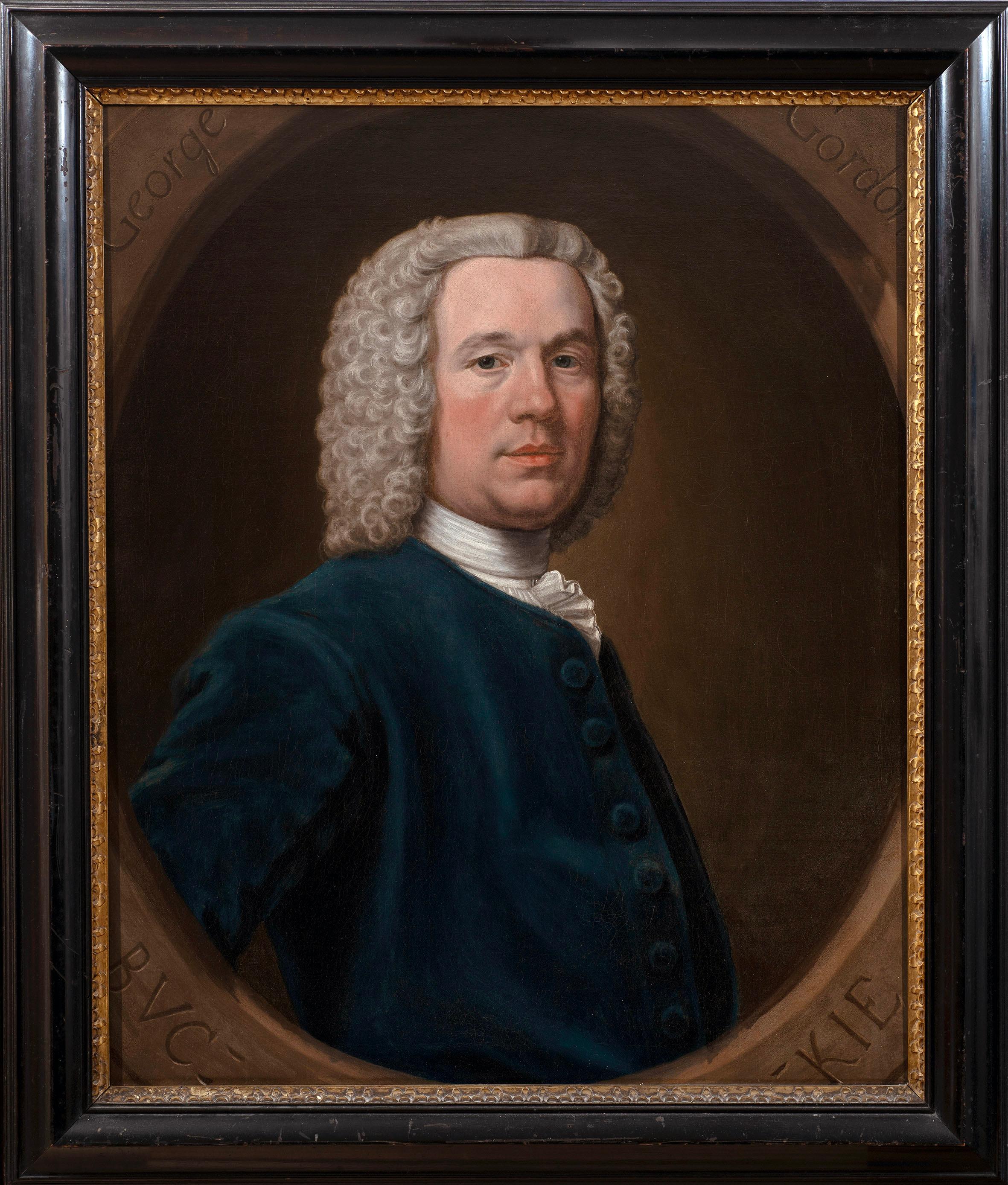
Ver todoRetrato de George Gordon, 7º Laird de Buckie (1707-1756)
Por John Alexander
John Alexander (escocés, 1686-1766)
Retrato de George Gordon, 7º Laird de Buckie (escocés, 1707-1756), c. 1743
Óleo sobre lienzo
En un marco ebonizado tallado, con un ligero borde i...
Categoría
Década de 1740, Antiguos maestros, Pinturas de retratos
Materiales
Óleo
7019 € Precio de venta
Descuento del 20 %
Retrato de caballero artístico, c. 1720
Por John Vanderbank
John Vanderbank (Londres 1694 - Londres 1739)
Retrato de caballero artístico, c. 1720
De tres cuartos, con turbante
Óleo sobre lienzo
125,5 x 101,7 cm; (dentro del marco) 145,6 x 1...
Categoría
Década de 1720, Antiguos maestros, Pinturas de retratos
Materiales
Óleo
Retrato de un caballero, tradicionalmente identificado como Edward Addison, Esq., 1780s
Por George Romney
George Romney (1734-1802)
Retrato de un caballero, tradicionalmente identificado como Edward Addison, Esq., c.1780s
Óleo sobre lienzo
En un marco barrado tallado y dorado de época
76...
Categoría
Década de 1780, Antiguos maestros, Pinturas de retratos
Materiales
Óleo
Tête d
expression retrato estudio de un caballero
Escuela académica francesa, siglo XVIII
Estudio de tête d'expression de un caballero, c. 1780-90
Óleo sobre lienzo
46,1 x 35 cm.; (dentro del marco) 57,5 x 46,6. cm.
Procedencia:
C...
Categoría
Década de 1780, Escuela francesa, Pinturas de retratos
Materiales
Óleo
Retrato de una niña, posiblemente Dorothy Bigg (de soltera Wither) (1661-1717), c. 1674
Por Gerard Soest
Gerard Soest (c. 1600-1681)
Retrato de una niña, posiblemente Dorothy Bigg (de soltera Wither) (1661-1717), c. 1674
De medio cuerpo, con joyas de perlas naturales y piedras preciosas...
Categoría
Década de 1670, Antiguos maestros, Pinturas de retratos
Materiales
Óleo
Retrato estudio de una Dama, con piedras preciosas y perlas
Adriaen van der Werff (1659-1722) (atrib.)
Retrato estudio de una Dama, con piedras preciosas y perlas
Tiza blanca y negra, realzada con blanco, sobre papel azul
Inscripción en el re...
Categoría
siglo XVII, Rococó, Dibujos y acuarelas de retratos
Materiales
Tiza
También te puede gustar
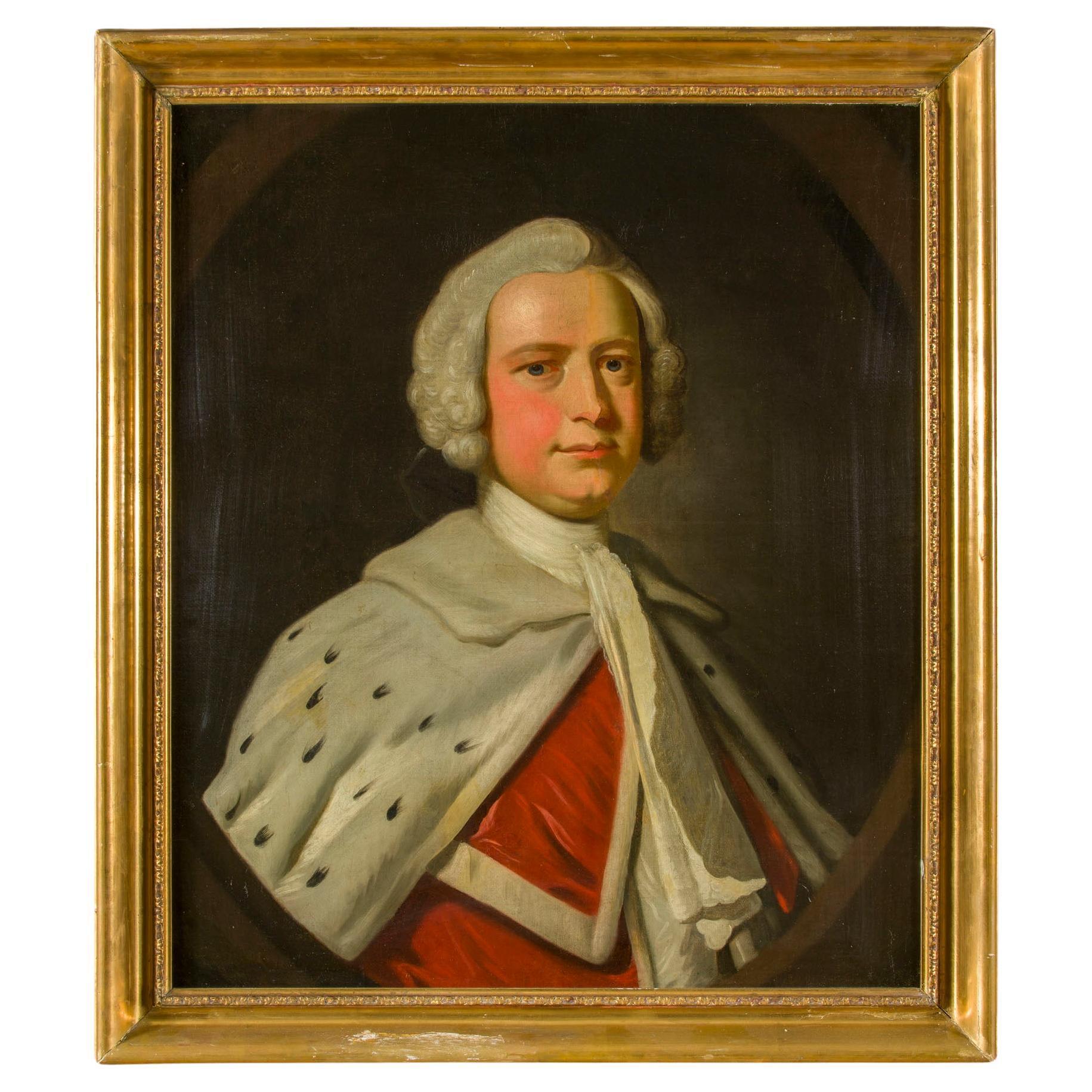
Retrato inglés del siglo XVIII al estilo de Thomas Hudson
Por Thomas Hudson
Importante pintura de la English School al estilo del gran artista Thomas Hudson (Devonshire 1701 - Twickenham 1779)
Representa el retrato de Harry Gray (1715-1768), IV conde de Stam...
Categoría
Década de 1750, Antiguos maestros, Pinturas de retratos
Materiales
Lienzo, Óleo
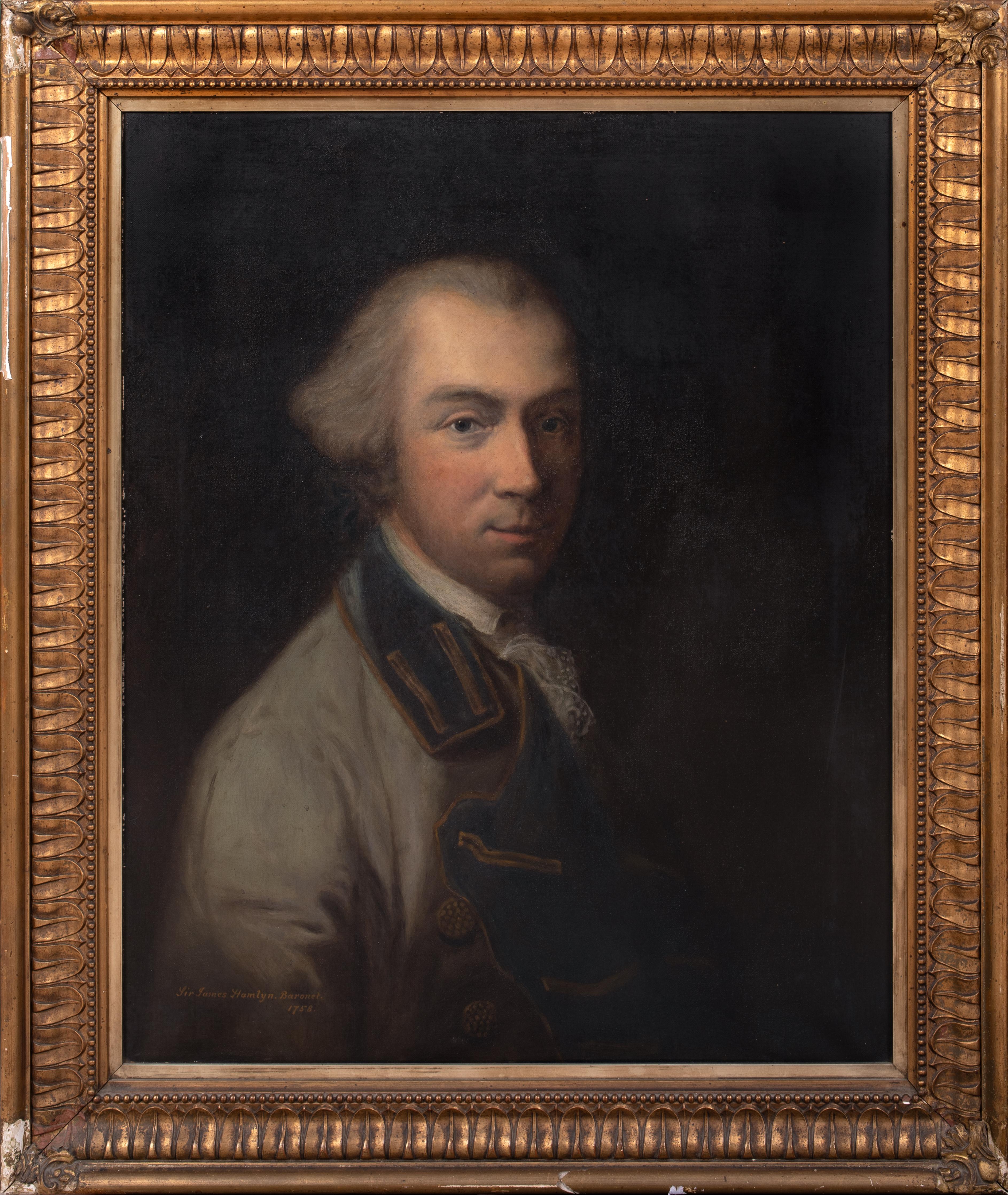
Retrato de Sir James Hamlyn (1735-1811), diputado por Carmarthen, sheriff de Devon
Por Joshua Reynolds
Retrato de Sir James Hamlyn (1735-1811), diputado por Carmarthen, sheriff de Devon, siglo XVIII
seguidor de Sir Joshua REYNOLDS (1723-1792)
Gran retrato del siglo XVIII de Sir Jame...
Categoría
siglo XVIII, Pinturas de retratos
Materiales
Lienzo, Óleo
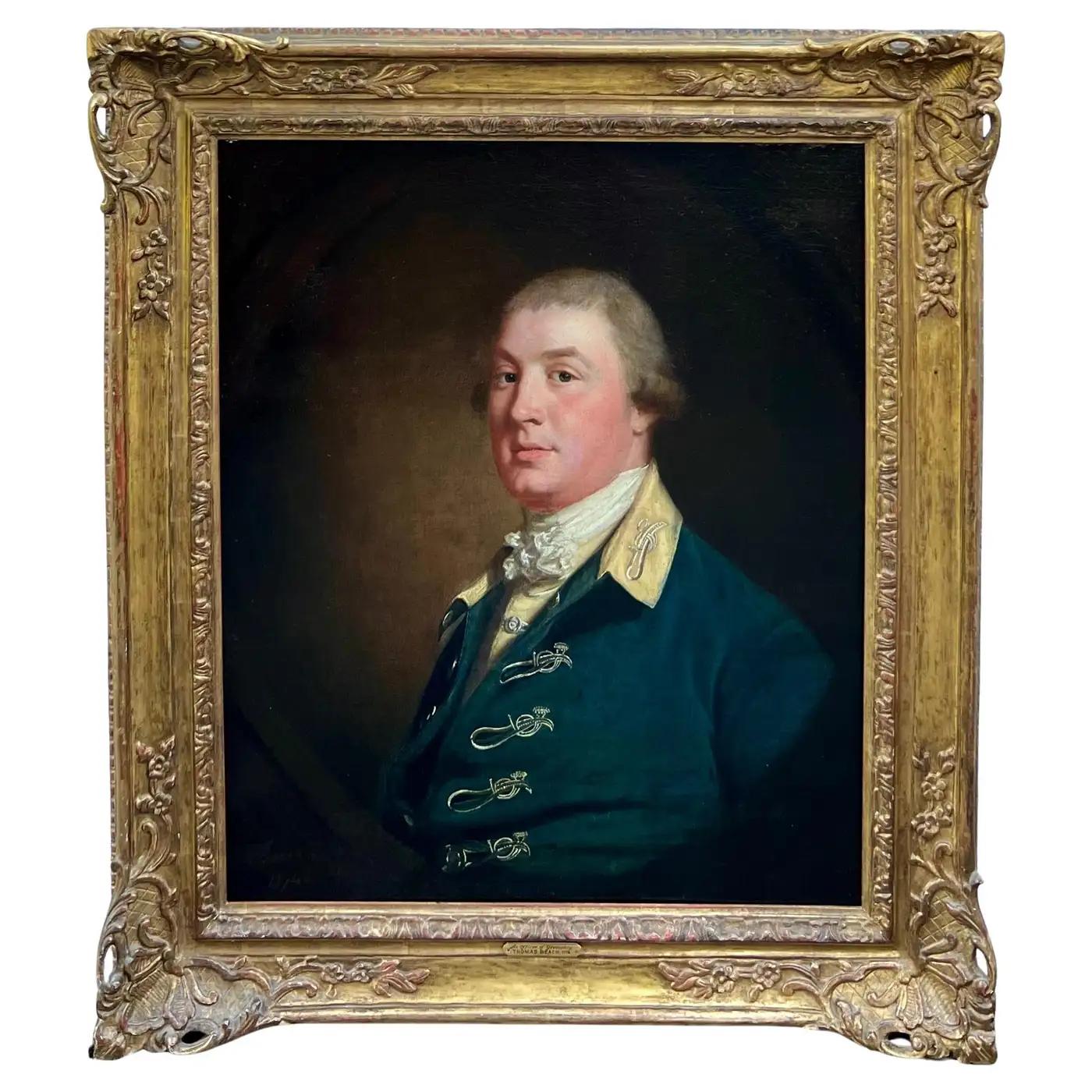
Retrato de un oficial británico
Por Thomas Beach
Un retrato muy fino de un oficial militar británico firmado y fechado Thomas Beach 1774 en la parte inferior izquierda. Este óleo sobre lienzo se presenta en un marco dorado de época...
Categoría
siglo XVIII, Antiguos maestros, Pinturas de retratos
Materiales
Óleo
Retrato de un caballero del Viejo Maestro - Pintura al óleo británica del siglo XVIII
Por Michael Dahl
Este impresionante retrato al óleo del Viejo Maestro del siglo XVIII se atribuye al artista Michael Dahl, nacido en Suecia y afincado en Inglaterra. Pintado hacia 1690 es un suntuoso...
Categoría
siglo XVII, Antiguos maestros, Pinturas de retratos
Materiales
Óleo
8891 € Precio de venta
Descuento del 20 %
Retrato de un caballero - pintura al óleo de arte británico Old Master c1750
Por Thomas Hudson
Este magnífico retrato al óleo del Viejo Maestro británico del siglo XVIII se atribuye a Thomas Hudson. Pintado hacia 1750, es un retrato de pie, de tres cuartos de longitud, de un c...
Categoría
Década de 1750, Antiguos maestros, Pinturas de retratos
Materiales
Óleo
5615 € Precio de venta
Descuento del 20 %
Gran retrato inglés del siglo XVII/XVIII del Sr. Gilbert Fundador de la Caridad
Retrato del Sr. Gilbert (se cree que fue el fundador de 'Gilberts Charity, Bridgwater, Somerset)
Artista de la English School, finales del siglo XVII/principios del XVIII
pintura al ...
Categoría
finales del siglo XVII, Antiguos maestros, Pinturas de retratos
Materiales
Óleo, Lienzo
1871 € Precio de venta
Descuento del 20 %