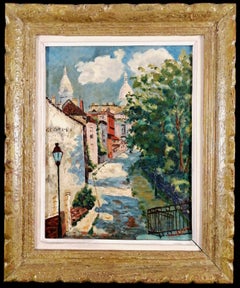
Artículos similares a French Impressionist Oil Painting Elisee Maclet Paris Montmartre Street Scene
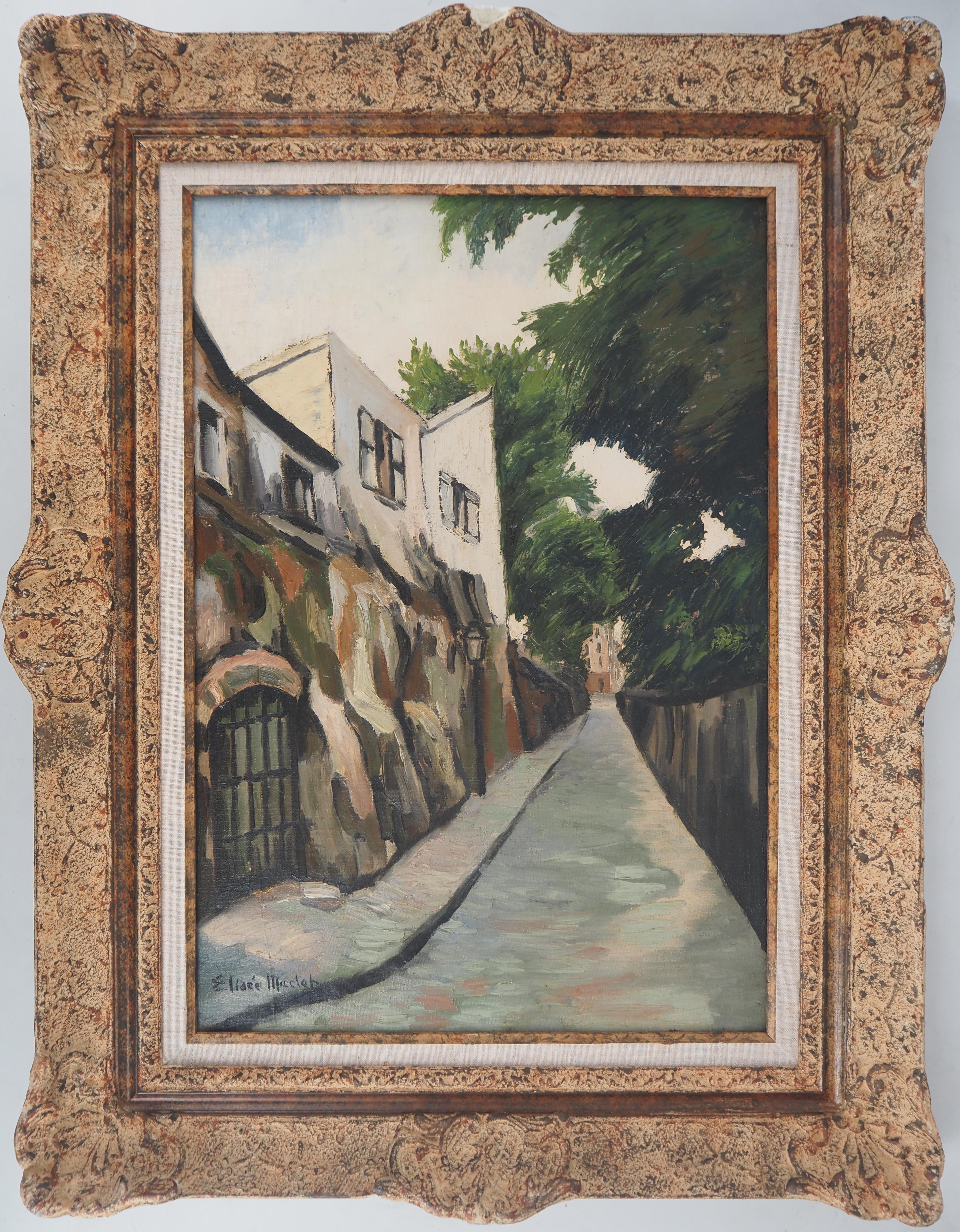
¿Quieres más imágenes o vídeos?
Solicita imágenes o vídeos adicionales al vendedor
1 de 17
Elisee MacletFrench Impressionist Oil Painting Elisee Maclet Paris Montmartre Street Scene
7014,52 €
Acerca del artículo
Elisee Maclet (French, 1881-1962),
Oil painting on canvas
Hand signed "E. Maclet" lower right.
Presented in a carved giltwood frame with linen liner
Dimensions: 28 X 31.5. Work Size: 18 x 21.5 in.
Depicting a colorful Montmartre, Paris street scene with classic Parisian architecture, a cylindrical tower, and greenery under a blue sky with vibrant light and bright Fauvist colors.
Jules Émile Élisée Maclet (1881 – 1962) was a French Impressionist painter, particularly known for his views of Montmartre.
Maclet was born the son of a gardener and a laundress at Lihons in the Santerre region in Picardy. His family was poor and he began work very young as an assistant to his father. Picardy is renowned for its roses, and Maclet used to say that he was born among cabbages and roses.His artistic talent became evident very early on. His father was also the sexton of the local parish church, where Maclet became a choirboy. The parish priest, Father Delval, was also an amateur painter, and often on fine Sundays he took the boy out to sketch and paint in the countryside.
The artist Puvis de Chavannes found the same scenes a source of inspiration, and on an April Sunday in 1892 happened to see some of the boy's work. The artist was so impressed that he asked Maclet's father to allow his son to study with him, but the father refused.
In spite of paternal opposition, in 1906 Maclet gave up gardening for art and moved to Montmartre, where while painting he supported himself with a variety of casual work (varnishing iron bedsteads, decorating the floats for the gala nights at the Moulin Rouge, washed dishes or opening oysters in restaurants). For several months in 1909 he served as a cook on board a ship sailing from Marseilles to Indochina. In 1912 he returned to Paris, where he painted dolls in crinolines and exhibited them at the Salon des Humoristes. But in spite of all these occupations, he found time to paint.
When Maclet arrived in Montmartre, much of the country charm of the area still existed and he put it on canvas, even before Maurice Utrillo did so. Maclet painted the Lapin Agile, the Moulin de la Galette, and the Maison de Mimi Pinson several years before Utrillo painted them. He painted most often in winter in this period, skilfully suggesting snow by leaving bare white spaces in his canvas or paper.
In a short time Maclet won a circle of sincere admirers. The art dealer Dosbourg bought his work, which gave him a fairly reliable source of income and enabled him to devote more time than ever to his painting. From Montmartre he launched out into the suburbs of Paris, painting them with the same affection with which he treated the scenes of Montmartre.
When war broke out in 1914, Maclet served as a medical attendant in a temporary hospital run by the Little Sisters of the Poor. That allowed him to spend his periods of leave back in Montmartre, where he stayed at the Lapin Agile thanks to the hospitality of his friend Père Frédé. Maclet slept in the cabaret hall and paid for his food by washing dishes and polishing the copper pots. While on one of these periods of leave, he painted two small pictures of the Sacré-Coeur and the Moulin de la Galette which he sold to a M. Deibler, who combined his profession of official executioner with a love of the fine arts. Francis Carco, the painter and poet, was also an admirer of his work and became a patron.
When the war ended in 1918, Maclet returned to Montmartre. Carco, feeling that the painter needed to widen his horizons, sent him to stay in Dieppe, and the sea coast soon featured in Maclet's paintings. In the following year he came back to Montmartre and to his former subjects. Montmartre was now changing: new apartment buildings were going up, taking the place of the green spaces, and under a huge reconstruction the picturesqueness of the Ourcq Canal was soon to disappear, as were the laundry boats on the Seine. Maclet captured these things in his canvases. His views of Paris were now earning him increasing recognition and success. Besides Carco, he found great supporters in the famous writer Colette and the American art dealer Hugo Pelsall, who regarded him as the equal of other great painters of the period. Max Jacob wrote about him. Famous dealers of the time, such as Pierre Menant and Matho Kleimann-Boch, hung Maclet's work beside the paintings of Vincent Van Gogh and Pablo Picasso in their galleries. School of Paris, Ecole de Paris peinture. In 1923 Maclet entered into a contract with a wealthy Austrian manufacturer, Baron von Frey, a condition of which was that he should leave Paris for the south of France, as the Baron sensed that Maclet would know how to handle the brilliant light and intense color of the Midi. The Baron's judgment was vindicated only a few hours after Maclet's arrival in Arles, when the son of an old and famous friend of Van Gogh's said to him, "Not since Van Gogh have I seen a painter use such pure color as you do." Maclet stayed in the region from 1924 to 1928. He painted in Orange, Vaison-la-Romaine, La Ciotat, Cassis, Golfe-Juan, Antibes, Cagnes, Saint-Paul-de-Vence, Villefranche, Nice, Menton, and (in Italy) San Remo, sending back to Frey glowing landscapes and glorious floral still lifes. Von Frey reserved for himself almost the total output of this period and sent most of the paintings to America, where wealthy collectors vied to buy them at high prices. Many magazines devoted articles to Maclet, and an exhibition of his work was presented in Paris in 1928. Frey also had the satisfaction of seeing paintings by Maclet purchased by important museums in Lyons, Grenoble, and Monte Carlo.
At the end of 1928, Maclet went to paint in Corsica. He spent 1929 and 1930 in Brittany and then went back to his native Picardy to paint. In the middle of 1933 he suffered the onset of a serious mental illness, from which he never entirely recovered, and was institutionalised for several months. After 1935 he resumed his studies of Paris and in 1945 presented a large exhibition of his work under the title Autour du Moulin ("Around the Moulin") which elicited from André Warnod the following glowing tribute: "What a happy spectacle to see Maclet paint. He begins by covering the top of his canvas with paint, the sky, the clouds. Then he attacks the chimneys and then the roofs, and then, floor by floor, he arrives at the street level of the houses... Under his brush, all becomes miraculously organized; he places the figures where they should be, and when he has painted the last paving block at the very bottom of the canvas, then he signs it. And the painting is finished; a happy painting expressing the joy of living."
When he made sporadic visits to Paris during his years in the south of France, the painters of Montmartre and Montparnasse considered him a painter on the rise, but the public remained indifferent. In 1957 a Parisian gallery organized a retrospective exhibition of Maclet's work, and the solid rise in the prices of his paintings dates from that retrospective exhibition.
American art dealer Wally Findlay, of Wally Findlay Galleries began to represent Maclet, bringing his Parisian paintings to America and showing them in his galleries in New York, Chicago, and Los Angeles. Along with Francois Gall, Michel Henry, Jules Rene Herve, Andre Gisson, Marcel Dyf, Dietz Edzard, Gaston Sebire, Jean Dufy, Claude Venard, Yolande Ardissone, Gen Paul, Andre Hambourg, Jean Dufy, Gaston Sebire, Paul Aizpiri, Constantine Kluge, Jacques Bouyssou, Le Pho, Henri Maik Hecht, he exemplified a Ecole de Paris sensibility in his work.
E. Bénézit, Dictionnaire des Peintres, Sculpteurs, Dessinateurs et Graveurs, Vol. 7, p. 48. Paris: Librairie Grund, 1976
Martine and Bertrand Willot: Élisée Maclet, le dernier Montmartrois, Édition La Vie d'Artiste et Galerie Villain
Jean Cottel and Marcel Guicheteau, 1982: Elisée Maclet, catalogue raisonné, ABC Collection
Marcel Guicheteau and Jan Cottel, 1960: "Maclet" in L'Information Artistique
Marcel Guicheteau and Jean Cottel: Maclet, with preface by Georges Peillex, Édition D'Arte Fratelli Pozzo
Jack Russell 2008: Of Paupers and Painters - Studios of Montmartre Masters, pp. 183–185. Ed: La Belle Gabrielle
- Creador:Elisee Maclet
- Dimensiones:Altura: 71,12 cm (28 in)Anchura: 80,01 cm (31,5 in)
- Medio:
- Movimiento y estilo:
- Época:
- Estado:frame with light wear at corners. painting with lightly applied uneven varnish. please see photos.
- Ubicación de la galería:Surfside, FL
- Número de referencia:1stDibs: LU38217461382
Sobre el vendedor
4,9
Vendedor Platino
Vendedores premium con una calificación de +4,7 y tiempos de respuesta de 24 horas
Establecido en 1995
Vendedor de 1stDibs desde 2014
1861 ventas en 1stDibs
Tiempo de respuesta usual: <1 hora
- EnvíoRecuperando presupuesto…Envío desde: Miami, FL
- Política de devolución
Partes de esta página se han traducido automáticamente. 1stDibs no puede garantizar la exactitud de las traducciones. El inglés es el idioma predeterminado de este sitio web.
Más de este vendedor
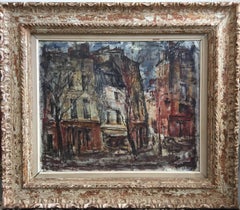
Ver todoEscena callejera parisina, Óleo sobre lienzo Ecole D
Paris, WPA, Artista Bezalel
Por Jacques Zucker
Jacques Zucker nació en 1900 en Radom, Polonia. He fue un famoso artista judío estadounidense, conocido sobre todo por sus pinturas expresionistas de figuras. En su juventud viajó a ...
Categoría
siglo XX, Impresionista, Pinturas de paisajes
Materiales
Lienzo, Óleo
Quai De La Tournelle, Pintura al óleo de una escena callejera de París, Modernista sordo americano
Por Robert Freiman
Cuadro al óleo de escena callejera de París en marco original de época tallado a mano, que muestra cierto desgaste. Firmado al dorso y fechado en 1953. Inscripción en el reverso con...
Categoría
mediados del siglo XX, Expresionista, Pinturas de paisajes
Materiales
Óleo
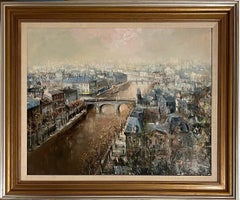
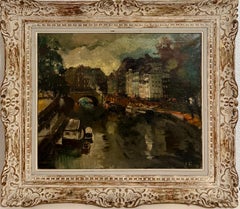
Gran óleo francés París, río Sena con puente, paisaje, Lucien Delarue
Por Lucien Delarue
Lucien Delarue (1925-2011)
Escena del río Sena de París.
"Sena en París"
Procedencia: Galería Newman, Filadelfia Reverso de la etiqueta.
Firmado a mano sobre lienzo.
Dimension...
Categoría
mediados del siglo XX, Posimpresionista, Pinturas de paisajes
Materiales
Lienzo, Óleo
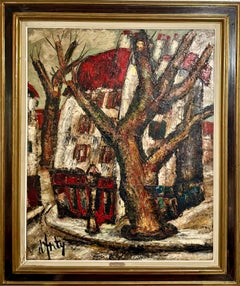
Pintura al óleo francesa modernista de gran tamaño de la calle de París Expresionista Henry D
anty
Por Henri d
Anty
Óleo grande sobre lienzo Escena callejera de París, Francia, con casa y árbol.
Firmado a mano
Dimensiones enmarcado 41 x 48,5 El lienzo es de 40 X 32 pulgadas
Henri Maurice D'Anty...
Categoría
siglo XX, Expresionista, Pinturas de paisajes
Materiales
Lienzo, Óleo
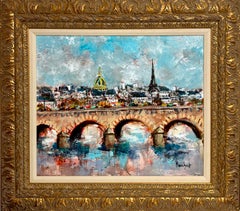
Arte fauvista postimpresionista Pintura al óleo francesa Puente de París Urbain Huchet
Por Urbain Huchet
Urbain Huchet (francés, 1930-2014)
Le Pont Neuf a París
Descripción: Pintura original al óleo o acrílico sobre lienzo que representa un paisaje urbano parisino con un puente sobre el...
Categoría
siglo XX, Posimpresionista, Pinturas figurativas
Materiales
Lienzo, Óleo
Pintura al Óleo Expresionista Escena de París Vista Visionismo Arquitectónico Olivier Foss
Por Oliver Foss
"Escena callejera" de Olivier B. Foss es una obra de arte icónica representativa de la pintura expresionista francesa de mediados de siglo. El personal estilo visionario del artista ...
Categoría
siglo XX, Expresionista, Pinturas de paisajes
Materiales
Lienzo, Óleo
También te puede gustar
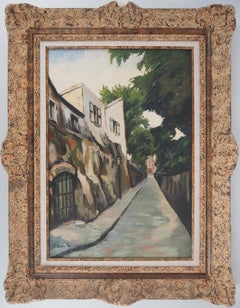
París, Montmartre : Rue des Daules - Óleo original sobre lienzo - Firmado
Por Élisée Maclet
Elisée MACLET (1881-1962)
París, Montmartre : Rue des Saules, c. 1910
Óleo original sobre lienzo
Firmado abajo a la izquierda
Sobre lienzo 55 x 38 cm (c. 22 x 15 pulg.)
Presentado ...
Categoría
mediados del siglo XX, Posimpresionista, Pinturas de paisajes
Materiales
Óleo
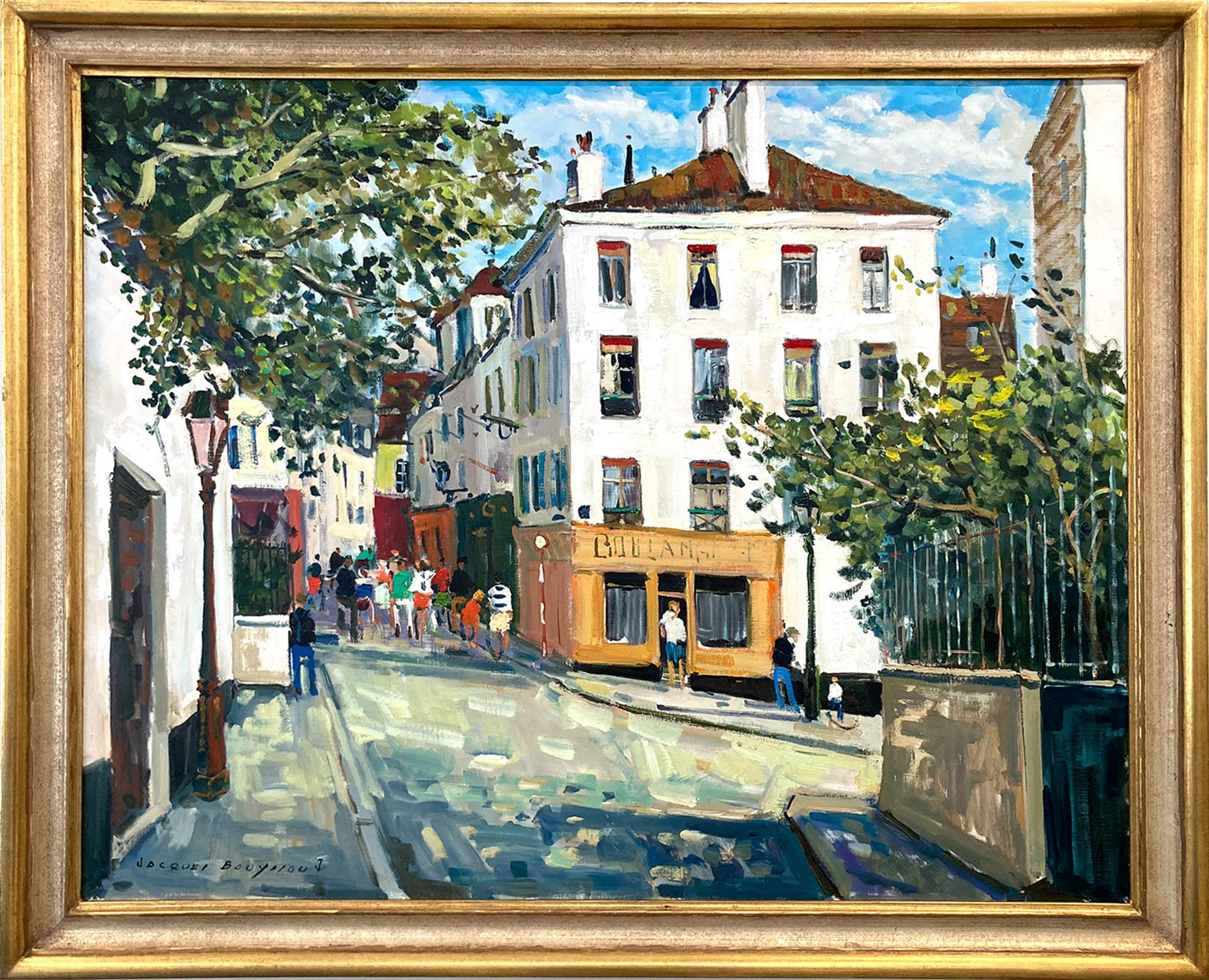
"París, Rue De Norvins" Pintura al óleo impresionista del siglo XX sobre lienzo
Por Jacques Bouyssou
Impresionante representación de una animada escena de pueblo con casas y figuras por todas partes. Hay una cafetería situada cerca de la concurrida calle, mientras la gente mira a tr...
Categoría
siglo XX, Impresionista, Pinturas de paisajes
Materiales
Lienzo, Óleo
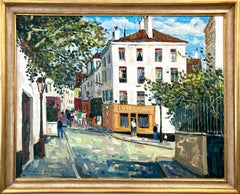
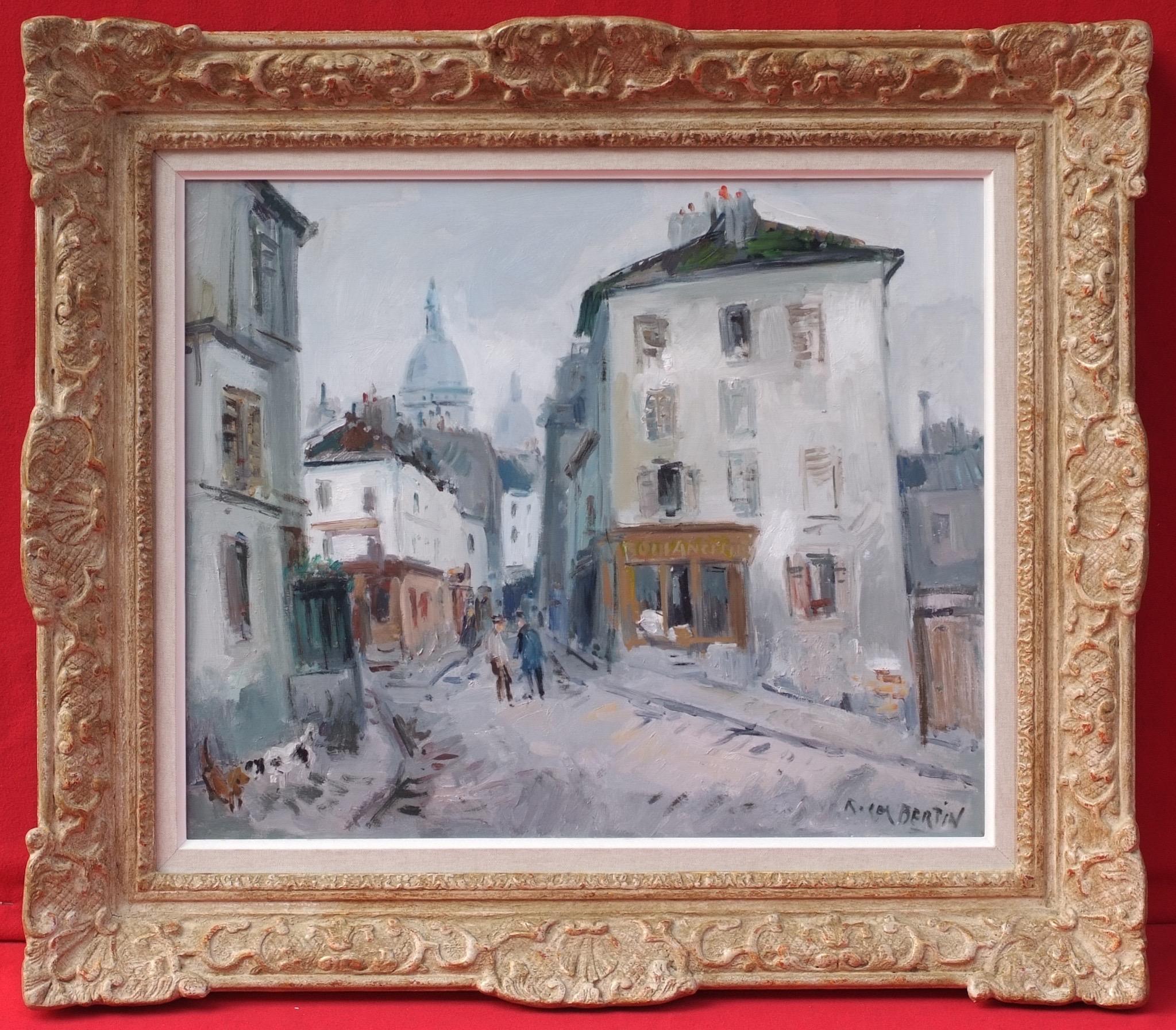
Calle Montmartre de París, pintura postimpresionista
BERTIN Roger (1915 - 2003)
París Montmartre animada escena callejera
Óleo sobre lienzo firmado abajo a la derecha
Enmarcado por Gault (París)
Dim lienzo : 54 X 65 cm
Dim Marco: 76 X...
Categoría
mediados del siglo XX, Posimpresionista, Pinturas de paisajes
Materiales
Óleo
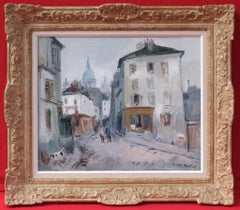
" Place Du Tertre " Pintura al óleo impresionista con figuras en un pueblo parisino
Este cuadro es una escena callejera tremendamente viva y vívida del París del siglo XX, que representa La Place du Tertre. Esta plaza se encuentra en el distrito 18 de París, Francia...
Categoría
mediados del siglo XX, Posimpresionista, Pinturas de paisajes
Materiales
Lienzo, Óleo
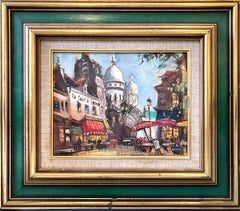
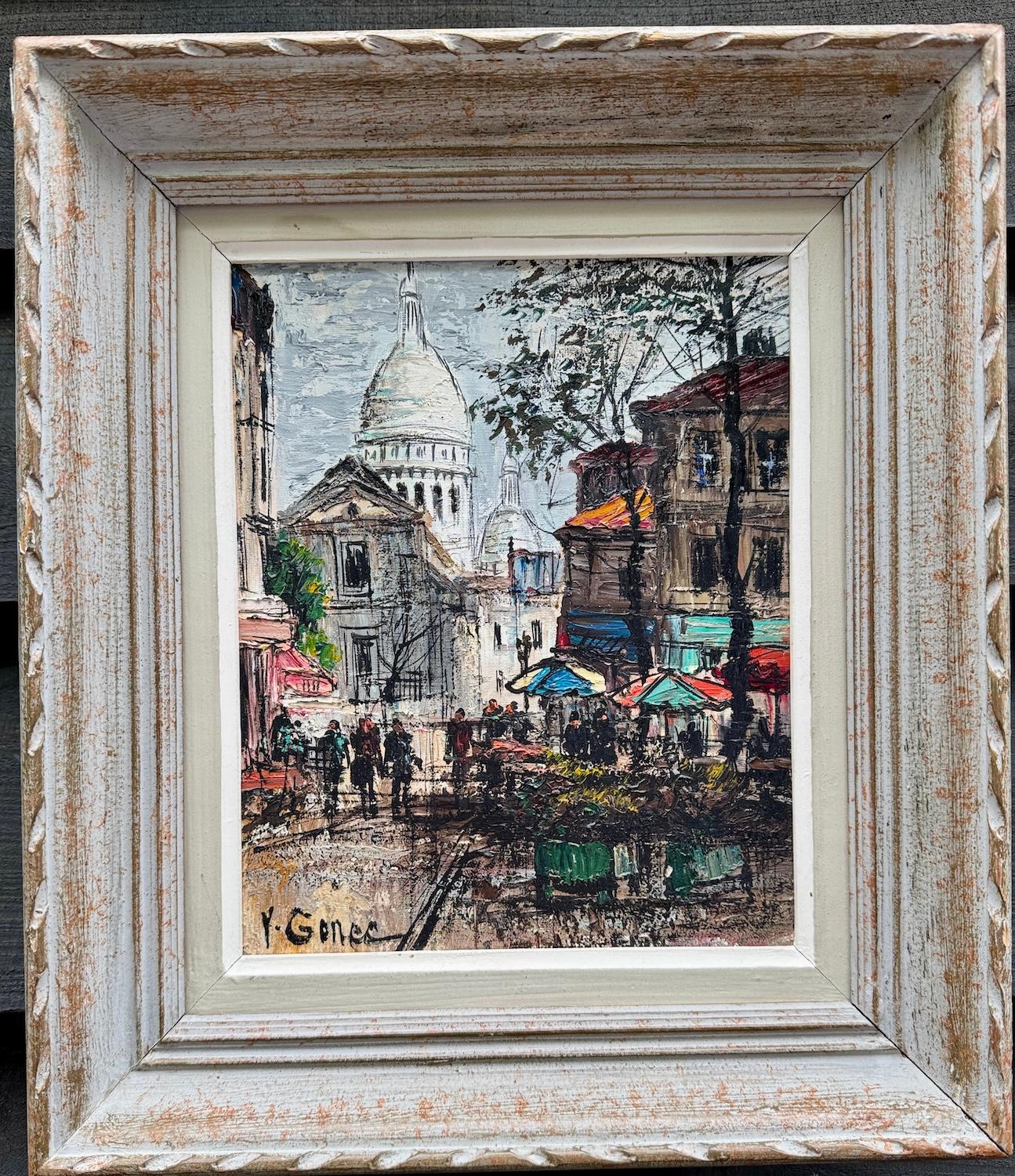
Vista impresionista francesa de mediados de siglo de Montmartre, París, Francia
Y. Gonez (francés, mediados del siglo XX)
Escena de mercado, Montmartre con Sacré-Cœur, ca. 1950
Óleo sobre lienzo, en bastidor estilo Montparnasse
En esta animada escena callejera,...
Categoría
Década de 1950, Impresionista, Pinturas figurativas
Materiales
Lienzo, Óleo
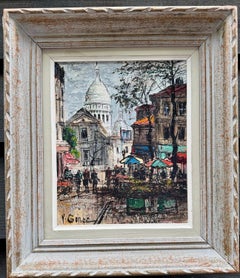
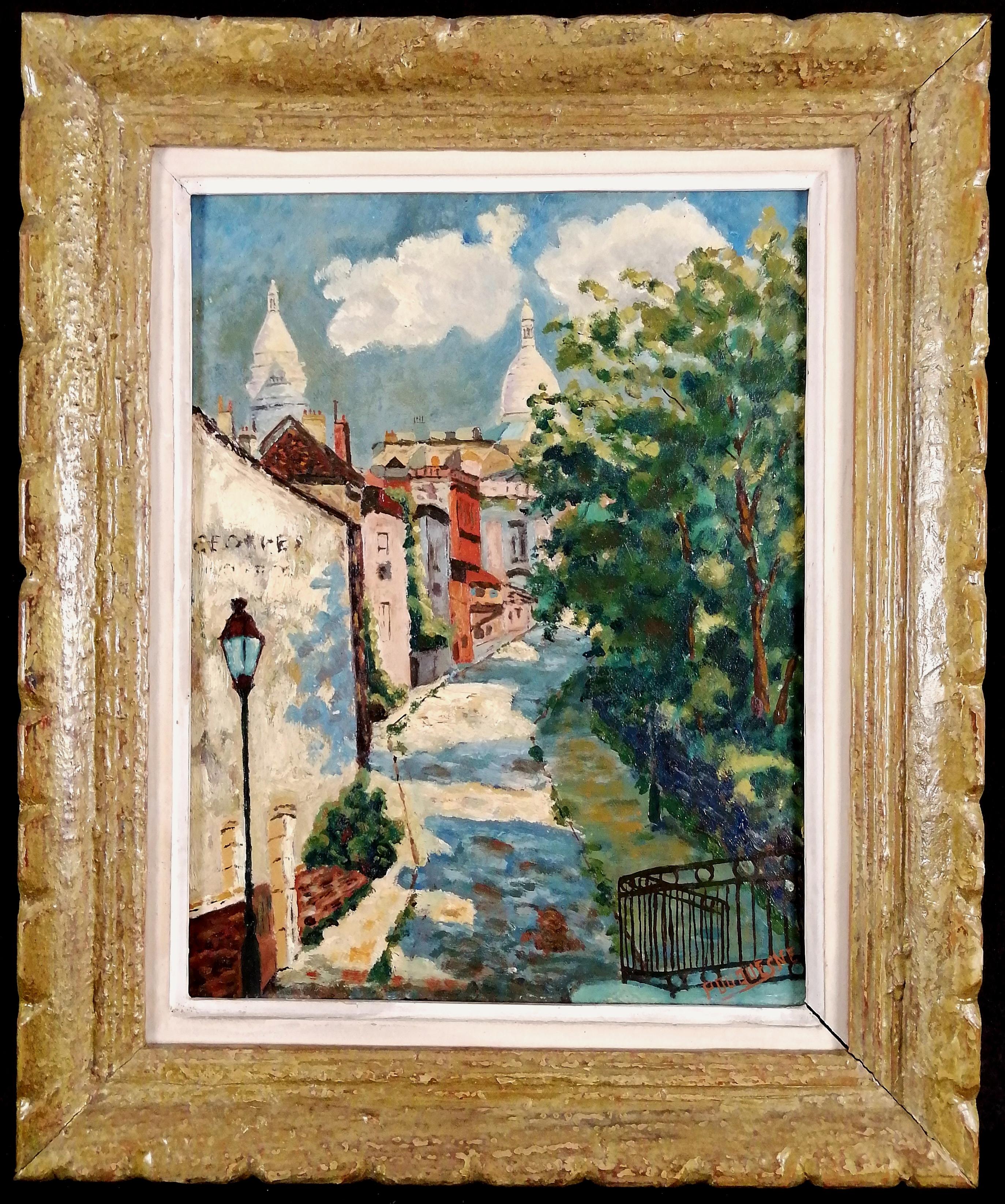
Montmartre - Pintura al óleo callejera impresionista francesa de París de principios del siglo XX
Precioso óleo sobre tabla impresionista francés de los años 30 que representa una vista del barrio de Montmartre de París, con las cúpulas de la iglesia del Sacré-Coeur al fondo.
En...
Categoría
principios del siglo XX, Impresionista, Pinturas de paisajes
Materiales
Óleo