Artículos similares a Two Ancient Egyptian Alabaster Canopic Jars
¿Quieres más imágenes o vídeos?
Solicita imágenes o vídeos adicionales al vendedor
1 de 9
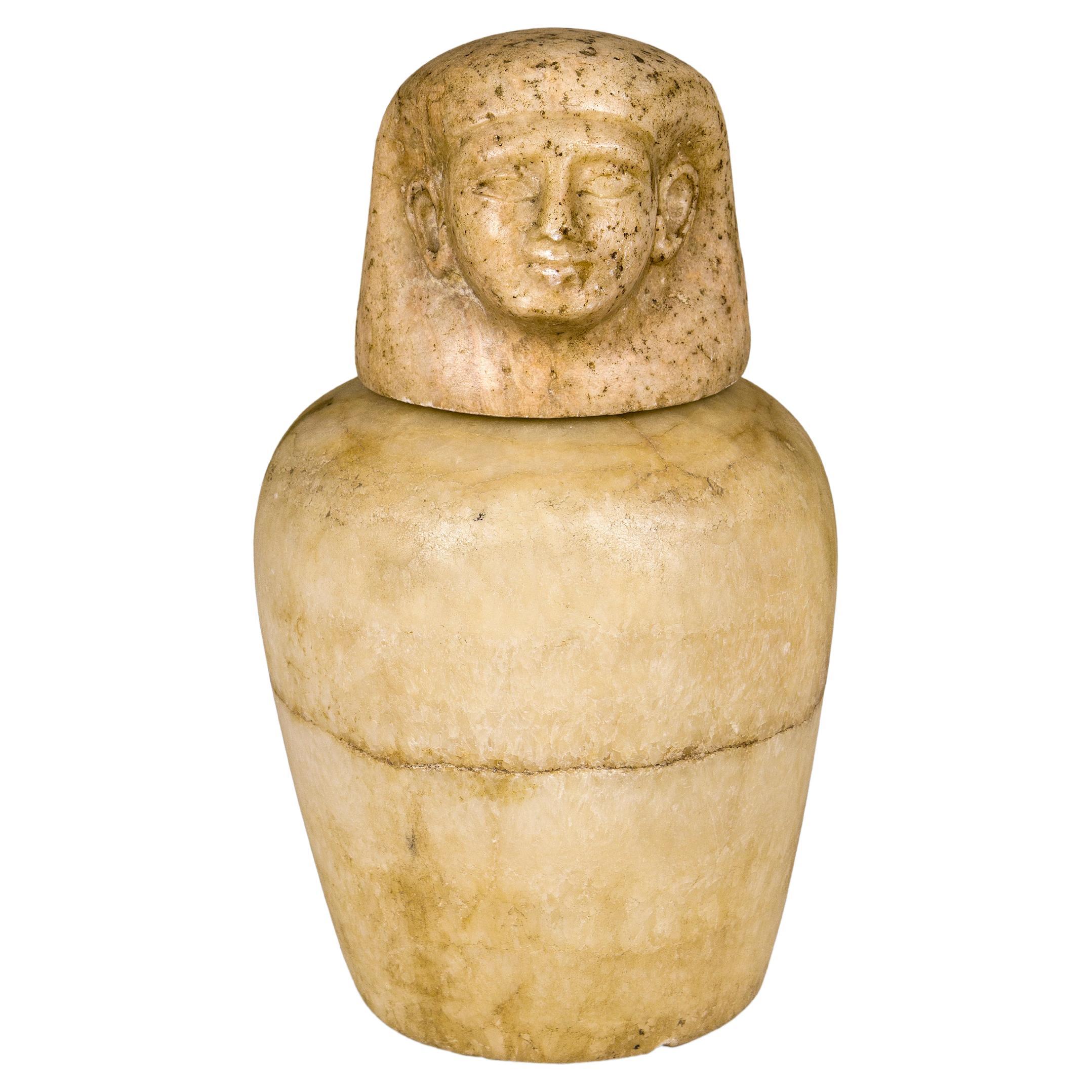
Two Ancient Egyptian Alabaster Canopic Jars
195.535,38 €
Acerca del artículo
This set of two canopic jars represents unequivocal masterpieces of the type. Carved out of a beautifully rich white veined caramel alabaster, both jars are deftly executed and of robust, elegant proportion. Each with rounded shoulders tapering to a flat base, and featuring lids in the form of the human-headed Imsety, one of the four sons of Horus. Both serene oval faces executed with heavy upper eyelids, a broad nose, thick lips and prominent ears.
Notes
As early as the Fourth Dynasty of the Old Kingdom, the internal organs of the deceased were removed from the body during the process of mummification.' These organs, the most easily prone to putrefaction, were then placed in special containers, the so-called canopic jars-always a set of four-and buried beside the sarcophagus or coffin with the mummy. The procedure was motivated by the belief that only a complete body, with all of its components, could guarantee an individual's rebirth and the desired afterlife. The earliest known examples were simple stone jars with shallow disklike lids, usually uninscribed. During the First Intermediate Period (the Ninth-Tenth Dynasty, ca. 2100 B.C.), the style changed to lids with human heads, and entire sets of jars were produced from a variety of materials.
It was not until the late Eighteenth Dynasty (ca. 1300 B.C.) that the lids were carved in the characteristic form with the four Sons of Horus, each associated with one of the viscera. Four funerary goddesses, in addition to the canopic deities, protected the jars' contents. Human-headed Imsety guarded the liver (under the protection of the goddess Isis, baboon-headed Hapy guarded the lungs (under the goddess Nephthys), jackal-headed Duamutef guarded the stomach (under the goddess Neith) and falcon-headed Qebehsenuef guarded the intestines (under the goddess Serket). The form and iconography of canopic jars and the chests that contained them remained in use till Greco-Roman times, and they were an indispensable element of standard burials, both royal and private
Provenance
Said to be found in Dahshur in 1896.
Palm Beach Private Collection.
Alice Tully (1902-1993), New York.
French Furniture, European Works of Art and Porcelain from the Collection of Alice Tully; Christie’s, New York, 26-28 October 1994.
Antiquities Christie's New York, June 4, 2015.
Private Collection, Los Angeles California.
- Dimensiones:Altura: 34,93 cm (13,75 in)Diámetro: 20,32 cm (8 in)
- Estilo:Egipcio (Del período)
- Materiales y técnicas:
- Lugar de origen:
- Época:
- Fecha de fabricación:Middle Kingdom, 12th Dynasty, 1985 BC to 1773 BC
- Estado:Desgaste acorde con la edad y el uso. Each intact as preserved, with some minor cracks and areas of heavy surface wear and incrustation. With some hairline cracks and chips. A label in one reading "Foiulles de Dachour", 1896.
- Ubicación del vendedor:Los Angeles, CA
- Número de referencia:Vendedor: MS.00321stDibs: LU10743247947422
Sobre el vendedor
Nuevo en 1stDibs
Se unió en los últimos seis meses.
Aún no hay opiniones
Vendedor profesional aprobado
Todos los vendedores superan estrictas normas de autenticidad y confiabilidad
Establecido en 2022
Vendedor de 1stDibs desde 2025
- EnvíoRecuperando presupuesto…Envío desde: Los Angeles, CA
- Política de devolución
Partes de esta página se han traducido automáticamente. 1stDibs no puede garantizar la exactitud de las traducciones. El inglés es el idioma predeterminado de este sitio web.
Más de este vendedor
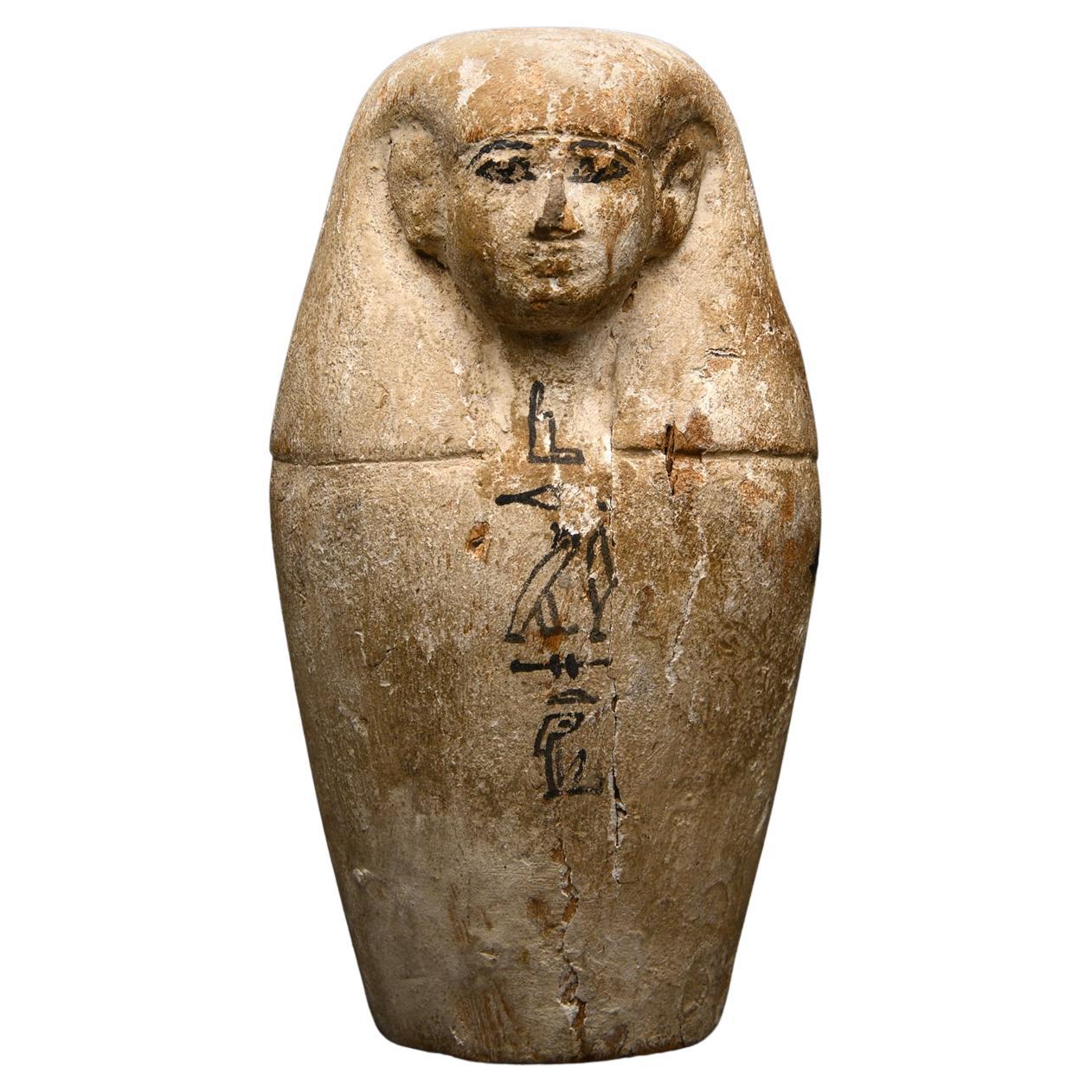
Ver todoAncient Egyptian Wood Dummy Canopic Jar
This beautifully rendered 'dummy' canopic jar is In the form of the human-headed Son of Horus, Imsety. It features an incised line indicating the division between the jar and the lid...
Categoría
Antiguo, siglo XV y antes, Egipcio, Egipcio, Antigüedades
Materiales
Madera
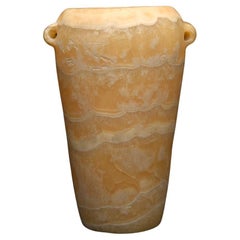
Ancient Egyptian Middle Kingdom Alabaster Jar
Of beautiful rich, translucent alabaster, banded with creamy hightlights, this sizeable vessel is of exceptional quality. The cylindrical squat piriform body tapers to a flat base, ...
Categoría
Antiguo, siglo XV y antes, Egipcio, Egipcio, Jarrones
Materiales
Alabastro
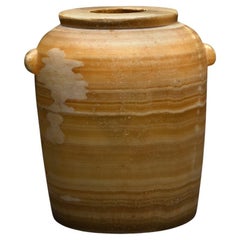
Ancient Egyptian Alabaster Storage Jar
A large, and very fine barrel-shaped jar of alabster with well defined bands of creme and caramel highlights. Twin vestigial lug handles are located on each side below a wide disc ri...
Categoría
Antiguo, siglo XV y antes, Egipcio, Egipcio, Jarrones
Materiales
Alabastro
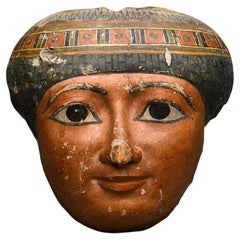
Máscara de momia de cartonaje pintado del Antiguo Egipto
Las máscaras de cartonaje como ésta se utilizaban para proteger e idealizar los rasgos faciales del difunto en el entierro. Los ojos sobredimensionados delineados con líneas cosmétic...
Categoría
Antiguo, siglo XV y antes, Egipcio, Egipcio, Antigüedades
Materiales
Lino, Madera
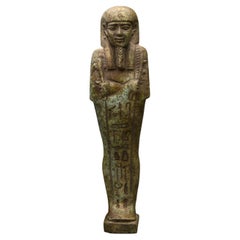
Shabti de loza verde del Antiguo Egipto
Para Padiusir, esta figura Shabti muestra un semblante sereno, con rasgos faciales finamente delineados y proporciones elegantes. Está de pie, momiforme, con los brazos cruzados, so...
Categoría
Antiguo, siglo XV y antes, Egipcio, Egipcio, Antigüedades
Materiales
Fayenza
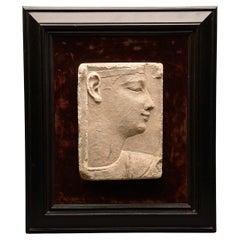
Ancient Egyptian Limestone Sculptor
s Model
This superb sculptors model is carved in raised relief with the bust of a pharaoh in profile to the right. The noble face features a prominent chin and thick lips. A delicate eye-lin...
Categoría
Antiguo, siglo XV y antes, Egipcio, Egipcio, Antigüedades
Materiales
Caliza
También te puede gustar
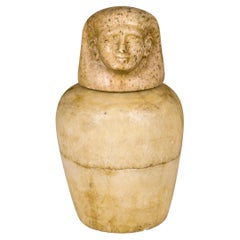
Jarra de Canopo "Asmet", 1069 - 664 a.C., Egipto
Tarro Canopus "Asmet",
Con certificado de autenticidad.
1069 - 664 a.C., Egipto.
Buen estado.
La cultura egipcia son las "jarras Canopus". Eran recipientes que los antiguos egipcios...
Categoría
Antiguo, siglo XV y antes, Egipcio, Egipcio, Jarrones
Materiales
Alabastro
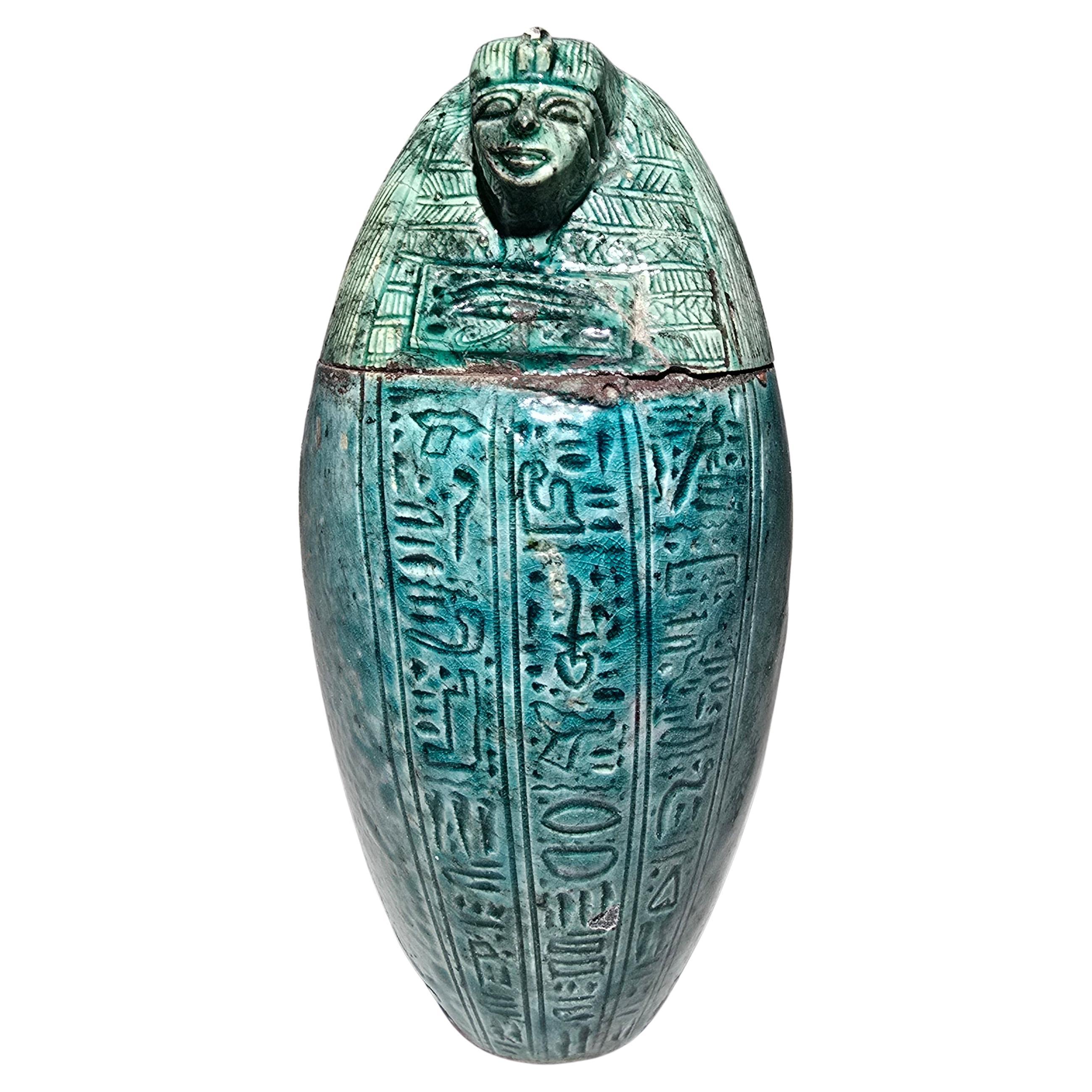
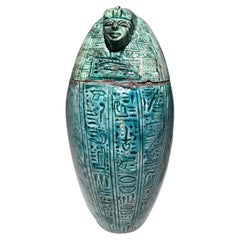
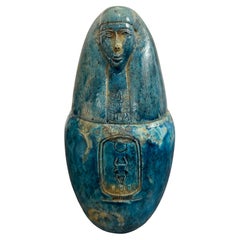
Tarro canopo egipcio del siglo XIX
Descubre un fascinante pedazo de historia con este exquisito tarro canopo egipcio del siglo XIX, expertamente elaborado en loza vidriada. Este artefacto único no sólo muestra el arte...
Categoría
Antiguo, Década de 1880, Frascos
Materiales
Fayenza
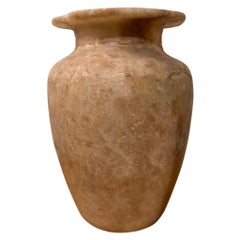
Tarro de alabastro de estilo egipcio antiguo Grand Tour
Jarra de almacenamiento de alabastro del siglo XIX, tallada a mano, de estilo egipcio tardío dinástico, con cuello cónico rematado por un ancho borde evertido. Gran pieza decorativa ...
Categoría
Antiguo, Fines del siglo XIX, Egipcio, Grand Tour, Frascos
Materiales
Alabastro
Tarro canopo de cerámica esmaltada de loza de Imsety, principios del siglo XX
Tarro canopo de cerámica esmaltada de loza de Imsety, principios del siglo XX
Procedencia: Colección privada australiana.
Descripción:
La robusta jarra ovoide con vidriado moteado ...
Categoría
principios del siglo XX, Egipcio, Frascos
Materiales
Cerámico
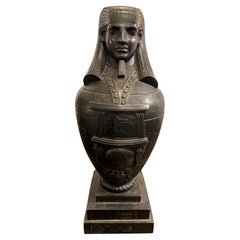
Tarro canopo de metal bronceado con base, principios del siglo XX
Tarro canopo de metal bronceado con base, principios del siglo XX
Descripción:
Jarra con tapa en forma de cabeza humanoide con el tocado faraónico nemes y barba postiza, que identif...
Categoría
principios del siglo XX, Egipcio, Frascos
Materiales
Metal
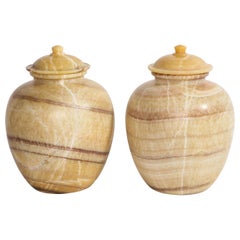
Pareja de jarrones egipcios de mediados de siglo/estilo art déco cubiertos de mármol de alabastro color miel
Preciosa y muy decorativa pareja de jarrones egipcios de alabastro color miel recubiertos de mármol, de estilo Art Decó de mediados de siglo. Cada una está bellamente tallada a mano ...
Categoría
Vintage, Década de 1930, Italiano, Art Decó, Jarrones
Materiales
Alabastro